

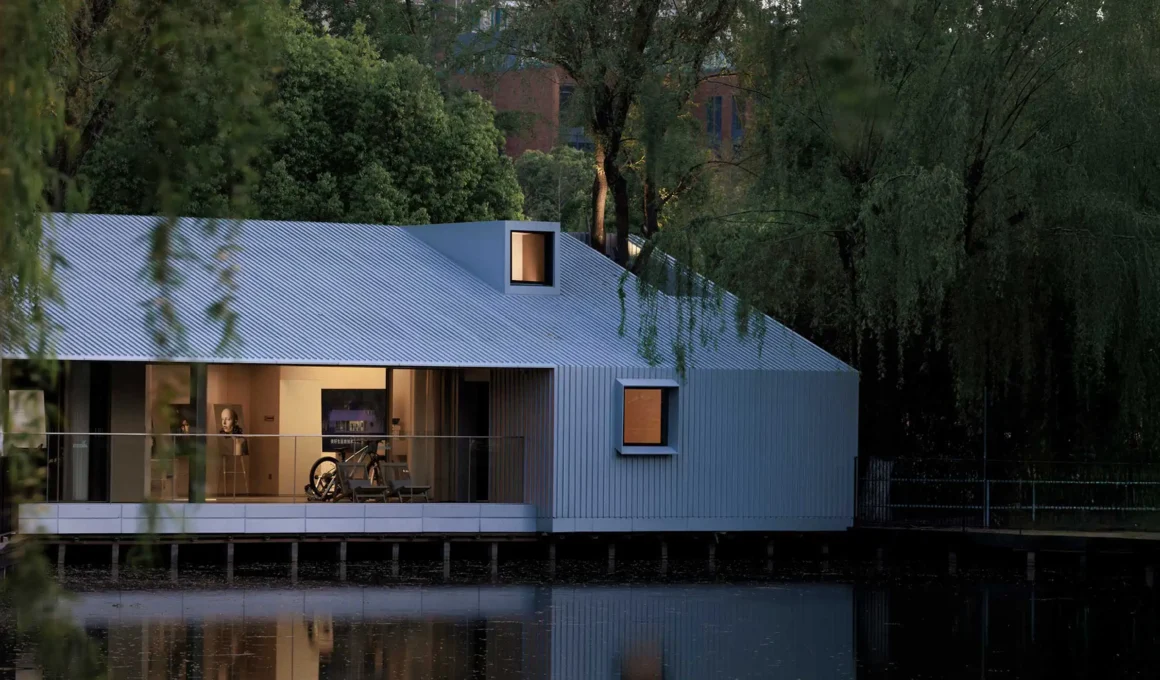
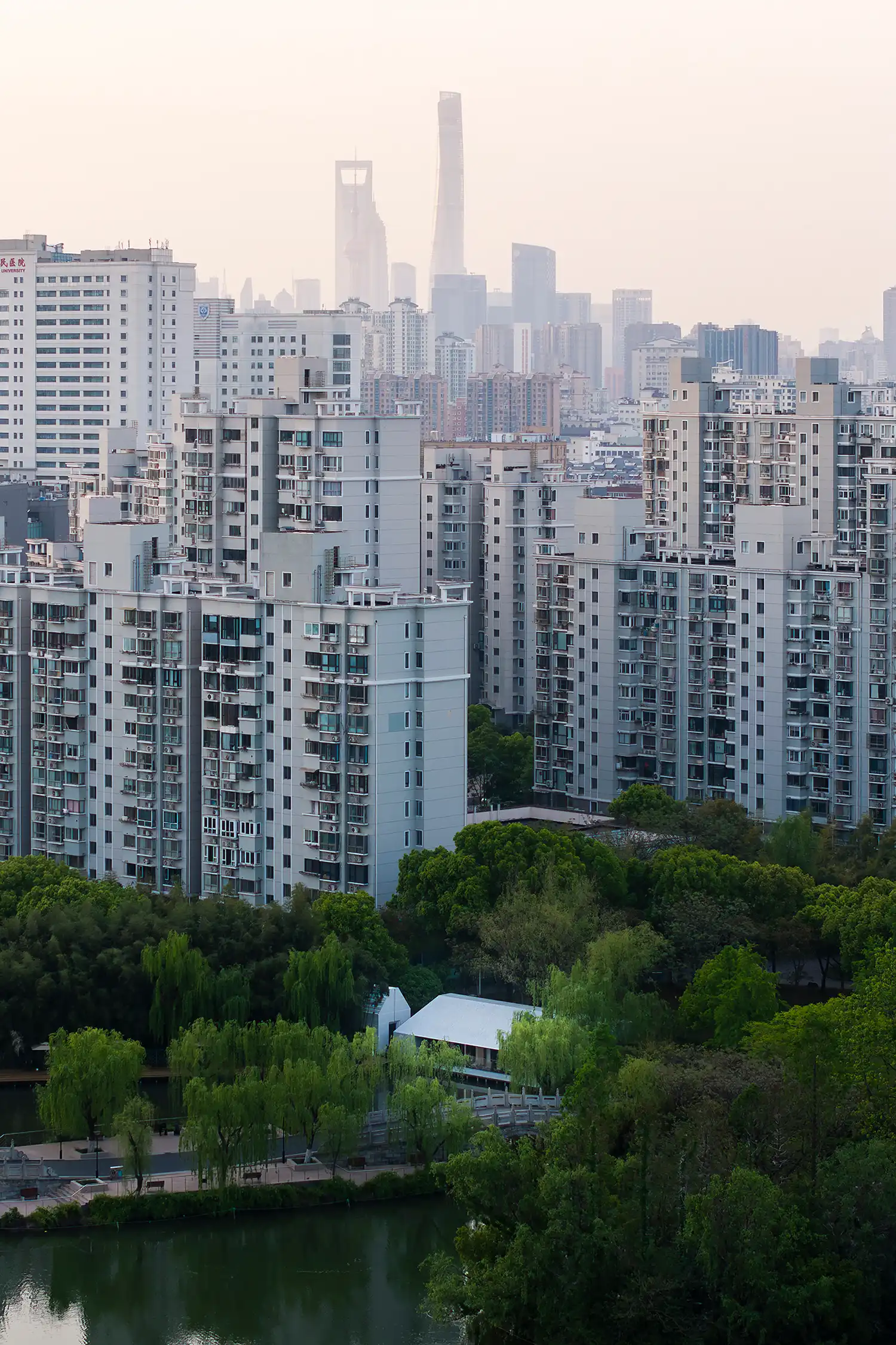
Wutopia Lab has unveiled The Lake House – Life Experience Pavilion, a shimmering architectural intervention within Shanghai’s Daning Park. Completed in a blistering 40-day construction period, this 190 m² pavilion, commissioned by CSCEC Jiuhe East China Region, demonstrates a masterclass in rapid-build architecture while weaving a profound zero-carbon narrative into its very fabric.
Chief architect Yu Ting faced a formidable challenge: select a site, design a structure preserving existing buildings and untouched greenery (including two trees intimately hugging the façades), incorporate the client’s existing ceramic curtain wall panels, and deliver a fully integrated experience – encompassing architecture, interior, landscape, soft furnishings, and exhibition design – by the immovable April 18th, 2025, opening date. The chosen site, a former water base by the bay, demanded sensitivity and speed.
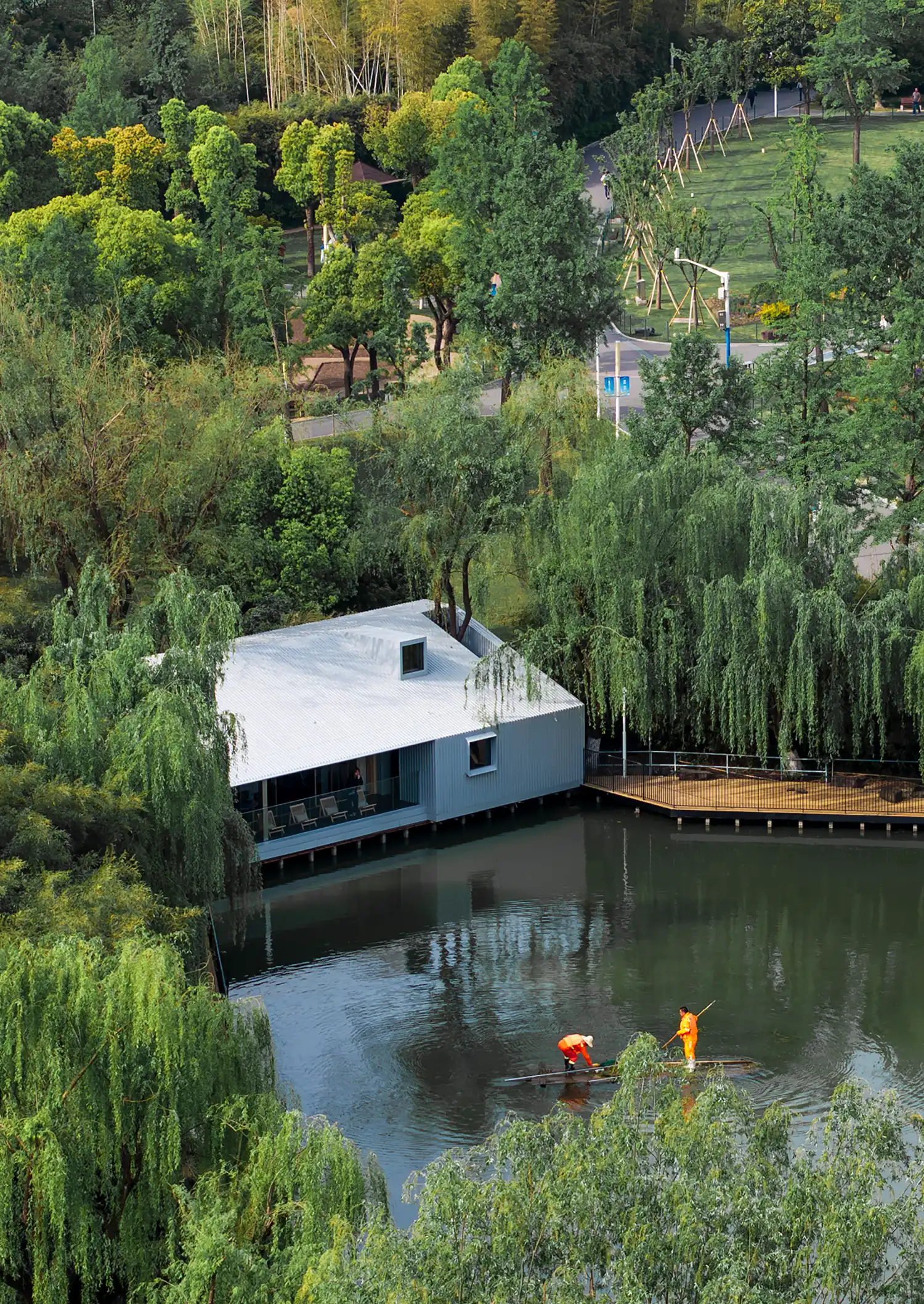
Yu Ting’s response was swift and ingenious. Employing his signature “house within a house” strategy, he enveloped the two preserved structures: one in a protective metal shell acting as the climate boundary, the other in a visually striking ceramic skin. This decision, confirmed via rapid consultation with structural engineer Miao Binhai, allowed the existing buildings to retain their insulation and waterproofing while transforming their appearance. The ceramic panels, with their subtle pearlescence, became a key visual and tactile element.
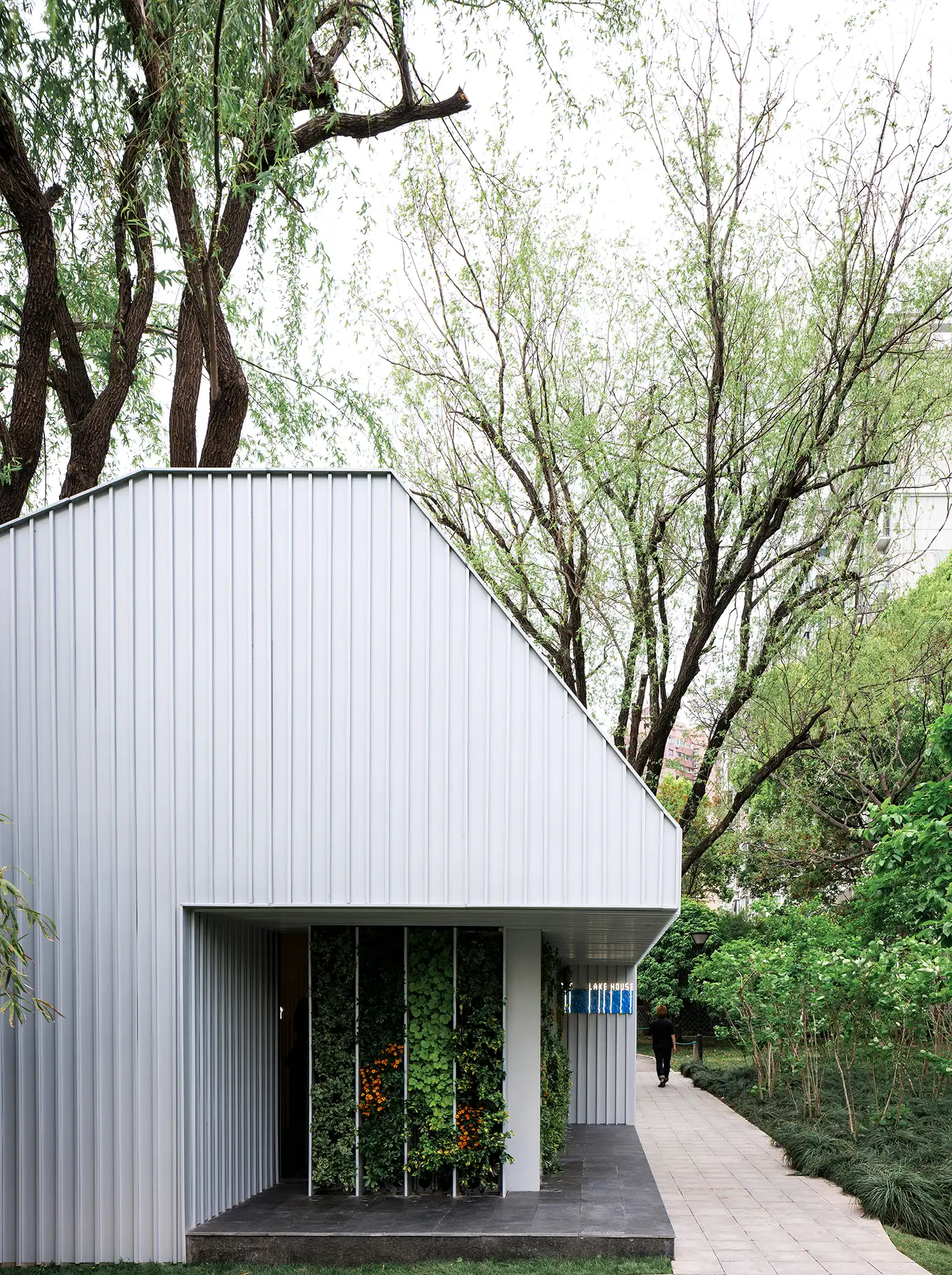
The project’s remarkable delivery within 40 days was anchored by Wutopia Lab’s rigorously executed fast-build design strategy. This approach began with the critical decision to use pre-decided standard materials. By selecting readily available, standardized materials like the client’s specified ceramic curtain wall panels, aluminum plates (chosen over initial aluminum-magnesium-manganese for superior waterproofing control), and various recycled materials, the team eliminated the time-consuming need for custom fabrication, ensuring components could be sourced and deployed rapidly.
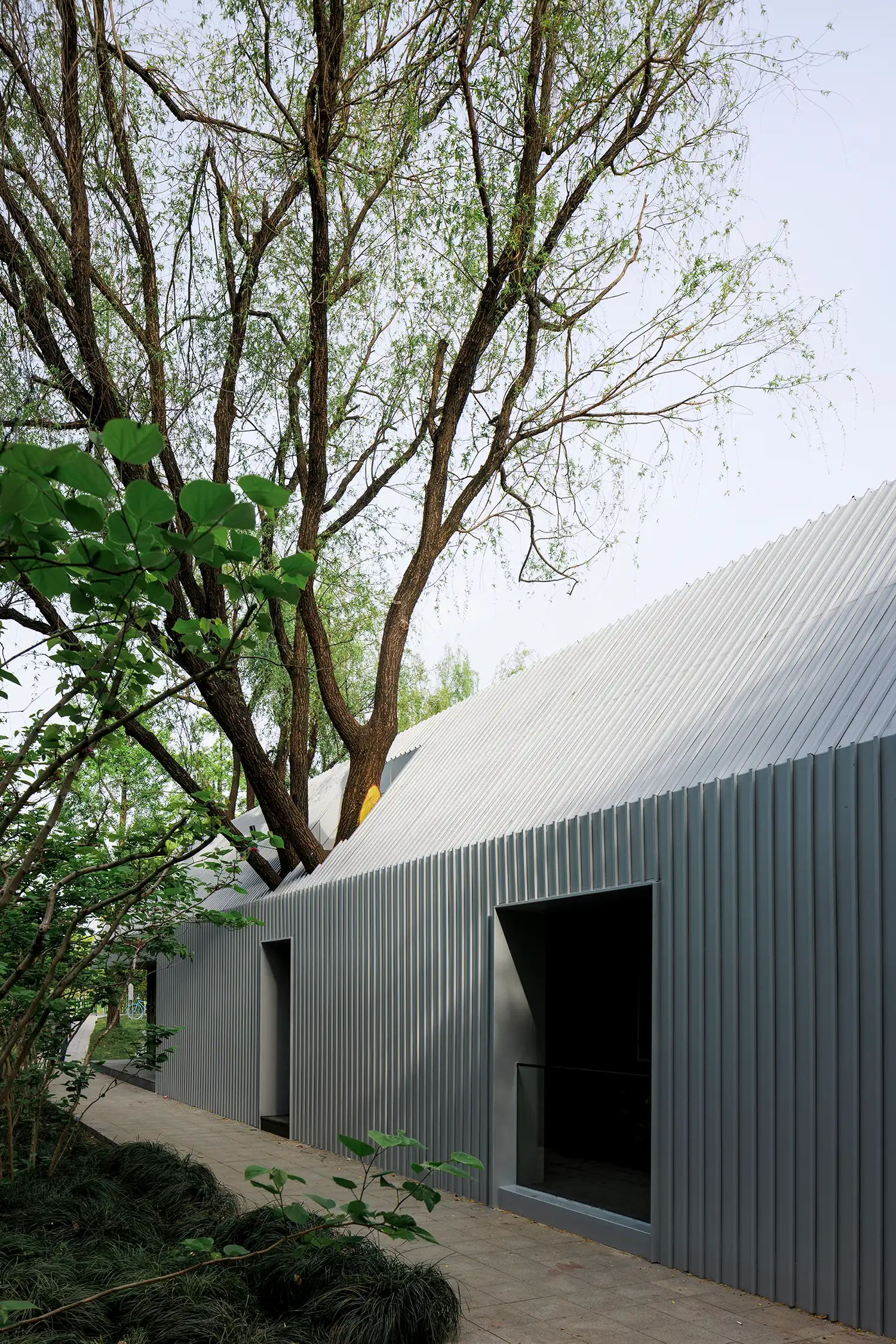
Optimizing the workflow was paramount to achieving the aggressive schedule. Wutopia Lab and structural consultant Miao Binhai focused on maximizing prefabrication while minimizing disruptive on-site wet work. Miao refined the system, specifying remarkably slender 150x150mm steel columns and beams. This innovation created an integrated system where the structure itself merged with the façade, forming a unified skeleton. This single layer efficiently supported the attachment of aluminum panels, vertical greenery, sliding glass partitions, interior walls, and the delicate ceramic skin, achieving both formal unity and material coherence. Furthermore, strategically designed cantilevered foundations addressed the challenging waterfront and sloped terrain, facilitating swift assembly by creating a level base.
True efficiency stemmed from integrating all systems from the project’s inception. Architecture, structure, interior, lighting design, soft furnishings, signage, and curation were developed concurrently, not sequentially. Crucially, this holistic approach allowed for early locking of vital details – like the precise specification of 20x20mm aluminum decorative trims spaced at 100mm intervals. This deep coordination, solidified during a pivotal March 12th meeting involving the client, designers, engineers, and builders, ensured every trade worked in concert around a shared modular system. This methodology not only compressed the timeline but also established a valuable replicable template for future fast-track projects.
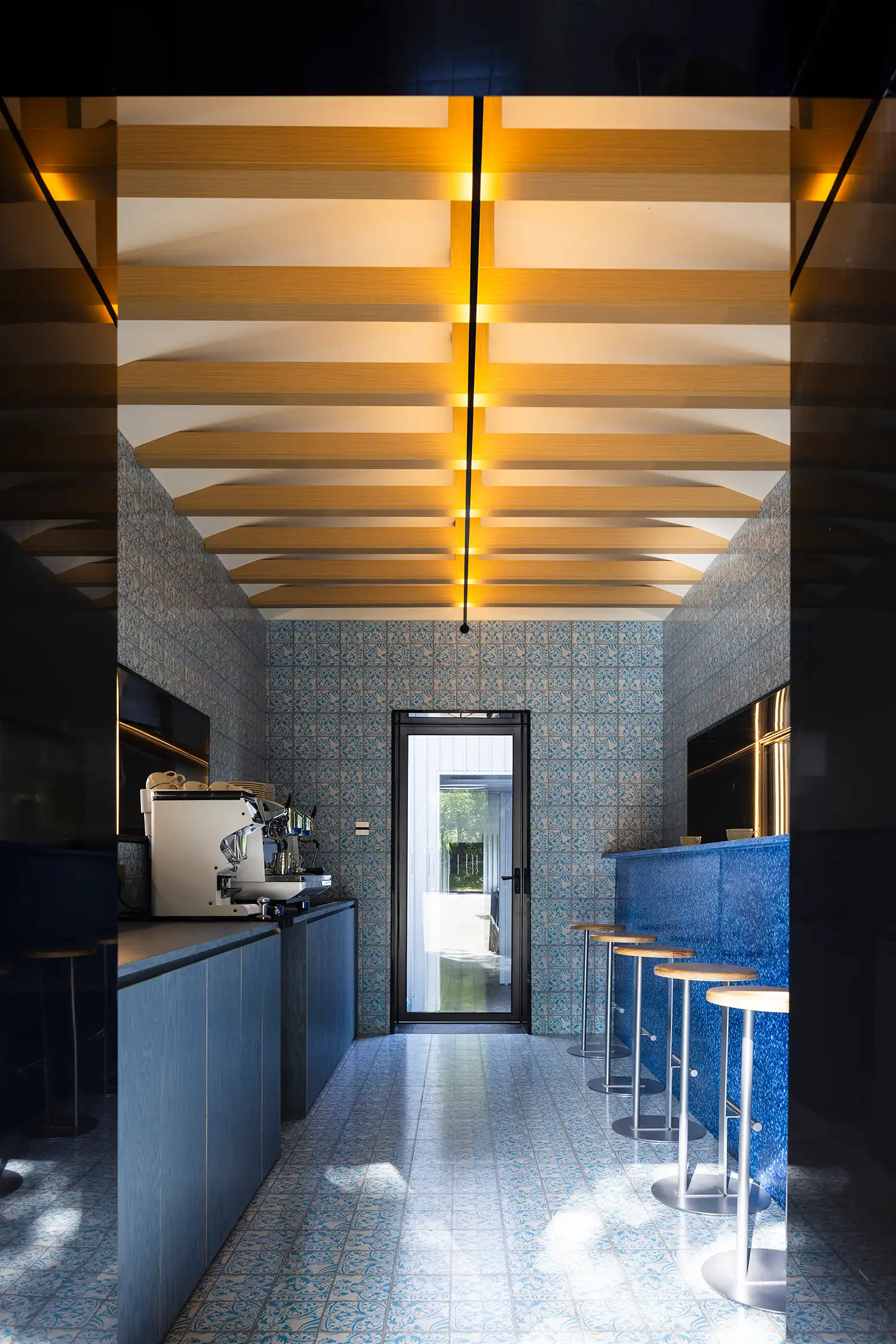
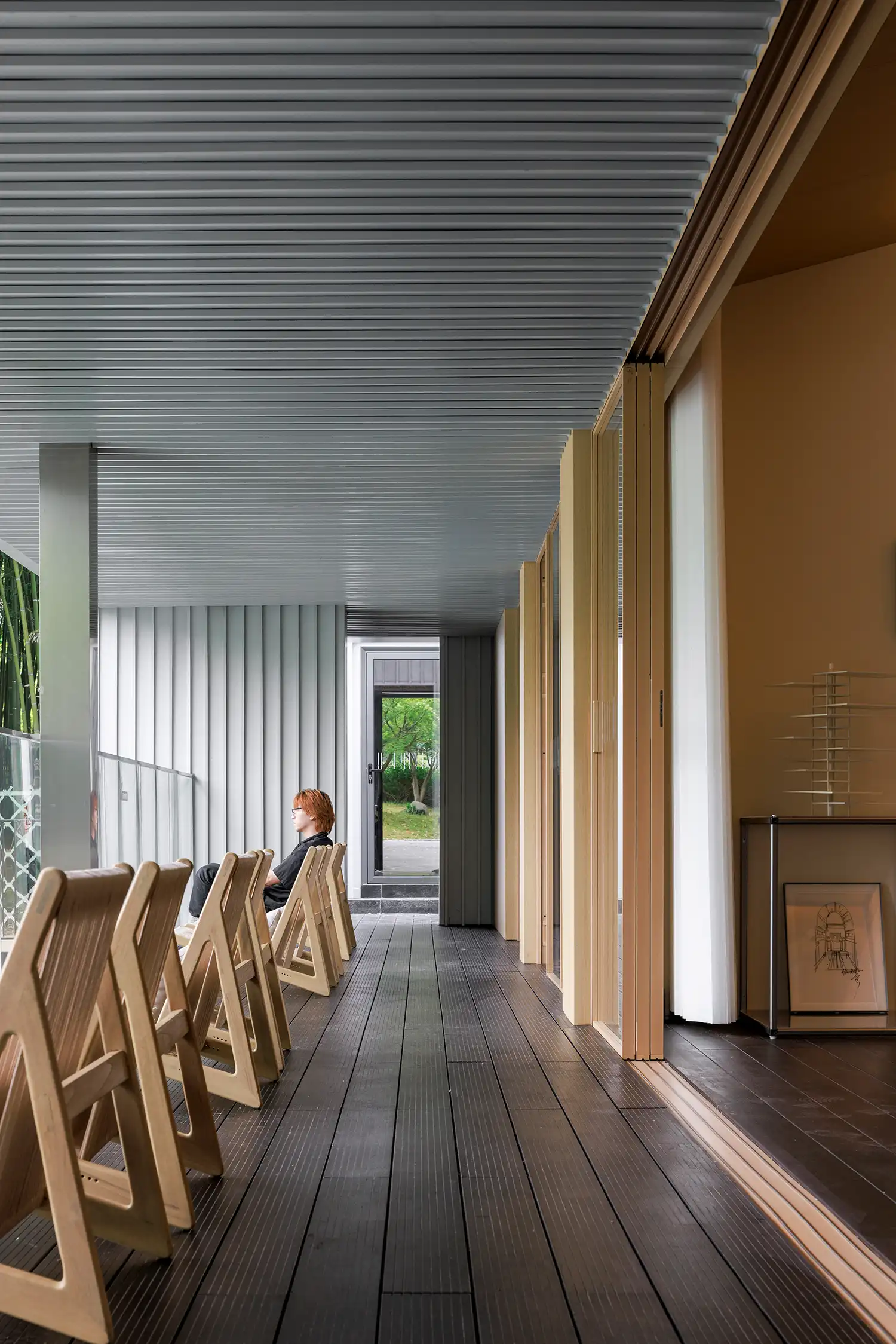
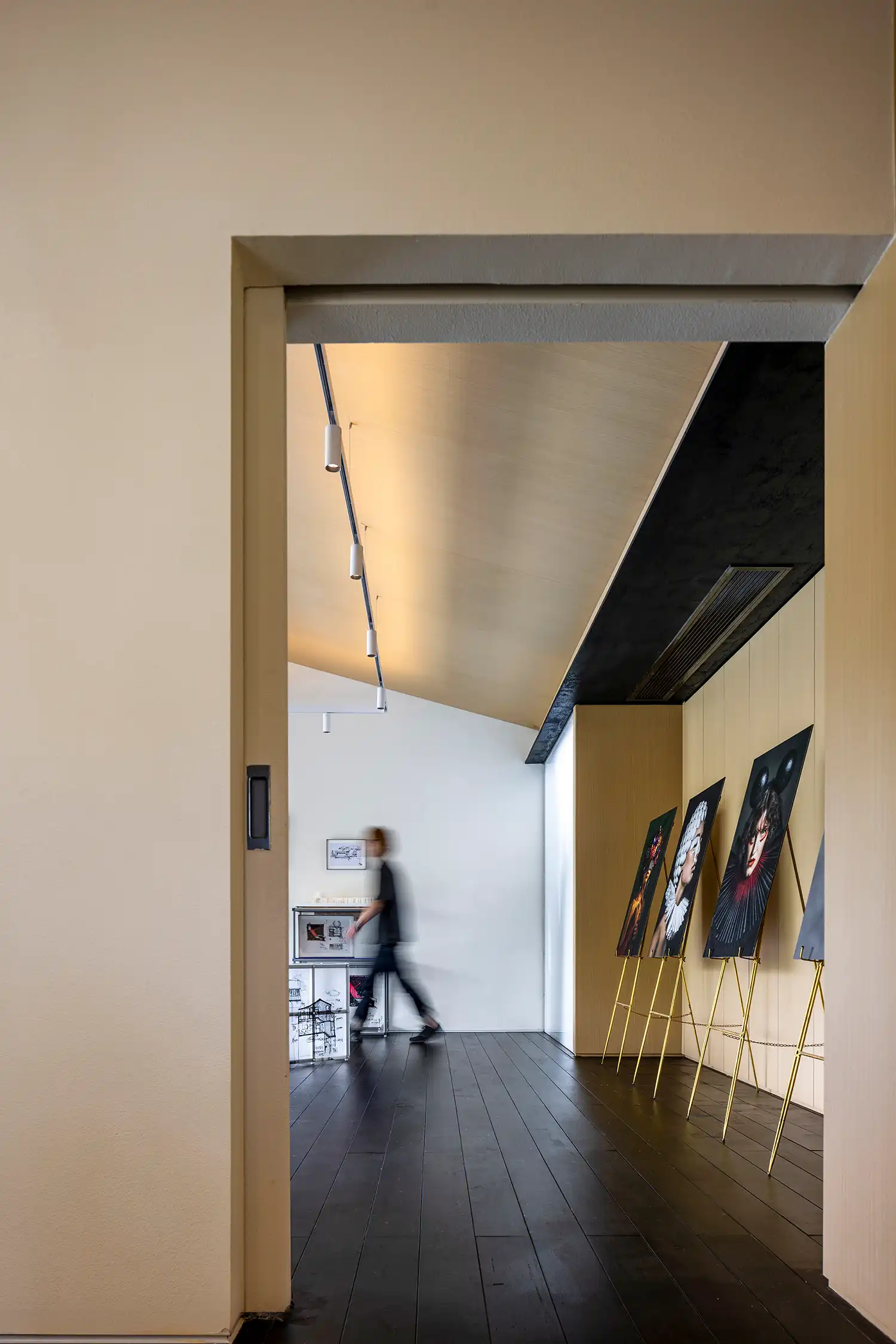
The result is a pavilion that transcends its expedited birth. Yu Ting envisioned a spatial sequence inspired by the horizontal lines of Chinese landscape scrolls and the philosophies of Wright and Mies. Layers of light and shadow orchestrate a journey through preserved trees, vertical greenery, a lobby, exhibition space, three distinct VIP rooms, a willow-draped colonnade, terrace, boardwalk, and café. Boundaries between interior and exterior dissolve; a gentle disorientation invites delightful discovery.
Sustainability is woven intrinsically into the pavilion’s narrative. Beyond preservation, materials tell a story of cherishing resources: recycled ceramic tiles, marine plastic plaster, marine plastic panels, mushroom leather, and carefully harnessed natural light form a tangible “zero-carbon narrative.” “This reflects a core cultural belief: to cherish,” states Yu Ting.
Moments of unexpected poetry emerged: a skylight, initially intended for a forbidden lookout staircase, now evokes old Shanghai “tiger windows” and plays against a neighbouring tree hollow like positive and negative space. On opening day, an elderly passerby lingered, gently touching the pearlescent ceramic wall, smiled, and departed – a silent testament to the project’s emotional resonance.
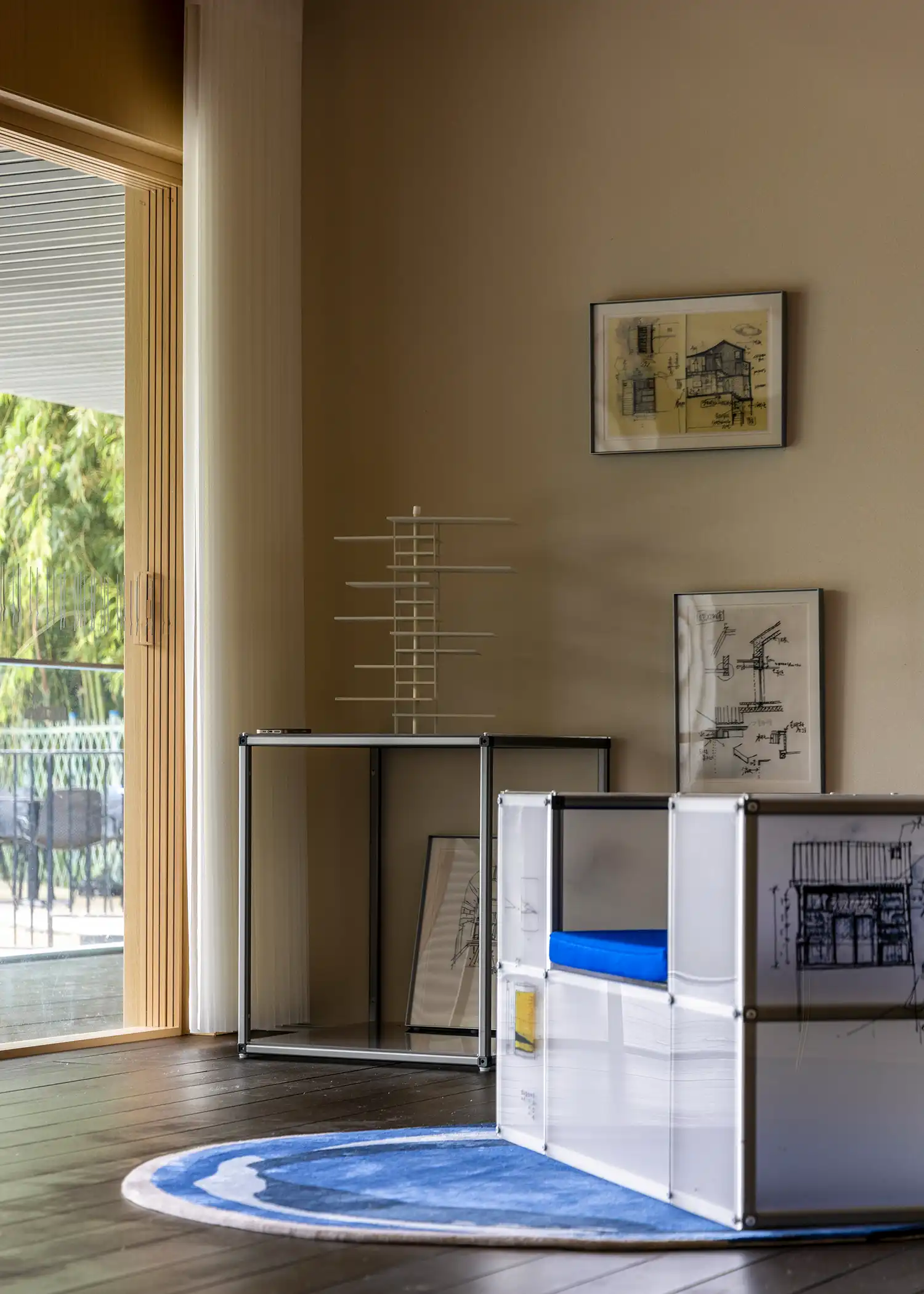
The Lake House is more than form or function; it’s spatial drama. It embodies Wutopia Lab’s conviction that architecture exists to capture fleeting moments where life reveals its beauty – moments of serenity, surprise, or clarity. As their mantra declares: Space is Spirit. This pavilion, a glimmer of light in enchanting green, achieves just that.