



The poetic elevation of the domestic sphere often finds its most profound expression in the spaces we previously ignored. In a residential project in South London, Turner Architects has looked upward, past the familiar pitch of the roofline, to uncover a hidden volume that transcends the traditional loft conversion. Known as SE24, this intervention transforms a dusty storage void into a “room of light,” a quiet architectural gesture that serves as a deliberate pause in the rhythmic life of the home. It is an exploration of how unused volume can be distilled into a refuge for rest and reflection, moving away from the clutter of daily existence toward a more meditative state of inhabitation.
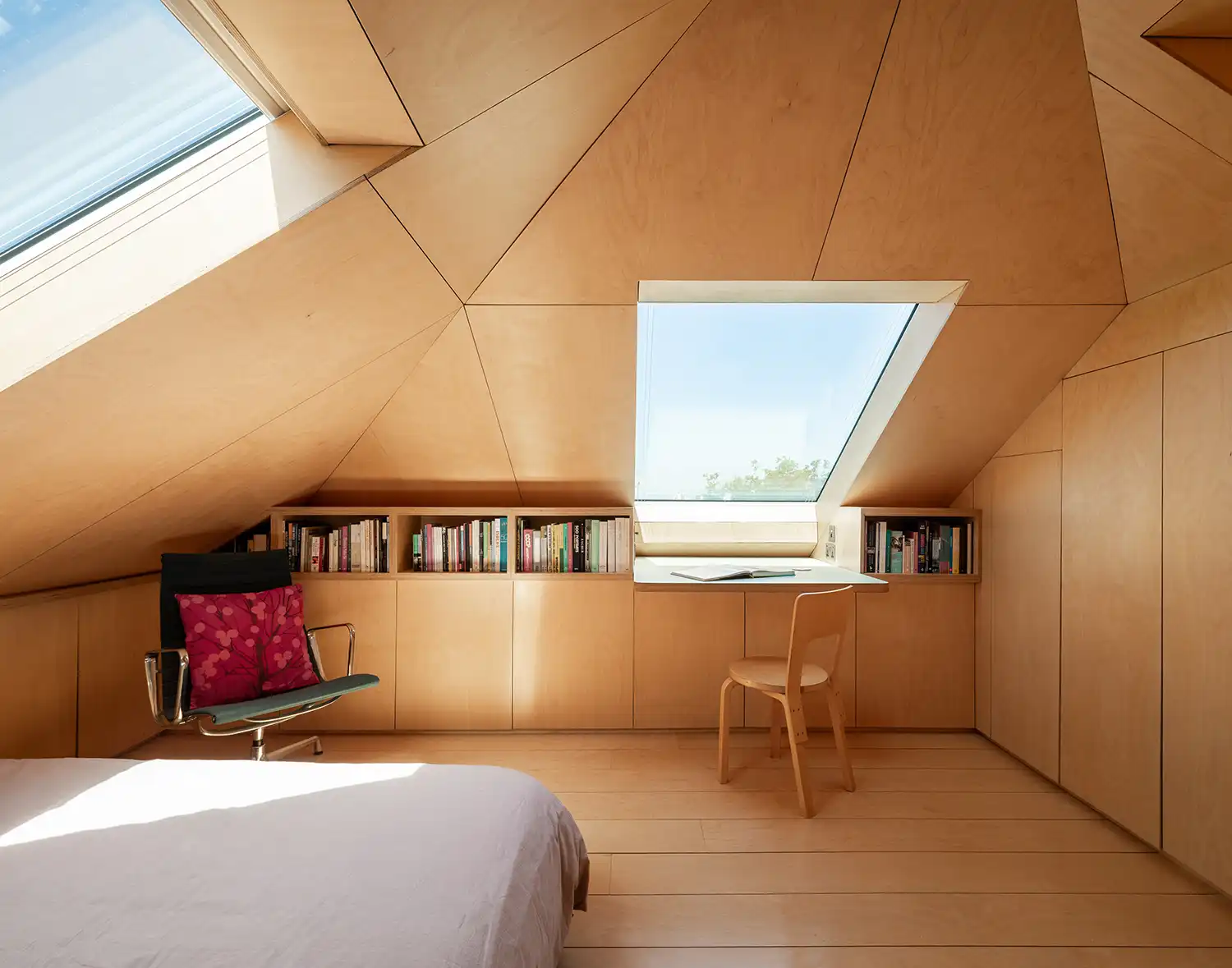
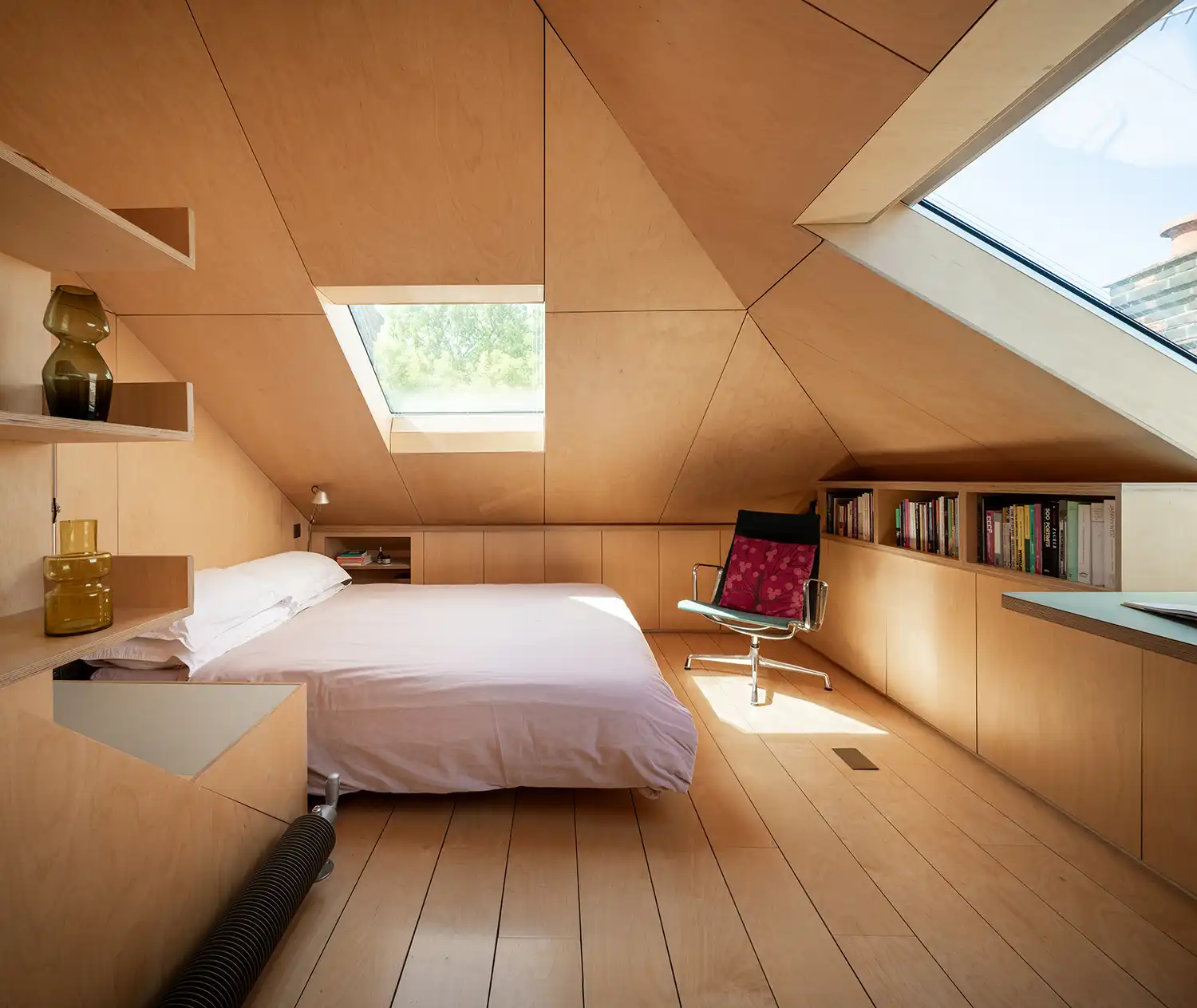
Material honesty and the warmth of birch define the sensory experience of the new interior. Rather than treating the extension as a grafted-on addition, the architects have lined the entire space in birch plywood, a material selected for its tactile quality and honest aesthetic. This timber skin wraps continuously across the walls, ceilings, and integrated joinery, creating a monolithic sense of enclosure. The soft grain patterns and subtle shifts in tone act as a natural canvas for the play of shadows, ensuring the room feels grounded yet ethereal. It is an approach that prioritizes the “sensory experience” over mere ornament, where the smell of wood and the smoothness of the surfaces invite a slower, more intentional pace of living.
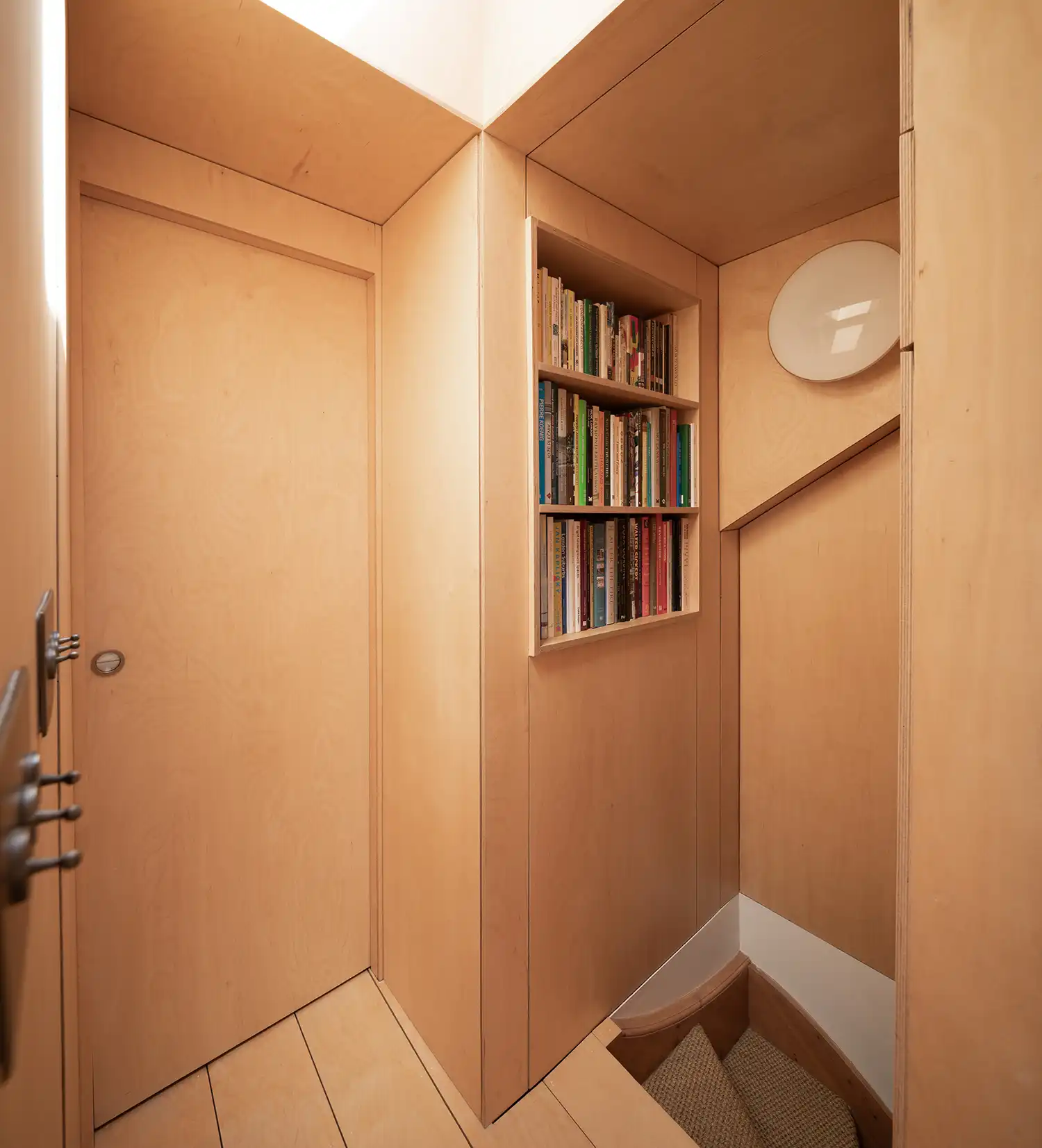
A seamless architectural choreography governs every junction and seam within the room. Simplicity, in this context, is not an absence of detail but a heightened presence of craftsmanship. By resolving every edge with precision, Turner Architects allows the material to flow as a single, uninterrupted breath through the space. This focus on continuity mirrors a broader trend in European urban design, where architects are finding ingenious ways to maximize small, vertical footprints. While this project favors a monochromatic, timber-clad tranquility, other recent interventions, such as when Midori Arquitectura uses vibrant satellites of color to organize a Madrid attic, show how the same “unreachable” volumes can be activated through chromatic intensity and playfulness.
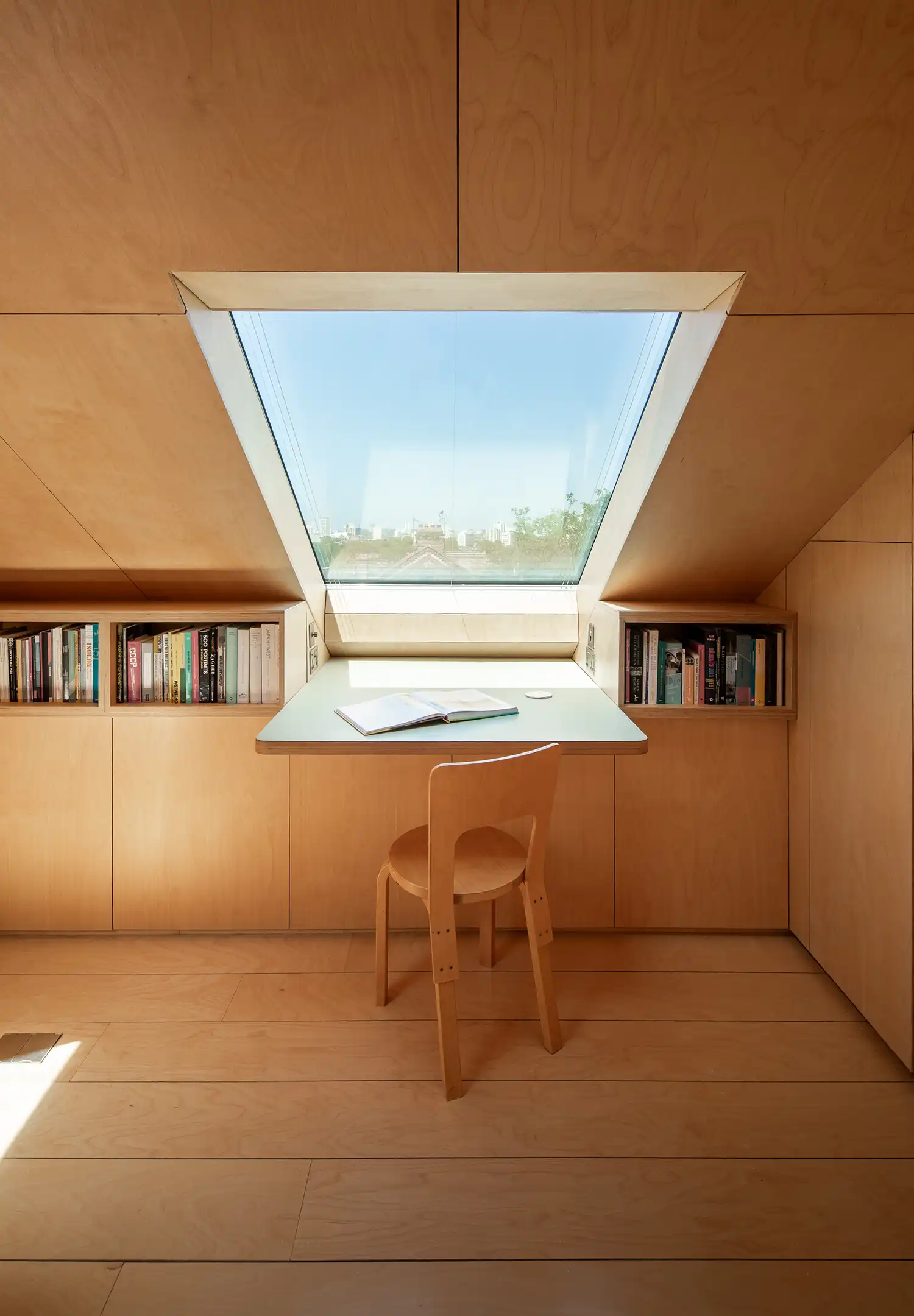
The dual nature of the program allows SE24 to function both as a secluded bedroom and a focused study. In an era where the boundary between professional and private life is increasingly blurred, this attic provides a necessary physical and mental distance. The geometry of the roof light and windows is carefully calibrated to frame specific views of the London skyline, pulling the city into the room while maintaining a rigorous sense of privacy. The light is never harsh; it is diffused by the plywood surfaces, softening the sharp angles of the rafters and shifting in character from the cool blues of dawn to the golden warmth of the late afternoon.
Contextualizing the vertical living trend requires looking at how different cities respond to the need for space. In Spain, for example, the transformation of upper-level units often takes a more structural and transformative approach; we see this in the way Gon Architects renovated Casa Flix in Madrid, using bold partitions and flexible layouts to redefine the attic experience. While SE24 opts for a more reductive, monastic atmosphere, both projects share a commitment to the idea that the top floor of a building should be its most soulful, offering a perspective that the street-level floors simply cannot provide.
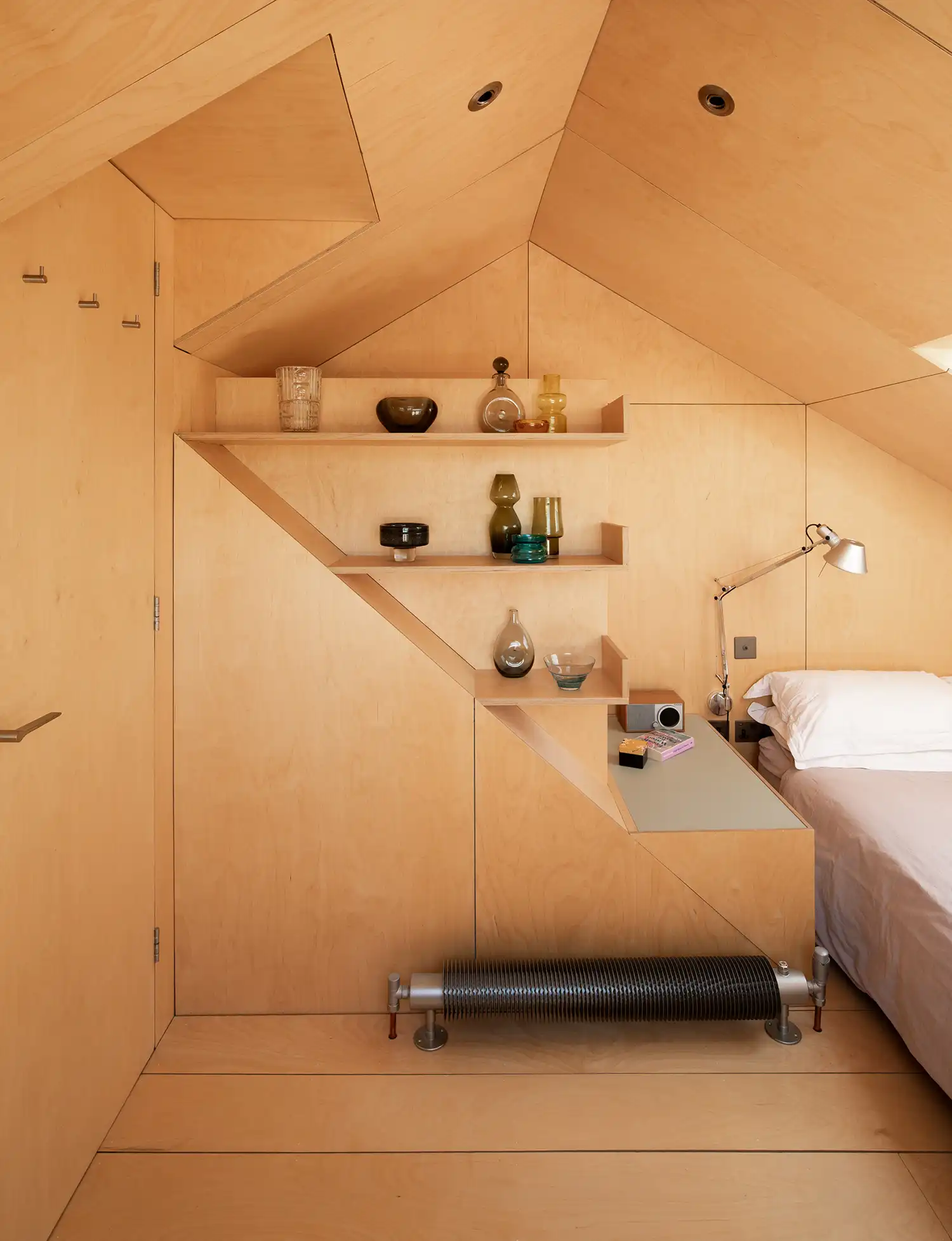
A legacy of quiet inhabitation is the true result of this intervention. Turner Architects has not merely delivered a functional shell, but a room attuned to the nuances of human emotion. By harmonizing material, light, and proportion, the project demonstrates that the most impactful design often comes from the quietest interventions. It is a testament to the power of the “extraordinary ordinary”—a reminder that beauty is often waiting to be uncovered within the existing bones of our homes, provided we have the vision to look up and the restraint to let the materials speak for themselves.