


A landscape defined by structural silence. In the lush periphery of a protected forest within Gyeonggi-do, South Korea, Chilean studio Pezo von Ellrichshausen has built a structure that blurs the line between functional architecture and archaic land art. Known officially as Überhaus, but referred to by the architects as REST, the project serves as a restaurant and observation point for Les Jardins de Médongaule. It is a “mute monument,” a dense concrete infrastructure that refuses to compete with the botanical surroundings, choosing instead to act as a stoic mediator between the cultivated gardens and the wild, vertical energy of the neighboring woods.
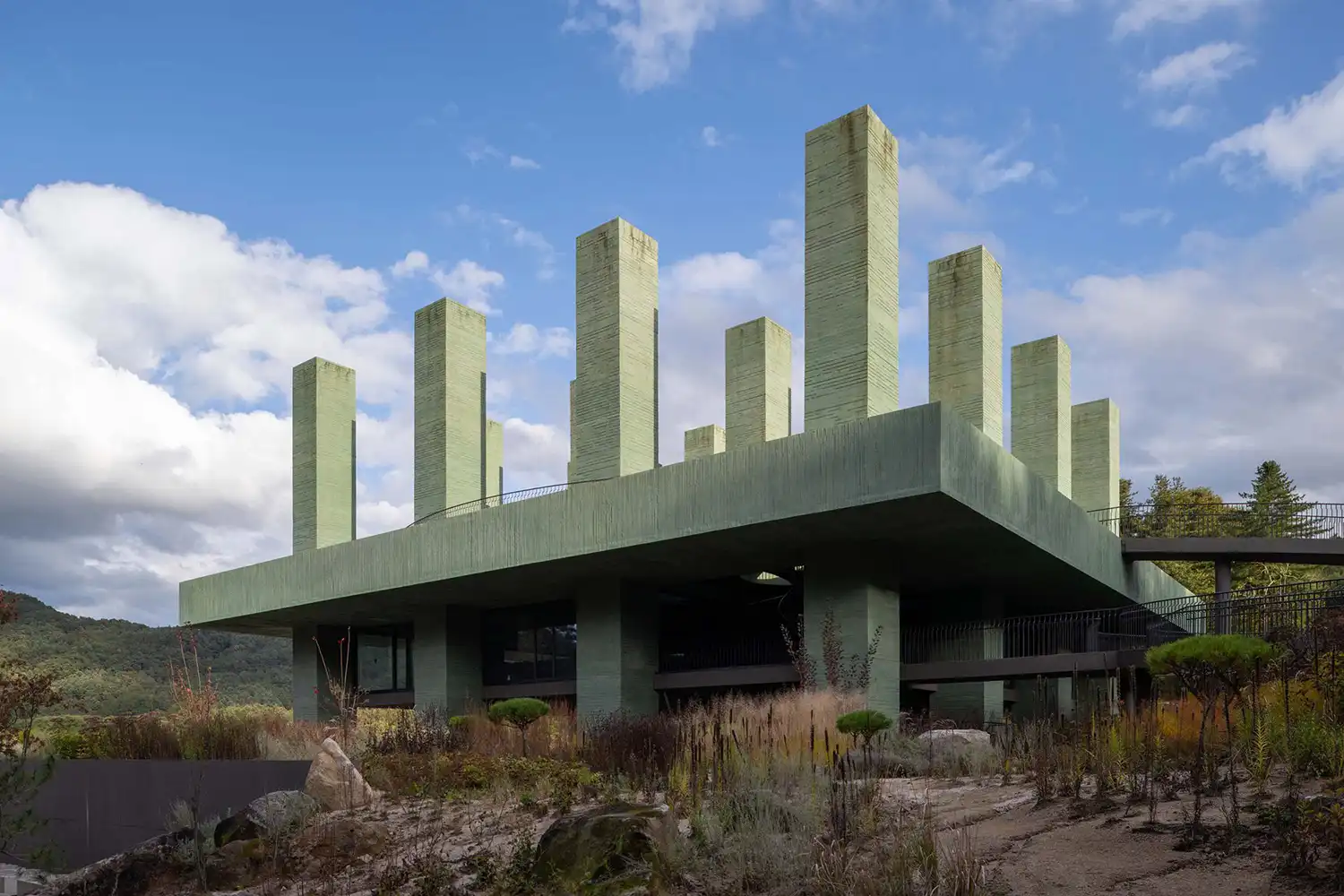
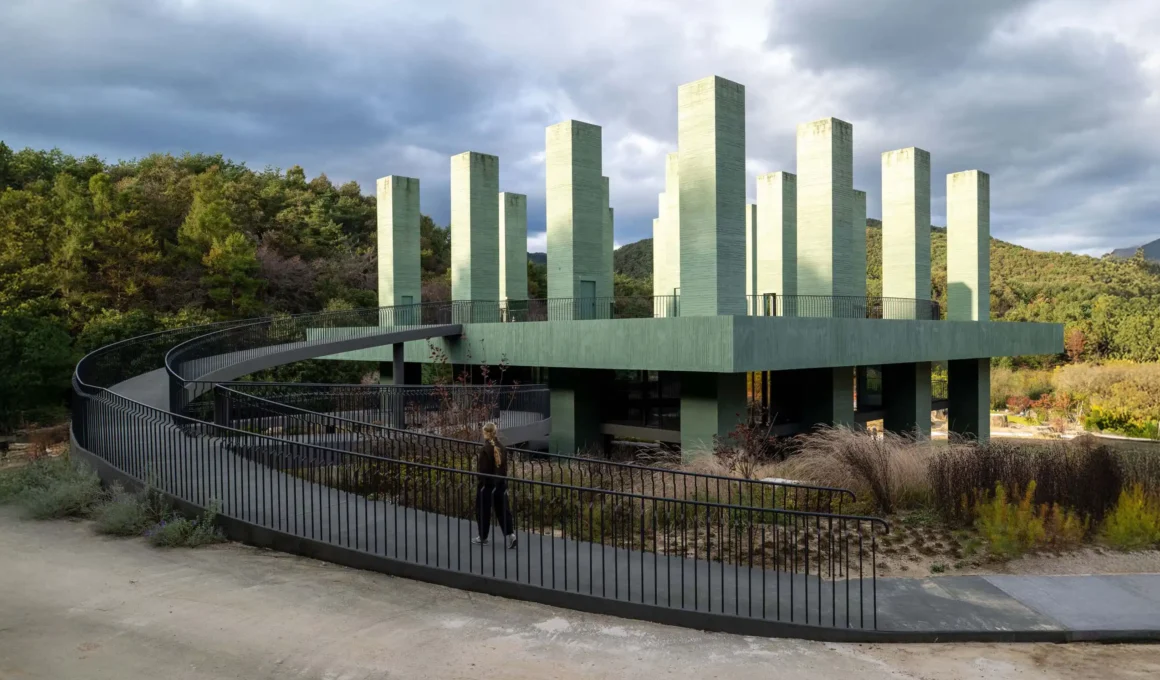
The architecture of inhabitable mass. The project’s formal logic is dictated by a rigid grid of sixteen monumental columns, each rising ten meters into the canopy. These are not merely supports; they are “inhabitable elements,” two-meter-thick square volumes that house the building’s essential services, from elevators to storage and restrooms. By hollowing out the structural mass, the architects have managed to keep the primary social spaces spatially abstract. This technical sleight of hand is furthered by burying the specialized kitchen entirely underground beneath a stepped plaza, liberating the upper levels from the typical clutter of hospitality and allowing the architecture to remain a pure exercise in volume and light.
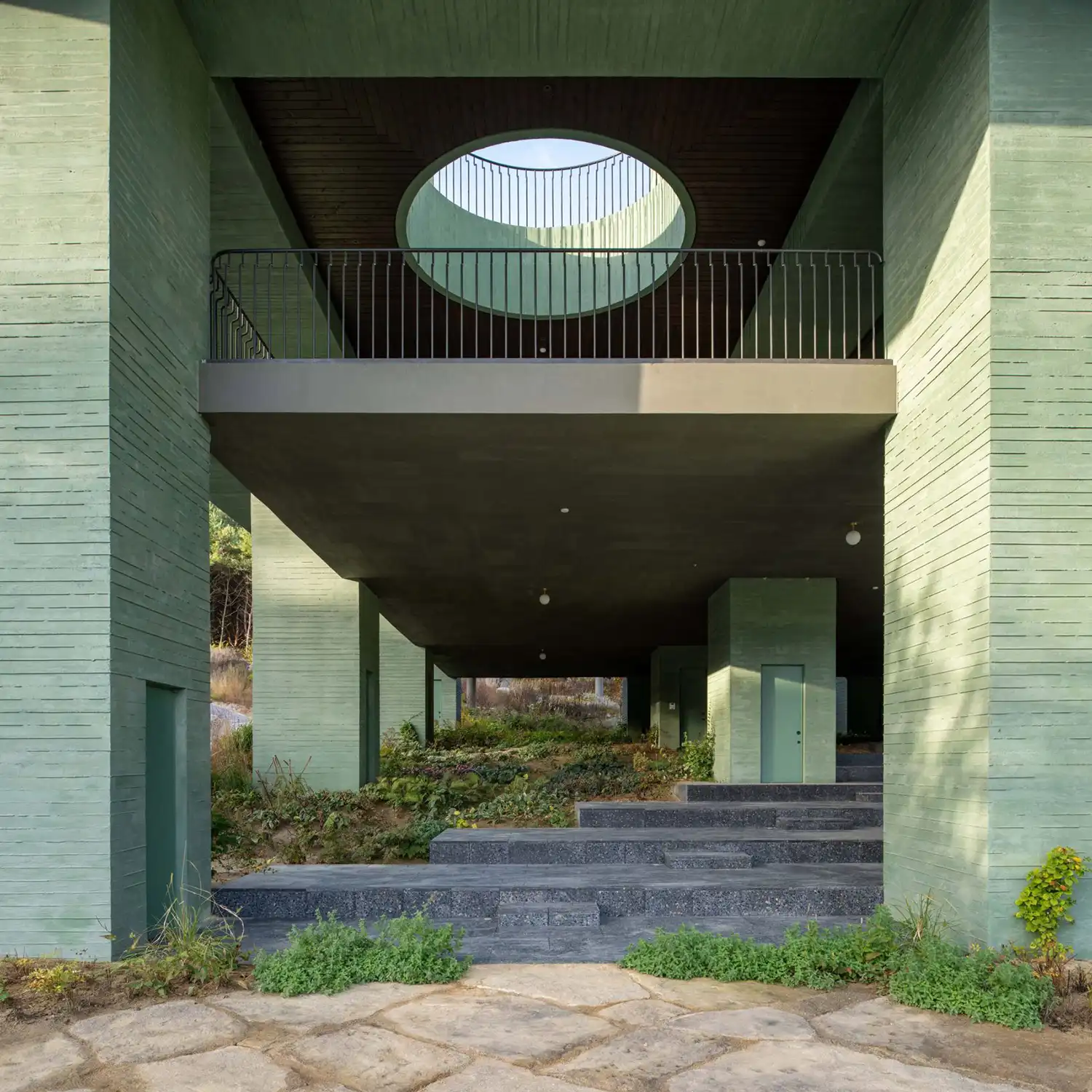
Materiality and the soft green patina. To harmonize with the verdant backdrop of South Korea’s Gyeonggi Province, the architects departed from their signature pink and yellow hues, opting instead for a soft green tint achieved through silicate pigments in the reinforced concrete. This choice creates a tonal bridge to the forest, while the interior palette introduces a tactile, human-centric warmth. Dark oak clads the ceilings and lines deep circular skylights, while terrazzo paving underfoot provides a cool, durable surface. These elements, framed by bronze-toned aluminum glass walls, ensure that despite its monumental scale, the restaurant offers a grounded, intimate sensory experience for its 100 guests.
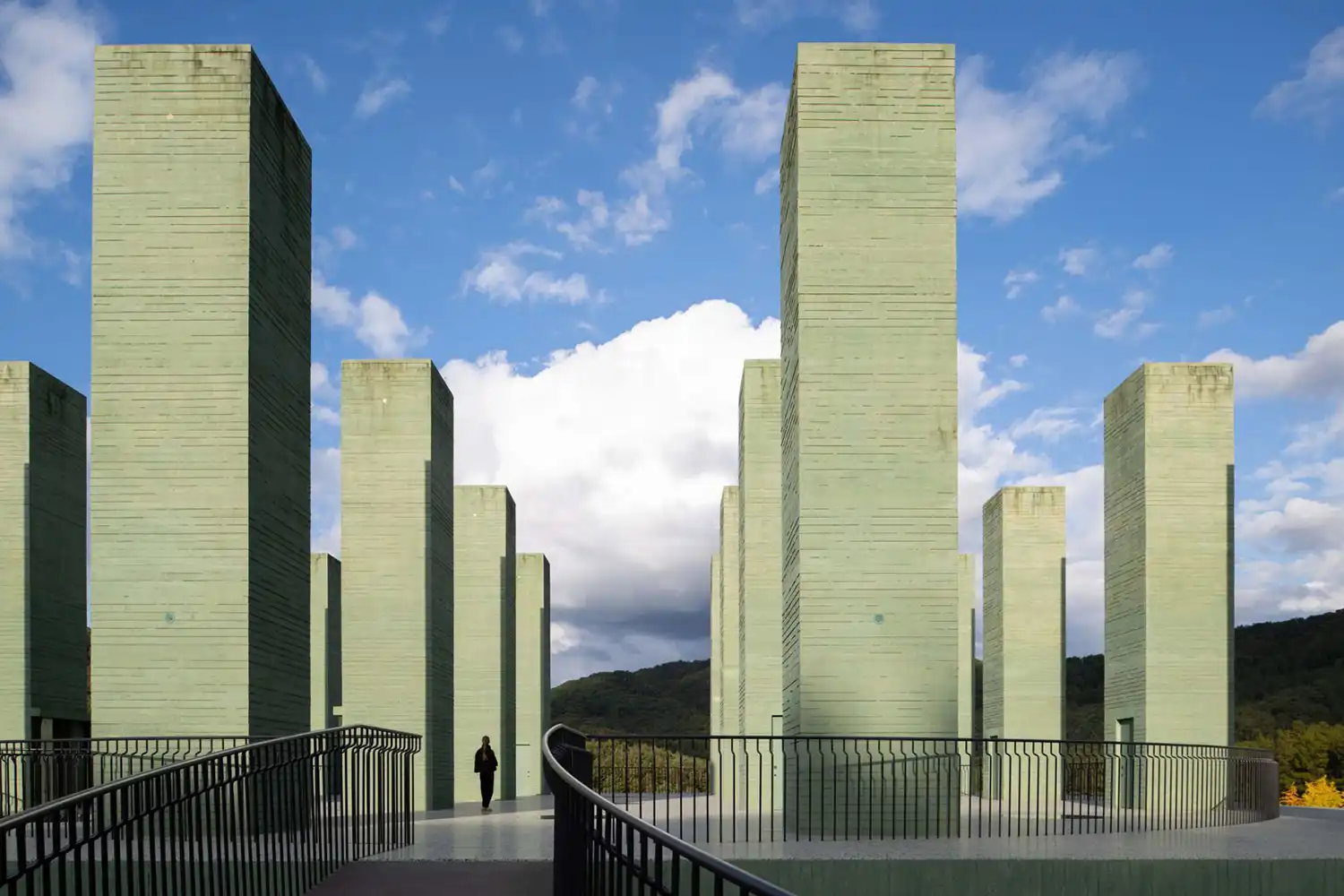
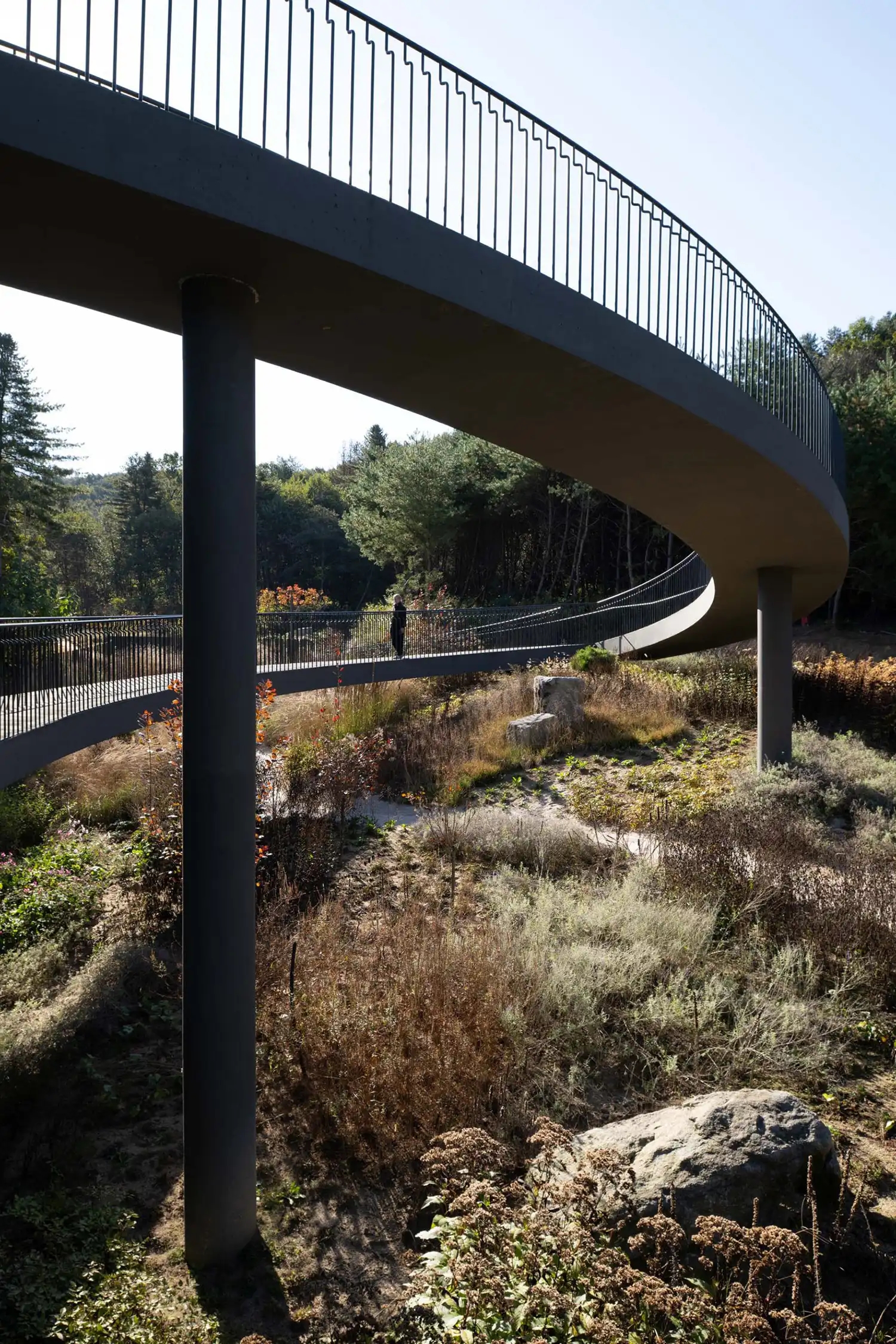
A vertical journey through three strata. The internal organization of REST follows the natural slope of the site, divided into three distinct strata that dictate the flow of movement. The lowest level forms a covered amphitheater, drawing activity toward the valley floor. Above it, the main dining salon is suspended under a thick horizontal slab, defined by a diagonal symmetry of open corner terraces. The journey concludes on the uppermost level—a non-directional roof platform where the free-standing, obelisk-like columns frame panoramic views of the Medongaule botanical garden. Access to these levels is an architectural event in itself, with circular ramped bridges spiraling up from the landscape to meet the concrete monolith.
The restaurant as an immersive artistic ritual. This project arrives at a time when hospitality design is shifting toward the creation of total environments—places where the act of dining is inseparable from the architectural narrative. We have seen this evolution in the cinematic, highly curated atmosphere of the Atelier 130 Wes Anderson-inspired diner in Beirut, and in the fluid, organic landscape integration of the DL Atelier Dancing Mountain in Wuhan. Even the raw, uncompromising geometries of the brutalist restaurant by Renesa in New Delhi suggest a growing desire for spaces that challenge the occupant. REST contributes to this global dialogue by offering a deliberate vacancy—a framework where the “X factor” of the experience is filled by the movement of light, shadow, and human interaction.
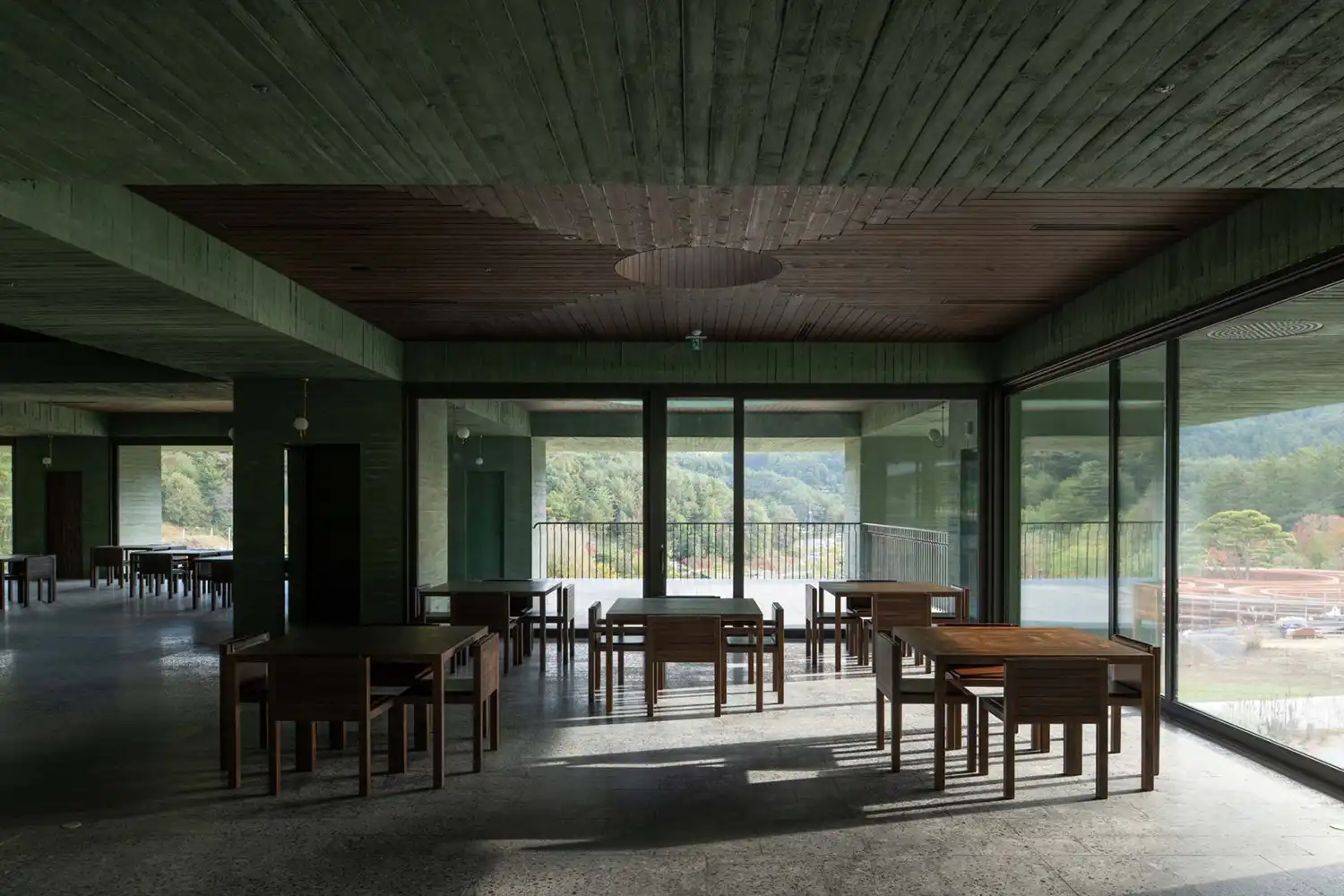
A framework for evolving social assemblies. By keeping the columns formally inexpressive and the plan open, Pezo von Ellrichshausen has created a space that resists a single, fixed identity. The architects suggest that these massive pillars can become supports for garlands, candles, or canopies, allowing the building to adapt from a quiet rest stop to a site for monumental celebrations. It is this balance of permanence and flexibility that gives the project its power. In the heart of Gyeonggi-do, REST stands as a testament to the idea that architecture, when stripped of excess, can provide a more profound connection to the “native feeling” of the land it occupies.