


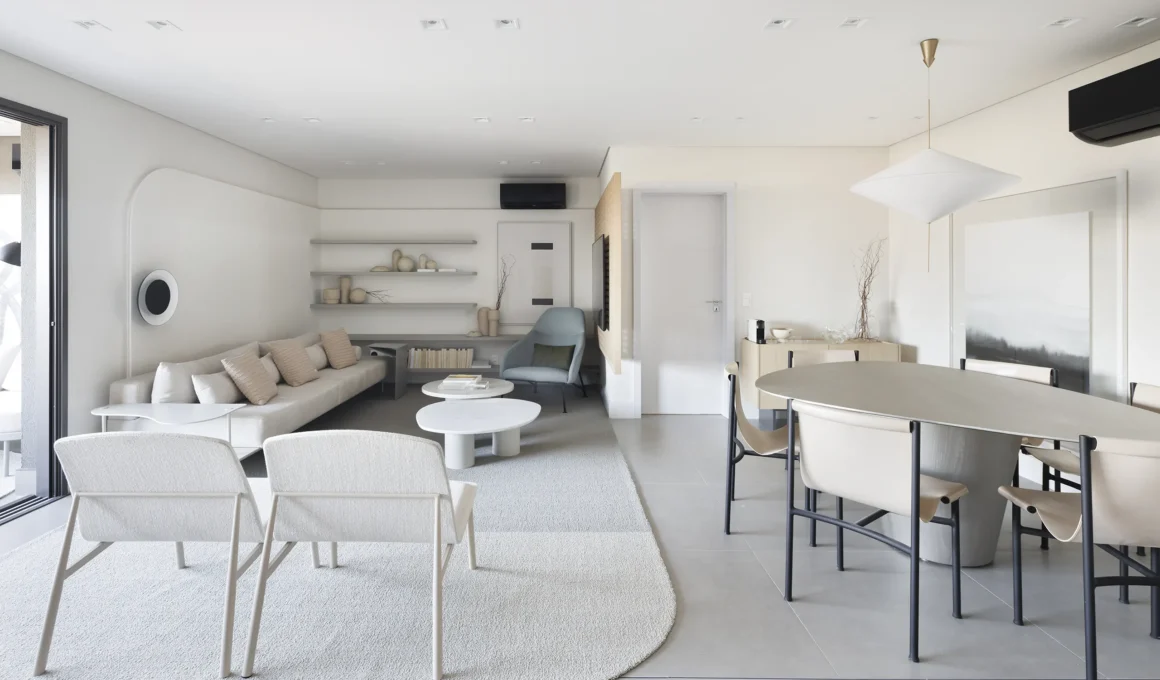
A conceptual vision of domestic quietude defines the essence of Apartamento Evidence, a 161-square-meter residence in Maringá, Brazil. Designed by Bohrer Arquitetos, the project transcends the traditional functionalism of a family home, treating the interior as a sensitive support for everyday life. By leaning into a neutral color palette and organic forms, the architects have curated an environment that prioritizes psychological well-being and sensory perception. It is a space where the frantic pace of the outside world is filtered through a lens of soft minimalism, allowing the inhabitant to engage in a more contemplative relationship with their surroundings.
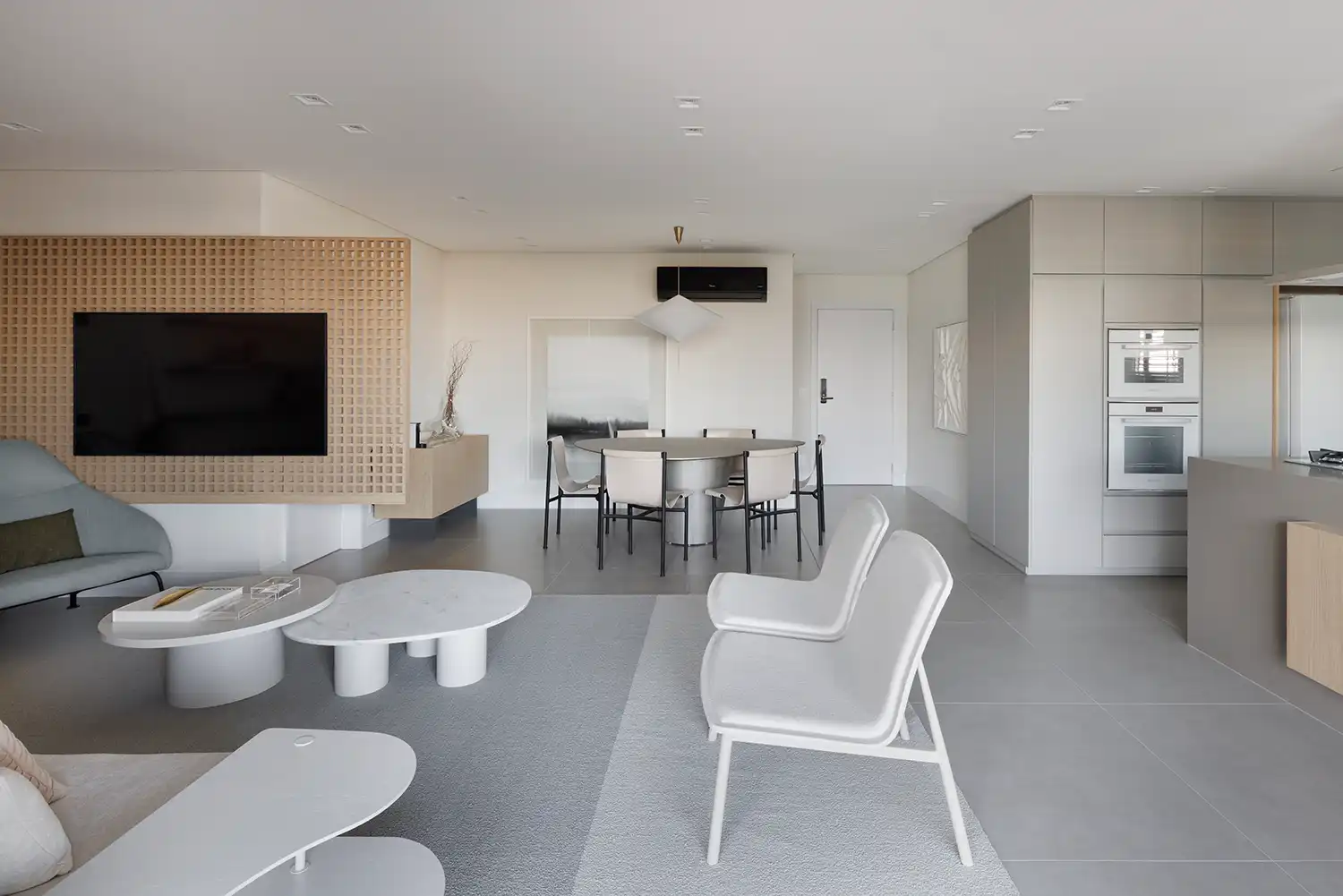
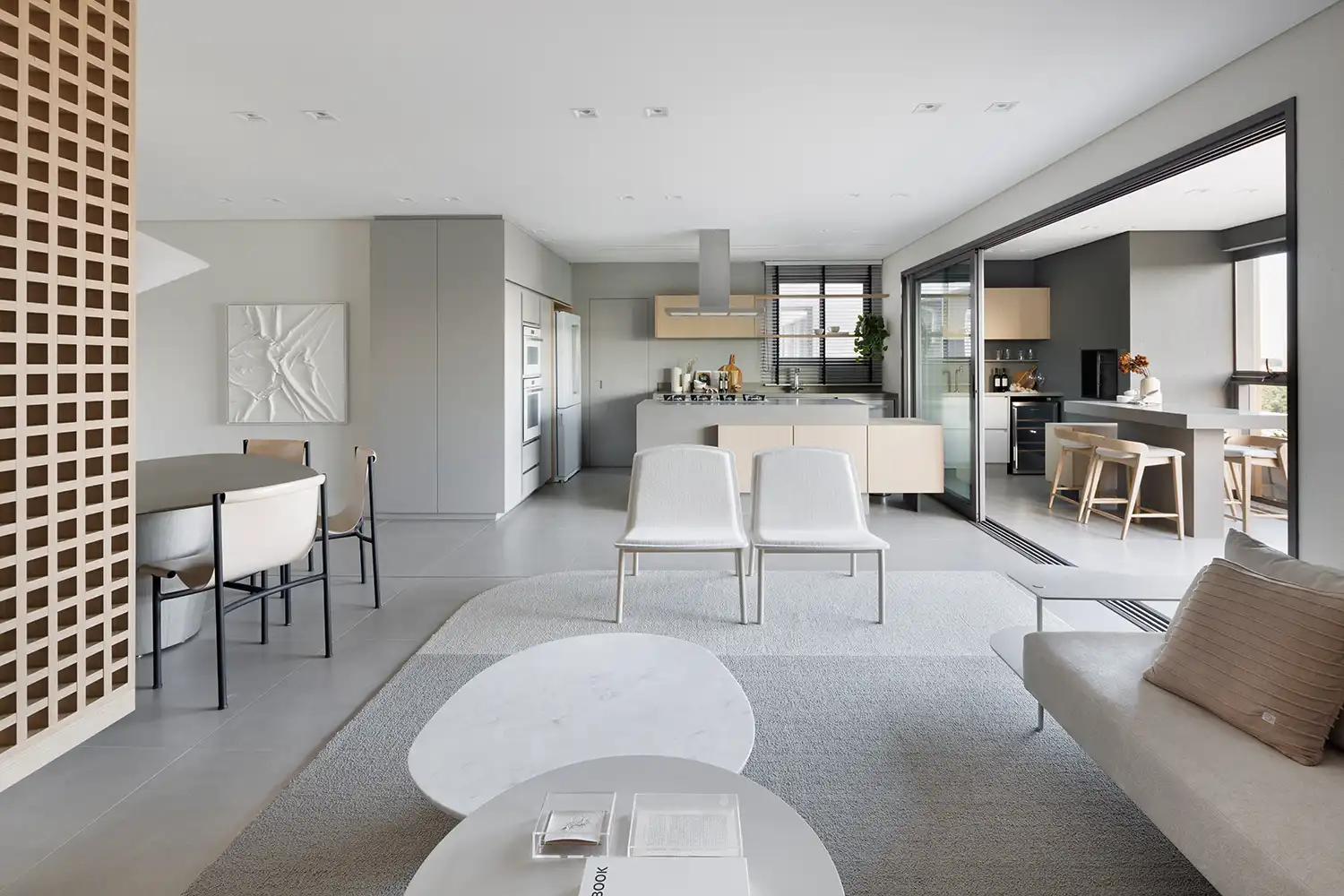
Spatial fluidity and rhythmic transitions govern the layout of the social areas, where the boundaries between the living room, dining area, and kitchen are intentionally blurred. This sense of continuity is reinforced by a series of light wood panels and linear shelving that wrap around the perimeter, acting as a unifying architectural skin. This approach to open-plan living echoes the sophisticated spatial logic found in other contemporary Brazilian interiors, such as the AC Apartment in São Paulo, where a seamless integration of volumes creates a sense of boundless domesticity. In Apartamento Evidence, the furniture selection—characterized by sculptural coffee tables and light, low-slung seating—further enhances this visual flow, ensuring that no single element obstructs the eye as it moves across the room.
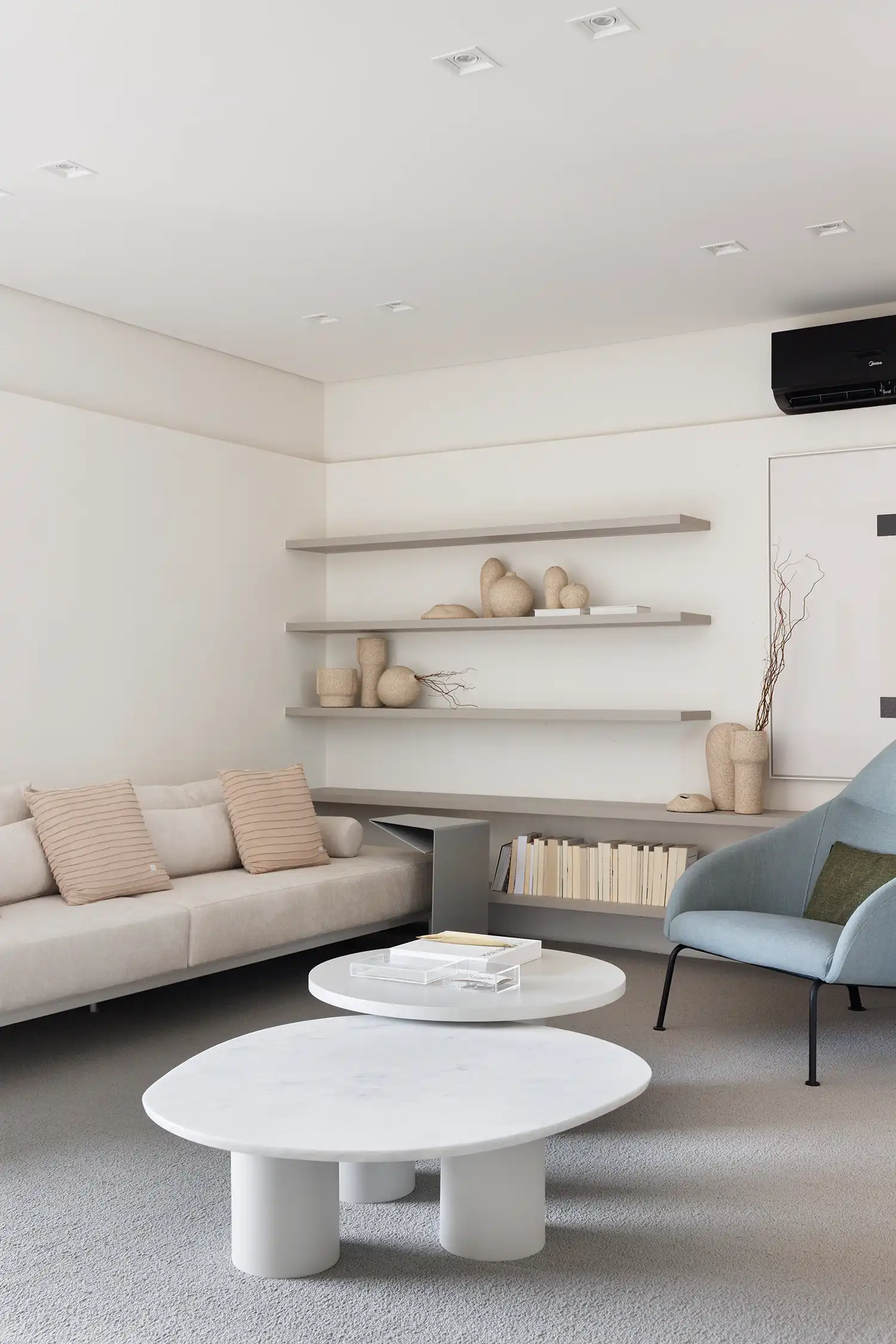
Tactile materiality and Brazilian identity elevate the aesthetic beyond the familiar tropes of Scandinavian minimalism. While the chromatic foundation relies on shades of sand, light gray, and white, the atmosphere is warmed by a distinctly local soul. Handcrafted ceramics and relief artworks with organic motifs introduce a layer of human touch, grounding the ethereal lightness of the architecture. The choice of materials behaves as a mediator; the coolness of the stone surfaces is balanced by the grain of the wood and the softness of the textiles. This balance of textures is a hallmark of high-end Brazilian residential architecture, often seen in renovated São Paulo apartments that seek to harmonize rationalist layouts with the warmth of natural elements.
The residential gallery concept emerges through a disciplined logic of “the pause.” Rather than filling every corner with decorative objects, Bohrer Arquitetos utilizes open niches and sparsely populated shelves to create moments of visual silence. This affective minimalism is not about emptiness, but about intention; it is an invitation to value the essential. Indirect lighting schemes further emphasize this atmospheric quality, casting soft shadows that highlight the textures of the walls and the curves of the furniture. The result is an environment that feels curated yet unpretentious—a home that functions as a backdrop for the art of living rather than a showcase of possessions.
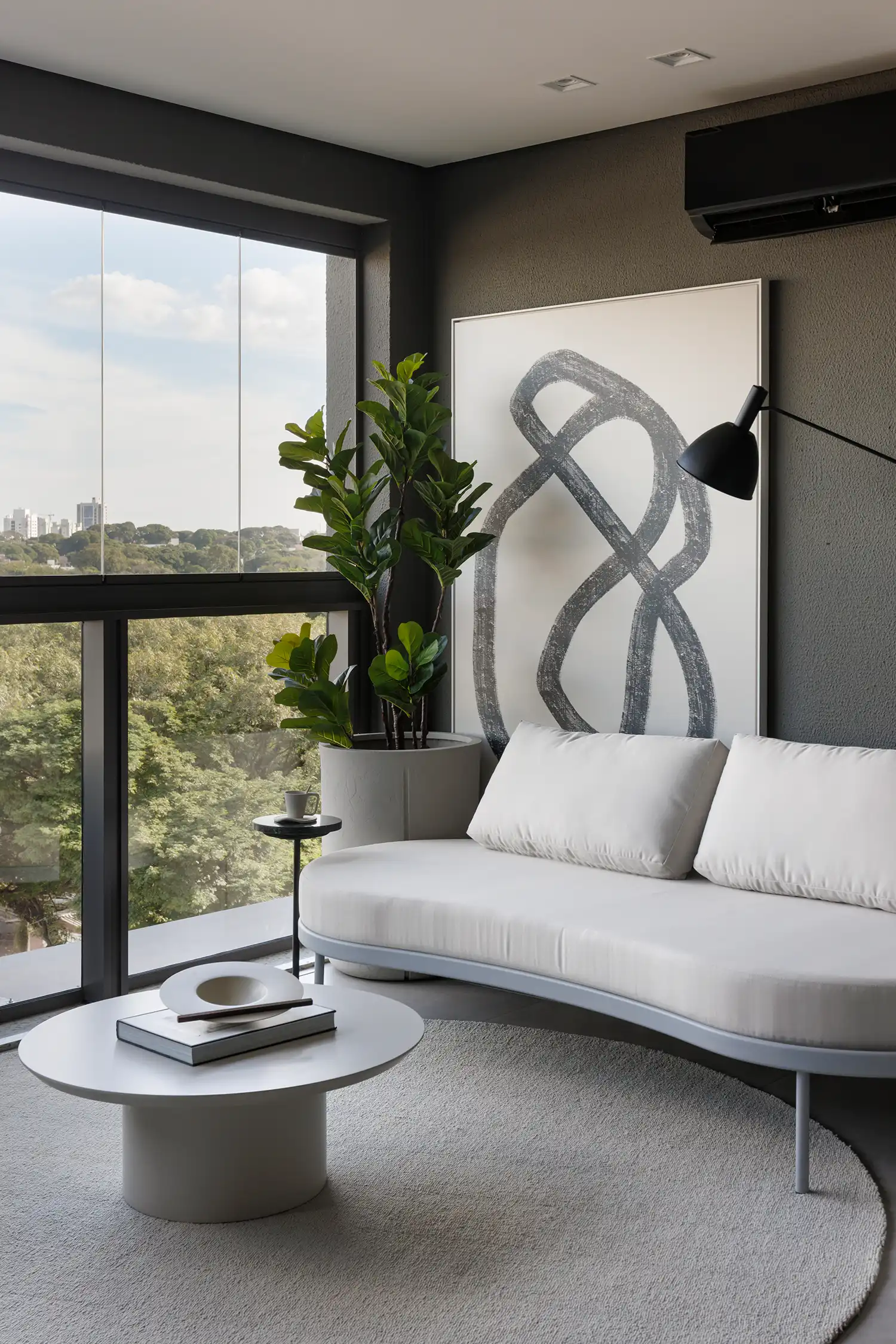
An extension of the interior horizon, the balcony serves as a vital bridge between the built environment and the natural world. By maintaining the same compositional rigor and material palette as the indoor living spaces, the architects achieve a rare sense of cohesion. The presence of lush greenery and organically shaped outdoor furniture dissolves the threshold between inside and out, inviting the natural light of Paraná to become an active participant in the home’s narrative. This transition is not merely physical but emotional, offering a transitional zone that facilitates a gradual reconnection with the exterior environment.
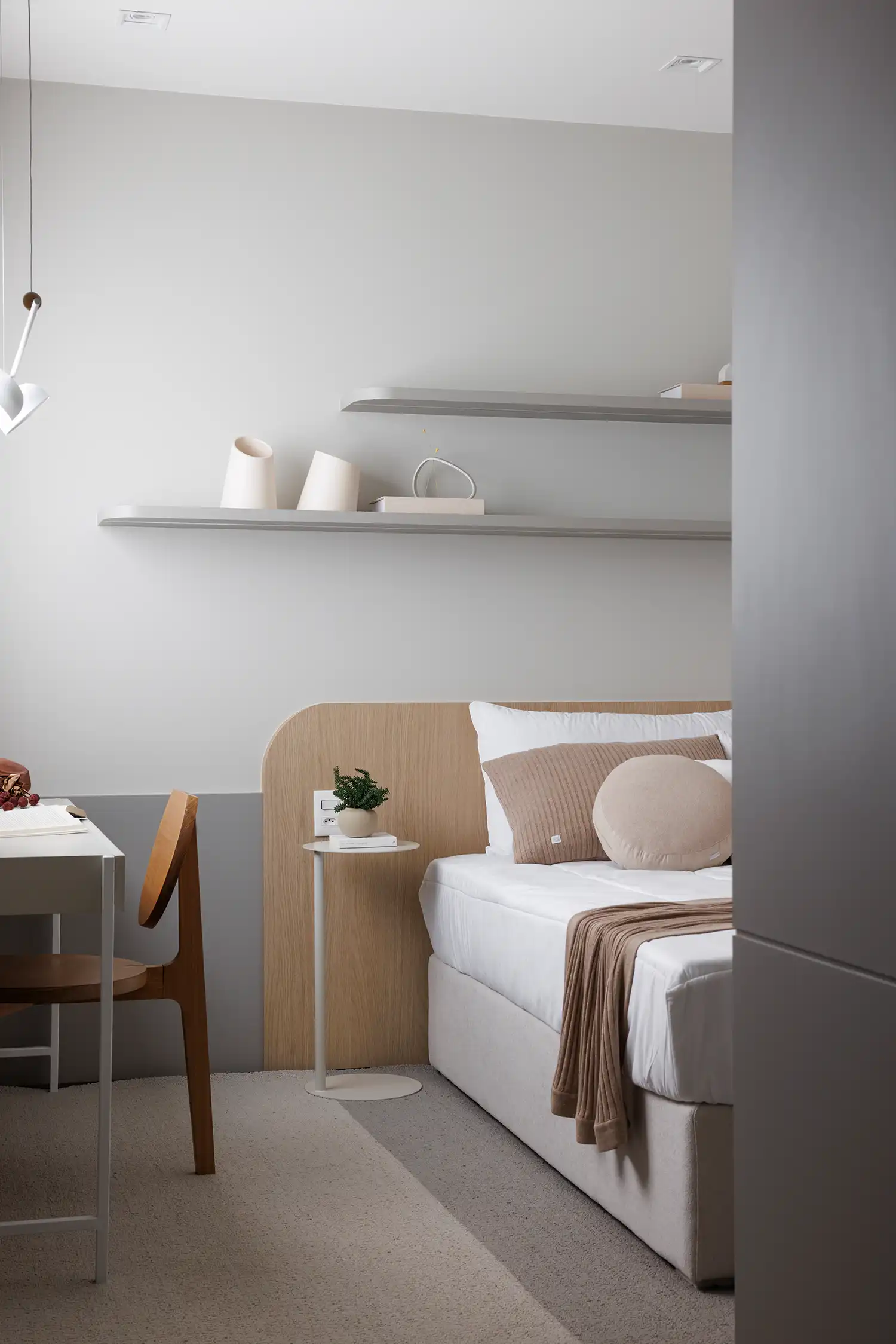
Introspection and geometric precision define the private quarters, where the design language shifts toward a more protective and hushed tone. In the bedrooms, the softness of the bedding and upholstered surfaces is countered by the rhythmic verticality of wooden slatted panels. These elements serve a dual purpose, acting as visual filters that organize the space while adding a layer of acoustic comfort. Every detail, from the choice of warm-toned textiles to the placement of the lighting, is calibrated to reinforce the sensorial nature of the most intimate areas of the house. Through this careful articulation of form and feeling, Apartamento Evidence stands as a testament to the power of contemporary interior design to create a life of balance, rationality, and profound emotion.