



A departure from the monolithic tradition of institutional design, the new main building at Prestige University in Indore challenges the conventional “ivory tower” archetype. Designed by Sanjay Puri Architects, the structure refuses to impose itself on the 32-acre campus. Instead of a singular, impenetrable mass, the building emerges as a rhythmic, rising landform that gradually steps up from its northern approach. While it eventually reaches a height of 28 meters, its profile feels intentionally horizontal and accessible, belying its scale to prioritize the human experience over architectural ego.
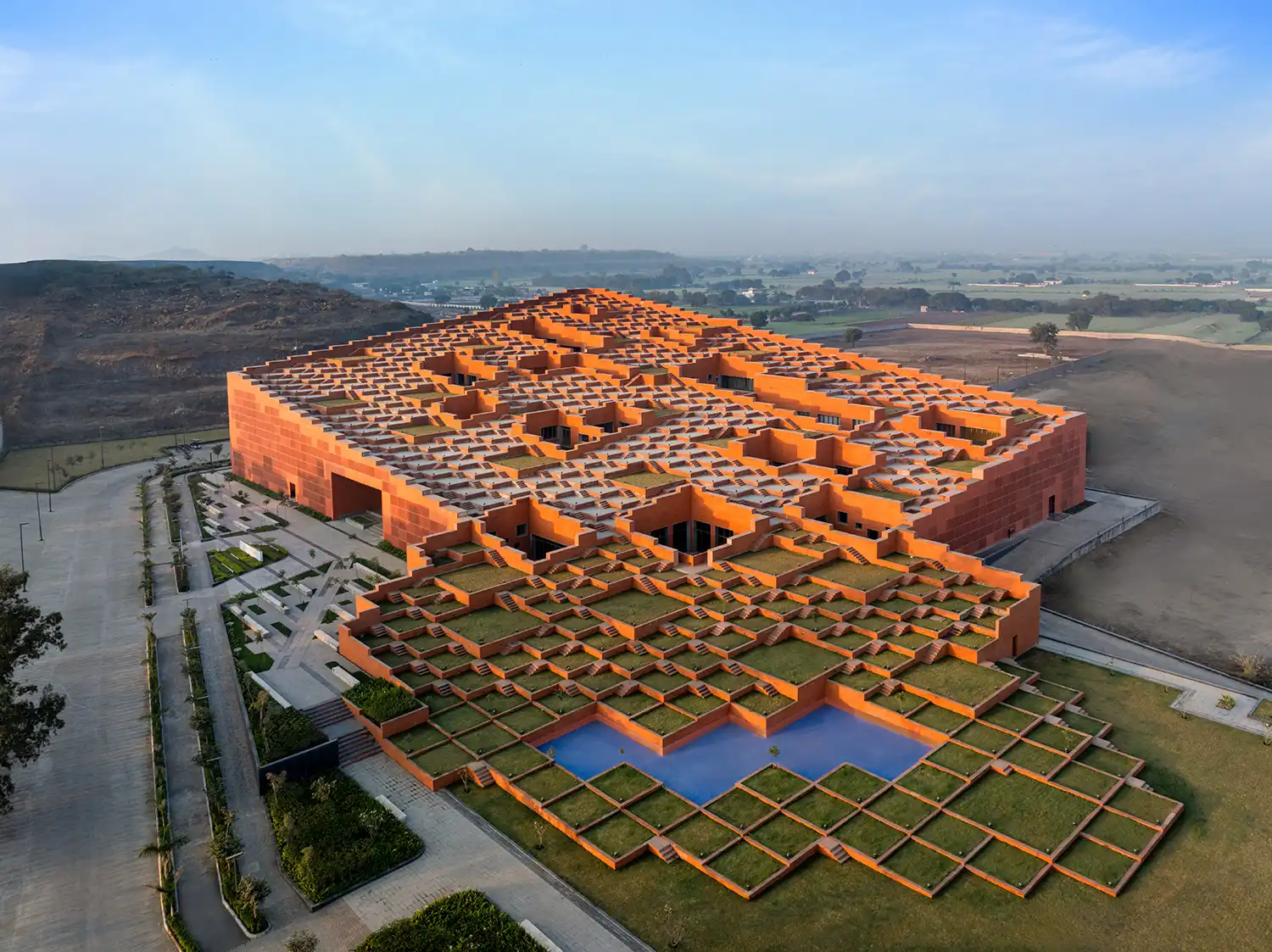
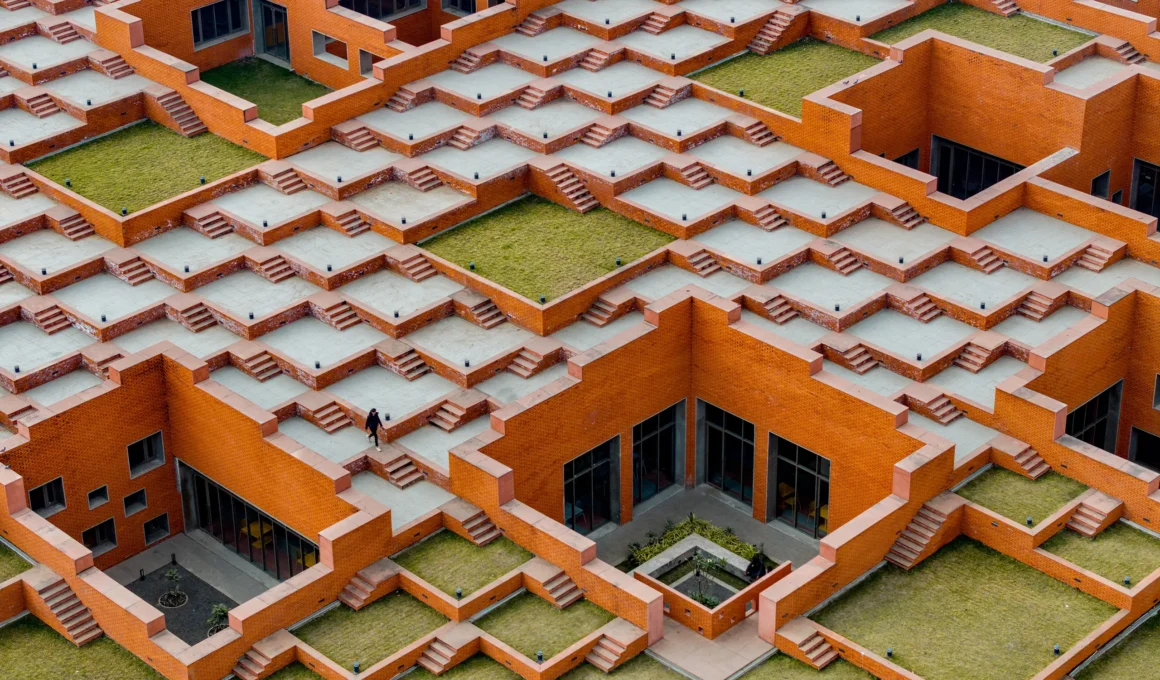
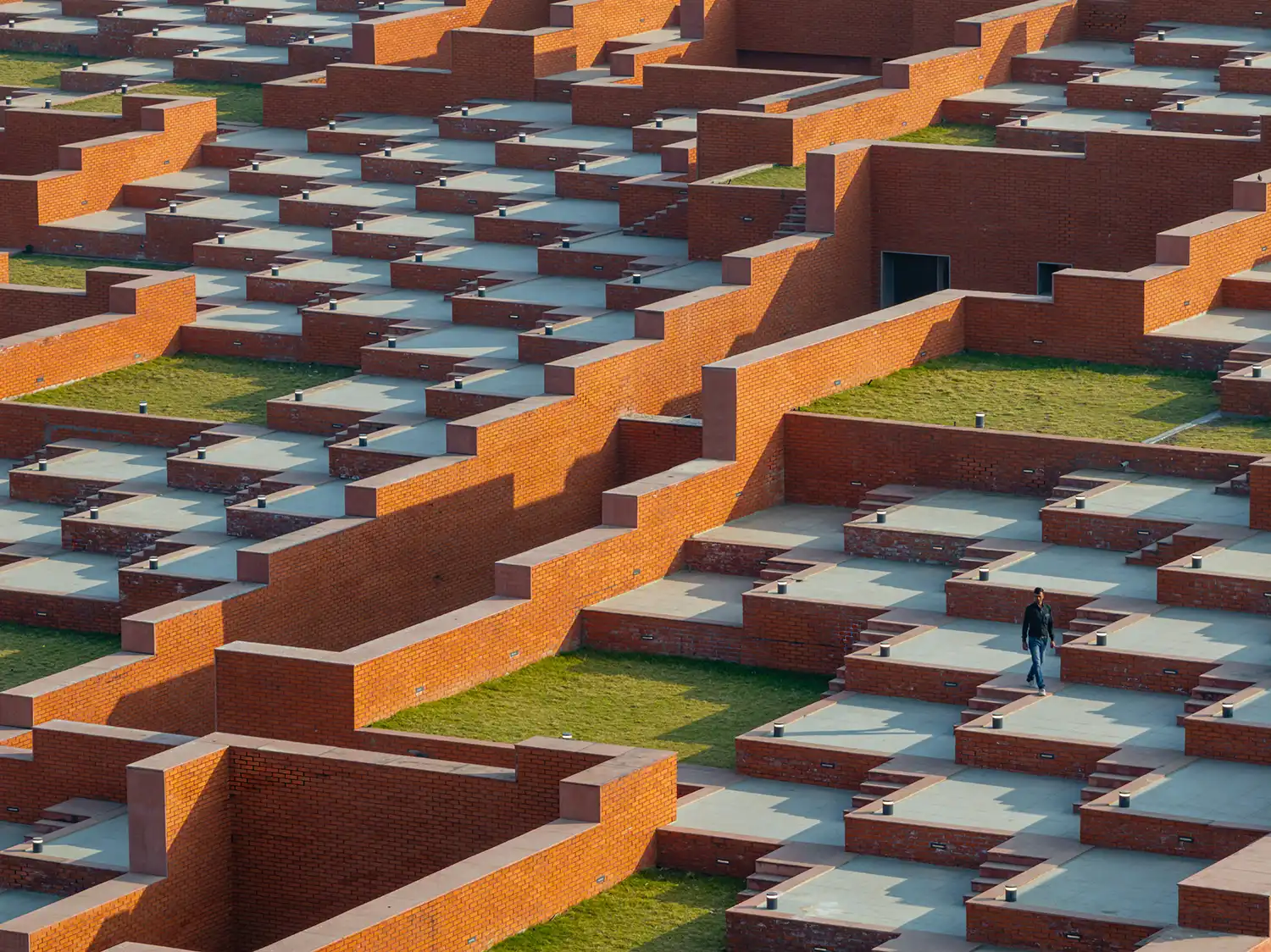
The vernacular inspiration of the stepwell serves as the project’s conceptual anchor, drawing on an 1100-year-old Indian tradition where water infrastructure doubled as vibrant social hubs. By translating the geometry of ancient subterranean stairs into a contemporary vertical park, the architects have created a multifunctional stage for campus life. This isn’t merely a roof; it is a 9,000-square-meter terrace garden composed of 463 stepped platforms. This expansive outdoor amphitheater can accommodate up to 9,000 students, blurring the line between a circulation route and a public plaza where the boundaries of formal and informal learning dissolve.
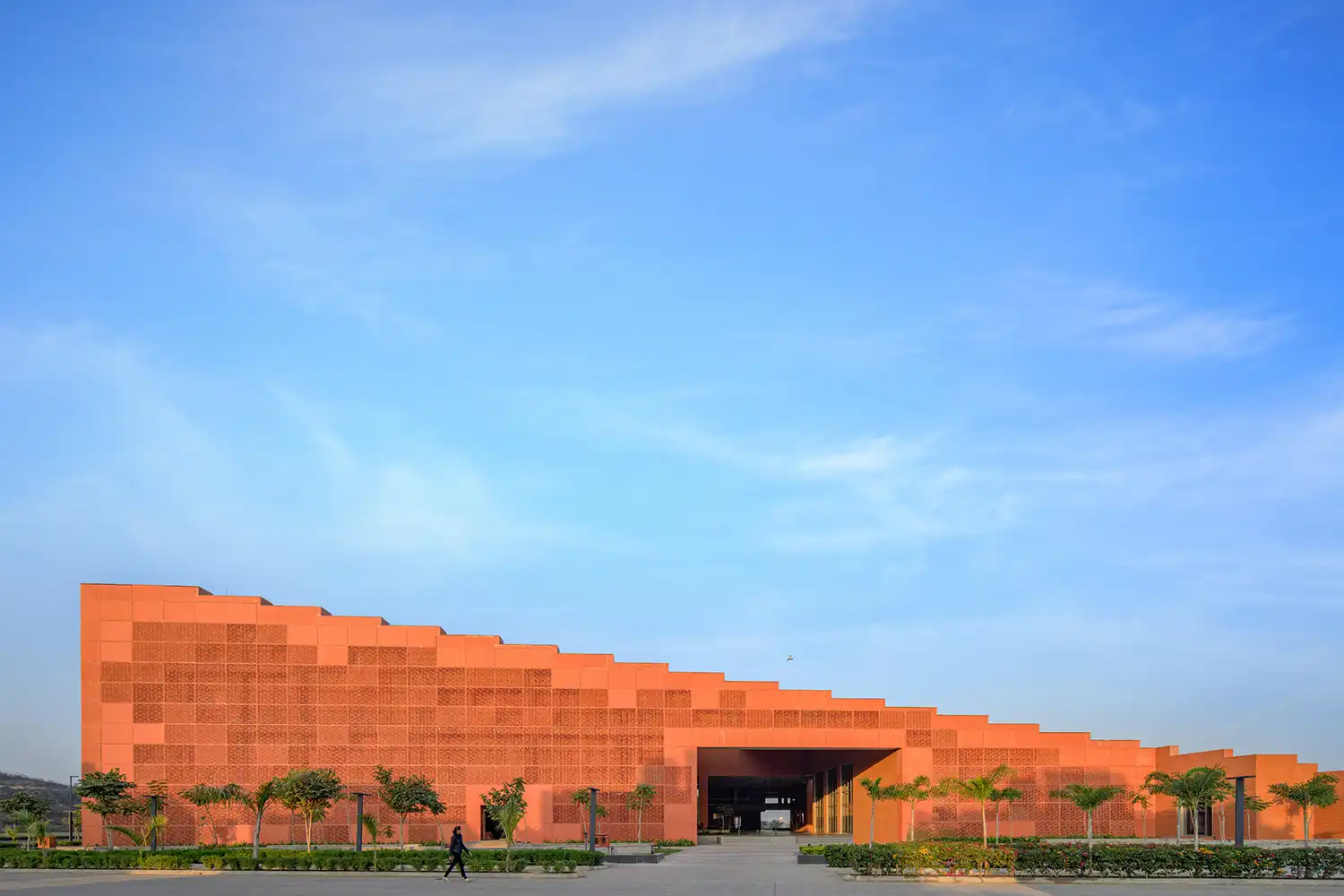
Climate-responsive strategies dictate the building’s technical DNA, particularly in a region where temperatures hover between 30°C and 40°C for two-thirds of the year. The structure is wrapped in ventilated GFRC (Glass Fiber Reinforced Concrete) screens on its southern, eastern, and western facets to mitigate intense solar heat gain. Internally, the experience is defined by a diagonal indoor street and a series of landscaped courtyards that pull indirect northern light deep into the core. This porous arrangement facilitates constant natural ventilation, creating a microclimate that significantly reduces the reliance on energy-intensive air conditioning.
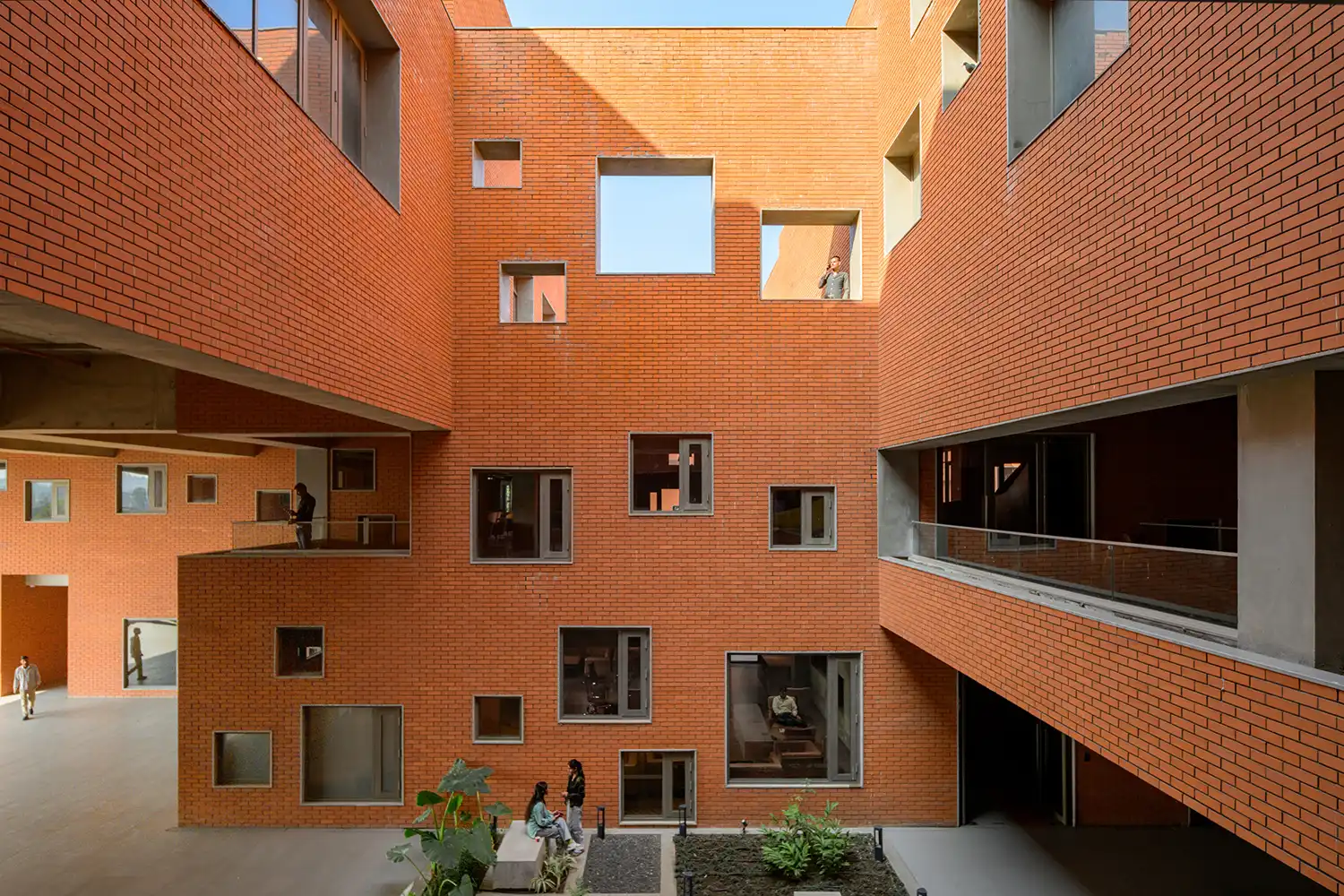
The internal program is choreographed around these voids to foster constant engagement. On the ground floor, high-traffic communal facilities like the auditorium and food court ensure the building remains a kinetic anchor for the university. Moving upward, the library occupies the first floor, linked by a bridge that traverses the internal street, while classrooms on the second and third floors spill out into recreational open courts. This layered approach to educational infrastructure mirrors the complexity of modern pedagogy, much like the integration of communal and academic volumes seen in contemporary Moroccan campus developments, where the dialogue between the built environment and local heritage remains paramount.
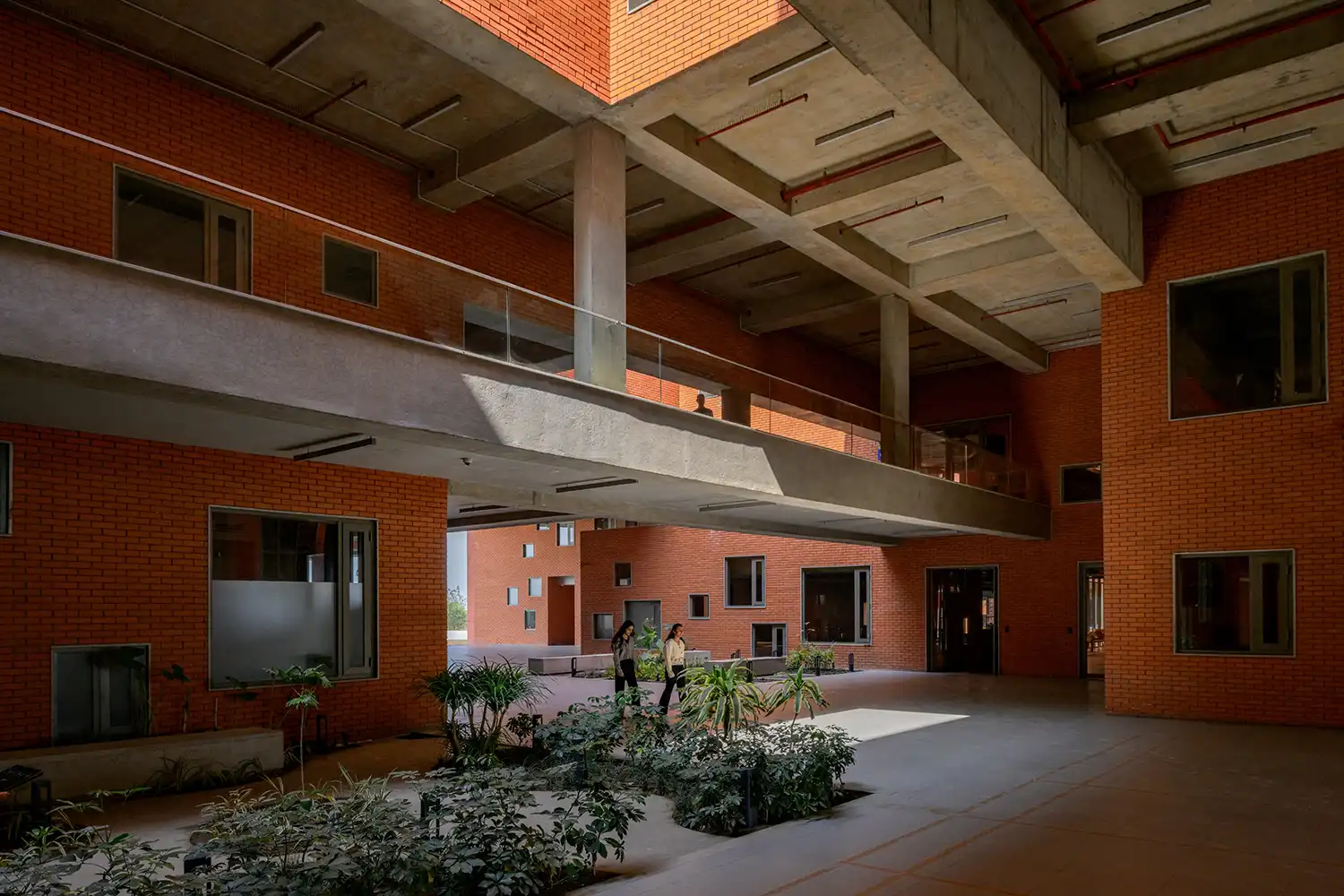
The pursuit of a non-hierarchical layout echoes a broader global shift toward porous, student-centric hubs, much like the mass timber student center at Johns Hopkins University by Bjarke Ingels Group (BIG). Both projects prioritize a “living room” feel, utilizing varied sectional volumes and internal streets to promote chance encounters. At Prestige University, this sensory richness is heightened by the transition from shaded, intimate corridors to sun-drenched, landscaped courtyards, creating a rhythmic “breathing” effect. The presence of greenery at every level—from the ground-floor spillover zones to the high-altitude rooftop gardens—softens the concrete edges and provides a visual connection to nature.
The legacy of Prestige University will likely be defined by how it successfully democratizes its own footprint. By transforming the “lost space” of a typical roof into a vital, wheelchair-accessible public realm, Sanjay Puri Architects have delivered a sustainable building that functions as an ecosystem. It is a structure that understands its place in the sun—not by fighting the heat, but by using traditional wisdom to craft a cooling, interactive environment. In doing so, it proves that the most effective way to design for the future is to listen closely to the echoes of the past.