



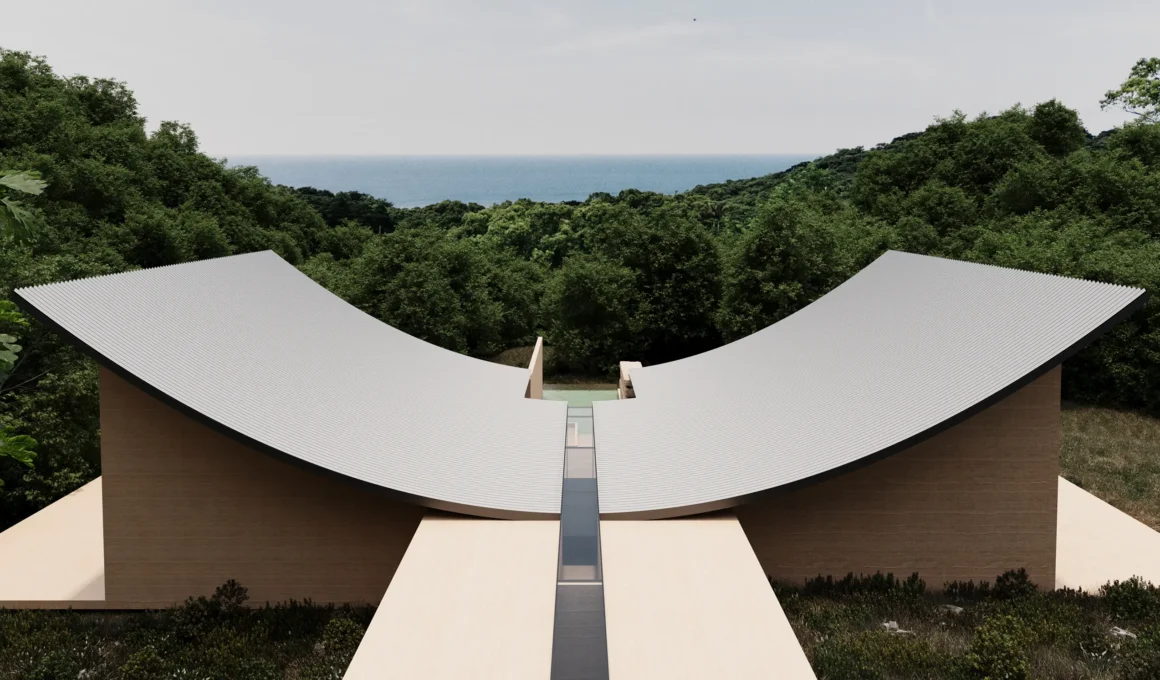
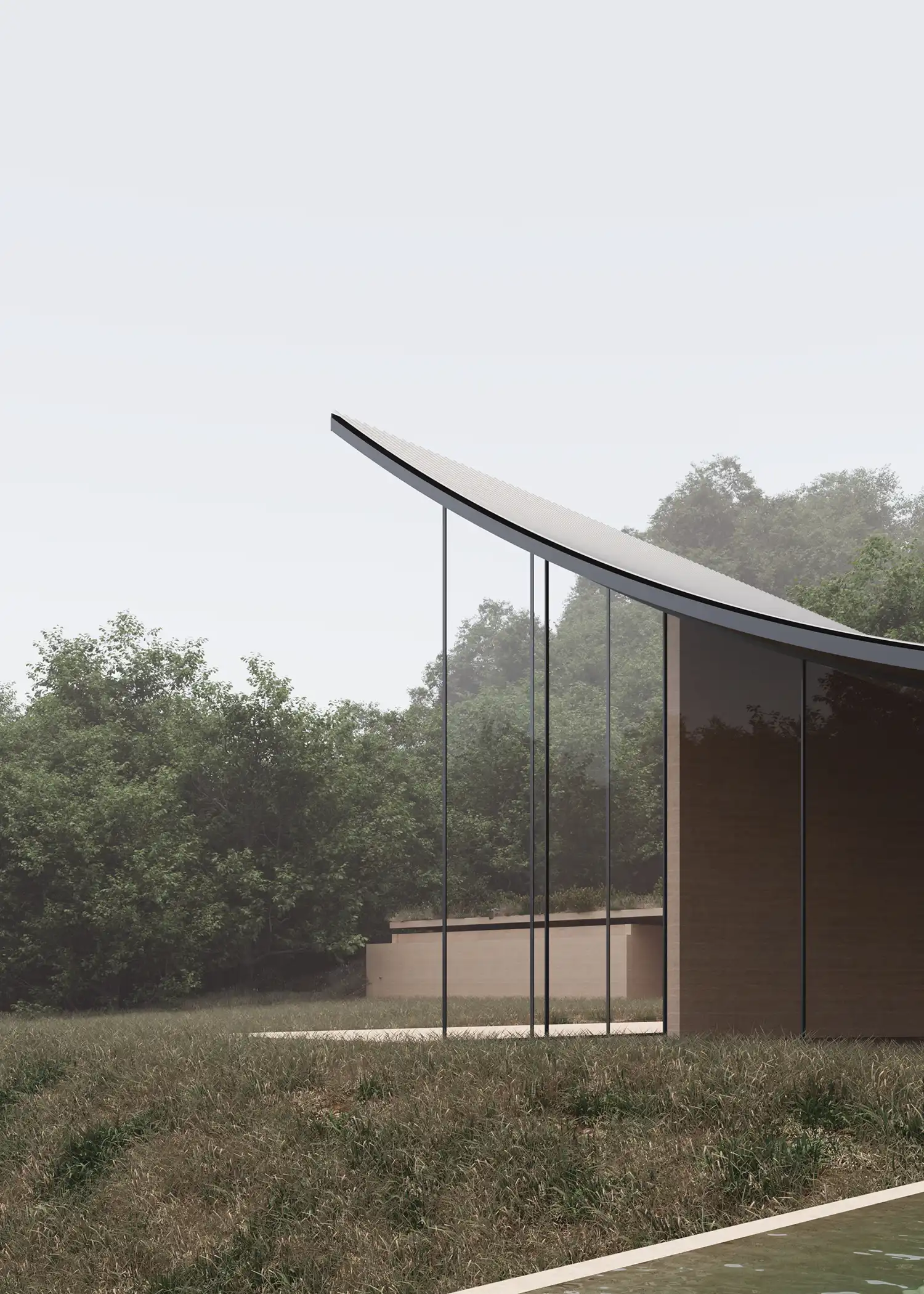
Villa Sensorium, designed by Poesis Studio, emerges from the primeval forests of Yakushima Island in Kagoshima, Japan, as an inhabitable topography that translates the island’s dramatic mountain ridges and relentless rainfall into a fluid architectural experience.
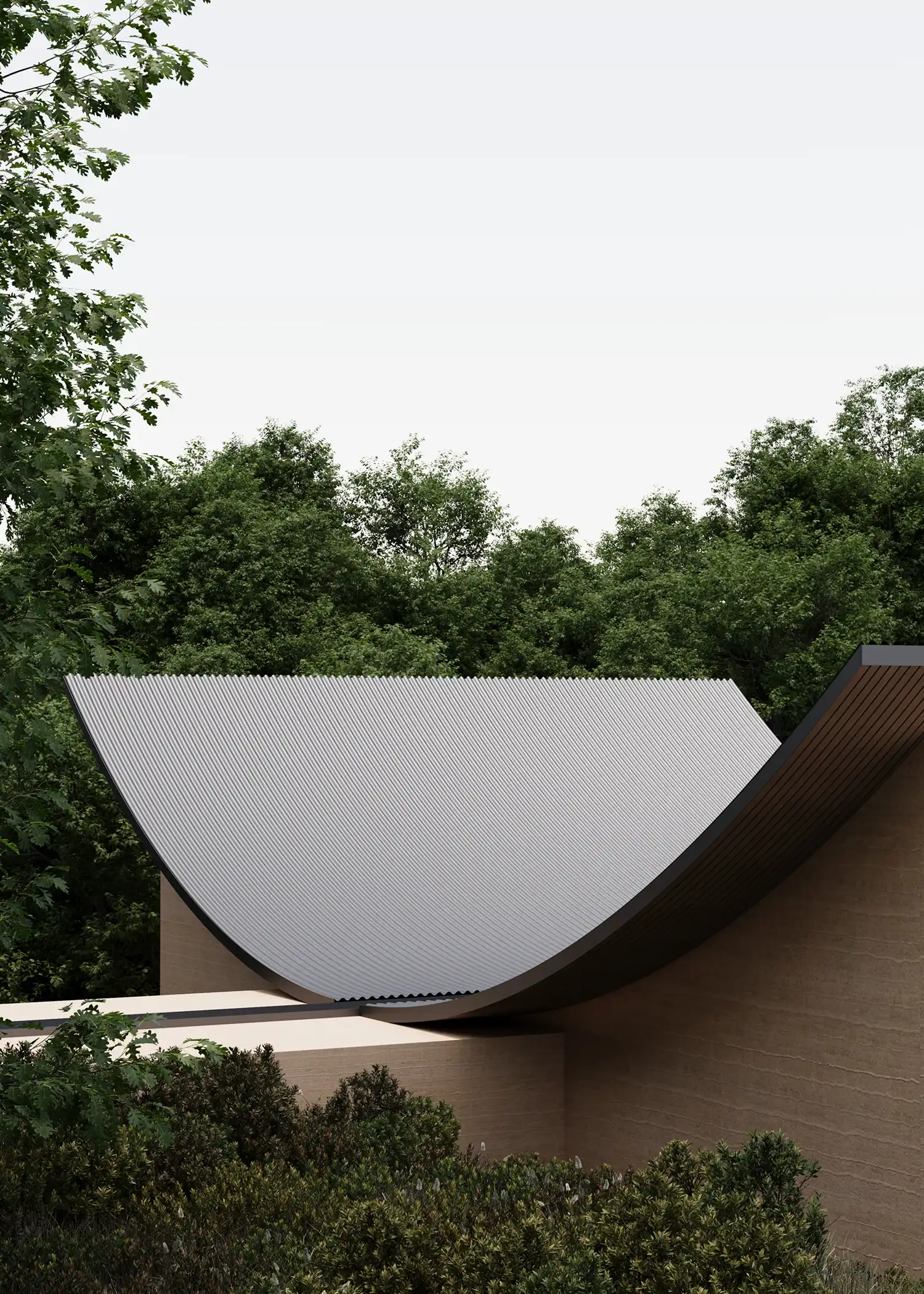
Conceived not as a static object but as an extension of the local ecology, the residence features a continuous curved roof bisected by a linear “water axis” that guides daylight and rain into the heart of the home, creating a visceral connection between the interior living spaces and the mist-wrapped landscape of this UNESCO World Heritage site.
A conceptual vision rooted in erosion defines the structural logic of the villa. Rather than resisting the subtropical climate of Yakushima, Poesis Studio embraced the forces of gravity and water to shape the building’s silhouette. The roofline mimics the island’s weathered peaks, intentionally “split” to evoke the deep valleys carved by ancient waterfalls. This central incision serves as a living threshold, allowing the raw elements of the Pacific to penetrate the built environment, ensuring that the Japanese residential design remains in a constant state of dialogue with its surroundings.
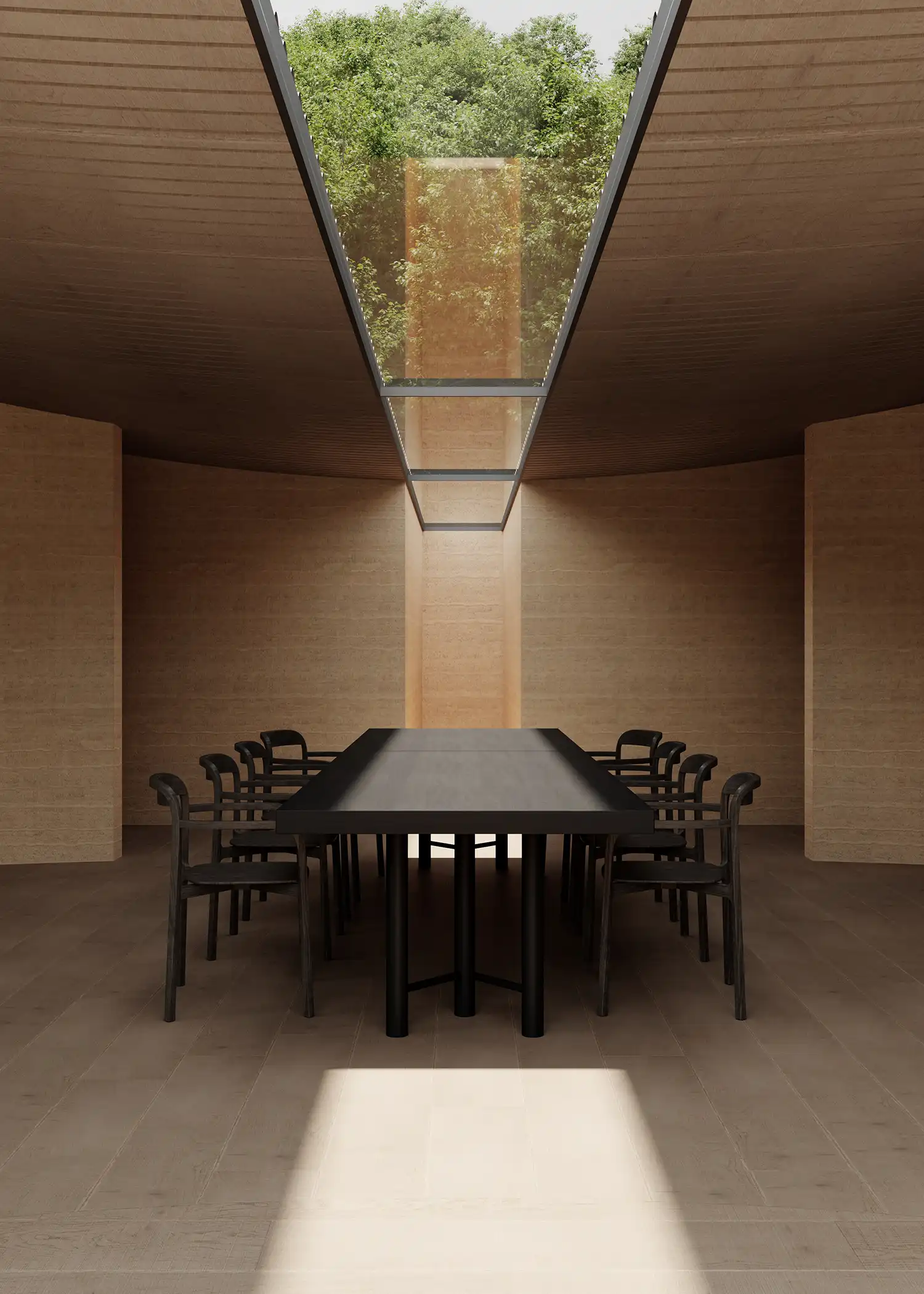
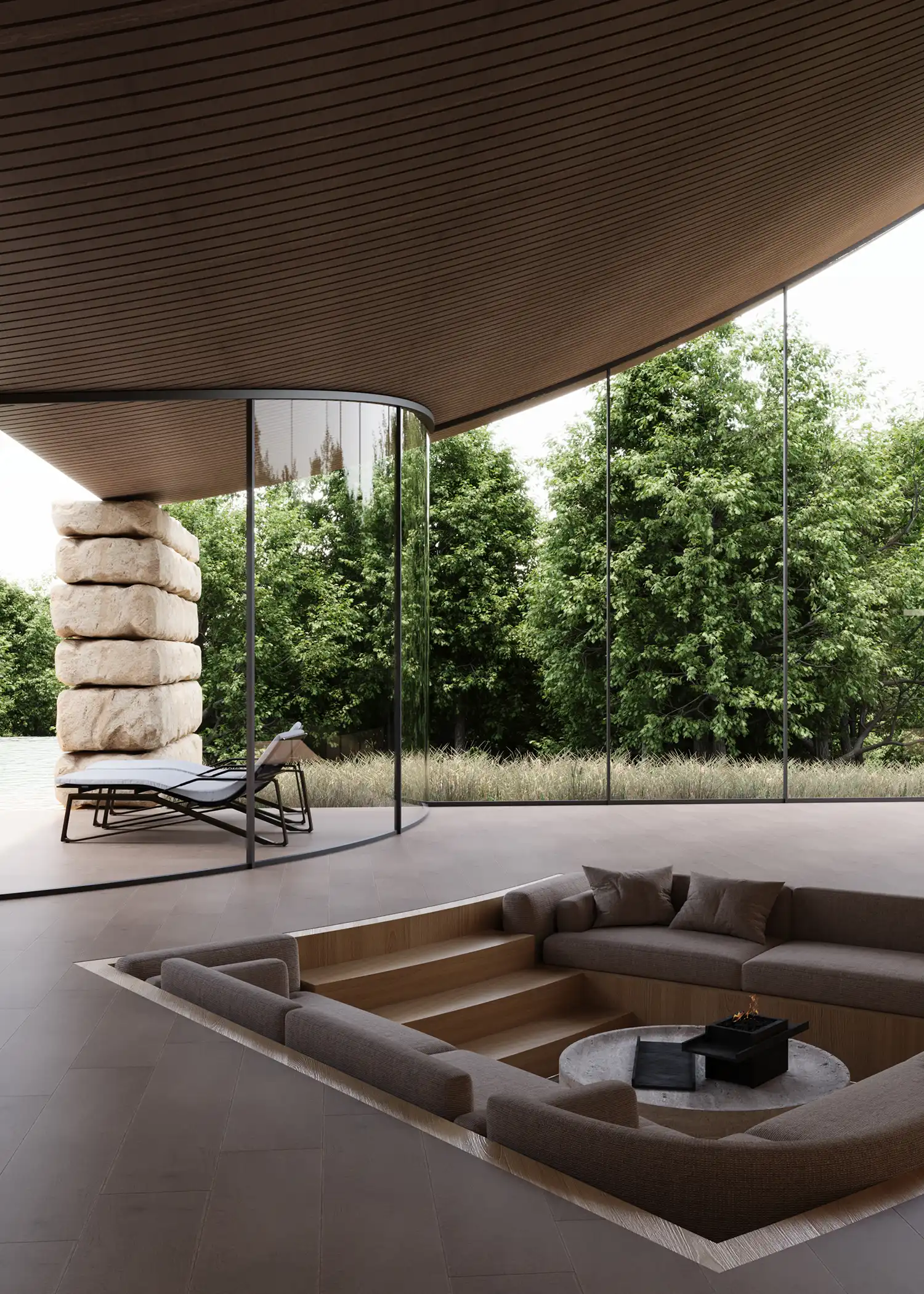
The sensory experience of the interior revolves around a central communal dining table, positioned directly beneath a linear skylight. This opening does not merely provide illumination; it frames the sky, turning the island’s frequent rainfall into a choreographed daily ritual. When the clouds break, the sound of water hitting the glass and the sight of rain descending through the axis transform the act of dining into an immersive encounter with the forest. It is a space where the boundaries between shelter and nature are intentionally blurred, prioritizing the tactile and auditory qualities of the environment.
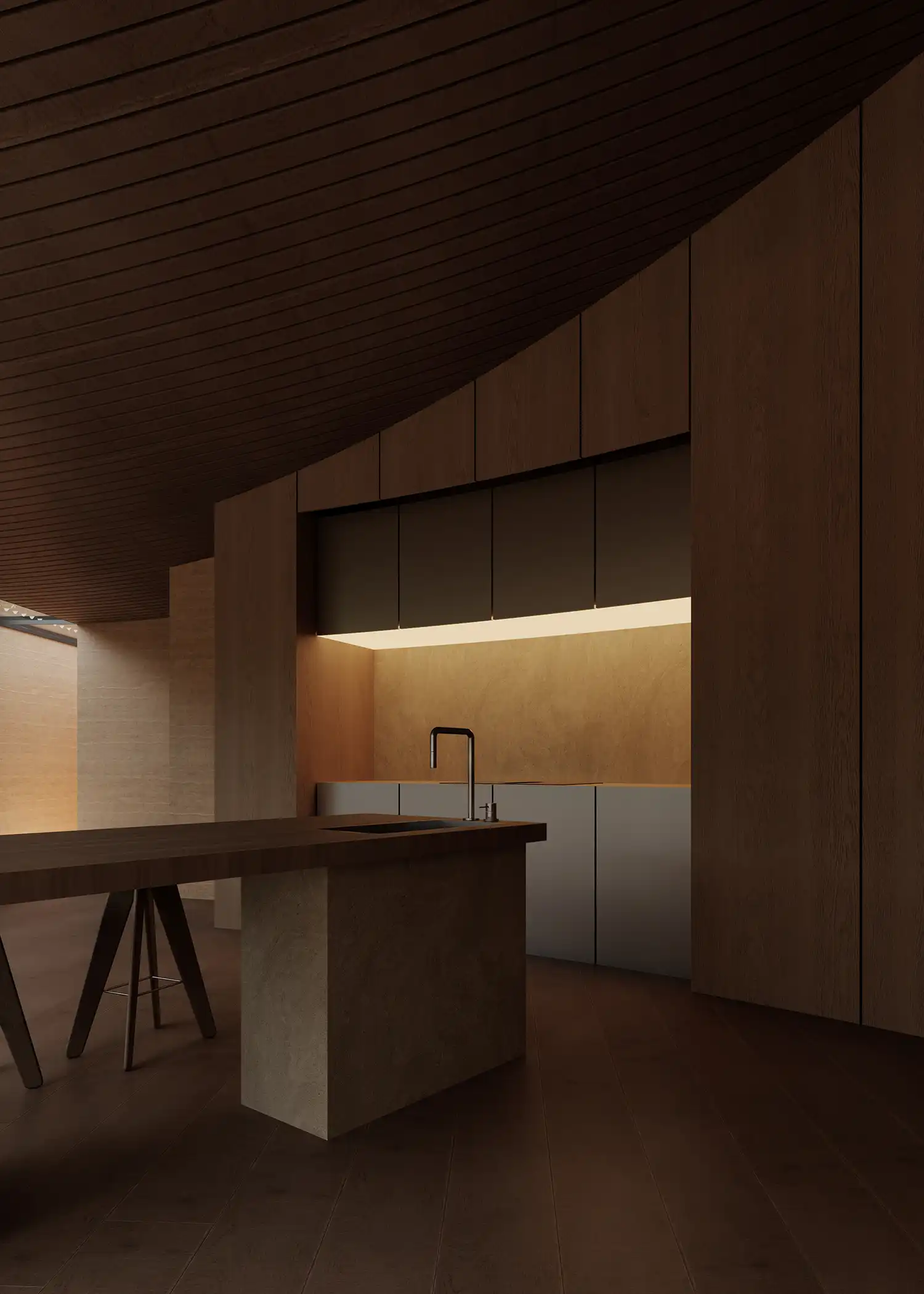
Technical details of the water axis reveal a seamless transition from the domestic to the elemental. As the central carved void extends beyond the living quarters, it transforms into a long, linear swimming pool. This architectural gesture echoes the trajectory of a mountain stream descending toward the sea, reinforcing the theme of fluidity. The sustainable integration of rainwater collection systems ensures that the flow is guided along the curved outdoor terraces, where water gathers and moves in harmony with the terrain, rather than being diverted through hidden pipes.
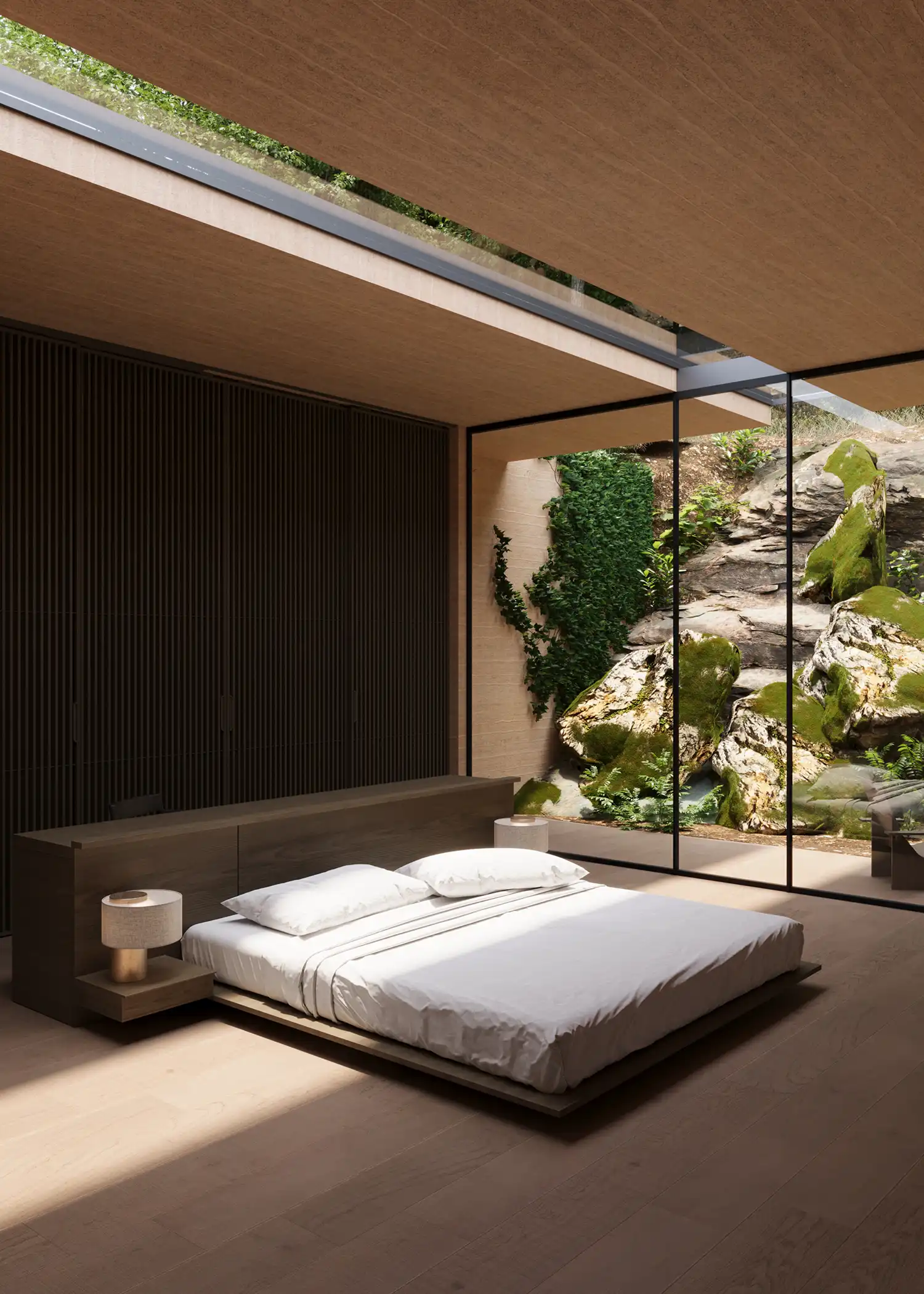
The spatial organization of the villa creates a clear distinction between social engagement and quiet introspection. At one end of the primary axis, the communal areas pulse with light and activity. Conversely, at the opposite end, the master bedroom is partially sunken into the earth. This design choice embeds the inhabitants within the forest floor, offering a perspective framed by moss-covered stones and the dense greenery of the ancient ecosystem. The textures here are soft and muted, reflecting the damp, fertile atmosphere of the Yakushima wilderness.
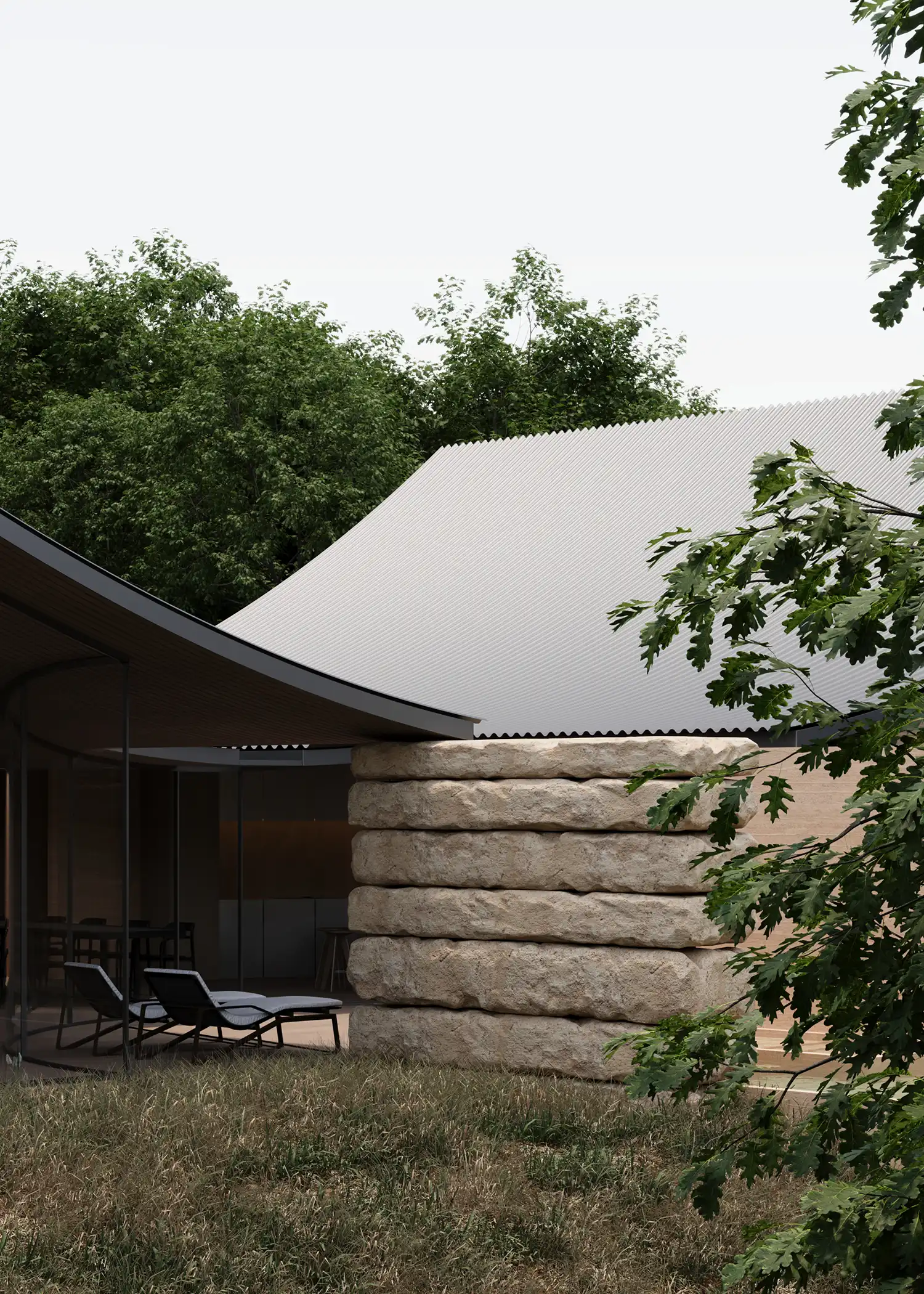
The material palette and form work in tandem to dissolve the building into the landscape. The grey tones of the concrete and the organic curves of the roof allow the structure to recede into the mist, appearing almost like a natural rock formation or a swell in the earth. By utilizing the island’s own topography as a blueprint, the studio has created a residence that feels as though it has been weathered into existence over centuries, rather than placed upon the site.
Contextual impact and broader influence within the region highlight a growing movement toward sensitive, site-specific interventions. Much like the psychological bridge found in the Kazari House in Tokyo, Villa Sensorium explores the boundary between the internal self and the external world. However, while urban projects often focus on privacy, this island retreat seeks a total opening to the environment. This philosophy of merging a home with its natural site is also evident in the minimalist Amami House, which similarly respects the unique coastal conditions of Japan’s southern islands.
A final reflection on the project suggests that the true value of the villa lies in its refusal to provide a sterile environment. By allowing the weather to dictate the mood of the interior, Poesis Studio has crafted a home that is alive. It is a reminder that living well often involves surrendering to the rhythms of the earth, turning the simple presence of rain into a profound luxury. The structure stands as a testament to how modern living can coexist with the untamed beauty of a primeval forest.