

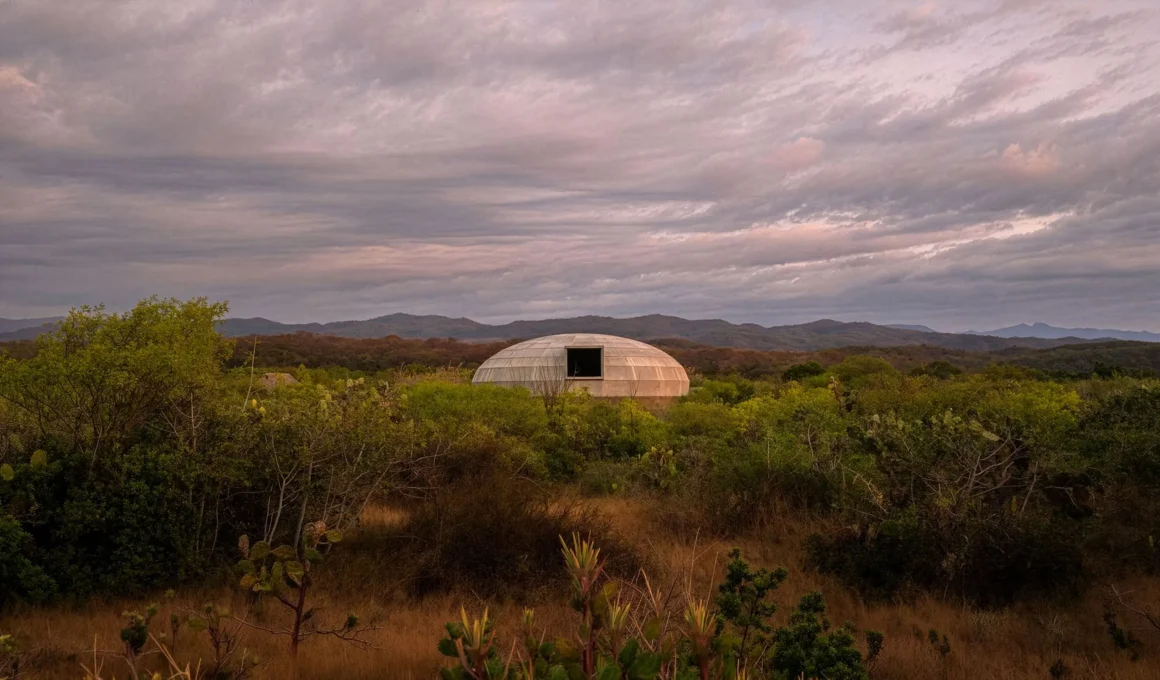
Located within the expansive 65-acre coastal landscape of Oaxaca, the Mushroom Pavilion at Fundación Casa Wabi marks OMA’s first completed project in Mexico, a sculptural concrete vessel designed by Shohei Shigematsu to balance specialized mycological cultivation with communal artistic exchange.
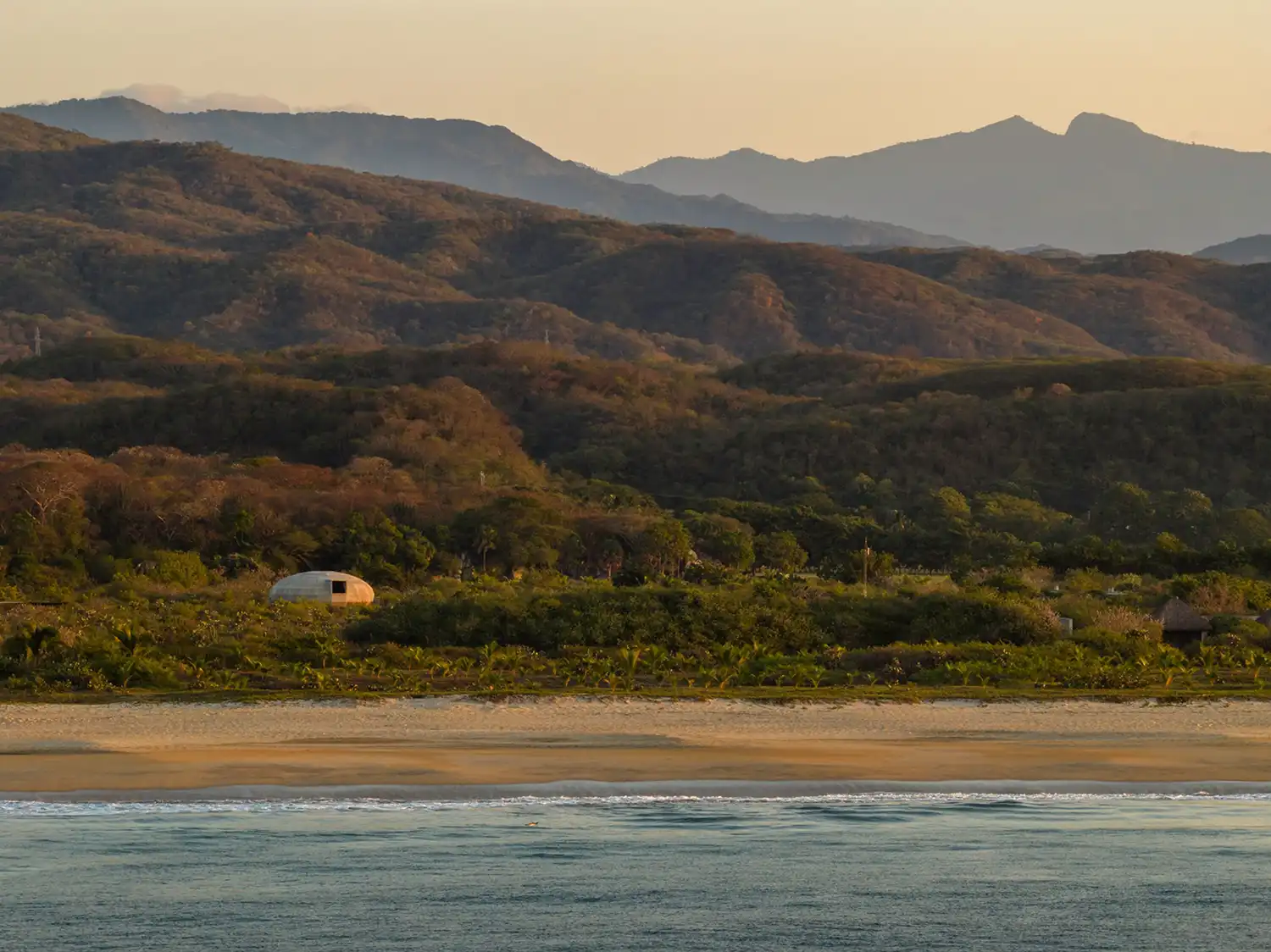
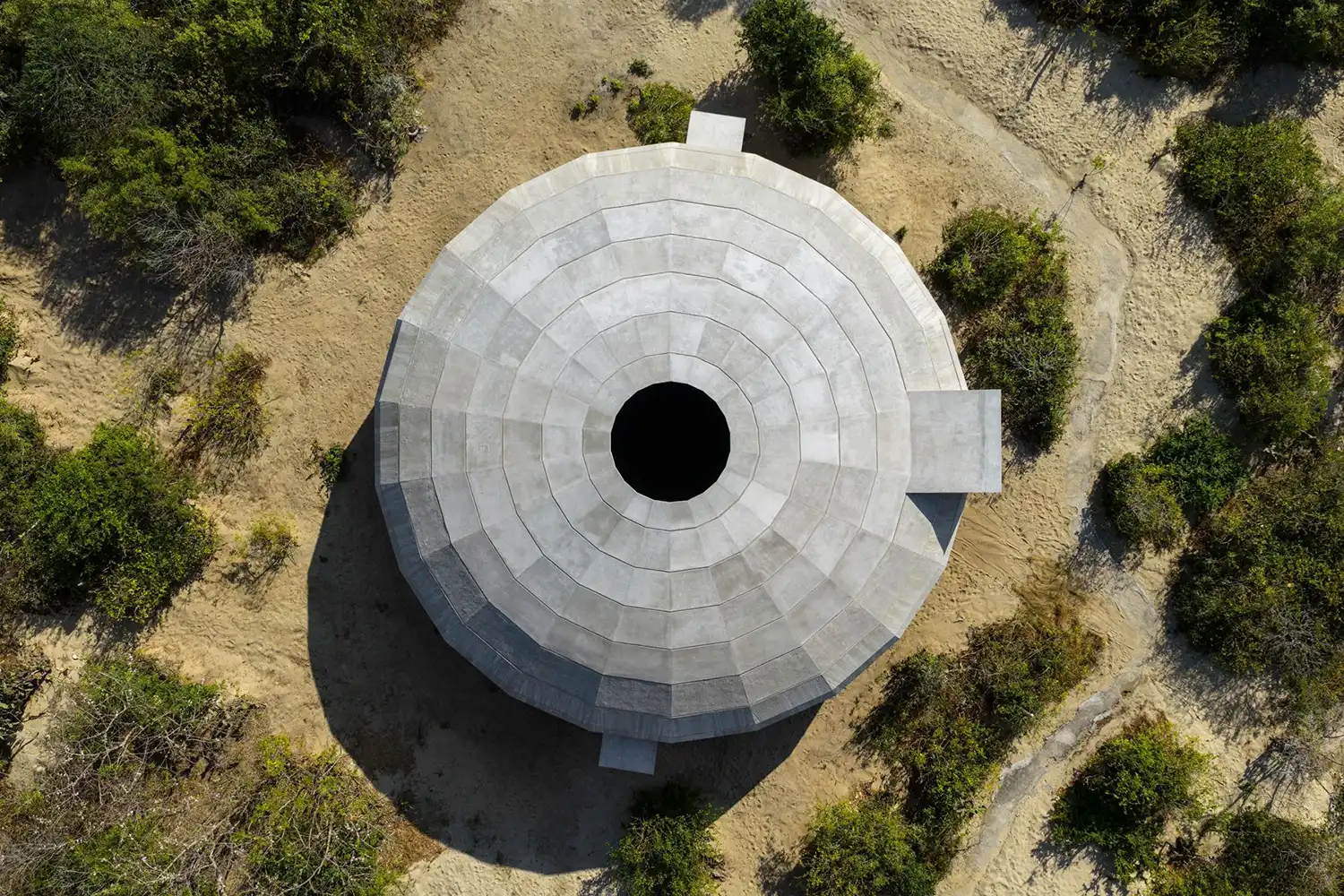
A dialogue with the earth. The pavilion emerges from the brush between the mountains and the Pacific Ocean as a singular, ellipsoidal form that feels both primordial and radically modern. Rather than imposing a rigid structure onto the terrain, the design curves inward at its base, minimizing its physical footprint to protect the surrounding native guayacan trees. This delicate touch ensures that the building does not disrupt the delicate local ecosystem, instead acting as a quiet observer of the shifting Oaxacan horizon.
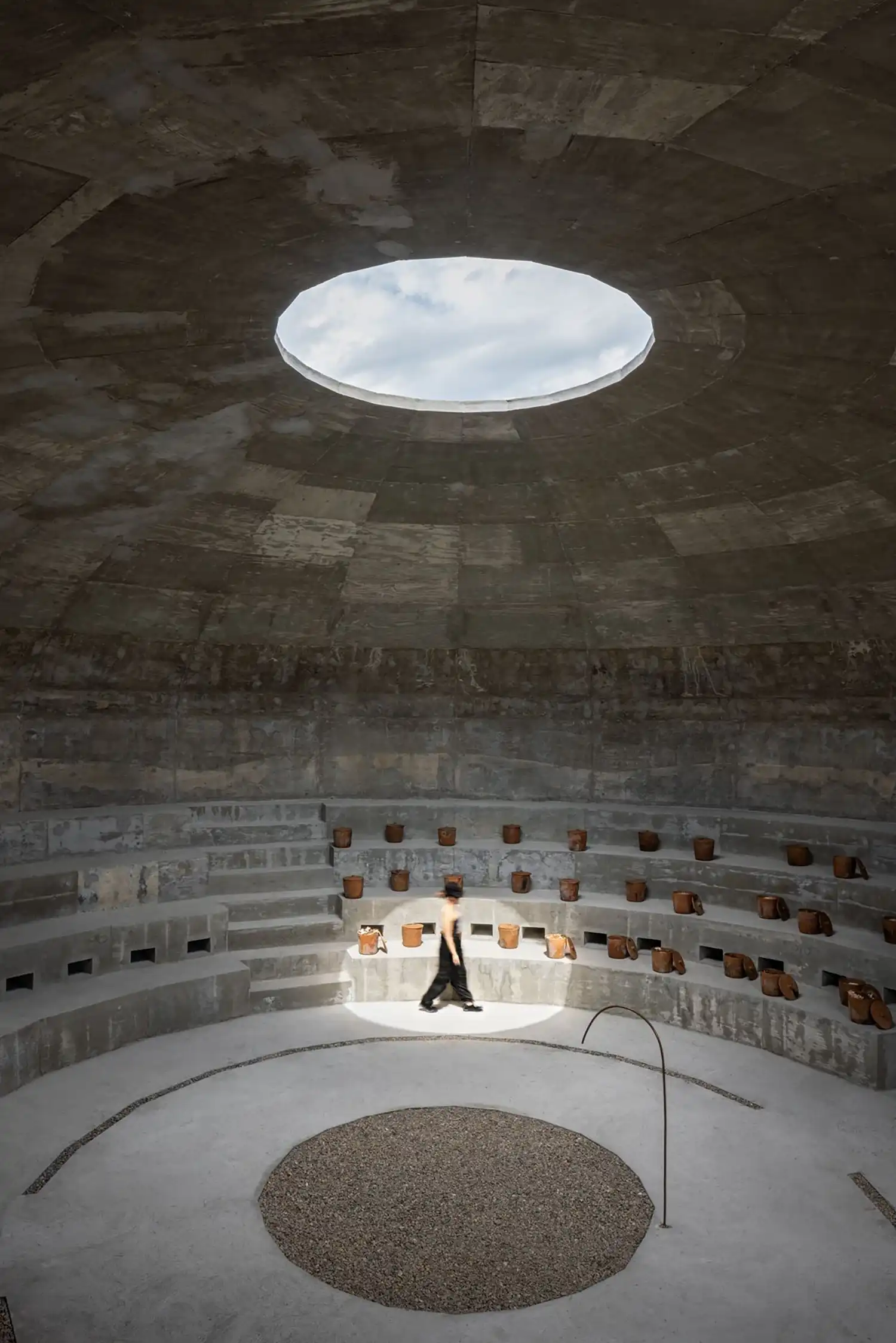
The alchemy of the interior. Within the domed shell, the atmosphere shifts to a cave-like stillness, illuminated by a central oculus that pulls the sky into the heart of the structure. The space is logically partitioned into three functional zones—fruiting, incubation, and storage—yet these remain connected by a central gathering area. This layout transforms a technical agricultural process into a sensory experience, where the cool humidity of the concrete walls meets the earthy aroma of the growing substrate.
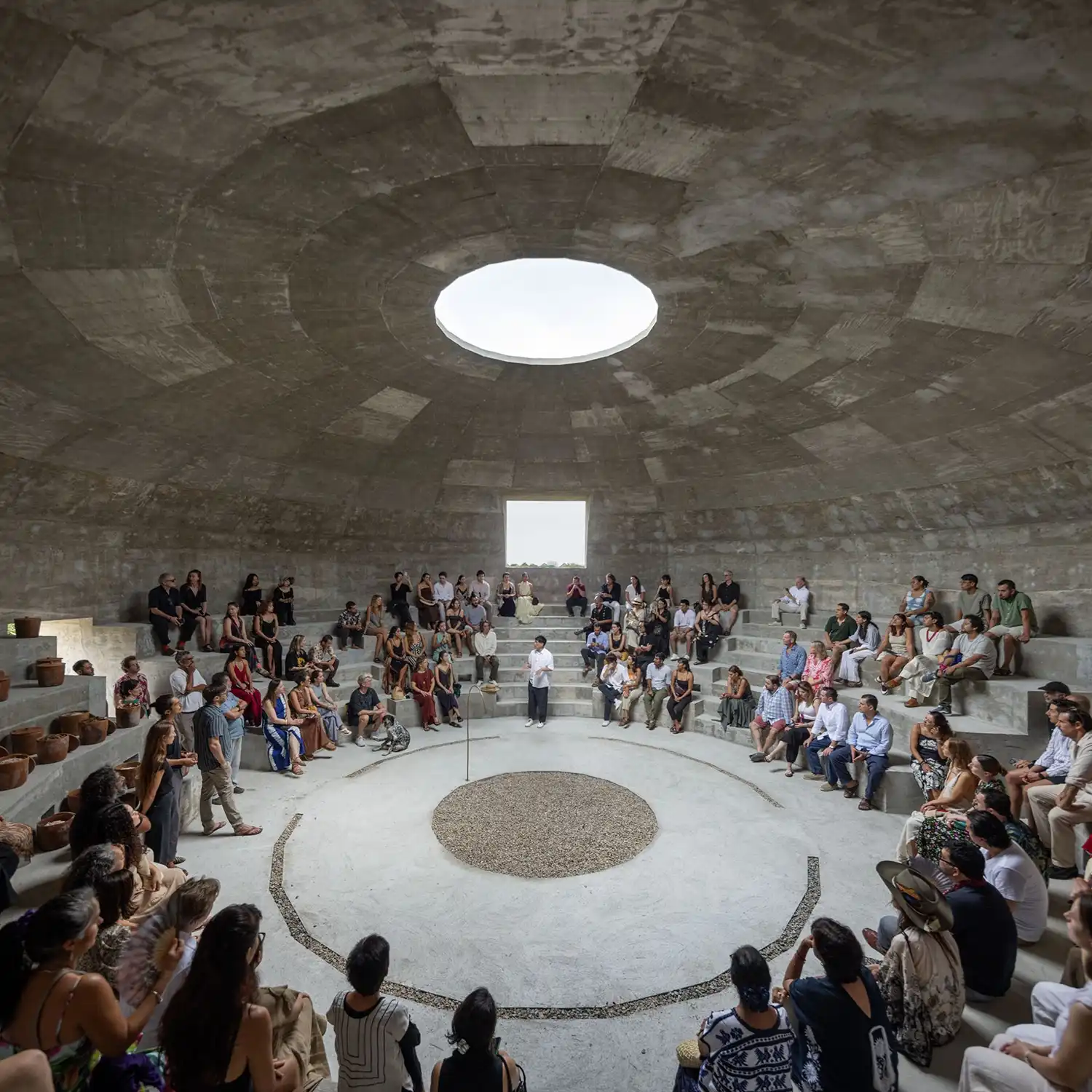
Ancestral craft meets modern form. The lower half of the interior volume is shaped into a stepped, earthen amphitheater, creating a panopticon that allows visitors to witness the entire growth cycle at a glance. These tiers serve as functional shelving for handmade terra cotta pots, which were produced by local artisans. By integrating these traditional vessels into the contemporary structure, the project establishes a direct link between OMA’s global perspective and the vernacular heritage of the region.
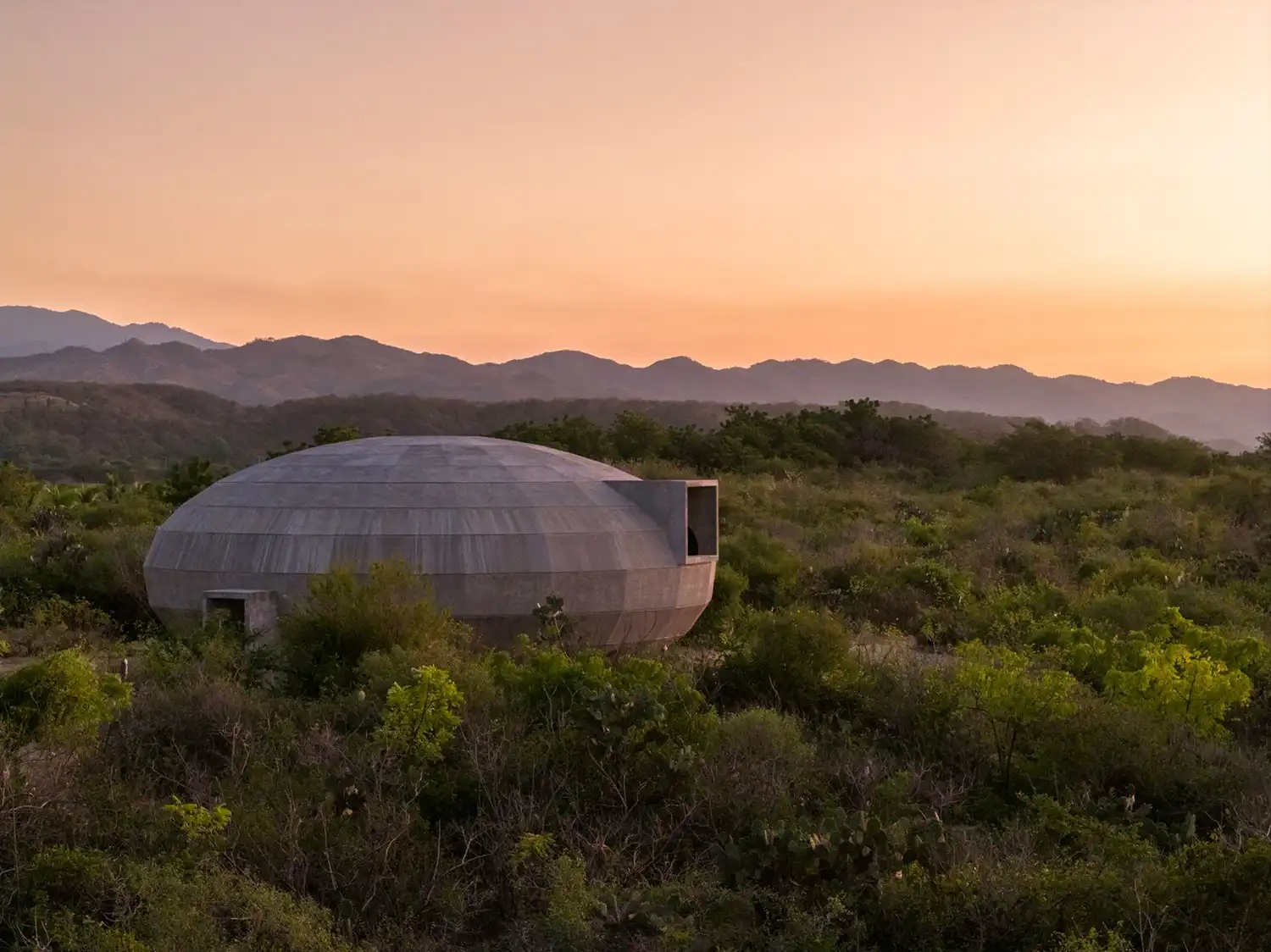
Climatic intelligence. Ventilation is managed through strategic apertures along the lower perimeter, allowing the coastal breeze to circulate naturally through the chambers. This passive cooling system is essential for maintaining the specific microclimate required for the mushrooms to thrive. For those who ascend the interior steps, a portal at the summit offers an unexpected perspective shift, providing sweeping views over the natural scrubland toward the distant ocean.
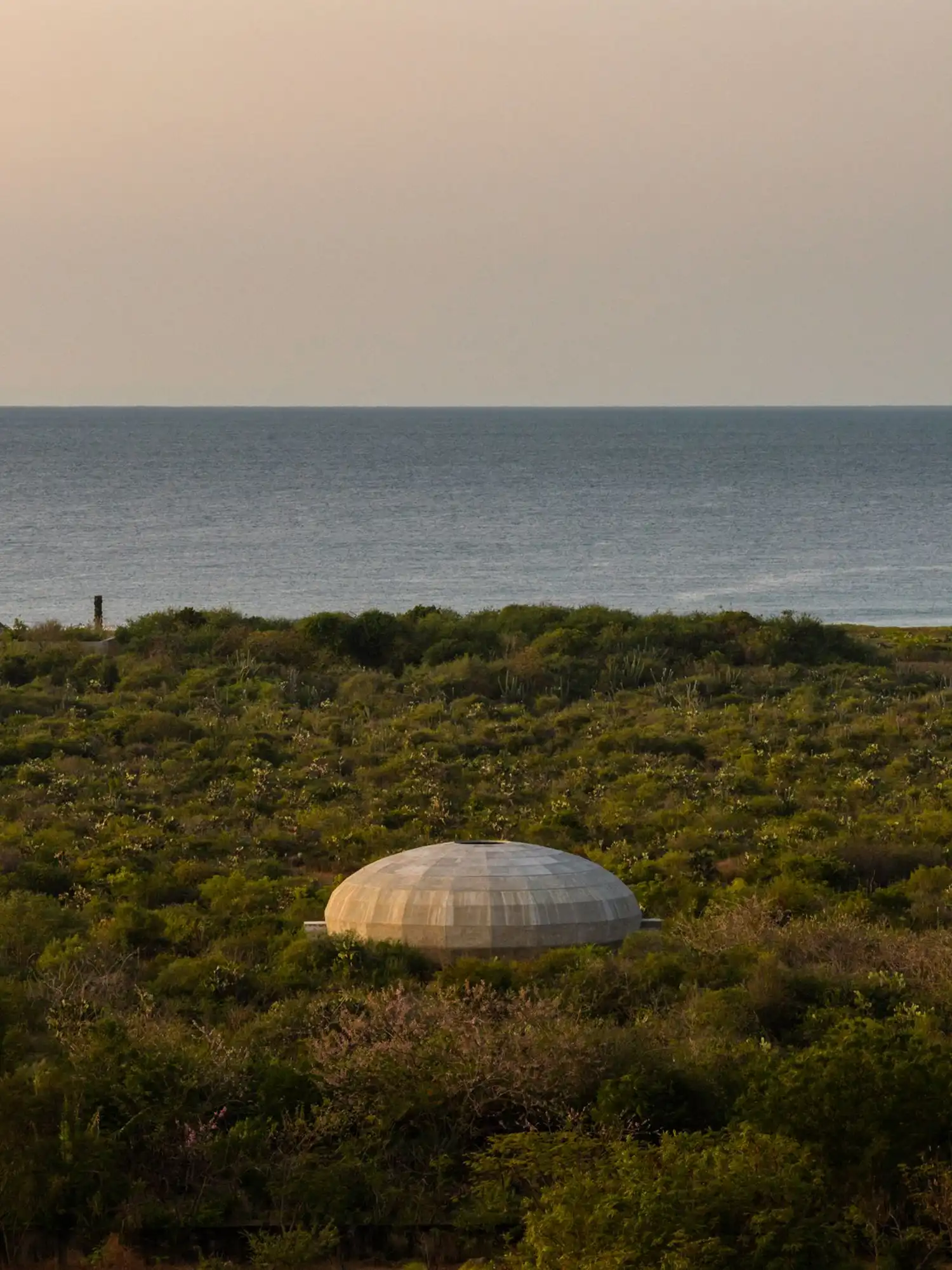
The beauty of decay. The material palette is a testament to the site’s rugged environment. Poured-in-place concrete was troweled and stamped with burlap to create a textured skin that intentionally traps the high iron content of the local water. Over time, the pavilion will not remain static; it is designed to rust, stain, and weather, allowing the architecture to participate in the same cycles of growth and decomposition as the fungi it houses.
Cultivating community. Beyond its role as a functional incubator, the pavilion serves as a vital node for the foundation’s art and community programs. It is a place where locals and international visitors can converge, turning a simple agricultural shed into a theater for social interaction. This duality reflects a broader trend in how experimental temporary and permanent pavilions are used to bridge the gap between technical utility and public engagement.
A philosophical anchor. Led by Shohei Shigematsu, the project draws a subtle line between Japanese spatial traditions and the philosophy of Fundación Casa Wabi’s founder, Bosco Sodi. It is an exercise in restraint and purpose, proving that even a specialized structure for food production can become a profound site for human connection. The Mushroom Pavilion stands not just as a piece of infrastructure, but as a living organism that matures alongside the landscape it inhabits.