

Located on the quiet outskirts of Kraków, Poland, the HFL Karcza apartment represents a vivid collaborative experiment between the Polish studio MISTOVIA and homeowners Agata and Przemek—graphic designers whose professional penchant for bold visual identity translates into a domestic landscape of high-contrast textures, geometric rigor, and unexpected warmth.
Creative synergy defines the soul of this 125-square-meter residence. The project is less a traditional client-architect commission and more a continuation of a long-standing friendship between the owners of Bisoñ Studio and Marcin, the founder of MISTOVIA. Having previously crafted the studio’s visual identity, the homeowners transitioned from creators to inhabitants, allowing for a bespoke interior that mirrors their own artistic sensibilities. The result is a home that balances the chaos of the creative process with the profound need for a “cosy” retreat, specifically tailored for two humans and their dogs, Ozzy and Furia.
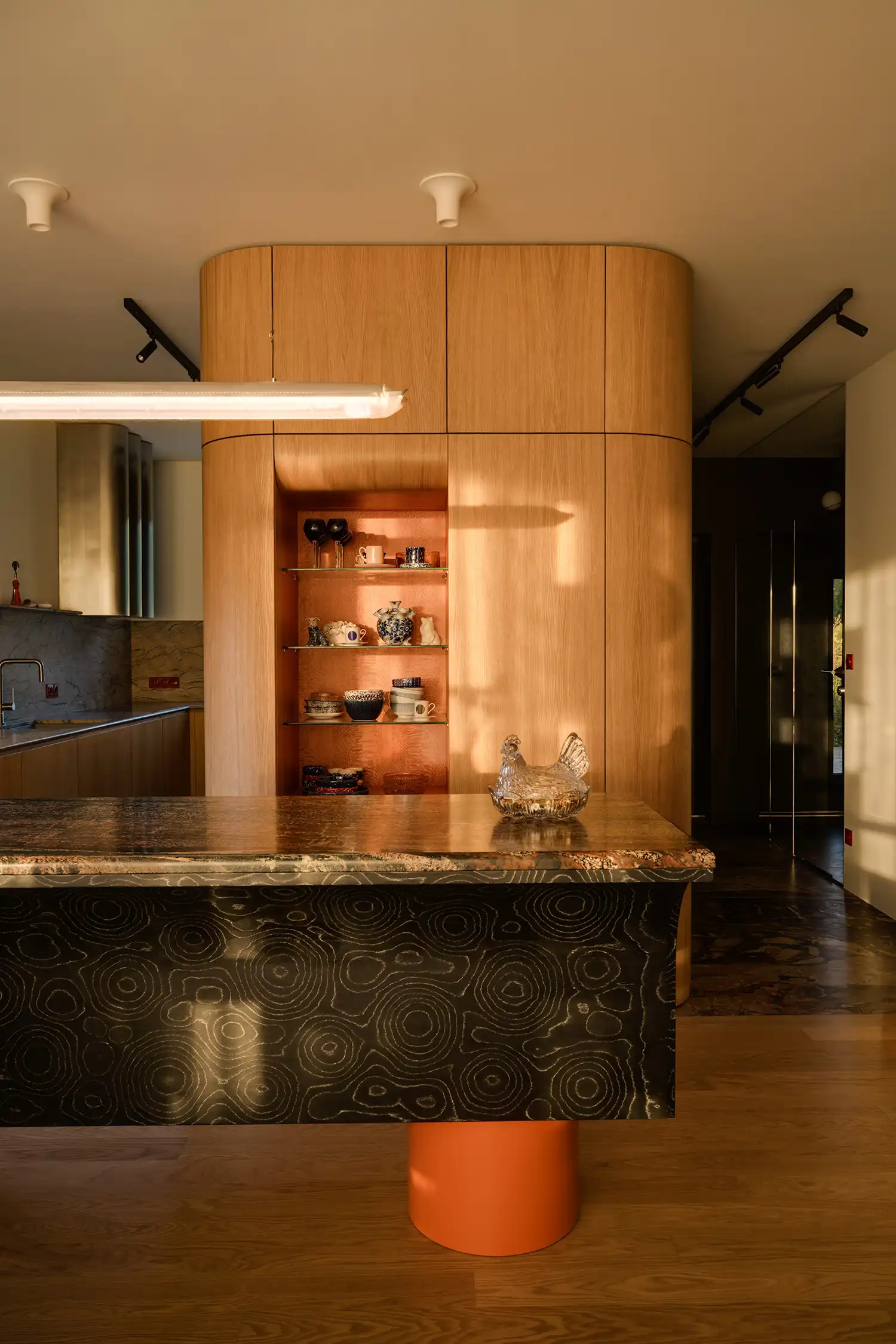
Spatial fluidity was the primary objective for the ground floor, which was originally delivered in a restrictive shell-and-core state. By removing the dividing walls, the design team invited a natural light flow that previously felt obstructed. The only immovable element—a central chimney stack—was transformed into a multifunctional, modular joinery piece. In the entry zone, this volume presents as a sharp, black geometric form, but as it bleeds into the living area, it softens into pale oak curves, housing a delicate display cabinet for the couple’s collection of glass and art.
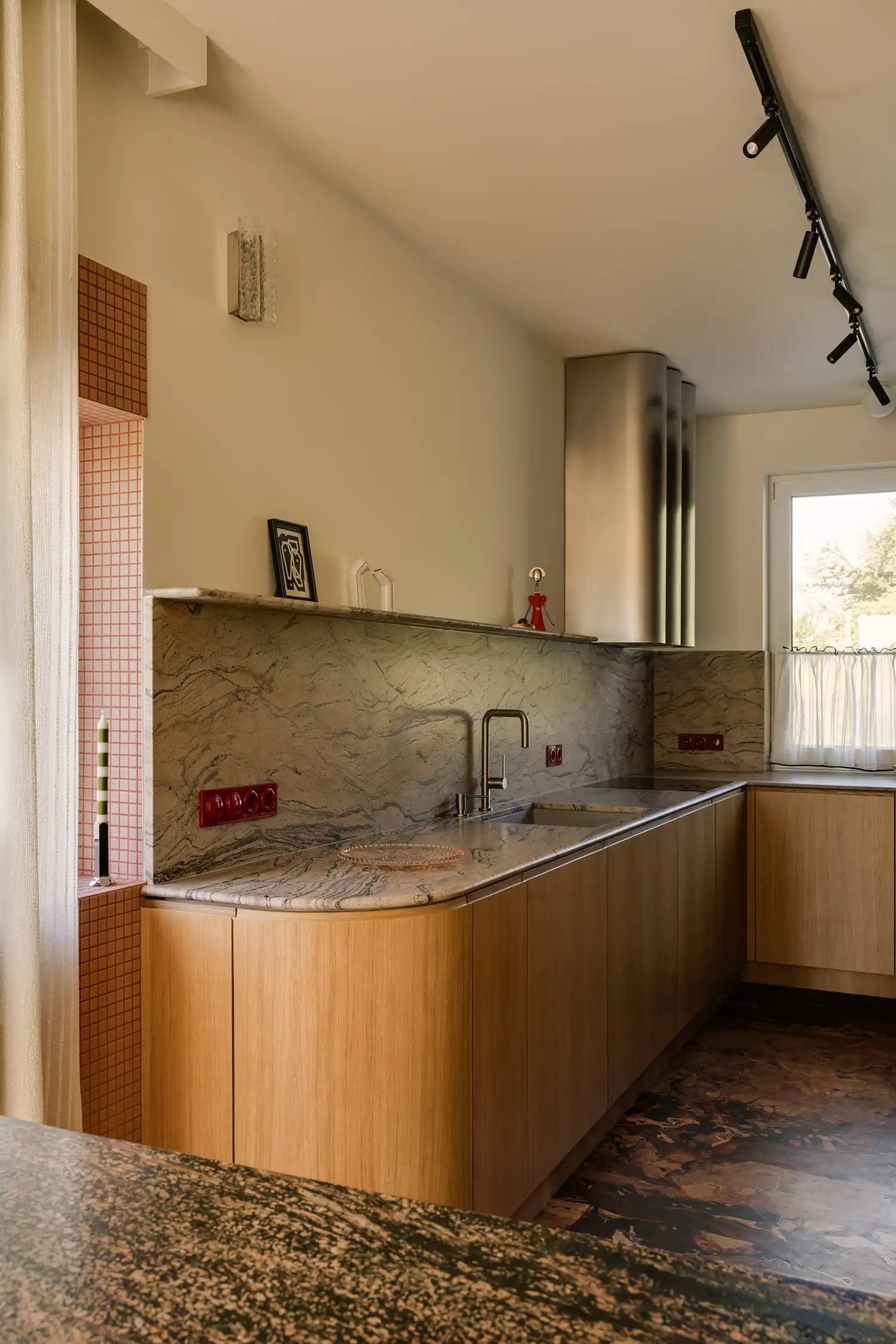
Material contrasts are most theatrical in the kitchen, accessed through a portal of Black Forest Granite. This stone, with its aggressive white veining against a dark abyss, provides a graphic backdrop that feels like a physical manifestation of a printmaker’s ink. This intensity is tempered by natural oak cabinetry and a secondary run of Prada Gold Granite in soft pinkish hues. A custom-designed steel extractor hood adds a sharp industrial edge, while a vivid orange-lacquered kitchen island base injects a playful, high-energy pulse into the center of the room.
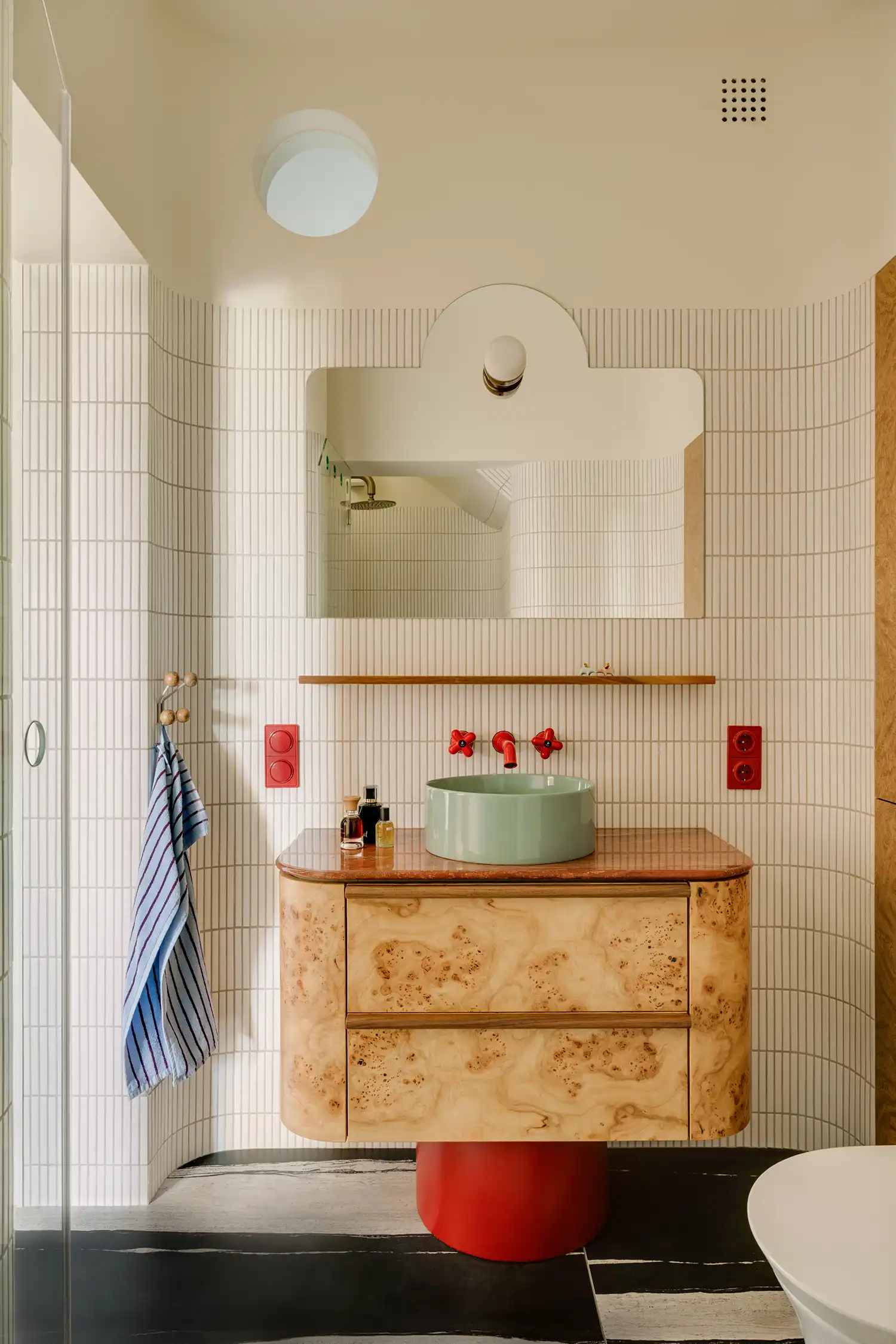
Tactile curiosity reaches its peak in the guest bathroom, a compact space that defies its lack of windows. Here, MISTOVIA utilized an undulating line of built-in storage to navigate the awkward geometry beneath the staircase. The palette is a fearless collision of red travertine, cobalt-blue porcelain, and rich burr wood. Two circular internal windows allow light to filter in from the adjacent rooms, turning a typically utilitarian “wet room” into a vivid, rhythmic experience that prioritizes sensory surprise over conventional minimalism.
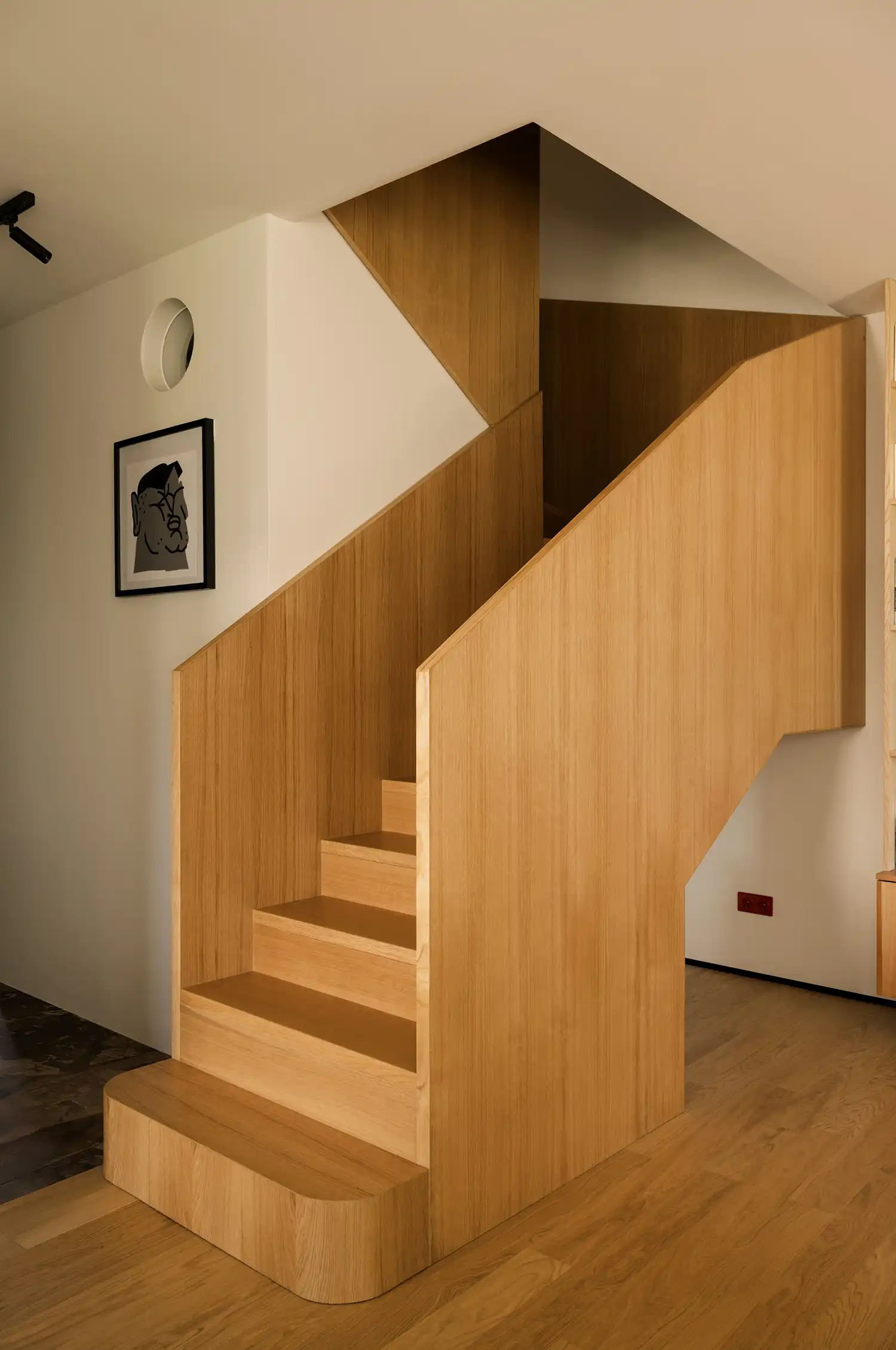
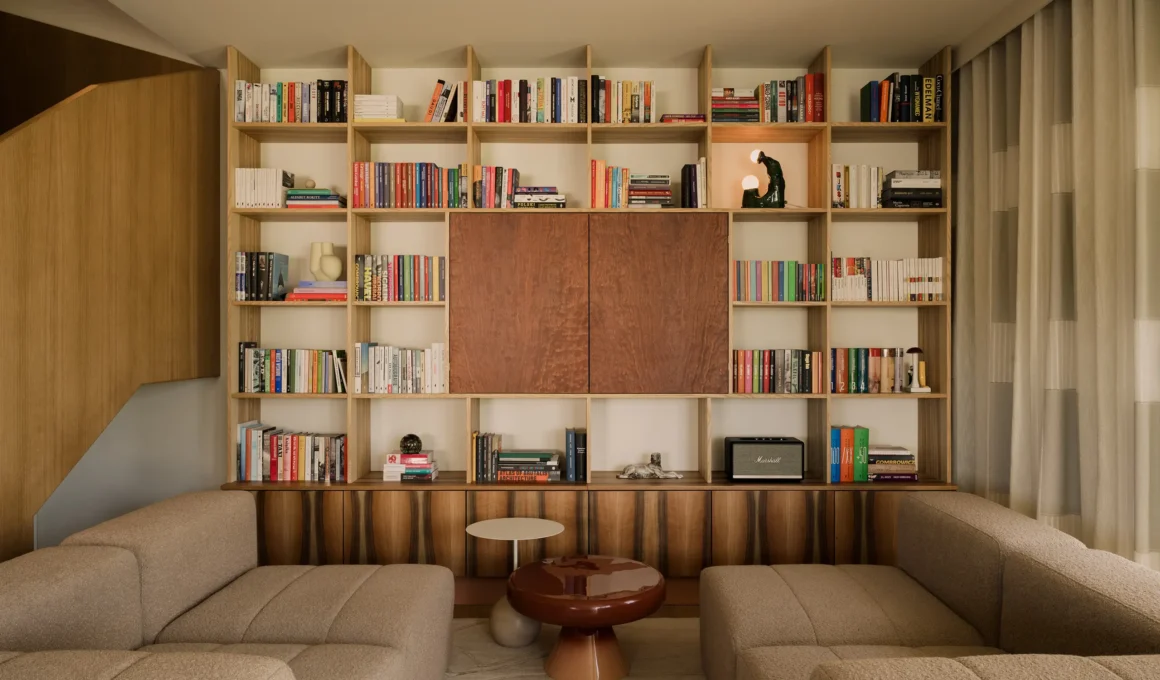
Refined transitions guide the move from the public ground floor to the more secluded upper levels. The dining area acts as a bridge, anchored by a black TAMO table and a sunset-toned Marset lamp that captures the shifting afternoon glow. The custom furniture here is particularly sophisticated; a large bookcase combines walnut, tinted ash, and exotic bubinga wood, demonstrating a level of joinery that feels more like fine cabinetry than standard storage. It is a space designed for slow conversations, with sofas arranged in a face-to-face configuration to encourage social intimacy.
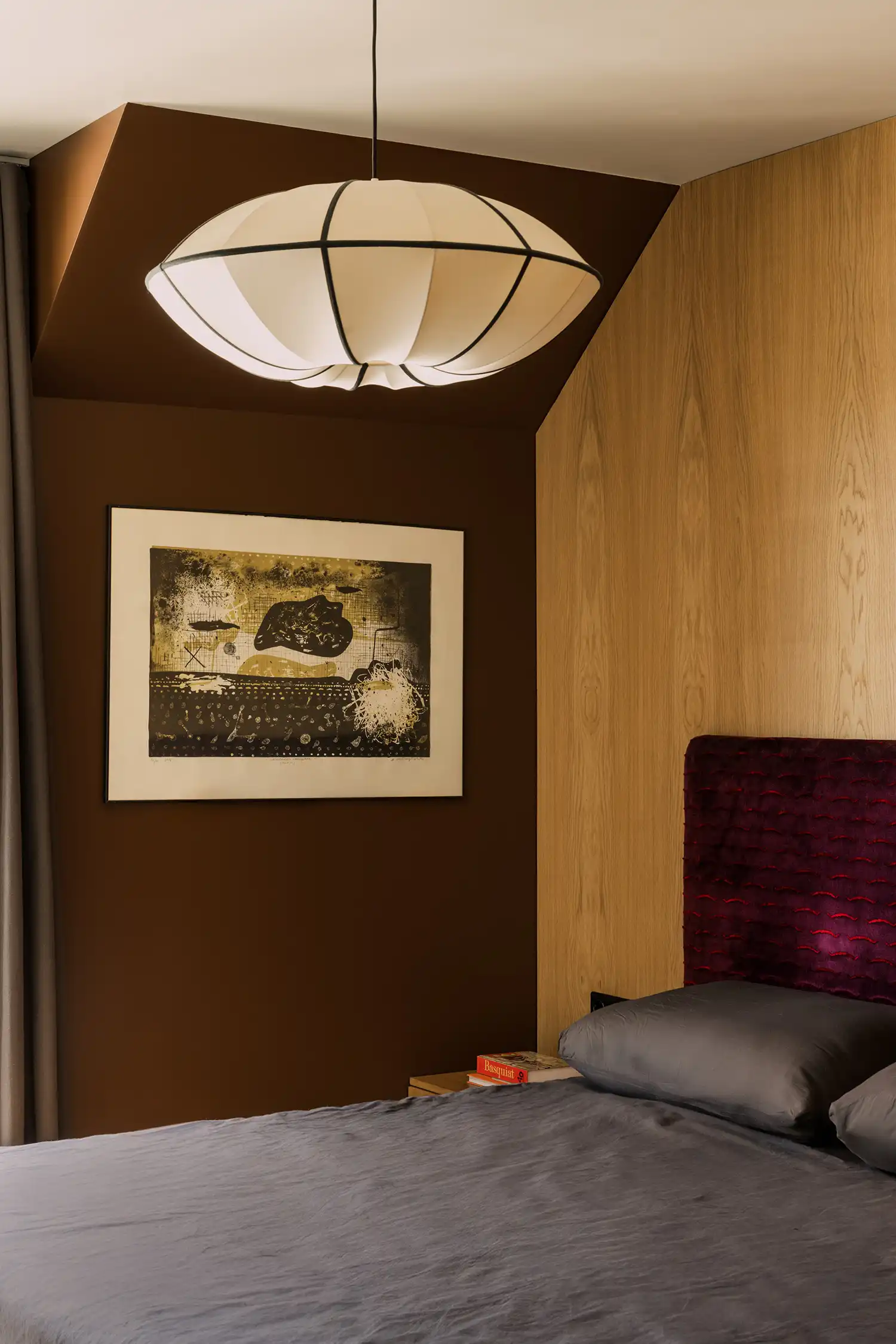
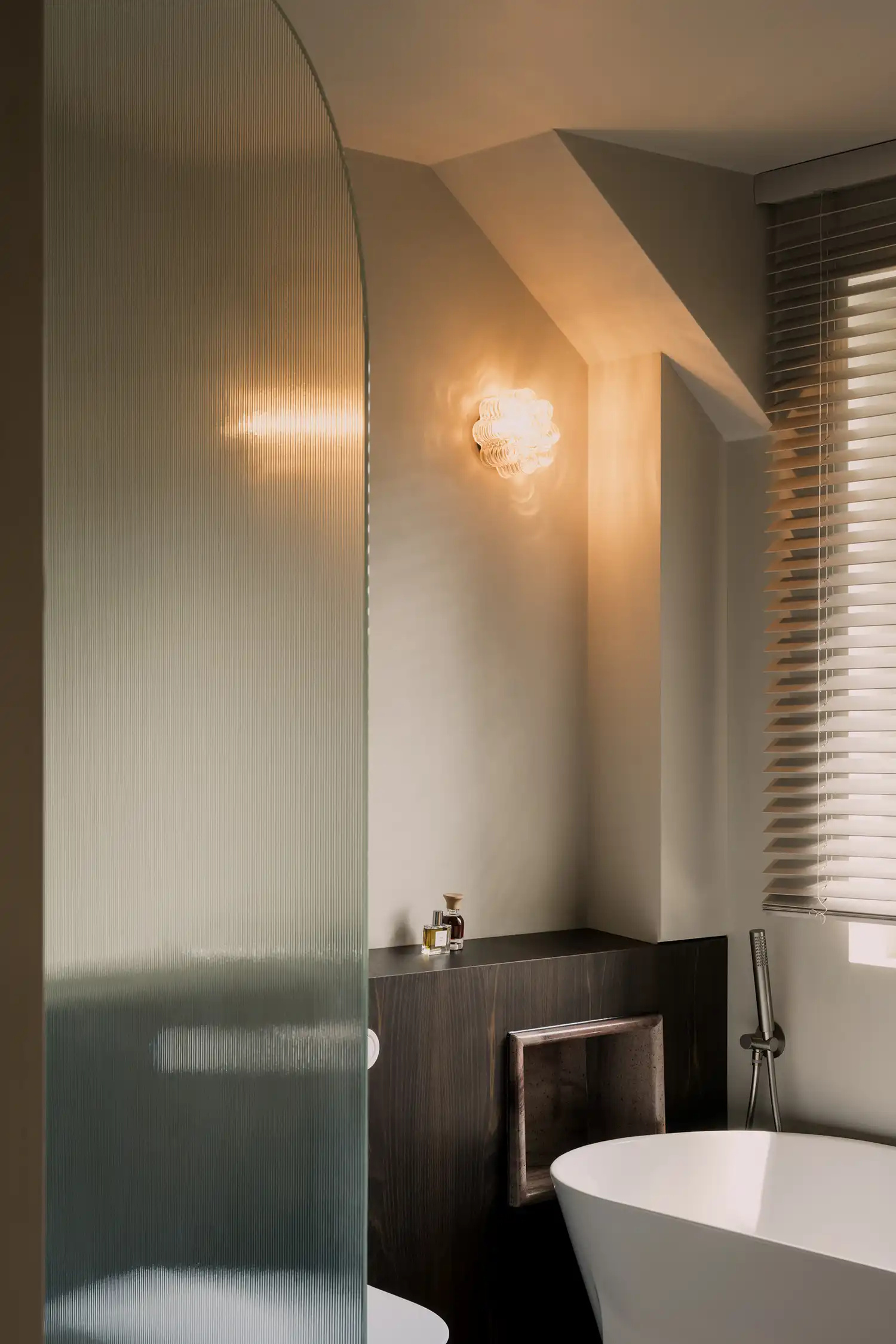
Quietude and restraint define the private quarters on the top floor. Reached via an oak and steel-frame staircase, the bedroom moves away from the graphic intensity of the kitchen. Instead, it relies on the soft forms of silk lamps and the warmth of timber headboards to create an atmosphere of total calm. The upstairs bathroom echoes this shift, trading the red travertine of the ground floor for smoked oak and textured glass, providing a balanced conclusion to the home’s narrative arc.
Coherent eclecticism allows the HFL Karcza apartment to vibrate with energy without feeling fragmented. It is a residence that proves artistic expression and domestic comfort are not mutually exclusive, but rather two sides of the same well-designed coin. This project continues MISTOVIA’s exploration of textured, era-blending interiors, much like their previous work with raw concrete and space-age elements in Warsaw or their approach to a timeless aesthetic in the Powiśle district. Through a dialogue of divergent personalities, the studio has delivered a space that is as much a gallery as it is a home.