

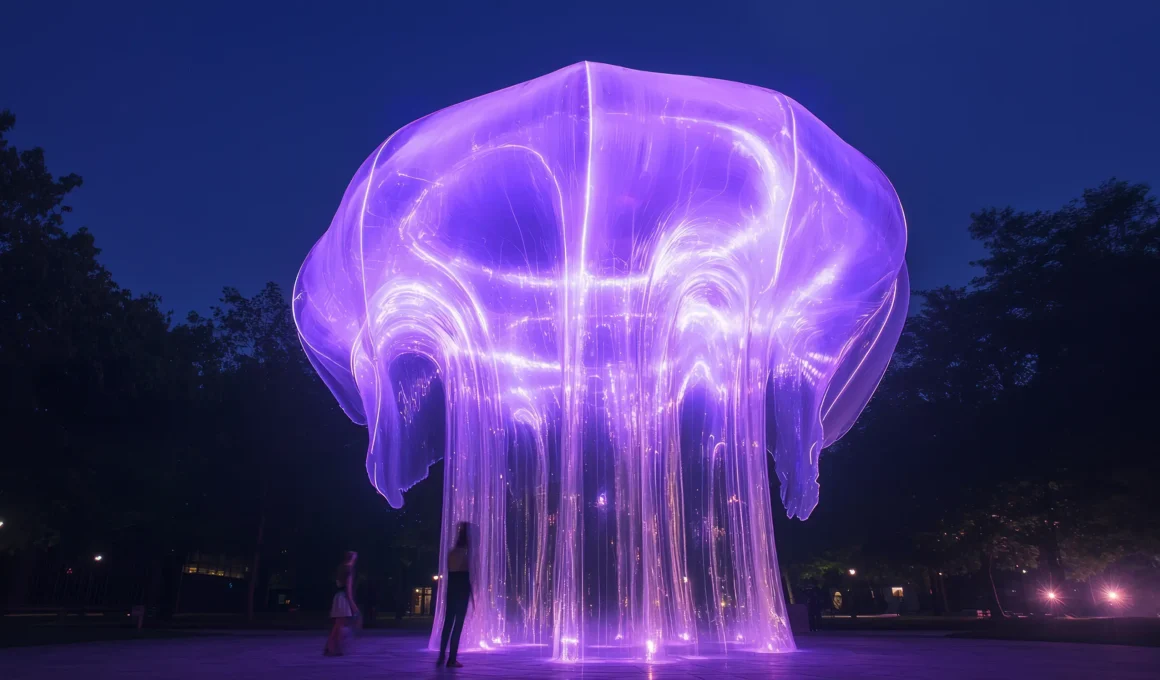
Urban revitalization is rarely achieved through architecture alone. While new buildings can redefine a skyline or restructure circulation, they do not automatically transform the perception of a place. What often changes the emotional and spatial experience of an environment are elements that create interaction, curiosity and public engagement.
In many contemporary redevelopment projects—from waterfront districts to post-industrial urban quarters—interactive art installations are increasingly used as catalysts for spatial activation. These installations operate at the intersection of architecture, technology and public space design. Rather than functioning as static monuments, they introduce participation, movement and sensory engagement into the urban environment.
For developers, city planners and architects, interactive installations are becoming strategic tools within placemaking strategies. They can transform underused plazas into destinations, introduce identity into newly built districts and redefine how people experience public space.
Studios working at the intersection of art, architecture and engineering, such as dionartstudio.com, increasingly collaborate with developers and municipalities to create large-scale interactive installations that become spatial anchors within revitalized urban environments.
Activating Dormant Public Spaces
Many urban revitalization projects begin with a common problem: the presence of large public spaces that lack activity. These spaces often emerge during redevelopment phases when former industrial zones are converted into mixed-use districts.
A newly created plaza between residential towers, office buildings and retail units may look impressive in architectural renderings, yet remain underused once the project is completed. Without elements that attract attention or encourage people to stay, the plaza functions merely as a circulation area rather than a place.
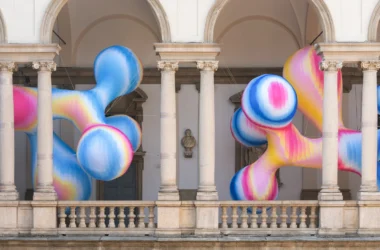
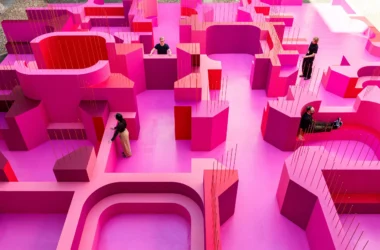
Interactive art installations can fundamentally change this dynamic. When a sculptural element responds to movement, light or sound, it invites participation. Visitors do not simply pass through the space—they engage with it.
Consider a waterfront redevelopment project where a large open promenade connects residential towers to public parks. A kinetic installation that responds to wind or human movement immediately introduces visual energy into the environment. Pedestrians slow down, gather and interact with the installation, transforming a transit corridor into a destination.
In this way, interactive art becomes an instrument of spatial activation, encouraging people to occupy spaces that would otherwise remain visually impressive but socially inactive.
Creating Identity in New Urban Districts
One of the most complex challenges in urban redevelopment is establishing identity in newly built districts. Masterplanned areas often emerge rapidly, with architecture completed within a short time frame. While the buildings may be visually impressive, the district itself may lack a recognizable character.
Interactive art installations can play a crucial role in shaping the identity of these environments. Unlike architectural forms, which are often repeated across multiple projects, landmark installations create a unique visual symbol for a specific place.
Cultural districts and waterfront developments provide clear examples. When a large-scale interactive sculpturebecomes associated with a particular plaza or promenade, it transforms into a visual reference point for the district.
Visitors begin to identify the location through the installation. Photographs circulate on social media, media coverage highlights the landmark and the space gradually becomes embedded within the collective memory of the city.
In this sense, interactive art operates not only as an aesthetic addition but as a tool for urban branding and identity formation.
Encouraging Movement and Public Interaction
Successful public spaces encourage people to move through them in meaningful ways. Architecture alone cannot always generate this movement, particularly in large open environments where spatial cues may be subtle.
Interactive installations introduce behavioral triggers into the public realm. When an installation reacts to proximity, movement or environmental conditions, it naturally attracts curiosity.
In a large urban plaza, for instance, a sculpture composed of moving elements may respond to the presence of visitors by shifting its configuration or reflecting light differently. As people approach the installation, they become part of the spatial experience.
Children interact with the structure, adults pause to observe and photographers document the installation from multiple perspectives. The public space becomes animated by human presence.
This transformation is particularly visible in civic plazas that were previously underused. By introducing an element that invites exploration, designers create an environment where people feel encouraged to stay rather than simply pass through.
Interactive Installations in Waterfront Revitalization
Waterfront developments around the world increasingly incorporate large public promenades designed to reconnect cities with their coastal or riverfront landscapes. While these projects often feature impressive architecture and landscape design, they also require focal points that attract visitors and structure the spatial experience.
Interactive sculptures positioned along waterfront promenades serve precisely this role. They provide orientationwithin long linear spaces and introduce moments of discovery along the route.
Imagine a coastal promenade extending for several kilometers along a redeveloped harbor district. Without spatial markers, the promenade may feel repetitive. An interactive installation placed at a key intersection—where pedestrian pathways meet a public plaza—becomes a landmark within the larger urban sequence.
The installation might respond to wind, sunlight or the movement of visitors, creating constantly shifting reflections or kinetic patterns. At night, integrated lighting transforms the sculpture into a luminous landmark visible from surrounding buildings and across the water.
Such installations contribute not only to the aesthetic quality of the waterfront but also to its role as a civic destination.
The Role of Technology in Contemporary Public Art
Interactive art in urban environments increasingly relies on digital technologies, sensors and responsive systems. These technologies allow installations to respond to environmental conditions and human interaction in real time.
From an architectural perspective, this responsiveness introduces a new layer of spatial experience. Instead of remaining static, public installations evolve throughout the day depending on light conditions, weather or the presence of visitors.
For example, a large kinetic sculpture in a business district plaza might respond to wind patterns, generating subtle movement that changes continuously throughout the day. In another scenario, an installation may incorporate interactive lighting systems that react to pedestrian movement at night, transforming a public square into a dynamic urban environment.
Integrating Interactive Art into Urban Masterplans
The most successful interactive installations are not added after a project is completed but integrated into the urban masterplan from the early design stages. This approach allows architects and developers to position installations at key spatial nodes within the development.
In large mixed-use districts, these nodes often correspond to plazas, transport entrances, cultural buildings or waterfront intersections. By placing a landmark installation at these points, designers create visual anchors that structure the urban experience.
The installation becomes part of the spatial narrative of the project. Visitors move from one focal point to another, navigating the district through a sequence of landmarks.
This strategy also enhances the long-term value of the development. Landmark installations contribute to the memorability of the place, strengthening its cultural and commercial appeal.
As cities continue to redevelop former industrial zones and expand into new mixed-use districts, the challenge of creating meaningful public spaces becomes increasingly complex. Architecture and landscape design establish the framework of these environments, but additional elements are often required to activate them.
Interactive art installations offer a powerful solution. By introducing movement, responsiveness and participationinto public spaces, they transform passive environments into dynamic urban destinations.
For architects, developers and city planners, these installations represent more than artistic statements. They are spatial tools that shape how people move through cities, how public spaces are experienced and how new urban districts establish their identity.
When integrated thoughtfully into architectural and urban design strategies, interactive art becomes a catalyst for urban revitalization—turning overlooked spaces into vibrant places where architecture, technology and human interaction converge.