



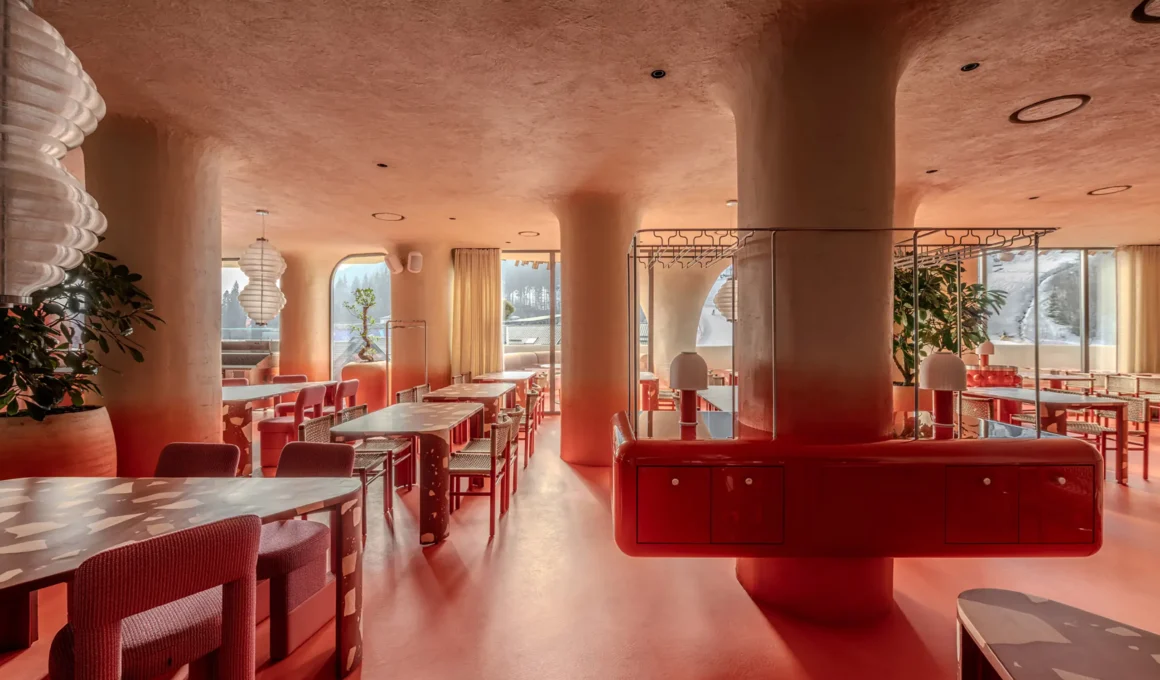
Netled within the Hrybova Khata hospitality complex in the Bukovel ski resort, Rosso is a family-oriented Italian restaurant where YOD Group translates the vibrant essence of Mediterranean gastronomy through a palette inspired by the forest floor. By merging the biological geometry of mushrooms with the warm, evocative tones of tomato sauce and aged wine, the studio has created a fluid, immersive environment that balances the rustic charm of the Ukrainian mountains with a contemporary, spirited hospitality experience.
A conceptual bridge between cultures defines the interior, where the name Rosso—Italian for red—serves as the primary narrative thread. Rather than leaning on predictable rustic tropes often found in alpine settings, the designers opted for an emotional exploration of color. The space is a celebration of the shared meal, utilizing a sandy-red spectrum to evoke the warmth of a kitchen in the heart of Italy, while maintaining a deep, structural connection to the surrounding woodland landscape.
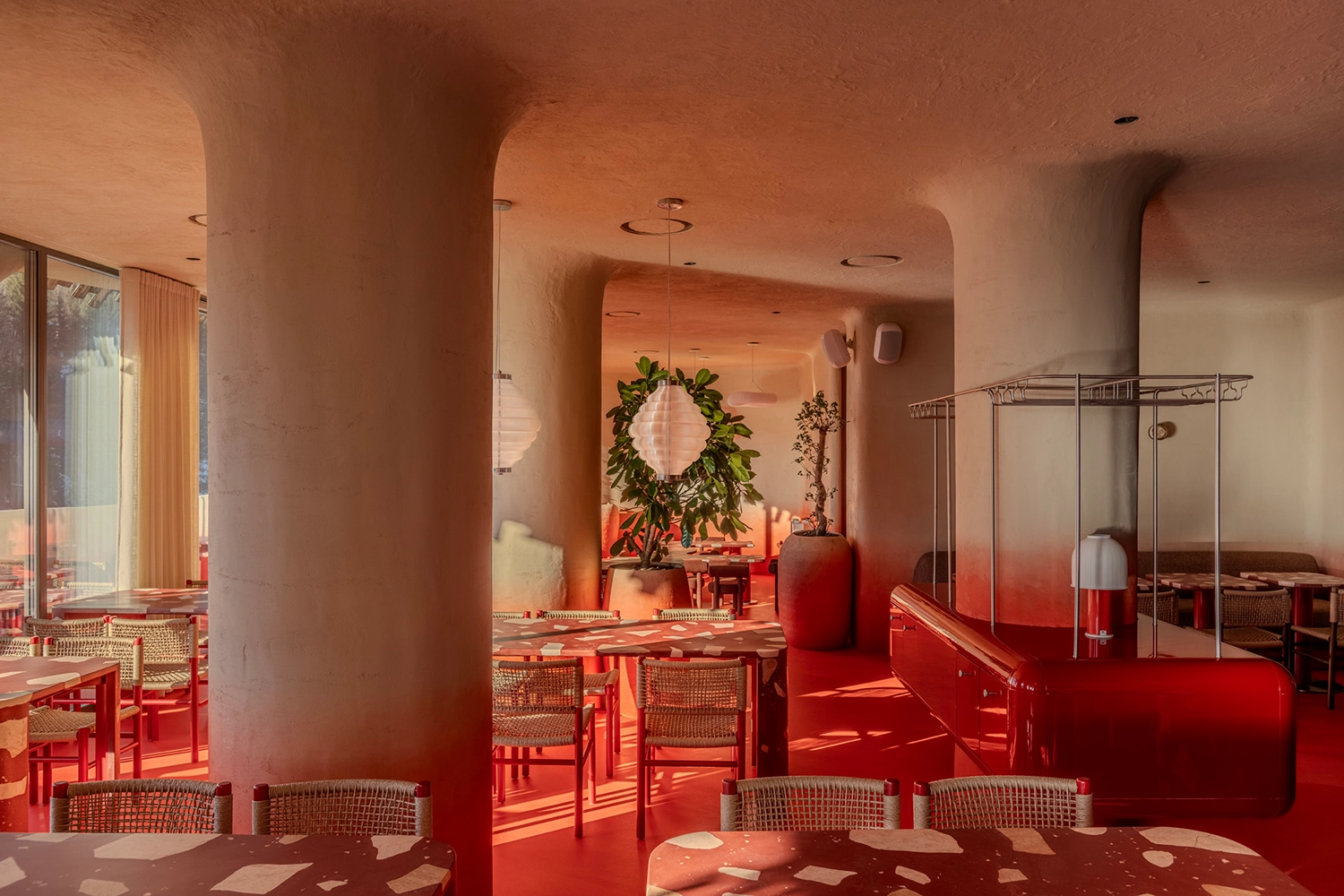
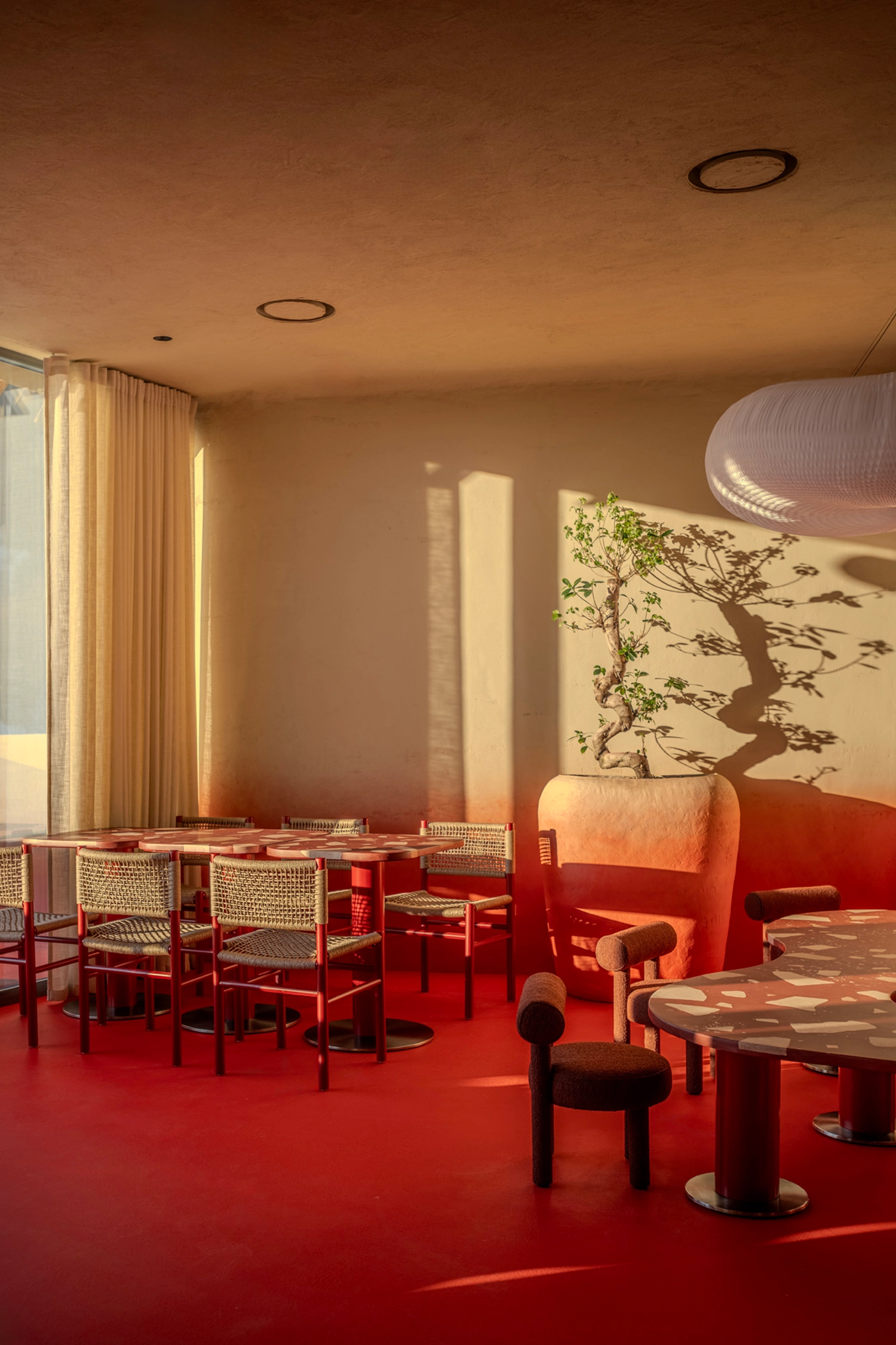
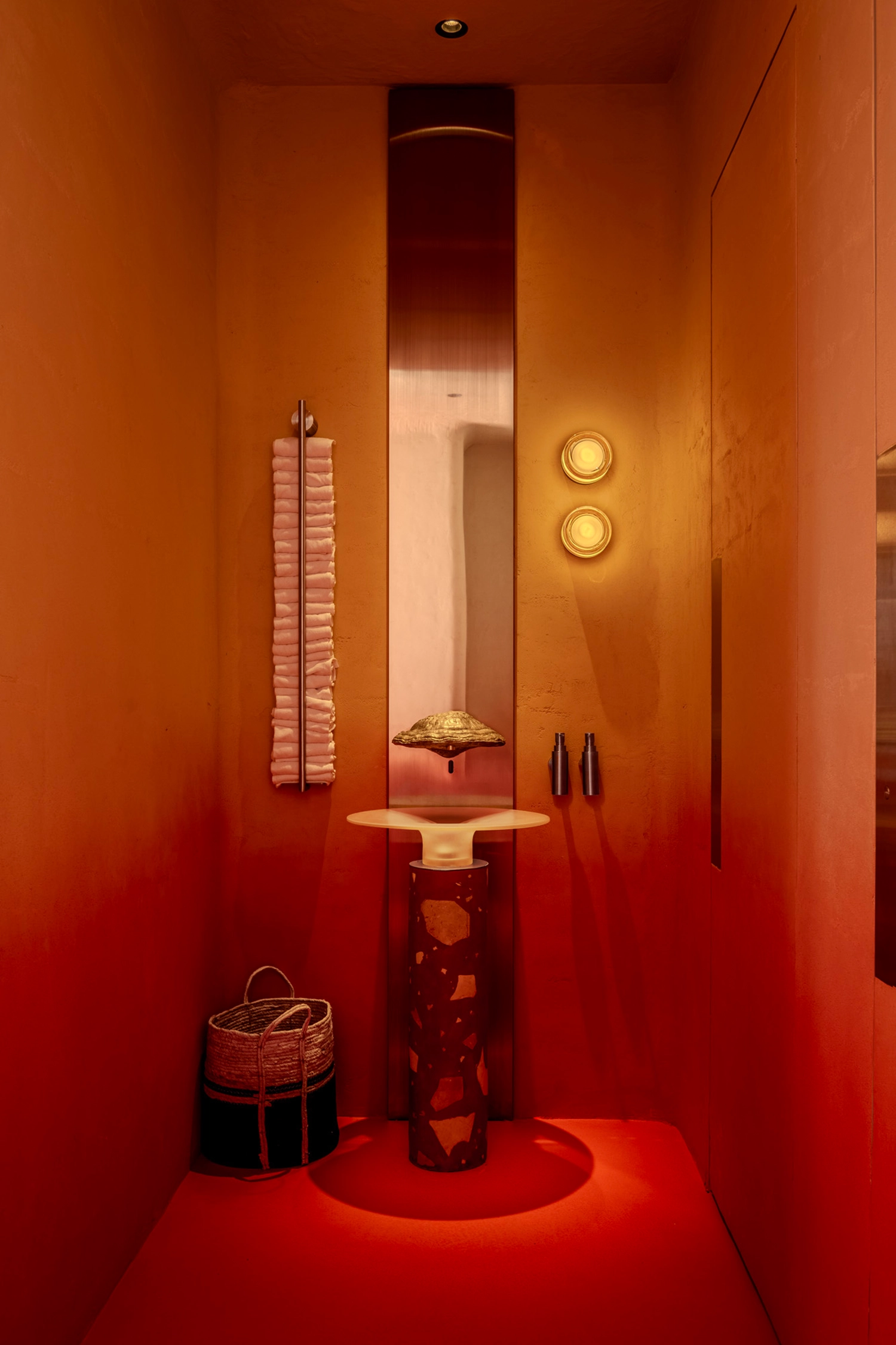
The gradient of life manifests on the walls, where YOD Group applied a sophisticated color transition that anchors the room. Deep, earthy crimsons at the base gradually dissolve into soft pinks and warm, sandy hues as the eye moves toward the ceiling. This vertical shift mimics the natural growth patterns of the fly agaric mushroom, one of the forest’s most visually striking organisms, bathing the interior layout in a rhythmic glow that feels both energetic and calming.
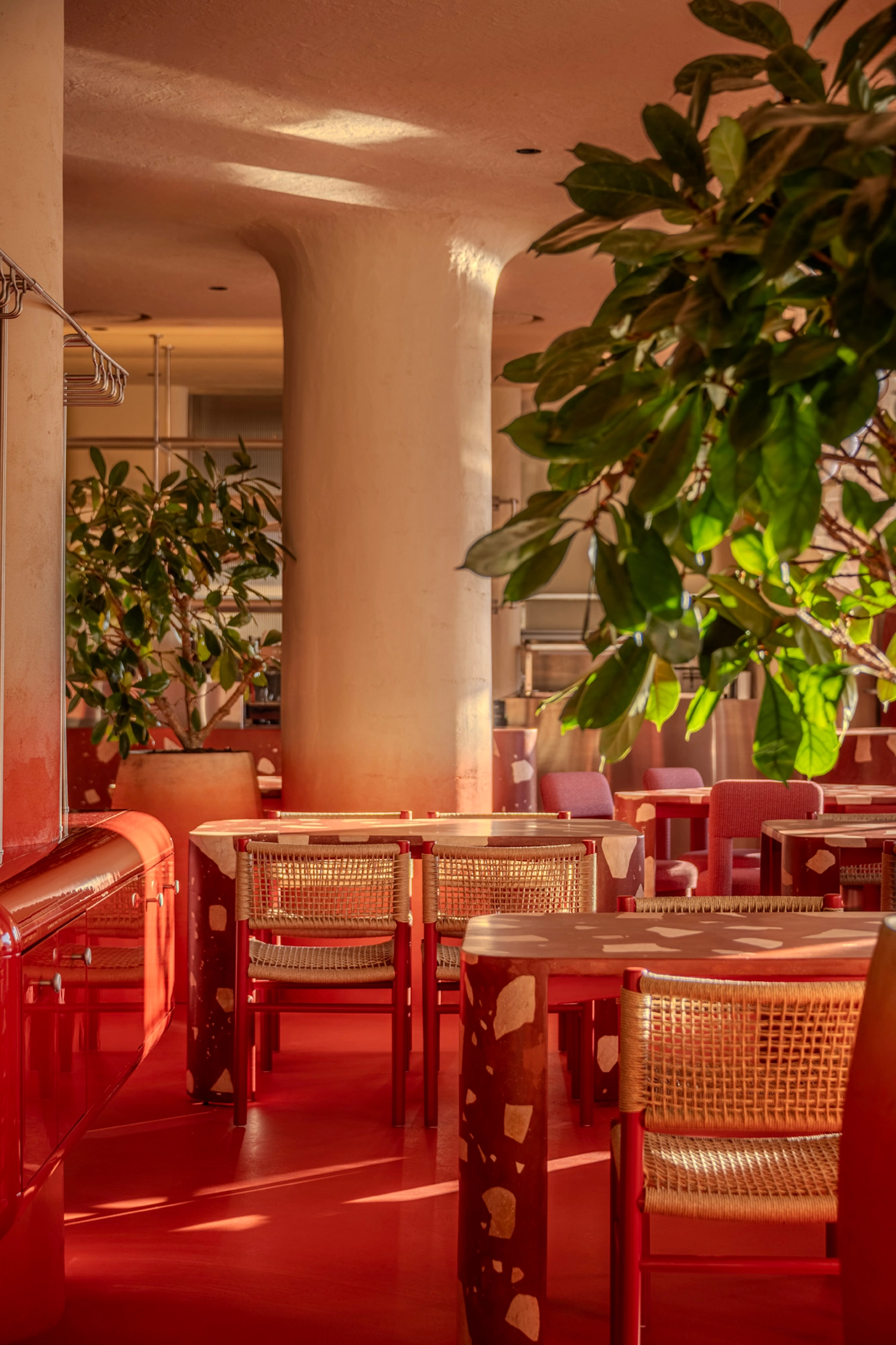
Biomorphic structural elements soften the transition between functional zones, moving away from rigid lines in favor of organic fluidity. Massive columns rise from the floor, seamlessly merging into the ceiling to mimic the underside of a mushroom cap. This anatomical approach extends to the large windows, where rounded corners frame the snowy Bukovel peaks, and even into the private niches, where a custom-designed faucet shaped like a chaga mushroom offers a tactile, unexpected nod to the project’s mycological DNA.
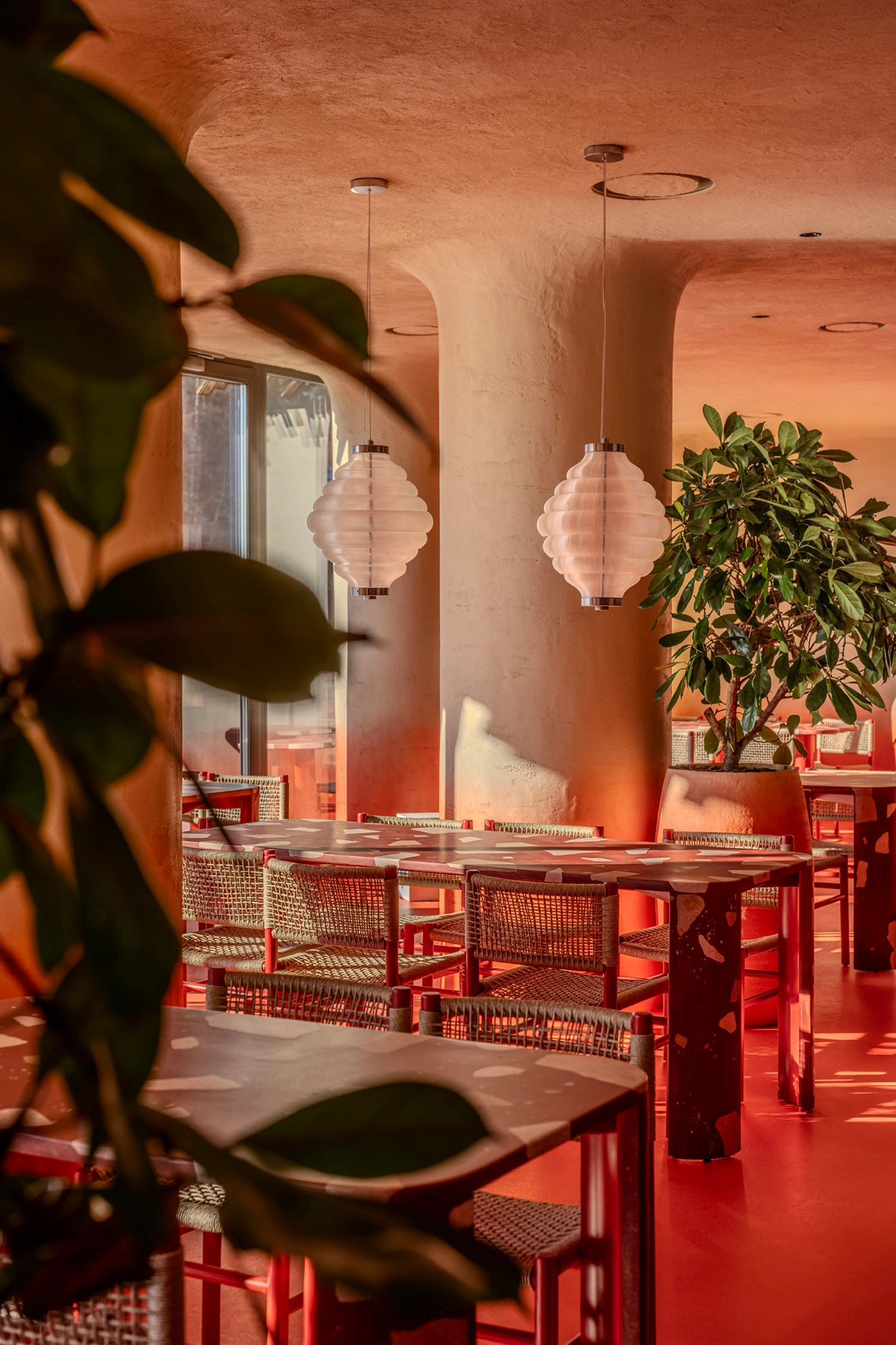
Materiality and local craftsmanship play a pivotal role in grounding the high-concept aesthetic. The communal dining areas feature heavy, concrete-cast tables with terrazzo-effect surfaces, providing a cold, tactile contrast to the warmth of the walls. The seating highlights the strength of the Ukrainian furniture sector, incorporating pieces from Woo Furniture and Noom. These elements are illuminated by 3D-printed pendant lights that hang like wild beehives, casting a patterned light that enhances the sensory experience of the diners.
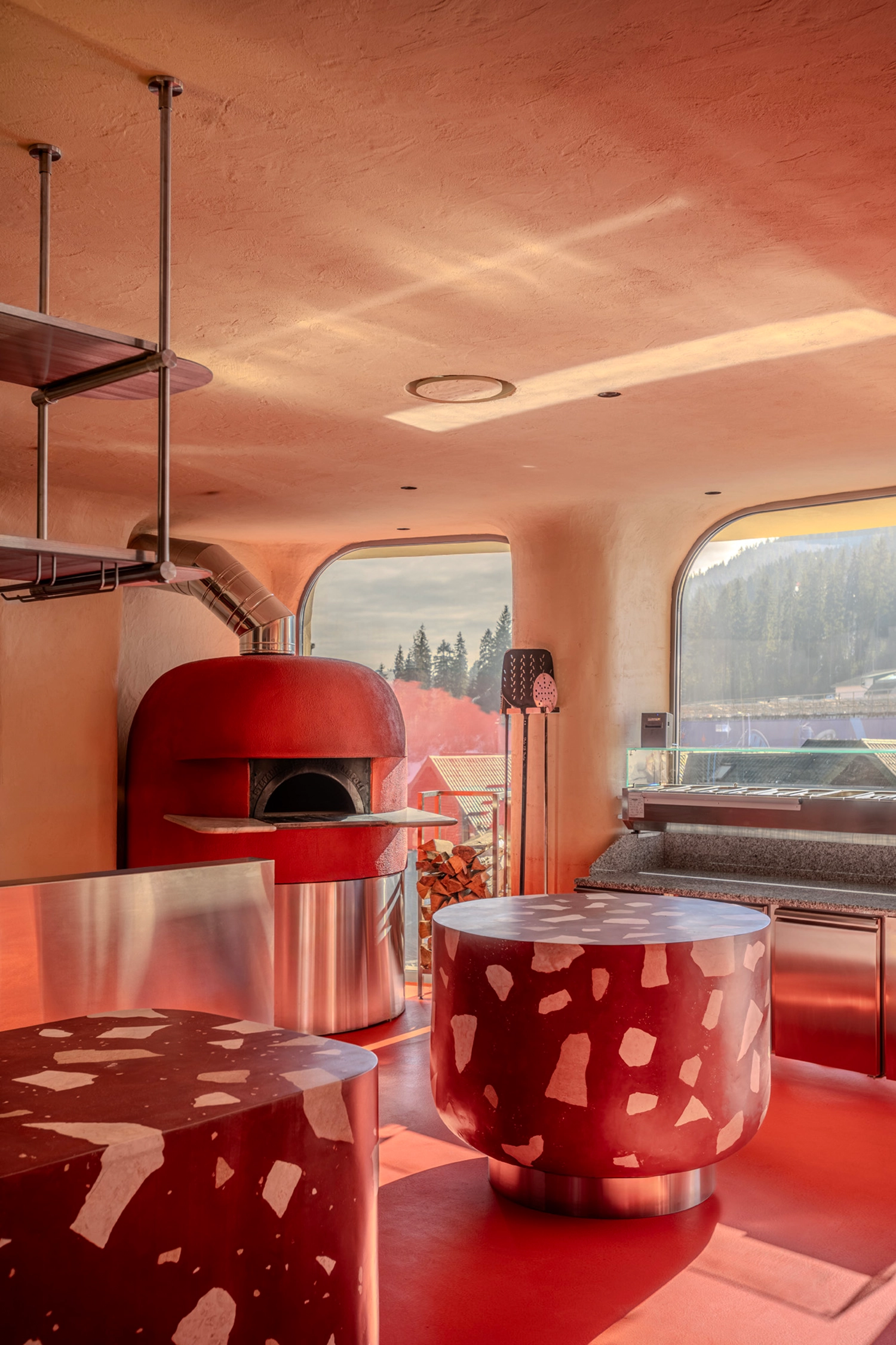
The culinary theater is positioned as the restaurant’s gravitational center, featuring an open kitchen that invites guests into the ritual of preparation. The large pizza oven stands as a focal point, turning the act of cooking into a performance of light and movement. This transparency fosters a lively, domestic atmosphere where the aroma of wood-fired dough and simmering sauces becomes a physical part of the spatial storytelling, bridging the gap between the chef and the family unit.
Inclusive spatial programming ensures that the children’s area is not an isolated afterthought but a fluid extension of the main hall. Designed to host culinary workshops, this zone encourages younger guests to engage with the restaurant’s theme through play and creation. Outfitted with child-sized Noom chairs, the area maintains the same high standard of industrial design found throughout the rest of the venue, ensuring the aesthetic integrity of the space remains uninterrupted.
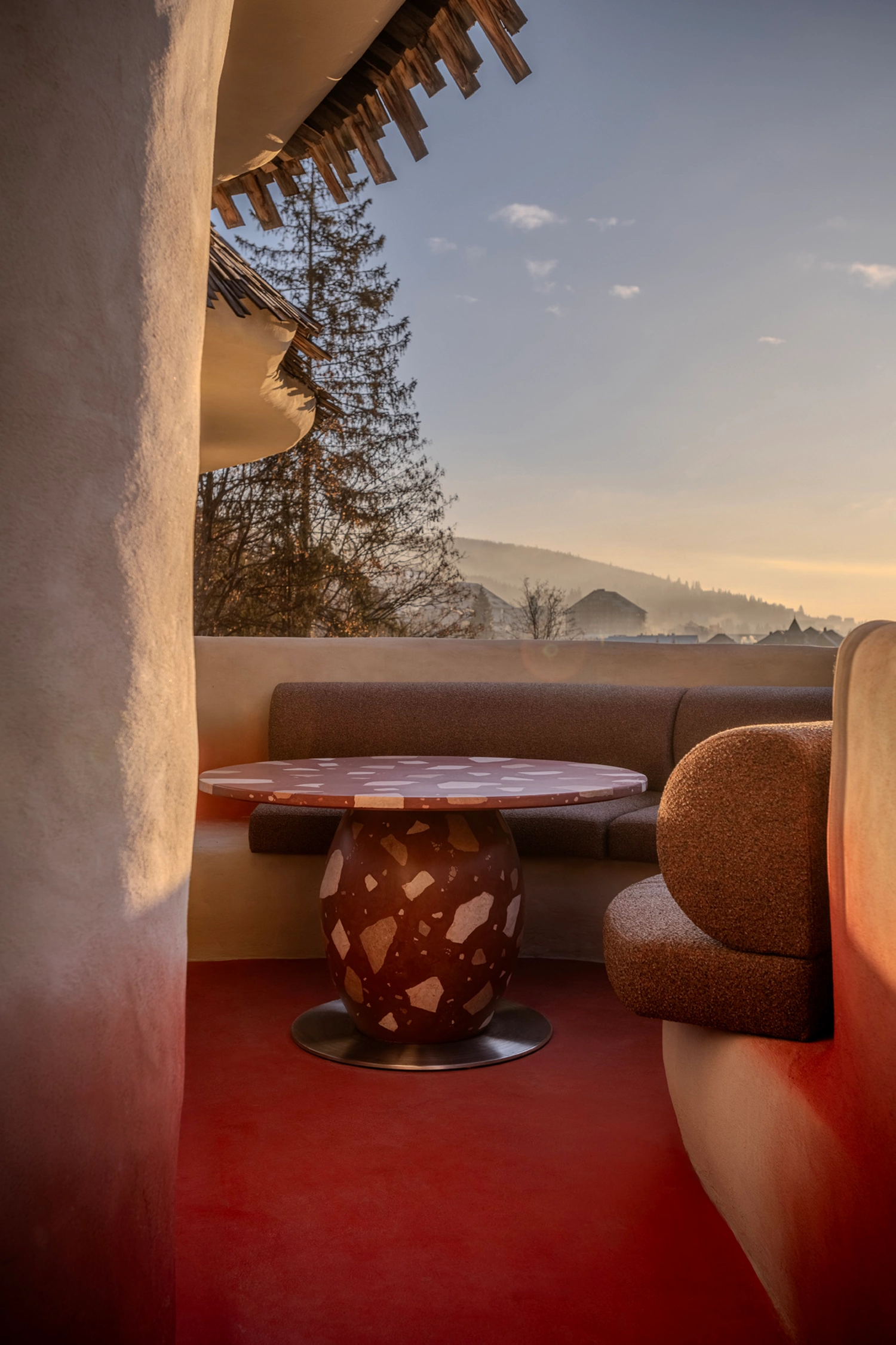
A dynamic family atmosphere was achieved through this precise mix of custom solutions and bold color theory. Dmytro Bonesko, co-owner and art director of YOD Group, notes that while Rosso carries the DNA of the broader complex, it offers a more energetic rhythm. By focusing on custom lighting and a gradient-driven environment, the studio has moved beyond mere decoration to create a space that feels living and breathing, echoing the resilience and creativity inherent in the region’s evolving landscape.
The broader cultural resurgence of Ukraine is perhaps most visible in these sophisticated hospitality ventures, which continue to emerge with a distinct, world-class identity. From the Gio Ponti-inspired elegance of Frank Café in Kyiv to the thatched-roof vernacular of the Under the Reed guesthouses, projects like Rosso and the minimalist Meva Spot demonstrate an unwavering commitment to beauty and innovation. These spaces do more than serve food or provide shelter; they act as beacons of a thriving creative spirit, proving that even in challenging times, the pursuit of exceptional human-centric environments remains a powerful form of cultural expression.