

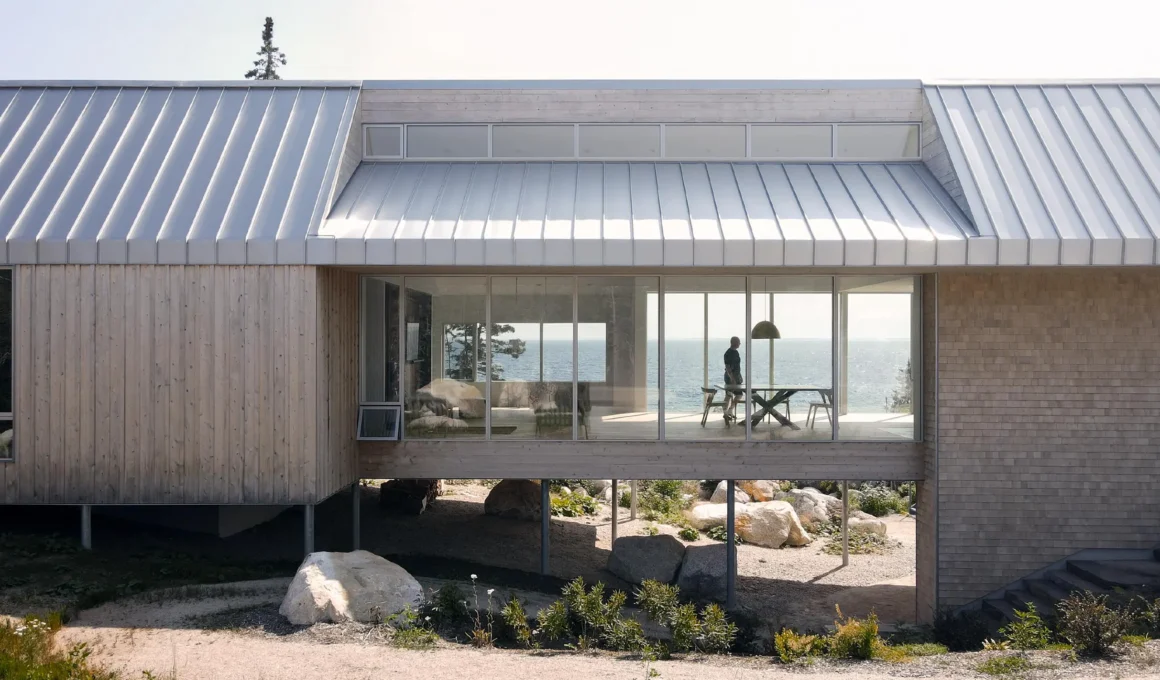
Toronto-based firm Omar Gandhi Architects has completed the East River Residence, a slender, bridge-like structure in Nova Scotia that spans a natural valley to connect two rocky shorelines while offering a contemplative retreat shaped by the tidal rhythms of the Atlantic.
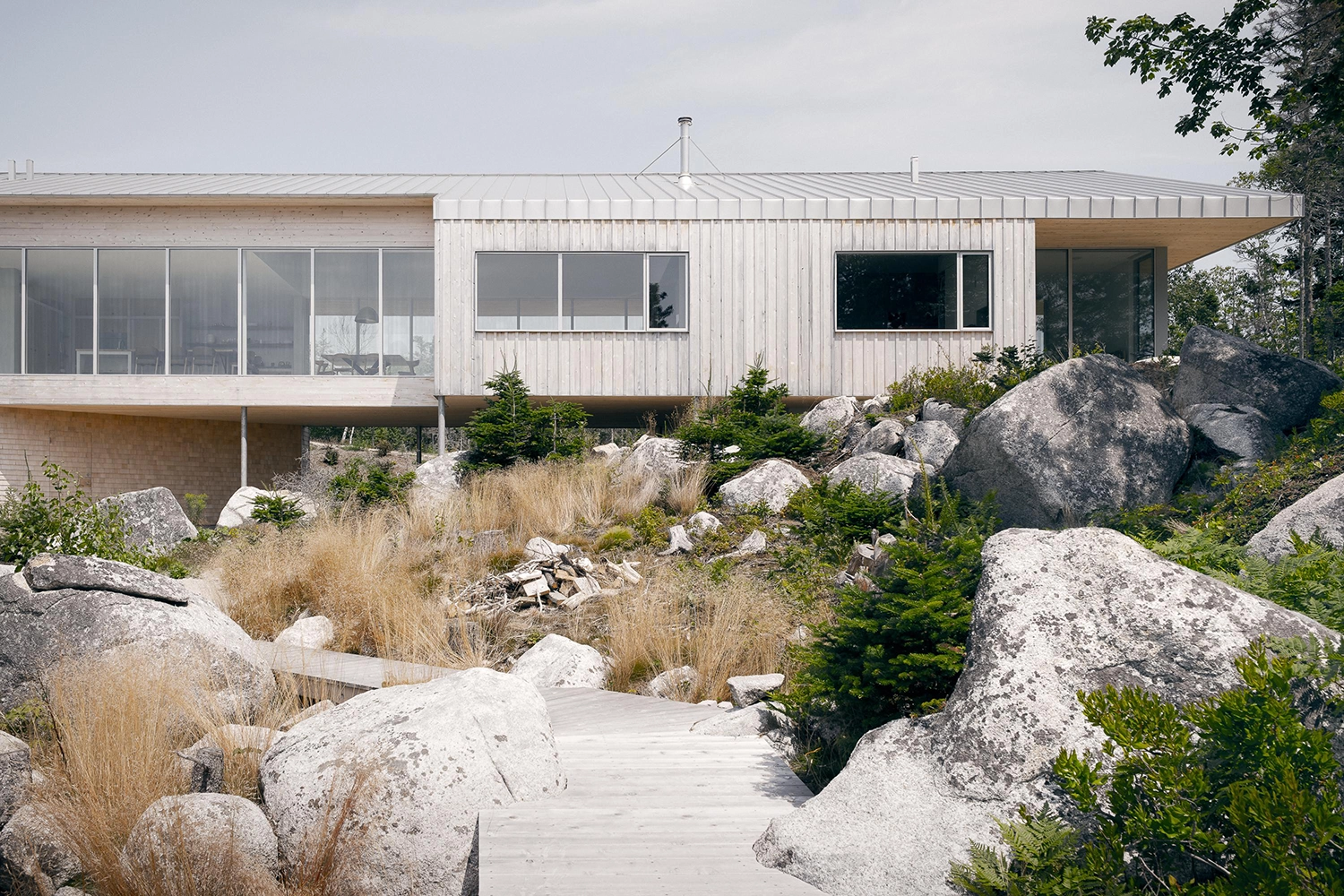
A rhythmic response to topography defines the project’s initial encounter with the site. Moving away from the dense coastal forest of East River, the building reveals itself as a delicate intervention within a soft valley nestled between steep inclines. Rather than leveling the earth, the studio opted to span the gap, allowing the natural landscape to flow uninterrupted beneath the living quarters. This decision preserves the local drainage and flora, positioning the inhabitants as observers of the terrain rather than conquerors of it.
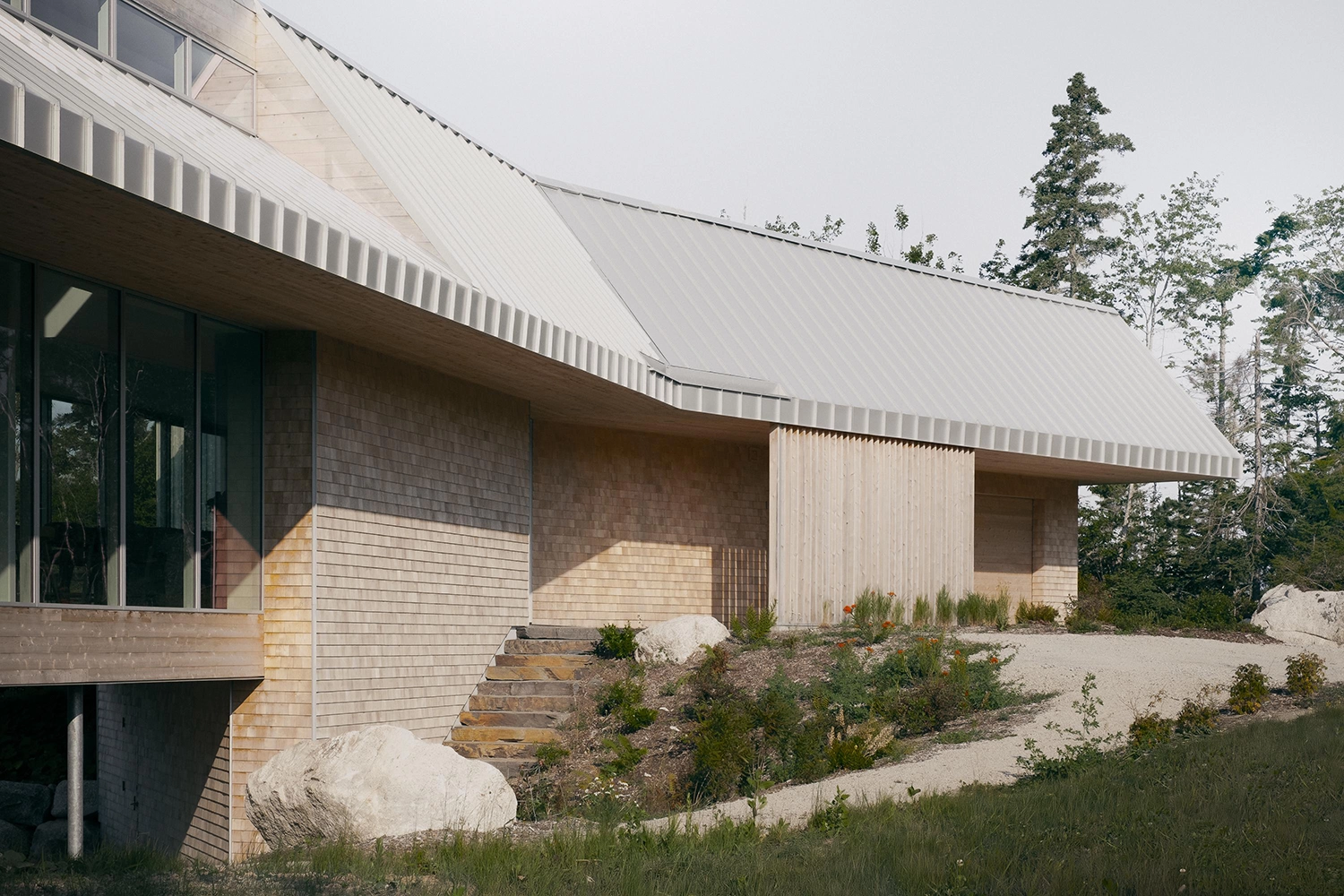
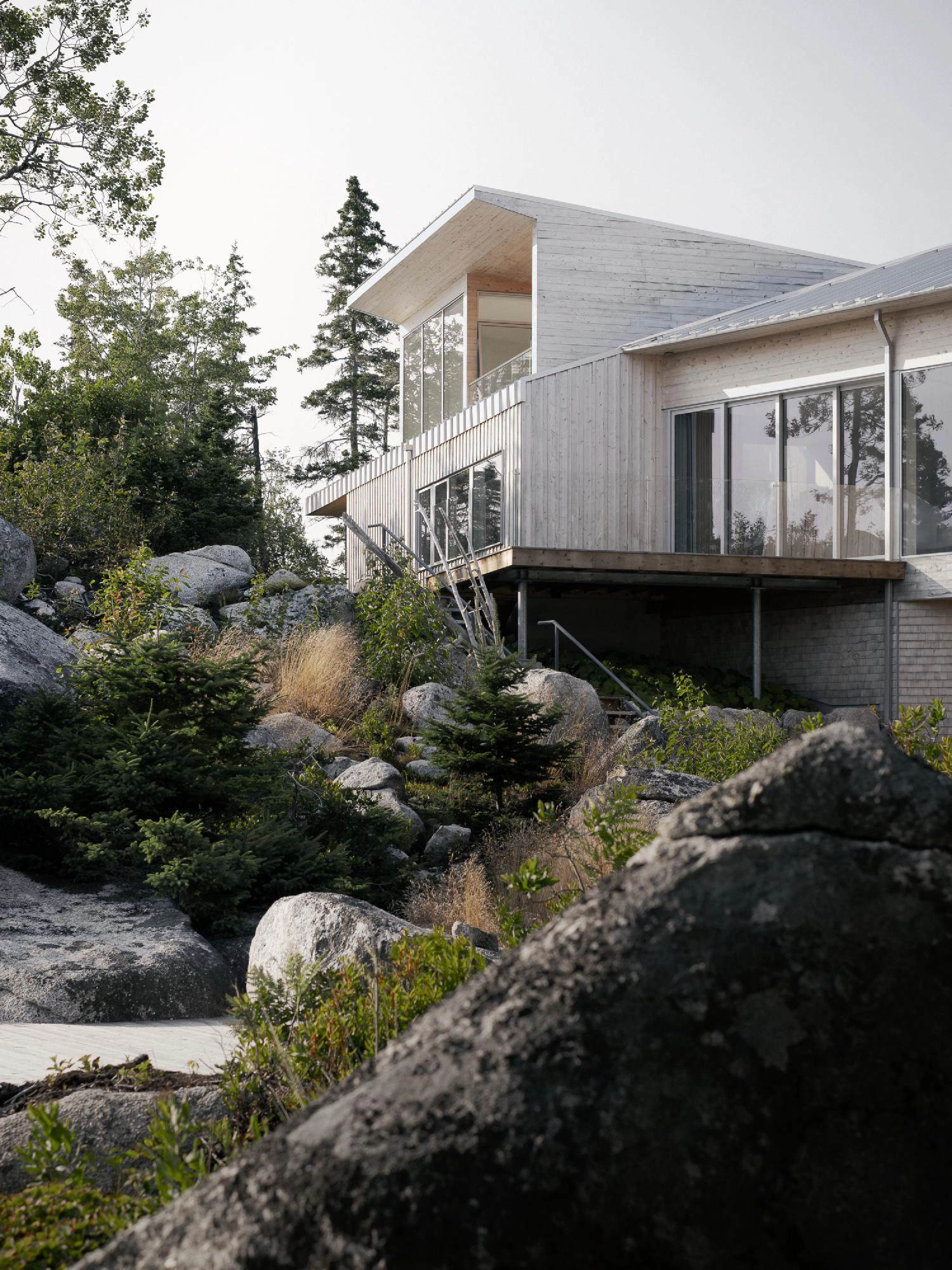
The formal composition utilizes a long, metal-clad offset gable that hovers above a warm, cedar-wrapped base. This geometric shell is not static; it shifts and undulates in direct response to the interior program. Supported by a series of slender steel columns, the volume appears to float, minimizing its physical footprint while maximizing the visual drama of the rugged Canadian coastline. The contrast between the industrial resilience of the metal and the organic texture of the wood reflects the dual nature of the environment—harsh Atlantic weather meeting the softness of the forest.
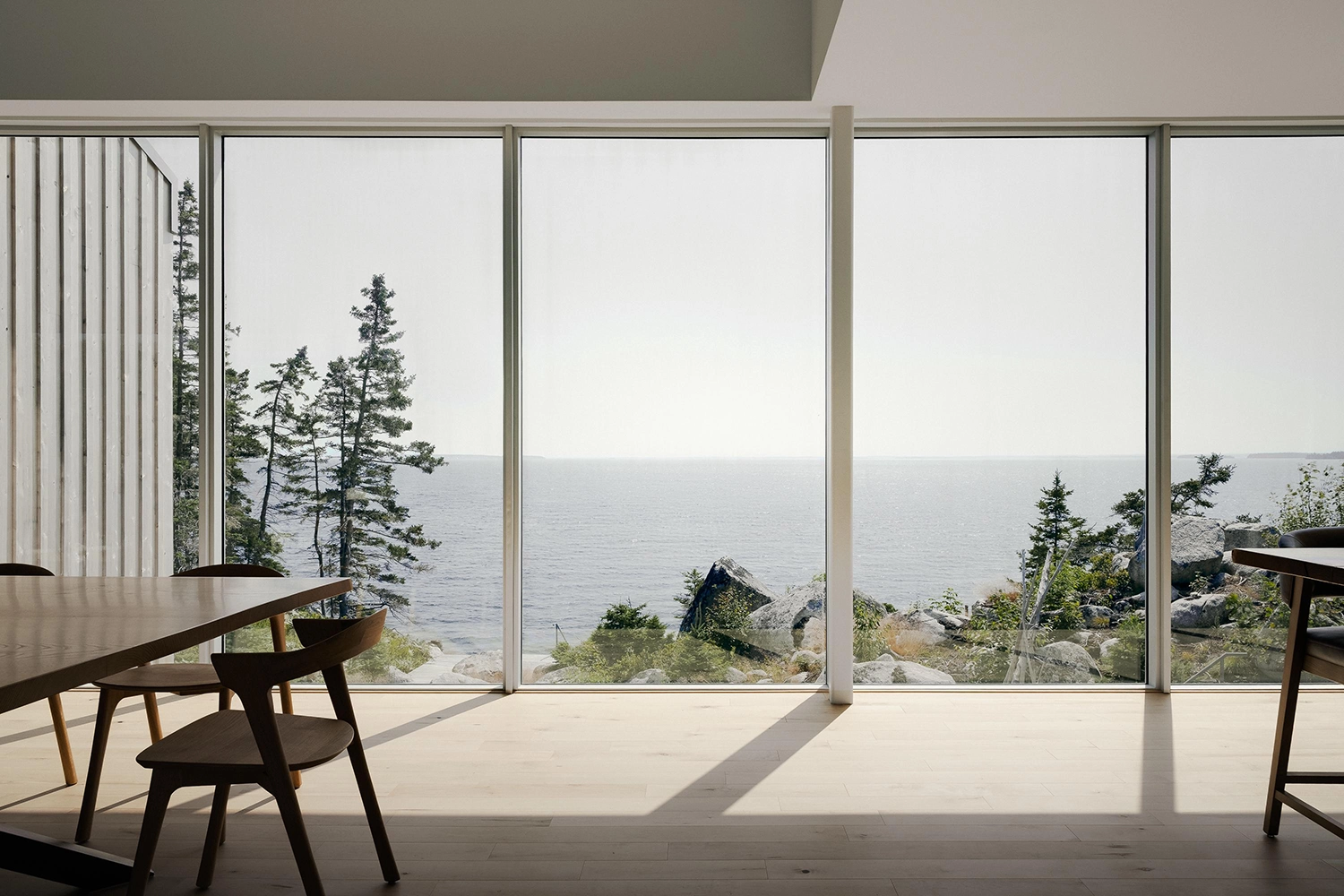
Interior atmospheres are dictated by the compression and expansion of the roofline. In the primary living areas, the ceiling dips lower, creating an intimate environment for gathering that draws in the warmth of the southern sun. Conversely, in the yoga studio, the roof plane lifts toward the sky, framing expansive views of the open ocean. This volumetric shifting ensures that the sensory experience of the house remains tied to the time of day and the specific function of each room.
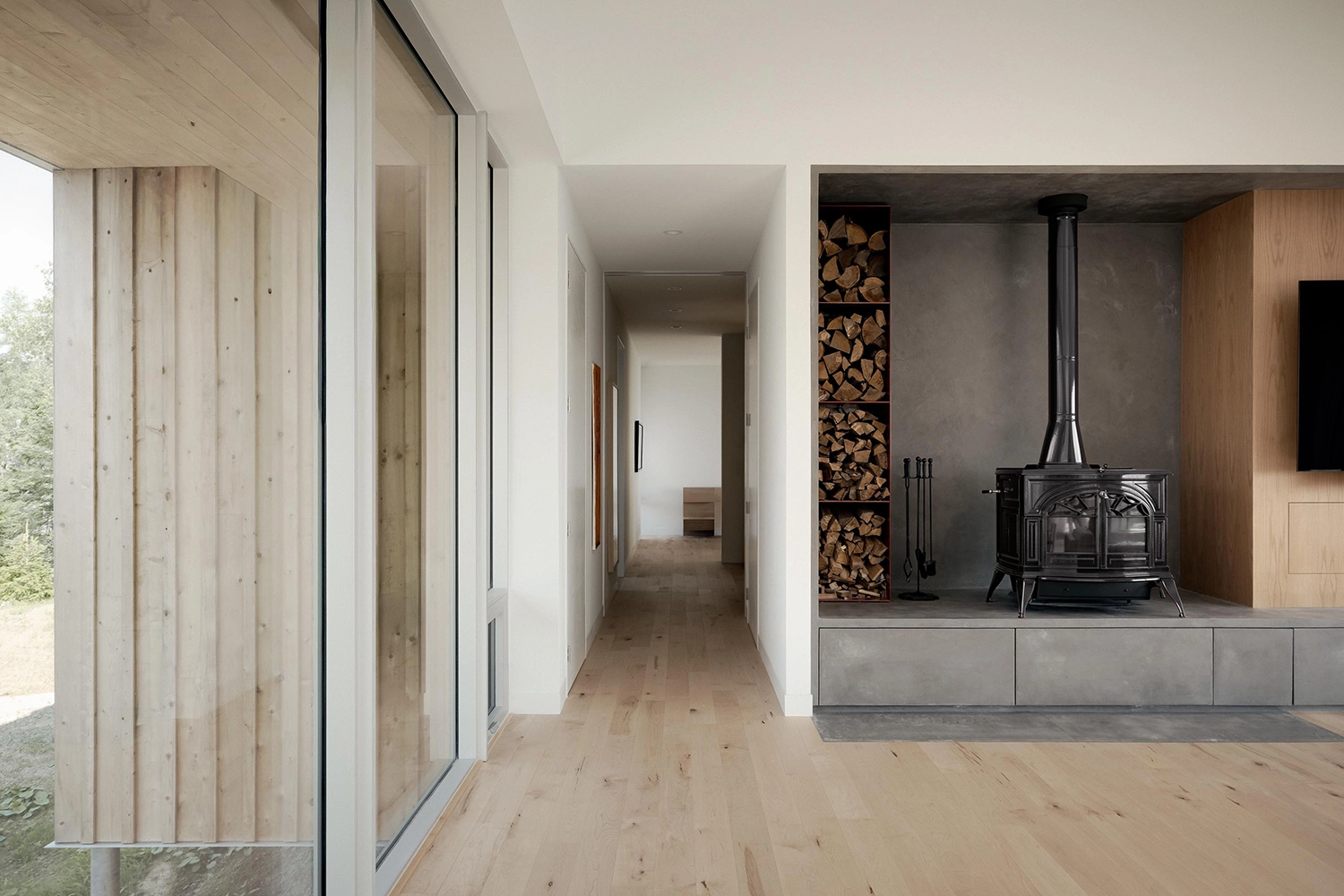
A seamless threshold exists between the protected interior and the wild exterior. Large glazed openings act as cinematic frames, drawing the changing colors of the horizon deep into the floor plan. Sheltered terraces and carved-out outdoor rooms provide transition zones where the residents can experience the salt air while remaining shielded from the wind. The transition is not just visual but physical, as the interior palette emphasizes natural materials that echo the stones and timber found just outside the glass.
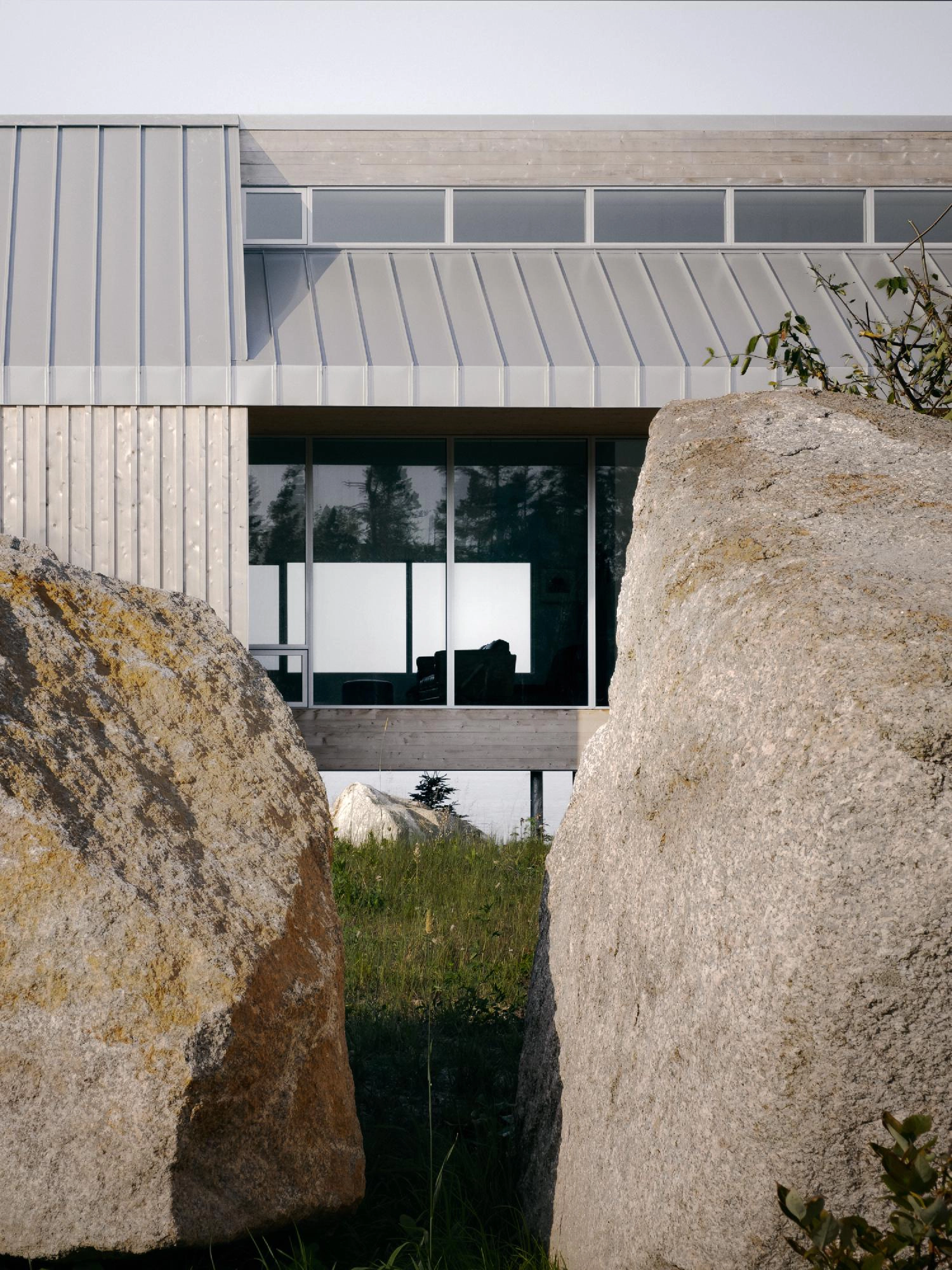
Engaging with the sea becomes the final act of the architectural promenade. Beneath the suspended belly of the house, a pathway guides occupants toward a timber dock that extends over the water. This structure allows for a direct interaction with the tidal movements, anchoring the home to the specific geography of Nova Scotia. It is a house that listens to the land, standing as a quiet settlement that prioritizes the shifting light and the weather patterns of the North Atlantic.
Contextual dialogues in contemporary Canadian residential works often grapple with this balance of shelter and exposure. For instance, the Angle of Repose Passive House in Ontario utilizes a similar sensitivity to site, though it leans into passive heating strategies and a black timber aesthetic to disappear into the woods. While Gandhi’s work in East River uses elevation to bridge a valley, projects like the Maison du Lac Perdu in Quebec focus on a more grounded, monolithic presence, using a simplified geometry to frame lakefront views with a different kind of quietude.
The vernacular evolution continues to move away from heavy, earth-bound cabins toward more ethereal structures. The Chalet du Ruisseau demonstrates this by reinventing traditional forms with a lighter touch, much like the East River Residence’s use of steel stilts. These projects collectively represent a shift in how we inhabit the Canadian wilderness: moving toward a philosophy of “touching the ground lightly” where the focus is on the sensory connection to water, forest, and sky rather than the imposition of a structure upon the site.
Refining the relationship between human habitation and the wild requires an analytical eye for detail and a respect for the void. The East River Residence succeeds by acknowledging that the most powerful part of the site is the space between the rocks—the valley itself. By choosing to bridge rather than fill, and by allowing the roof to dance between intimacy and vastness, the project highlights a sophisticated path forward for coastal living. It is a residence that functions as a lens, sharpening the resident’s awareness of the horizon and the timeless pulse of the sea.