



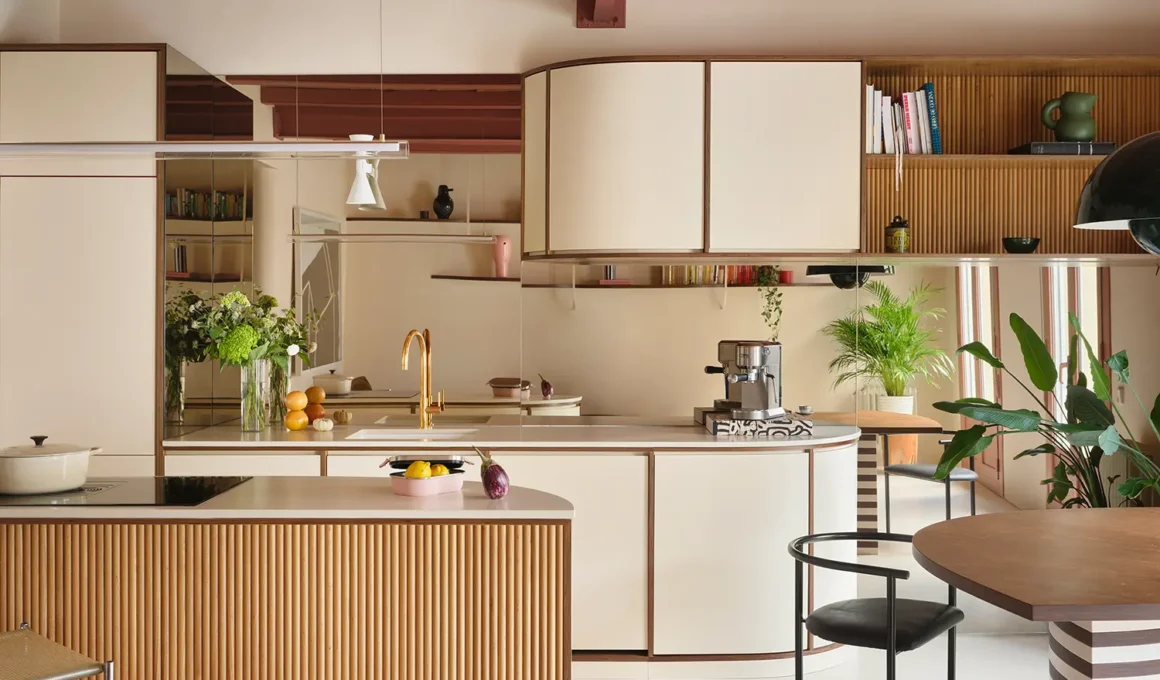
Bardo’s debut intervention in Madrid centers on a rigorous structural subtraction, dismantling the load-bearing partitions of a 19th-century shell to liberate the rhythmic “revoltó” ceiling. By exposing the ceramic joists and traditional Catalan vaults, the studio establishes a structural cadence that dictates the entire interior geometry, translating the overhead arches into a series of fluid, curved volumes that redefine the domestic boundary.
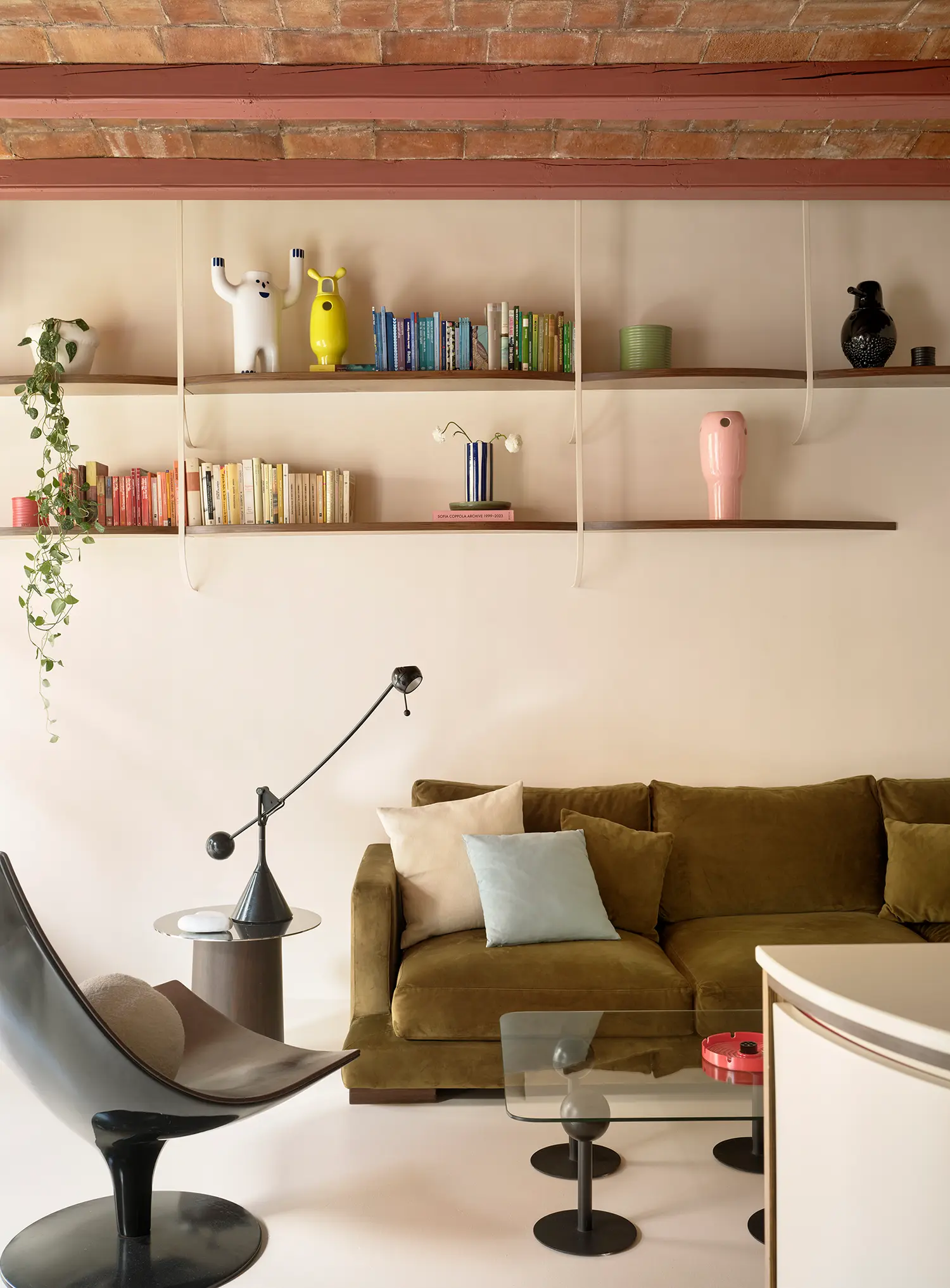
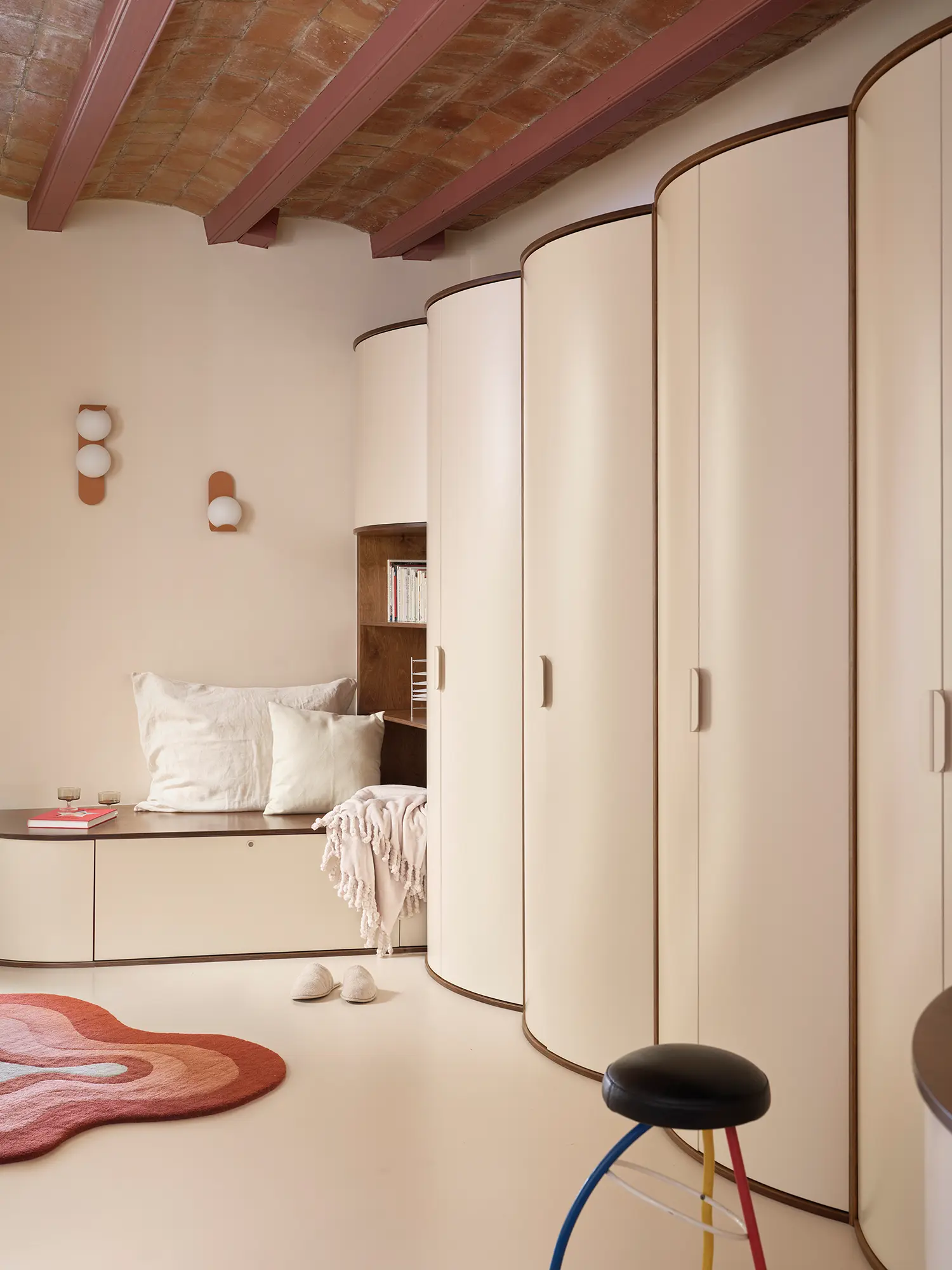
The geometry of weight. The project began not with an addition, but with a structural excavation. In an era where many renovations seek to mask the past with drywall, Bardo opted for a deep intervention, removing the internal walls to expose the original constructive essence. This operation transformed the apartment into a singular volume where the ceiling is no longer a forgotten plane but a vibrant, rhythmic map. The Catalan vaulted ceiling, with its exposed ceramic joists, provides a textured continuity that anchors the open floor plan.
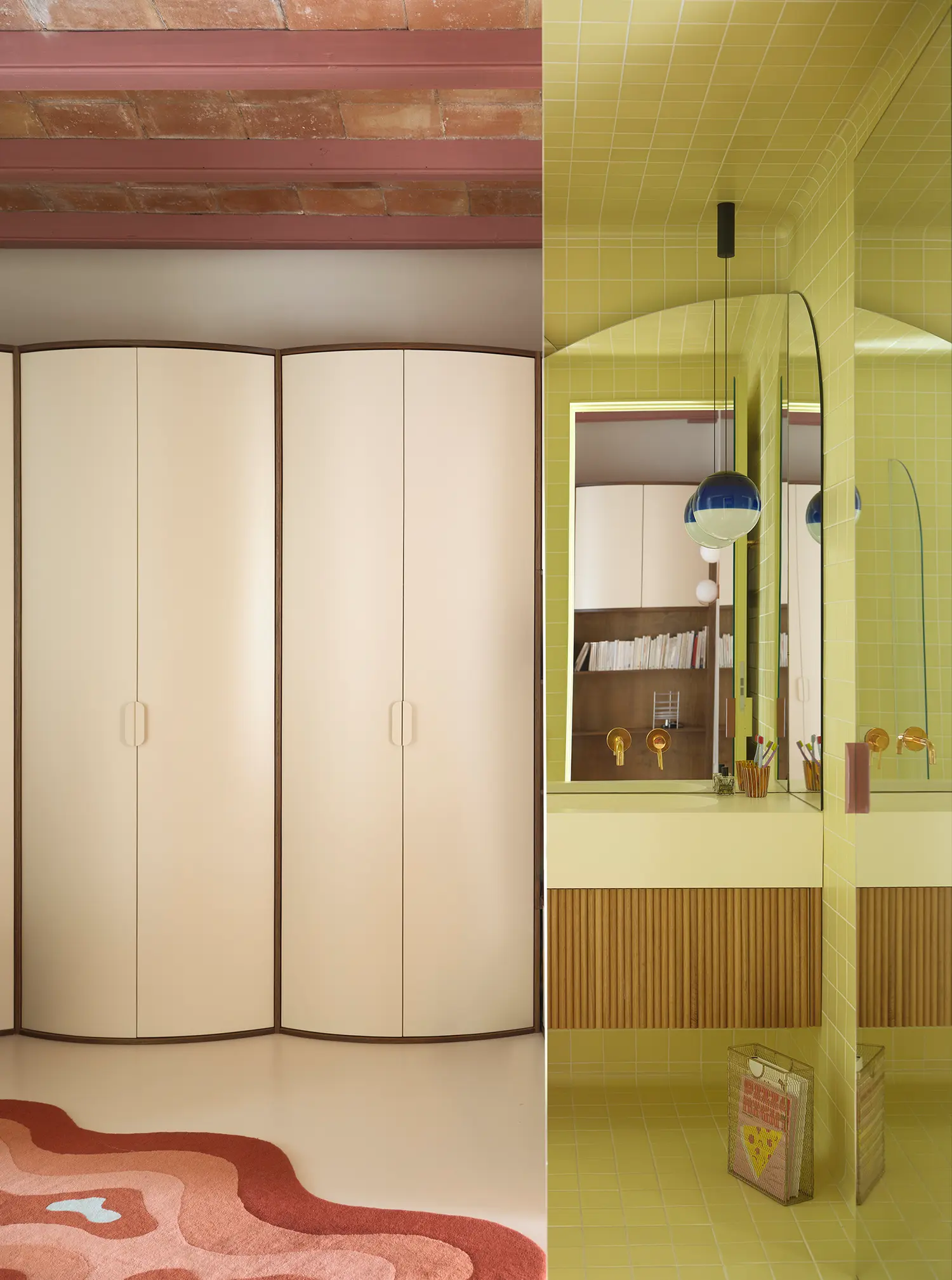
Curvatures as spatial anchors. The house develops a language based on the curve, a direct formal translation of the revoltó’s arch into the vertical plane. The most assertive gesture is found in the dressing room: a curved façade that echoes the ceiling’s cadence. This is not merely decorative; it is a functional organ that organizes movement and sightlines. By wrapping the wardrobe and bed unit in these softened edges, the studio replaces rigid corridors with a fluid sequence of spaces that feel intuitive rather than dictated.
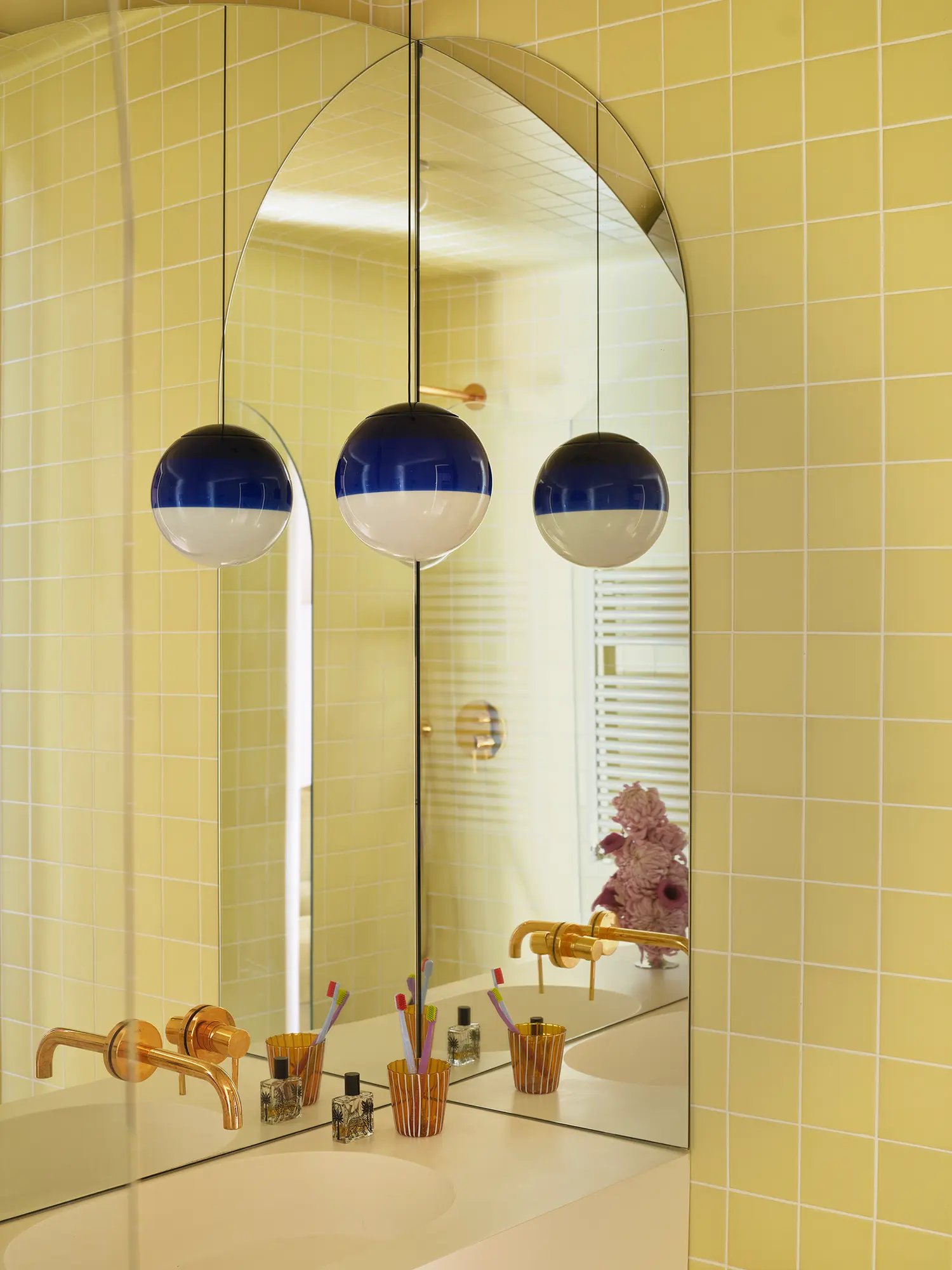
Chromatic hierarchy. The material strategy is one of calculated contrast. A neutral palette of creams, timber, and soft textures creates a “silent” background, ensuring that the visual weight remains on the ceiling. Color is used as a surgical tool, applied exclusively to the beams and vaults to celebrate their structural role. This hierarchy is inverted only in the bathroom—the sole area lacking the vaulted ceiling—where yellow ceramic tiles wrap the space entirely, creating a concentrated, sensory atmosphere that acts as a deliberate departure from the rest of the home.
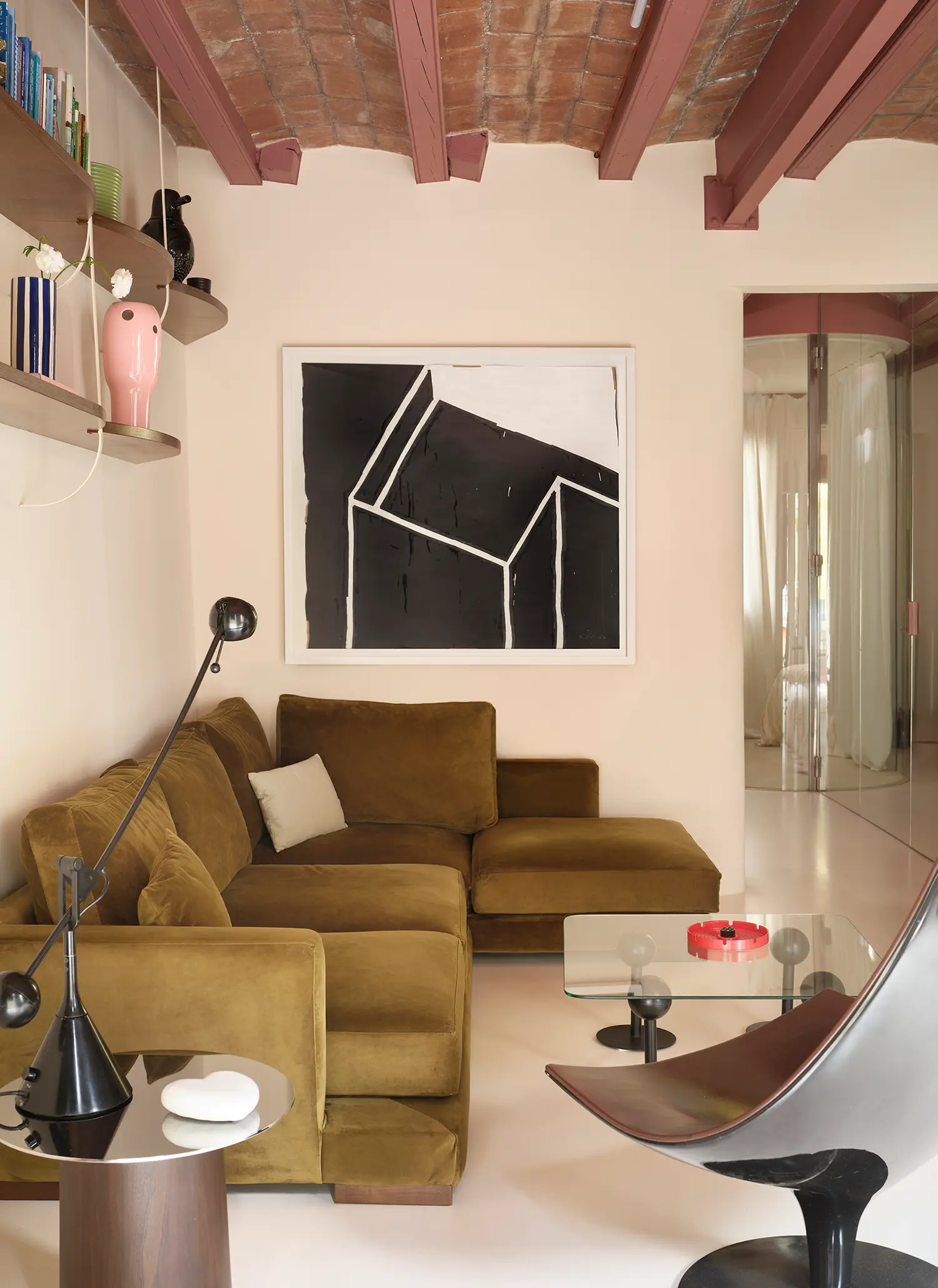
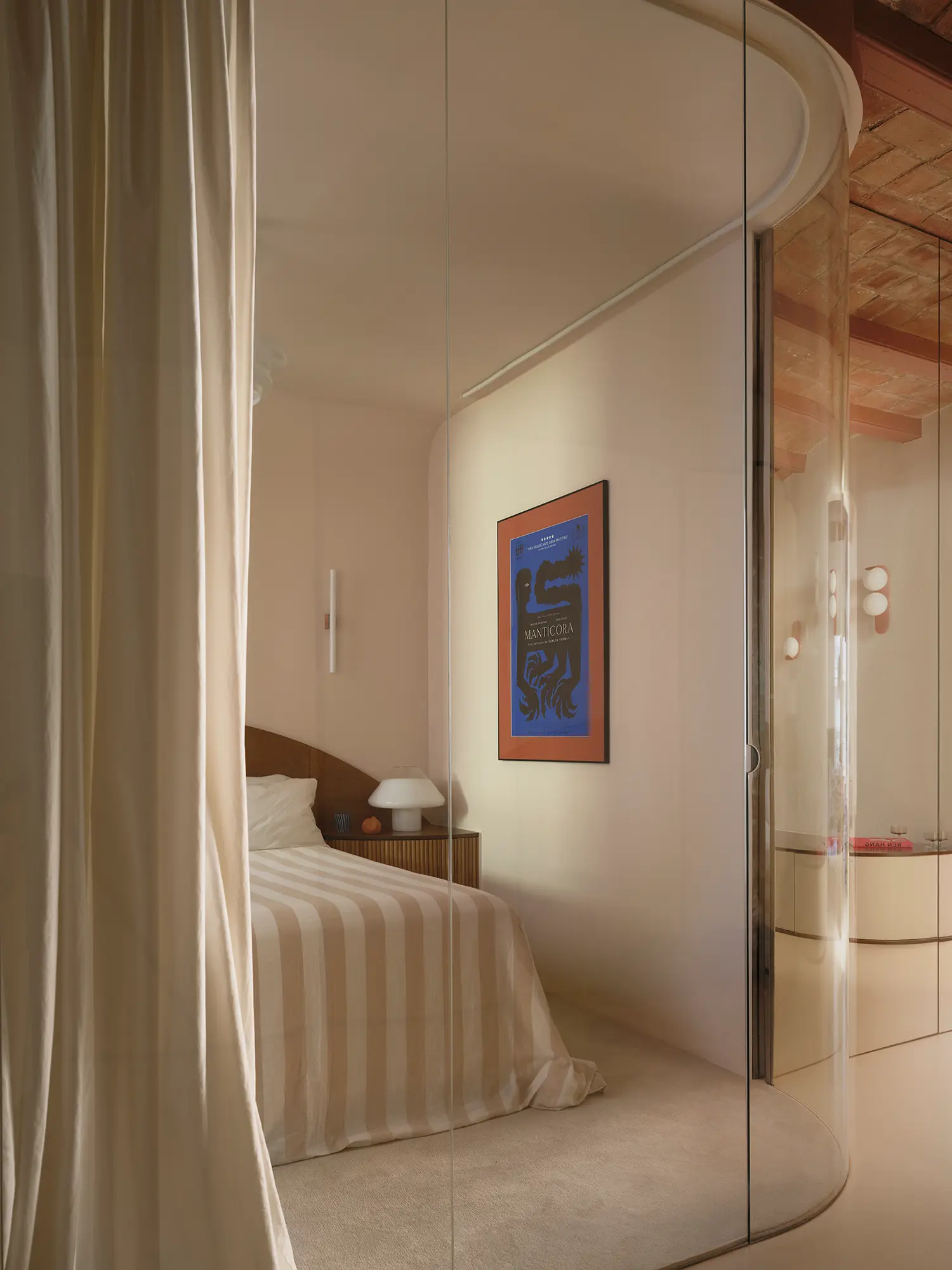
The optics of transparency. To maintain the integrity of the open plan without sacrificing privacy, Bardo utilized curved glass enclosures and mirrors. In the bedroom, the glass acts as a translucent filter rather than a barrier, softening the transition to the living area. Meanwhile, large smoked mirrors are used as architectural tools to amplify natural light and create a perception of depth, effectively dissolving the physical limits of the 19th-century footprint.
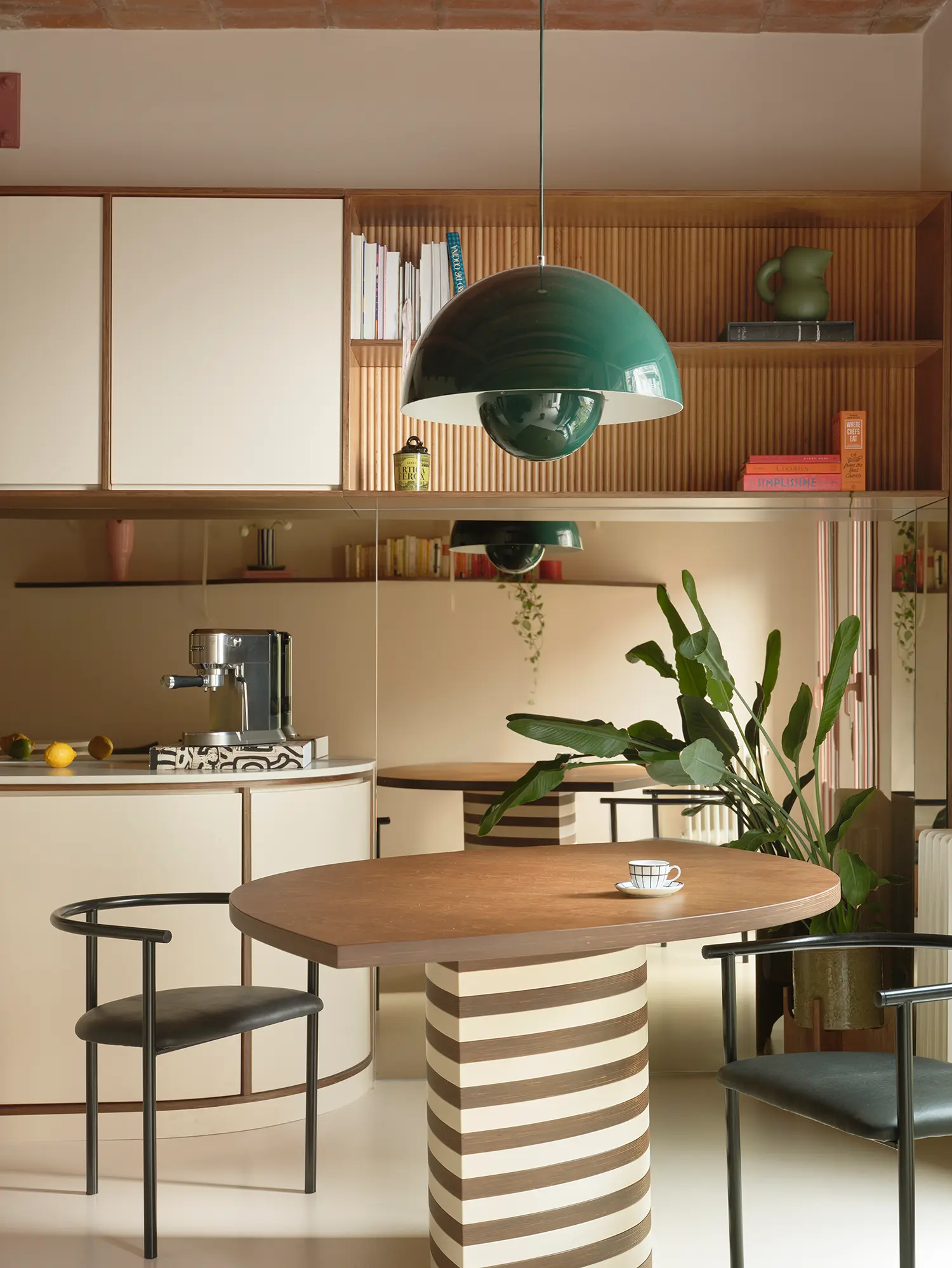
A domestic core. The kitchen serves as the home’s mechanical and social heart, featuring fluted wooden fronts that provide a tactile counterpoint to the smooth, neutral surfaces. This area is designed to blend seamlessly into the living space, reinforced by a shared logic of materiality and light. The kitchen is not an isolated room but a vital node within a larger, continuous journey through the apartment.
Madrid’s renovation landscape. This project places Bardo at the forefront of a sophisticated wave of Spanish residential interventions. It shares a common thread with other recent local projects that reject generic minimalism in favor of character. For instance, the Casa GNR by MOCA Estudio successfully navigated the use of peripheral materials within a 1970s framework, while the PDLL70 House by Plutarco reinterpreted a modernist villa with similar chromatic bravery.
Material storytelling. The focus on material honesty is a recurring theme in the capital’s most compelling work. Similar to the way Gon Architects utilized wood in Casa Eme to define structural warmth, Bardo’s Revoltó apartment finds its strength in the dialogue between Mediterranean construction techniques and contemporary precision. It aligns with a broader movement toward a more contextual impact, where the history of the building is treated as a collaborator rather than an obstacle.
Structural identity. The final result is a residence that feels as though it was derived, rather than imposed. By treating the original architecture as the primary driving force, Bardo has managed to create a new spatial identity that feels both historic and avant-garde. It is an exercise in restraint, where every curve and every choice of material responds to the hidden logic of the building’s own history.