



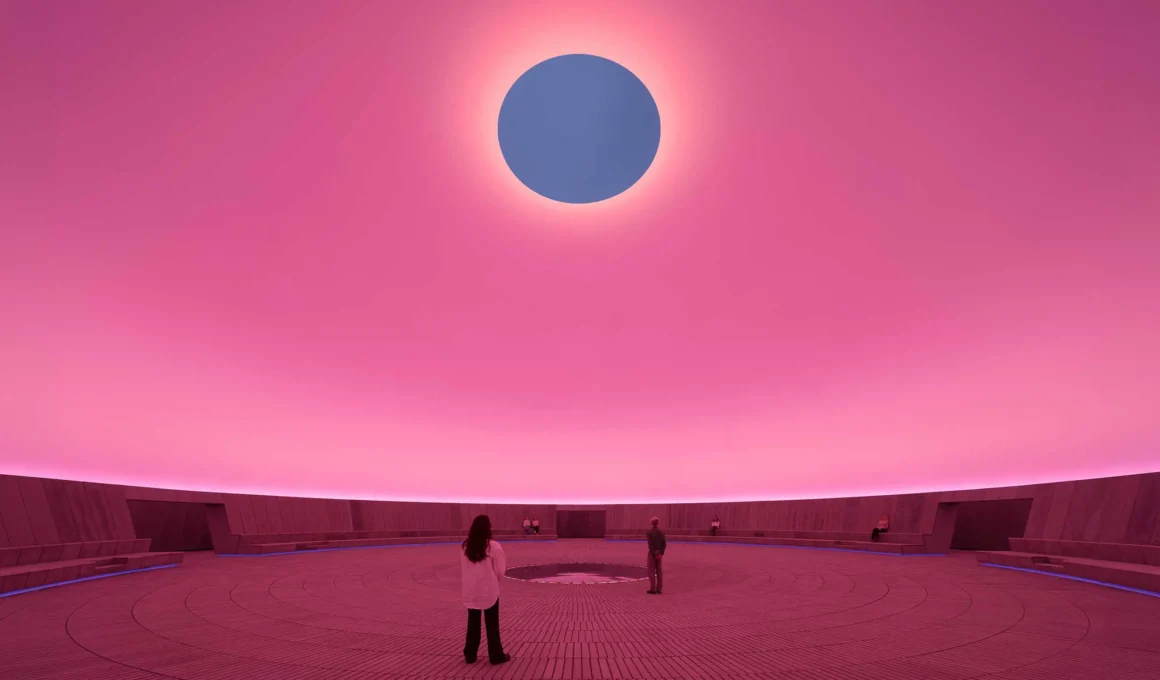
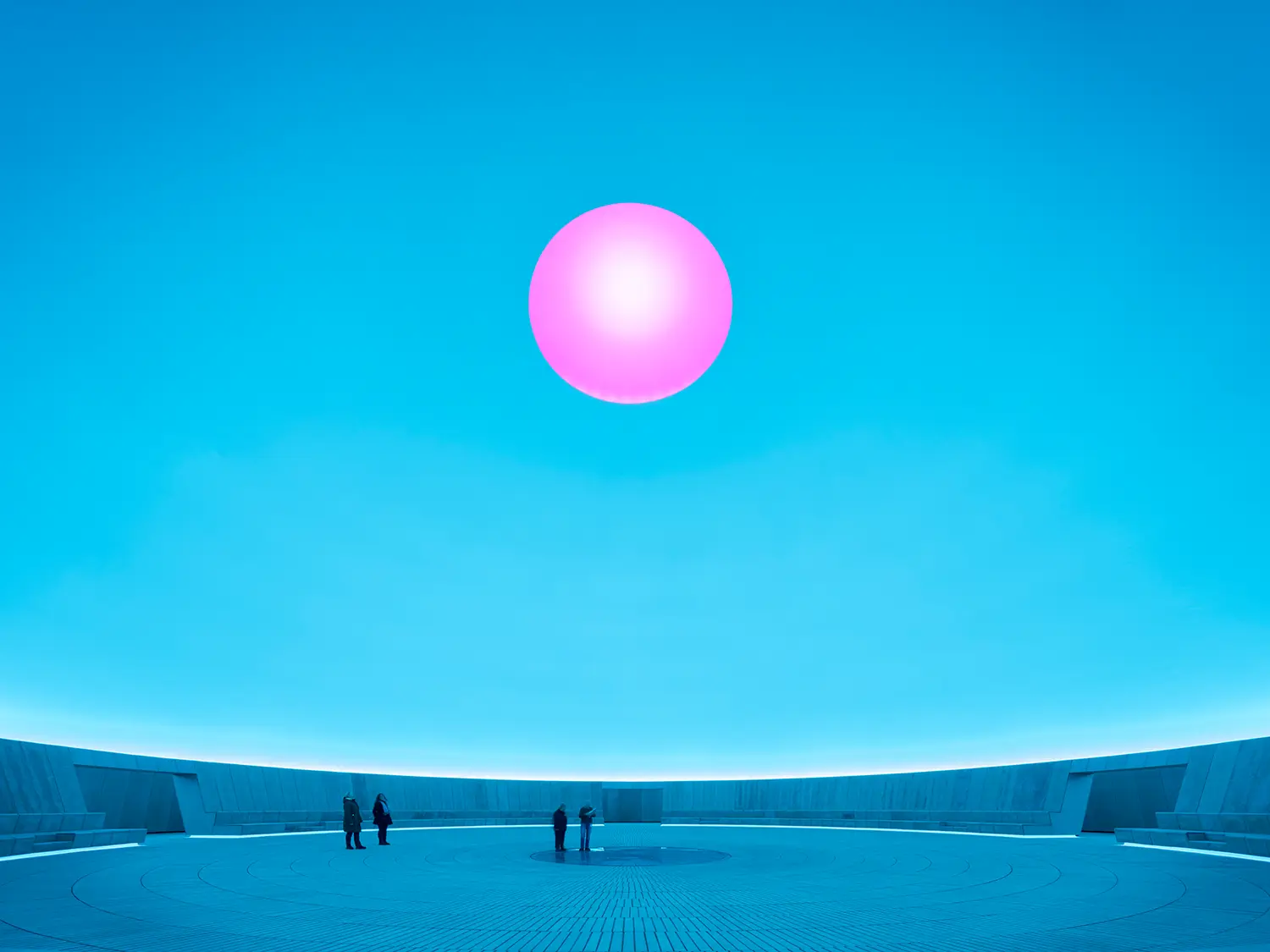
James Turrell’s As Seen Below – The Dome, his hundredth and largest Skyspace, now permanent at ARoS Aarhus Art Museum in Denmark, is not the culmination of a lifetime working with light — it is the moment the Skyspace formally became architecture. At 16 metres in height and 40 metres in diameter, entered through an underground corridor and structurally integrated into a museum expansion designed by Schmidt Hammer Lassen, the work has crossed a threshold that fifty years of smaller iterations kept at a comfortable distance. The art world will call it a landmark installation. The more precise category is civic monument.
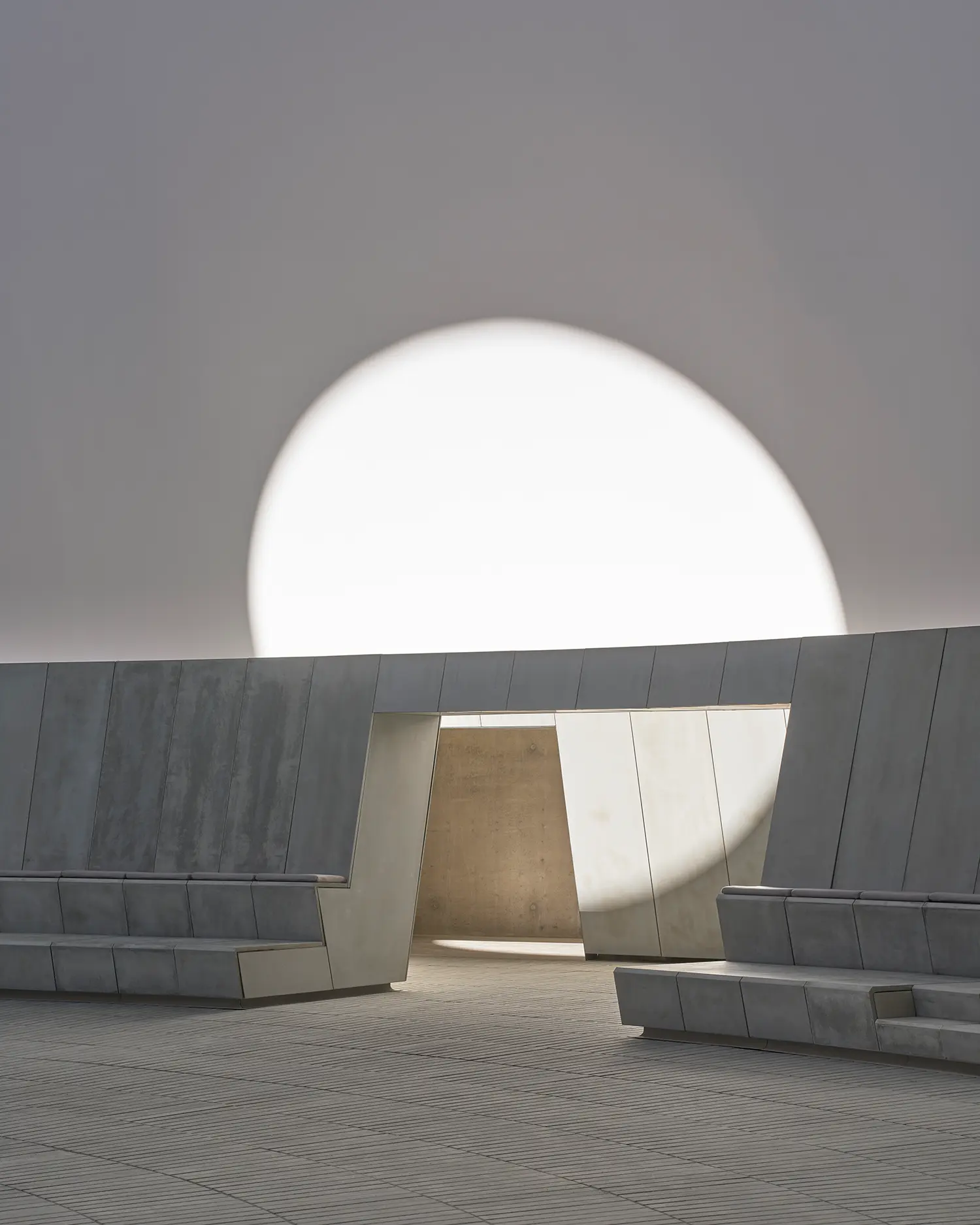
The Pantheon comparison is not incidental. ARoS reaches for it freely — As Seen Below is comparable, the museum notes, in scale and monumentality to the Pantheon in Rome. The reference is offered as endorsement, but it opens a question the press release prefers to leave closed. The Pantheon’s oculus — a circular aperture in an unreinforced concrete dome, framing an unobstructed disc of sky — has been doing precisely what Turrell does for nearly two thousand years. It was built as a temple. It has always been understood as architecture. What the American artist has done, across five decades and now a hundred iterations of the same fundamental device, is relocate that ancient architectural idea into the context of contemporary art. As Seen Below is the point at which that relocation becomes impossible to sustain.
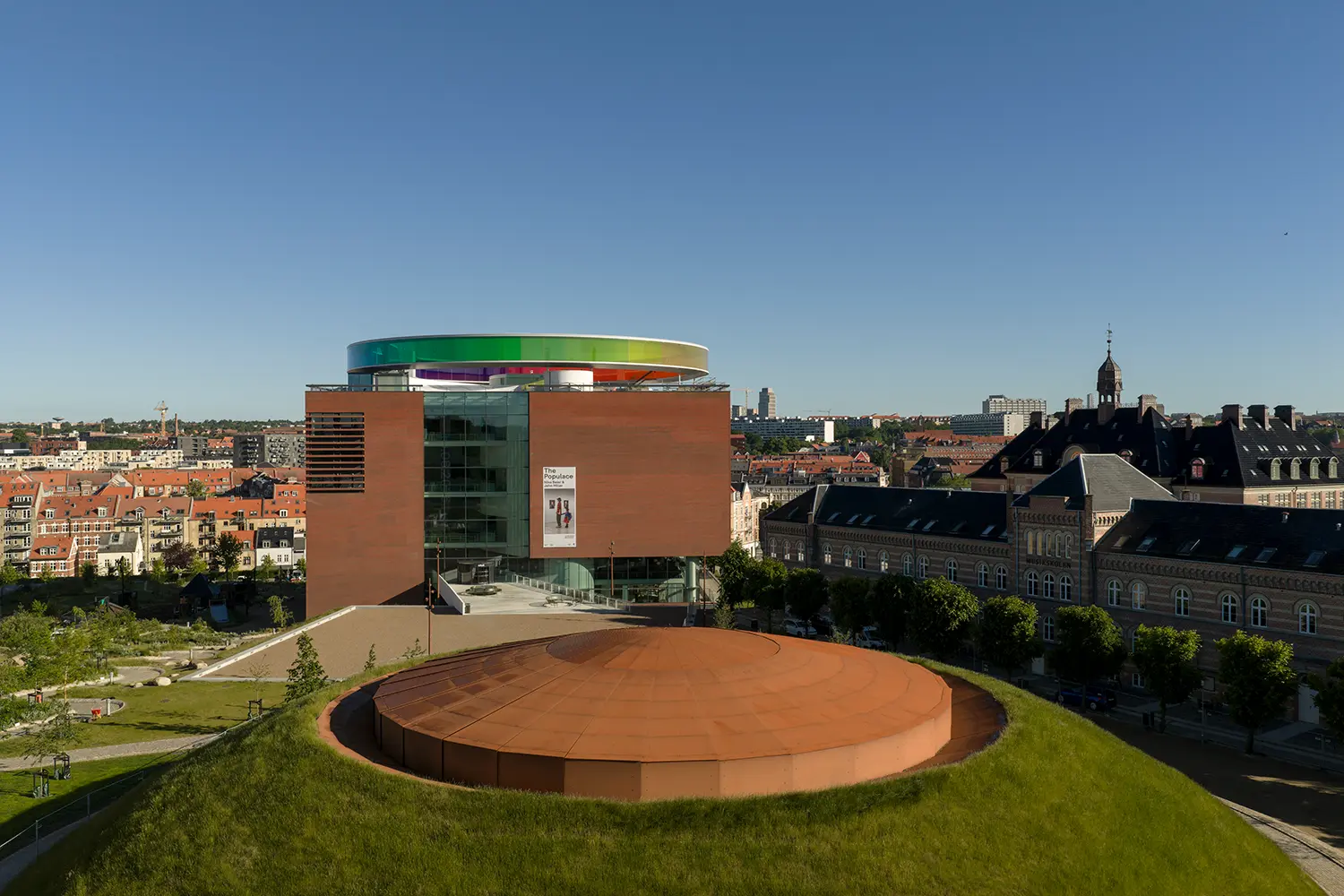
The scale alone changes what the work asks of the body. Most Skyspaces, including earlier Turrell pieces, can be encountered as discrete objects within a larger building — you enter a room, you look up, a ceiling aperture frames the sky. As Seen Below resists that reading entirely. Visitors descend through an underground corridor before ascending into a domed chamber that occupies the building’s full footprint at that level. There is no external vantage point, no position from which to regard the work as a whole. You are inside it — as you are inside architecture — not standing before it, as you are before art. “As Seen Below offers a collective experience driven by light and the poetry of seasons to emphasise our relationship to nature, the sky, and our shared planet,” says Turrell. The word collective is worth noting. It is the language of public space, not private contemplation.
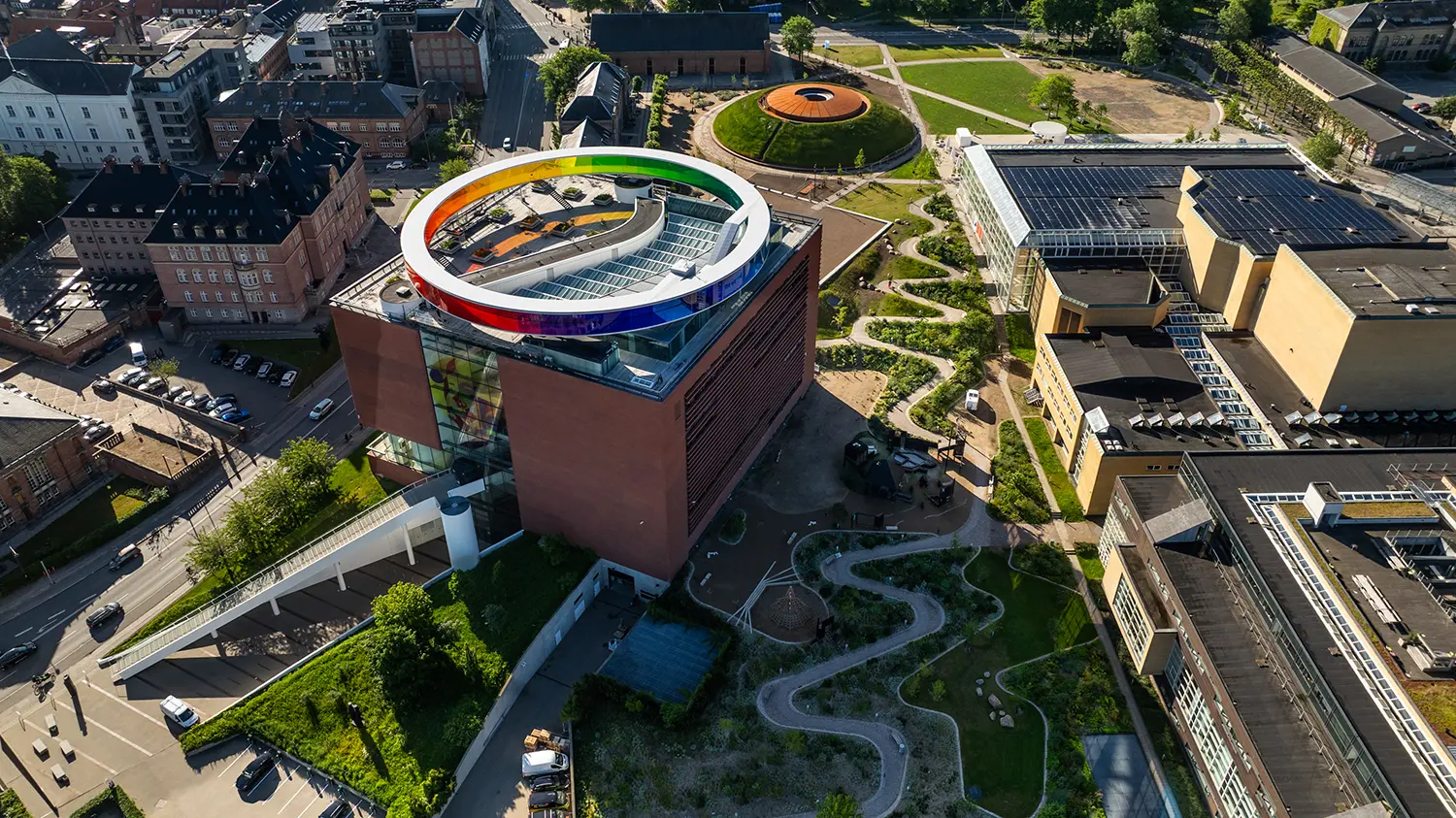
Lassen, 2026.
Three experiential modes distinguish the work from any fixed artwork. In Open Sky, the dome’s central aperture remains open and the sky above Aarhus becomes the primary surface — a field of natural colour shifting with weather, season, and hour. In Colour Shift, the aperture is sealed and artificial light transforms the dome’s interior, making the chamber itself the subject rather than the sky above. The third mode, Twilight, synchronises Turrell’s programmed interior hues with the actual movement of the sun at dusk and dawn, producing the effect that defines his public reputation. “I can change the sky to any colour you want,” says Turrell. Technically this is an illusion — he alters the perceptual context, not the sky — but the result is physiological rather than metaphorical, and among the most precisely engineered experiences in post-war art.
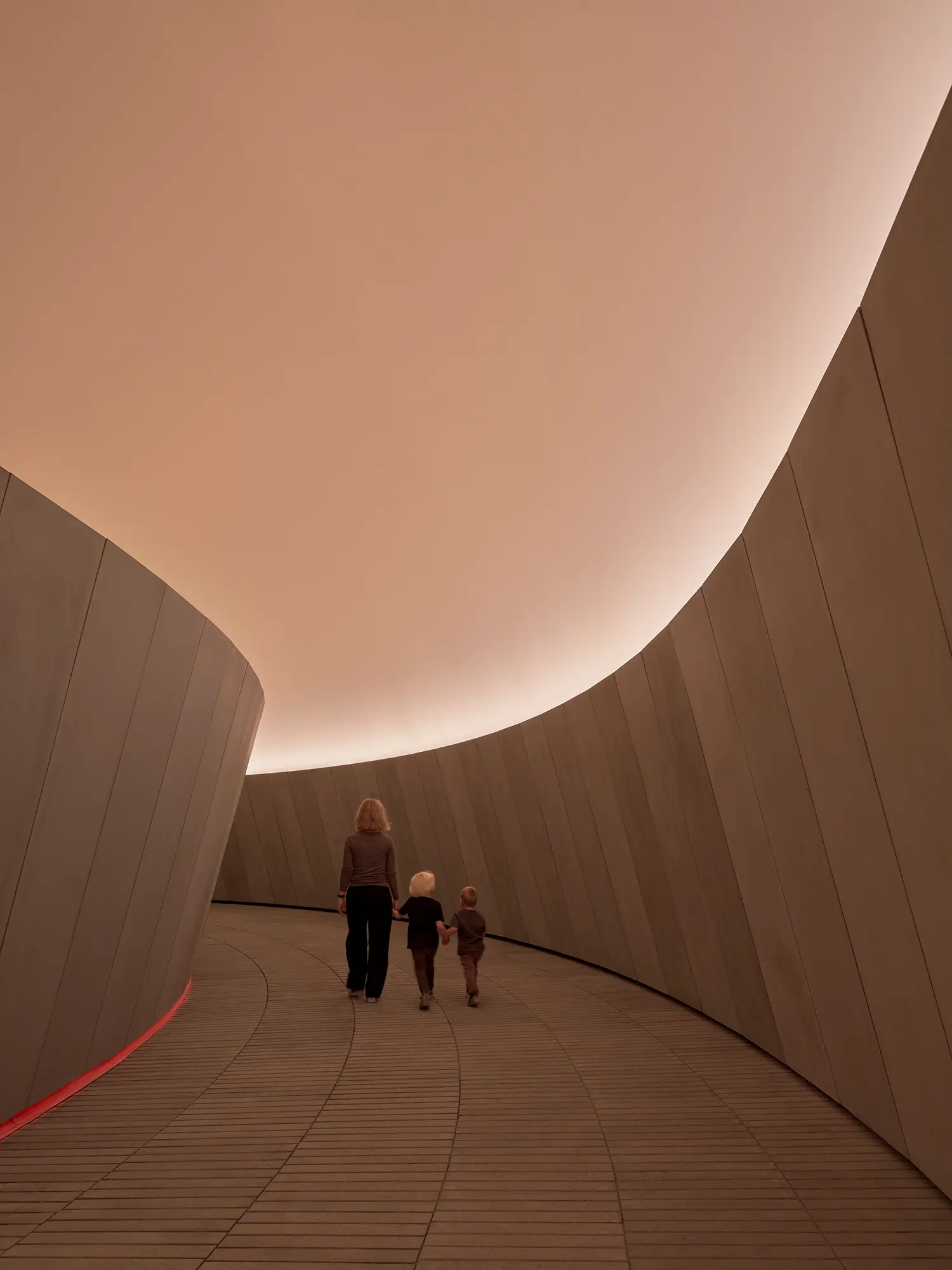
The hundredth iteration is itself an argument, whether Turrell intends it as one or not. The Skyspace began as a genuine investigation: what happens to perceived colour when a ceiling aperture frames the sky under controlled lighting conditions? These were open questions in the late 1960s and 1970s. A hundred editions later, they are not questions — they are conclusions, repeated with increasing precision and ambition. As Seen Below is Turrell’s most resolved Skyspace not because it pushes the form into new territory, but because it crystallises it. The research is complete. What remains is the monument. At some point — and this may be that point — the hundredth iteration of any idea stops being an experiment and becomes a doctrine.
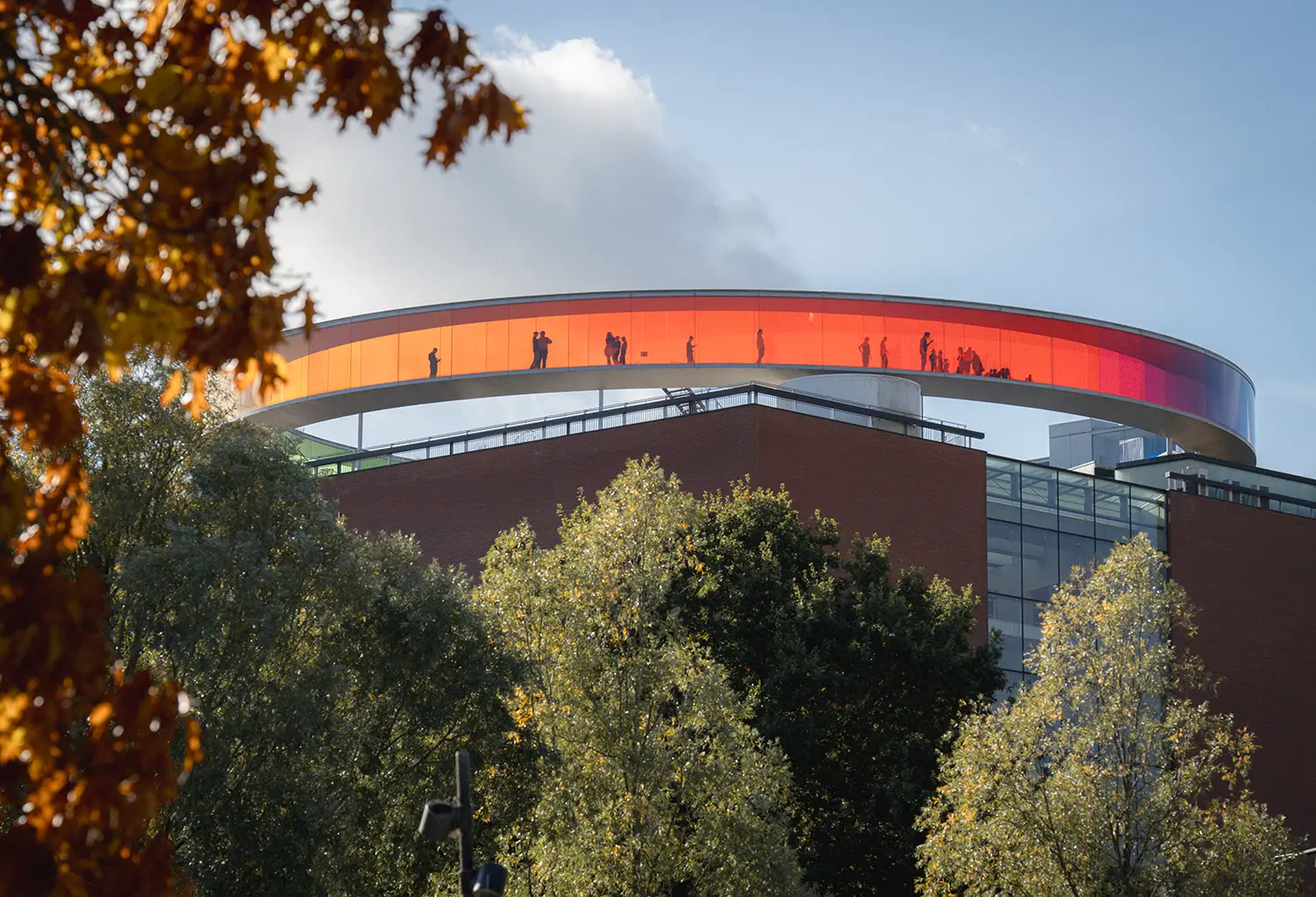
The architectural collaboration reframes what the work fundamentally is. As Seen Below was developed as part of a major ARoS expansion that also includes The Salling Gallery, a subterranean exhibition space opened in June 2025, and the ARoS Art Square, a new permanent outdoor zone. Schmidt Hammer Lassen designed the expansion in collaboration with Aarhus Municipality. In this context, Turrell’s dome is not an installation placed within a building — it is a programmed chamber within a larger architectural system. “This is a transformative moment for ARoS,” says Museum Director and CEO Rebecca Matthews. “With As Seen Below, we are not only presenting a landmark installation by one of the most important artists of our time, but also creating a place of wonder, reflection, and connection.” That is civic language. It describes an institution, not a work.
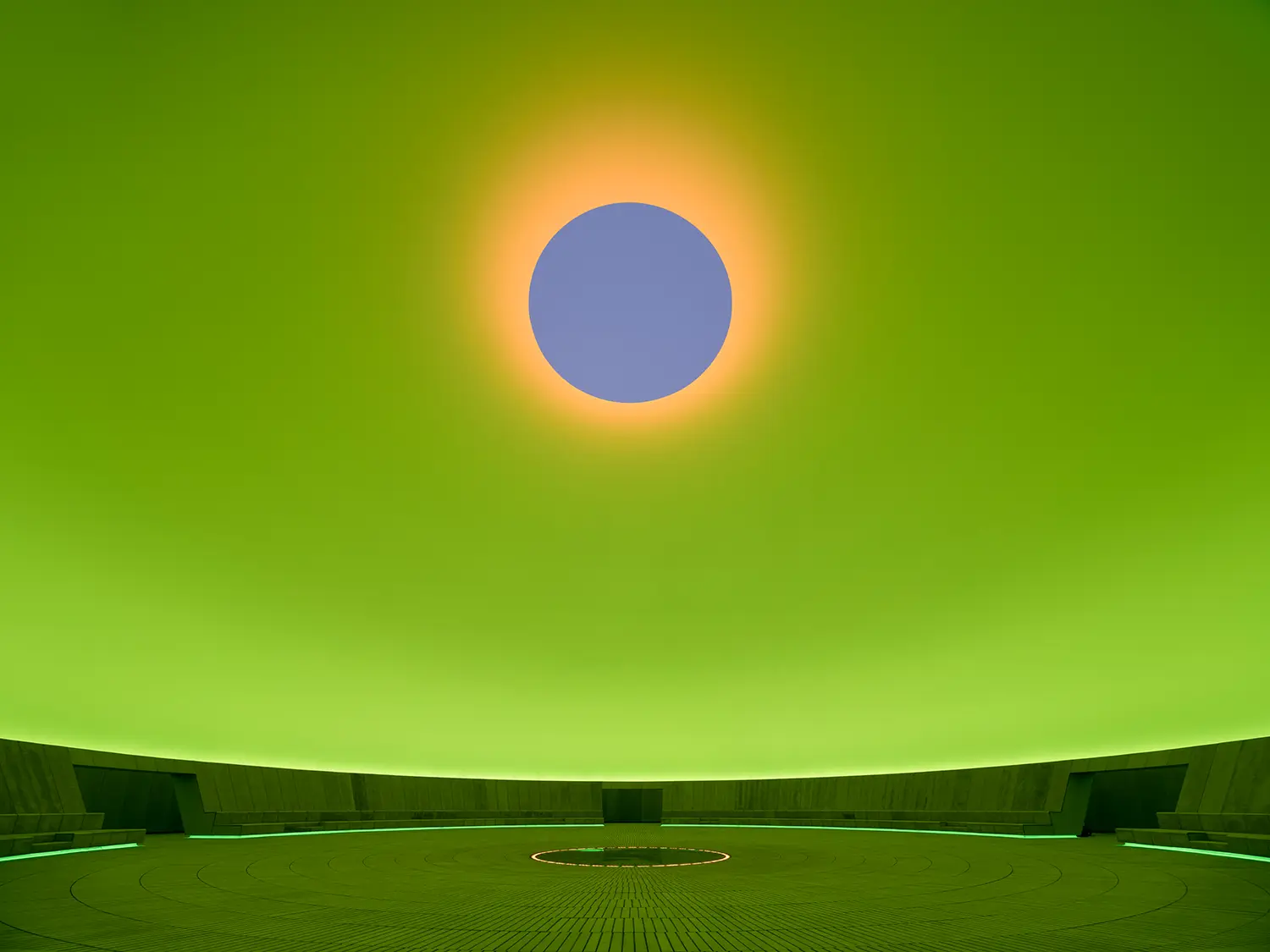
Turrell’s biography has always informed the Skyspaces more than criticism acknowledges. Born in Los Angeles in 1943 and raised in a Quaker family where silence and inward light were structural values, he became a licensed pilot before becoming an artist — captivated by the colour shifts of the sky at altitude and the way perception changes with elevation and time of day. The Skyspaces are, in one reading, flight conditions made available at ground level: sky experiences without the barrier of entry, without the requirement of altitude. The underground approach at ARoS formalises this transition more explicitly than any previous installation in his career. You are not admitted to a gallery. By the architecture of your arrival, you are ascending toward light. Among large-scale works that use an atmospheric or physical medium to restructure how a visitor occupies space, Fujiko Nakaya’s fog sculpture at the Bourse de Commerce operates on a comparable principle — though where Nakaya dissolves architectural boundaries outward, Turrell compresses the sky into proximity.
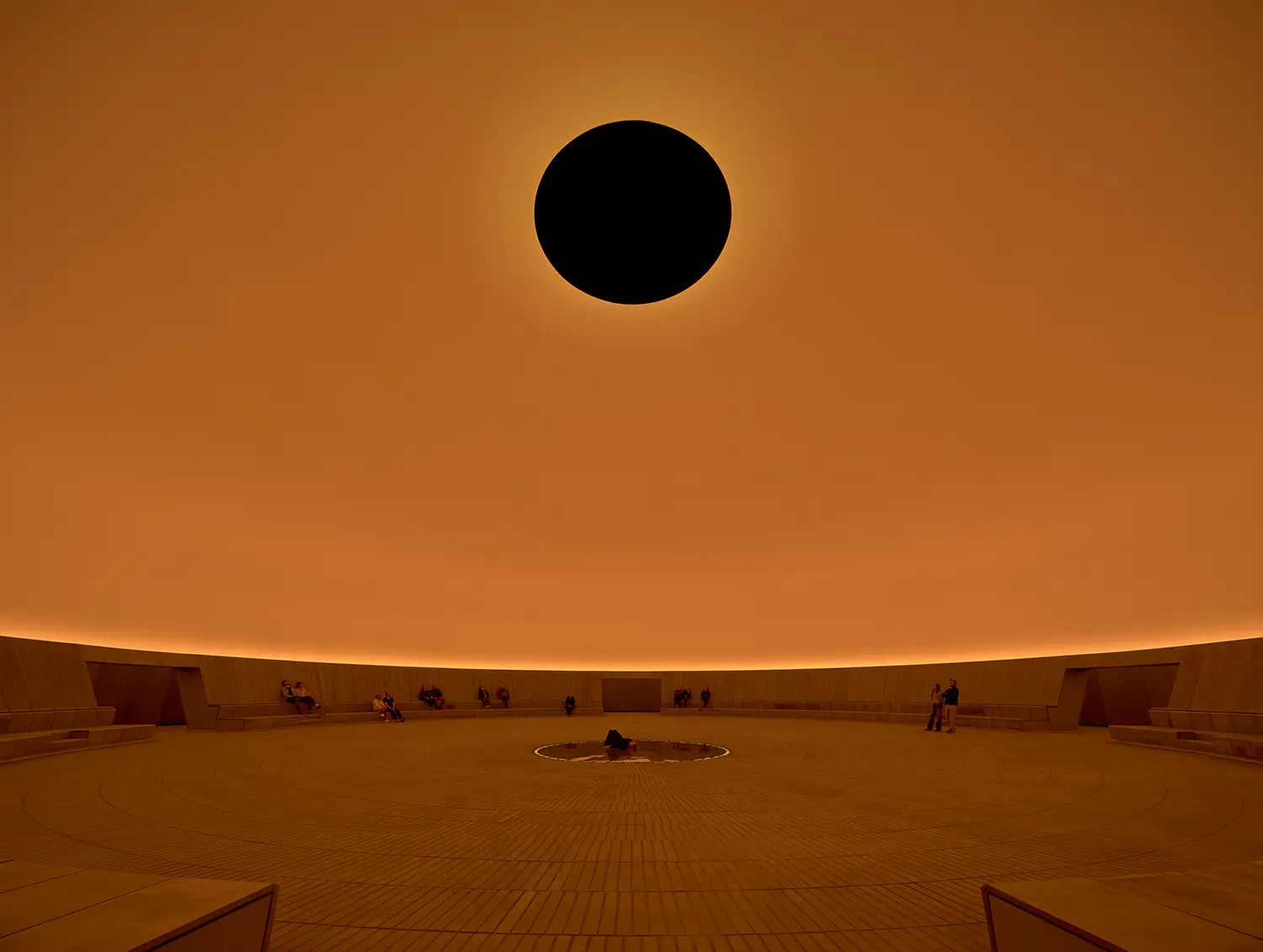
The Quaker parallel may be the most structurally precise one available. Quaker meeting houses are stripped of ornament, hierarchy, and spectacle — there are no objects to interpret, no hierarchy of attention, only the gathered community in relation to silence, time, and light. Turrell’s Skyspaces have always operated on this principle. As Seen Below adds permanence, monumental scale, and civic endorsement: the Salling Foundations, the New Carlsberg Foundation, Aarhus Municipality, and a private anonymous donation underwrote its construction. It is, in the plainest terms, a publicly funded place of contemplative practice within a secular institution. Whether that makes it more or less interesting as contemporary art is a question ARoS would prefer to leave unanswered.
Roden Crater — the volcanic cinder cone in the Arizona desert that Turrell has spent nearly five decades converting into a large-scale light observatory — remains unfinished, and that incompleteness has long been part of its mystique. As Seen Below, by contrast, is a permanent installation of civic scale, funded by foundations and municipalities, designed to accommodate a museum that already draws more than 650,000 visitors a year. The vocabulary of the gallery — installation, artwork, collection acquisition — is being asked to describe something for which a different word might serve more honestly: a place. Turrell has always insisted that is what the Skyspaces are. At ARoS, for the first time, the institution has built one large enough to prove him right.
As Seen Below – The Dome, a Skyspace by James Turrell | Where: ARoS Aarhus Art Museum, Aros Allé 2, 8000 Aarhus, Denmark | When: Permanent collection