




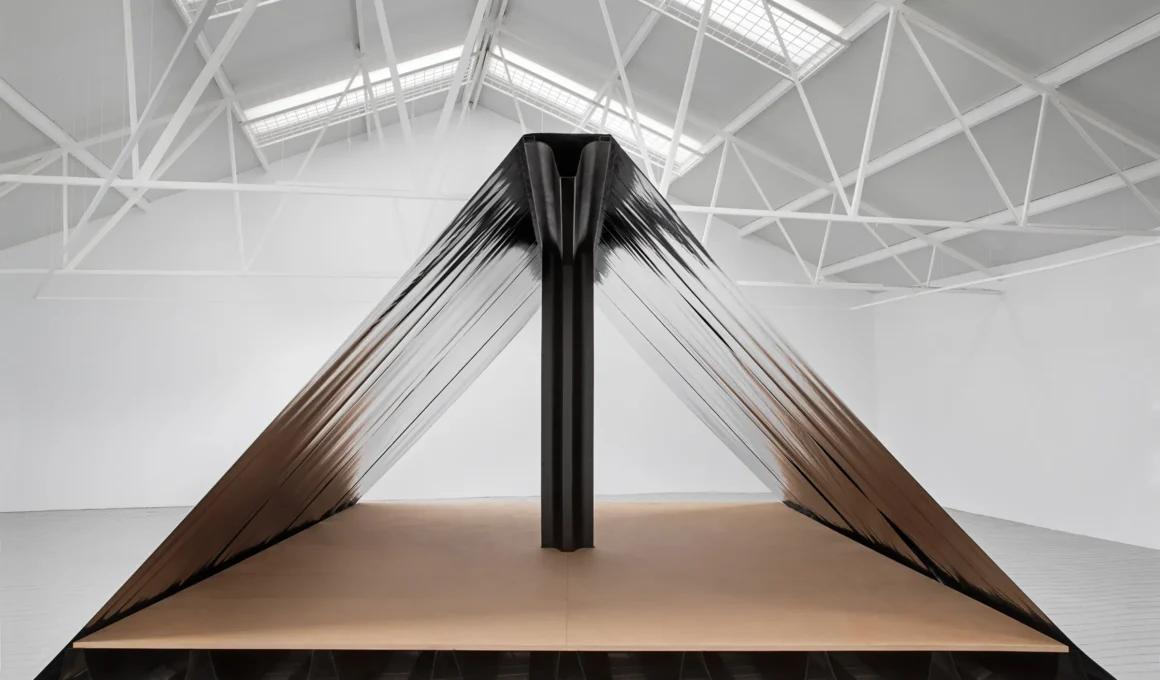
What if the genesis of a building wasn’t a heavy, poured foundation, but a single, intelligent fold of fabric? This is the core, poetic question driving the latest work by architect Paloma Cañizares, who has spent years exploring the revolutionary potential of rigidized textiles. Her new exhibition, Armed Fabrics: 1 Profile – 1 Building, presented at the Marc Bibiloni art gallery, showcases the evolution of this long-term, material-focused research and introduces a new kind of versatile, prefabricated construction element poised to redefine the lightness and precision of modern architecture. The project proposes a radical shift in construction logic, suggesting a future where structures arise from the inherent intelligence of matter rather than sheer mass.
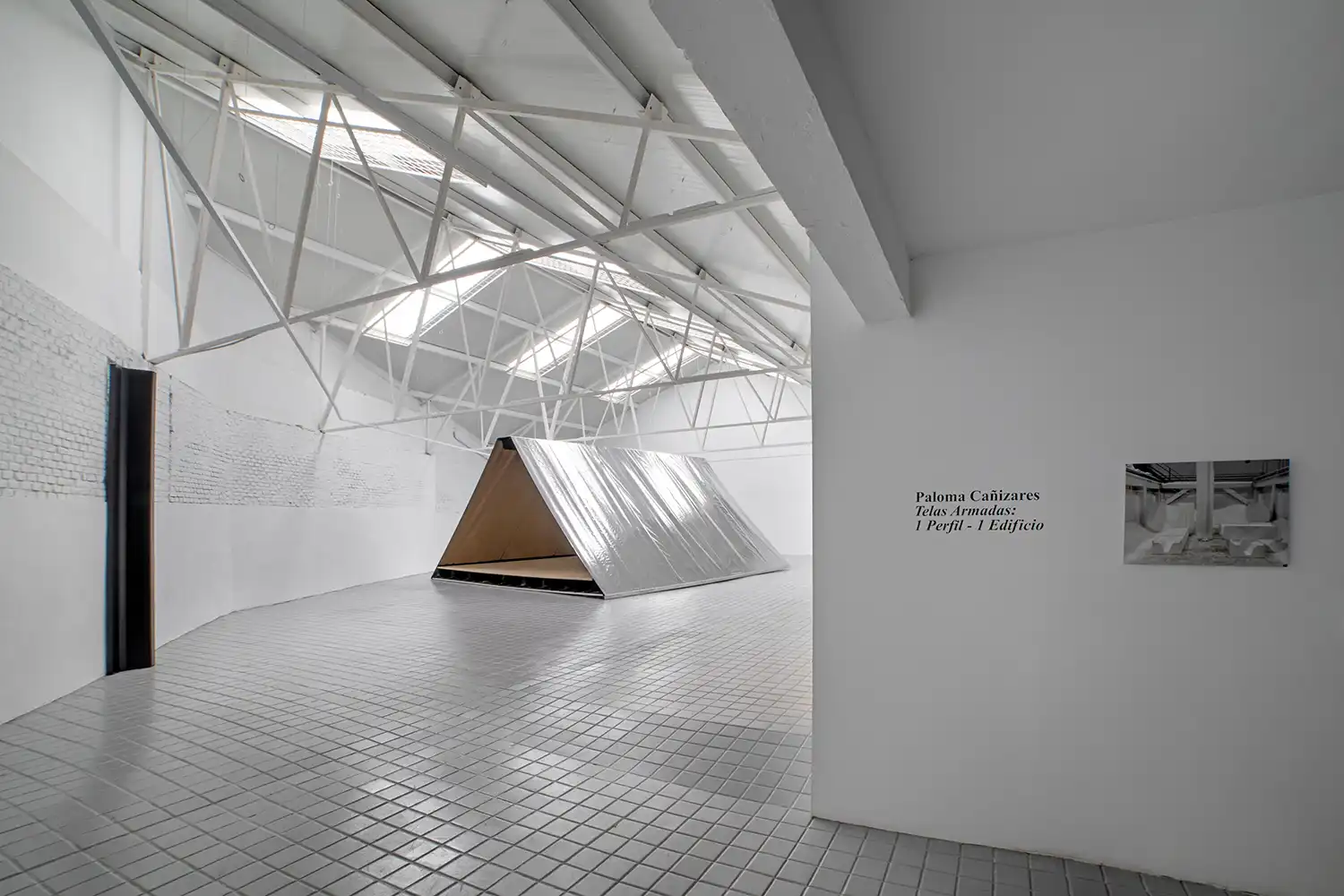
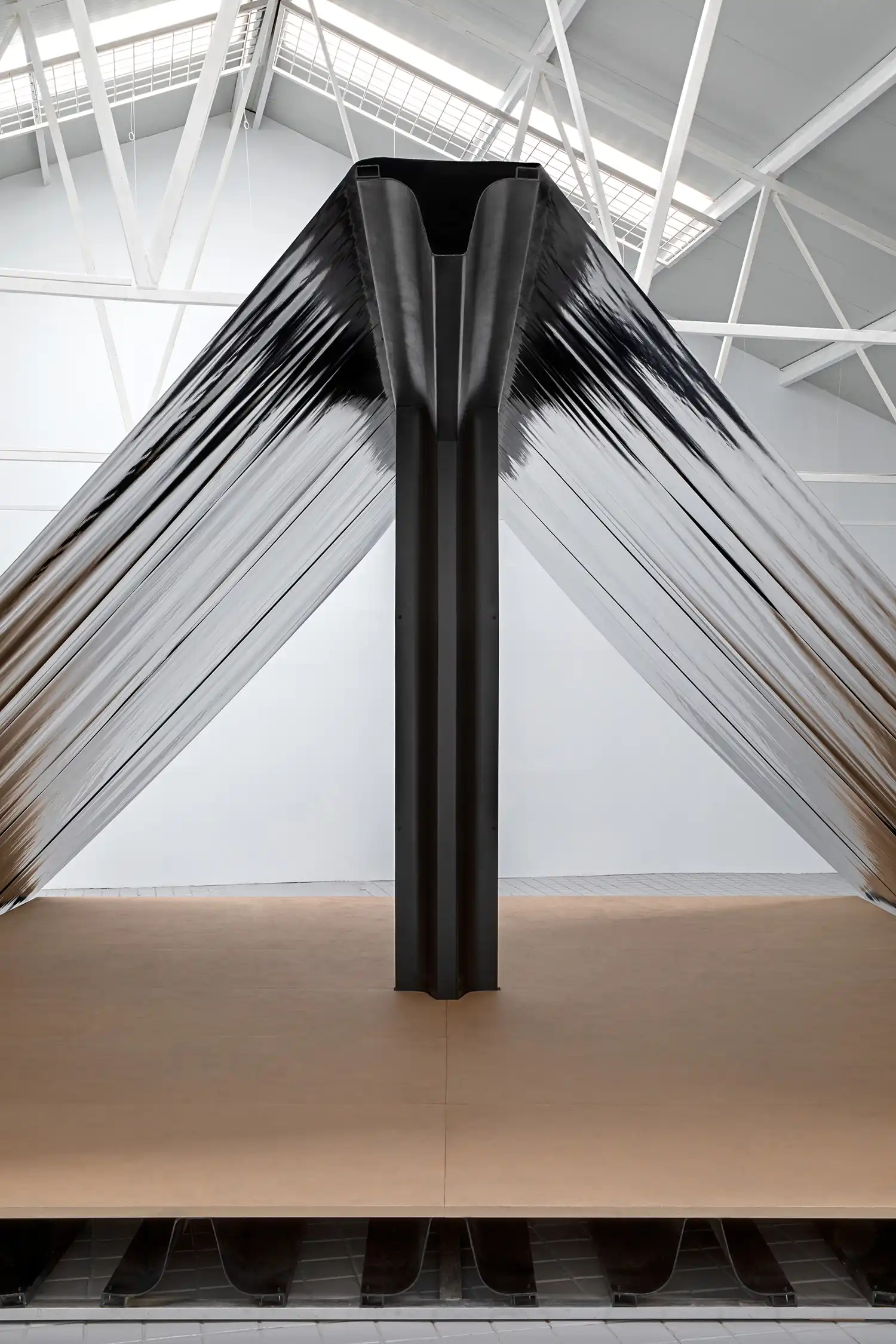
Cañizares’s investigation centres on transforming woven materials—fibers interlaced to define properties like strength and elasticity—into structural, load-bearing components. When a textile structure is rigidized, it becomes an ultra-slim, lightweight material capable of new architectural uses. However, to compensate for the extreme slenderness of the material, these structural profiles must be strategically folded into specific geometries. This intelligent folding is critical; it’s what increases the supporting surface and ensures the necessary stability. By masterfully combining the right woven fiber with the appropriate resin-based rigidizing agent and a strategic folding pattern, Cañizares has unlocked the strength required to create resilient architectural elements suitable for contemporary needs.
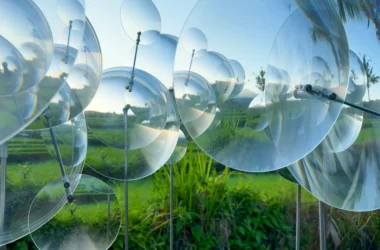
The foundation of this concept was laid with the Silk Pavilion, an installation featured at the 2023 Concéntrico International Festival of Architecture and Design. This earlier, full-scale exploration was composed of twelve 8.40-meter-long triangular profiles, demonstrating a star-shaped structure that functioned as both an enclosure and a hollow super-column. The deliberate choice of silk—a material typically confined to fashion—was an artistic gesture, designed to highlight the material’s latent structural properties when taken out of its traditional context. The pavilion successfully proved that rigidized textiles could engage in a complex dialogue with context, light, and history, far beyond being a simple decorative skin.
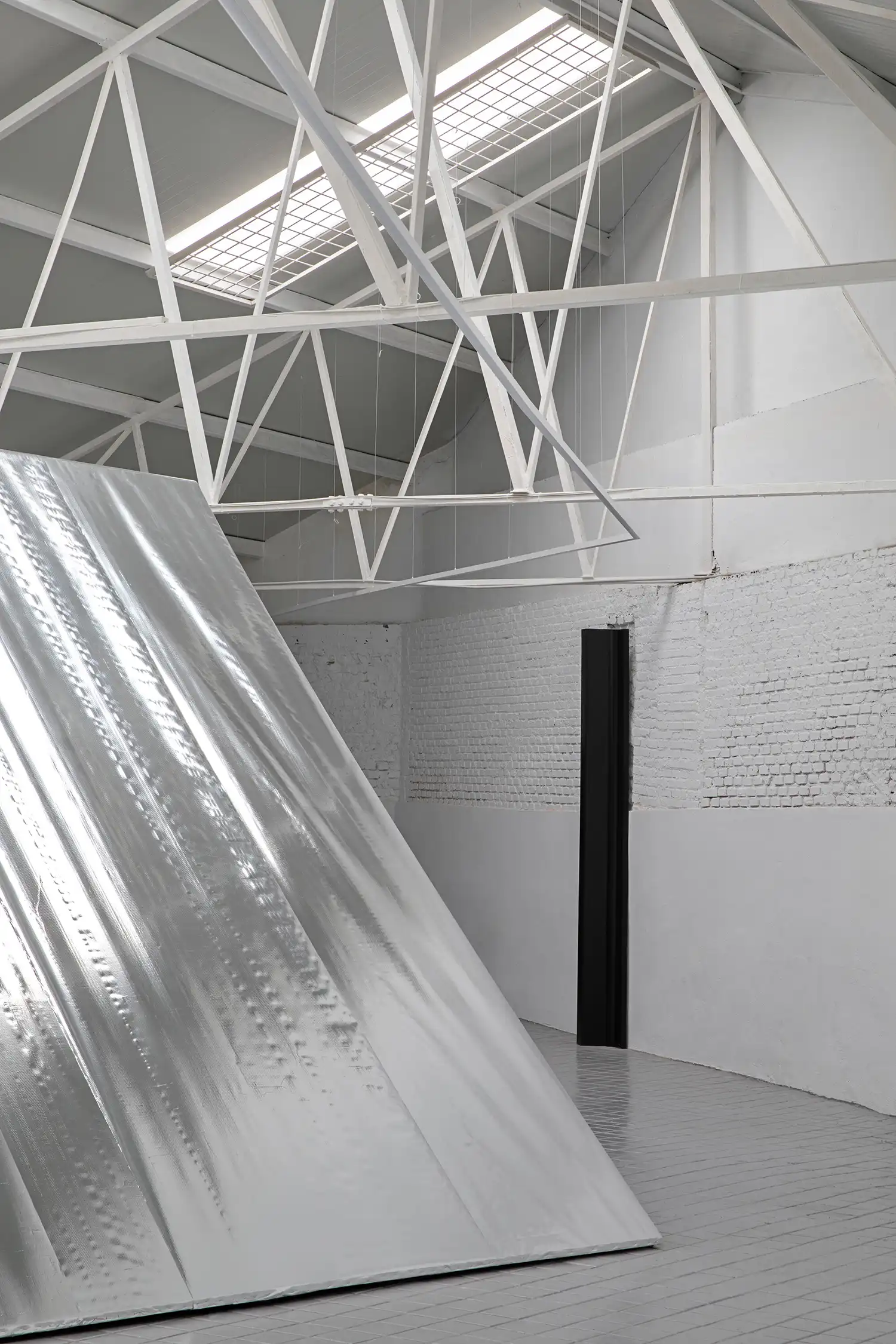
Moving past the site-specific exploration of the Silk Pavilion, the ARMED FABRICS: 1 PROFILE – 1 BUILDING project zeroes in on creating a universal, multifunctional construction profile. The core challenge was to answer a fundamental question for dry-building systems: can a single element be lightweight, slender, highly resistant, stackable for efficient transport, easy to assemble, and reusable, all while generating a complete building system? Cañizares’s profile, measuring six metres long, 50 cm wide, and 25 cm high, is the powerful answer. It is conceived to act as every fundamental part of a structure—it can be a beam, a column, a joist, a footing, or a floor panel.
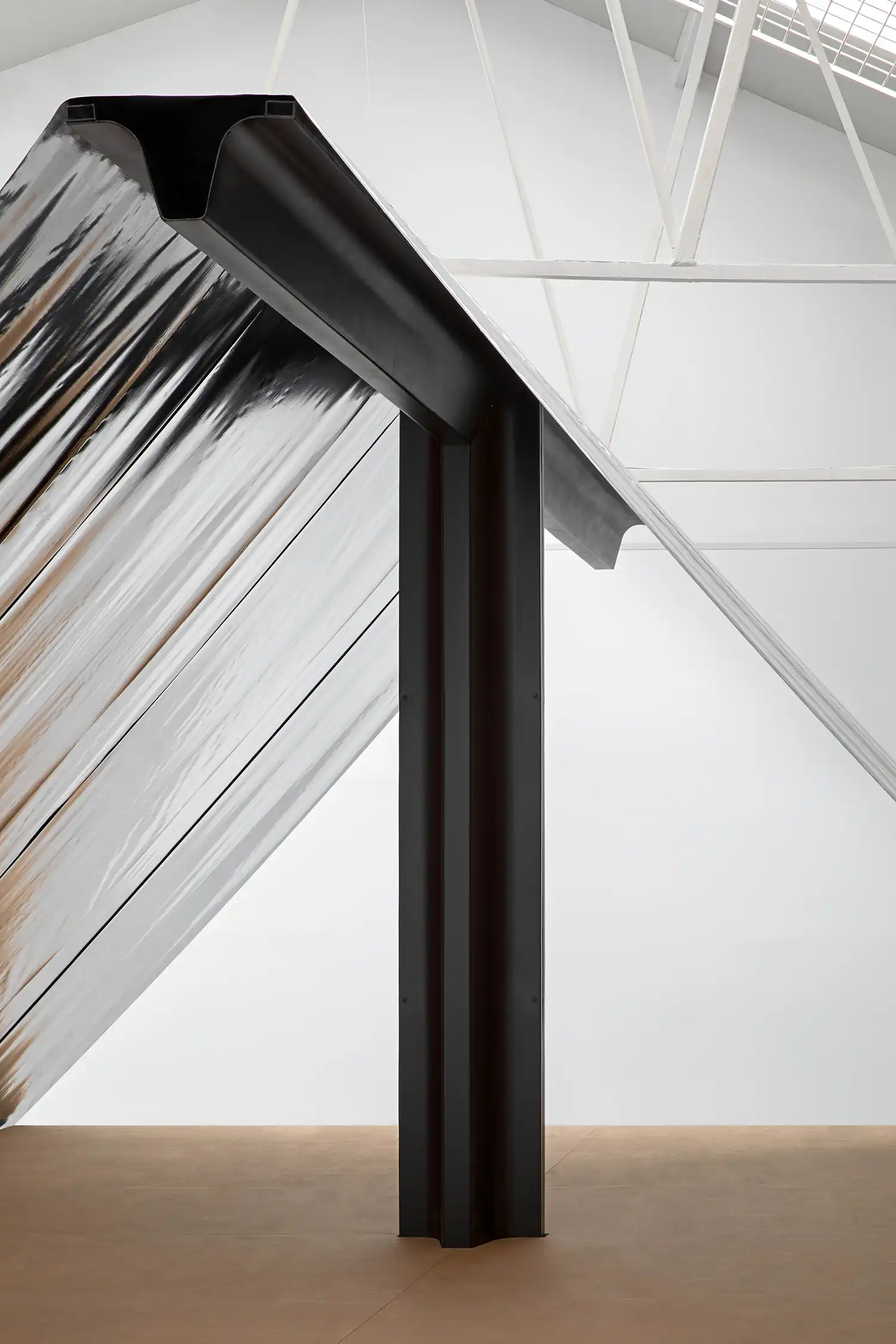
For this latest chapter, the material shifted from silk to woven fiberglass, chosen specifically for its superior technical performance, strength, durability, and excellent thermal and electrical insulation properties. This new material selection reflects a commitment to developing a solution that can truly integrate into modern, demanding construction processes. The rigidity is achieved by combining different woven fiber structures with suitable, high-performance resins. Furthermore, to make the system highly versatile, a sophisticated joining system was developed, utilizing 45-degree cuts, aluminium side bars, and custom connecting pieces. This allows the single profile to fluidly form all necessary structural connections, from footing-to-column to beam-to-joist, enabling diverse architectural solutions.
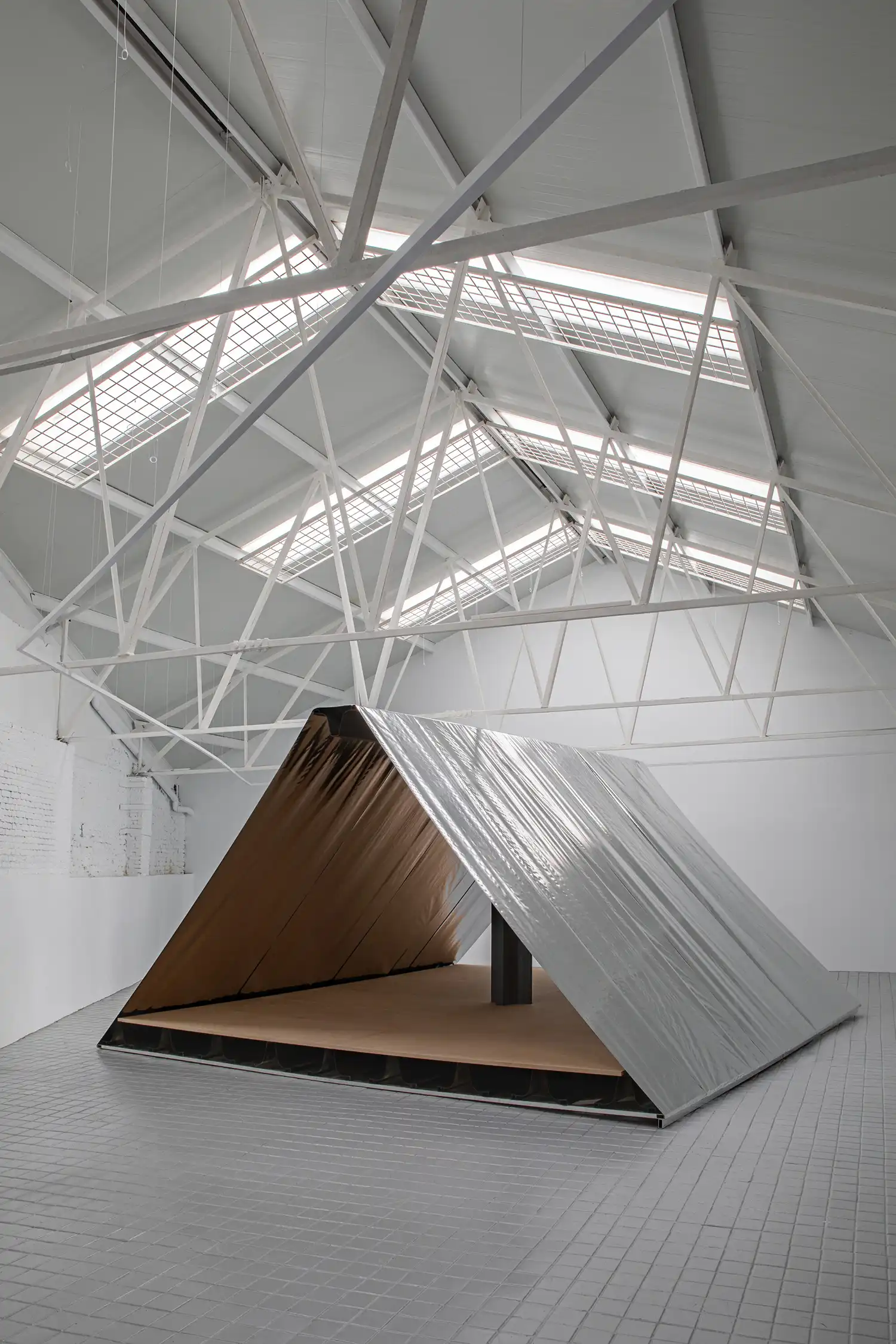
Through years of dedicated research and full-scale experimentation, Paloma Cañizares sends a powerful and clear message to the design and technology world: it is entirely possible to develop comprehensive, fully formed architectural solutions using nothing more than a single profile made from rigidized textiles. By leveraging material innovation and resource optimization, her work opens a bold new path for the prefabrication industry. The Armed Fabrics project is more than just a gallery exhibition; it is a conceptual prototype that embodies a future where lightness and precision are the ultimate measures of structural intelligence.