





In an era where automotive design is increasingly defined by a pursuit of “reductive” aesthetics and hyper-efficiency, the Chinese Ministry of Industry and Information Technology (MIIT) has introduced a regulatory pivot that will reshape the global EV market. Following a series of safety investigations throughout 2025, China has officially set January 1, 2027, as the deadline: from this date, all new vehicles sold in the country must feature door handles that can be operated mechanically from the outside, effectively banning purely electronic retractable systems.
The Conflict Between Form and Function
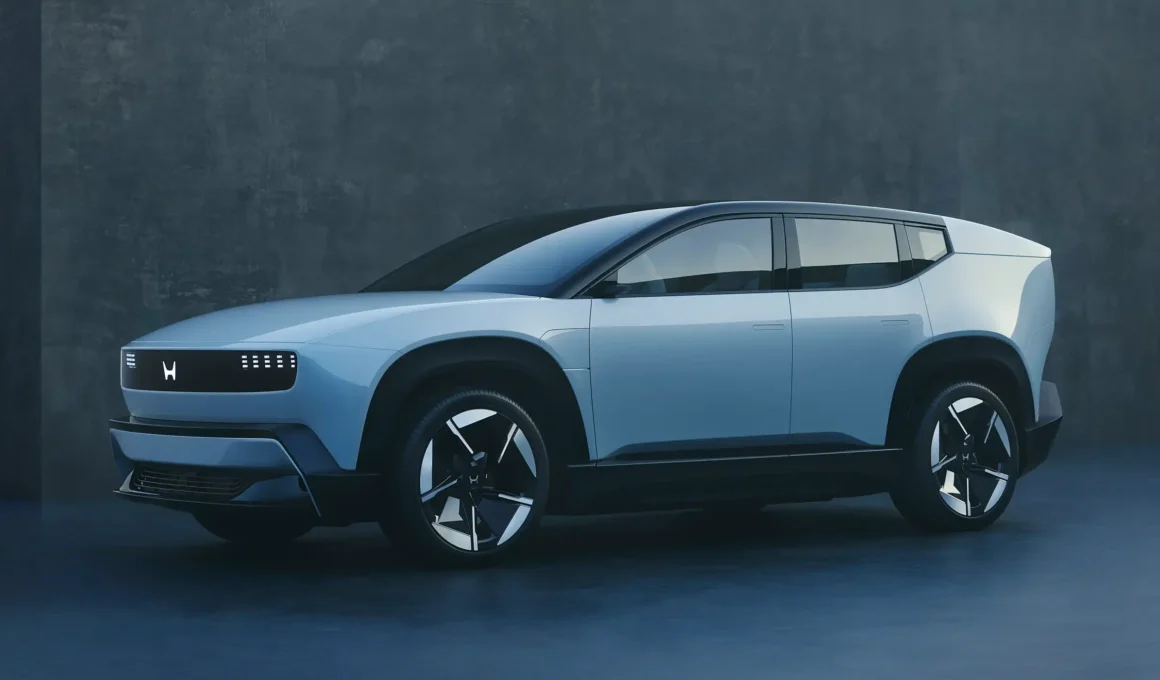
The trend, popularized by Tesla and adopted by brands looking to signal a high-tech identity, transformed a functional necessity into a “party trick” of industrial design. By nesting the handle flush within the bodywork, designers achieved an uninterrupted silhouette that suggests a futuristic, monolithic object. We have seen this philosophy embraced by storied design houses, such as in the Karma GT designed by Pininfarina, where handles were integrated into the body to keep volumes as pure as possible. This pursuit of the “unbroken” surface is central to concepts like the Honda 0 Series, where a “Thin, Light, and Wise” philosophy uses extreme minimalism to redefine the electric silhouette. By tucking the handle into the bodywork, car makers could shave fractions off the drag coefficient, a crucial metric in the race to maximize battery range for mass-market transport like the Hyundai IONIQ 5. Yet, as these vehicles move from concept to daily use, the mechanical reality of these systems has come under intense scrutiny.
However, this minimalist design choice has come under intense scrutiny. While flush handles are marketed as a way to reduce aerodynamic drag—a crucial metric for cars like the Hyundai IONIQ 5—the real-world gains are often marginal. Critics argue that this slight increase in battery range comes at the cost of passenger safety, as electronic actuators frequently fail during the power surges or battery failures common in electric vehicle collisions.
Analyzing the Pros and Cons: Aesthetics vs. Survival
The move by China—the world’s largest EV market—forces a critical re-evaluation of current design priorities. On one hand, retractable handles offer undeniable benefits in aerodynamics and visual purity, creating a “handshake” between the user and the machine through automated movement. On the other hand, the user experience (UX) has been problematic: in cold climates, these mechanisms are prone to freezing shut, and for first responders, a flush handle that refuses to deploy can be the difference between a successful rescue and a tragedy.
The MIIT regulation stipulates that every door must have a mechanical override. This doesn’t necessarily mean the end of the “hidden” look, but it does mean the end of the purely electronic version. Manufacturers must now integrate mechanical redundancy, ensuring that a door can be opened without tools or power even after a severe impact.
Toward a New Functional Aesthetic
The design challenge now lies in creating emergency overrides that don’t compromise the vehicle’s “clean” look. We are likely to see a rise in semi-flush handles—mechanisms that sit close to the body for aerodynamics but feature a physical pivot point. This shift represents a broader maturation of the automotive industry. As the novelty of “smart” features wears off, the definition of luxury is shifting from “invisible technology” to “unfailing reliability.”
By enforcing mechanical safety standards, China is reminding the global design community that while beauty is a goal, the most sophisticated design is the one that works when everything else fails. The “invisible” handle may be disappearing, but in its place, a more honest, function-driven design philosophy is emerging—one where the door handle is no longer a hidden secret, but a visible promise of security.