

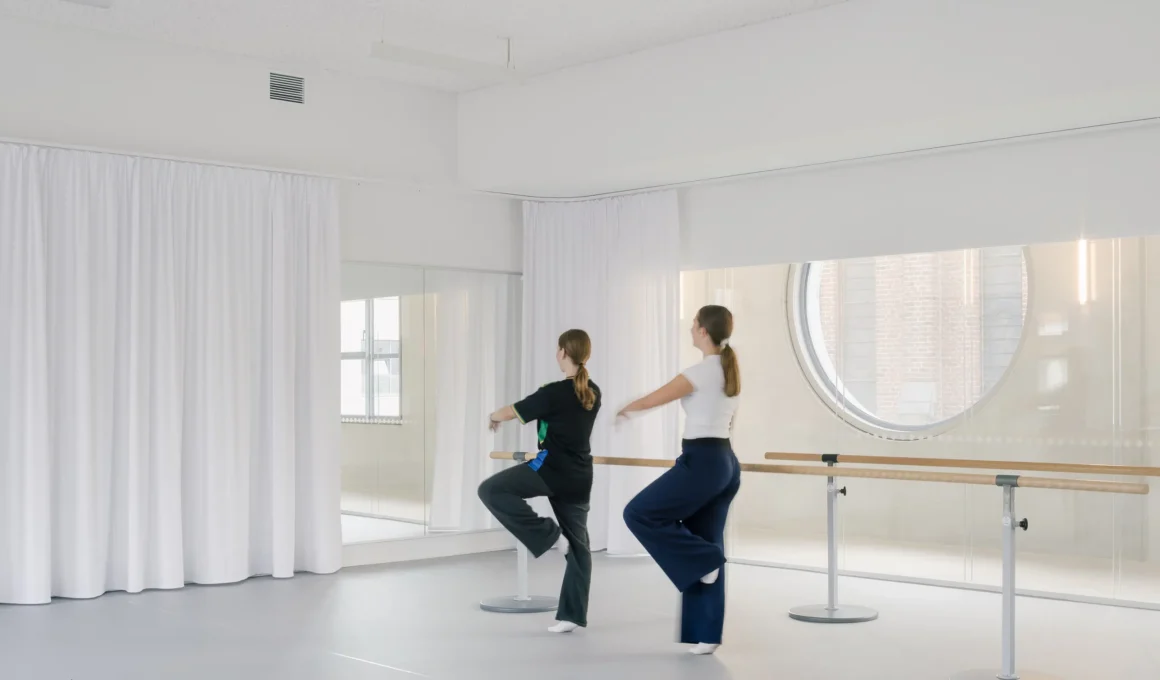
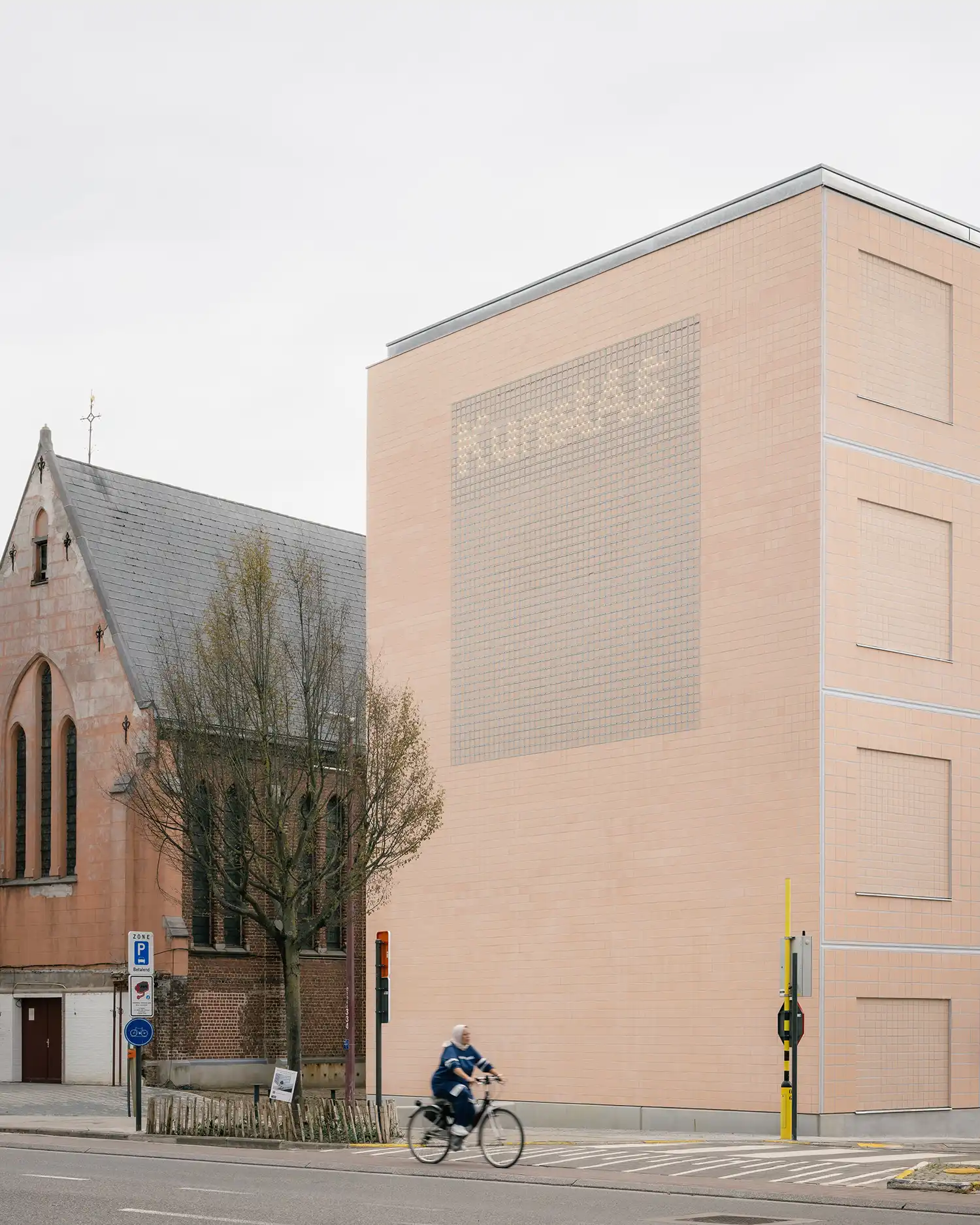
A strategic urban suture defines the essence of the new Arts Campus ‘Kunst-As’ in Asse, Belgium. Designed by FELT and Oskar Architecten, the project is a deliberate response to a fragmented city center, aiming to anchor a growing cluster of cultural institutions. By adopting a precise L-shaped configuration, the architects have managed to frame the site’s protected chapel while simultaneously completing the urban block, turning a formerly neglected void into a coherent public destination.
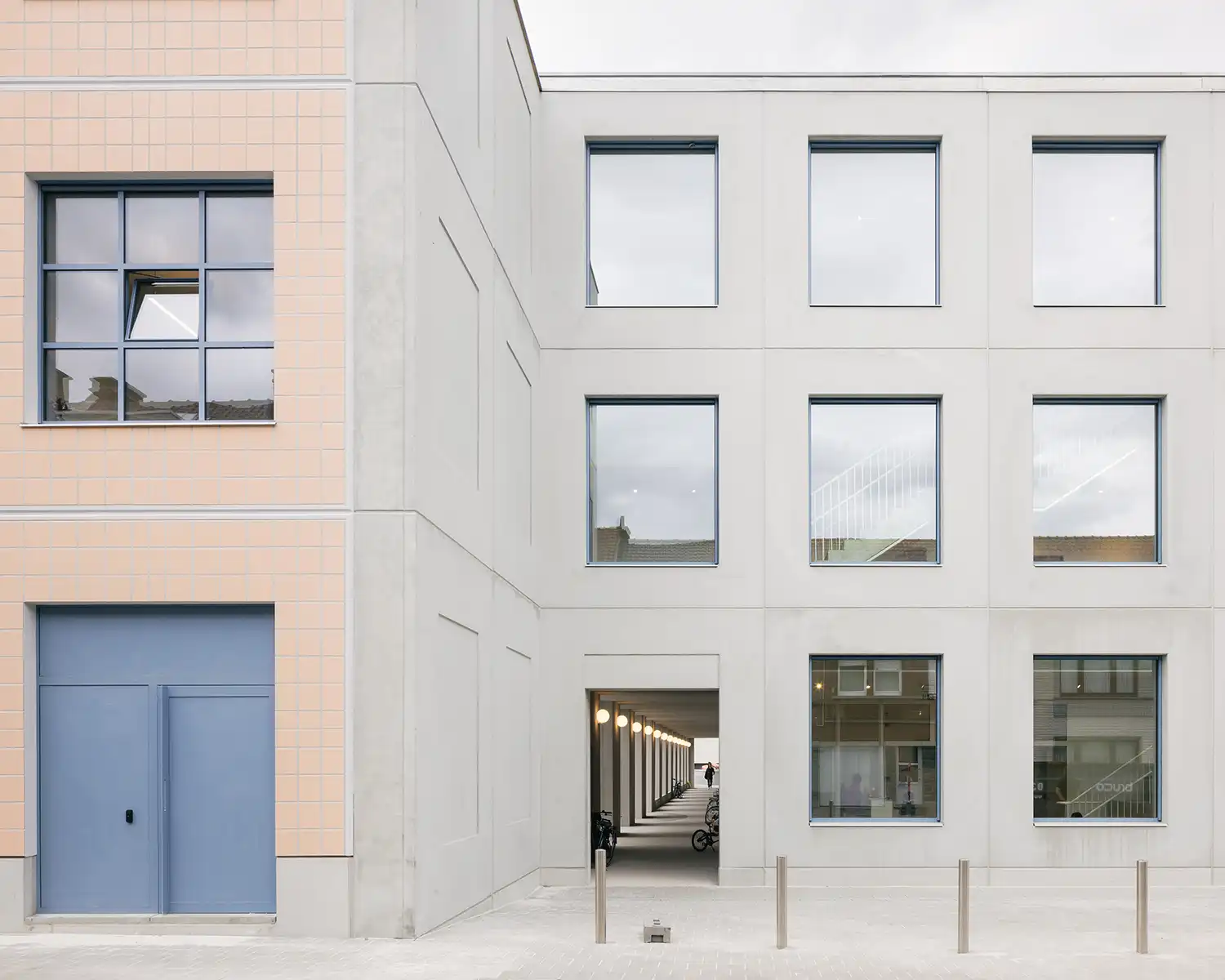
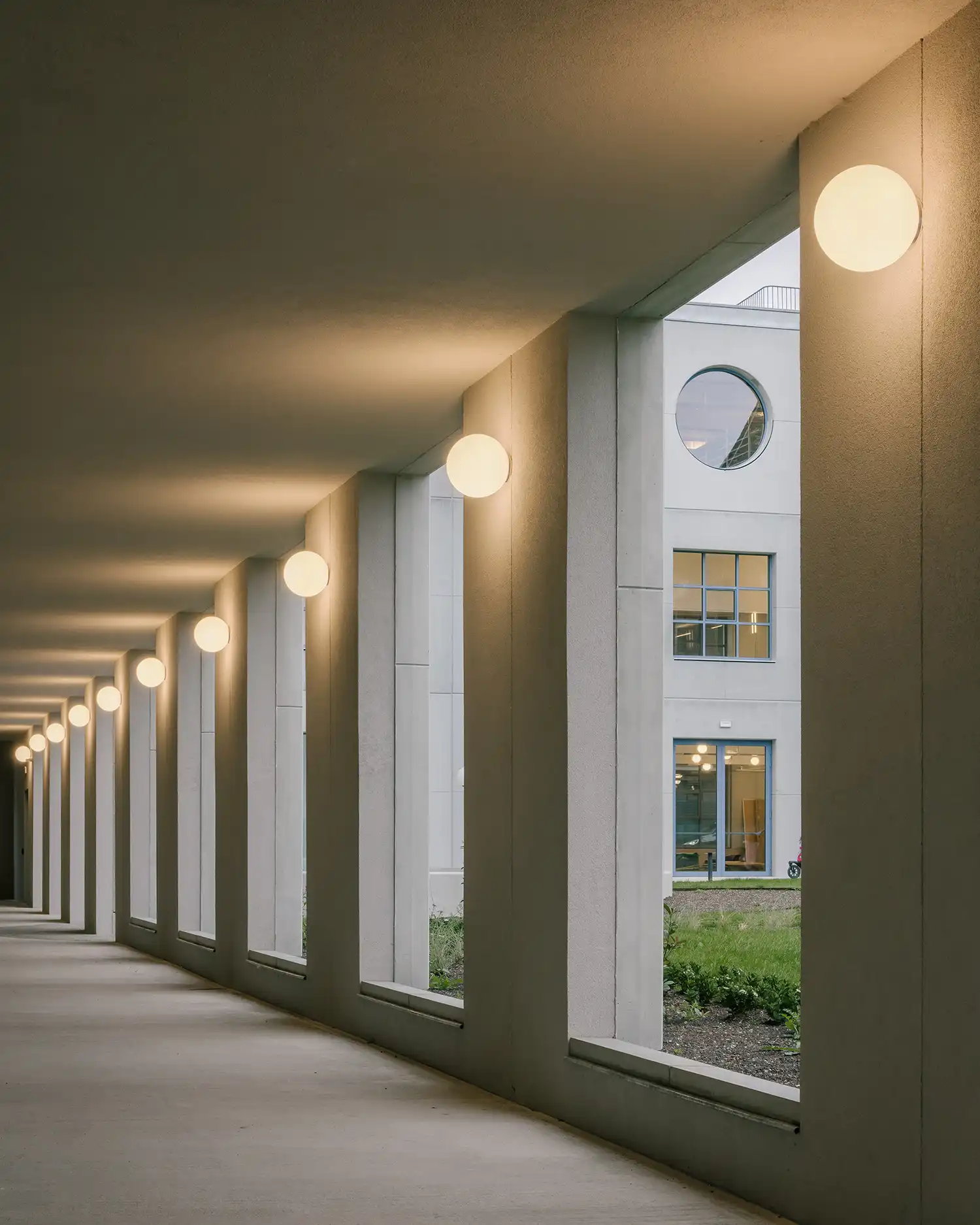
The threshold between street and garden serves as the primary experiential driver for the campus. On the outer corner of the plot, a subtle setback carves out a forecourt that acts as a modern stoop for the community. This entrance does not merely lead indoors; it functions as a portal to a revived cloister garden, drawing visitors along a covered gallery that stitches the new building to the neighboring library and cultural center.
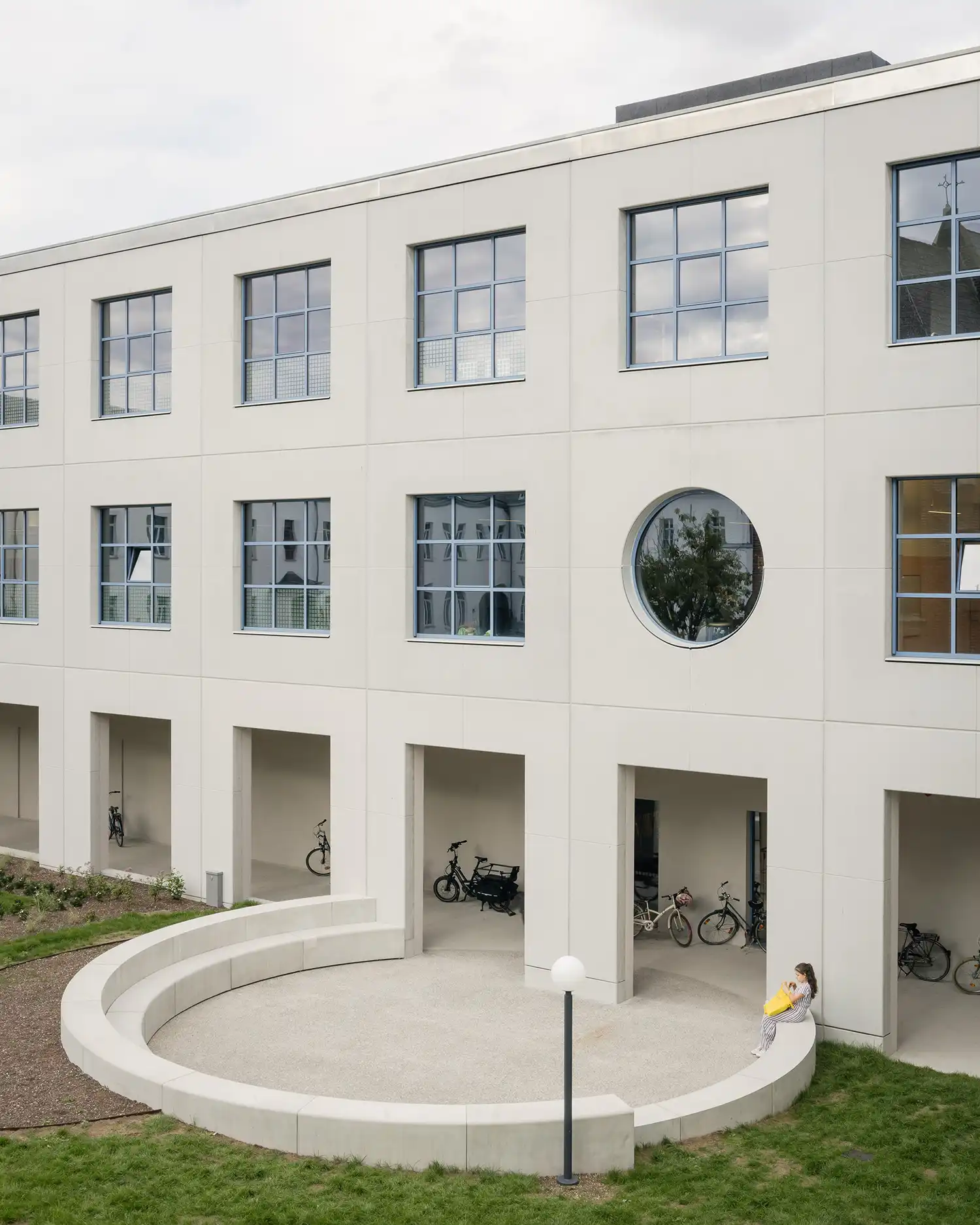
A dual-faced architectural identity allows the project to speak two languages at once. Facing the inner courtyard, the elevation is composed of calm, square, prefabricated concrete elements that provide a neutral backdrop for daily activity. This “introverted” side of the building prioritizes serenity, reflecting the quiet heritage of the adjacent chapel while providing a stable visual environment for students and faculty within the educational infrastructure.
Contextual rhythm and color dictate the character of the street-facing skin. Here, the architectural tempo quickens, adopting a tighter rhythm that mirrors the grain of the Belgian townscape. The palette shifts to warmer, pastel tones, subtly sampling the hues of the surrounding vernacular. By doing so, the campus avoids the sterile aesthetic often associated with institutional buildings, opting instead for a polite yet firm integration into the existing urban fabric.
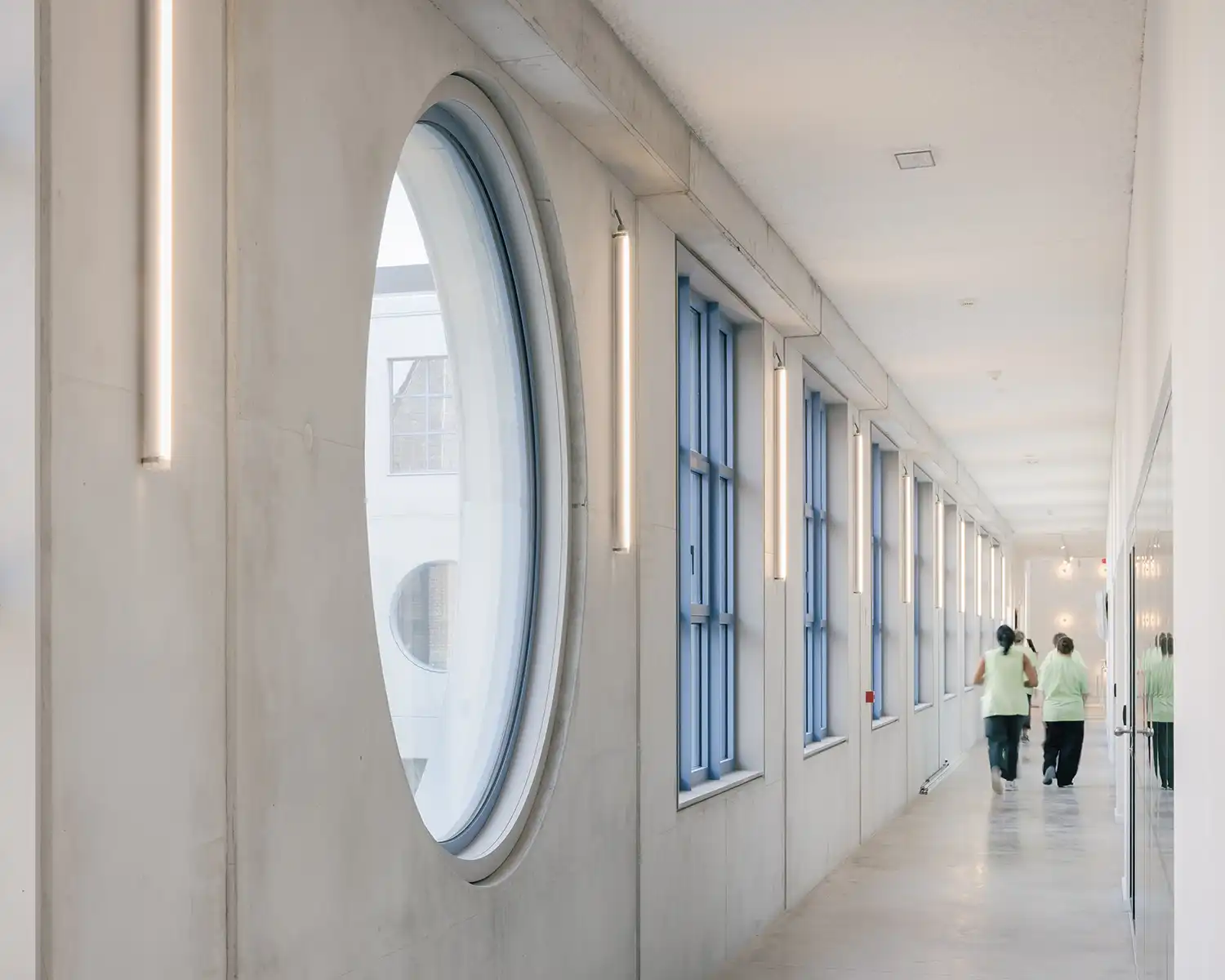
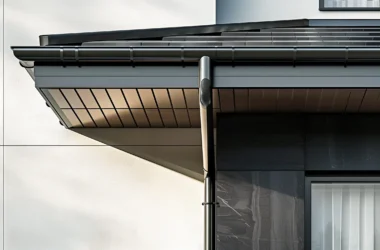
Tactility through material depth is achieved through a layered system of deep reveals and large square openings. The combination of robust concrete, soft ceramic tiles, and elegant blue-toned framework gives the campus a distinctive, touchable identity. These deep shadows and rhythmic delineations create a facade that changes throughout the day, responding to the shifting light and providing a sense of permanence and “weight” to the new cultural landmark.
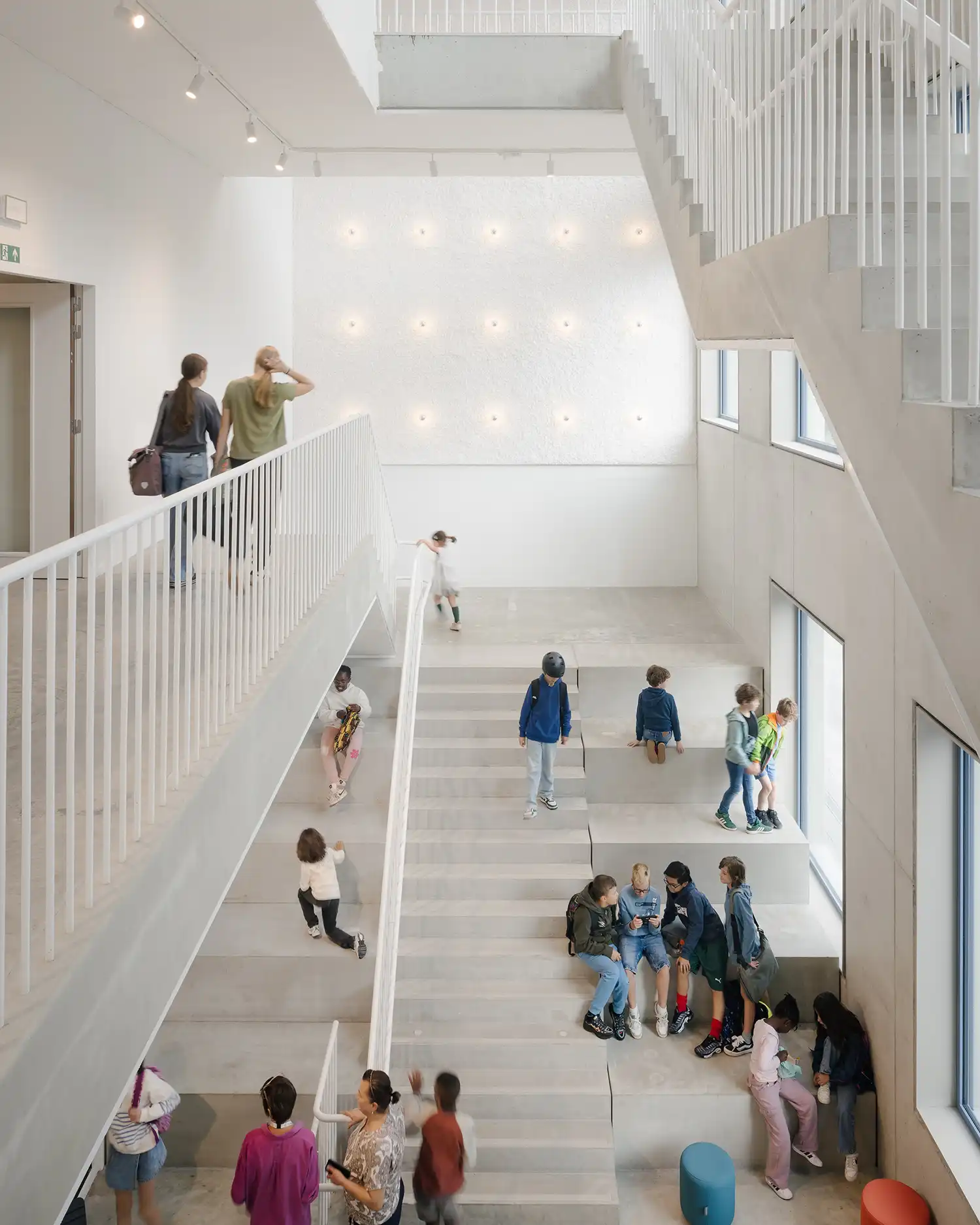
Internal movement as a social catalyst transforms the corridors from mere transit zones into a sequence of curated experiences. Two parallel circulation routes branch out from a central foyer, leading to a specialized program of ateliers and rehearsal rooms. Rather than hidden hallways, these paths are designed as wide landings and transparent vitrines, turning the act of moving through the building into an opportunity for spontaneous interaction and observation.
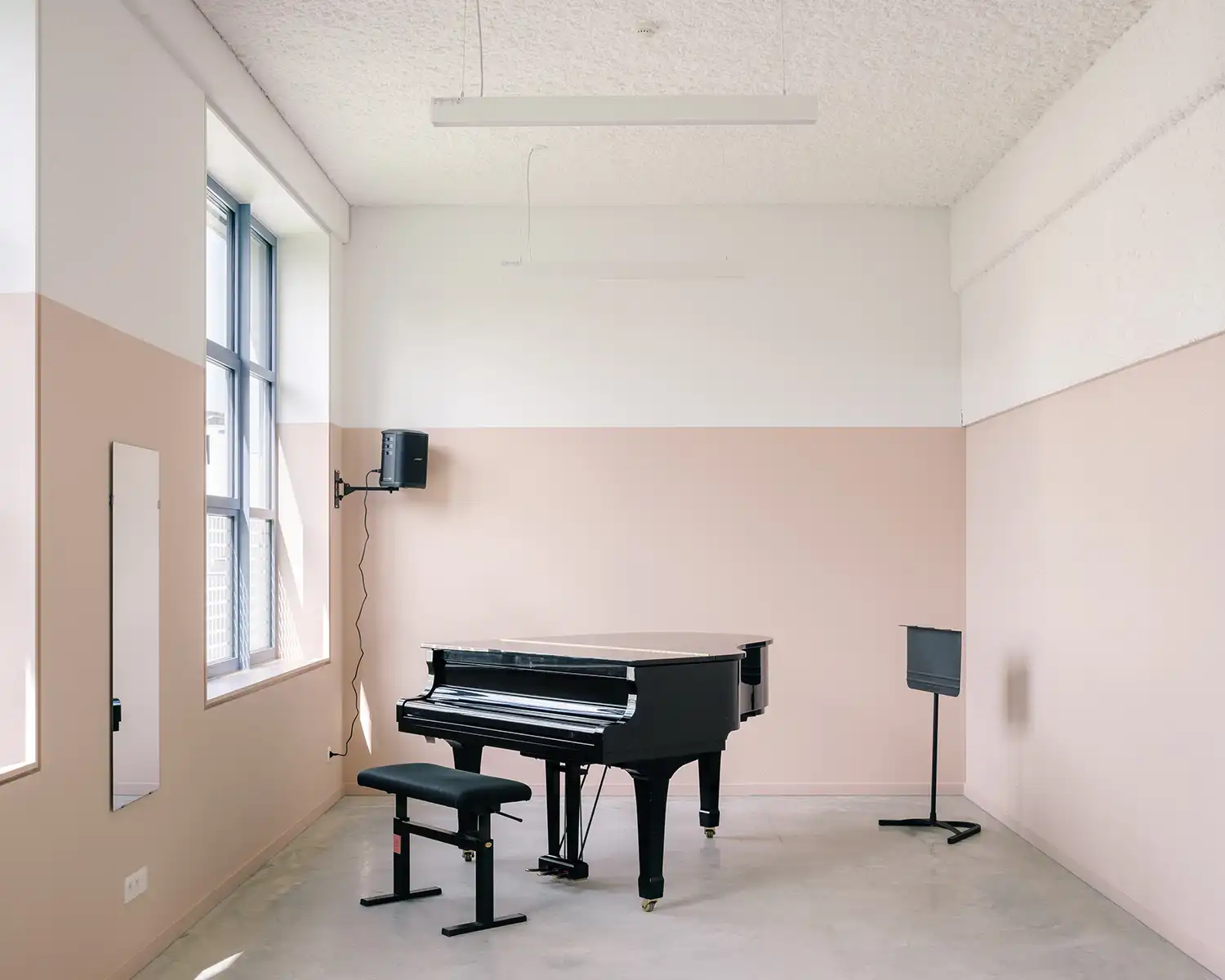
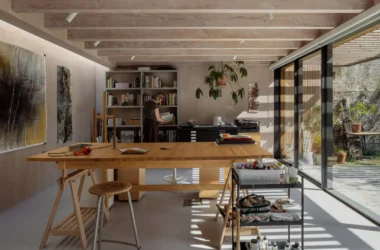
The sensory experience of the atelier is one of light and transparency. Large windows frame views of the city and the internal garden, blurring the line between the disciplined environment of the arts school and the public life outside. Inside, the raw materiality of the structure is left exposed, celebrating the “workshop” nature of the space where the creative process is prioritized over decorative finishes. It is an environment built for production, not just display.
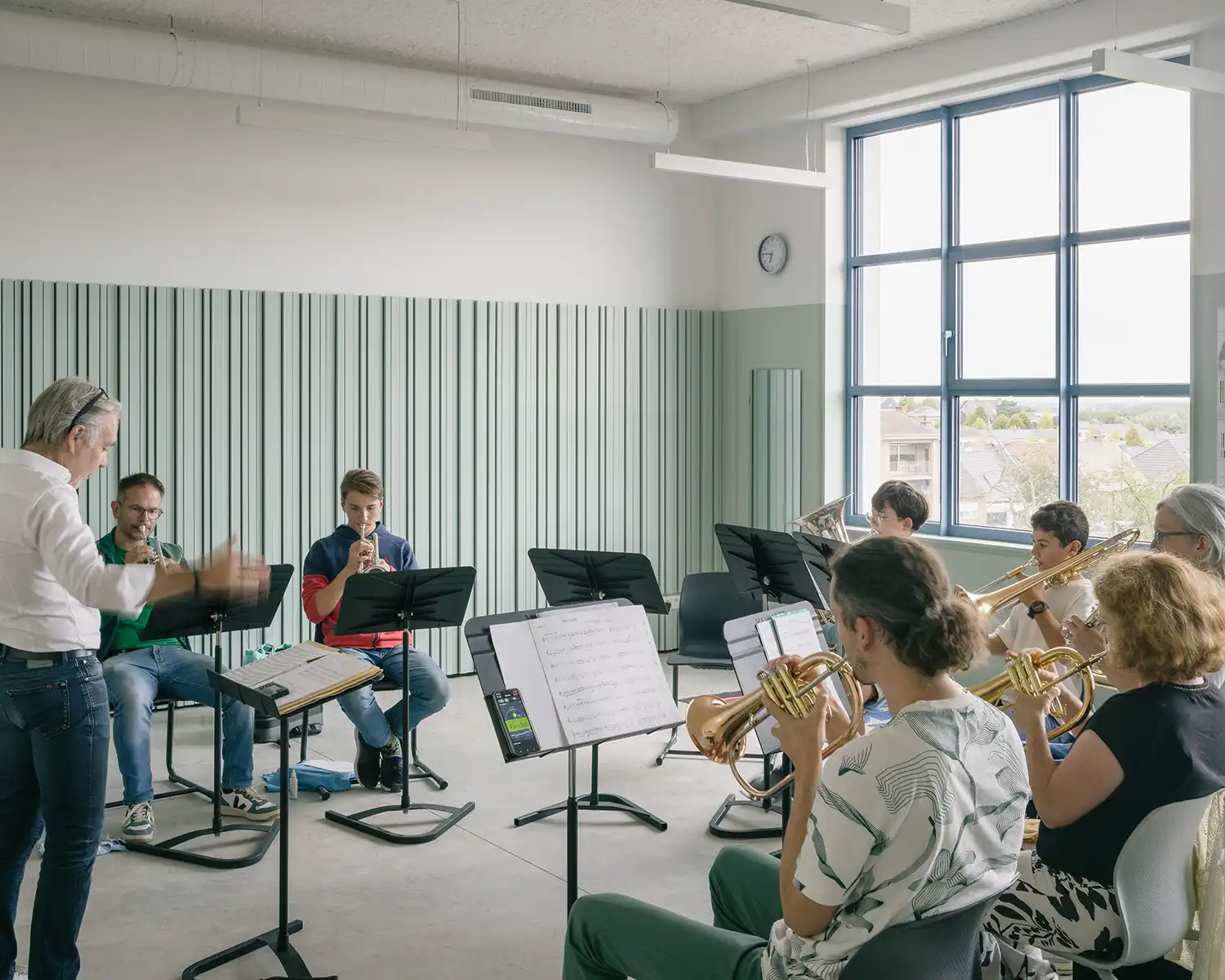
A sequence of places to linger is created through the clever use of exhibition walls and generous common areas. These “in-between” spaces allow students to show their work in a non-precious, integrated way, making the building itself a living gallery. The transition from private practice to public performance is fluid, reflecting a modern approach to arts education where the exchange of ideas is as important as the practice itself.
A confident cornerstone for a civic landscape in transition, the Kunst-As successfully gathers diverse users under a single, cohesive roof. It stands as a testament to how sensitive architectural intervention can revitalize heritage while providing the technical rigor required for contemporary arts education. For those interested in exploring how similar projects navigate the intersection of education and public life, the broader collection of art centers offers a diverse look at global typologies.