


Bjarke Ingels Group has designed a university that refuses the traditional campus boundary — not as a rhetorical gesture, but as the organizing principle behind every material choice, every massing decision, and every threshold between building and street. The new BIG STEM university Bentonville Arkansas, commissioned by members of the Walton family and developed in collaboration with Polk Stanley Wilcox Architects, occupies the former Walmart Home Office site and positions itself not as an institution inserted into downtown, but as a continuation of it. The implications extend well beyond architecture: this is a civic recalibration, executed in Corten steel, copper, and red-hued cement.
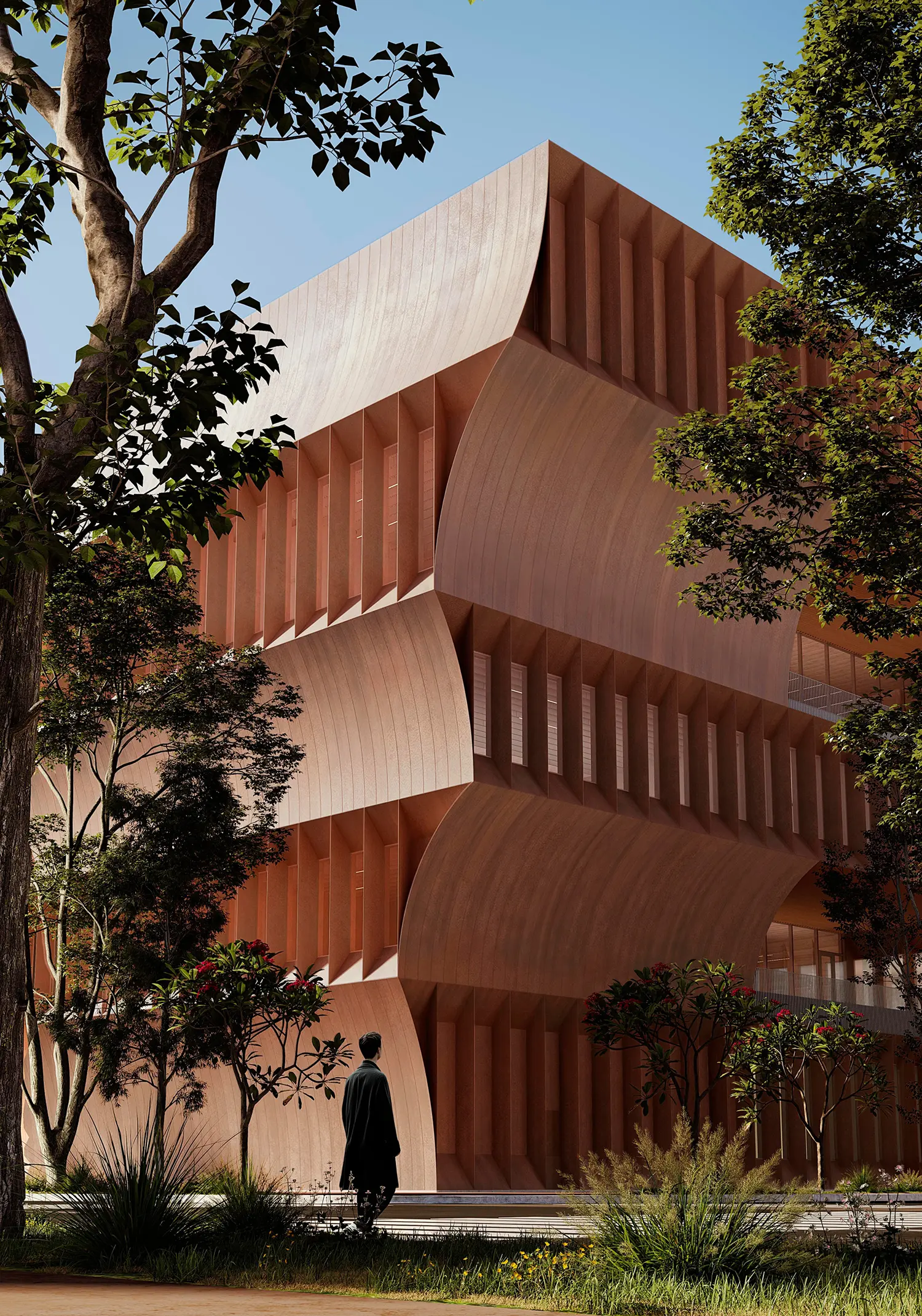
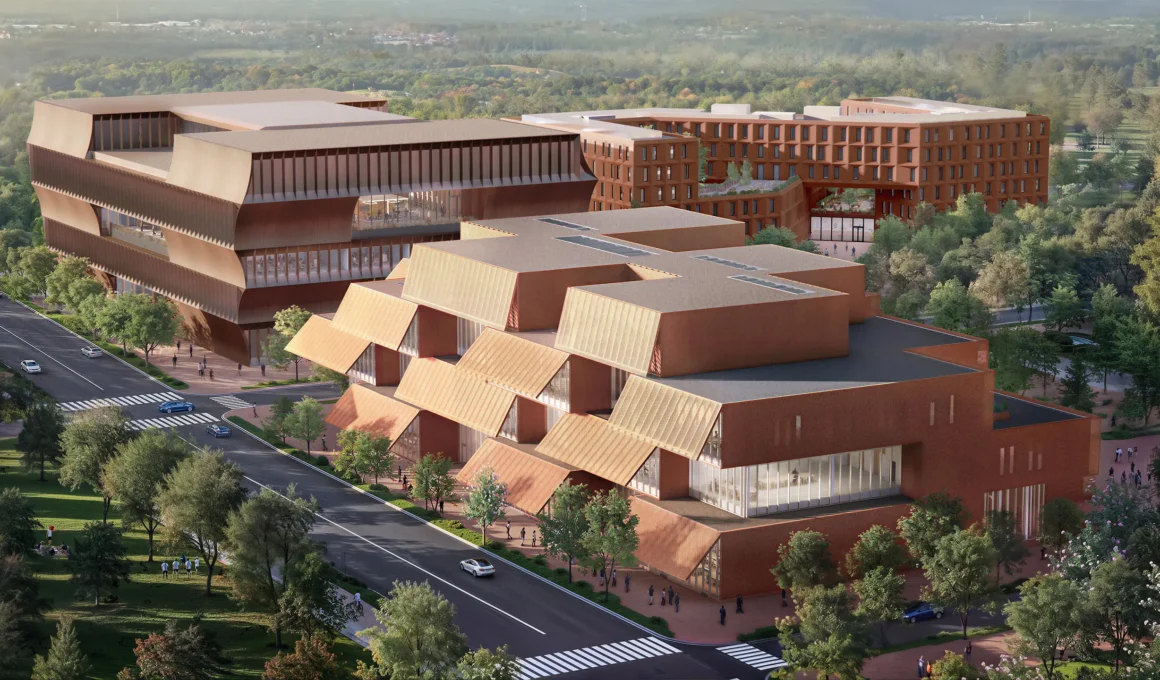
The site itself is the argument. Situated between Bentonville’s downtown square and Gateway Park, and oriented around a historic diagonal rail line that once cut through the city, the 422,372-sq-ft urban university campus reads the urban grain before imposing a new one. Three buildings — a makerspace, an academic building, and a student residence — are not arranged as objects on a lawn but as figures in an active street network, connected by public plazas and green corridors that remain open to the city. The decision to follow the rail line rather than override it is, quietly, the most important design decision on the entire project.
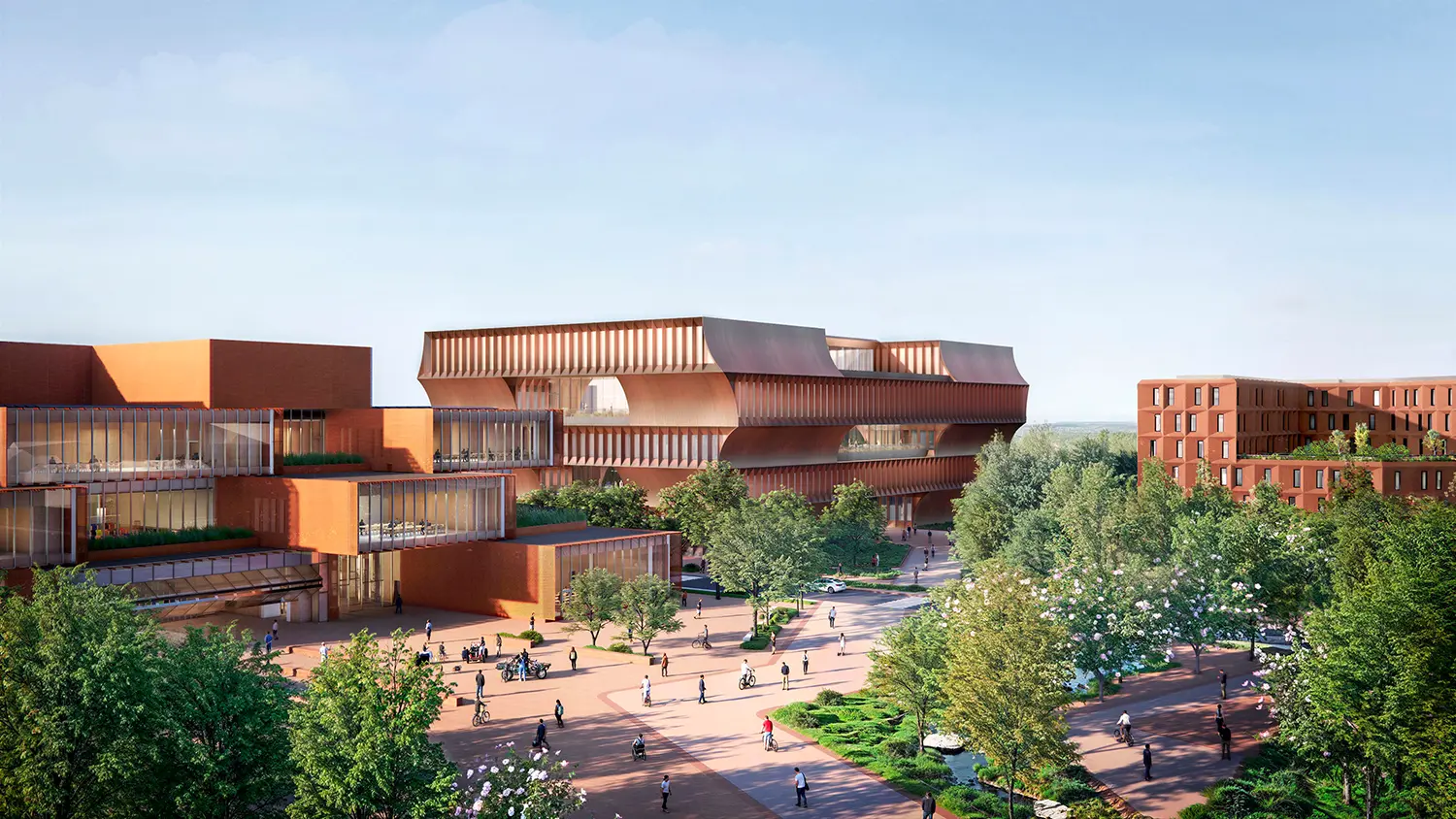
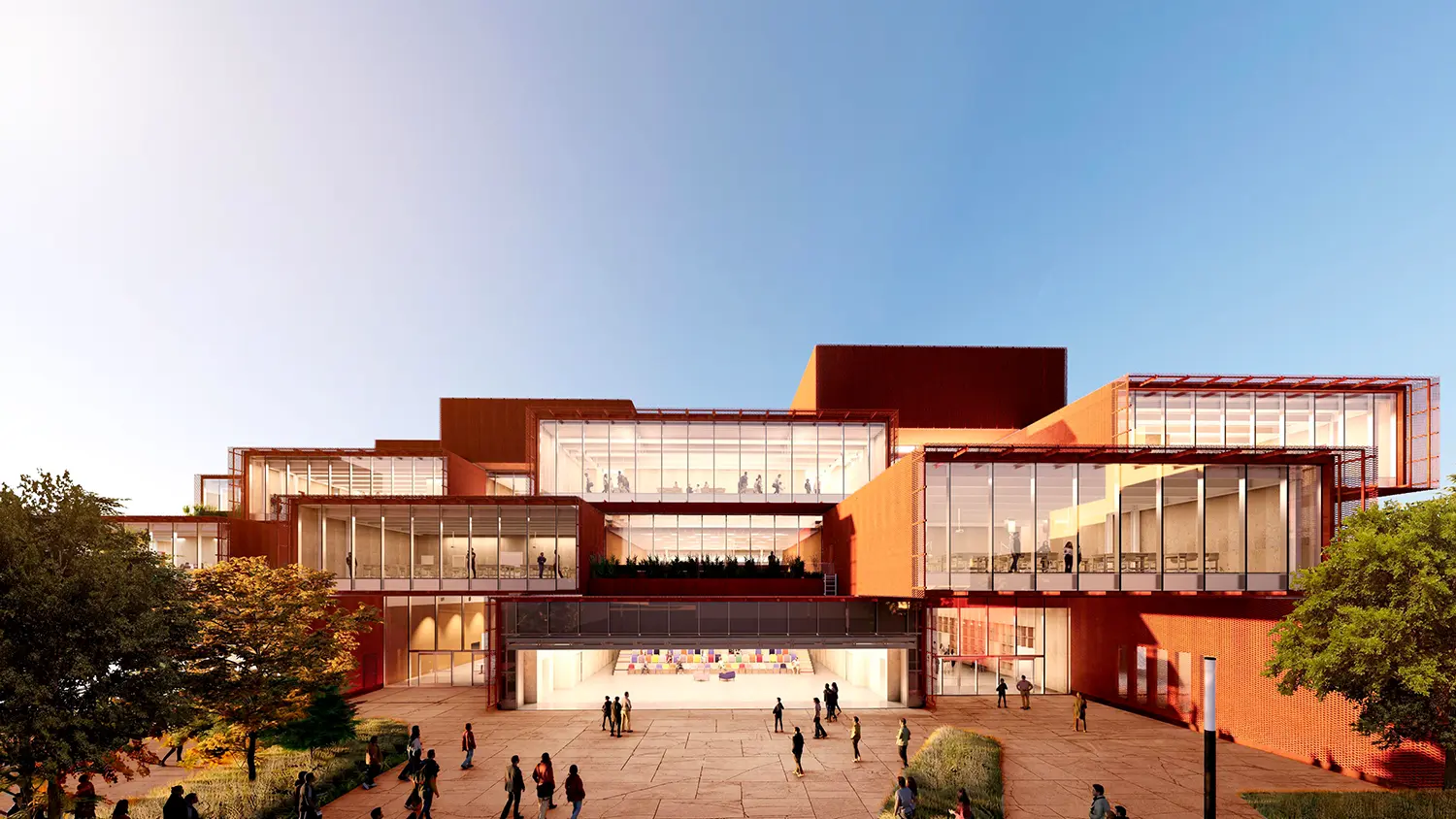
The makerspace sets the tone — and does so with material conviction. Clad in Corten weathering steel facade that will oxidize and darken over time, it acknowledges Northwest Arkansas’s industrial memory without replicating it. The split massing — stacked, offset, and interlocking volumes — carves out a building that is legible from the street as something permanently in process. Industrial-inspired vitrines and weathering steel mesh awnings handle solar heat gain while keeping floor-to-ceiling windows visible: students working inside are on display to passing citizens. “The makerspace is conceived as an inhabited showcase, displaying a culture of physical experimentation and rapid prototyping to the passing citizens,” said Bjarke Ingels, Founder and Creative Director of BIG. Green terraces step toward the public plaza, pulling campus activity toward the street rather than away from it.
Across SW E Street, the academic building takes a different approach to the same problem. Its floor plan alternates bar orientations on every level, generating interior terraces and breezeways that reference the dogtrot — a vernacular Arkansas building type defined by a central open passage between two enclosed volumes. The reference is not decorative. It produces genuine cross-ventilation geometries and visual continuity between floors, allowing a daylit atrium and a dramatic internal staircase to become the building’s social infrastructure. “Each of the three buildings fosters a different element of campus life, from study and collaboration to experimentation and innovation,” said Thomas Christoffersen, Partner at BIG.
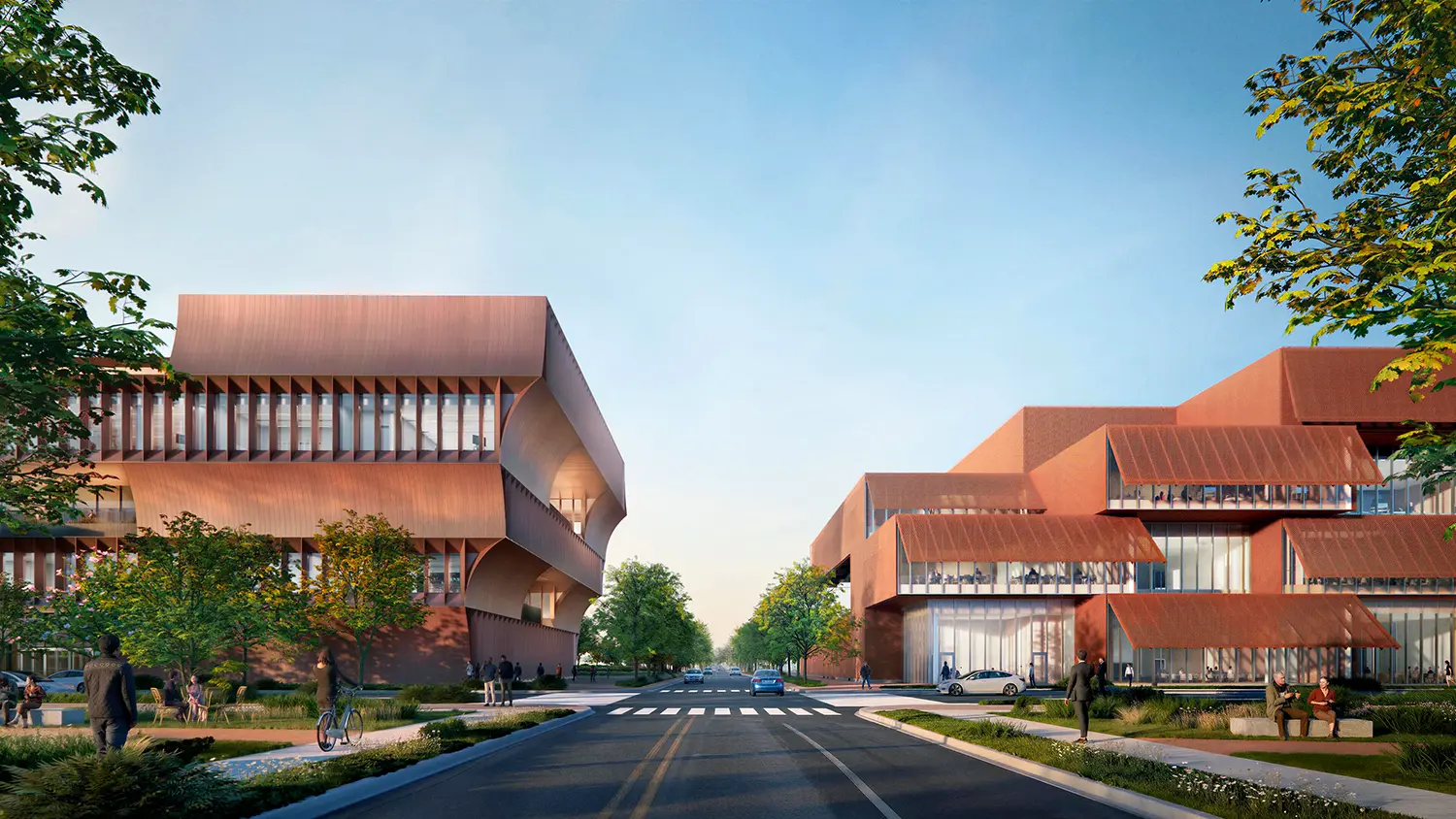
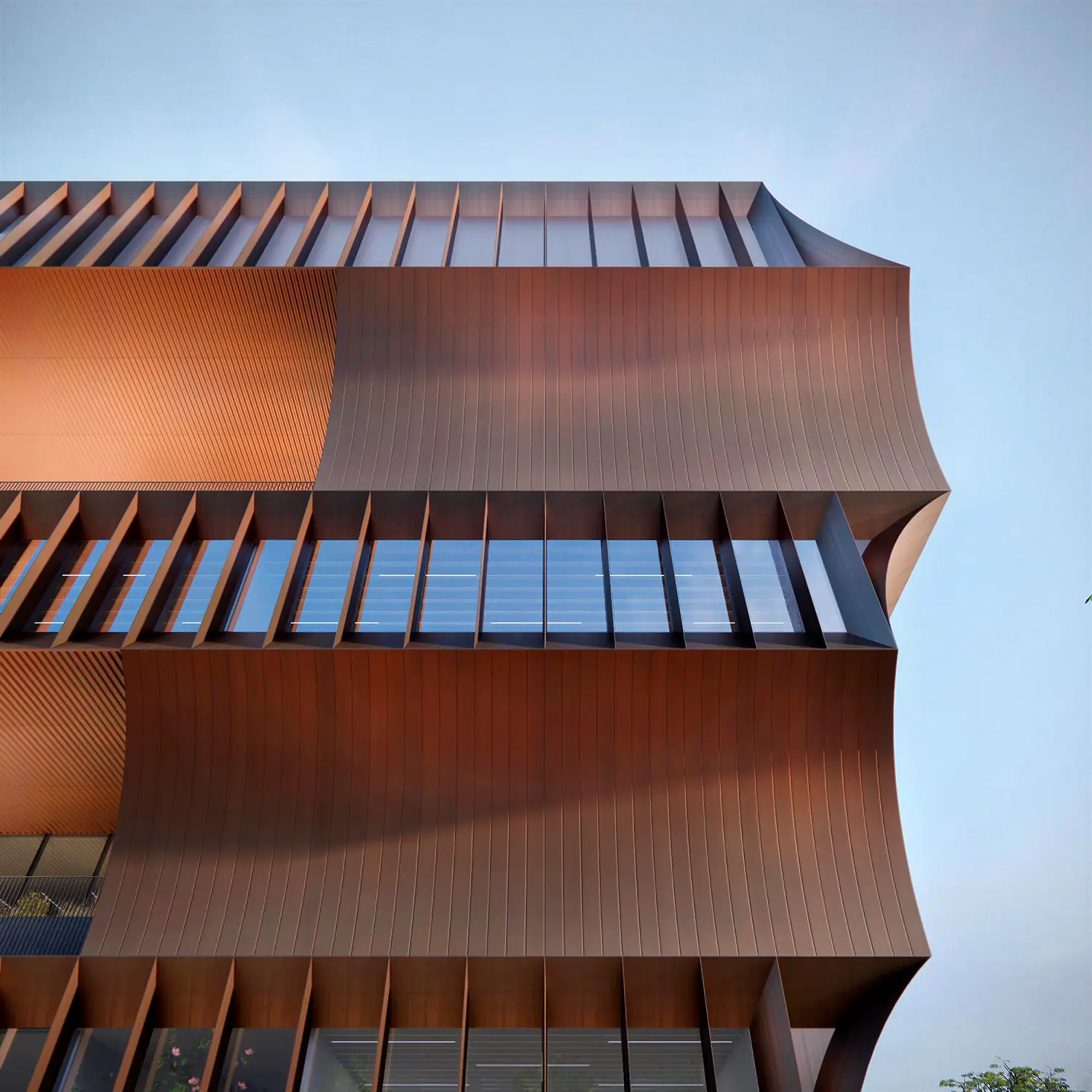
The facade of the academic building reads as a further exercise in regional translation. Its curved copper metal cladding evokes the interlocking logic of carved timber in traditional log construction — a contemporary abstraction of a form common to the Ozarks rather than a literal reproduction. The tapered massing activates the streetscape and creates shaded zones that function as informal invitation: covered areas where the threshold between inside and outside dissolves before a visitor has made any deliberate decision to enter.
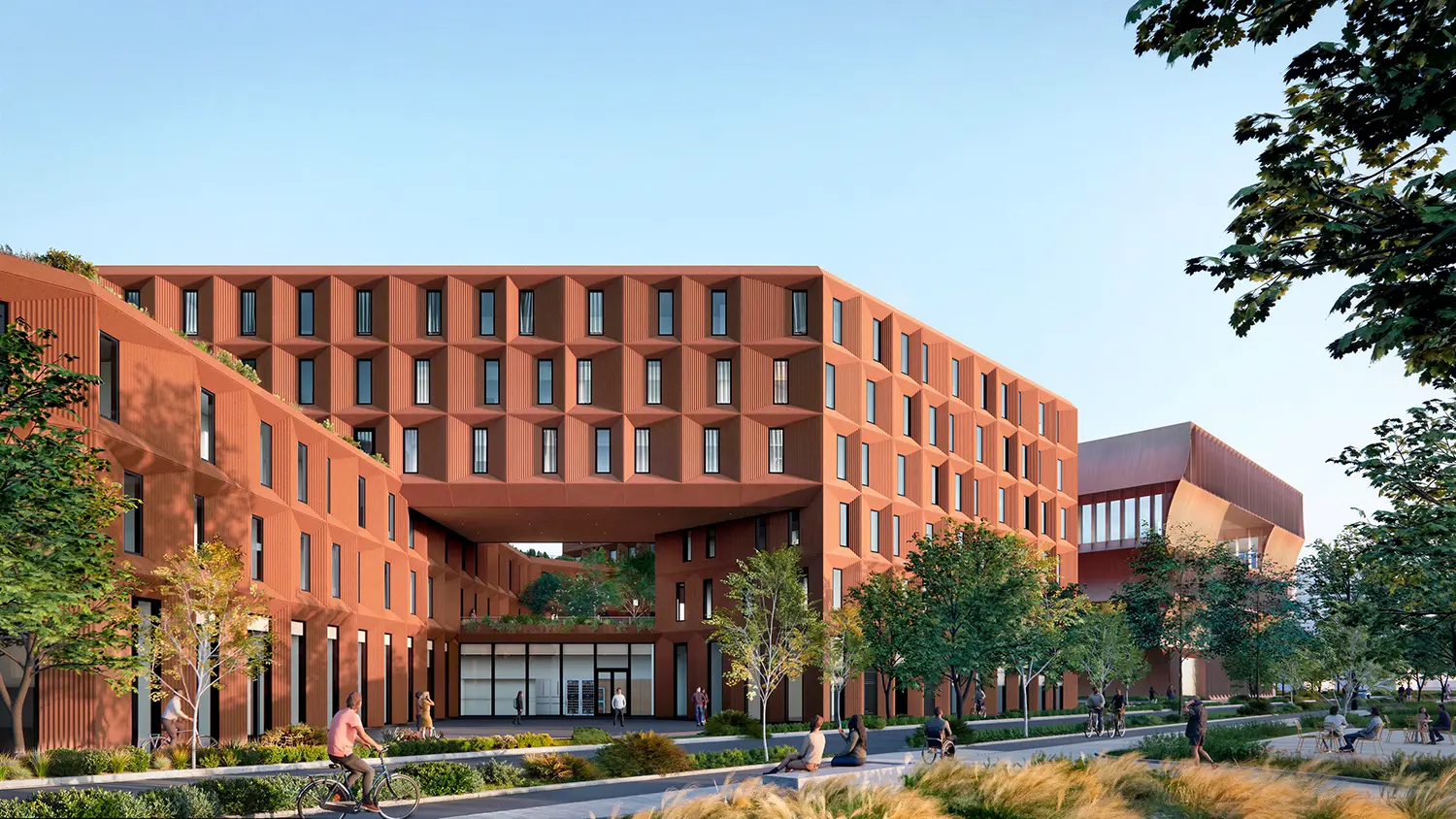
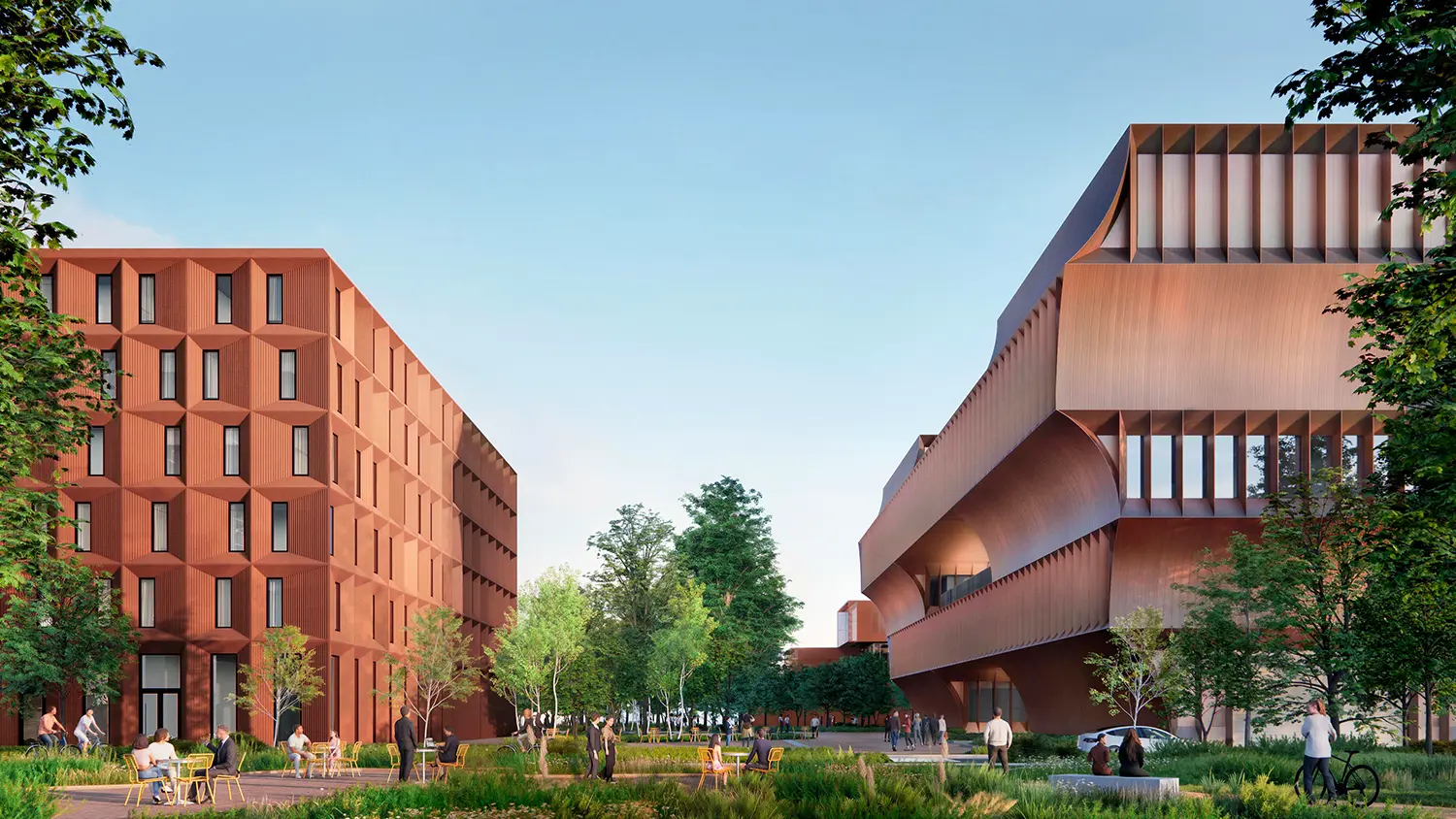
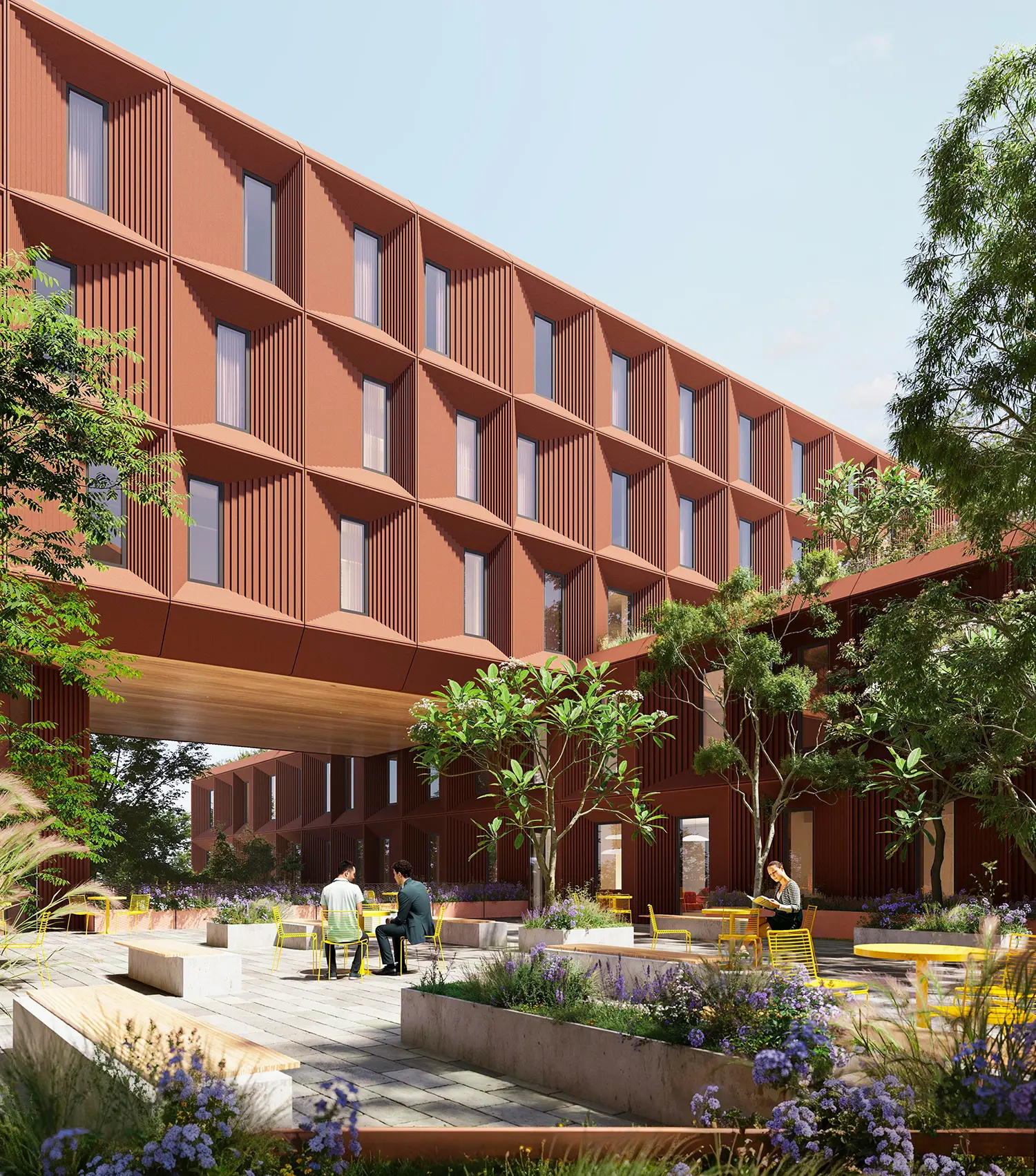
The student residence handles density through geometry rather than height. Organized as a figure-eight student residence building, it carves two elevated courtyards above a dining hall and shared amenity base, with each courtyard oriented to catch a different arc of daylight — one facing morning sun, the other afternoon. Red-hued cement panels distinguish it from its neighbors without breaking the material logic established across the campus. Every room faces outward, toward the campus and the parks beyond, refusing the introverted residential typology that isolates students from urban context.
The landscape strategy is consistent with the buildings rather than supplementary to them. Drawing on Bentonville’s established network of urban parks and the wider ecology of the Ozark region landscape design, the project treats outdoor space as programmed connective tissue — not passive lawn or decorative greenery, but the medium through which the city and the campus negotiate shared territory. The historic rail alignment, followed rather than erased, becomes the campus’s organizing spine, carrying pedestrian movement along a diagonal that no orthogonal plan could have produced.
The project enters a city that has been deliberately building a contemporary architectural identity for over a decade — from Crystal Bridges to the Momentary to a growing collection of commissioned public works. “BIG and the other acclaimed architects working on these campuses understand that these designs need to have a sense of place,” said Alice Walton. BIG’s higher education architecture portfolio already includes the Bloomberg Student Center at Johns Hopkins and the Robert Day Sciences Center at Claremont McKenna; Bentonville adds a more ambitious proposition — not a single building on an existing campus, but a new university campus downtown Bentonville built from scratch on urban land. The first class is expected in 2029.
What this project ultimately tests is whether dissolving the campus boundary actually produces civic life, or merely the appearance of it. The material choices are calibrated, the vernacular references are earned rather than applied, and the urban logic is rigorous. Whether students working in the makerspace vitrines will genuinely activate the street — or whether those windows become the architectural equivalent of a stage set — is a question only occupation will answer.
Bentonville STEM University by BIG | Location: Bentonville, Arkansas, USA — Year: 2029 (expected completion) — Key materials: Corten weathering steel, aged copper, red-hued cement panels