



House For Rural Habits by Spolia Office breathes new life into a three-story mountainside residence in Siero, Asturias, transforming a fragmented interior into a light-filled retreat for a sommelier that frames the dramatic Spanish landscape through a lens of contemporary minimalism and rural memory.
A Dialogue with the Valley. The project is situated on a plot defined by apple trees and a traditional cider llagar, where the air is thick with the heritage of Asturian production. Spolia Office, led by Mireya Fabregas and Juancho Mesa, approached the renovation not as a mere restoration, but as an intellectual inquiry into the contemporary rural aesthetic. By stripping away the dark, compartmentalized walls of the original structure, the architects invited the valley inside, allowing the interior to breathe in synchronization with the shifting seasons and the mist of the Cantabrian mountains.
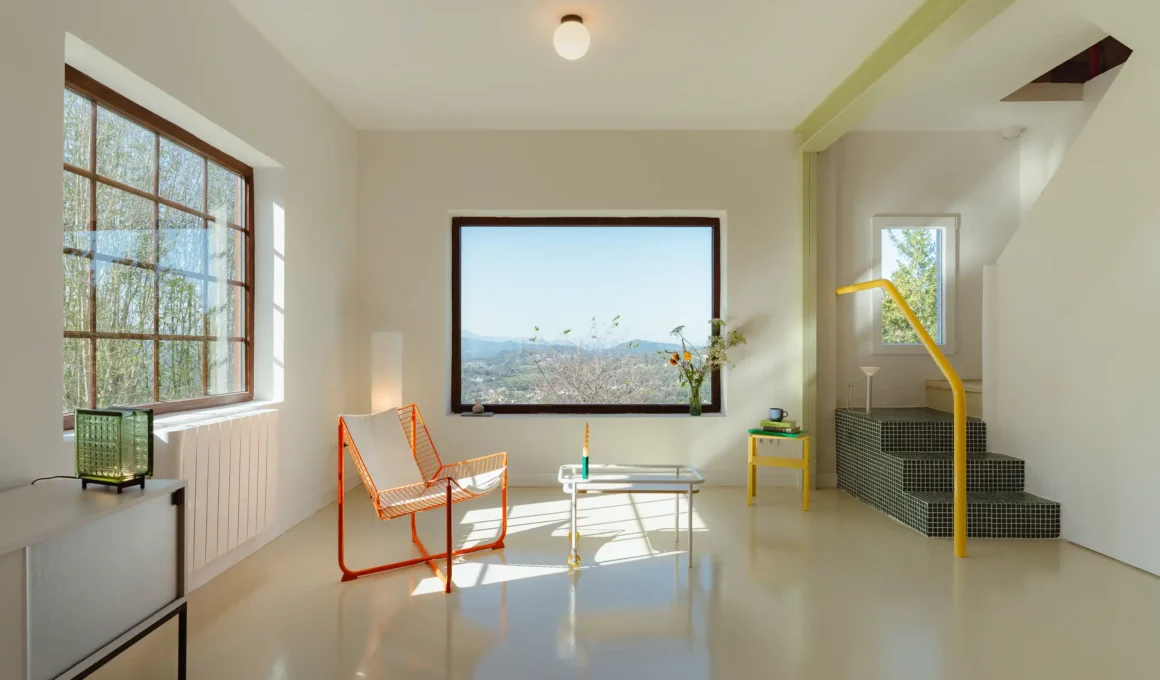
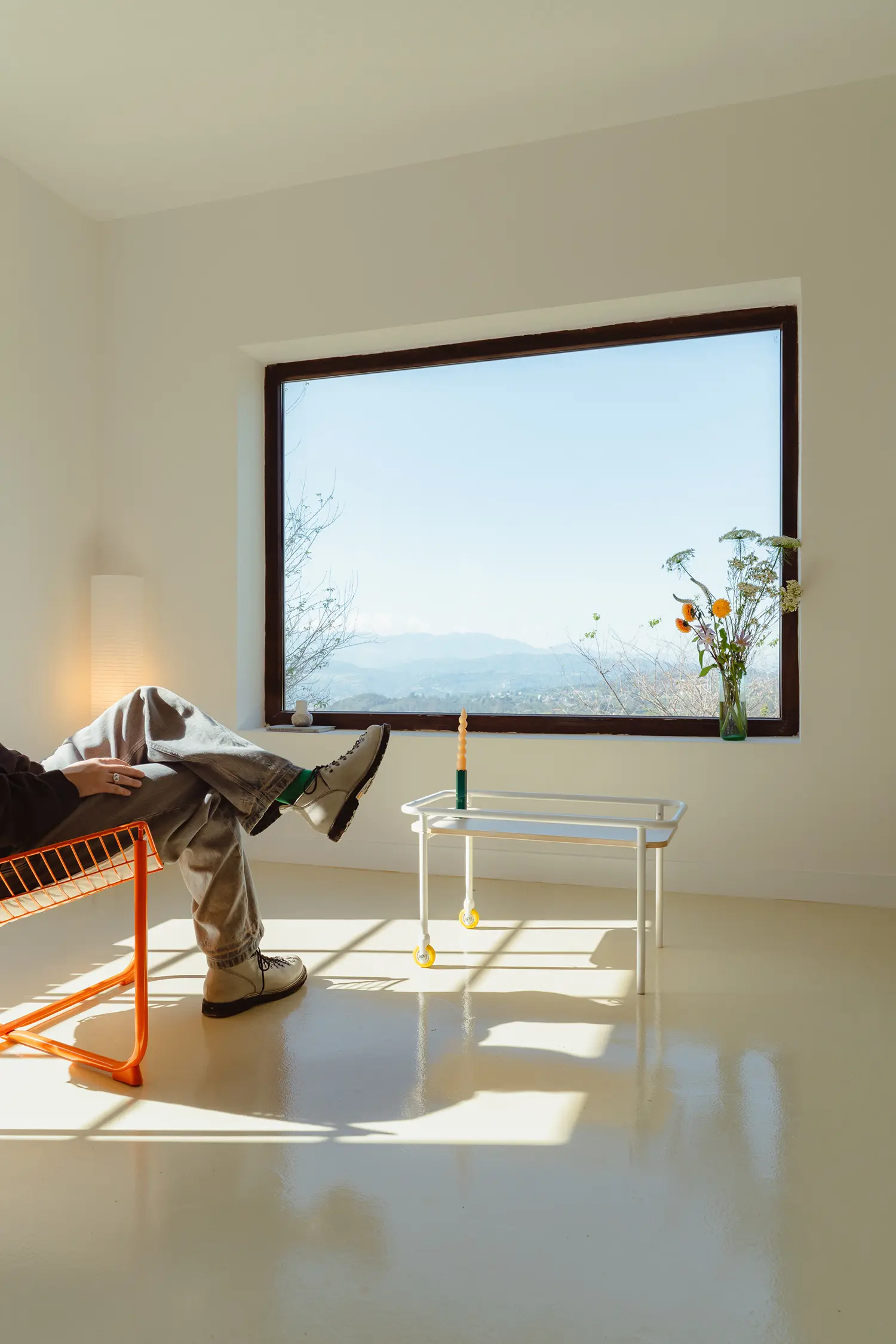
Framing the Living Canvas. Inspired by the Le Corbusian notion that nature only becomes landscape when framed by the human hand, the house utilizes large, strategic apertures to curate views of the surrounding hills. These windows function as living paintings, capturing the transit of the sun and the changing hues of the apple orchards. For the inhabitant—a creative professional deep-seated in the culture of wine—the home becomes a sensory extension of their craft, where the slow pace of fermentation and harvest is mirrored in the quietude of the spatial arrangement.
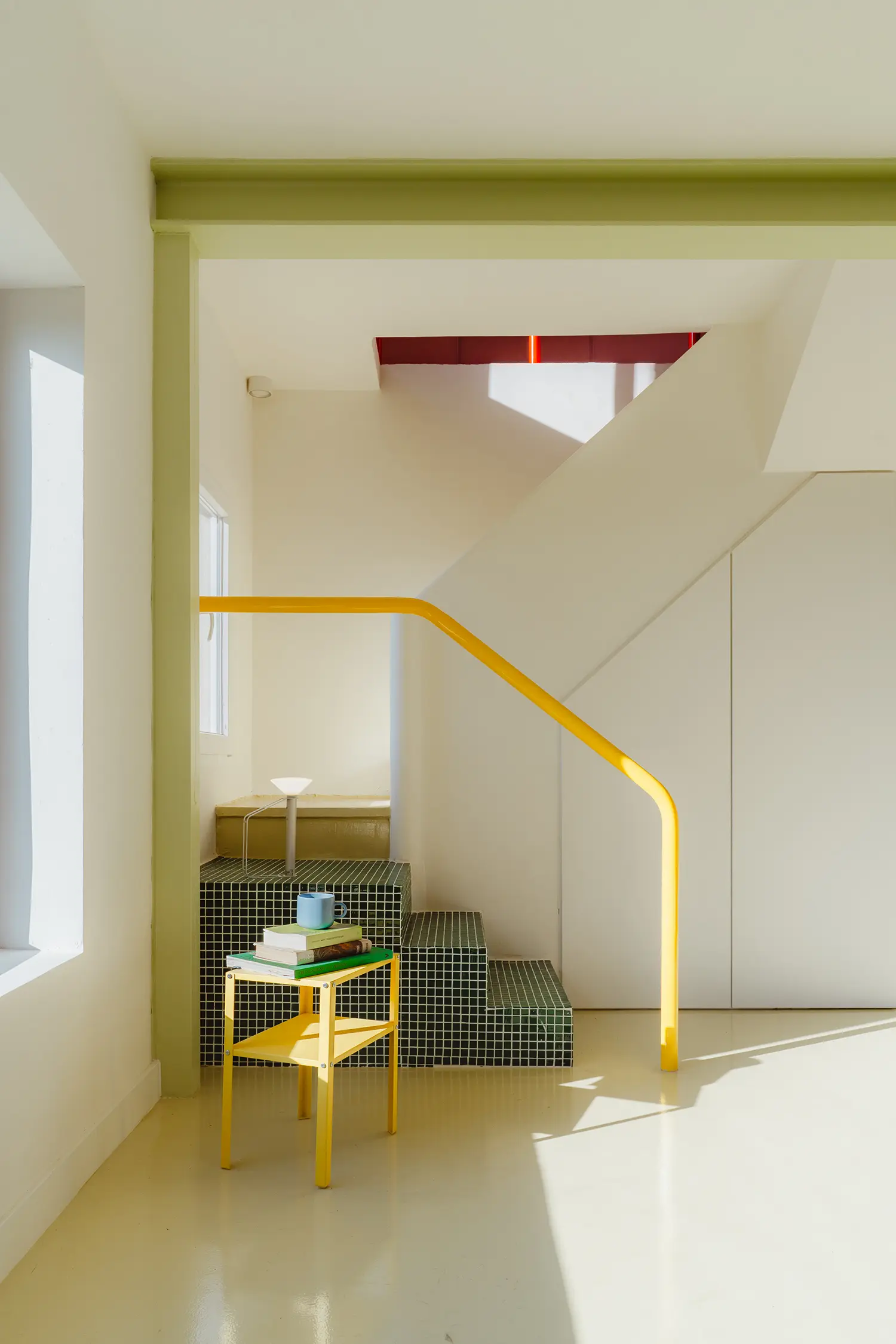
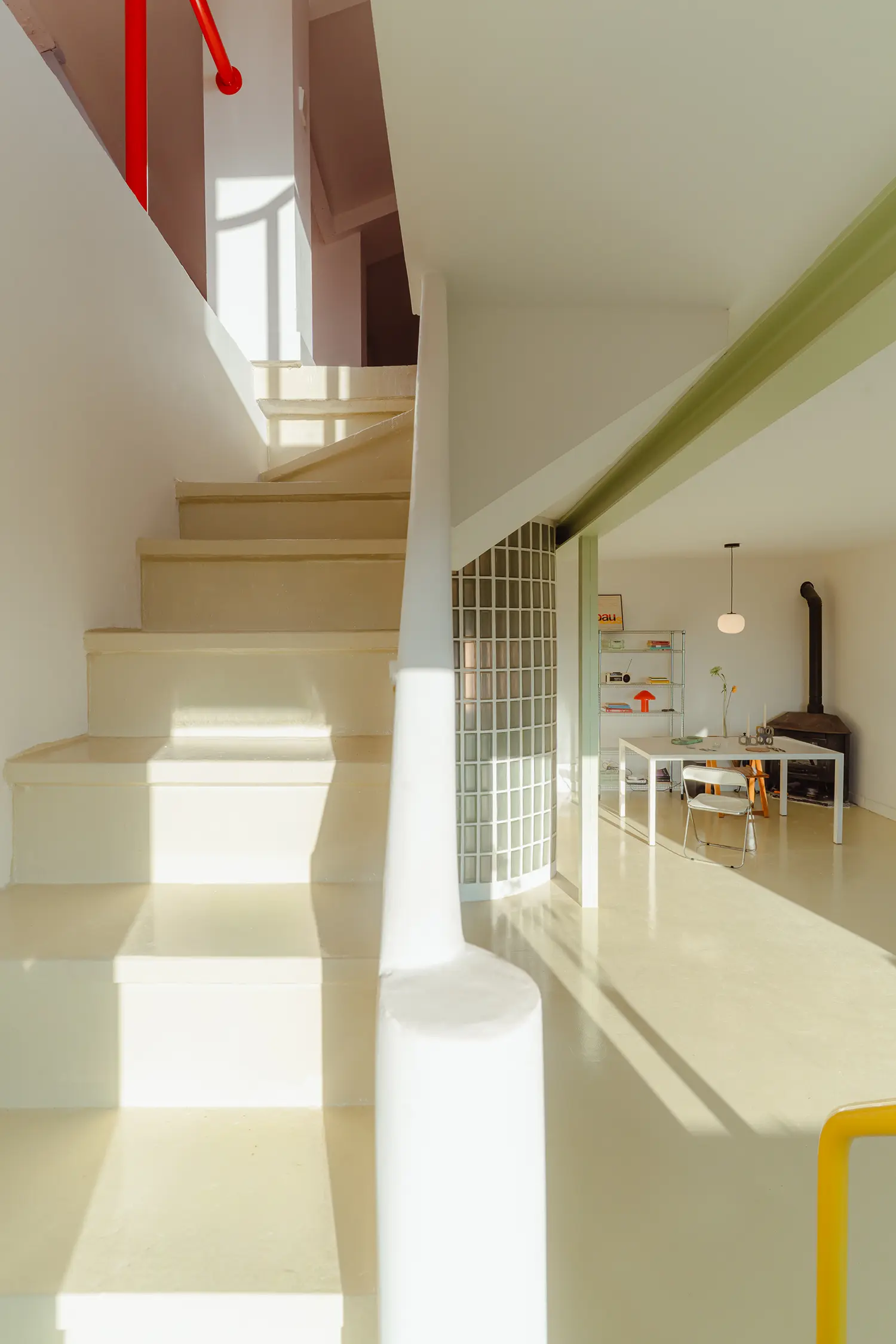
Material Honesty and Chromatic Depth. The interior avoids the clichés of rustic luxury, opting instead for an austere material palette that emphasizes texture and resilience. Rather than relying on precious finishes, the studio employed color as a primary structural tool. Epoxy floors and tactile yellow rubber surfaces create a neutral yet vibrant canvas, while accents of sun yellow, mountain green, and apple red provide a rhythmic counterpoint to the raw, industrial materiality. This approach redefines the concept of value, placing weight on atmospheric quality over material expense.
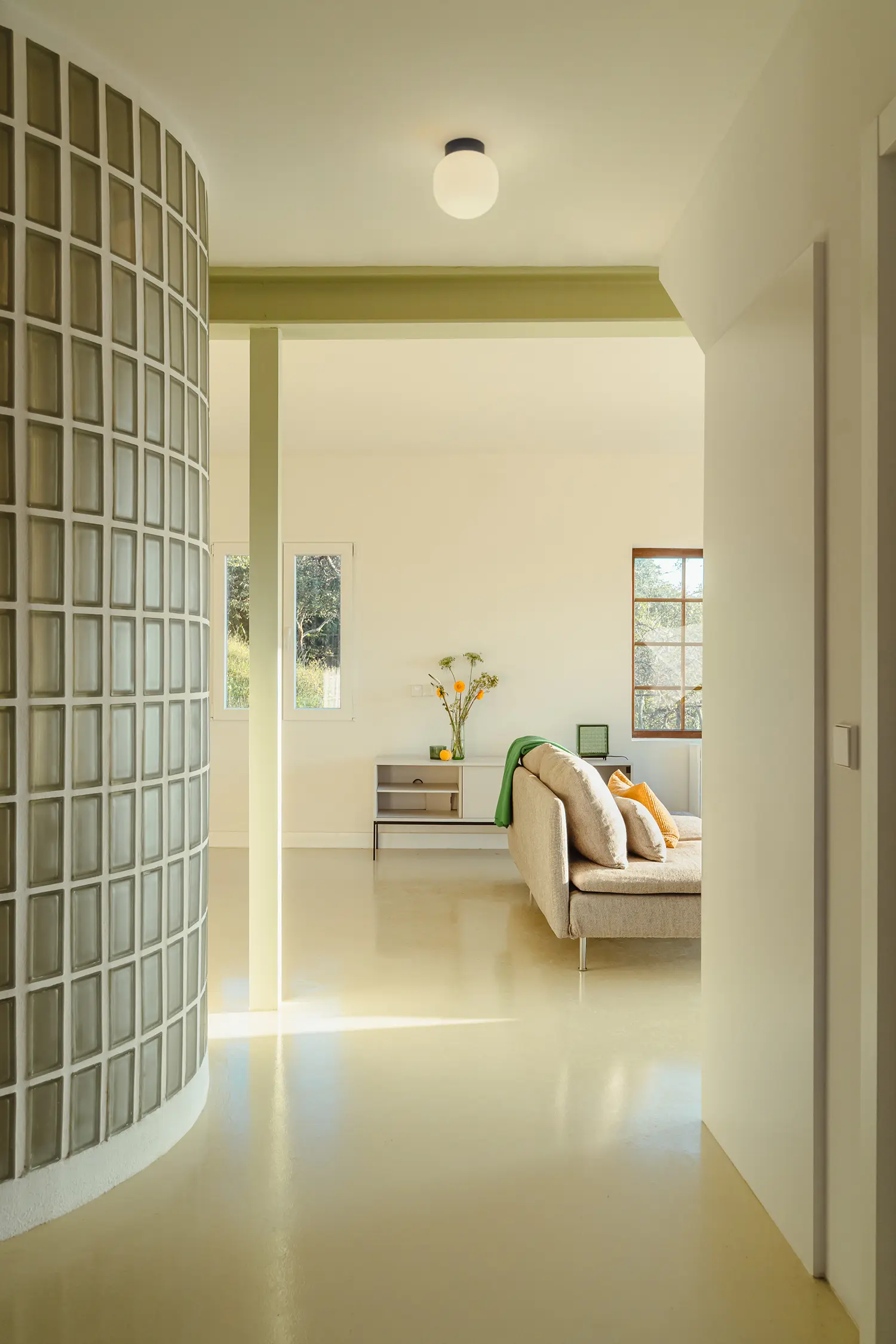
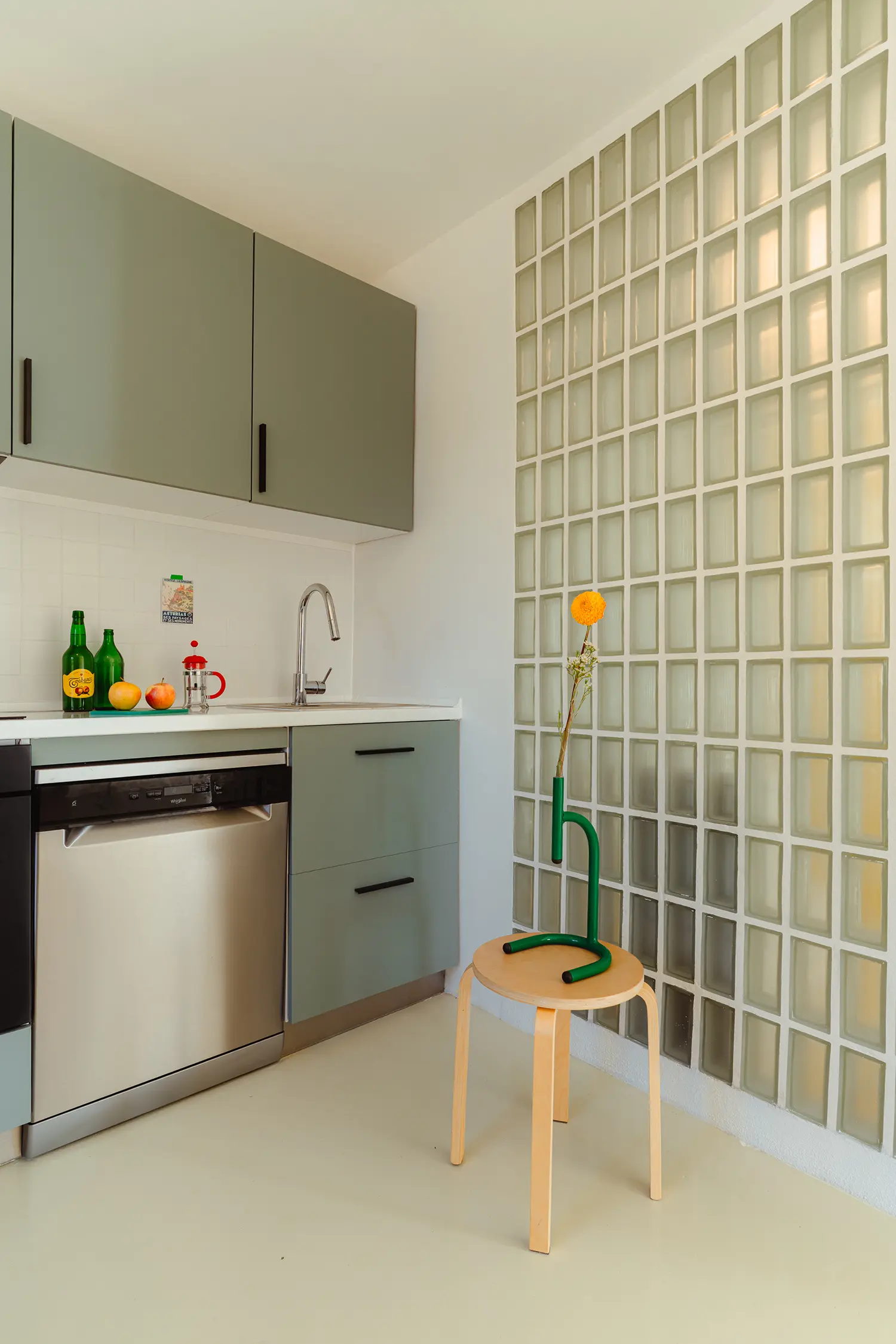
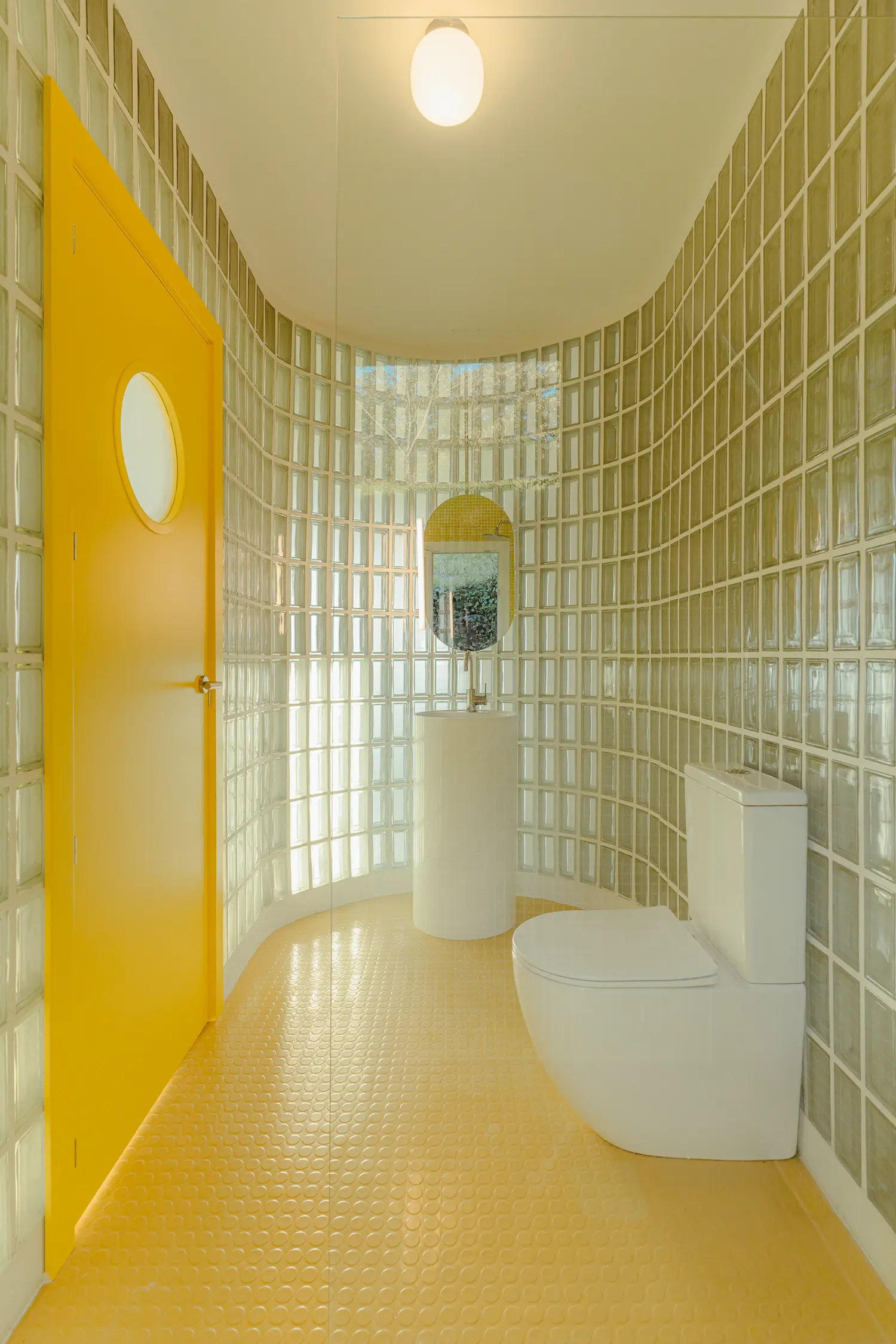
The Luminescent Core. At the heart of the 148-square-meter home, a glass-block volume acts as a vertical anchor. During the day, it captures and diffuses the fickle Asturian light, softening the shadows that dance across the open-plan living and cooking areas. As night falls, the structure reverses its role, illuminated from within to glow like a lantern perched on the mountain. This central element ensures that light remains a constant protagonist, blurring the boundary between the domestic interior and the infinite sky.
Excavating History. Moving downward into the basement, the narrative shifts from the ethereal to the telluric. Here, the architects meticulously restored the original stone walls, exposing the rugged textures of northern Spanish masonry. Amidst these ancient stones, a foundation block inscribed with the construction date was unearthed and preserved—a silent, tactile link to the past. This cooler, humid level serves as a physical reminder of the home’s lineage, grounding the contemporary interventions in the weight of the earth.
The Attic as Refuge. Under the triangular pitch of the roof, the attic provides a more intimate scale. Conceived as a space for storage or a quiet guest room, it represents the archetypal rural retreat, a place to withdraw under the eaves. The geometry here is sharp and purposeful, maintaining the house’s commitment to spatial generosity even within a modest footprint. It is a space for contemplation, where the architecture feels closest to the elements.
A New Vision for the Countryside. The House For Rural Habits reflects a growing global shift where the move to the countryside is no longer a permanent exile from the city, but a quest for rhythmic living. This project joins a broader discourse on how we inhabit the periphery—whether through the minimalist, concrete interventions of Archiplanstudio in Italy, where old barns are reimagined as sculptural voids, or the sustainable, radical barn typologies explored by WORKac in the United States. These projects share a common thread: they reject the nostalgic in favor of the functional, proving that the rural landscape is a fertile ground for high-level architectural innovation.
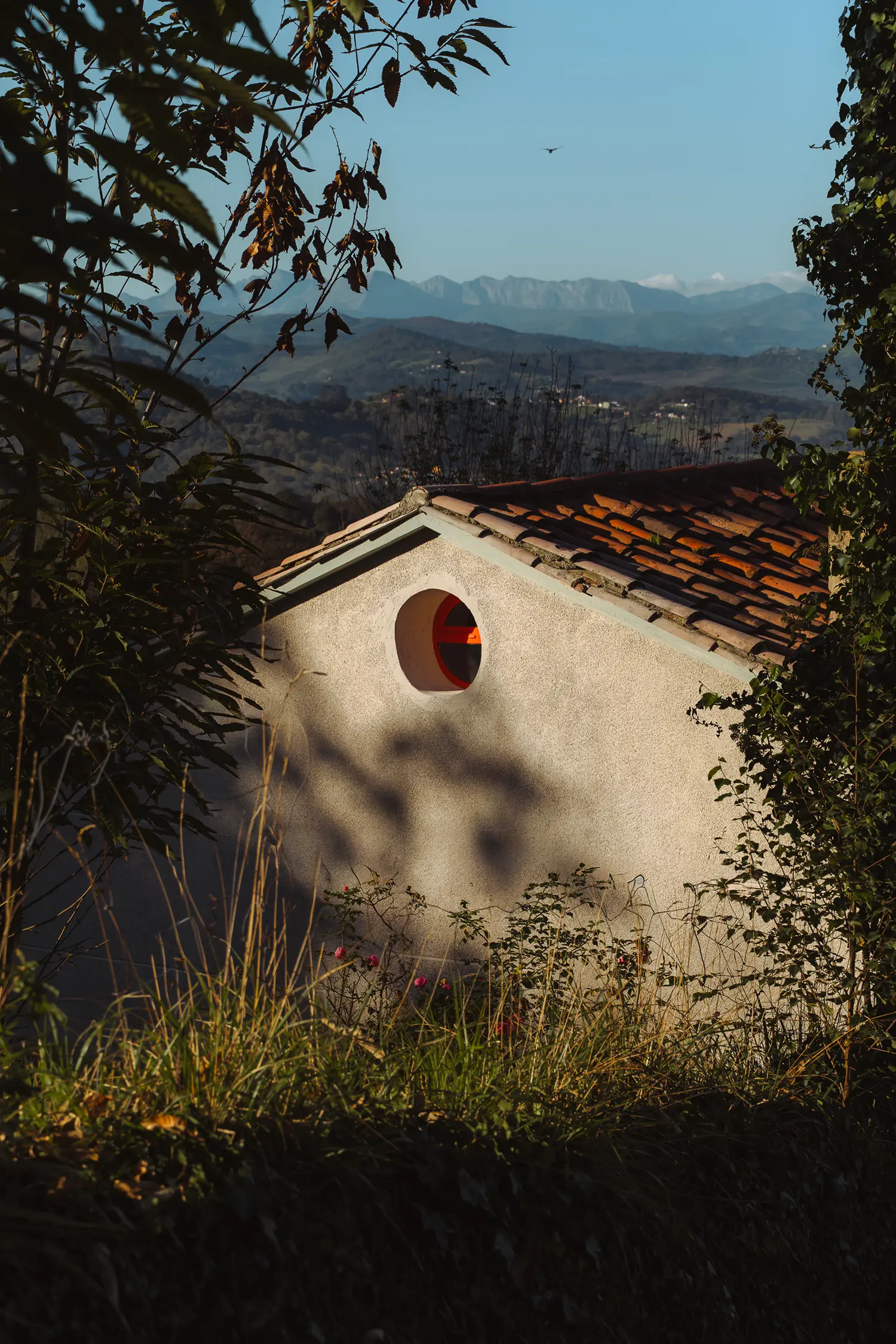
The Evolving Rural Identity. There is a lingering magic in the adaptive reuse of these structures that continues to captivate the modern imagination. By breathing new life into forgotten volumes, architects are not just building houses; they are preserving the “genius loci” while allowing for a new way of being. In Siero, Spolia Office has demonstrated that a home can be both a witness to history and a vessel for the future. In this house, luxury is found in the ability to slow down, to work the earth, and to watch the valley transform through a single, perfectly placed window. This project joins a broader discourse on how we inhabit the periphery—whether through the minimalist, concrete interventions of Archiplanstudio in Italy, where old barns are reimagined as sculptural voids, or the sustainable, radical barn typologies explored by WORKac in the United States. These projects share a common thread: they reject the nostalgic in favor of the functional, proving that the rural landscape is a fertile ground for high-level architectural innovation.