


Imagine a world where buildings adapt to the seasons, changing their very skin to optimize energy efficiency. This isn’t science fiction; it’s the reality envisioned by New York-based designer and inventor, Joe Doucet, with his groundbreaking climate-responsive paint.
Doucet’s innovative formulation tackles a fundamental issue: the significant impact of color on a building’s temperature. “I was researching the effect of color on a building’s temperature as I wanted my own home to be as green as possible,” Doucet explains. “Realizing the significant impact dark vs light colors can have on a building’s temperature, it struck me that in an ideal scenario a building could change color just like leaves change with the seasons on trees.”
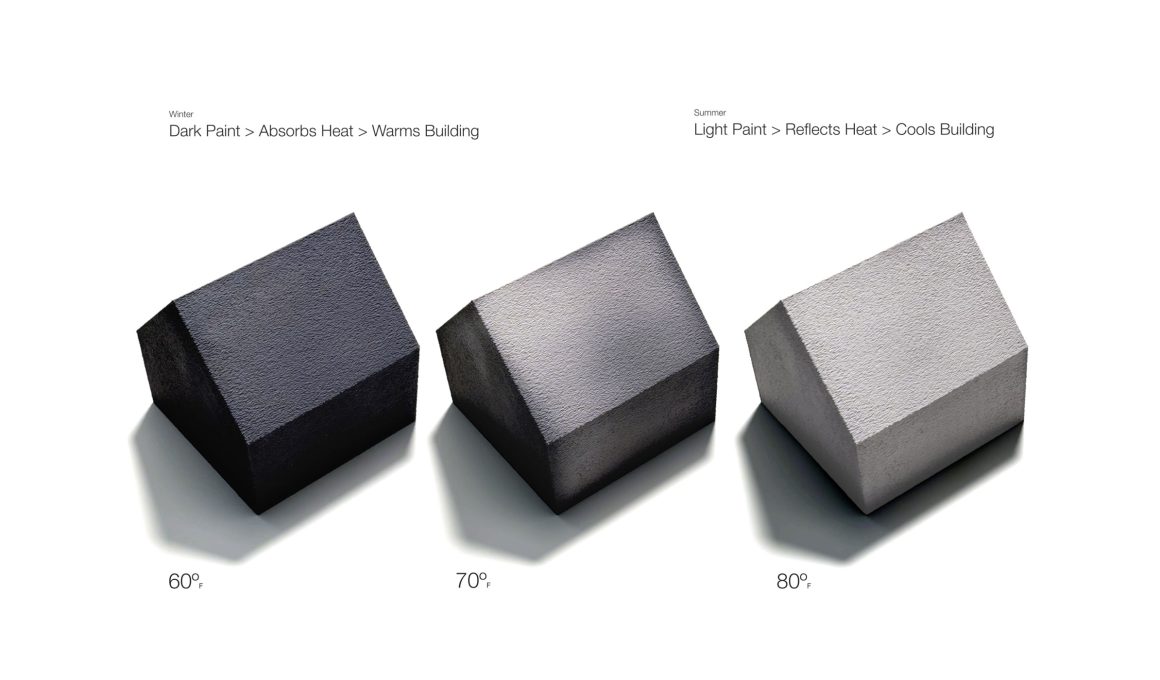
Intrigued by this concept, Doucet embarked on a year-long experimental journey, meticulously tracking the thermal performance of various paint tones. His findings were compelling: a white house proved approximately () cooler internally during summer than a black house, while in winter, the black house maintained a () warmer internal temperature. Conversely, the black house became () warmer in summer, and the white house () colder in winter.
The challenge lay in developing a stable, durable exterior paint that could transition between these color states without requiring manual repainting. “After much experimentation, we developed a paint which is a dark grey below and white at temperatures above that,” Doucet reveals. “The color changes almost instantly at that temperature, so a building is either one color or the other.”
This isn’t limited to a simple grey-to-white transformation. Doucet’s formulation can be tinted to achieve a spectrum of color changes. Imagine a building transitioning from a light blue in spring/summer to a deep navy in fall/winter.
The potential energy savings are substantial. Doucet’s research suggests that a change in internal temperature equates to roughly 3% of a building’s total energy cost. By passively adjusting the building’s color to optimize heat absorption and reflection, this paint could potentially save an average of 20-30% of energy used for heating and cooling.
The applications are vast, extending beyond residential use. Schools, factories, and any structure where thermal regulation is crucial could benefit from this technology. This passive approach eliminates the need for seasonal repainting, offering a sustainable and cost-effective solution.
Doucet has a patent pending on his formulation and is actively seeking partners to bring this innovation to market. “I’m very excited by the sustainability aspect of this paint, but I also find the idea that built environments can change with the seasons quite poetic,” he reflects.
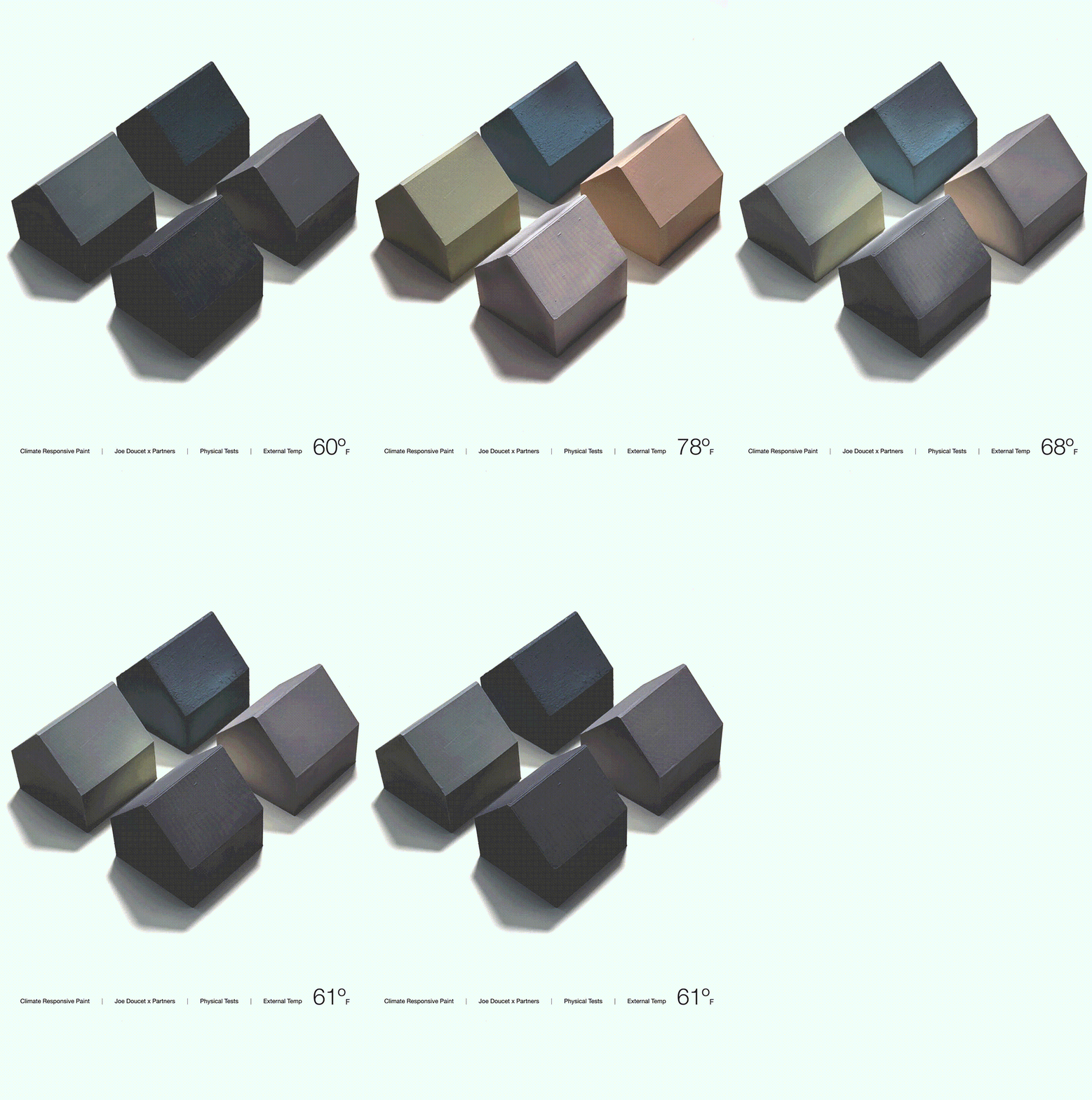
Doucet’s climate-responsive paint is more than just a product; it’s a vision for a future where architecture seamlessly integrates with nature, optimizing energy efficiency and enhancing the aesthetic experience. It’s a testament to the power of design to create solutions that are both functional and beautiful, painting a greener future for us all.