

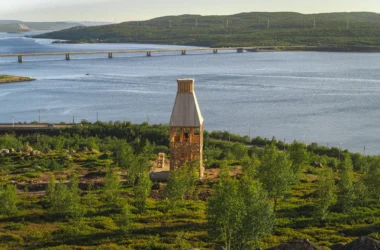


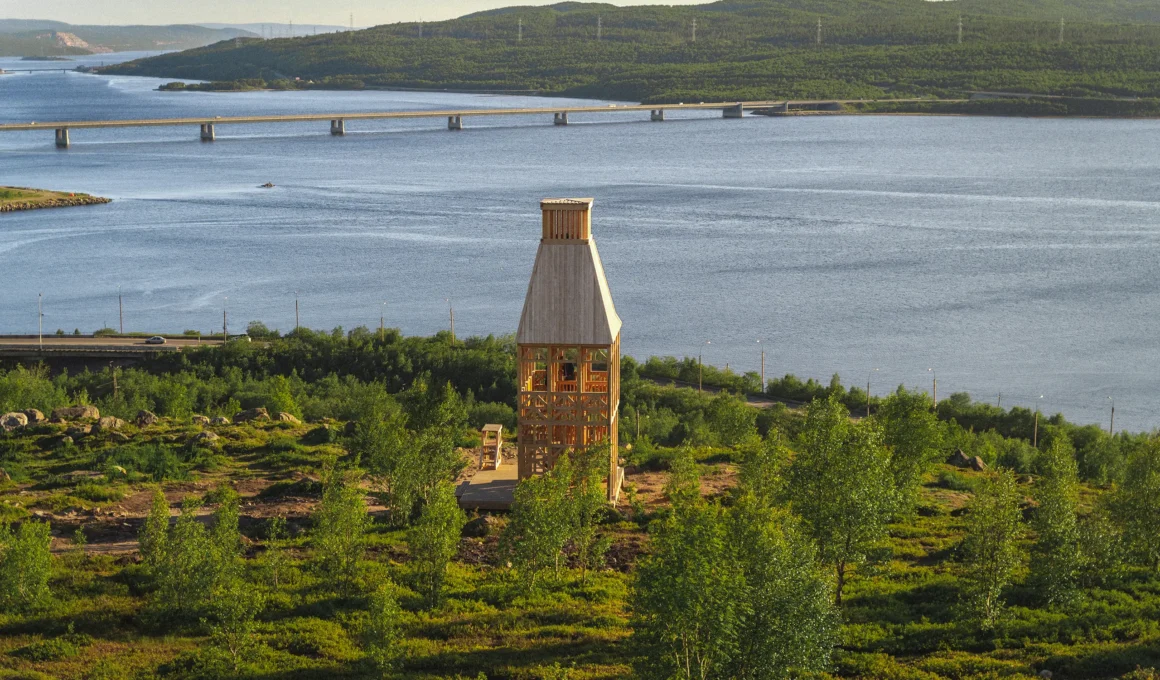
Evgeny Makarenko’s Timber Architecture Workshop built a public viewpoint on Kola Bay using almost no metal fasteners, relying on wood joinery alone to survive an Arctic climate. Commissioned by the Murmansk Regional Government as part of the “Living in the North” program, the pavilion sits on a hillside just five minutes on foot from a residential neighborhood. The result treats a modest recreational structure as capable of carrying the weight of a much larger civic ambition.
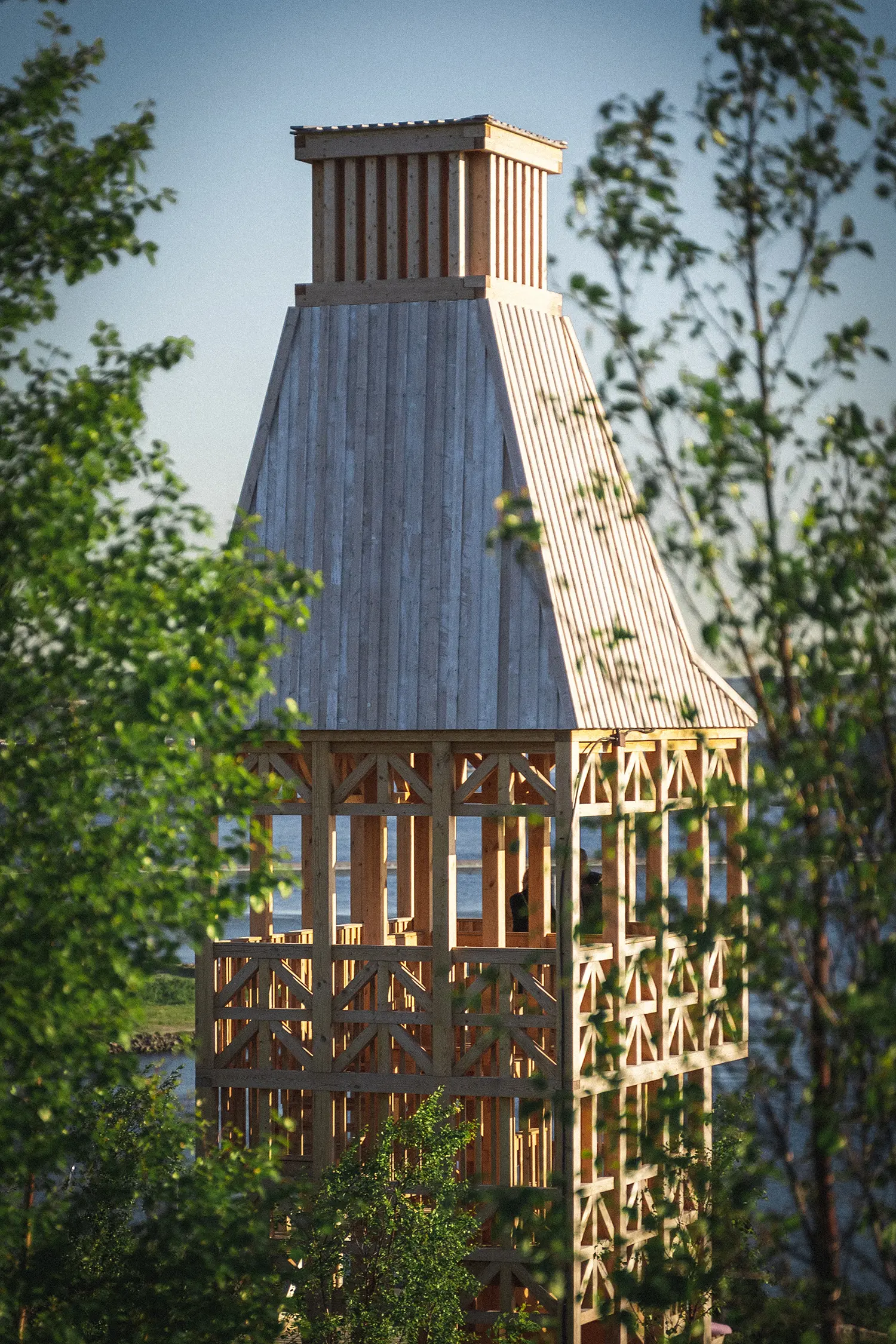
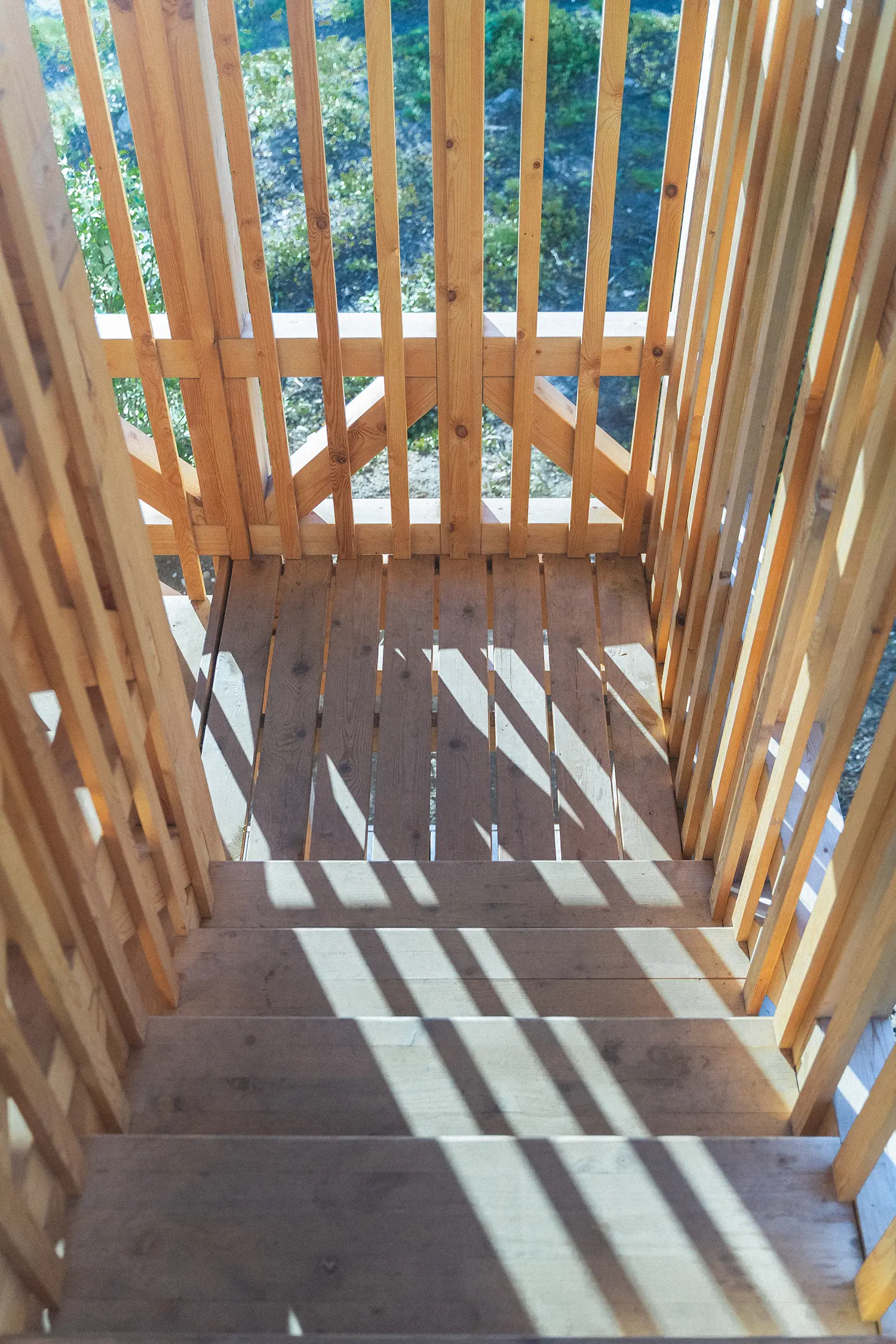
The tower’s silhouette deliberately echoes the region’s industrial heritage — the monumental port cranes and lighthouses that dot the Kola coastline — reworked in wood and at human scale rather than reproduced literally. Timber structural joinery does nearly all the work here: the pavilion is built using intricate wood joints that virtually eliminate the need for metal fasteners, guaranteeing durability in a harsh climate while keeping the timber construction ecologically direct.
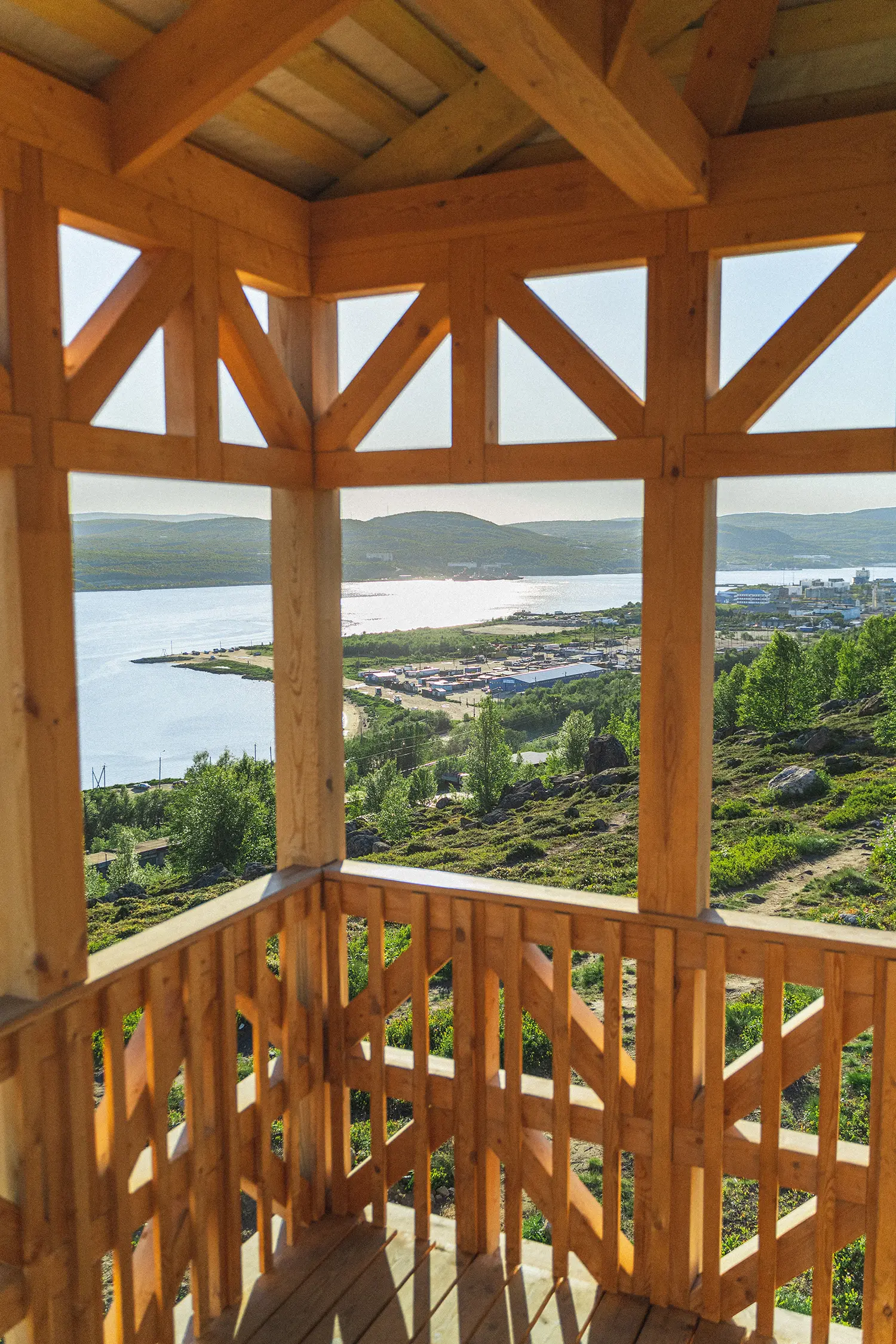
The lower level is equipped with benches and a terrace angled to capture whatever daylight the northern latitude offers, while the upper level opens onto a wide panorama of the bay’s water. A small secondary tower gives pets a place to wait safely while their owners climb — a detail that reads as minor until you notice how much design attention went into a structure most visitors will never enter.
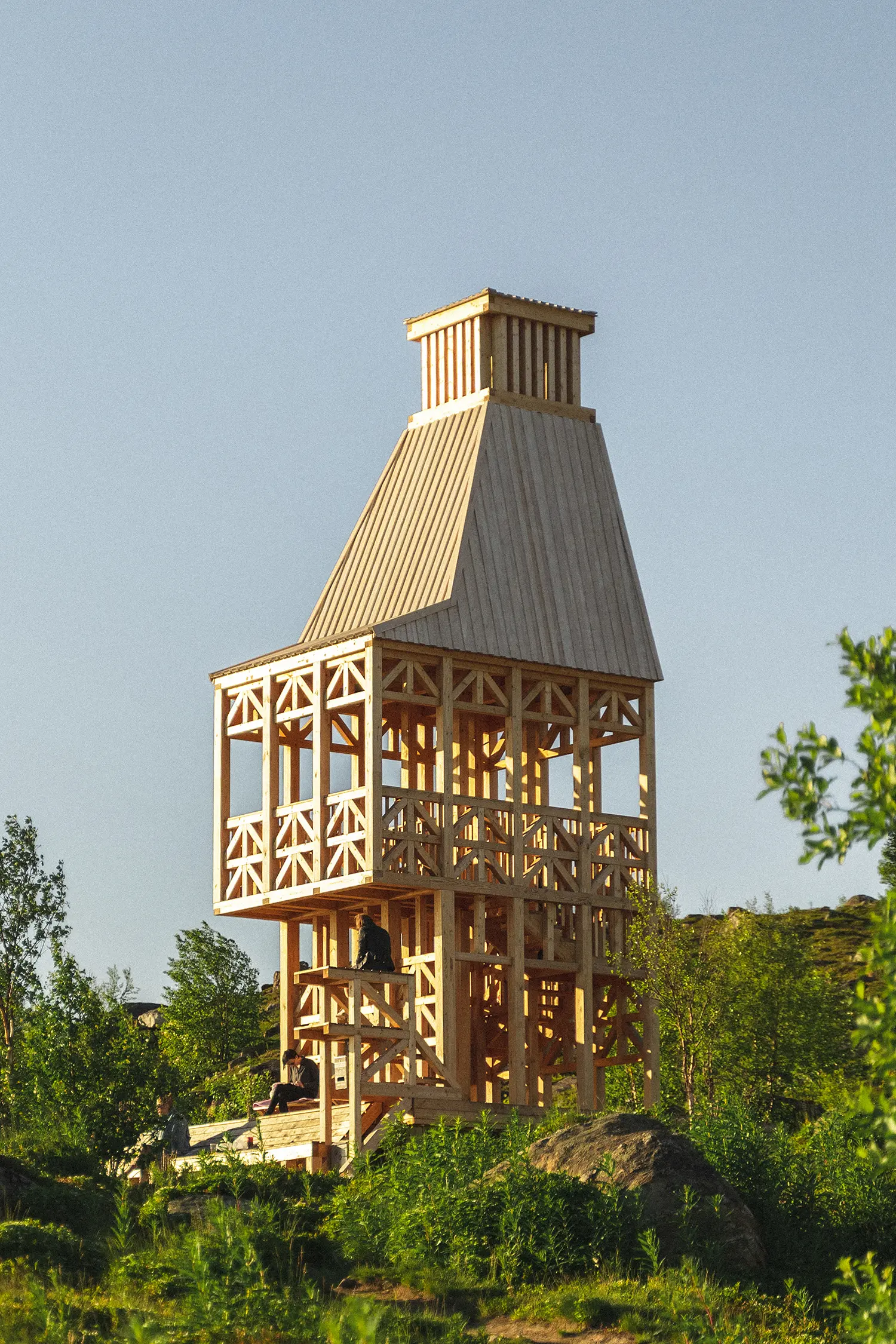
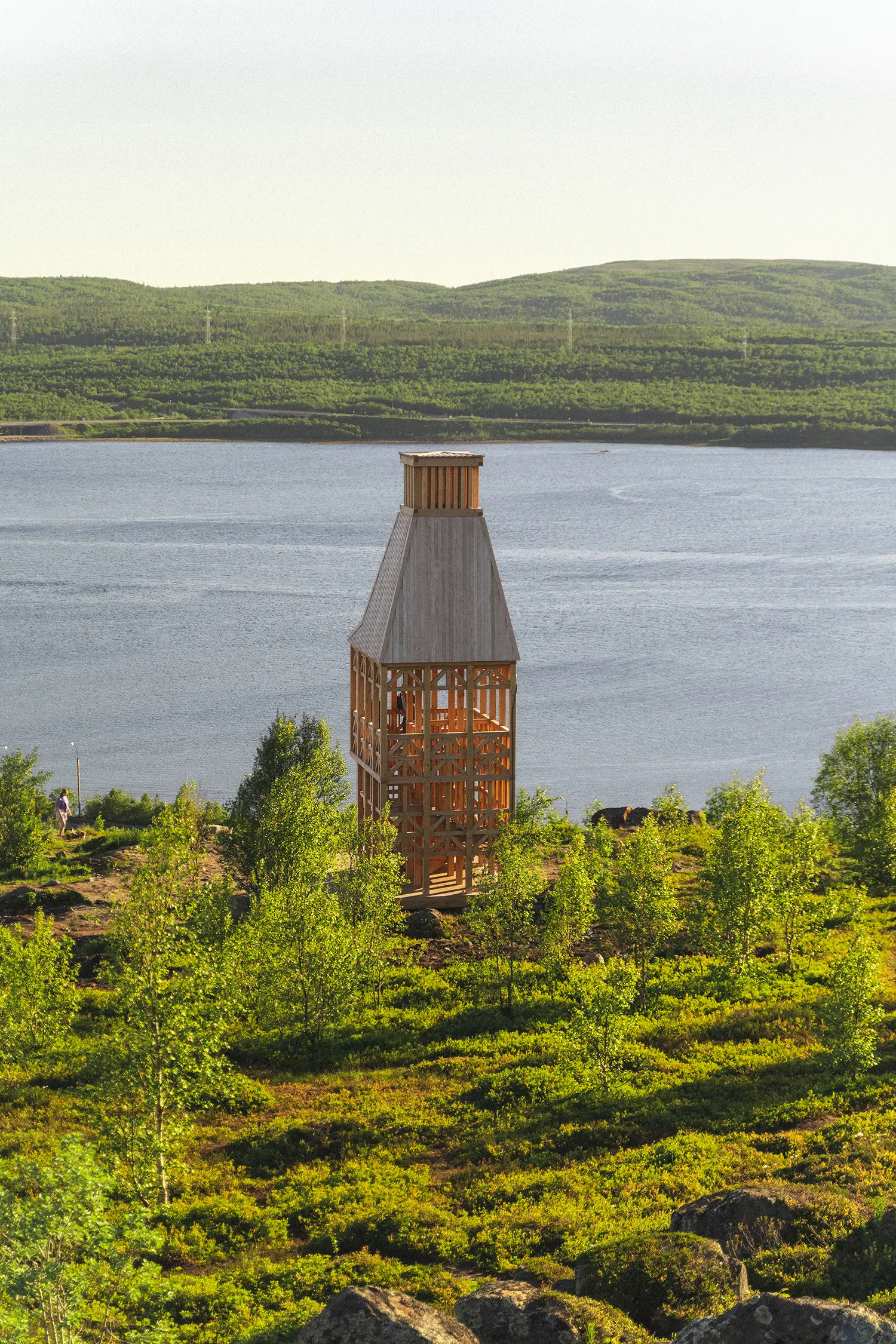
The surrounding landscaped territory is laid out specifically to concentrate visitor flow along defined routes, protecting the fragile ecosystem of Arctic mosses on the slope from the foot traffic the viewpoint itself is designed to attract. From its elevated position, the observation deck functions as a clear architectural beacon, its expressive silhouette visible from a distance across the bay.
A related instinct for treating timber viewpoints as landscape-blending devices runs through MVRDV’s Pujiang Platform in Chengdu, where an earth-covered timber pavilion recreates a hill flattened by an earlier viewpoint, while SCUT’s Lunar Tower in Hainan solves a similar tension with a perforated aluminum skin that protects a mangrove reserve’s migratory birds. Different materials, same underlying premise: an observation structure’s success shouldn’t come at the ecosystem’s expense.
The real test of this pavilion isn’t whether a wood joinery technique can survive Arctic winters — the engineering already answers that — but whether a landmark commissioned explicitly to symbolize “qualitative transformations of the urban environment” can stay a genuine neighborhood amenity once its role as regional symbol inevitably brings more visitors than the moss on that hillside was ever built to withstand.
Kola Bay Lighthouse Viewpoint by Evgeny Makarenko’s Timber Architecture Workshop | Location: Kola Bay, Murmansk, Russia — Year: 2025 — Key materials: timber (wood joinery construction)