


In the rugged heights of the Ore Mountains, No Architects has completed the resurrection of a long-abandoned homestead, transforming a site of historical disappearance into a vibrant, year-round complex that bridges the gap between the Sudetenland’s fractured past and a contemporary vision of collective mountain living.
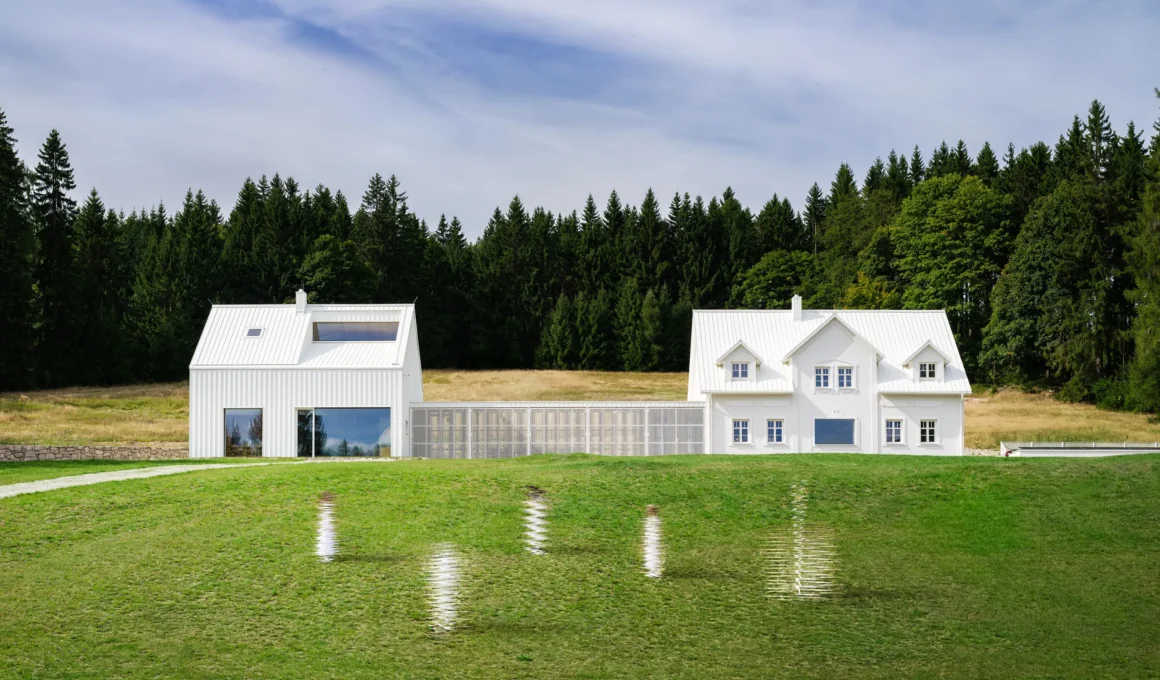
The weight of absence in the Ore Mountains is a tangible force, rooted in the mid-century expulsion of German-speaking inhabitants that left thousands of hamlets to be reclaimed by the forest. For decades, this specific site survived as a pragmatic patchwork—a ski club here, a summer camp there—before structural decay threatened to silence it forever. No Architects stepped into this void not to build a monument to melancholy, but to re-establish a living structure. By stripping away seventy years of disjointed additions, the studio has returned the site to a singular, coherent farmstead where a renovated farmhouse and a sharp new volume coexist under a unified envelope.
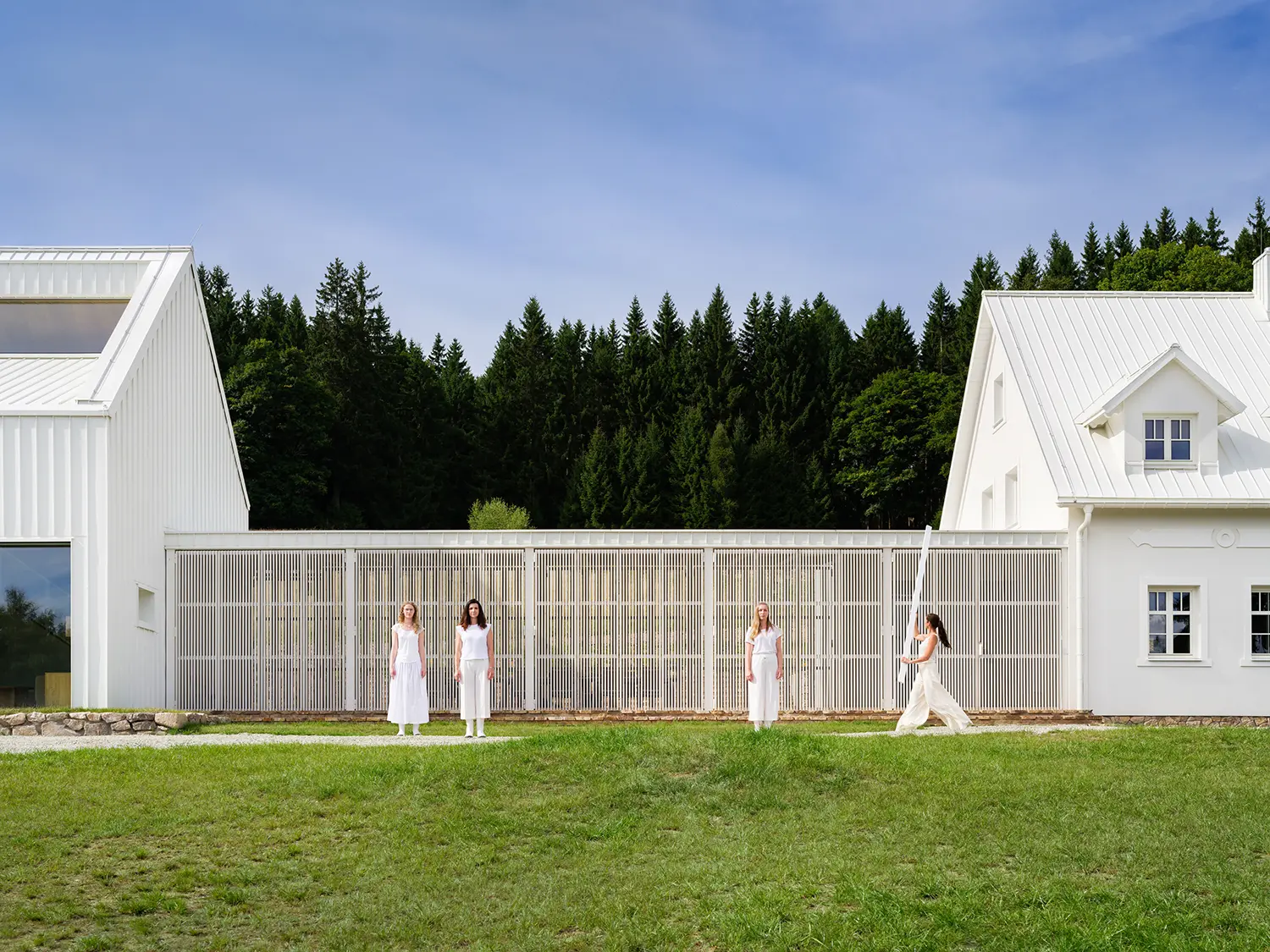
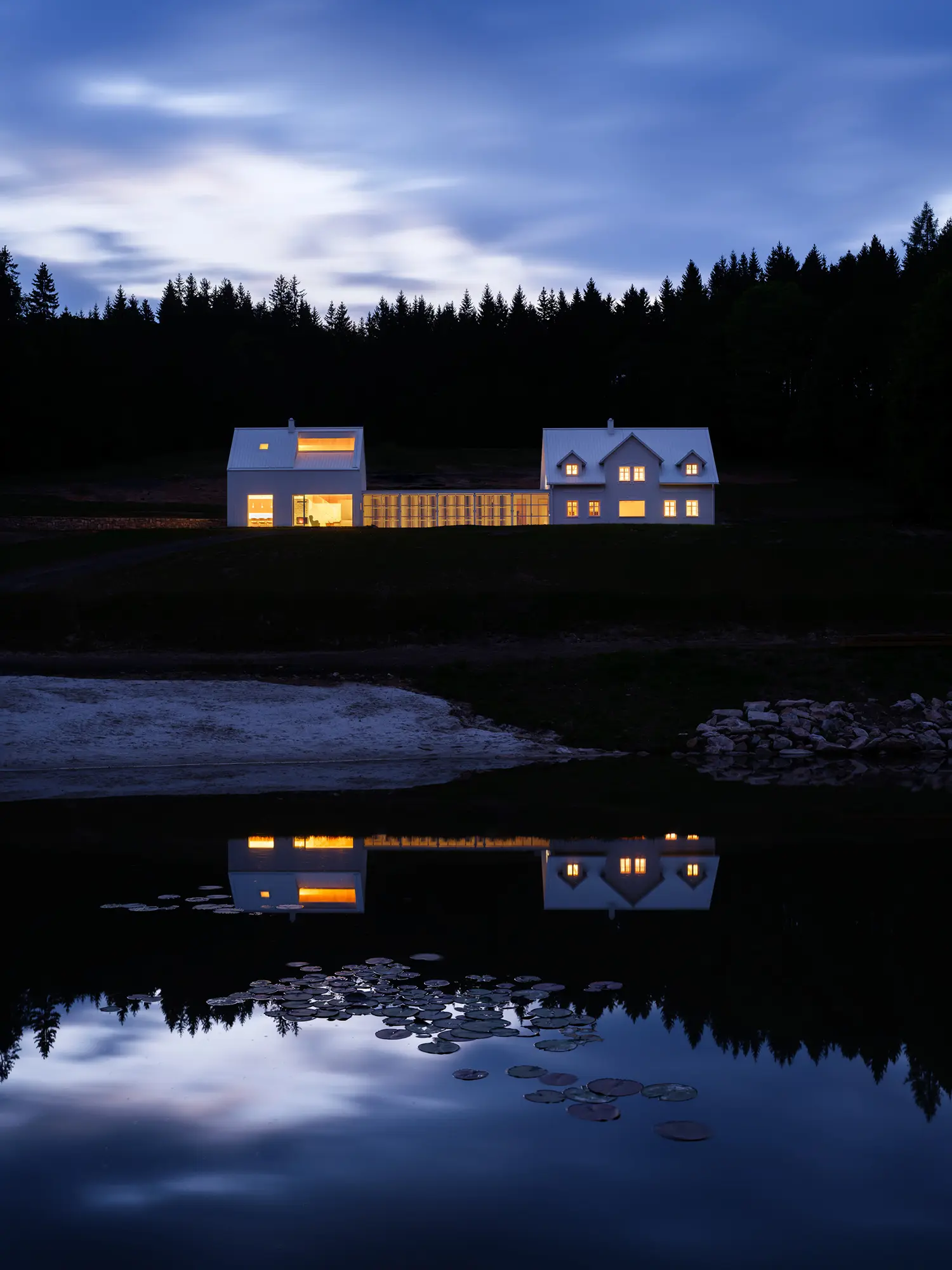
A radical material honesty defines the exterior, where the decision to reject “mountain romanticism” manifests in a startling, monochromatic palette. The architects wrapped the old building in a durable white steel cap, which extends across a timber-framed terrace to become a sleek white steel suit for the new addition. This choice of white sheet metal tectonics is more than an aesthetic provocation; it is a functional response to the harsh climate at 900 meters above sea level. By placing this gleaming composition on a base of local stone—the salvaged ruins of the original structures—the project literally stands on the shoulders of its predecessors while looking firmly toward the future.
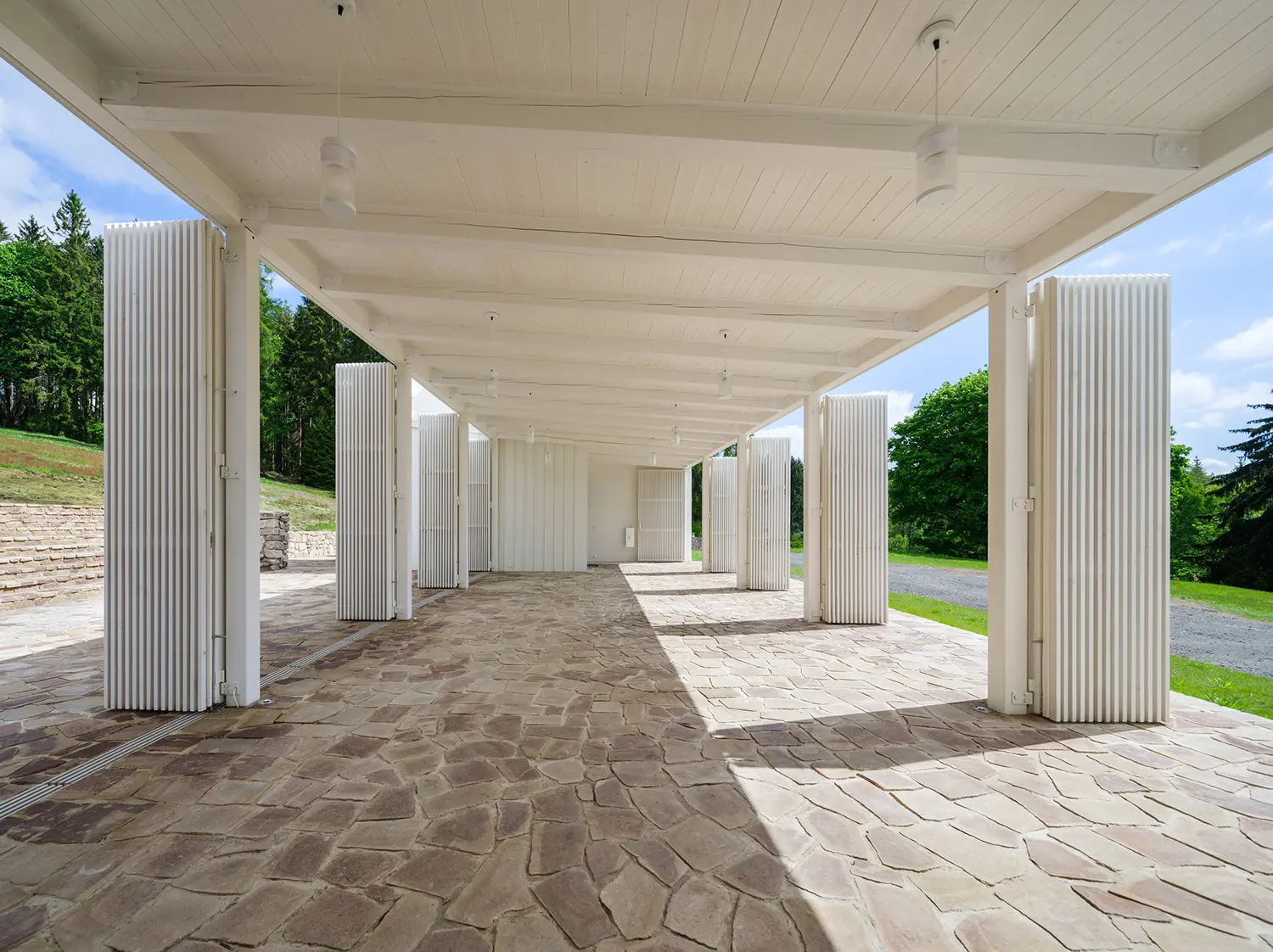
Navigating the mountain climate requires a deep understanding of natural forces that have remained unchanged for centuries. In a region where frost can appear in June and snow blankets the peaks for over two hundred days a year, the house functions as an autonomous machine for habitation. The energy strategy is hidden beneath the landscape: ground-source collectors buried in the meadow accumulate solar heat from the brief summer months, while a photovoltaic array atop the sunken service building powers the complex. This technical rigor ensures that the transition from individual family use to the high-intensity occupancy of children’s camps remains sustainable and low-impact.
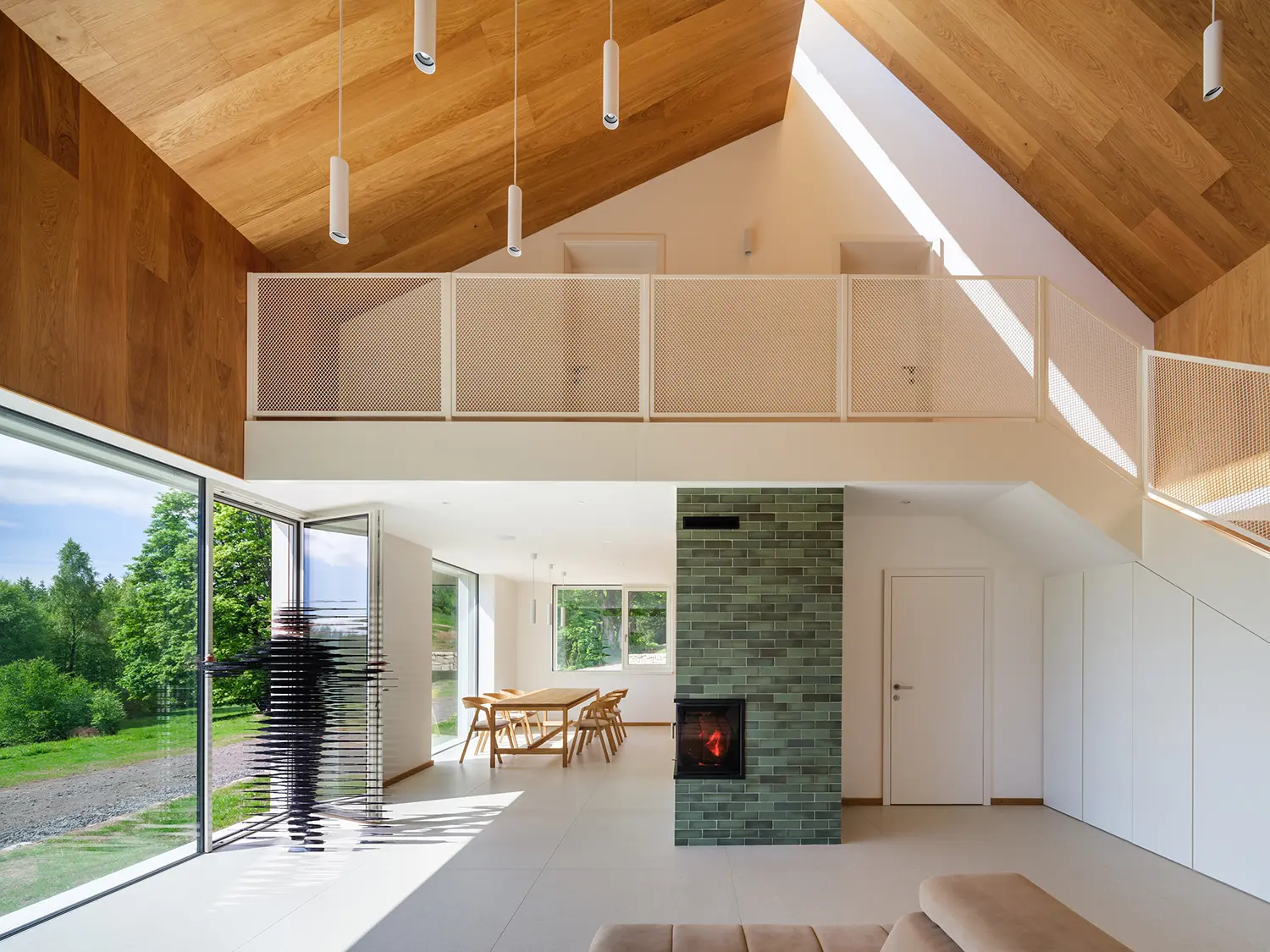
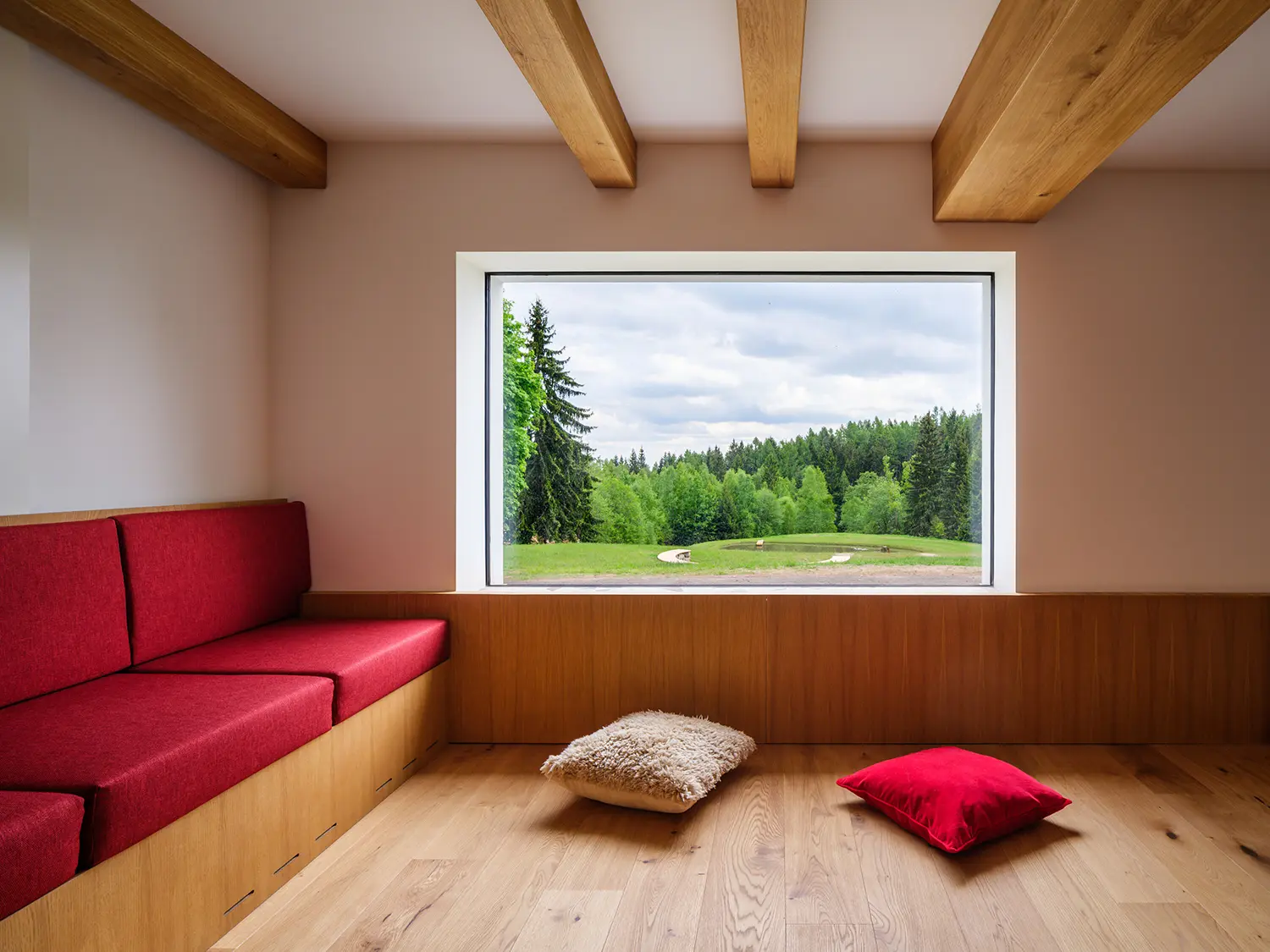
The interior atmosphere shifts the narrative from the protective exterior shell to a warm, durable domesticity. Designed to withstand the energetic chaos of summer camp residents and winter vacationers alike, the apartments prioritize tactile simplicity. Massive built-in fireplaces provide the radiant heat essential for mountain survival, echoing the communal hearths of the past. There is a deliberate lack of preciousness here; materials were chosen to endure sticky fingers, resin-coated natural treasures, and the constant movement of a multi-generational program that refuses to treat the Sudetenland as a museum of suffering.
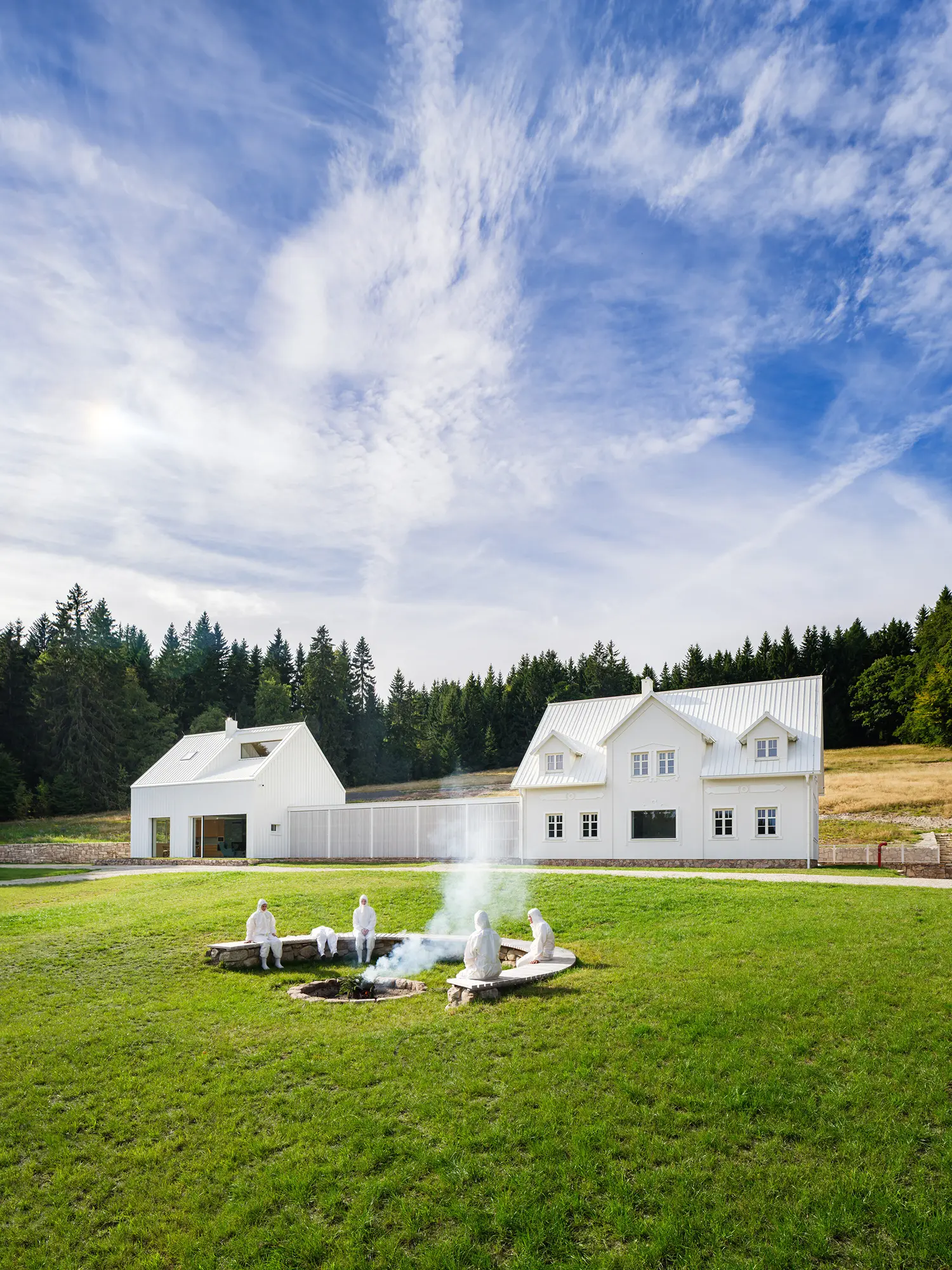
Invisible infrastructure acts as the digital nervous system of the remote site, linking it to civilization via satellite. Remote-controlled locks, cameras, and lighting allow the complex to be managed with precision, even when the fierce north winds bring in the legendary winter fogs. This integration of smart technology into a traditional settlement pattern proves that remote living does not necessitate isolation or hardship. Instead, it offers a redefined sense of security, where a fire reservoir hidden under the parking lot protects both the architecture and the surrounding forest.
Continuity over nostalgia serves as the project’s guiding philosophy. By burying the secondary technical requirements into the slope, the architects preserved the visual silhouette of a single, proud farmstead. This act of “merilessly” organizing the program into a compact footprint allows the surrounding meadow and the newly restored pond to breathe. The intervention suggests that the best way to honor a difficult history is to populate it with vibrant activity, replacing the silence of depopulated villages with the noise of craftsmen and the laughter of playing children.
A dialogue with the landscape is further emphasized by the inclusion of white gravel paths and a small beach by the pond, elements that invite a “sensory experience” beyond the walls of the dwelling. The project functions as a beacon of year-round optimism, proving that even the most fragile landscapes can support a robust, contemporary lifestyle. It is a rejection of the myth that these mountains are an eternally decaying region, offering instead a model for how high-altitude settlements can evolve through a blend of technical innovation and spatial memory.
This approach to renewing the Czech wilderness through a balance of metallic precision and organic grounding reflects a broader movement in regional architecture. Just as this project utilizes a durable shell to protect its communal heart, the Villa Red Steel in the Jevany forest explores a similar tension between industrial materials and woodland surroundings. Likewise, the Strážné Cottage renovation by Mimosa Architects and the Borová Lada project by Studio Plys demonstrate a shared commitment to reviving the traditional mountain typology without falling into the trap of superficial kitsch. Together, these interventions signal a sophisticated era for the Czech landscape, where the “mountain cabin” is reimagined as a resilient, high-performance anchor for modern life.