



Designed by Prague-based studio RDTH architekti, the No-Wall Apartment in Prague, Czech Republic, redefines contemporary residential living by dismantling traditional spatial boundaries in favor of a continuous, fluid layout where permeable furniture, tactile curtains, and translucent glass blocks organize the interior without enclosing it.
Dismantling the domestic boundary. An apartment without structural partitions might initially seem counterintuitive, yet in this thoughtful apartment renovation, openness is elevated to a deliberate and sophisticated spatial strategy. The project challenges the rigid, post-war cell-like configurations common to many urban European housing blocks. By replacing solid plasterboard or brick partitions with light, permeable dividing elements, the designers have established a domestic landscape that functions as a continuous field of use. It is a home that rejects static compartmentalization, prioritizing instead a layout that adapts naturally to the changing rhythms of daily life.
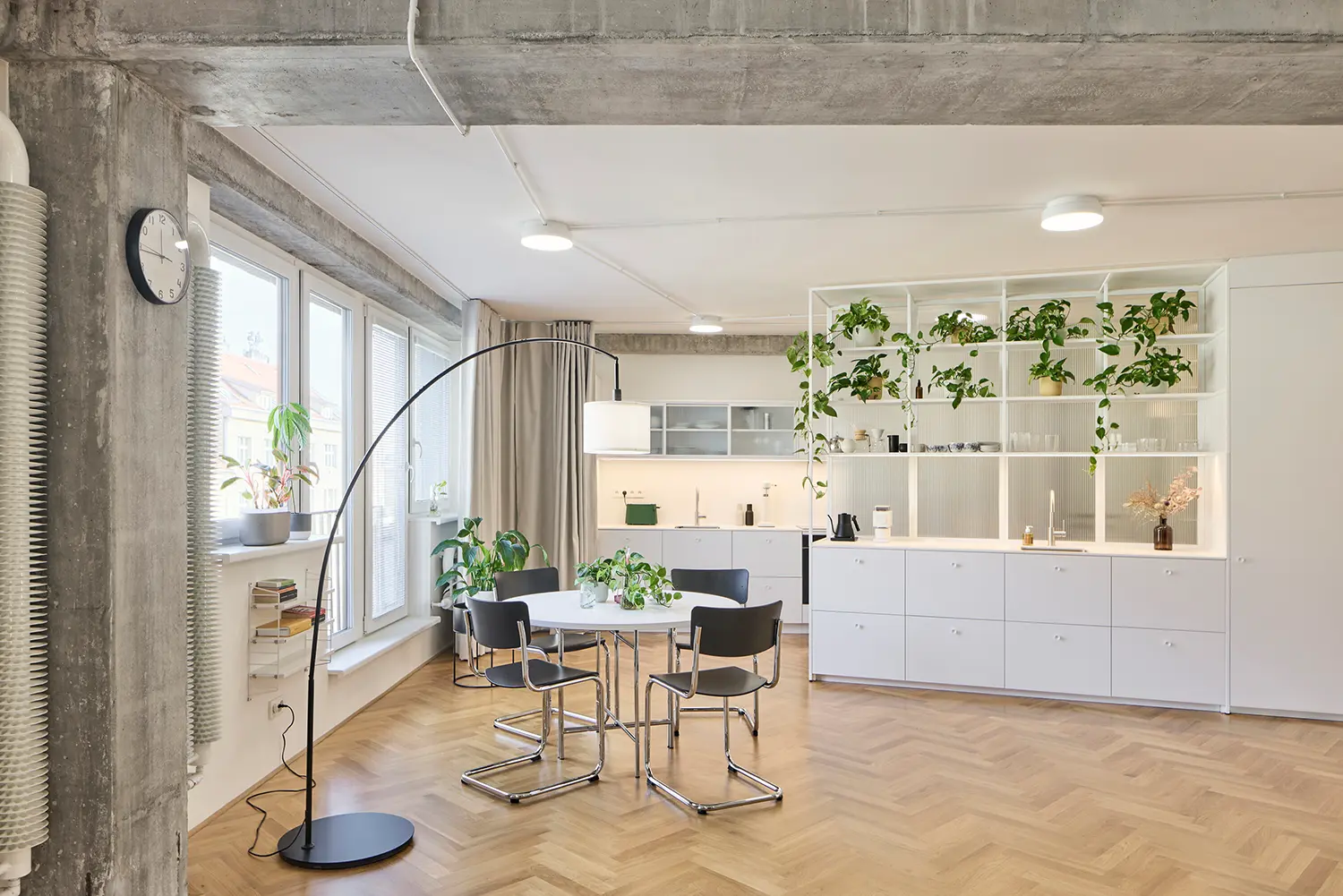
The rotated central volume. Organizing this open floor plan is a single, slightly rotated central block that acts as the spatial anchor of the entire interior design. This geometric gesture is both subtle and highly functional, establishing distinct pathways and generating multiple living zones without erecting physical boundaries. Positioned in the middle of the apartment, the volume naturally channels movement around its perimeter, creating a clear yet soft division between the social lounge, the culinary prep zones, and the more secluded, private quarters.
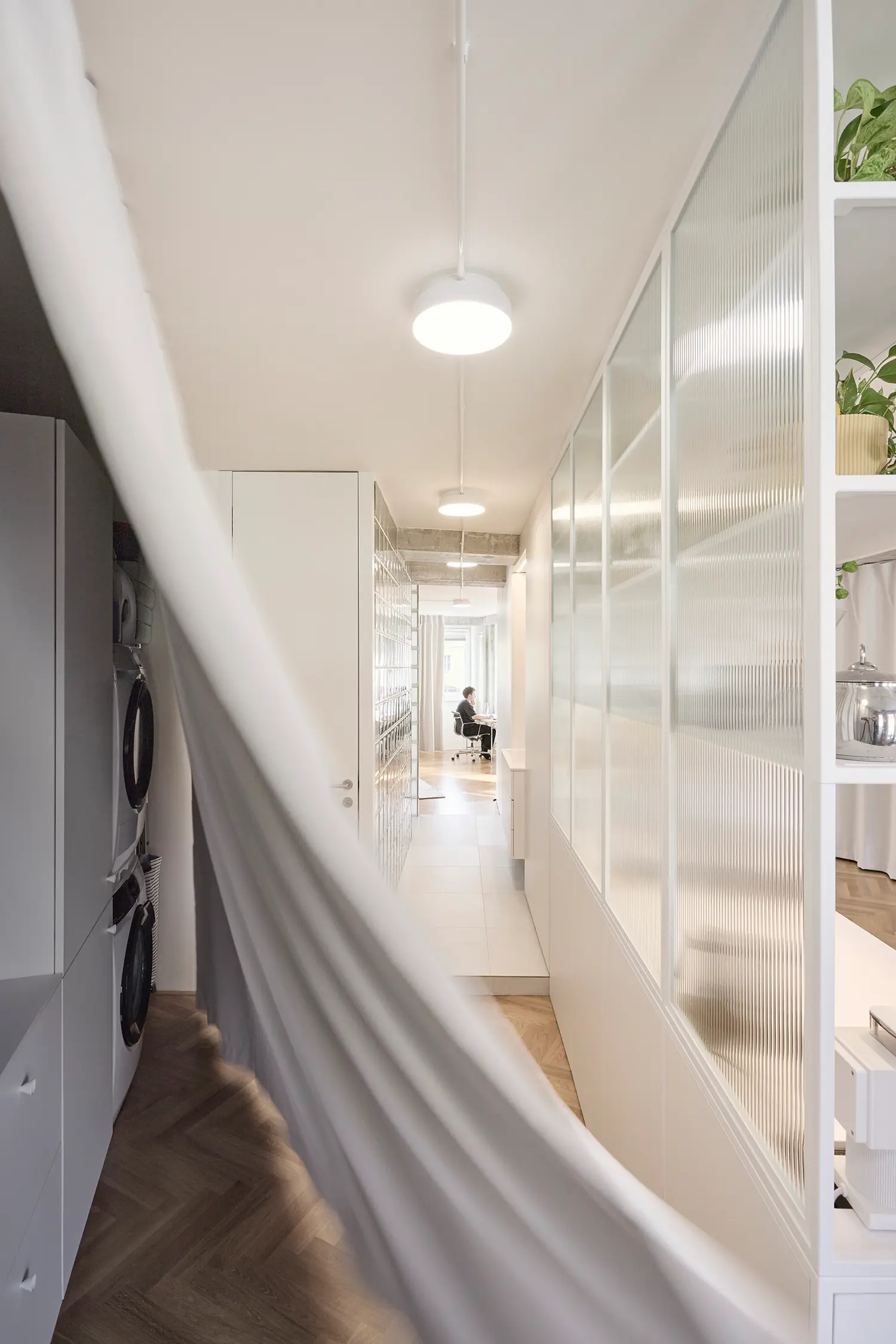
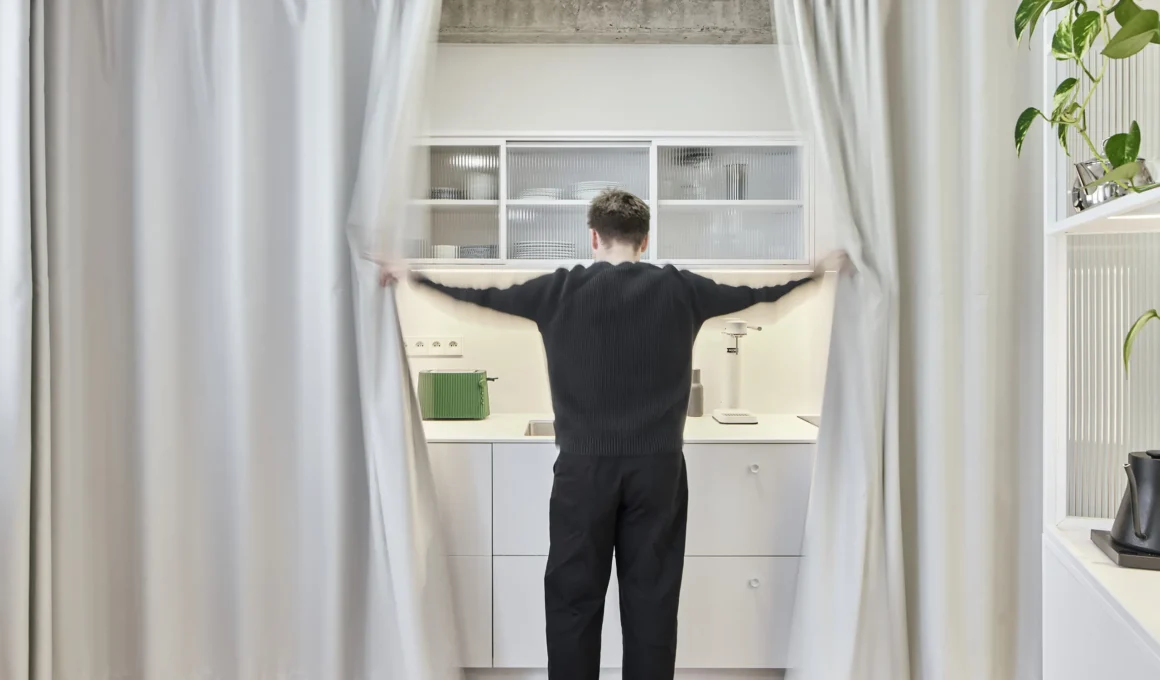
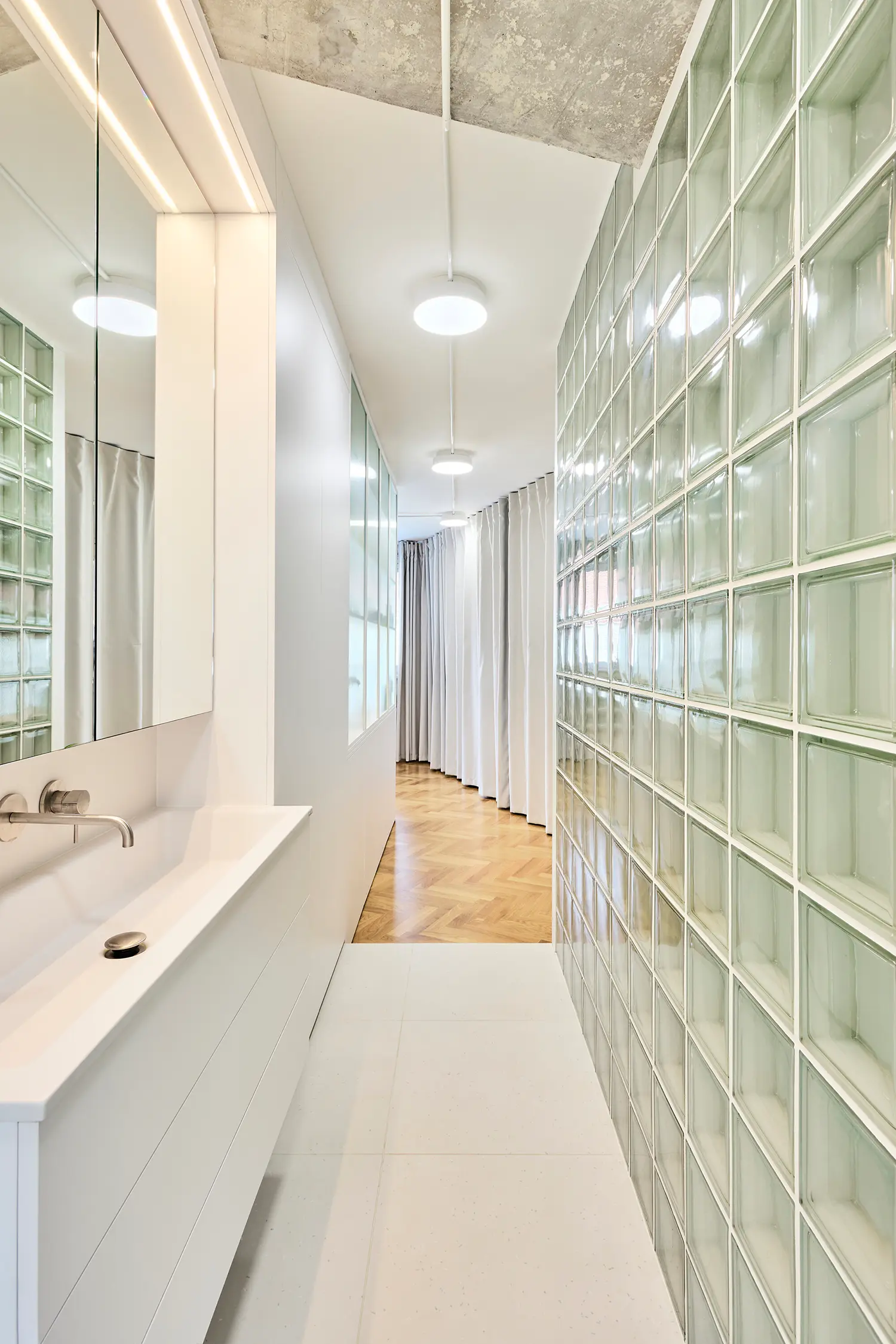
Material contrast and sensory warmth. Within this fluid landscape, the tactile qualities of the selected materials introduce a profound sensory depth that elevates the living experience. The cool, structural precision of translucent glass blocks allows natural light to filter deep into the floor plan, casting diffuse, shifting shadows throughout the day. This geometric clarity is paired with the soft, flowing movement of full-height textile curtains, which can be drawn or retracted to instantly alter the acoustic and visual privacy of the home. These elements interact with the warm, organic grain of natural timber and polished concrete to ground the minimalist layout in physical comfort.
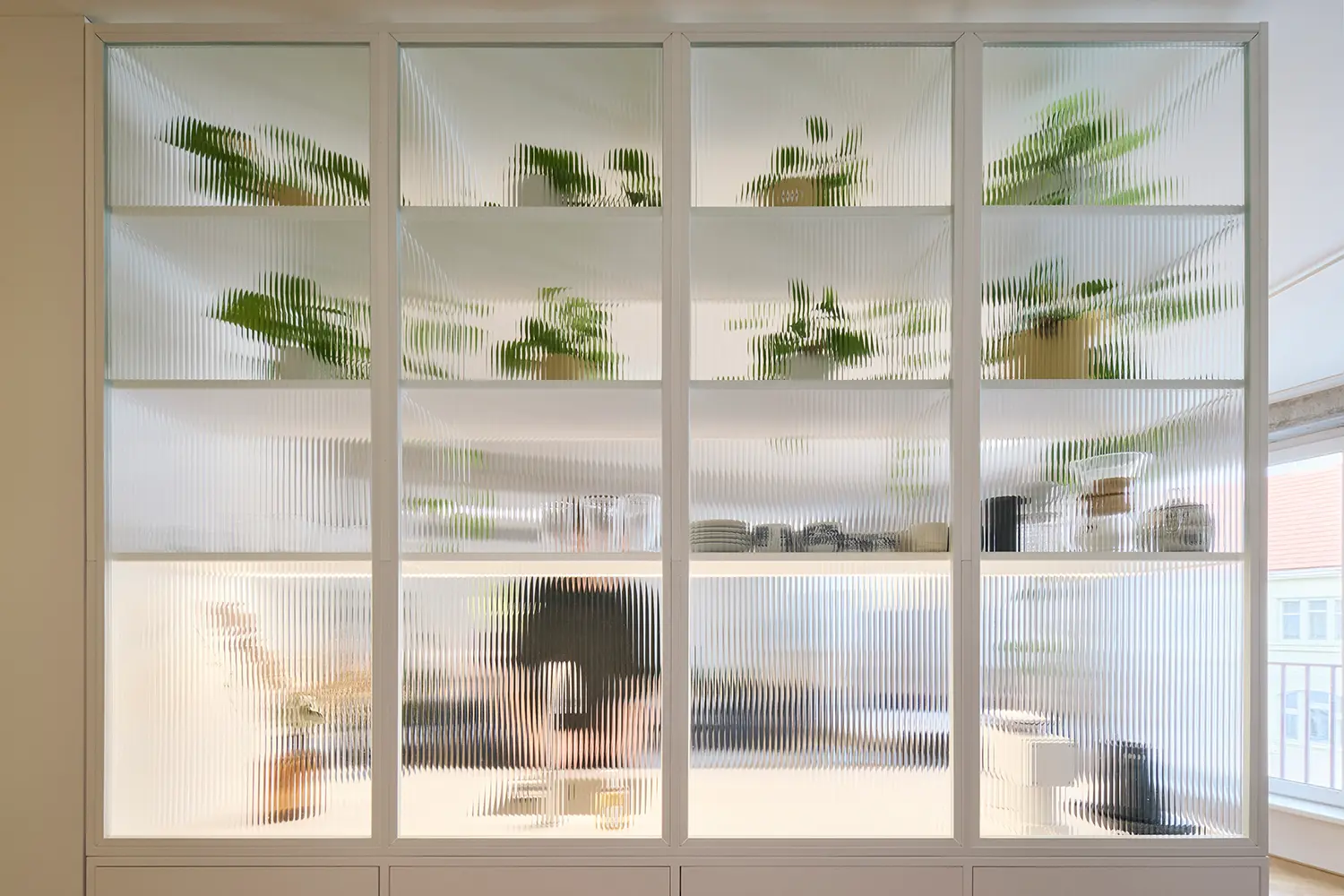
Rethinking the modern floor plan. Rather than defining standard rooms, the interior architecture prioritizes the relationships between different activities, atmospheres, and changing modes of inhabitation. This strategy allows the interior to operate simultaneously as an expansive, uninterrupted volume for social gatherings and as a highly responsive framework capable of accommodating quiet, independent domestic scenarios. A quiet workstation can easily coexist with a lively dining area, partitioned only by a drape of fabric or a slight shift in the viewing angle provided by the central block.
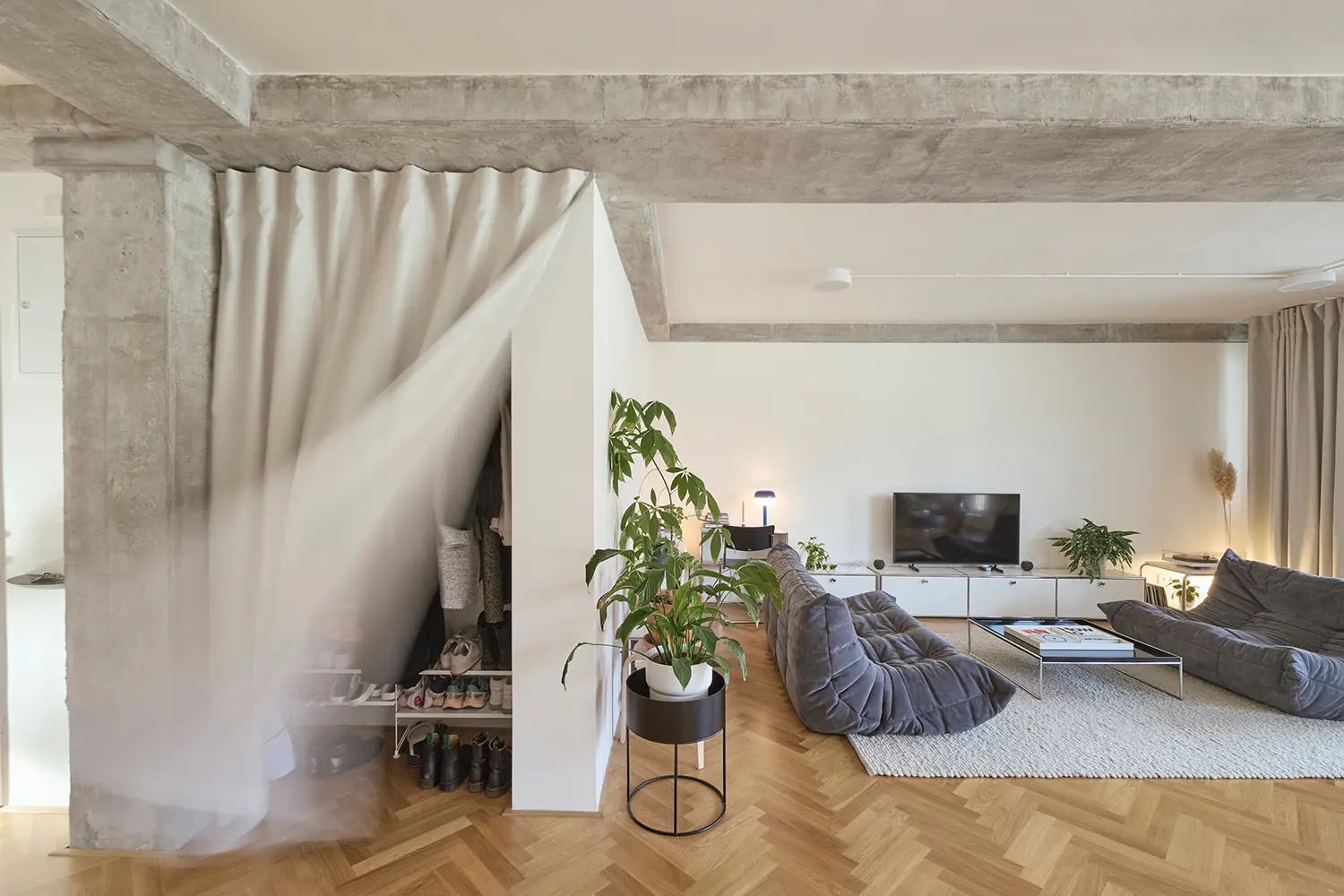
Contextual integration and structural honesty. In maintaining the integrity of the original structure, the studio left visible indicators of the building’s physical history. The scars where old load-bearing walls once met the ceiling have been preserved and simply painted over, acting as an honest chronicle of the home’s transformation. This dialogue between past and present is a hallmark of contemporary Czech architecture, where raw, industrial legacies are increasingly treated with intellectual curiosity and delicate refinement rather than being hidden behind uniform layers of drywall.
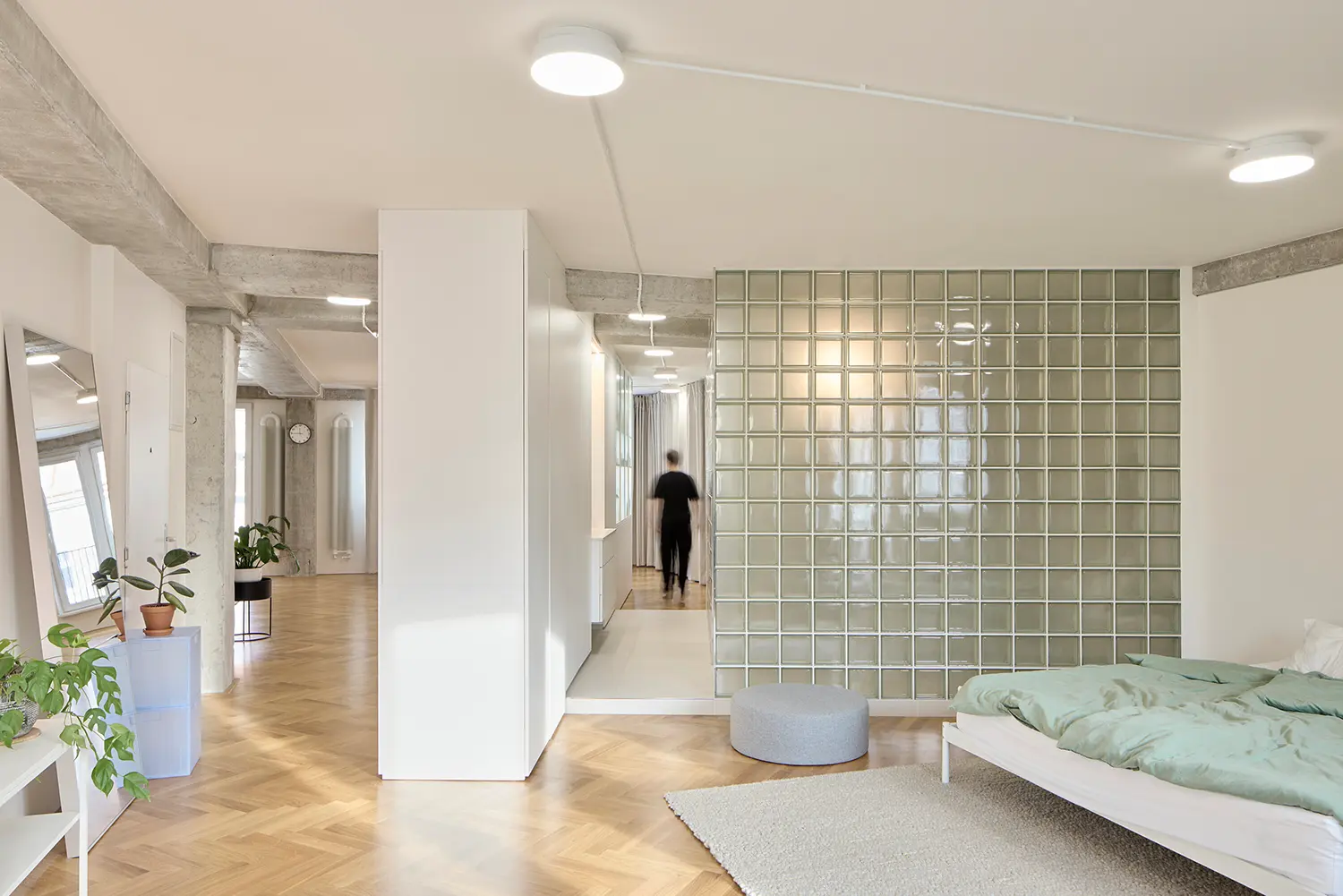
A new era for urban apartments. The project represents a broader, highly sophisticated movement within the local landscape, where architects are continually finding innovative ways to breathe new life into older housing stock. This progressive attitude toward spatial efficiency and material honesty reflects a growing desire among metropolitan residents to live in homes that favor atmospheric quality and physical flexibility over sheer square footage.
A quiet revolution in the Czech capital. This fluid approach to domesticity is not an isolated experiment, but part of a highly sophisticated, quiet shift currently reshaping Prague’s historic interiors. Rather than working against the rigid constraints of the city’s twentieth-century housing stock, a younger generation of local studios is using surgical demolition and bespoke joinery to unlock light and movement. It is a sensibility clear in the Prokop & Hartl corner apartment renovation, which stripped back a 1930s Functionalist footprint to its raw essentials, and the vibrant, material-driven Prague functionalist apartment by Martin Cenek Architecture. What these residential renovations share with RDTH architekti’s latest work is a rejection of the standard cellular floor plan. By replacing solid brick with timber, textile, and glass, they collectively argue that modern urban living is defined not by the count of walled-off rooms, but by the atmospheric and functional freedom allowed between them.