



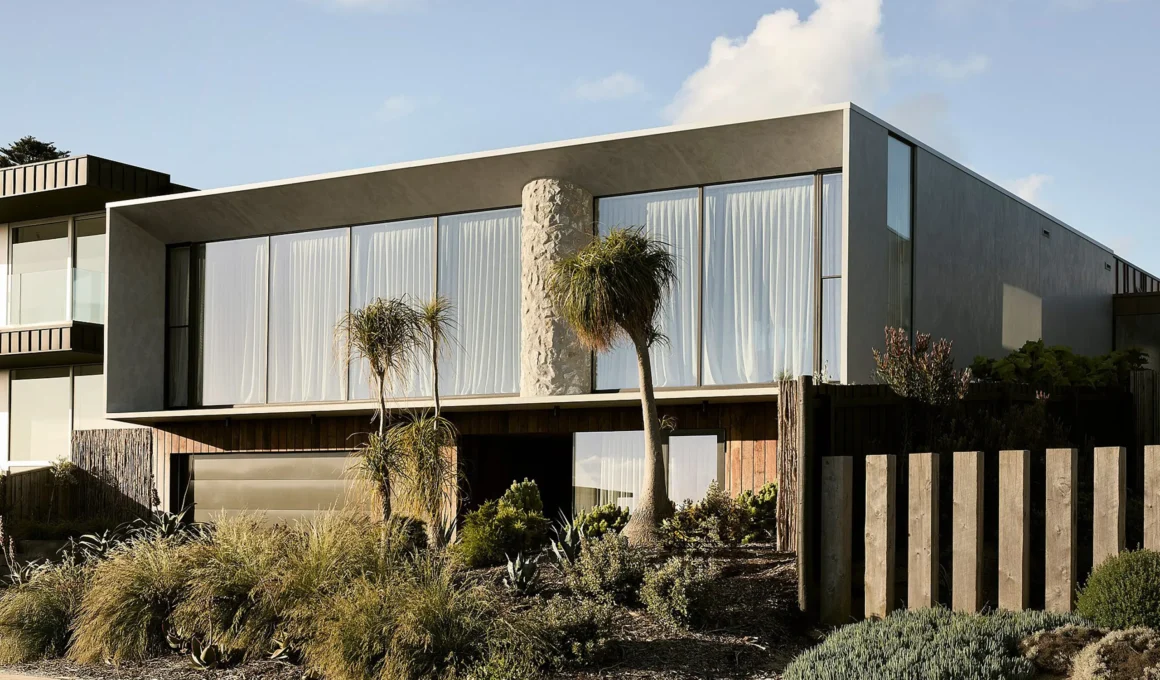
Coastal House in Ocean Grove is a robust, light-filled family residence by Splinter Society Architecture, situated on an elevated site in Victoria, Australia, where a cantilevering concrete volume and recycled timber cladding respond to the rugged coastal environment.
A dialogue between weight and weightlessness defines the conceptual core of the project. Perched above the shoreline, the structure is a study in contrasts, commissioned by a builder with a penchant for honest, raw materials. The building is split into two distinct identities: a grounded, recessive lower level clad in silvering recycled timber and a striking upper floor that appears to float. This upper mass, a refined rectilinear concrete volume, features a delicate chamfer along its edges to soften its presence while framing expansive southern views of the Bass Strait.
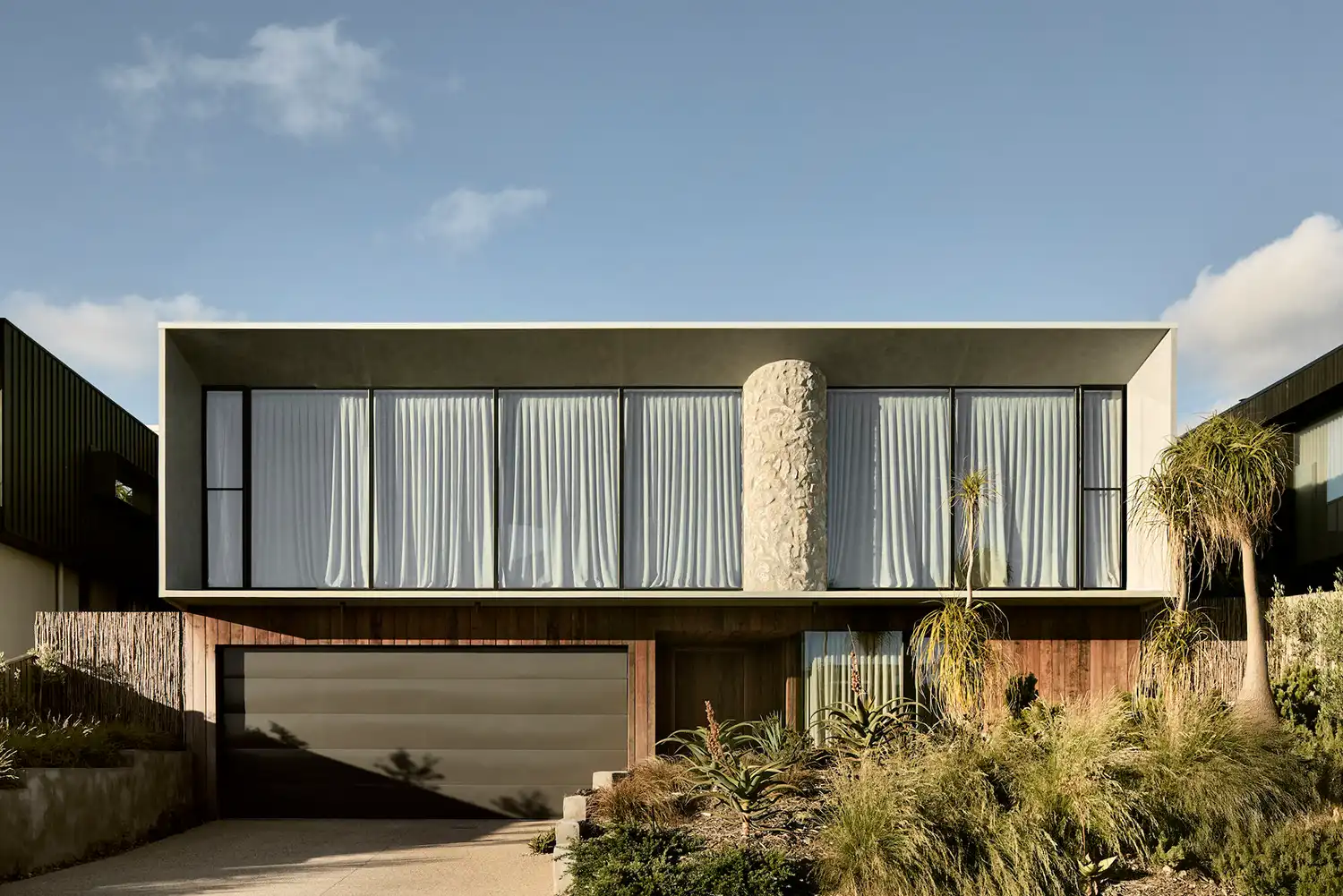
The sensory experience of the site is immediate upon entry. By tucking the house into the natural contours of the terrain, the architects have created a sense of discovery. The entryway is deeply recessed, drawing visitors away from the prevailing winds and into a temperate interior world where the scent of native coastal landscaping mingles with the tactile reality of the building’s skin. The choice of materials—naturally patinated copper, rough limestone, and weathered wood—ensures the home will age gracefully, acquiring a unique character as it is buffeted by salt air and sunlight.
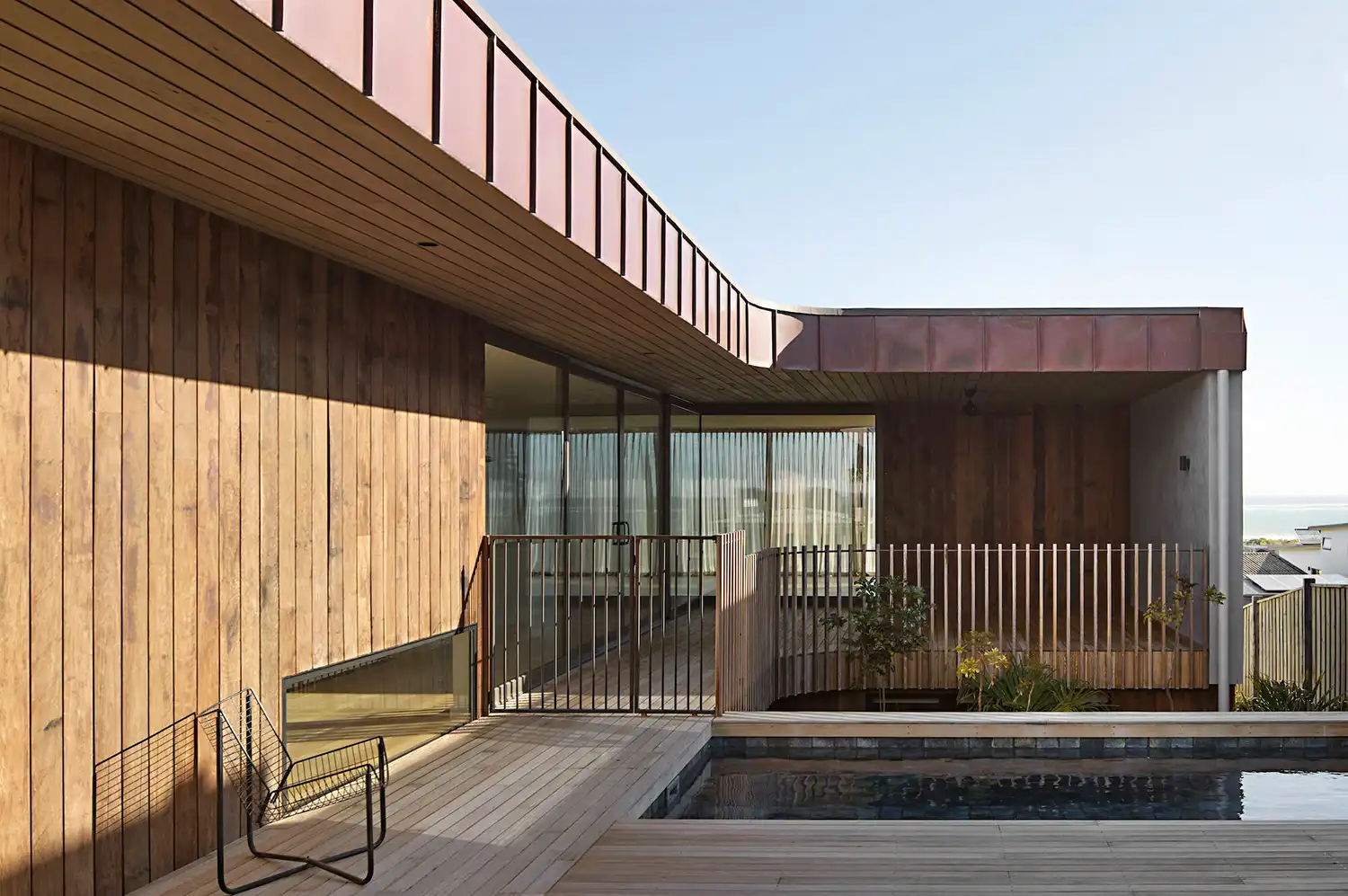
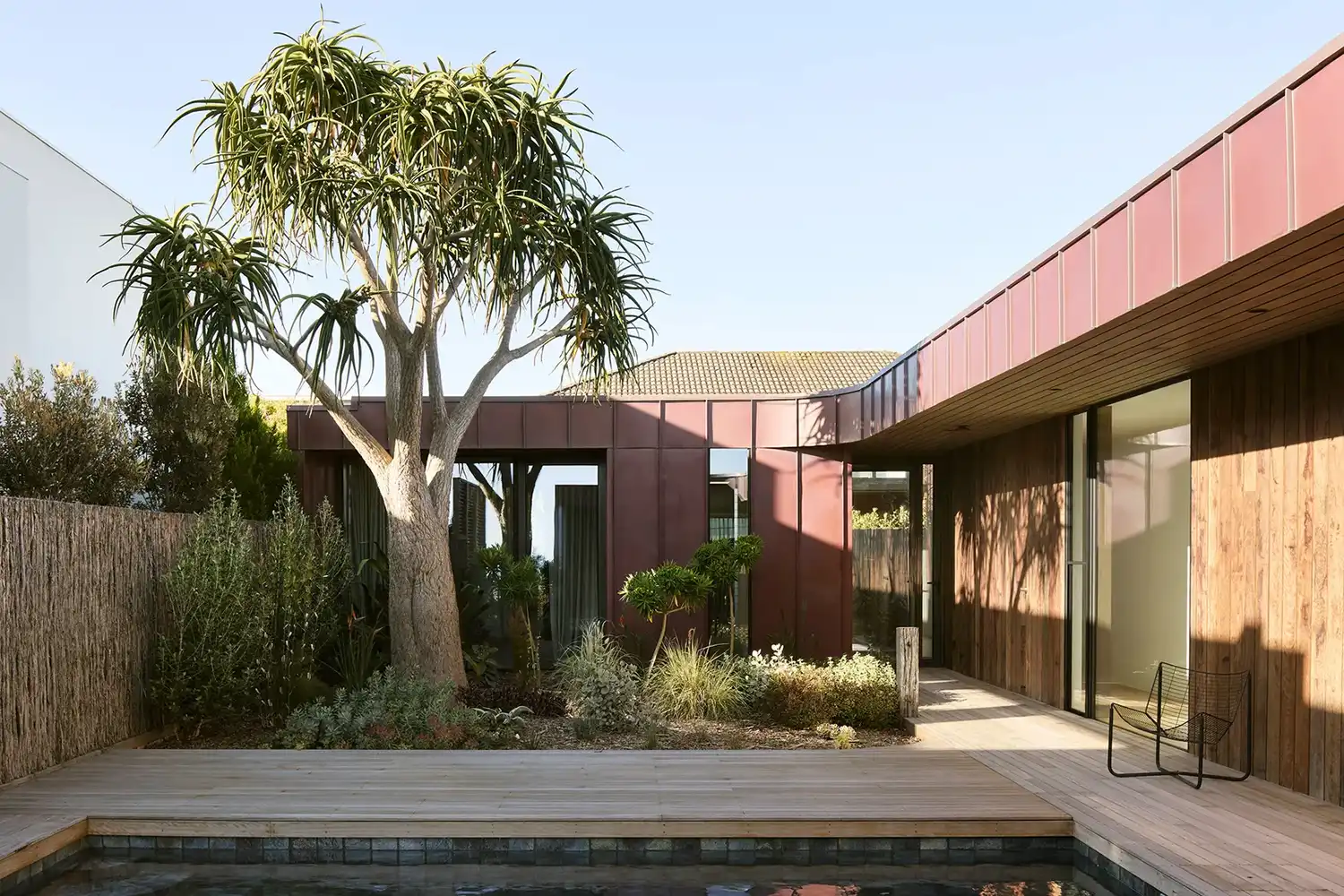
An internal logic of light governs the semi-courtyard layout. The plan wraps around a central outdoor heart, sheltering a pool and lounge area from the elements. This configuration is a strategic response to the Australian climate, allowing the primary living zones to bathe in northern sunlight while maintaining a visual connection to the water. The transparency of the glazing along the front façade creates a blurred boundary, where the interior feels less like an enclosed box and more like a high-vantage viewing platform for the shifting tides and the coastal horizon.
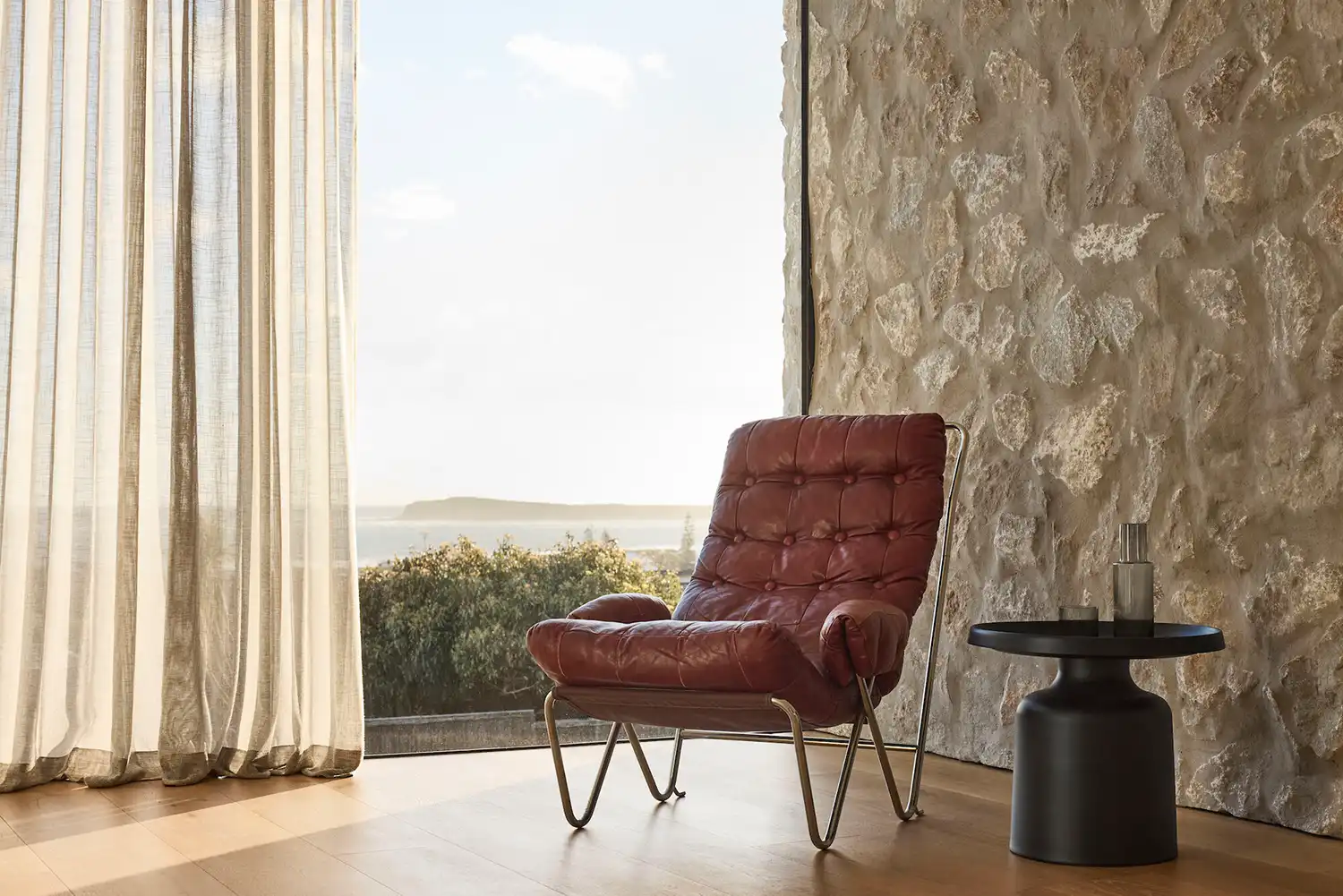
Materiality as a spatial anchor is used to define the home’s program without the need for rigid partitions. Inside, a soft, neutral palette allows the textures of the construction to take center stage. A massive, rough-hewn limestone columnstands as a centerpiece, subtly dividing the public and private realms. This inclusion of local stone creates a grounding effect, linking the contemporary structure to the geological history of the Victorian coastline. The transition from the cool, smooth concrete of the exterior to the warm, tactile timber of the interior provides a sophisticated domestic rhythm.
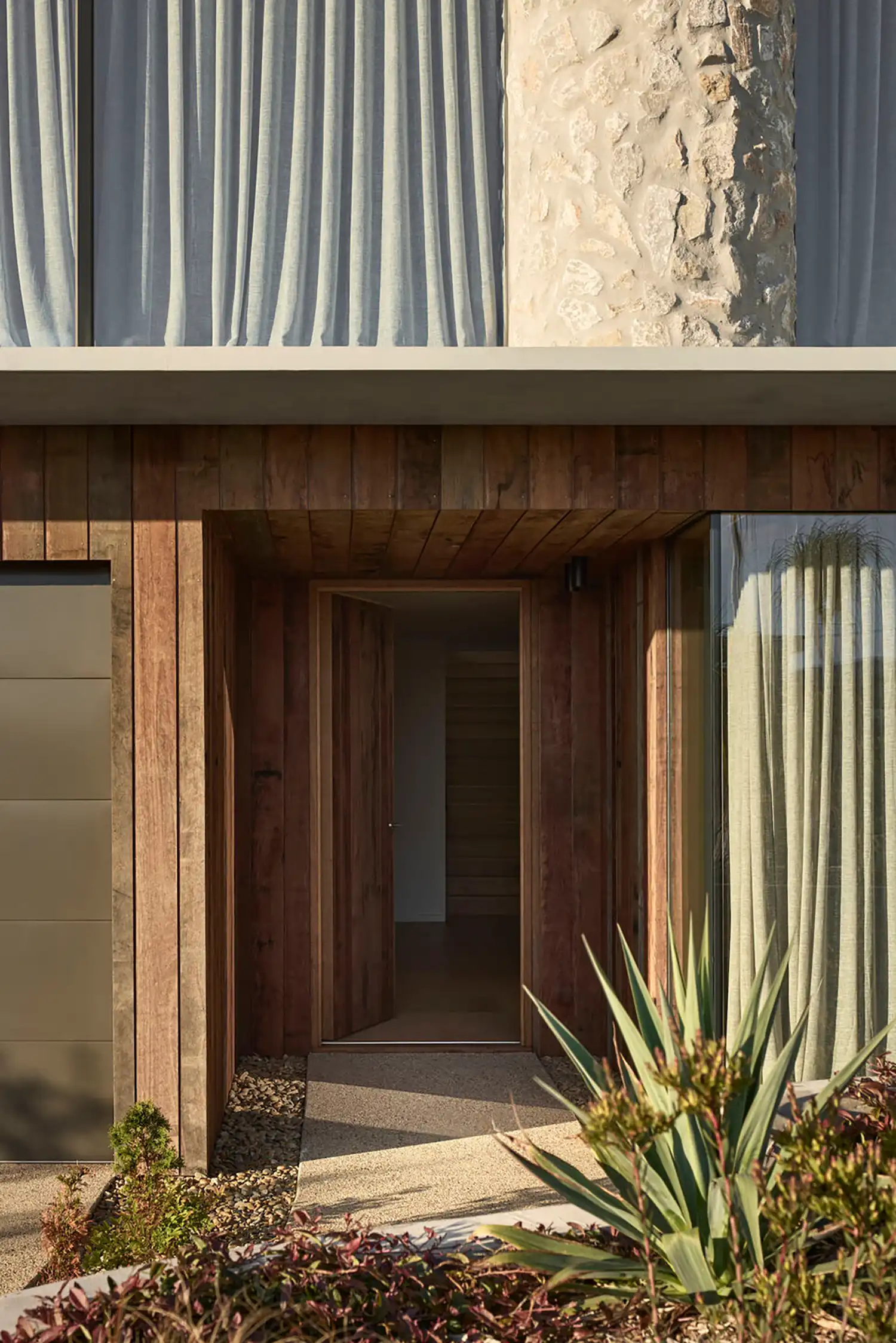
The zoning strategy prioritizes privacy by placing the sleeping quarters at the quiet rear of the site. While the lower level houses guest amenities, a garage, and storage, the upper level is dedicated to the daily flow of family life. The primary suite enjoys a direct relationship with the central courtyard, offering a secluded vista of the garden and pool. This careful separation ensures that even when the house is full of guests, the core living areas remain a serene environment for the residents, defined by a resilient approach to luxury and high-quality fabrication.
Exploring the evolution of regional typologies offers further insight into how contemporary dwellings are adapting to the Australian landscape. For those interested in how timber is utilized to harmonize with the shore, this coastal timber residence in Mount Martha provides a compelling comparison. Similarly, the concept of the internal courtyard is beautifully executed in this secluded Melbourne home, while this thoughtful renovation in Coburg demonstrates how textural materiality can transform a compact footprint into a light-filled family haven.