






Studio McW has completed the redesign and extension of Threshold House, a split-level Victorian home in London’s tranquil De Beauvoir neighbourhood, masterfully transforming its lower ground floor into a highly functional hub tailored for exuberant entertaining. The project sets a strong precedent for revitalising traditional London architecture with a sensitive, contemporary design lens, establishing a delicate equilibrium between communal, social spaces and the owners’ need for more private retreats.

The architectural challenge centered on mediating the existing structure—where the upper levels contained formal reception spaces and bedrooms—by creating a generous, discovered space below. Studio McW responded to the brief for a dramatic moment of descent by designing an extension that stretches to the maximum planning allowance, significantly increasing the footprint. This move accommodates an expansive new kitchen-dining area and a connecting living room, while fundamentally improving the physical and visual link to the rear garden setting with its two protected palm trees.
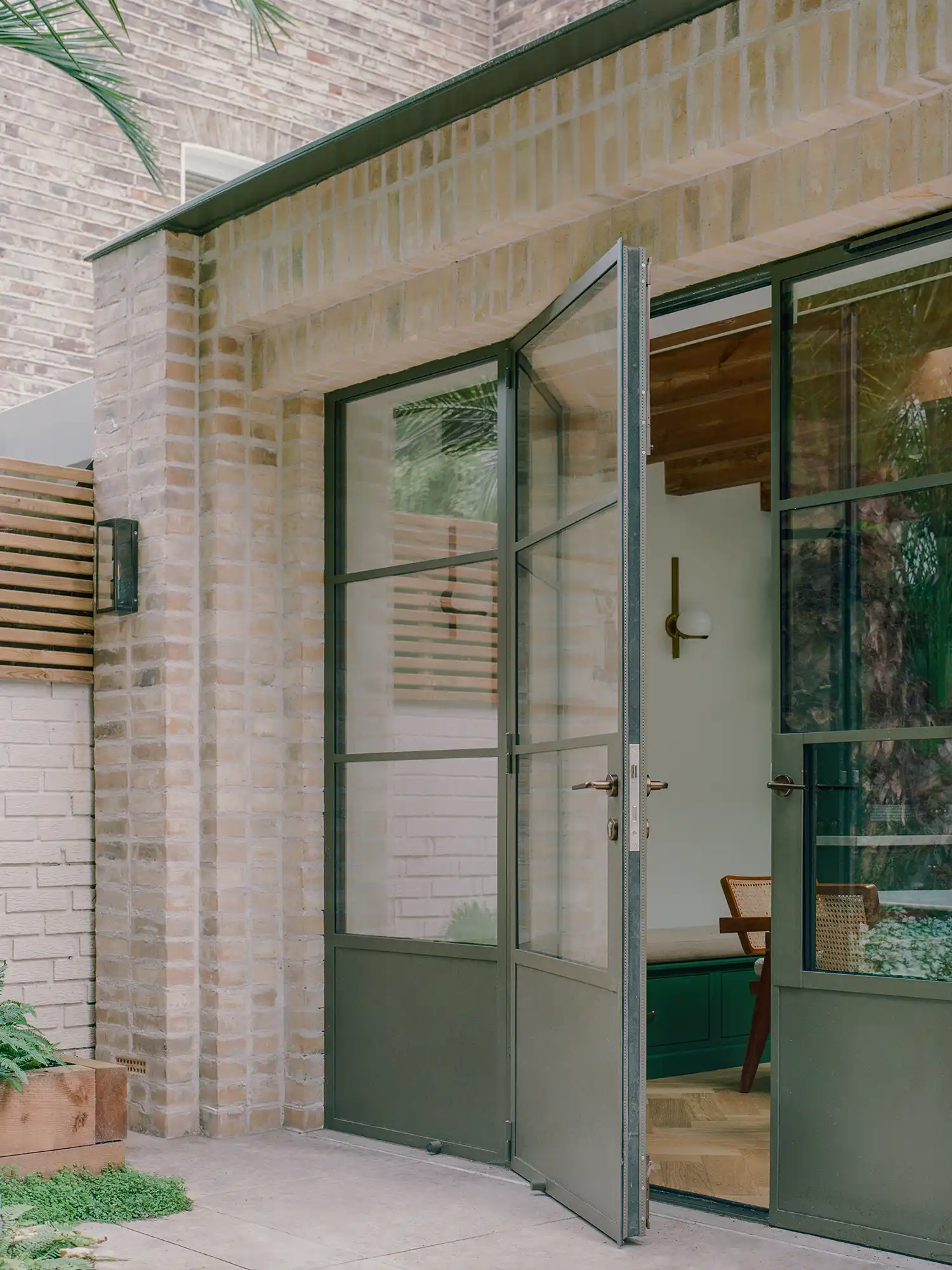
Externally, the addition is defined by a sophisticated, layered facade that carefully respects the scale of the original Victorian home. The design is articulated as two complementary faces, separated by a central, thick, monolithic brick wall that imparts a sense of permanence and grounding. This larger face frames the new kitchen-dining area with tiered brickwork that projects outward, establishing deep reveals around the full-height, industrial-style Crittall-style doors, thus lending the structure a profound sense of solidity and depth.
To mitigate the visual bulk from the garden and provide contrast to the heavy brickwork, the Studio McW team integrated a finely detailed metalwork frame. This elegantly expressed steel structure projects to the same depth as the adjacent masonry and, crucially, future-proofs the structure for a potential upper-floor addition. This frame also strategically shelters a recessed, sliding window, allowing it to remain open in all seasons, while a corresponding external brick bench is mirrored internally by a built-in seat within the adjacent flexible space.
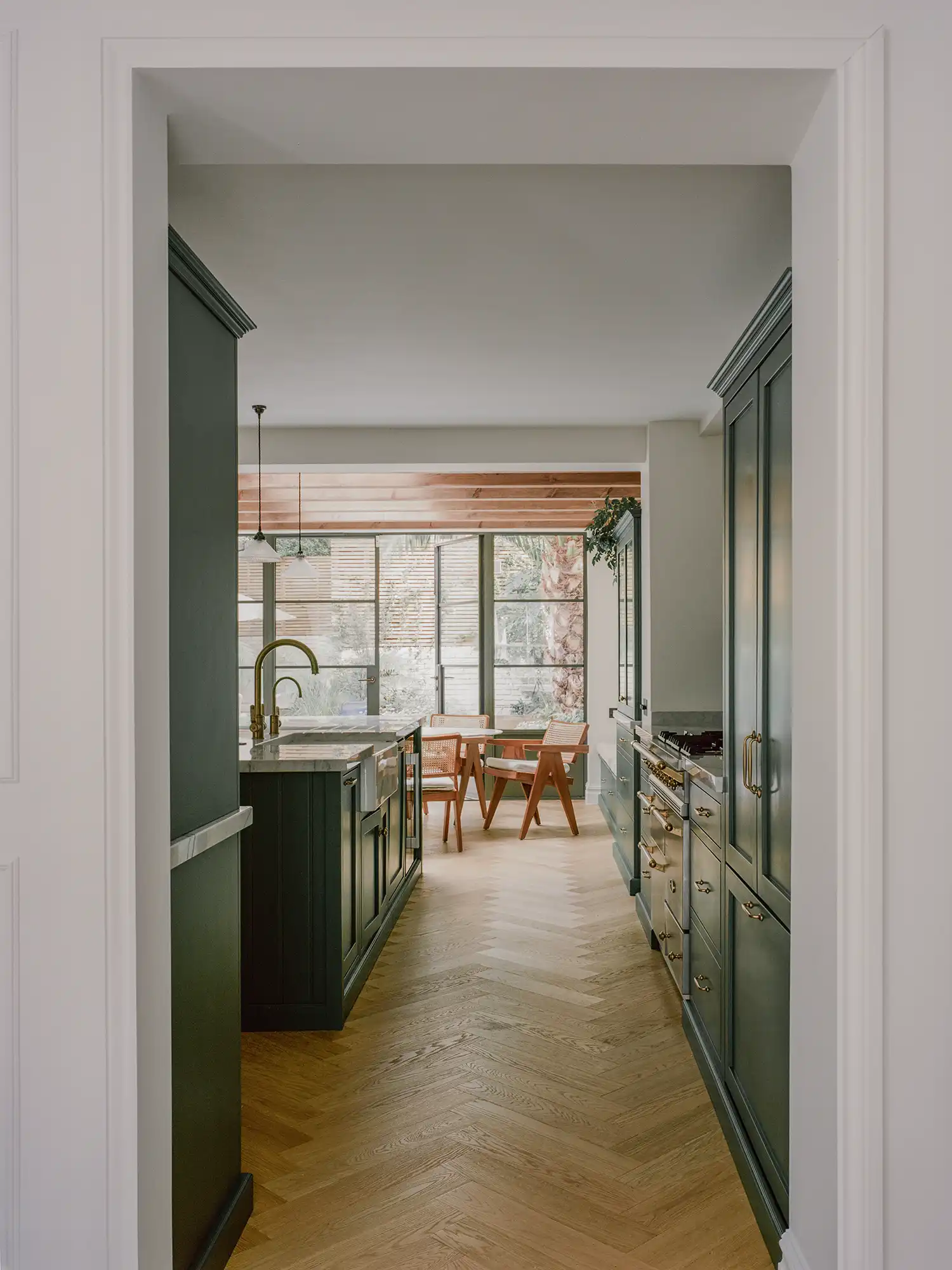
Inside, the layout is a study in spatial organisation and flow, driven by the need for adaptability. The kitchen forms the central core, anchoring a circular route that effortlessly connects the social areas with the more intimate rooms. This path links the dining area to a versatile study/guest bedroom and a dual-access bathroom.
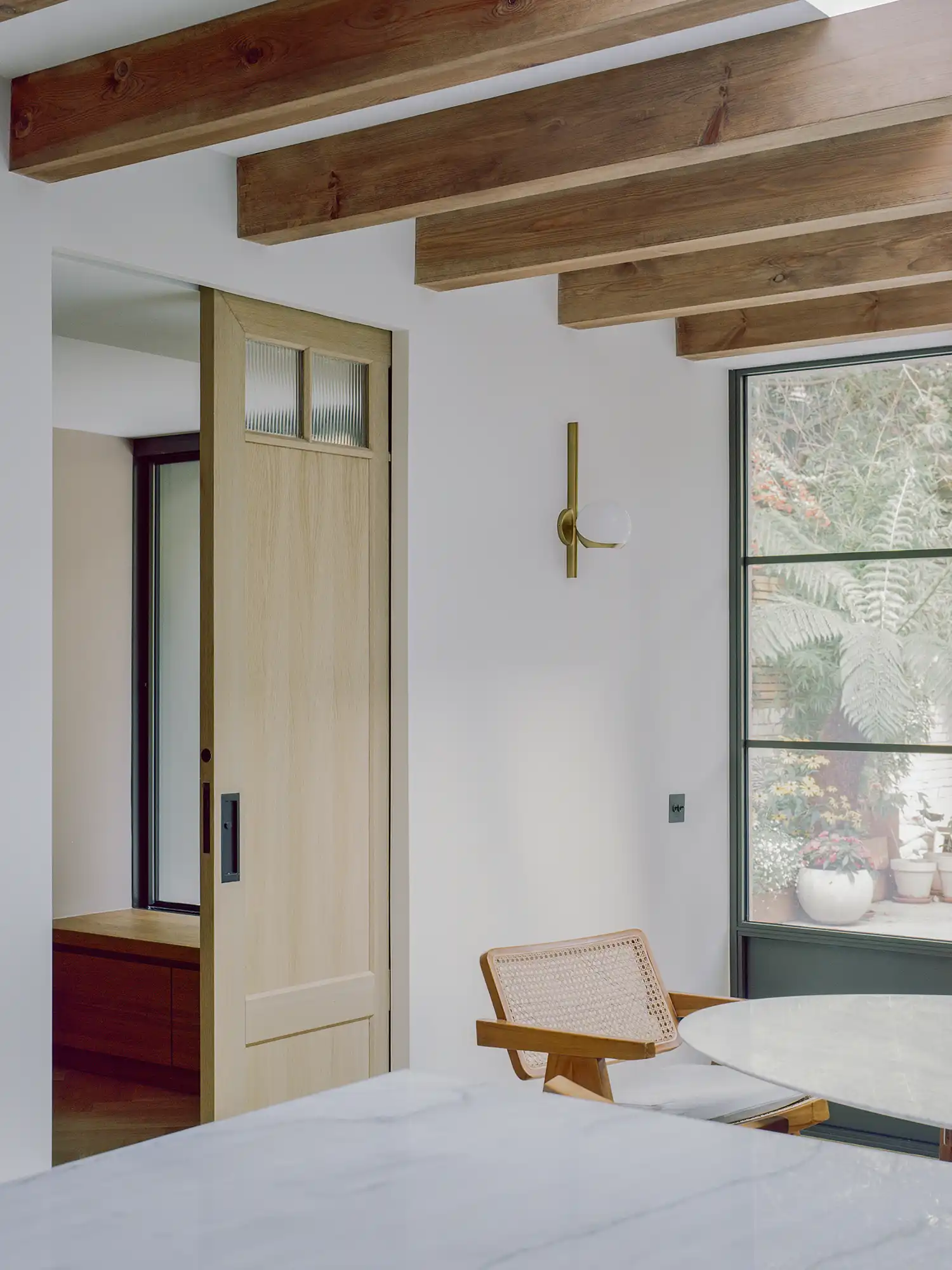
The combination of a sliding pocket door and the dual-access bathroom ensures the entire floorplan remains highly flexible, easily converting for entertaining or establishing privacy when the study is in use as a bedroom. Moreover, this clever arrangement allows natural light to be drawn deep into the centre of the plan from the utility room and study, enhancing the bright, cohesive atmosphere across the entire lower ground floor. Finally, the installation of a low-maintenance green roof minimizes the structure’s visual impact from the reception rooms above, underscoring Studio McW‘s considered and highly technical approach to this exemplary piece of contemporary design.