

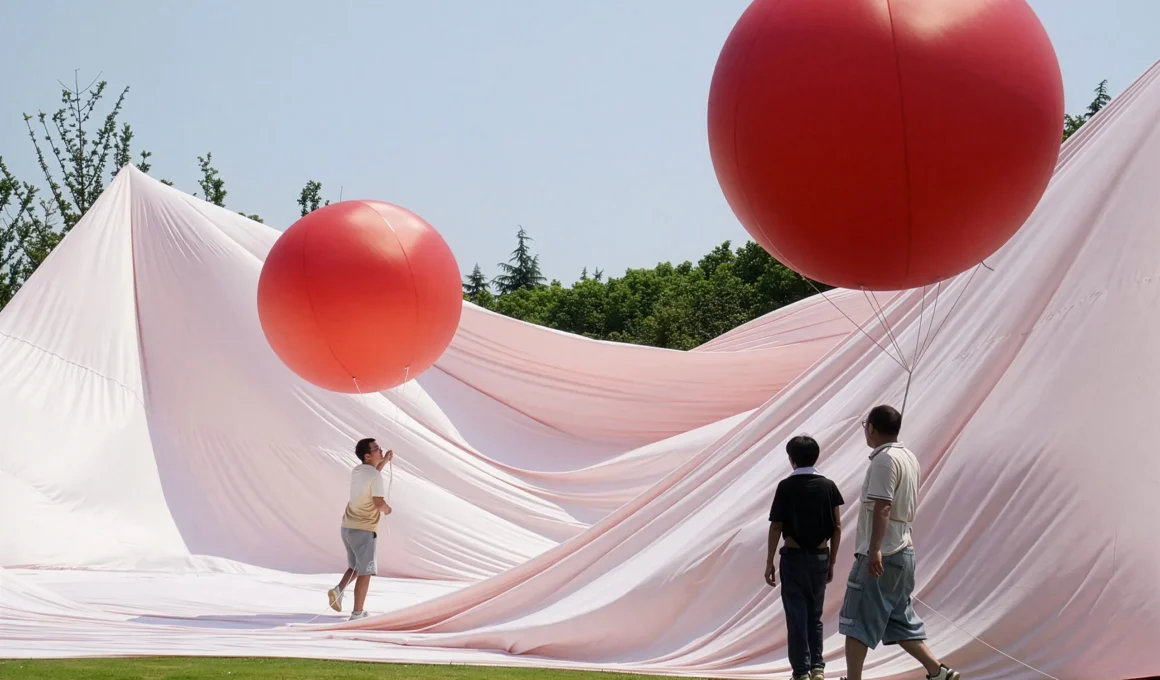
Located on a sprawling 2,640-square-meter lawn in Yangzhou, China, the “Playground” installation by Suki+Partners reimagines the traditional wedding ceremony as a continuous process of human connection through a series of undulating pink fabric volumes and crimson balloons. By lifting a two-dimensional plane into a three-dimensional experience, the studio creates a weightless, ephemeral landscape that invites guests to rediscover the spirit of exploration and empathy in a space defined by light, wind, and movement.
A conceptual shift from ritual to play defines the core of the project. Rather than treating a wedding as a static, one-day event, suki+partners envisioned the site as a living environment where the act of gathering mirrors the growth of a relationship. The designers suggest that the curiosity of childhood does not fade but evolves into adult dialogues and shared discoveries. This philosophy manifests in a structure that prioritizes interactive spatial experiences over rigid ceremonial protocols, encouraging guests to step out of their daily routines and engage with the natural elements.
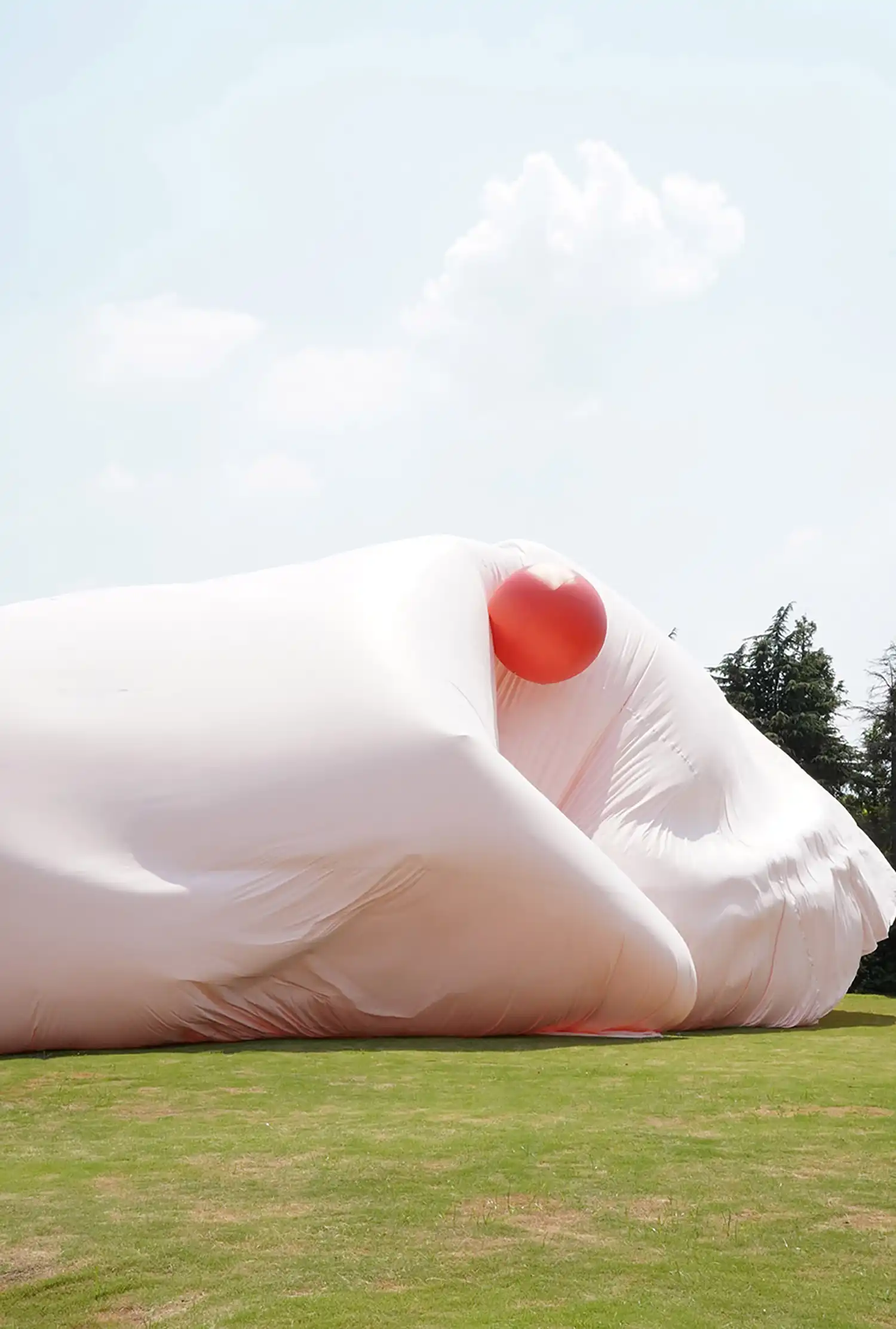
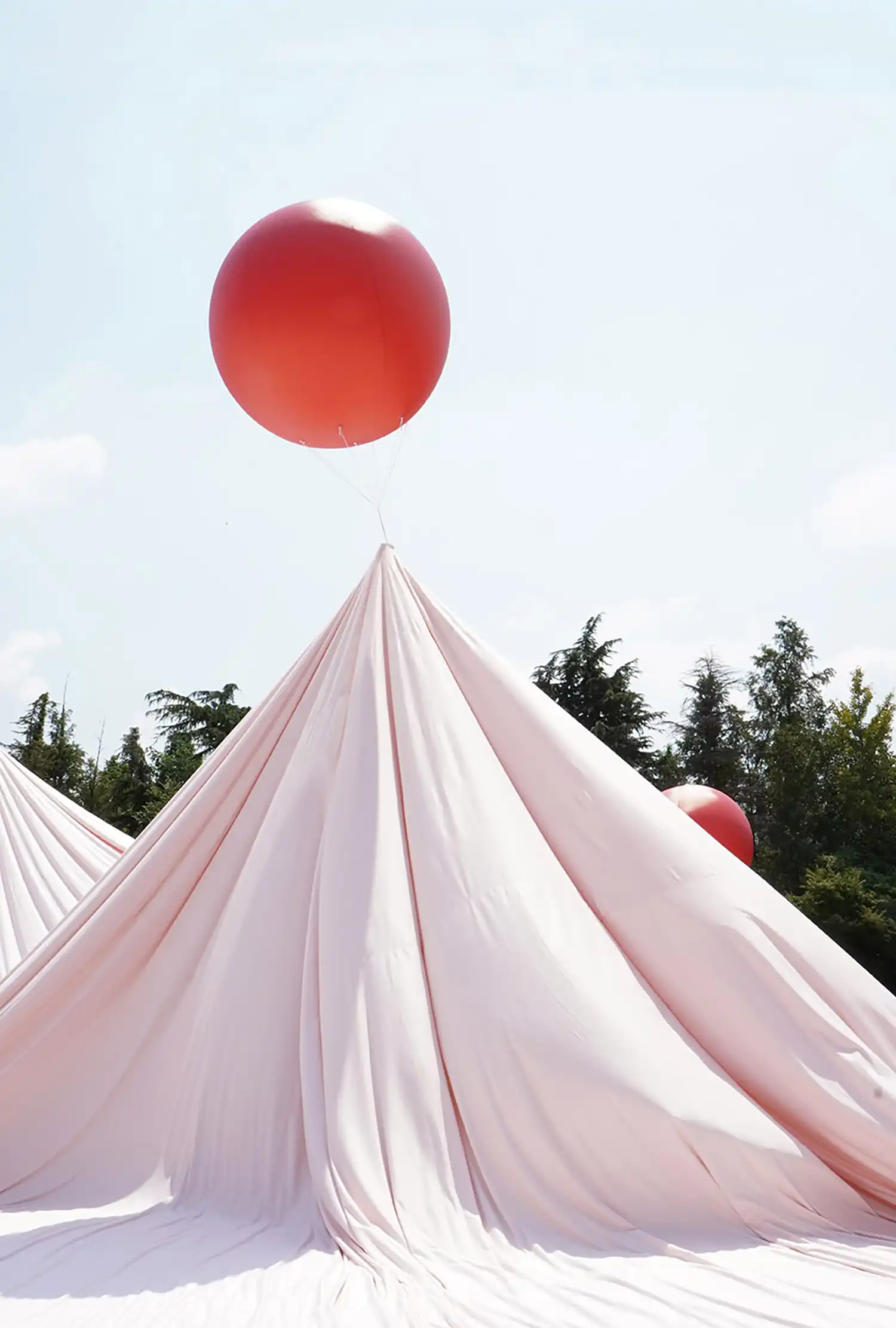
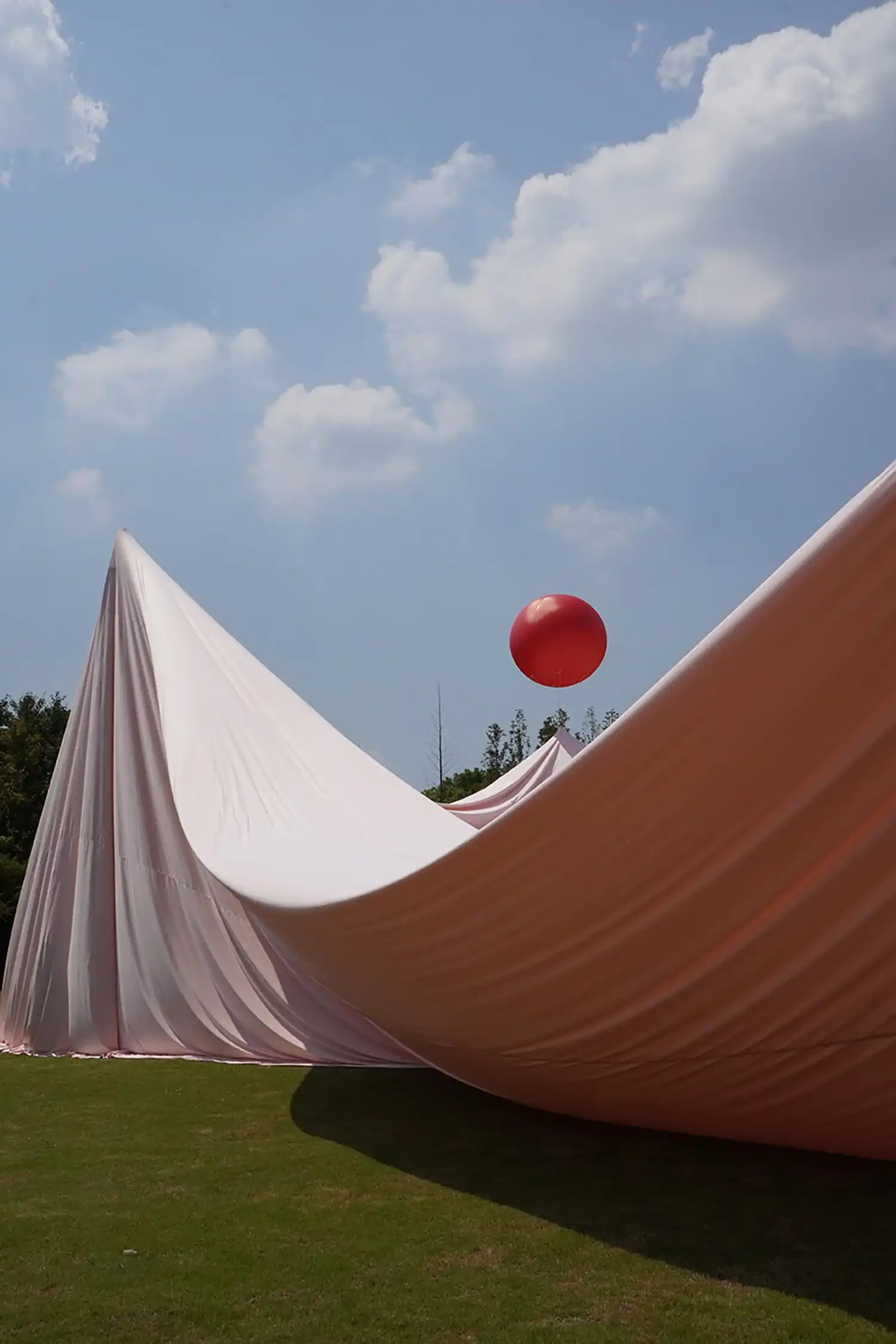
The transformation of materiality is achieved through a deceptively simple gesture: lifting the corner of a flat plane. Using expansive sheets of pale pink fabric, the studio created a variable topography that oscillates between solidity and airiness. These textile surfaces are hoisted by large, buoyant red balloons, allowing the cloth to drape naturally toward the ground. This creates a rhythmic play of positive and negative space, where the undulating folds of the material define both the stage for the ceremony above and the sheltered zones below.
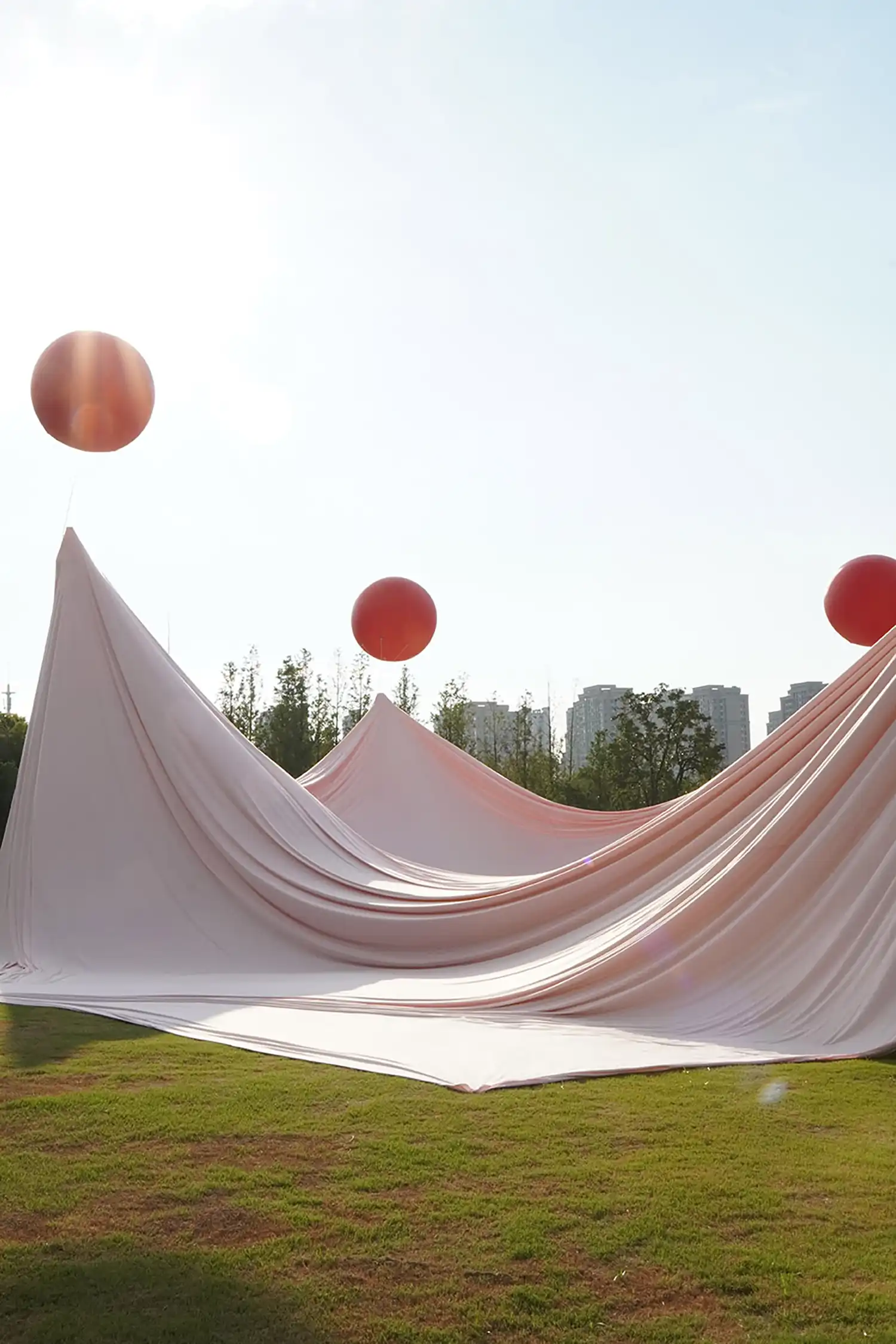
Technical efficiency and climate response were essential to managing the vast, open site during the summer months. To address the intensity of the sun, the space beneath the draped fabric serves a functional dual purpose. While the upper surfaces host the main performances and conversations, the lower areas, supported by slender columns, remain open on both sides to facilitate natural ventilation. Cooling systems and seating are integrated into these shaded alcoves, providing a temperate retreat for guests without compromising the installation’s visual lightness.
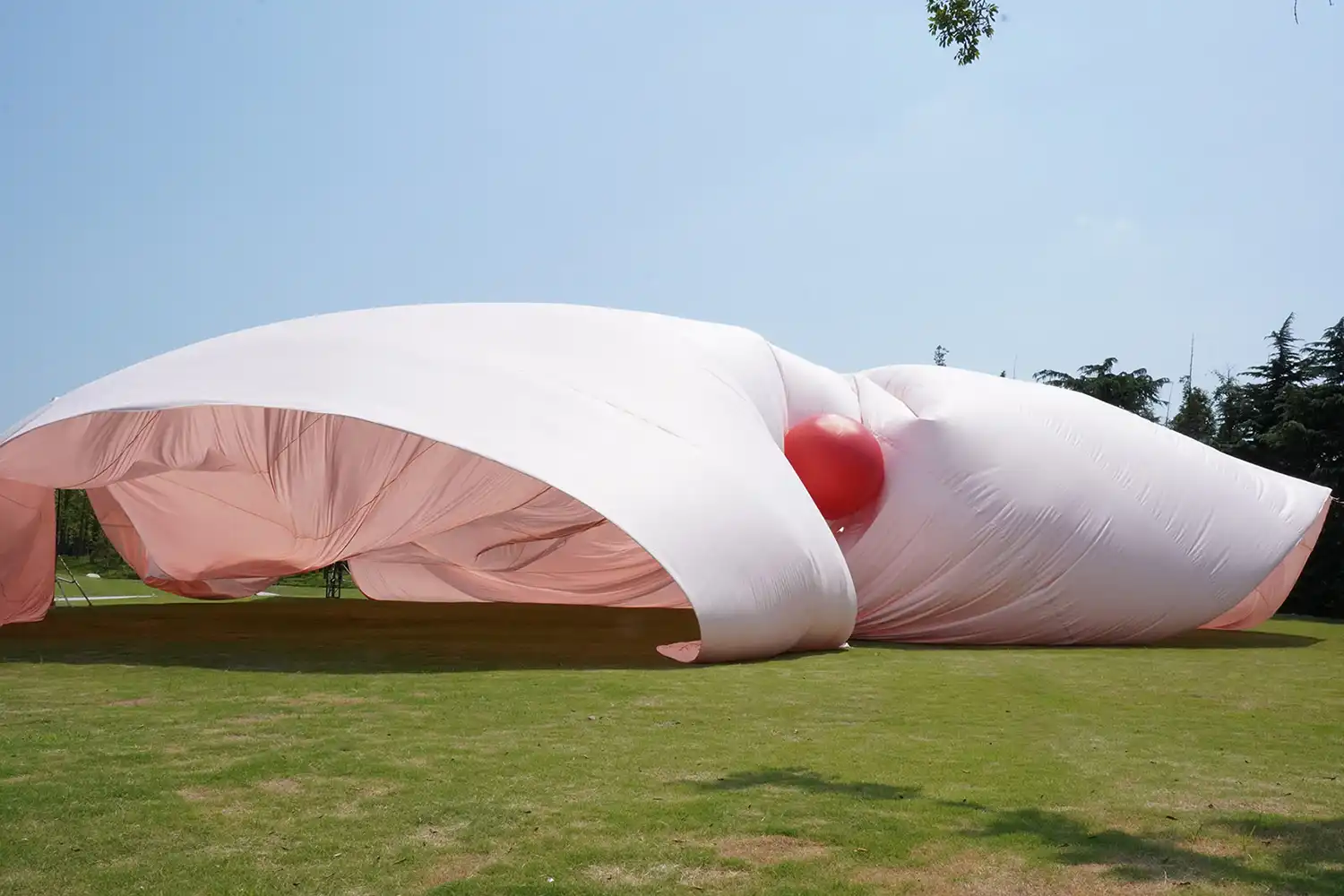
The sensory experience of the wind adds a layer of kinetic energy to the installation. The playground is not a static object but a reactive one; as the breeze moves across the lawn, the fabric shifts, rises, and falls in a synchronized dance with the red balloons. This movement emphasizes the ephemeral nature of the intervention, making the invisible currents of air visible to the participants. The structure acts as a sail, catching the light and the wind, blurring the boundaries between the built environment and the surrounding atmosphere.
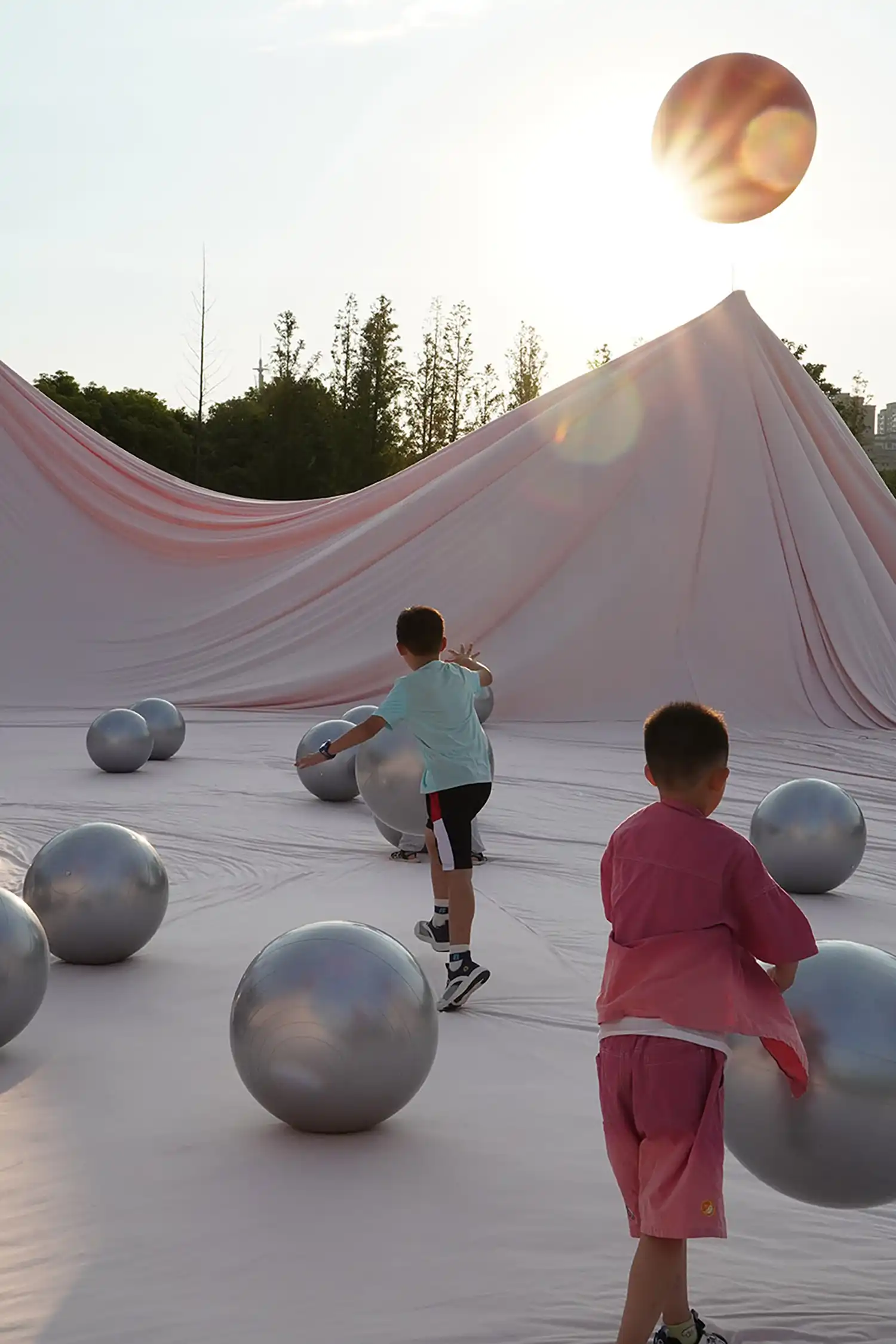
A landscape of memory and light unfolds as the day progresses. The designers describe the installation as a “sponge” for human interaction, absorbing the laughter of children running across the lawn and the quiet moments of guests watching the sunset. At dusk, the fabric glows with an orange hue, contrasting against the refreshing spray of water misters and the distant silhouette of local landmarks. These textures—the tactile quality of the cloth, the weightlessness of the balloons, and the play of shadows—transform the site into a multisensory landscape that prioritizes feeling over form.
Exploring the boundaries of temporary structures allows for a deeper investigation into how we inhabit public and private spaces. The Yangzhou project demonstrates that minimal construction can produce a high contextual impact by working in harmony with the site’s existing topography. By focusing on adaptive spatial design, suki+partners have created a moment of wonder that exists between the earth and the sky, proving that the most resonant environments are often those that allow for the greatest freedom of movement.
The evolution of site-specific art in East Asia continues to push the limits of materiality and light. For those interested in how designers are reshaping the Chinese landscape through temporary interventions, it is worth exploring the Ice Garden installation in Aranya or the Divided Light installation in Xi’an, both of which reflect a similar dedication to creating profound emotional resonance through experimental forms. Like these previous works, “Playground” stands as a testament to the power of imagination to redefine our shared reality.