


In the historic heart of Suzhou, China, where the echoes of the Ming Dynasty still resonate through the canals of the Taohuawu district, a new architectural protagonist has emerged. Verdant Ridges, the latest intervention by Wutopia Lab, is not merely a renovation of the former Xinguang Silk Weaving Factory; it is a profound narrative landscape. Commissioned to transform Building No. 5 into a multifunctional theater, founder Yu Ting has bypassed the conventional binary of preservation versus reconstruction. Instead, the project serves as a “third way”—a spatial biography of the legendary polymath Tang Bohu, whose life of bureaucratic exile and artistic liberation provides the conceptual scaffolding for this ethereal structure.

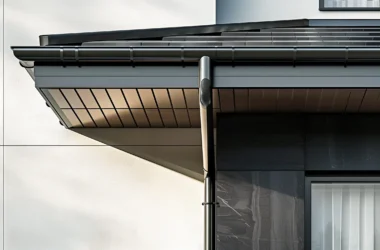
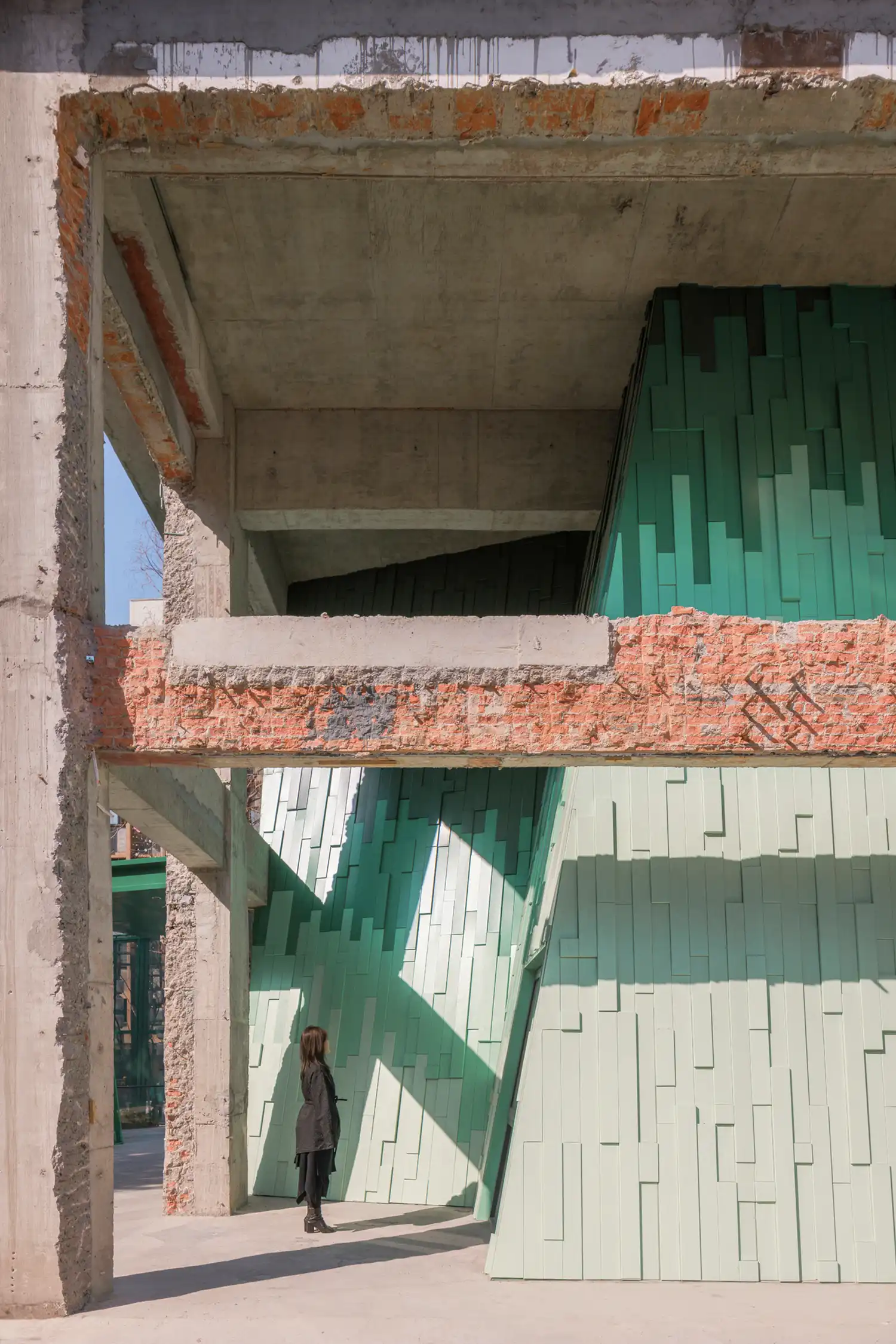
A metamorphosis from ruin to refinement defines the building’s exterior presence. The original concrete skeleton, once a symbol of industrial order, has been enveloped in a complex, layered skin of metal mesh and solid panels. This facade is a physical manifestation of Tang Bohu’s artistic duality; the outer layers utilize four variations of green-blue hues, evoking the vibrant colors of his figure paintings and the lushness of classical Jiangnan landscapes. By strategically setting the structure back to accommodate the neighboring fire station, Wutopia Lab created a “gray space”—a transitional threshold that invites the public into a dreamlike mountain range crafted from steel. This approach mirrors the studio’s penchant for treating architecture as a monumental art installation, where the boundary between a functional shell and a sculptural object becomes beautifully blurred.
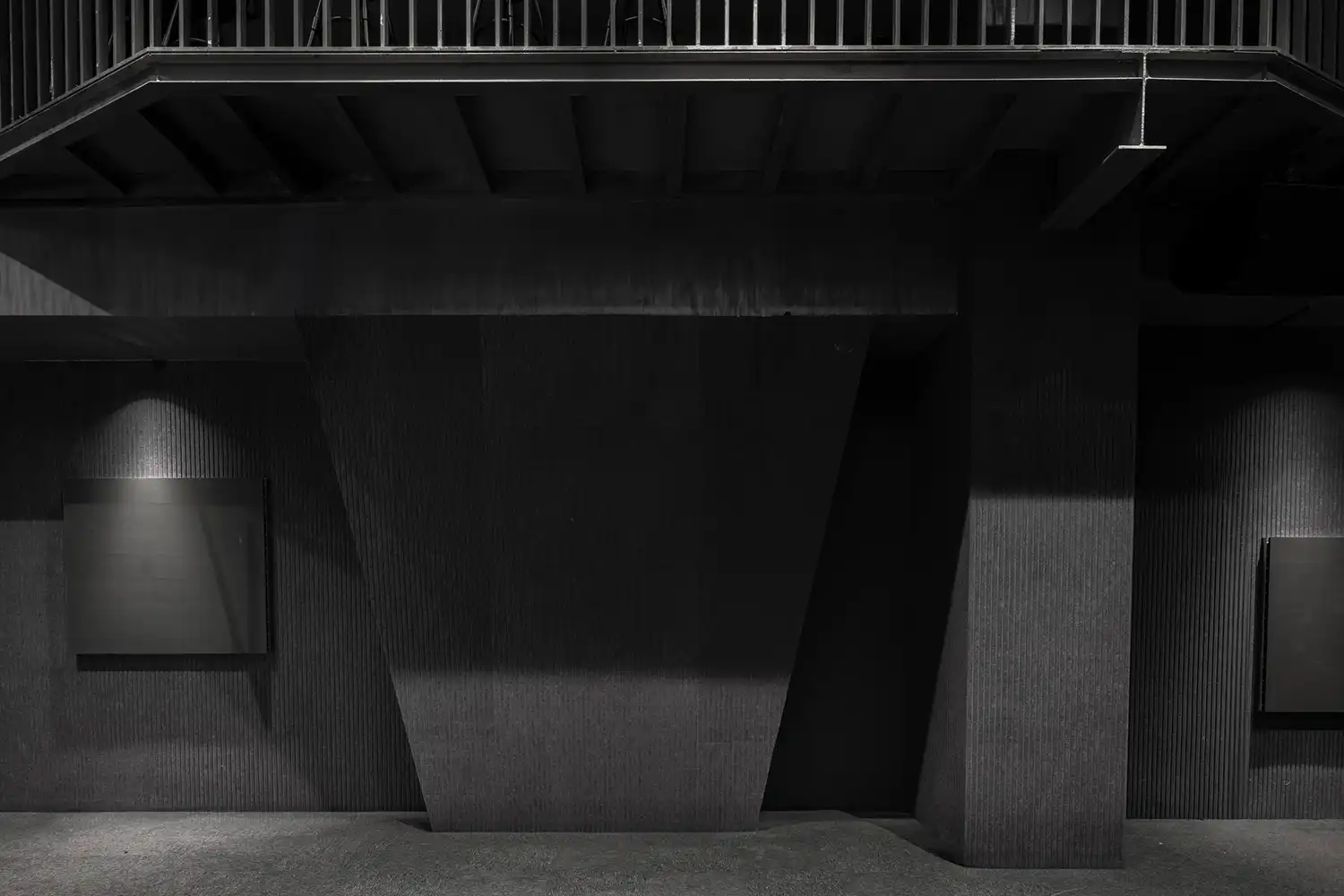
The sensory journey deepens as one crosses the threshold into the theater’s “Midnight Door.” Inside, the exuberant palette of the exterior gives way to a monochromatic world of black, white, and gray—a nod to the internal sanctuary of the artist’s soul. The walls are textured with acoustic panels and artistic coatings that mimic the cún (皴) brushstrokes of traditional ink painting, creating a rich, tactile verticality. Walking through the ground floor feels like navigating an ink-wash scroll; the undulating silhouettes of “mountain” partitions guide visitors toward an I-shaped stage. This layout intentionally breaks the “fourth wall,” forcing a temporal interplay where the audience and the performers inhabit the same fractured timeline, bridging the gap between modern Suzhou and the late Ming Dynasty.

Technical ingenuity meets historical constraint in the resolution of the performance space. Due to rigid local preservation regulations, a central structural column on the stage could not be removed—a potential disaster for traditional sightlines. Wutopia Lab turned this obstacle into a focal point, cladding it in dark wood to integrate it into the theatrical narrative. Above, a mezzanine level echoes the inclined geometry of the ground floor, creating an immersive, cavernous atmosphere. This meticulous orchestration of mechanical systems and stage lighting ensures that even with the addition of new floors, the spatial harmony remains intact. It is a philosophy seen in their other works, such as the Shanghai Iceberg Urban Observatory, where complex engineering is hidden behind a veil of poetic abstraction.
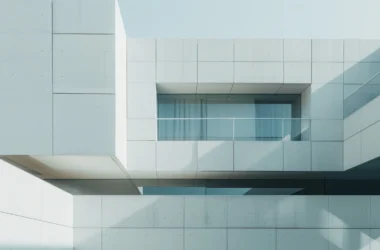
The architectural dialogue extends beyond the walls, reaching upward to a second-floor terrace nestled among the metallic “peaks.” From this vantage point, visitors experience a moment of retreat, standing within a synthetic mountain range while looking out over the urban fabric of China. This interplay of transparency and solidity, of the “negative space” of the mountain entrance and the “positive” mass of the terrace, showcases Wutopia Lab’s ability to create ethereal urban interventions that feel both weightless and grounded in history. Every detail, down to the V-shaped panels used to unify the complex corner junctions of the facade, speaks to a rigor that elevates the project from a simple renovation to a piece of “super intertextuality.”

In reimagining urban renewal, Verdant Ridges stands as a testament to the power of storytelling in the built environment. Wutopia Lab has not just delivered a theater; they have crafted a space where the accidental textures of contemporary construction sit comfortably alongside the refined symbolism of the past. Much like their Emerald Screen Pergola in Wuxi, the project demonstrates that modern architecture can be a vessel for cultural memory without being a slave to it. As Yu Ting suggests, the theater is an “open-ended conclusion”—a vibrant, living landscape that proves that to truly see a building, one must understand not just what it has, but what it represents.