


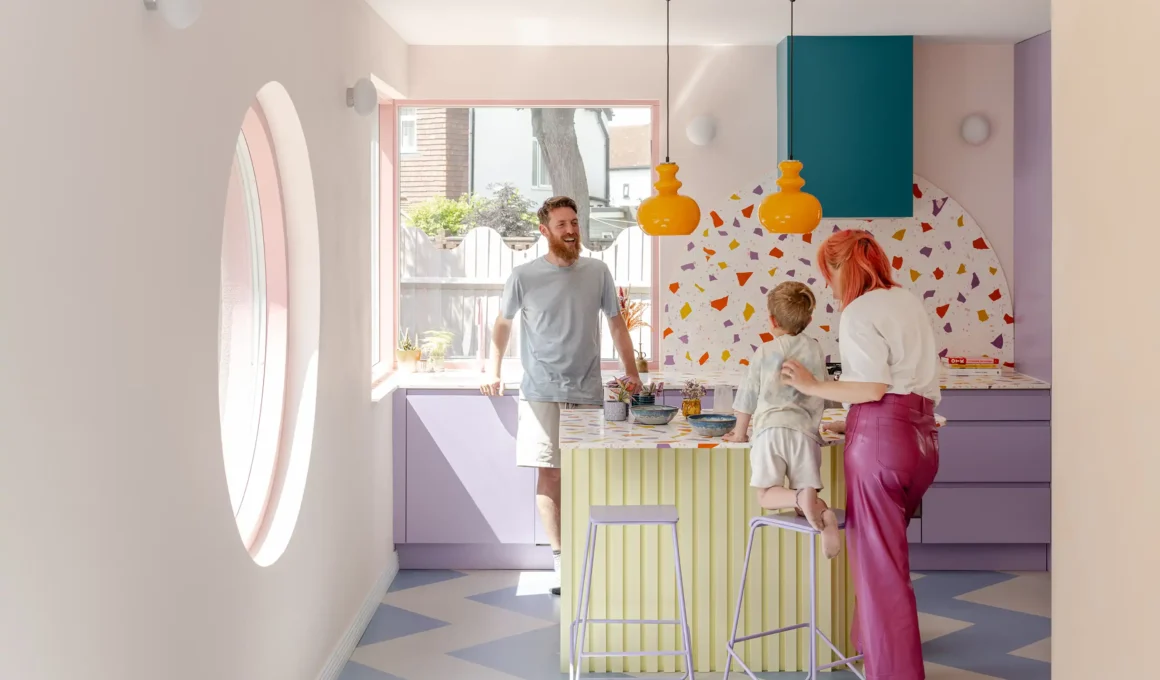
The global shift from austere minimalism to bold, colorful interiors marks a definitive turning point in contemporary urban design. For over a decade, the design world lived under the undisputed reign of minimalism, celebrating “Millennial Gray” and neutral palettes that promised order in a chaotic world. But as we move through 2026, we are witnessing a radical U-turn where metropolitan apartments—increasingly smaller and more expensive—become theaters for Post-minimalism and maximalist expression. This isn’t just an aesthetic shift; it is a psychological rebellion and an architectural necessity, acting as a “counterweight” to digital noise through what we call Analog Architecture.
Tine Loncin Brings Romanian Folk Art and Modernist Lines Together in Brussels Apartment
Understanding the psychological roots of this movement reveals a post-pandemic collective desire for joy and emotional resilience. After years of staring at beige walls, the urge to surround ourselves with vibrant colors and meaningful objects has evolved into a form of self-care. This has fueled the joyful, expressive spaces of the Dopamine Decor phenomenon: a design philosophy where every choice is intended to trigger the brain’s reward system. As noted in research regarding the psychology of color, these choices help enhance emotional well-being and provide a sense of control over one’s environment, creating an unmediated identity within the home.
Midori Arquitectura Uses “Vibrant Satellites” of Color to Organize 30-Square-Metre Madrid Attic
Modern maximalism draws its provocative energy from the radical foundations of the Memphis Group and 1980s Postmodernism. Contemporary design is rediscovering the “mischievous and irreverent” attitude of Ettore Sottsass, mixing impossible geometries with industrial materials like plastic laminate. This maximalist interior design of 2026 is a “curated abundance” that juxtaposes antique treasures with contemporary silhouettes. By looking at the Memphis Group legacy, we see a shift toward artisanal craftsmanship and tactile materials that ensure longevity over mass-produced industrial design.
Innovative structural solutions like “Soft Architecture” are transforming cramped urban units into flexible, multifunctional sanctuaries. As urban living spaces shrink, the Glass Block Revivalhas emerged as a key trend to define distinct zones—such as in the(https://www.urdesignmag.com/lisbon-barao-sabrosa-apartment-aurora-arquitectos-gaioleiro-renovation/) renovation—while letting natural light flow and ensuring privacy. Similarly, the curtain as a room divider has evolved into a central architectural element, eliminating the “swing radius” of traditional doors to optimize floor space utilization. These solutions allow for dynamic zoning, transforming a home from an open-plan living area to a private sanctuary in seconds.
ZYVA Studio Designs “Underwater Stage” for 40-Square-Metre Apartment in Marseille
Bespoke wooden modules and tailored furniture represent the new frontier of urban spatial efficiency. The concept of Bespoke Architecture, exemplified by the(https://www.urdesignmag.com/tiny-grandeur-a-small-apartment-by-llabb-reflecting-genoas-historic-essence/) project in Genoa, uses multifunctional okoumé plywood modules to integrate staircases, storage, and sleeping zones into a single sculptural volume. These custom furniture solutions allow for the meticulous optimization of every available inch, ensuring that multifaceted functionality meets personalized aesthetics. By utilizing vertical space and modular systems, designers are creating a sense of vastness even within micro-living constraints.
In a hyper-competitive real estate market, atypical design serves as a significant economic asset that increases property value. Research confirms that “good design” is often atypical and region-identifying, which are powerful tools for urban revitalization and investment growth.Furthermore, the socio-economic benefits of high-quality urban design include improved returns on investment and increased workforce productivity. Occupants are increasingly investing in living room-bedroom combo ideas to maximize their investment and reduce social exclusion.
40sqm Living: GON Architects’ Madrid Apartment Transformation
The return to color and character signifies a new spatial humanism where homes once again reflect the soul of the inhabitant. We have realized that neutrality is not a synonym for elegance, and that emptiness does not always equate to freedom. The future of living is a conversation between history and modernity, creating spaces that are not just photogenic, but vibrant to live in. Ultimately, the current U-turn in design is about reclaiming the emotional connection between people and the spaces they inhabit.