


The architectural identity of the Spanish hinterland is often defined by a silent, crumbling heritage of “emptied” villages. In Casas de Pradas, a tiny enclave of 84 residents near Valencia, CRUX Arquitectos has completed Casa Felipa, a project that navigates the tension between rural preservation and the urgent need for contemporary habitation. The original structure—an impossibly narrow dwelling once shared by the matriarch Felipa with her livestock—had become a dissolving relic of a bygone agrarian era. Rather than opting for a sentimental restoration, the architects have treated the ruin as a structural palimpsest, stripping the building back to its masonry essence to re-establish a dialogue between the landscape and its inhabitants.
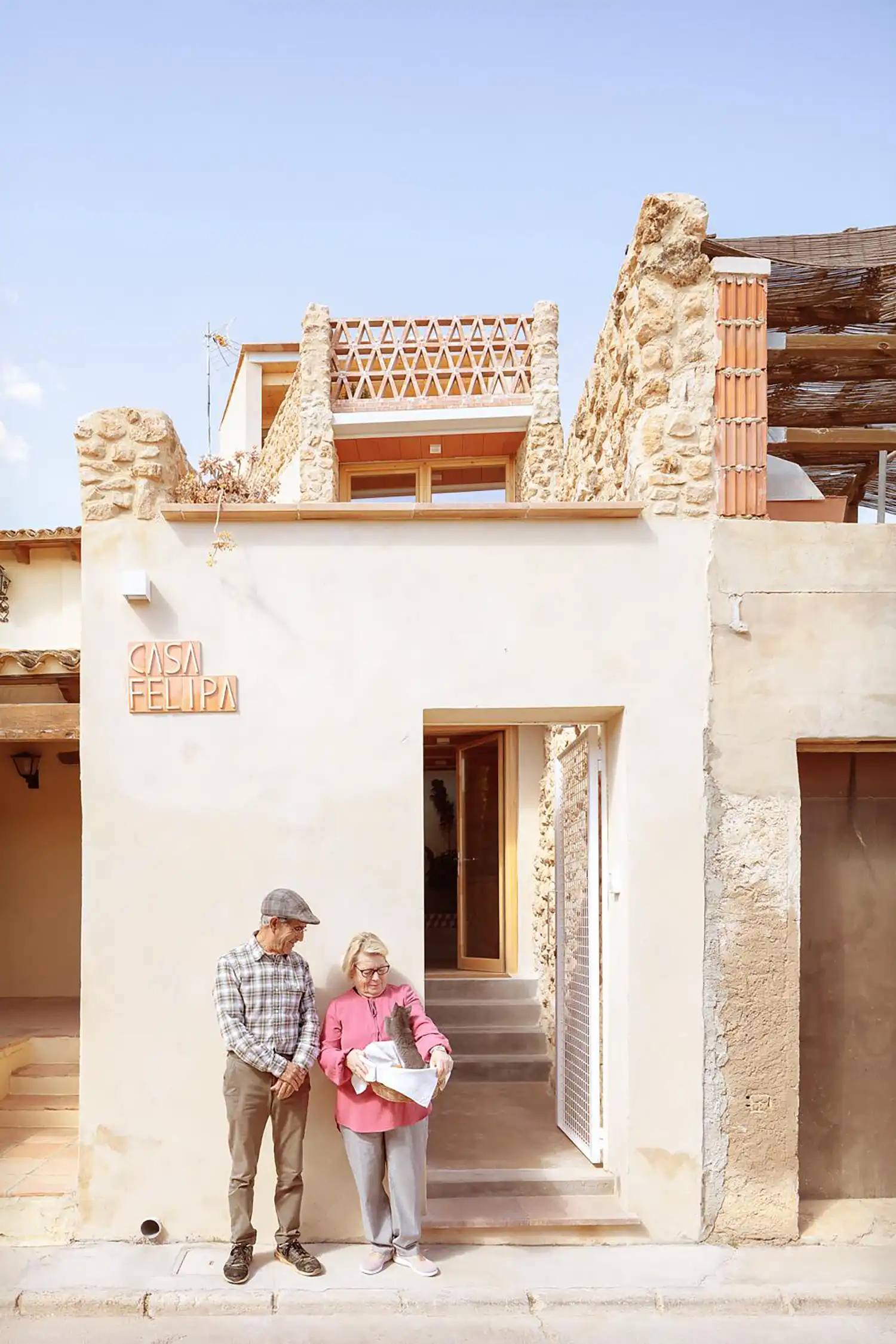
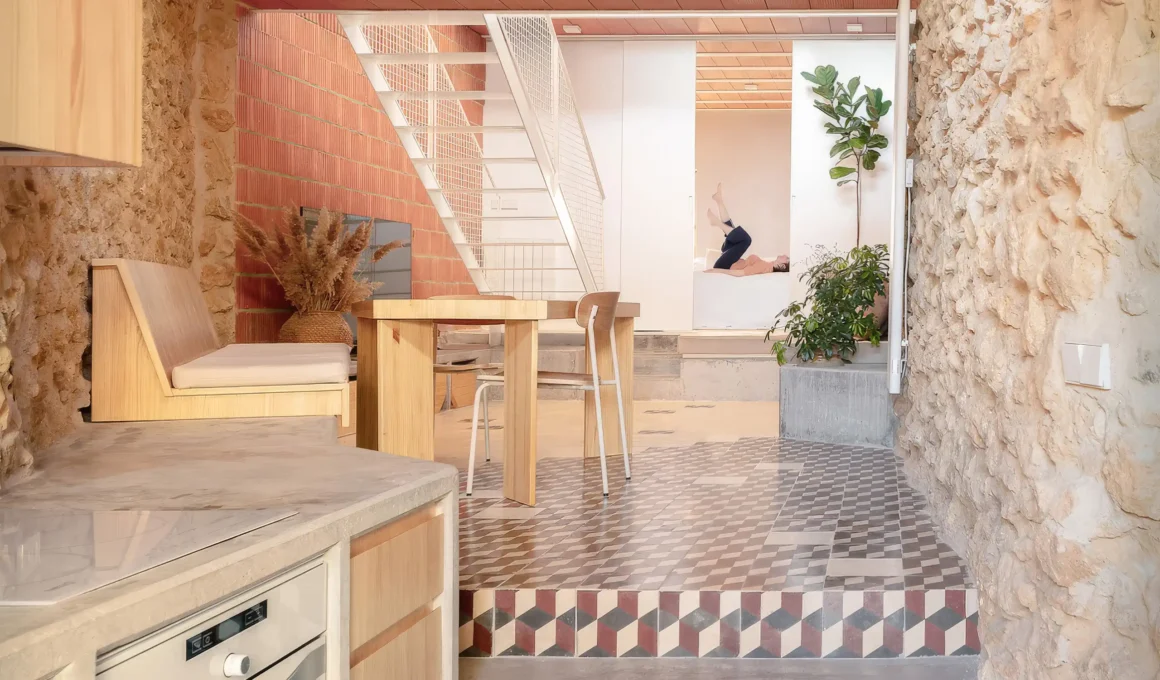
A structural resurrection defines the subsequent logic of the project, where the architects opted to hollow out the interior entirely. By removing failing partitions and floors, they revealed the raw, honest stone shell of the party walls and facade. This void was then reinforced with a new ceramic-block skin, tied together by a dramatic, inclined timber roof that lifts toward the sky like a brimmed hat. This architectural gesture is functional as much as it is poetic; it invites the high Iberian sun to wash over the interior, transforming what was once a dark, cramped dwelling into a vessel of light and air that feels deeply connected to the Mediterranean landscape.
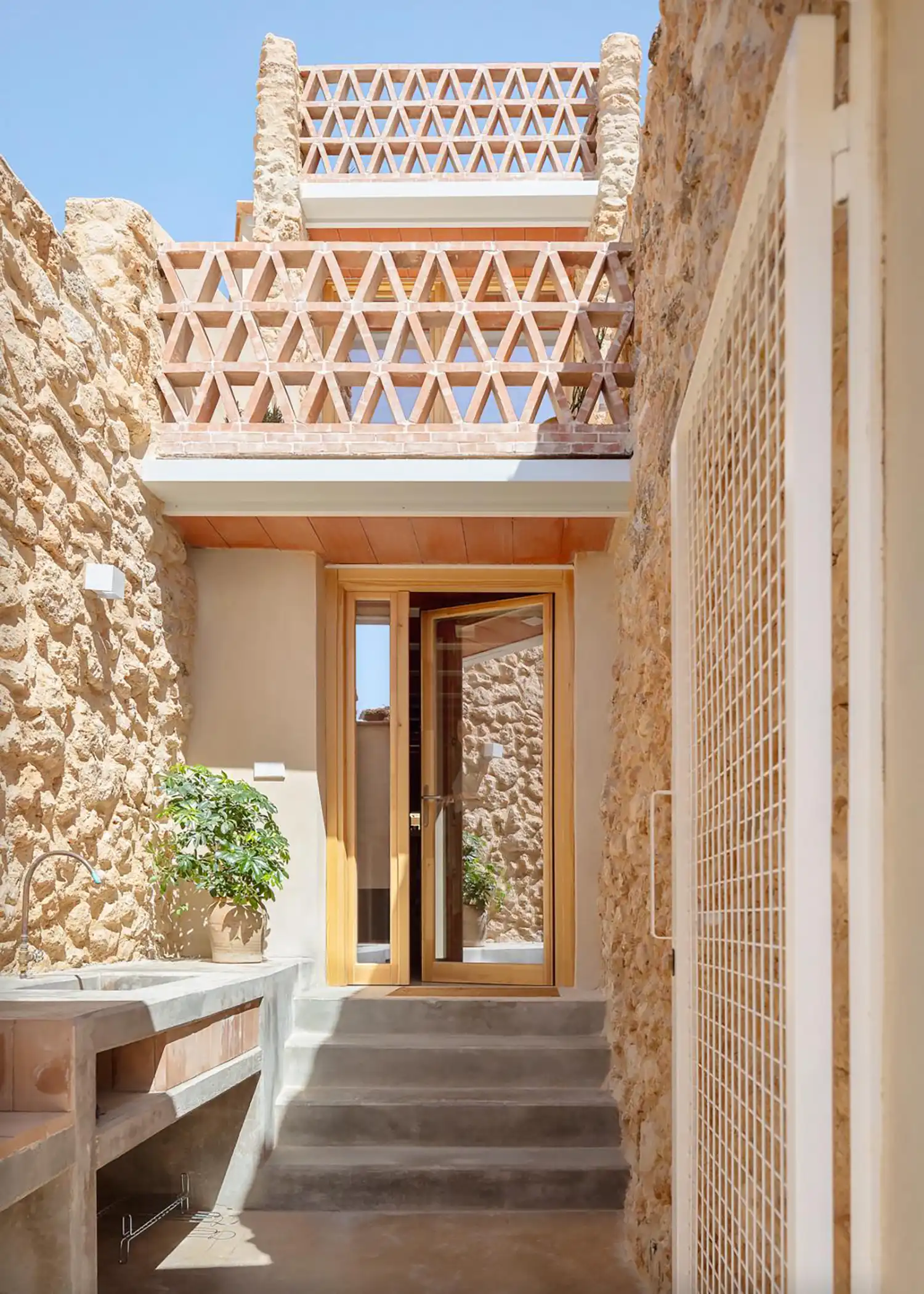
The sensory palette of Casa Felipa eschews the polished uniformity of modern catalogs in favor of a “living inventory.” In the rural context of Spain, luxury is redefined as the endurance of local materials: the roughness of the stone, the warmth of the wood, and the thermal mass of the ceramic. Every texture serves as a genealogical layer, allowing the inhabitants to read the history of the site through their fingertips. This commitment to materiality mirrors other contemporary Spanish interventions that prioritize local craftsmanship, such as this self-built timber home in the Pyrenees, which similarly explores the relationship between the built environment and its natural surroundings.
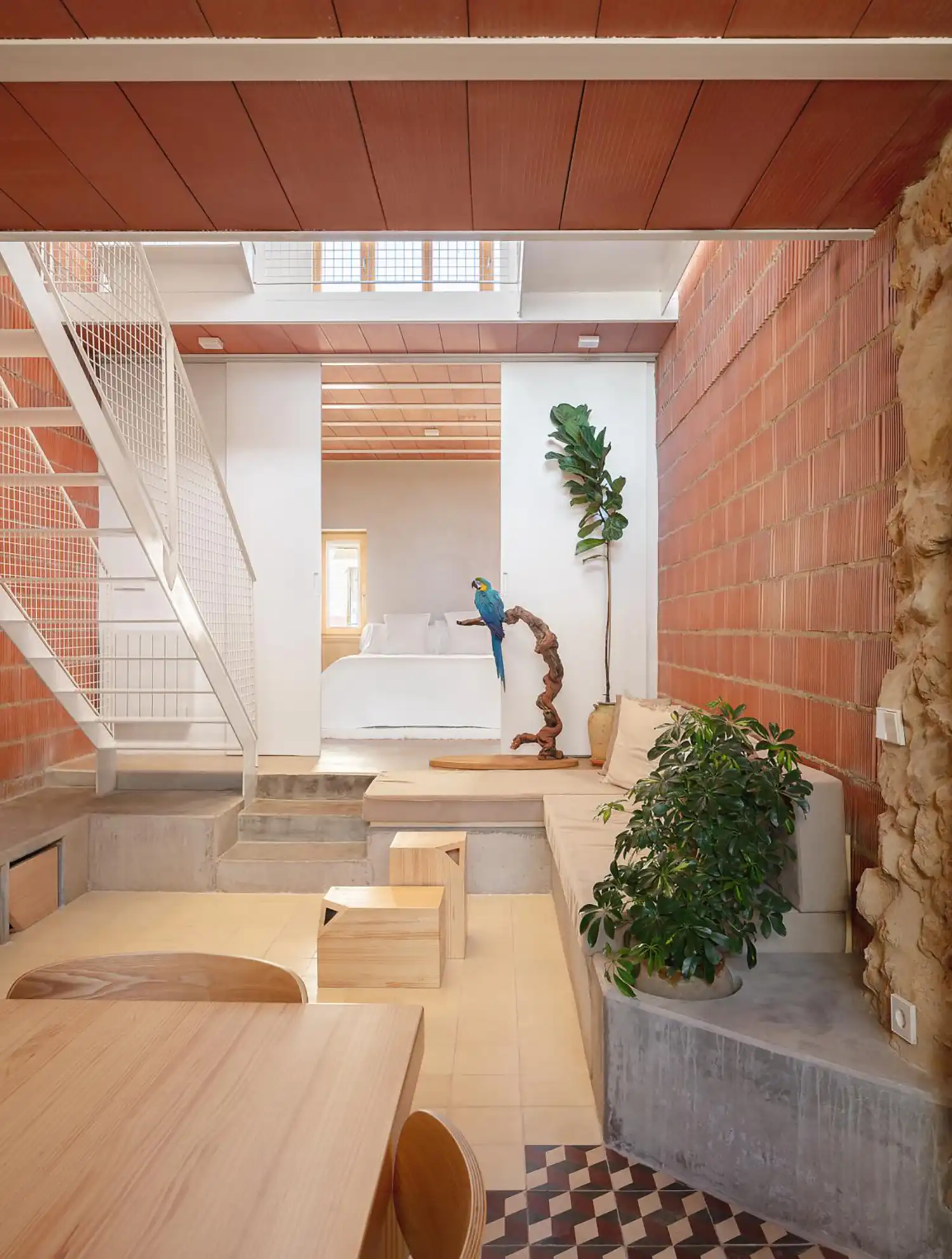
Domestic engineering at a micro-scale ensures that the home remains functional despite its narrow footprint. Crux Arquitectos designed custom modular furniture—trapezoidal tables, stools, and sofa beds—that act as extensions of the architecture itself. These pieces allow the floor plan to remain fluid, adapting to the needs of modern self-care and social gathering while respecting the home’s original proportions. This intelligent use of limited space is a recurring theme in the evolution of Spanish interiors, reminiscent of how innovative apartment renovations in Madrid maximize utility without sacrificing the soul of the dwelling.
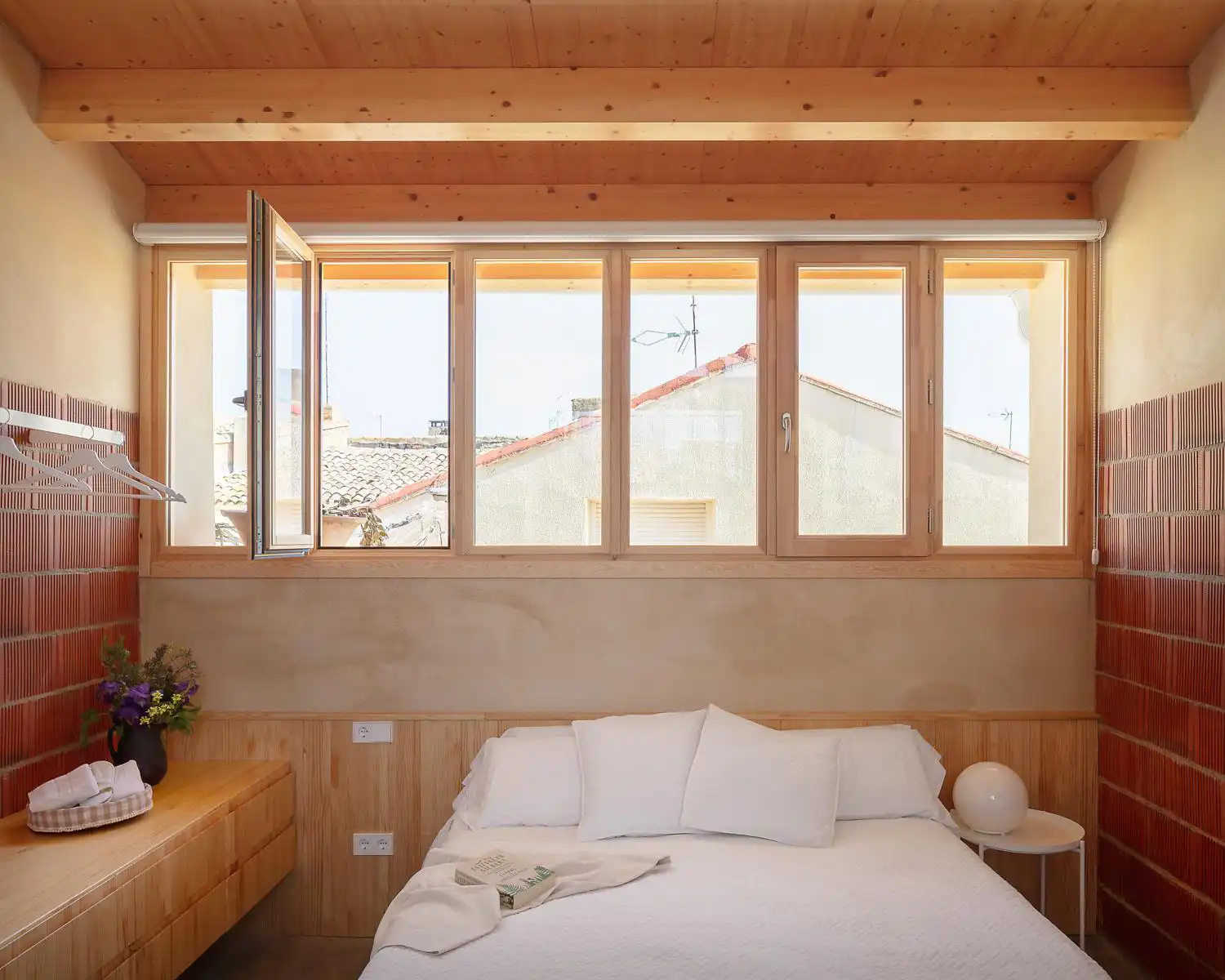
The topographic journey through the house begins at the lower street level, leading through a newly carved courtyard that acts as a thermal buffer and a private sanctuary. From here, the interior unfolds as a series of light platforms and connecting walkways that hover within the stone shell. This vertical promenade creates varied “places for pause,” where the boundary between the domestic interior and the rugged exterior is intentionally blurred. Such a focus on the emotional and atmospheric qualities of architecture allows Casa Felipa to transcend its role as mere shelter, becoming an experiential bridge between the past and the present.
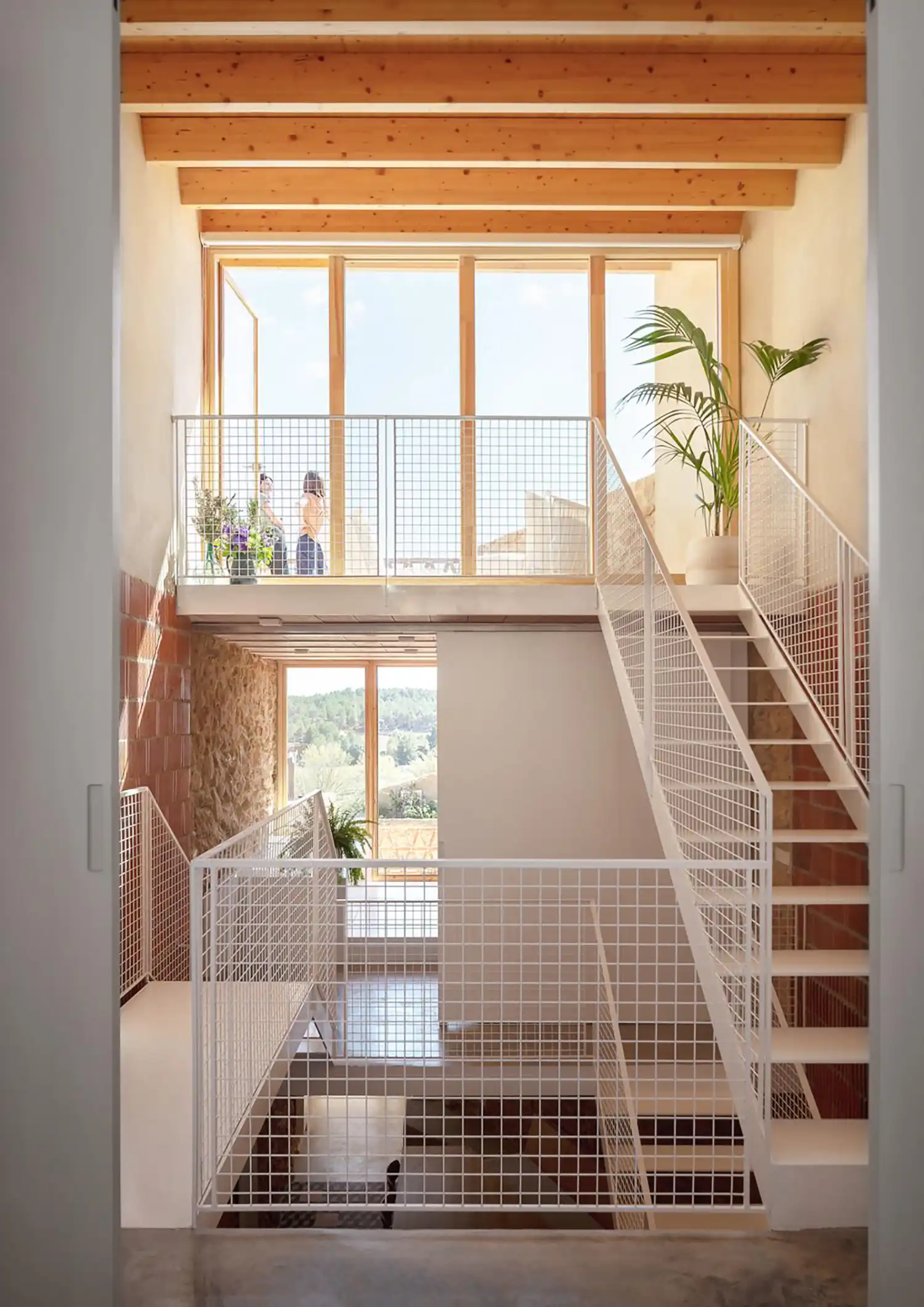
A return to the landscape is finally realized at the upper terrace, the culmination of the home’s internal path. Here, elevated above the village rooftops, the gaze is directed toward the misty sunrises and lilac sunsets of the Valencia region. Casa Felipa stands as a testament to the idea that rural revitalization does not require the imposition of urban tropes, but rather a listening to the stories already embedded in the walls. By reimagining Felipa’s legacy, the project provides a blueprint for how we might return to the countryside—not as tourists, but as participants in a living, breathing culture.