



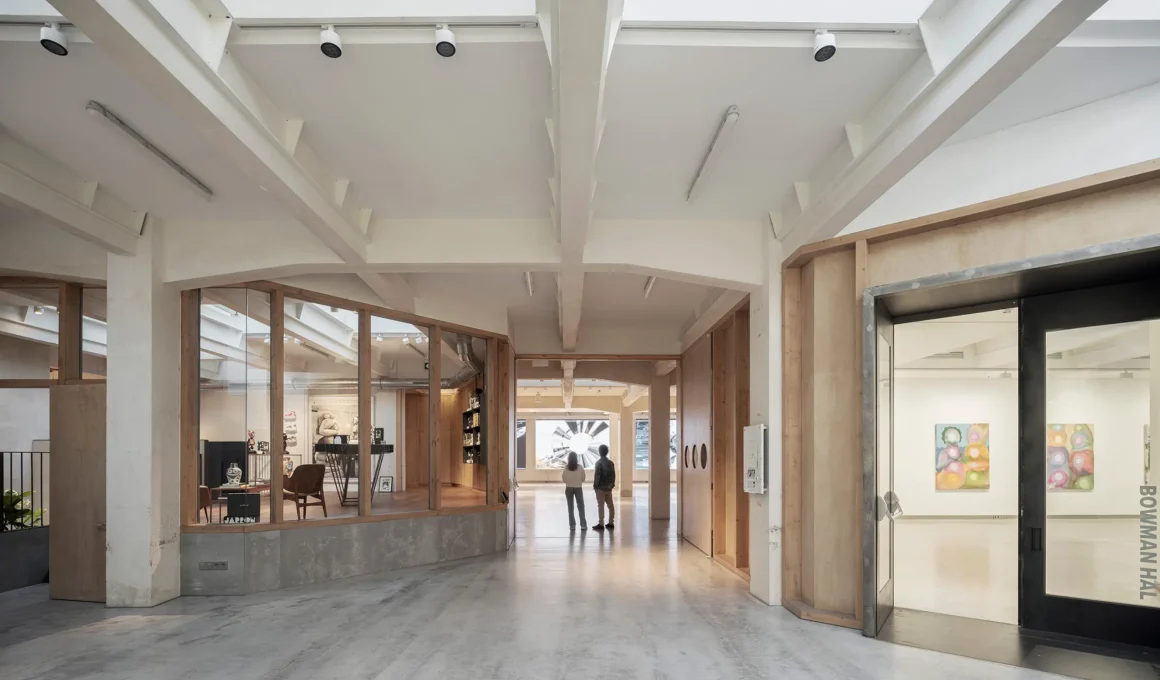
The transformation of a former industrial warehouse into SOLO CSV by estudio Herreros marks a significant evolution in Madrid’s cultural landscape, creating a 4,000-square-metre center for artistic experimentation near the Cuesta de San Vicente. This ambitious adaptive reuse project serves as a sophisticated urban machine, blending raw concrete structures with meticulously crafted timber and steel interventions to foster a new peripheral gravitational center for the city’s creative community.
A shifting urban spine. The heart of the project is defined by a public circulation loop that defies the traditional constraints of an interior corridor. Moving through the two-story volume, this spine mimics the unpredictable energy of a Mediterranean street—expanding into generous plazas for spontaneous encounters and contracting into intimate passages for quiet contemplation. The sensory experience is dictated by this rhythmic compression, where the scent of fresh timber meets the cool, tactile neutrality of stone-like terrazzo, guiding visitors through a space that feels both intentionally designed and delightfully indeterminate.
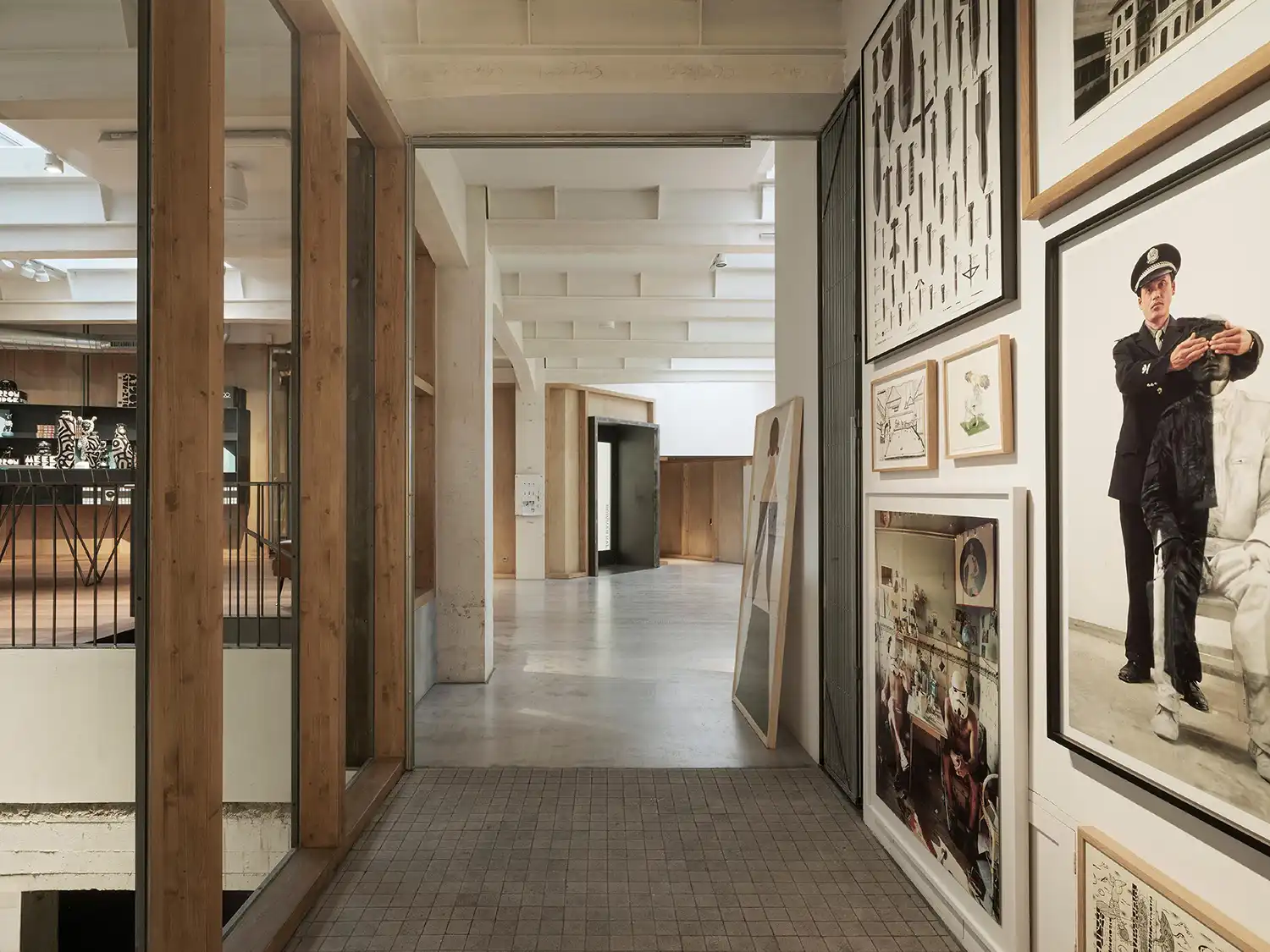
The institutional core. Organized with clinical precision, the layout is anchored by “The Institutions,” a series of large-scale volumes that activate the building’s original concrete skeleton. The Agora provides a monumental gathering space for 400 people, while the Greenhouse—a technical marvel of glass and metal—is inserted like a transparent jewel within the rugged industrial shell. Below, in the basement, the Museum offers a starkly different atmosphere: a dark, columned hall where the building’s structural weight becomes a backdrop for immersive art, highlighting the tension between the original heavy masonry and the lightness of the new insertions.
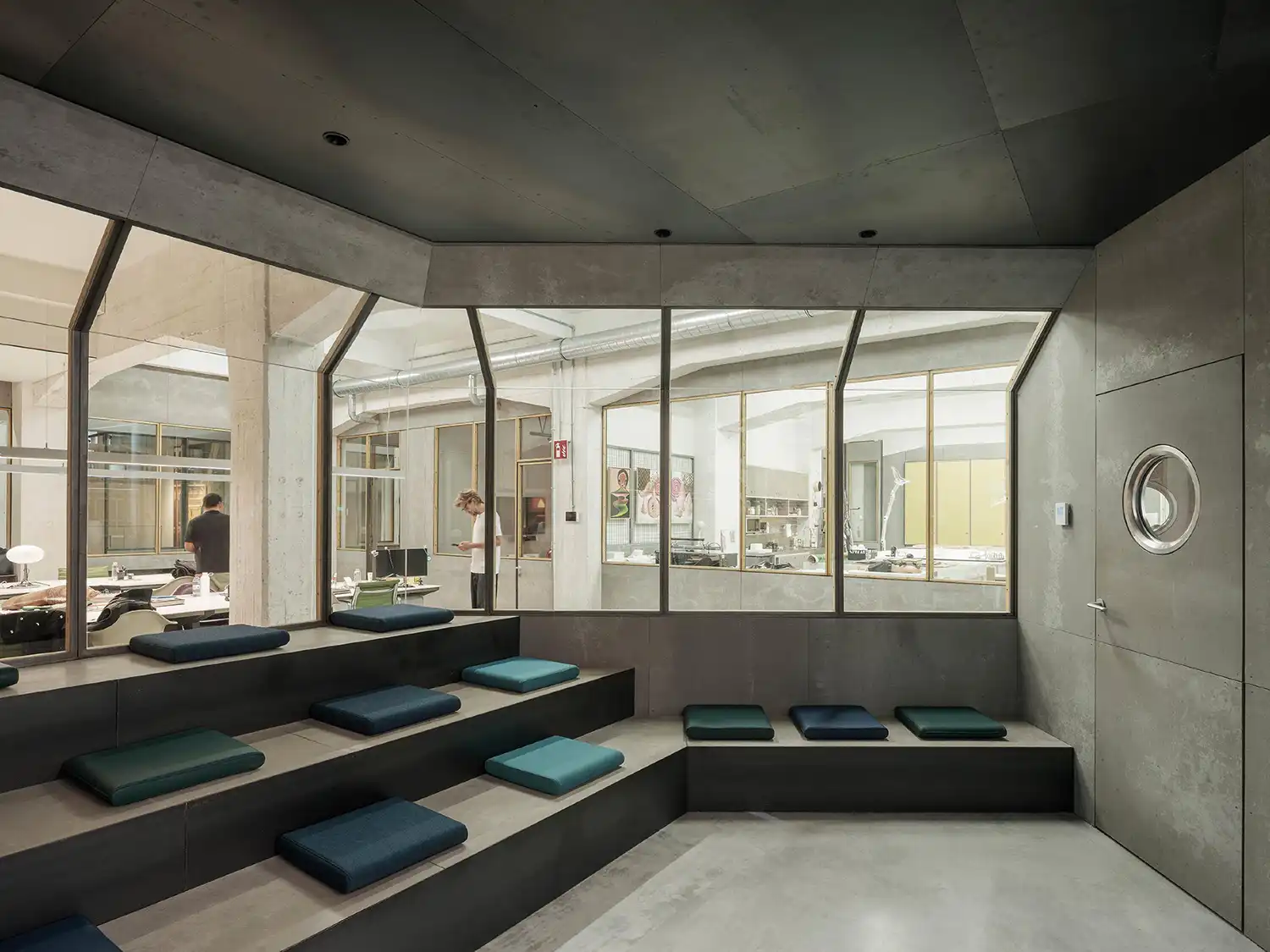
Laboratories of urban culture. Scattered along the circulation loop are “The Cabinets,” a collection of small-scale architectural manifestos that function as independent experiments in materiality and program. These micro-spaces—ranging from vinyl archives and cinema studios to a kiosk and a haunt—reflect the intensive, multifaceted nature of contemporary street life. Each cabinet is visibly constructed, celebrating the joinery of steel plates and recycled cement panels, acting as a functional bridge between the grand scale of the institution and the granular needs of the individual creator.
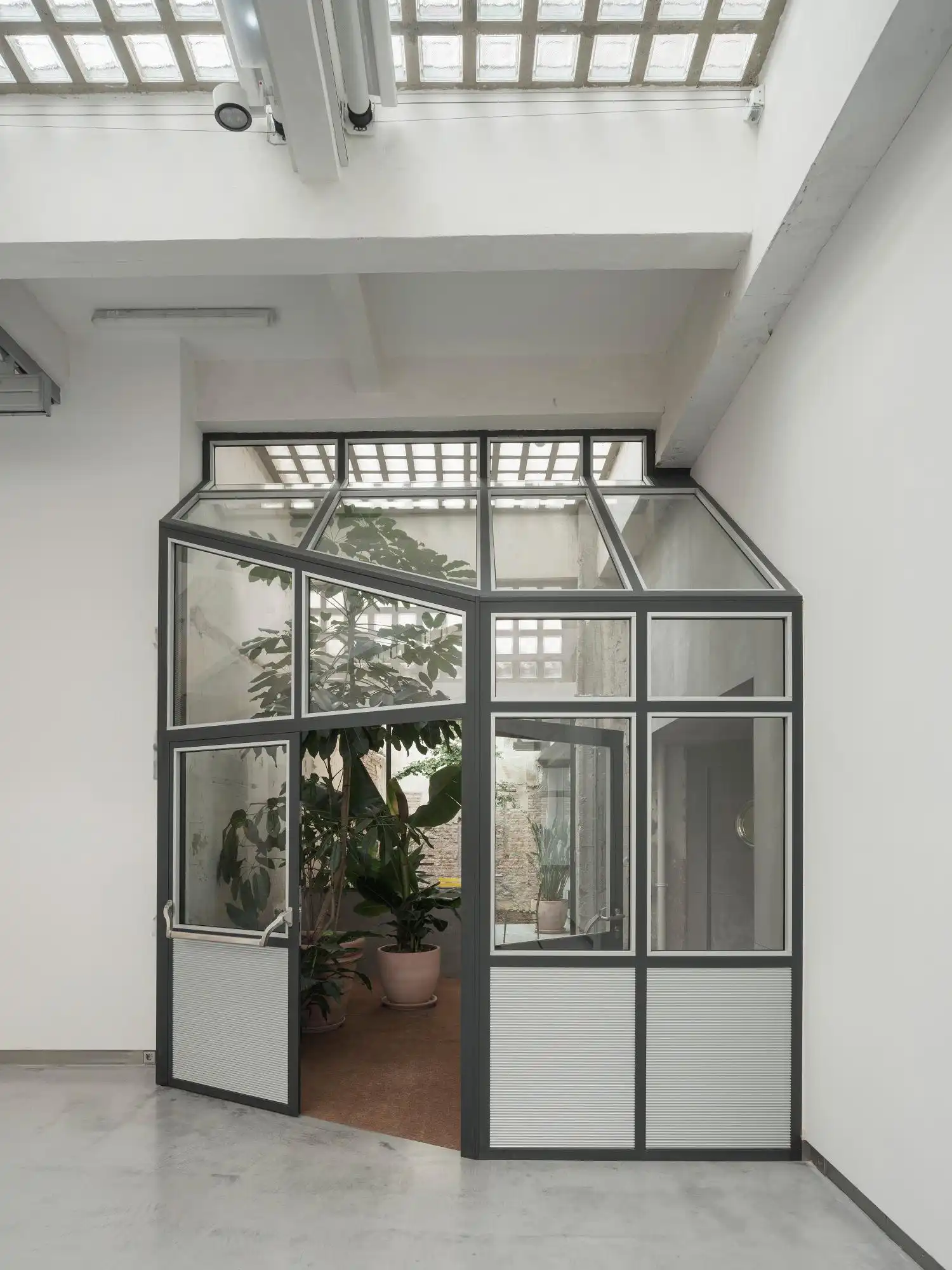
The craftsmanship of the technical. While the aesthetic leans toward the industrial, the soul of SOLO CSV is found in its manual execution. The project serves as a rare testament to the knowledge of local artisans who worked alongside technicians to realize complex steel angles and bespoke timber finishings. This “industrial-craft” palette prioritizes environmentally conscious resources, ensuring that the intervention is not merely an aesthetic layer but a sustainable dialogue with the existing fabric. It is a work of high-level coordination where the “back-of-house” facilities—the kitchens, server rooms, and packing areas—are integrated with the same rigour as the public galleries.
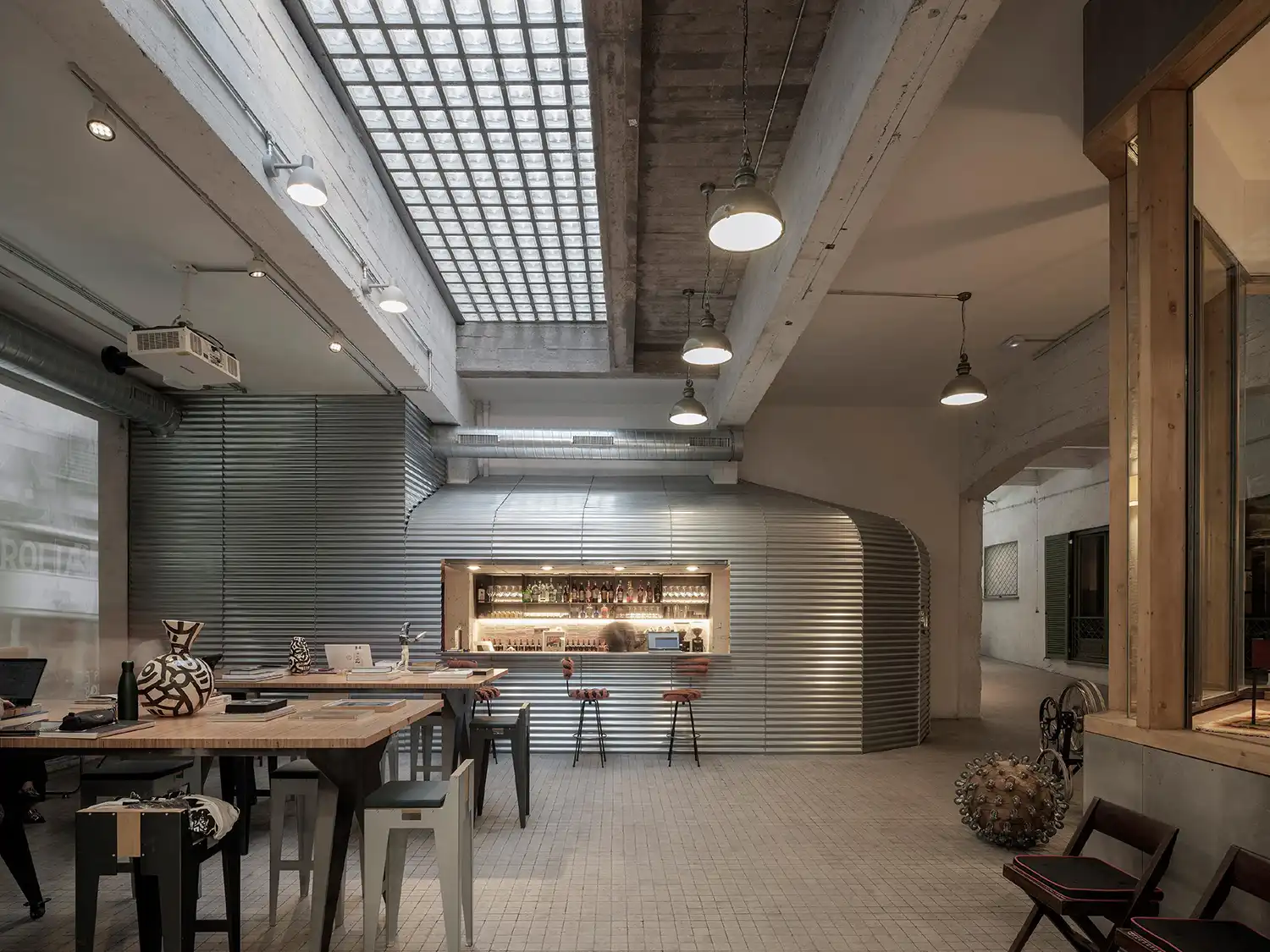
A new cultural geography. Strategically located between Plaza de España and the historic Príncipe Pío station, the project intentionally avoids the polished art circuits of the city center. By occupying an unassuming façade within a humble neighborhood descending toward the river, estudioHerreros reinforces a growing global trend: the revitalisation of the urban periphery. The building does not shout its presence to the street; instead, it invites the city inside, blurring the boundary between the public realm and the private institution through its porous, street-like interior.
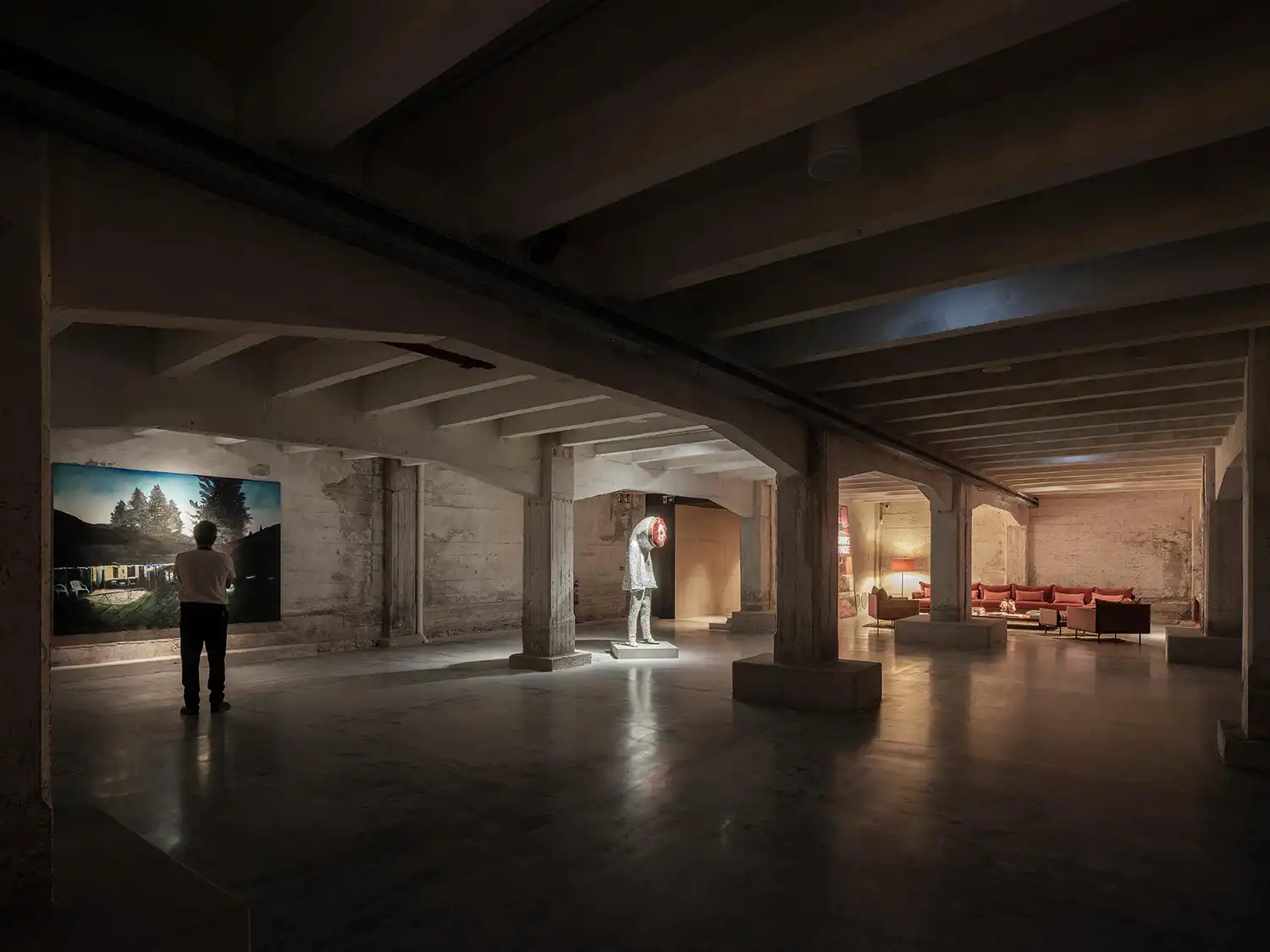
Evolution of the Madrid museum. This project follows the success of the first SOLO venue completed in 2017, further establishing the studio’s expertise in converting neglected structures into vibrant hubs. This approach to urban renewal is becoming a hallmark of the city’s modern identity, echoing other recent interventions that seek to balance heritage with high-tech performance. Such developments are crucial for a city that continues to reinvent its industrial past into a future-facing cultural network.
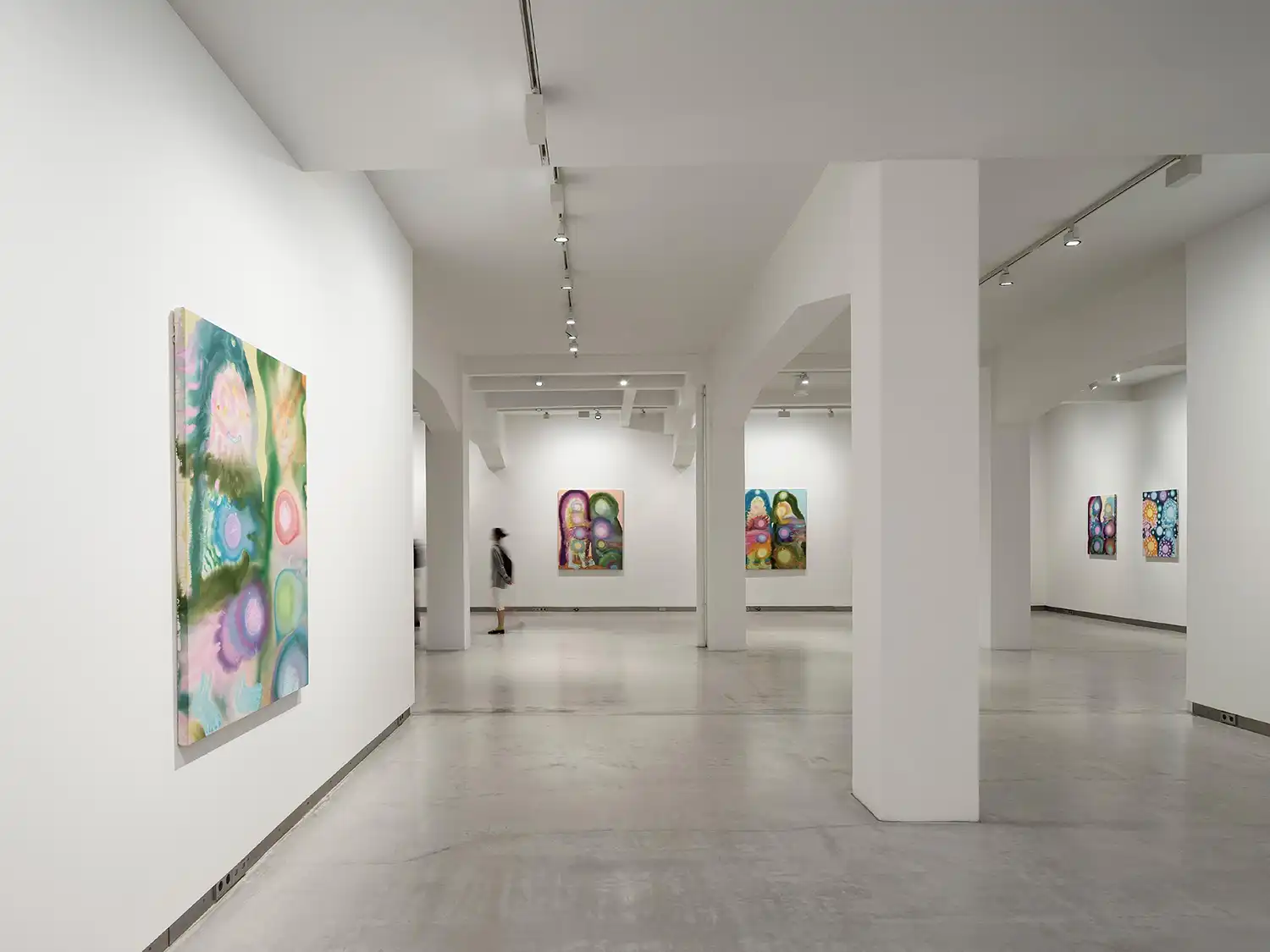
The future of artistic containers. As Madrid continues to expand its creative infrastructure, the focus has shifted toward high-performance, translucent volumes that interact with their surroundings. This trajectory is evident in upcoming projects like the translucent ETFE EMT Museum in Madrid, which similarly explores the potential of light-filled, adaptable spaces for public engagement. By prioritizing flexibility and material honesty, SOLO CSV stands as a definitive model for how the city can breathe new life into its historic bones without losing the grit that makes its urban fabric so compelling.