



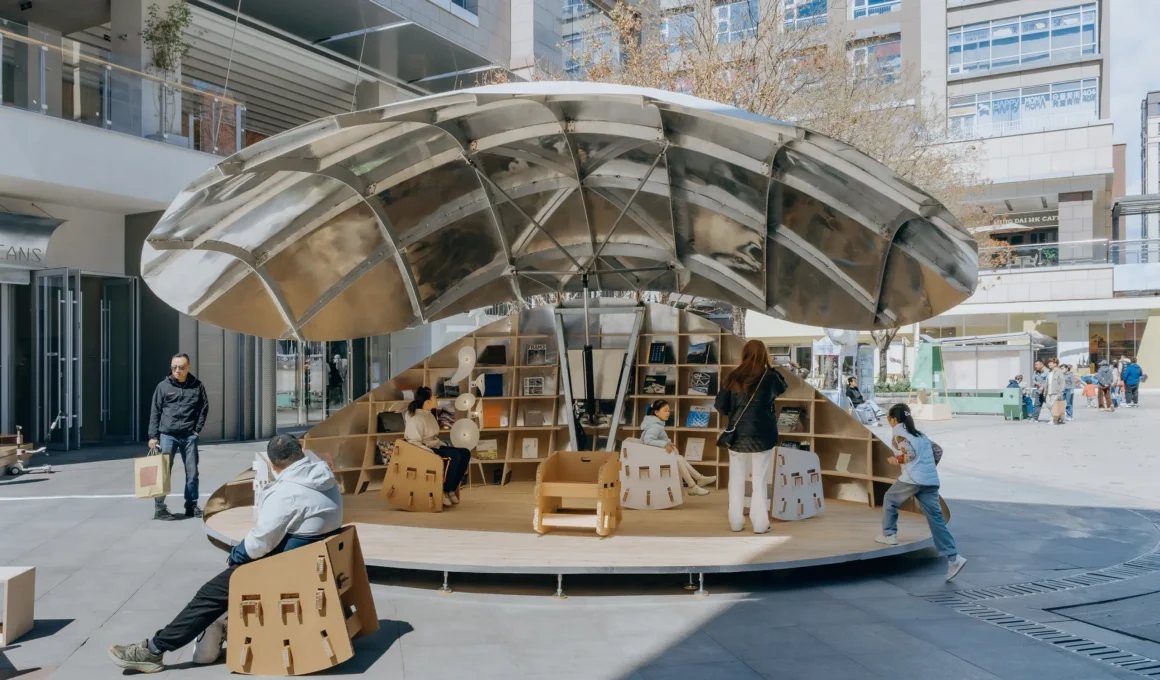
LUO studio has introduced the Shell Book Pavilion to the Fountain Plaza of Shine Hills in Beijing, a kinetic community hub that redefines the relationship between public infrastructure and social interaction through a transformative, shell-like envelope.
A kinetic response to community life. The genesis of the project lies in the designer’s personal history with the site—a bustling commercial plaza in the Shunyi District. Recognizing the area’s inherent openness to families and children, the goal was to avoid the static nature of traditional kiosks. Instead, the pavilion functions as a living organism within the urban fabric, designed to facilitate reading, lingering, and spontaneous encounters without imposing a rigid back or front to the surrounding pedestrian flow.
The morphology of playfulness. To maintain a 360-degree presence, the studio moved away from the conventional “box” typology. The resulting form is driven by a vertical opening system that allows the structure to shift through a spectrum of spatial configurations. When fully retracted, the operable roof unfolds like a stage, inviting the community into its core; when partially closed, it offers a sheltered environment for focused reading. This fluidity ensures the pavilion remains an active participant in the plaza’s daily rhythm.
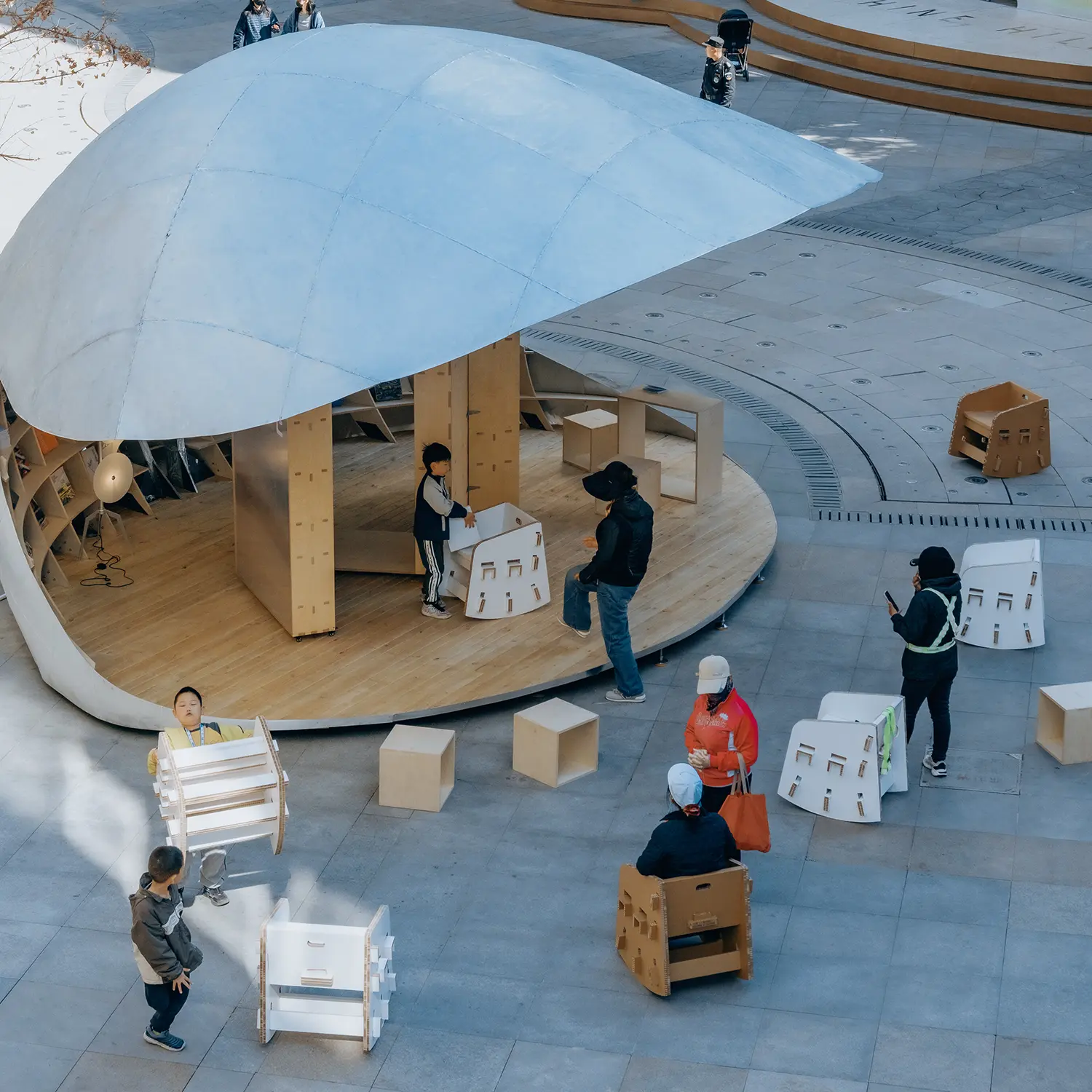
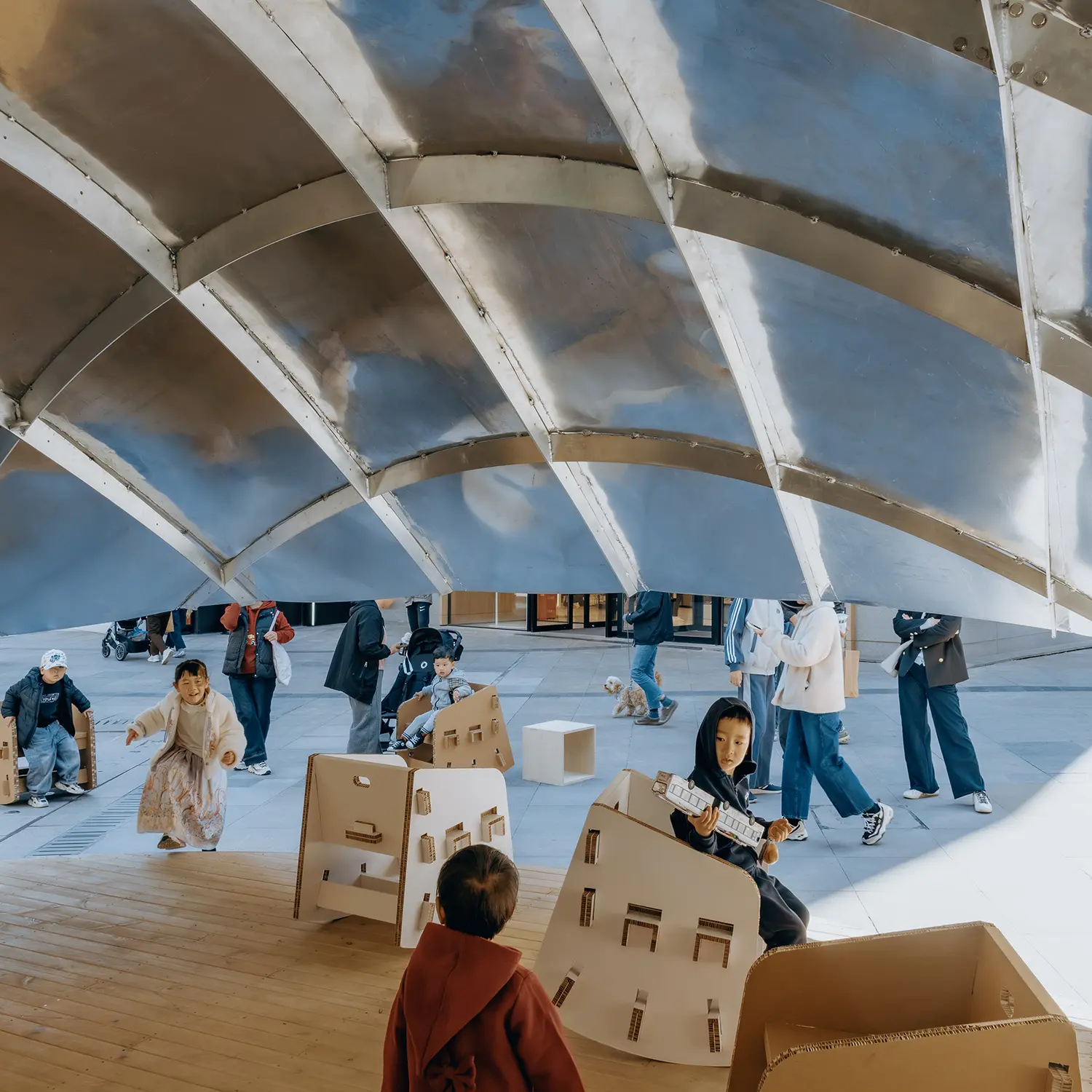
Aerospace precision and tactile warmth. While its appearance suggests the lightness of a temporary installation, the pavilion is built with rigorous architectural scale and technical complexity. Spanning over 40 square meters when open, the structure utilizes a frame of aerospace-grade aluminum to ensure long-term durability and safety during its repeated opening cycles. This industrial skeleton is softened by the integration of timber elements, creating an interior atmosphere that balances structural reliability with the sensory warmth required for a library setting.
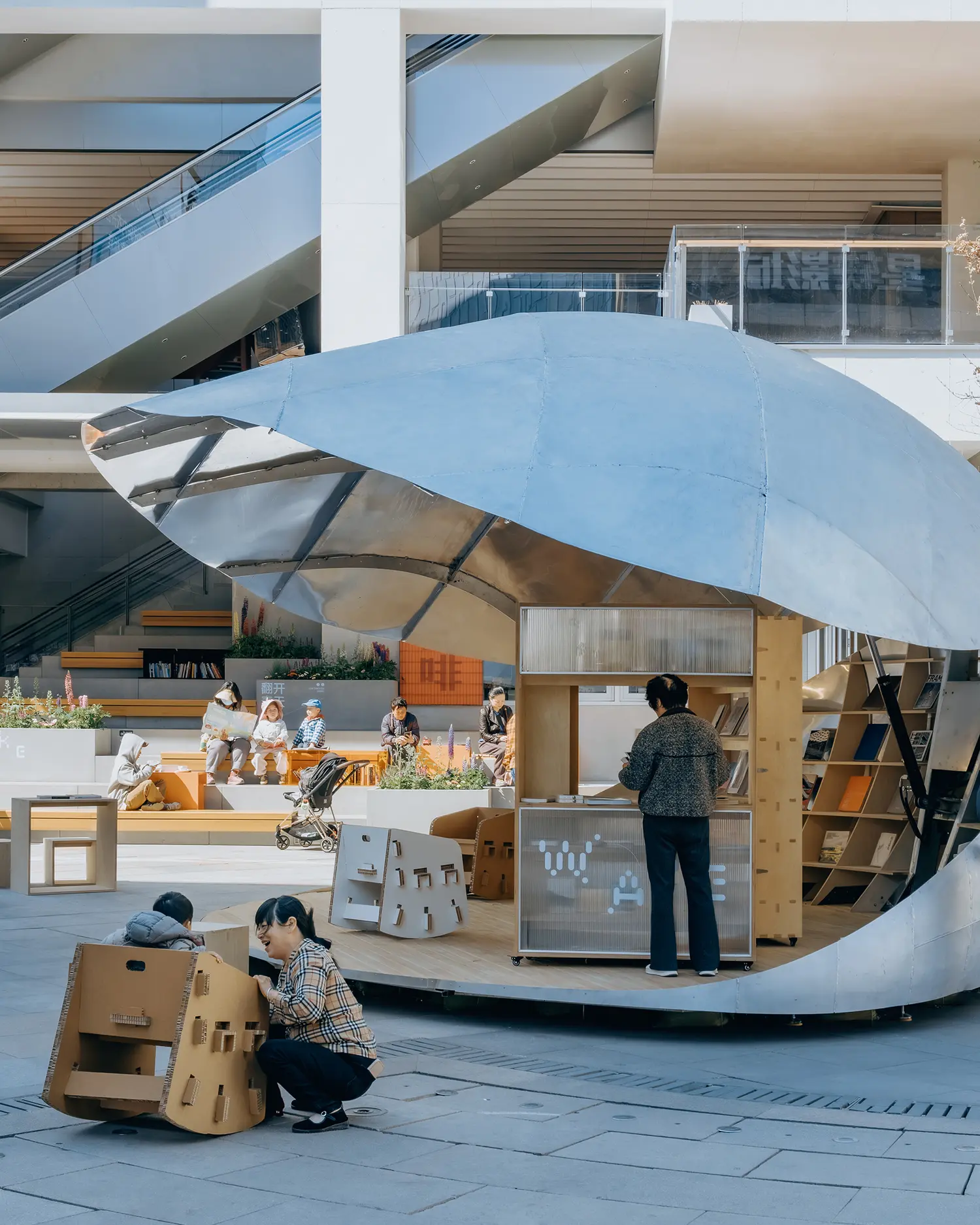
The choreography of ceremony. The transformation of the space is not merely functional but performative. During organized reading sessions, the mechanical transition—facilitated by specialized bearing-supported systems—becomes part of the event itself. A speaker may begin enclosed within the shell, only to be slowly revealed as the roof ascends. This spatial evolution lends a sense of ceremony to community gatherings, turning the act of opening the library into a public ritual that signals the start of shared activity.
Engineering against the clock. The realization of the Shell Book Pavilion was a feat of rapid digital fabrication and on-site ingenuity. The entire process, from design to final assembly, was compressed into a 20-day window. Working exclusively during nighttime hours to avoid disrupting the commercial plaza, the team navigated significant topographical challenges, including an 18-centimeter elevation variance across the site. This required meticulous on-site calibration to ensure the mechanical alignment remained precise.
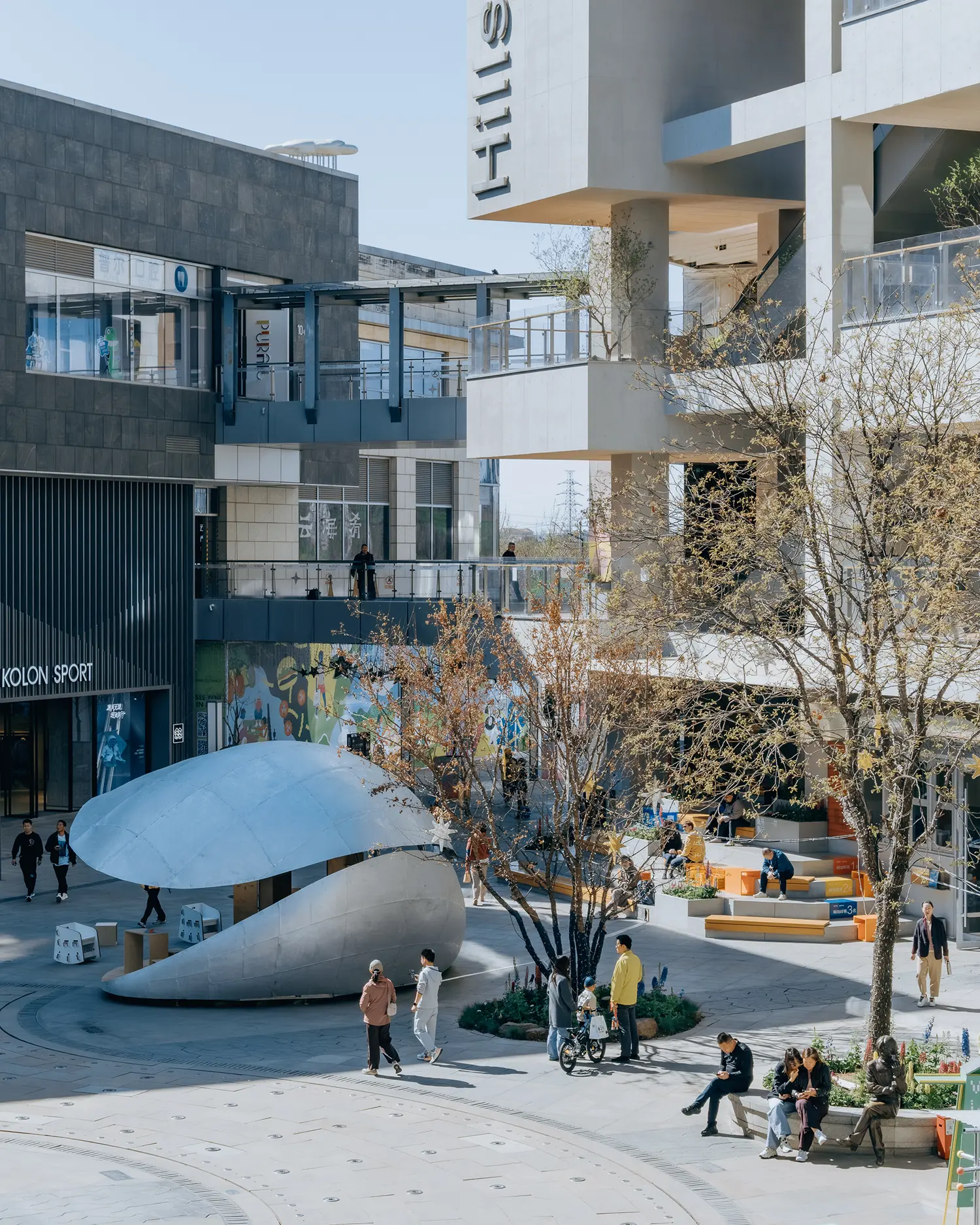
Craftsmanship and metalworking. Beyond its conceptual depth, the pavilion serves as a showcase of diverse metalworking processes. The assembly involved a sophisticated combination of CNC machining, forging, and lathe work to create a seamless movement mechanism. By integrating these high-precision components with the organic logic of the shell, the studio managed to create a structure that feels both technologically advanced and deeply connected to the human scale, providing a height range that comfortably accommodates a variety of community-oriented activities.
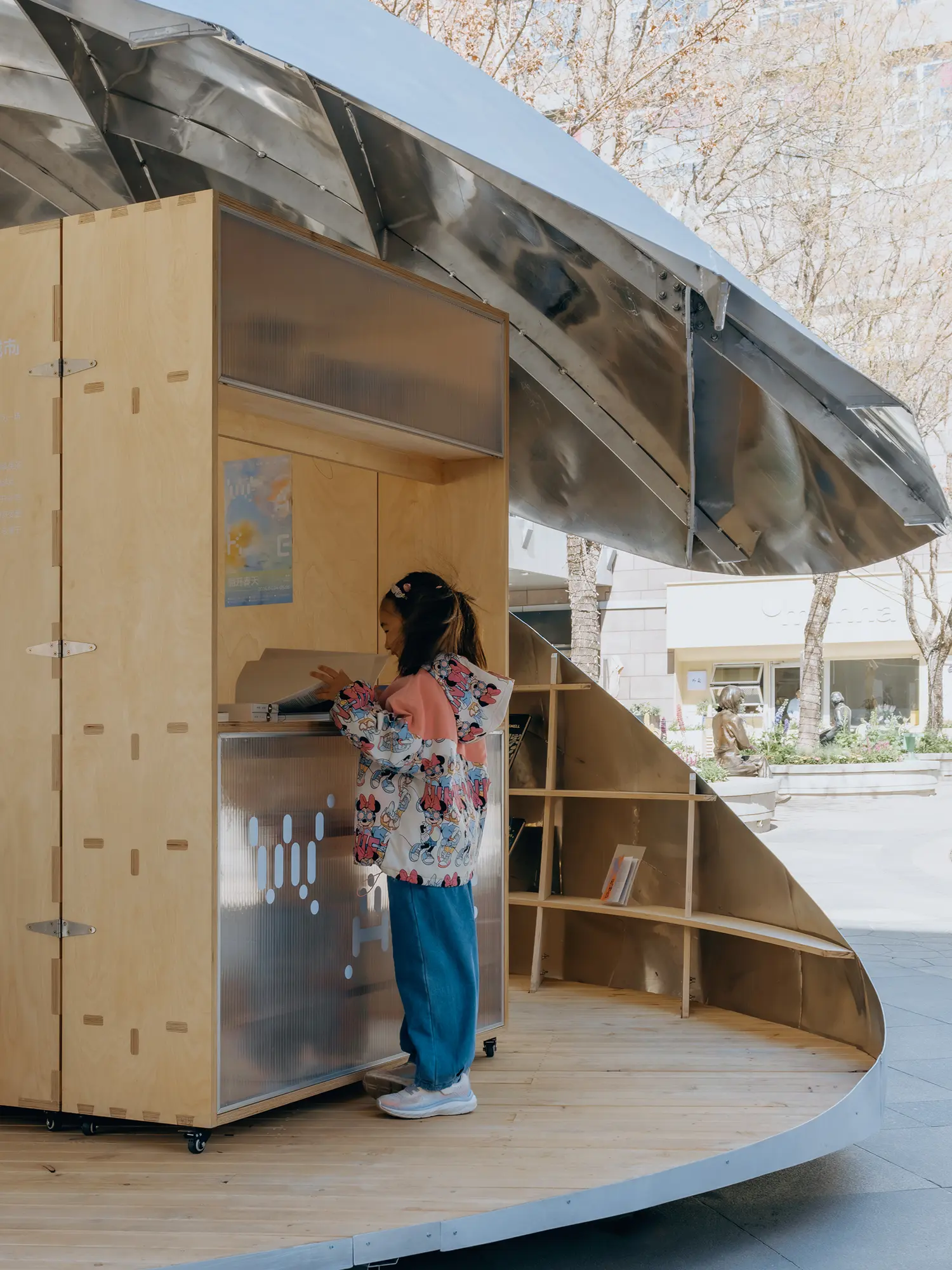
A permanent catalyst for connection. The project’s success is measured by its ability to foster public relationships. It acts as a focal point that adapts to weather, time, and user intent. Whether it is serving as a vibrant public stage or a quiet retreat, the pavilion’s existence is defined by its responsiveness. It proves that even small-scale interventions can have a significant contextual impact when they prioritize the fluidity of human movement and the unpredictability of urban life.
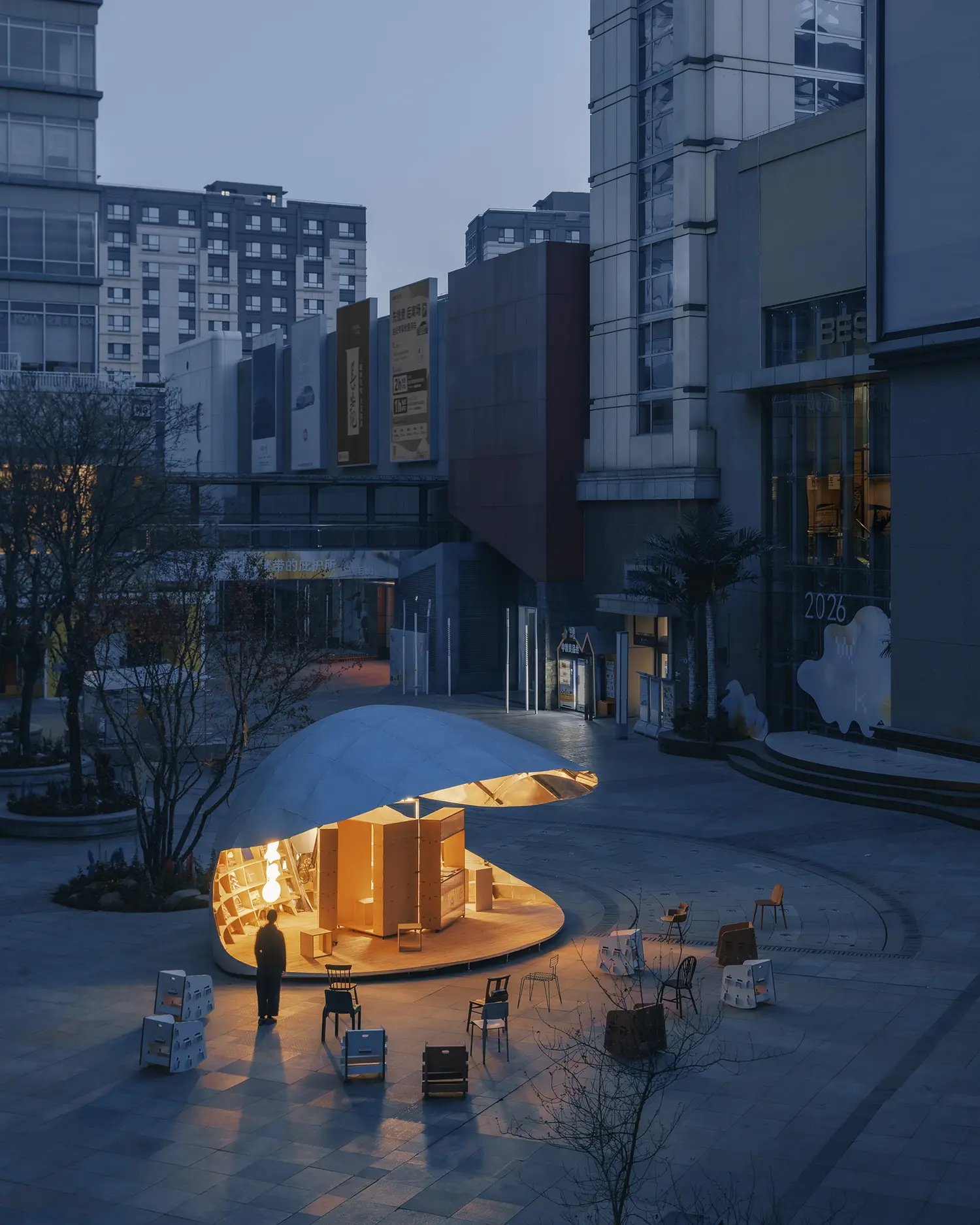
Redefining the urban micro-library. The Shell Book Pavilion transcends its role as a book repository to become a study in how temporary structures can anchor a community. By rejecting a fixed form in favor of a metamorphic one, LUO studio emphasizes that the future of public space lies in adaptability and sensory engagement. This project contributes to a broader global dialogue on innovative pavilions that prioritize the human experience, suggesting that the most successful urban interventions are those that remain in a constant state of unfolding.