



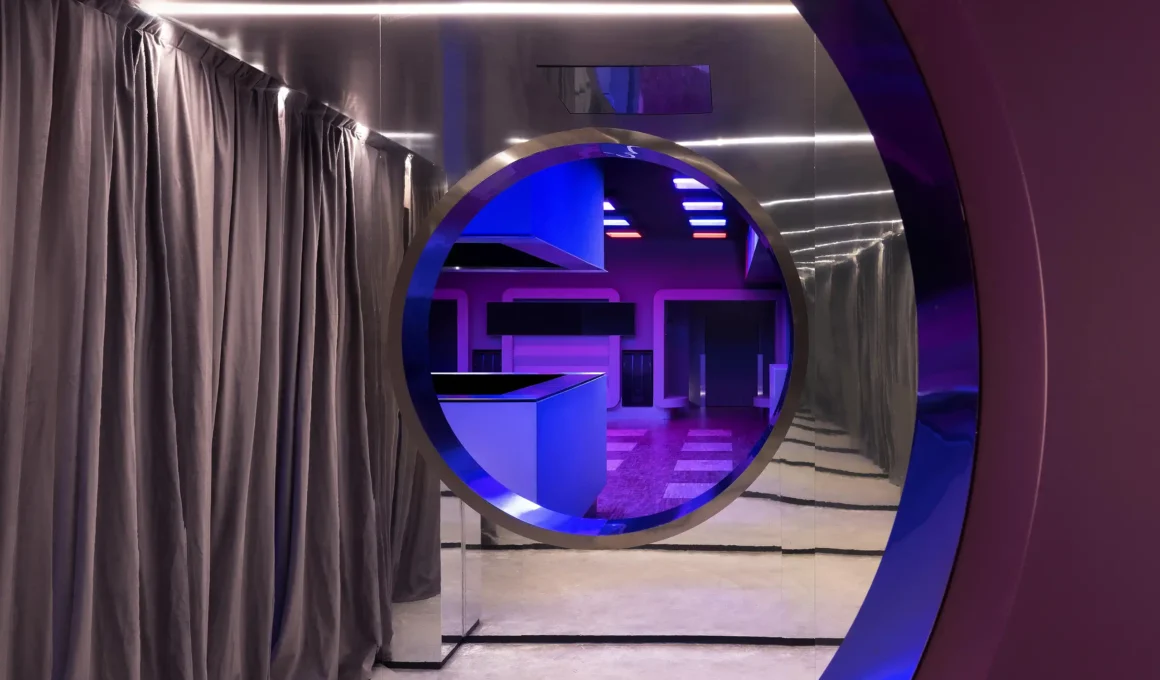
DURO proves that the most radical thing a new Milan club can do is refuse to smooth anything over — leaving the cement raw, the seating deliberately uncomfortable, and the DJ booth hidden like a command post behind enemy lines.
DURO, the new club by Velvet Studio — the Turin-based practice founded by Gianluca Bocchetta — occupies a former cement factory in Milan’s Certosa District, a neighborhood mid-transformation whose industrial skeleton is being reclaimed rather than erased. Founded by Marco and Riccardo Augeri, already known for DA ORIENT, the project doesn’t treat its brutalist inheritance as a backdrop. It treats it as a brief. The cement surfaces are worked with plastering techniques that make them live — textured, warm to the eye, cold to the touch — rather than sealed into submission. What you see is what the building is made of. Nothing else.
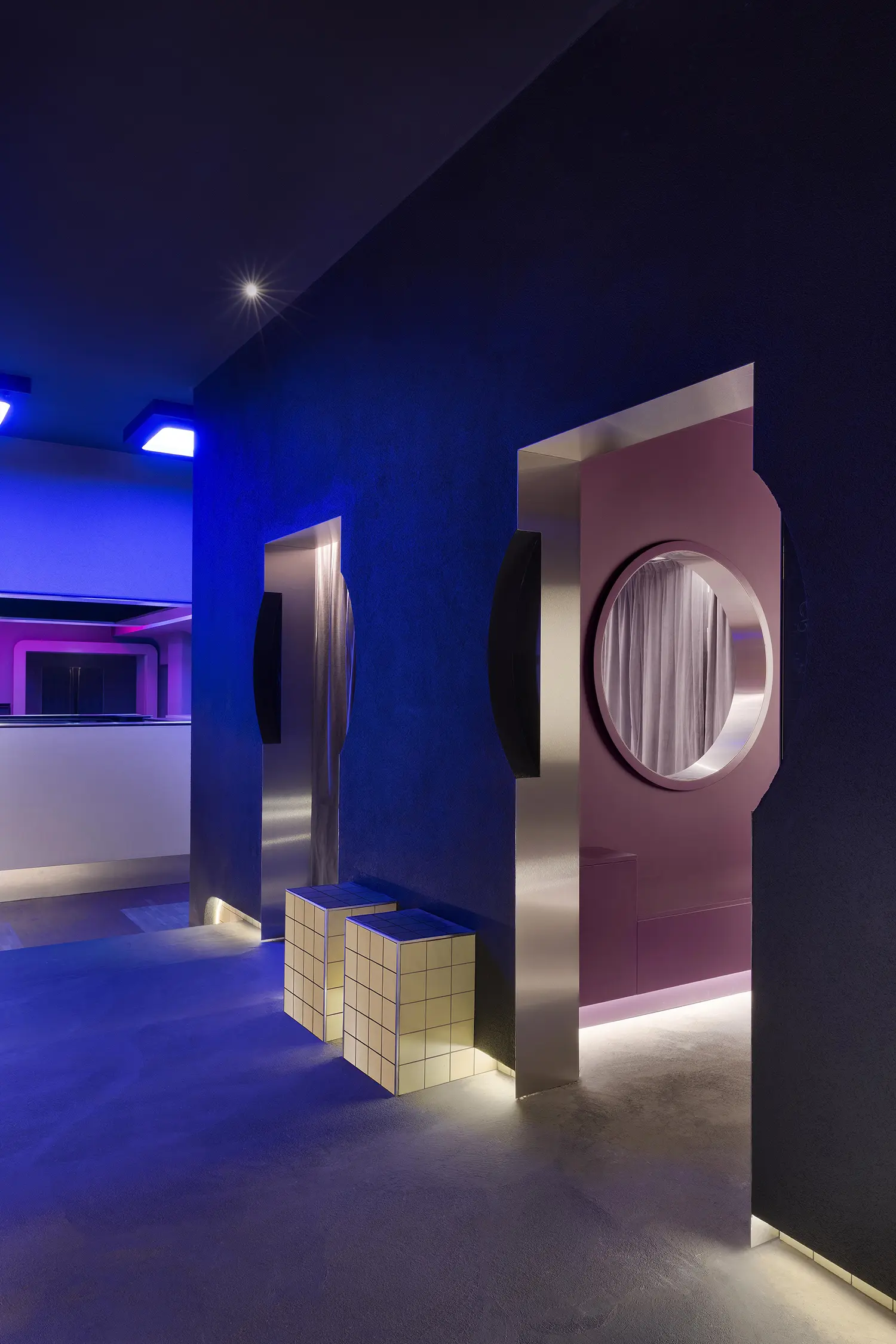
The architectural language is precise and deliberate. Velvet Studio operates at the intersection of brutalism and rationalism — exposed structure, material honesty, formal clarity — and the choice is not incidental. It mirrors the sonic identity of the space: music that is precise, clean, uncompromising. The exterior already announces this. Three-dimensional volumes build a recognizable, almost scenographic facade that prepares you for what’s inside without explaining it. You understand something before you enter. That’s the point.
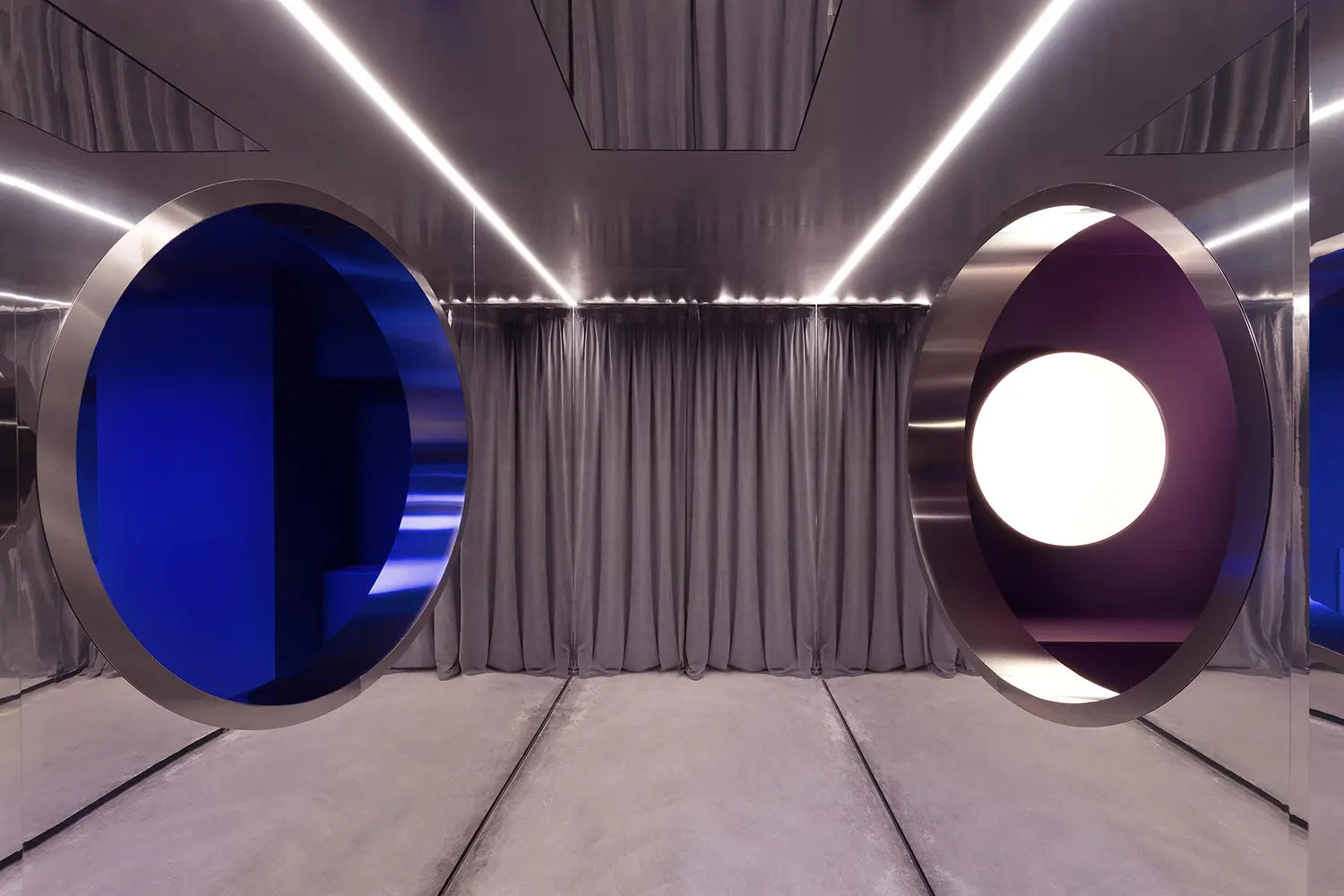
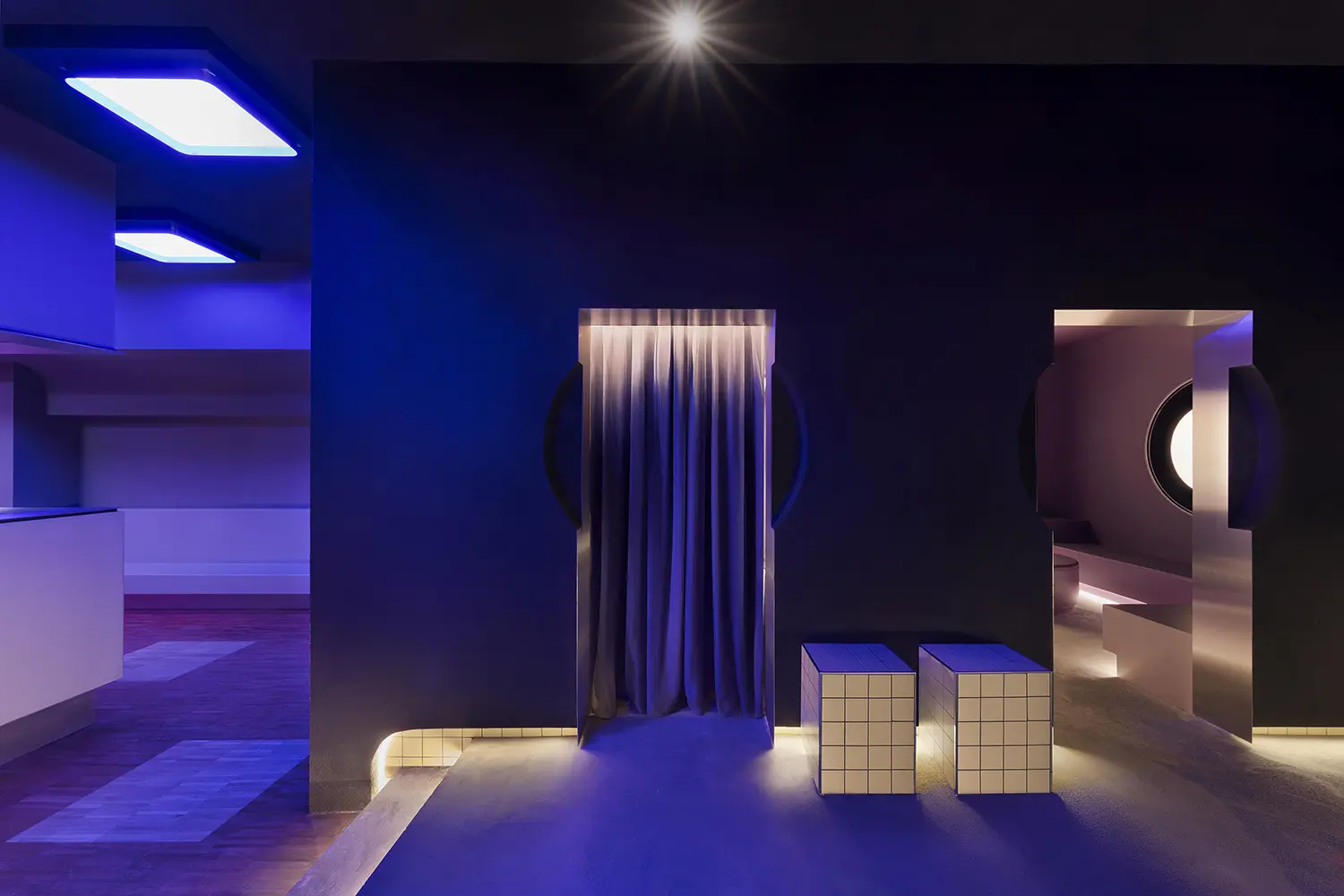
Every spatial decision here disincentivizes passivity. The seating and low sofas are deliberately rigid — designed, as the studio puts it, to discourage stasis and encourage movement. You come to DURO to live the club, not to sit in it. The central bar is conceived as a command cabin, the DJ console cuts the space like a gun slit: architectural elements that organize flow while suggesting a partial, almost hidden view of the environment. Oblò and peepholes traverse the space, building visual relationships between people and place — a recurring device in Velvet’s work that turns the act of looking into an architectural experience.
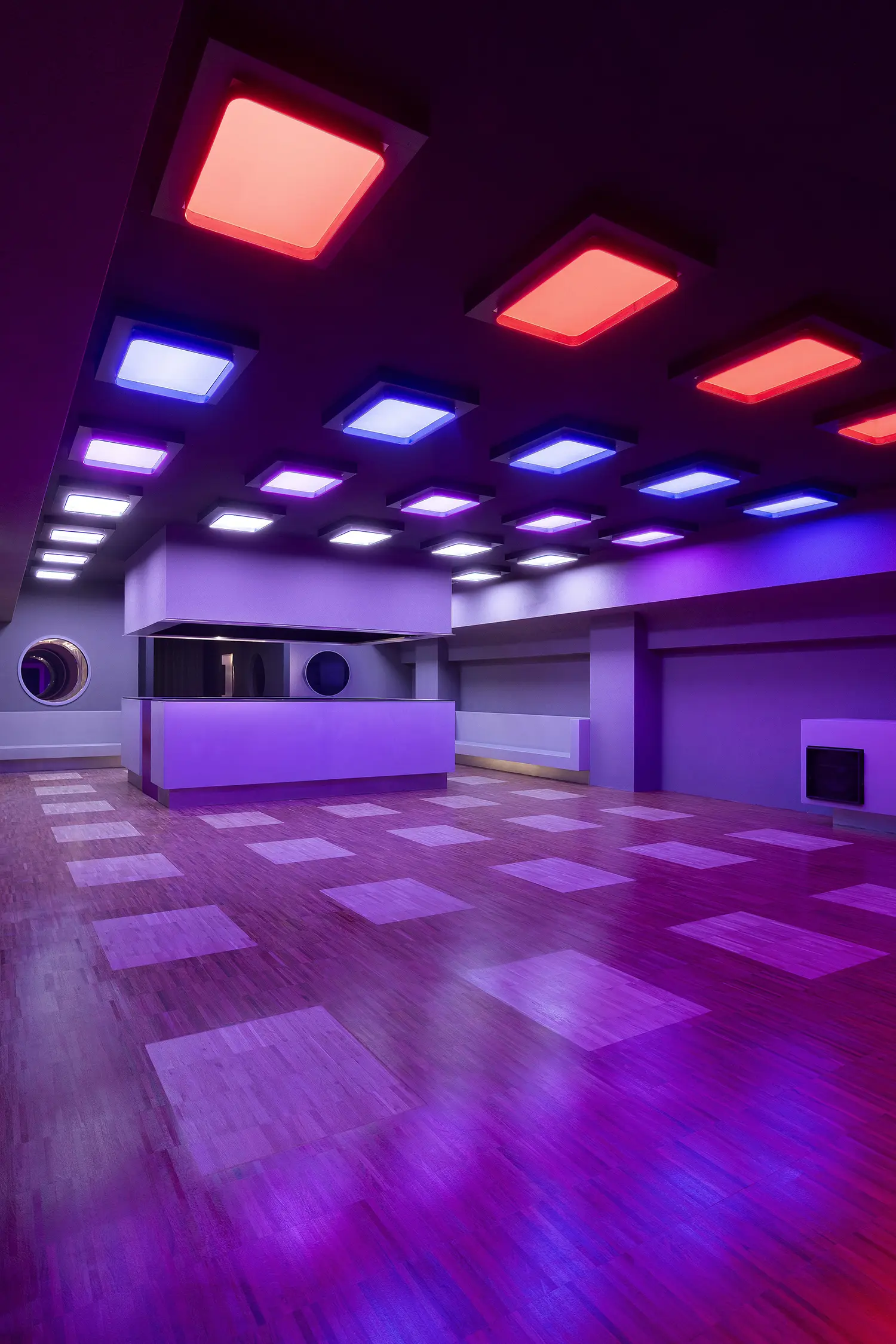
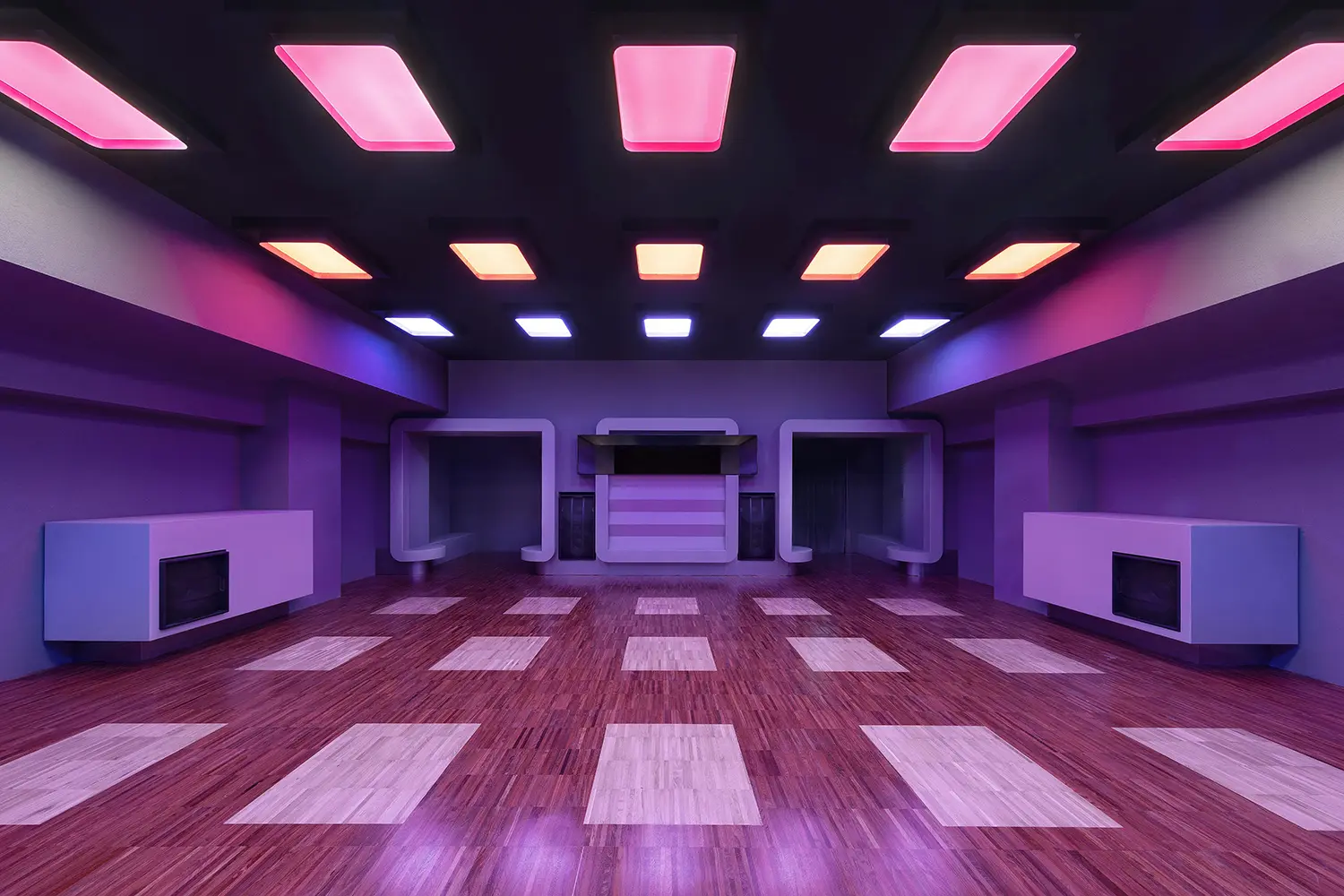
The flooring carries the spatial argument through to the body. Raw cement meets warm parquet — a contrast that registers physically before it’s understood intellectually. You feel the shift underfoot as you move from one zone to another, the building communicating through sensation rather than signage. The dancefloor pulses at the center, dominant and unambiguous. At the far end, a discreet booth — almost a profane altar — positions the DJ not as absolute protagonist but as guide: present, visible, but not mythologized.
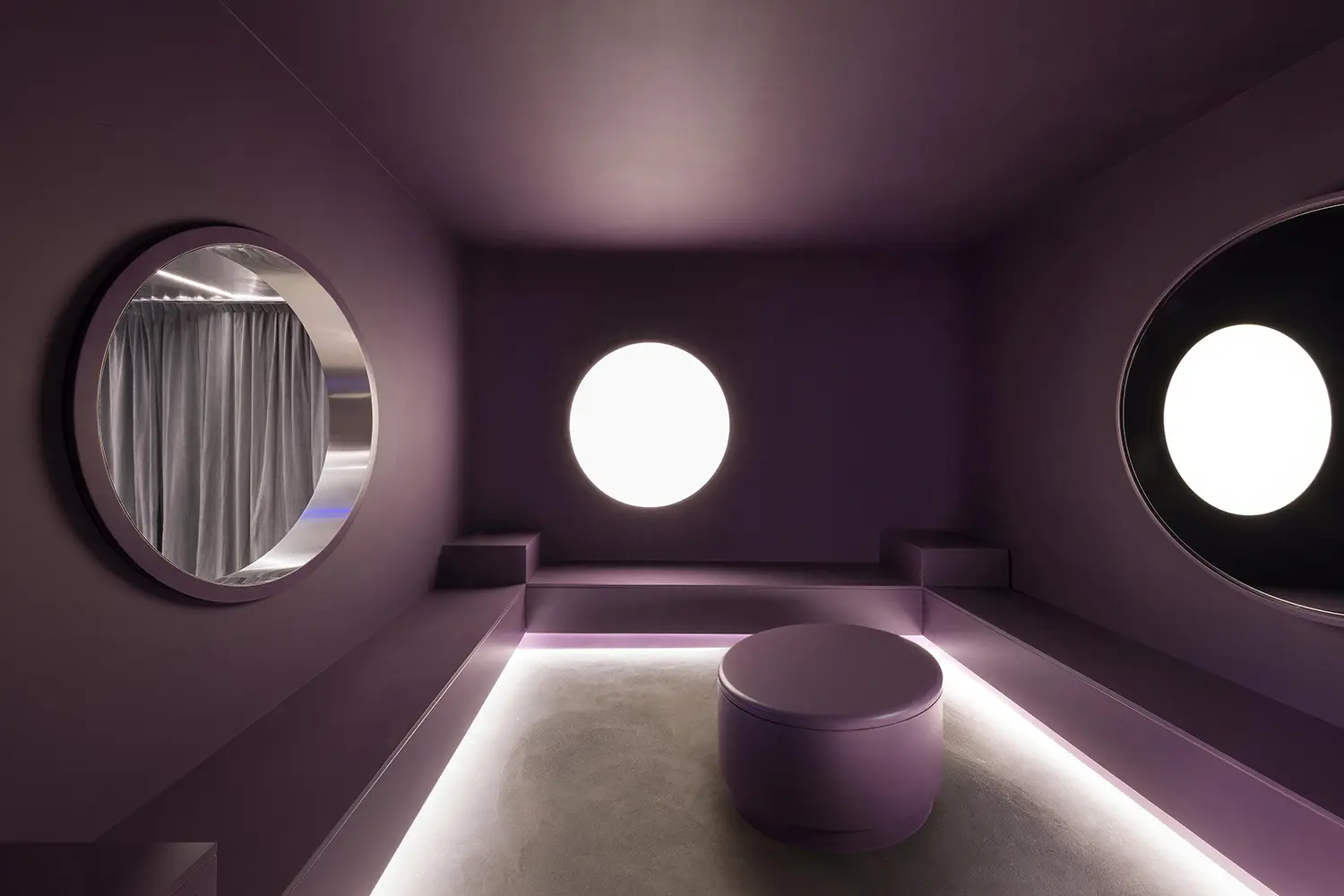
The lighting design, by ILTI Luce — the historic Turin firm specializing in museum lighting — defines volumes through geometric LED systems without competing with the music. Neutral colors, no visual spectacle. The light serves the sound. It is the sound that colors the space. This hierarchy is architectural as much as sonic: every surface decision, every material choice, every light source is calibrated to make the music louder without turning up the volume.
The cultural ambition of DURO extends beyond the walls of the Certosa District. The club positions itself within a network that includes Kappa Futur Festival and iconic underground Milan venues like Dude, building outward toward Turin, Berlin, Paris, and Lisbon. The sound moves, absorbs, returns. Each vibration shapes the environment, invoking Nyx — goddess of night — as symbolic presence and generative force. Darkness here is not softened but amplified. The warmth of bodies becomes the measure of the space.
The quote the project uses to define itself comes not from an architect but from a music critic: “Brutalism in music should manifest itself in bold, grand statements. Be memorable, be different. Reveal the functional elements of your sound — don’t hide, don’t apologise.” Tom Spooner wrote that about electronic music. Velvet Studio built it in cement. For those interested in how Milan’s underground scene translates into spatial terms, Ganko Feat’s underground club offers a compelling counterpoint — a different material register, the same refusal to apologize for what a night out can ask of its architecture.

DURO doesn’t seek universal consensus — the studio says so explicitly, and the space confirms it. It doesn’t domesticate, simplify, or soften. It takes a position. The cement is raw, the seats are hard, the booth is hidden, and the music is everything. In a city where nightlife increasingly defaults to the decorative, that’s not a design choice. It’s a stance.