



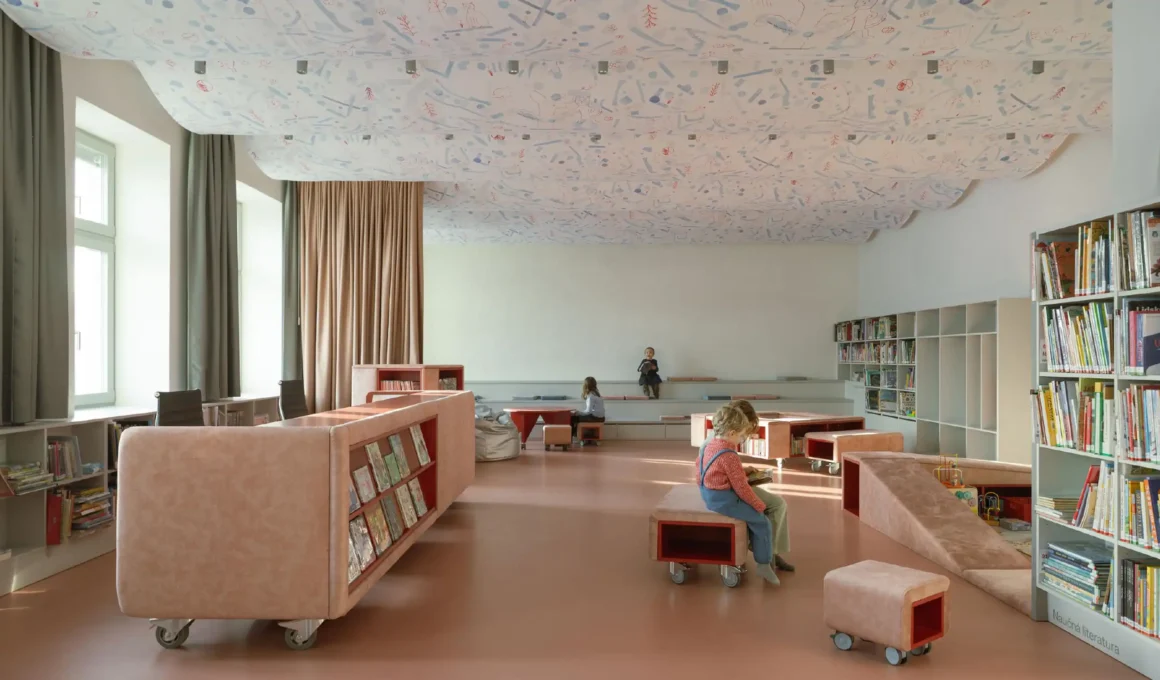
The transformation of historic heritage into contemporary civic infrastructure requires a delicate balance between preservation and bold intervention. In the town of Červený Kostelec, located in the Hradec Králové Region of the Czech Republic, local practice Papundekl architekti has masterfully reimagined the Břetislav Kafka Library. Occupying a former historic inn, the project transcends a simple interior renovation, evolving into a comprehensive architectural dialogue that addresses thermal efficiency, spatial clarity, and the sensory experience of learning. By engaging directly with the constraints of the original masonry, the architects have crafted a space that feels inherently tied to its past while functioning as a vibrant, modern hub for the local community.
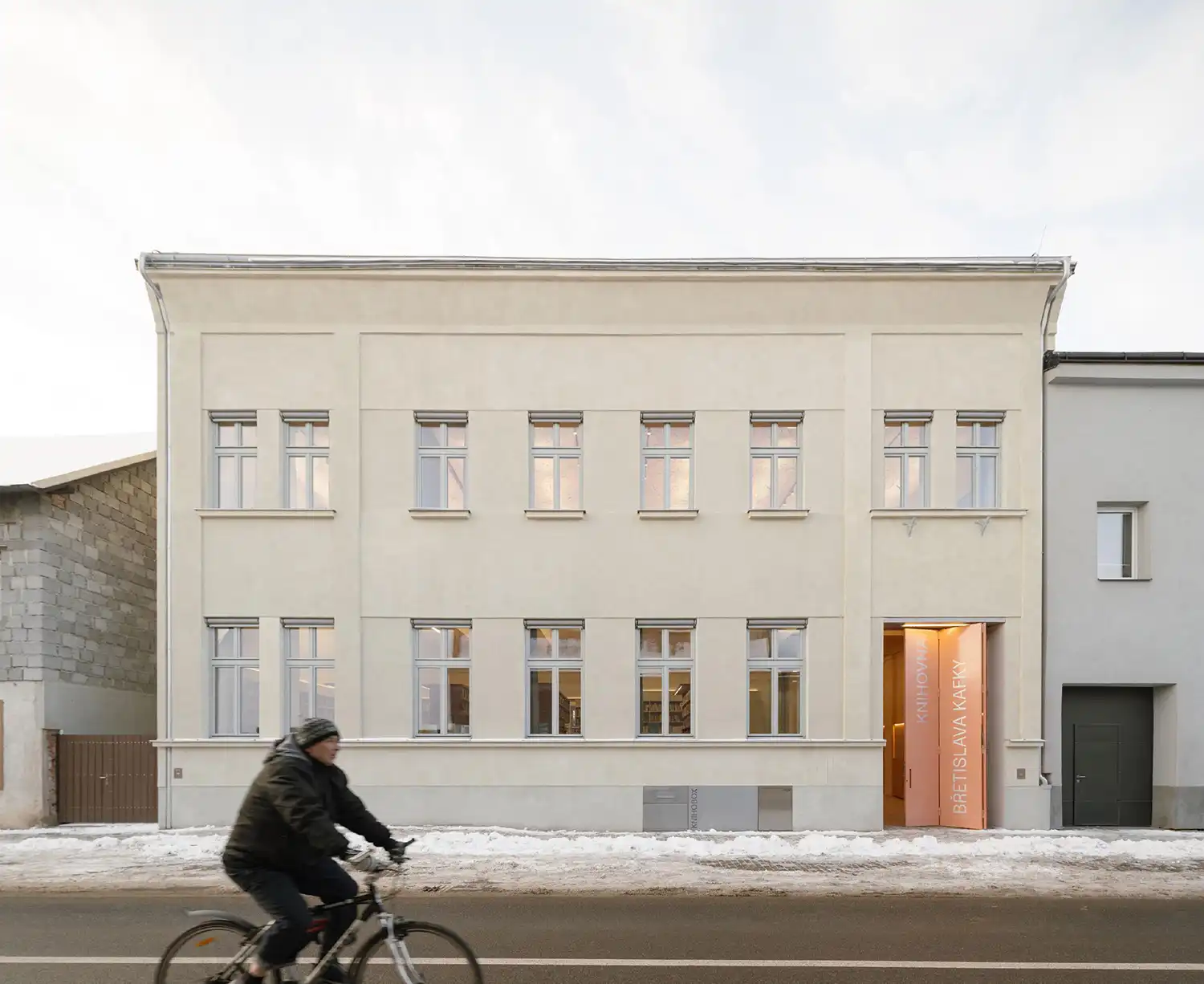
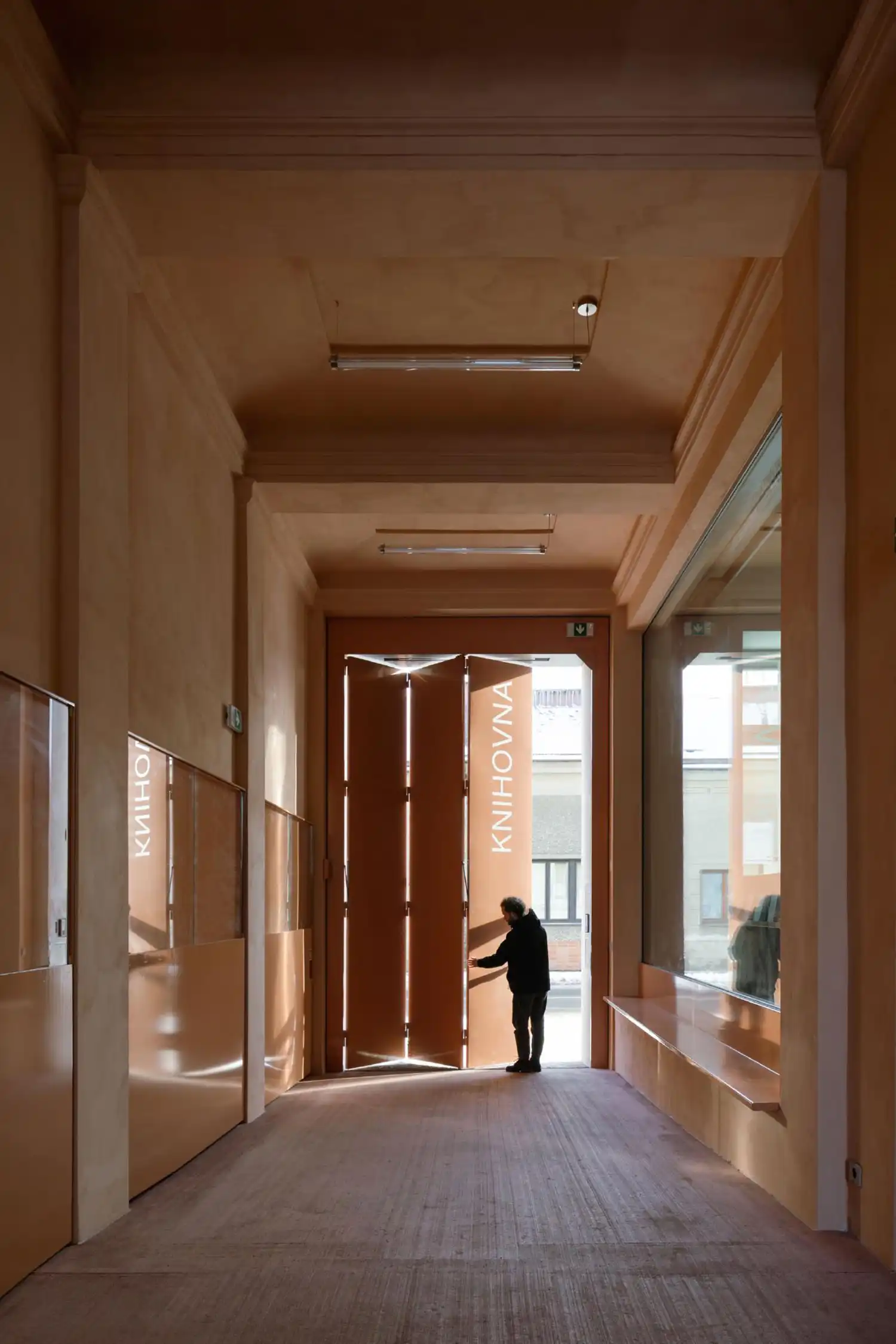
The threshold between the street and the interior served as the primary catalyst for the redesign. To signal the building’s public evolution, the entrance was reconceived as a transparent artery that draws the city inside. A series of generously proportioned gates now define the passageway: a rhythmic metal structure faces the street, while translucent panels at the rear invite sunlight from the courtyard garden. This move not only improves accessibility but also transforms the passage into a curated exhibition area. This approach to visual connectivity and natural light mirrors the strategies used when Studio Vapore reimagined the children’s library at the Western Academy of Beijing, where the boundary between learning and the surrounding environment is intentionally blurred.
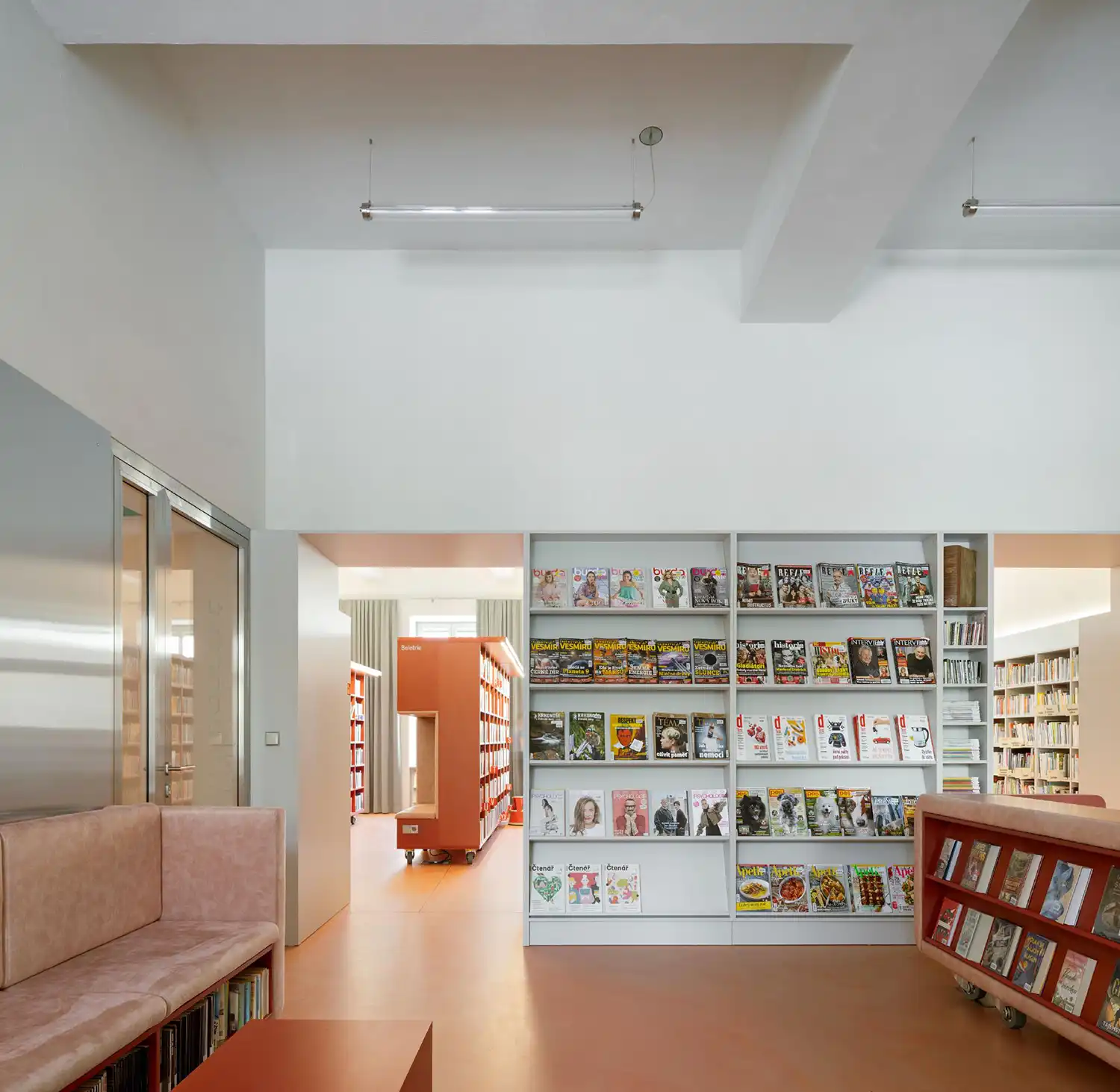
Navigating the interior reveals a sophisticated logic defined by a dualistic furniture concept. The perimeter of the rooms is lined with neutral grey built-in units that recede into the architecture, maximizing floor area. In contrast, the center of the rooms is activated by mobile, multifunctional red furniture. These elements—incorporating storage, integrated lighting, and seating—are mounted on wheels, allowing the floor plan to remain fluid. This flexibility is essential for a contemporary municipal institution, enabling the library to pivot from a quiet reading room to a lecture hall or community workshop space in minutes. The tactile quality of these interventions, ranging from smooth stainless steel to warm textiles, provides a grounded, physical experience.
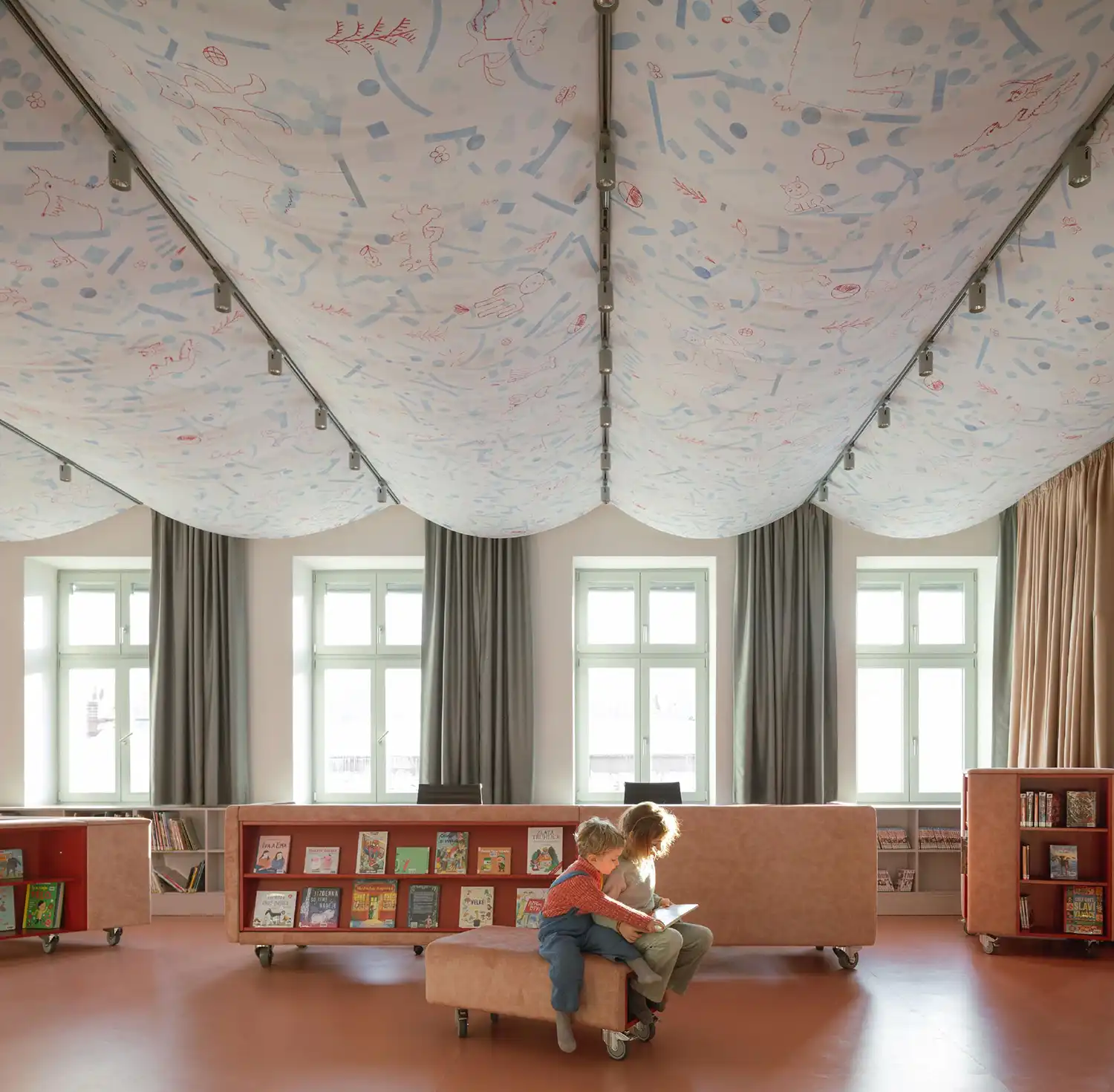
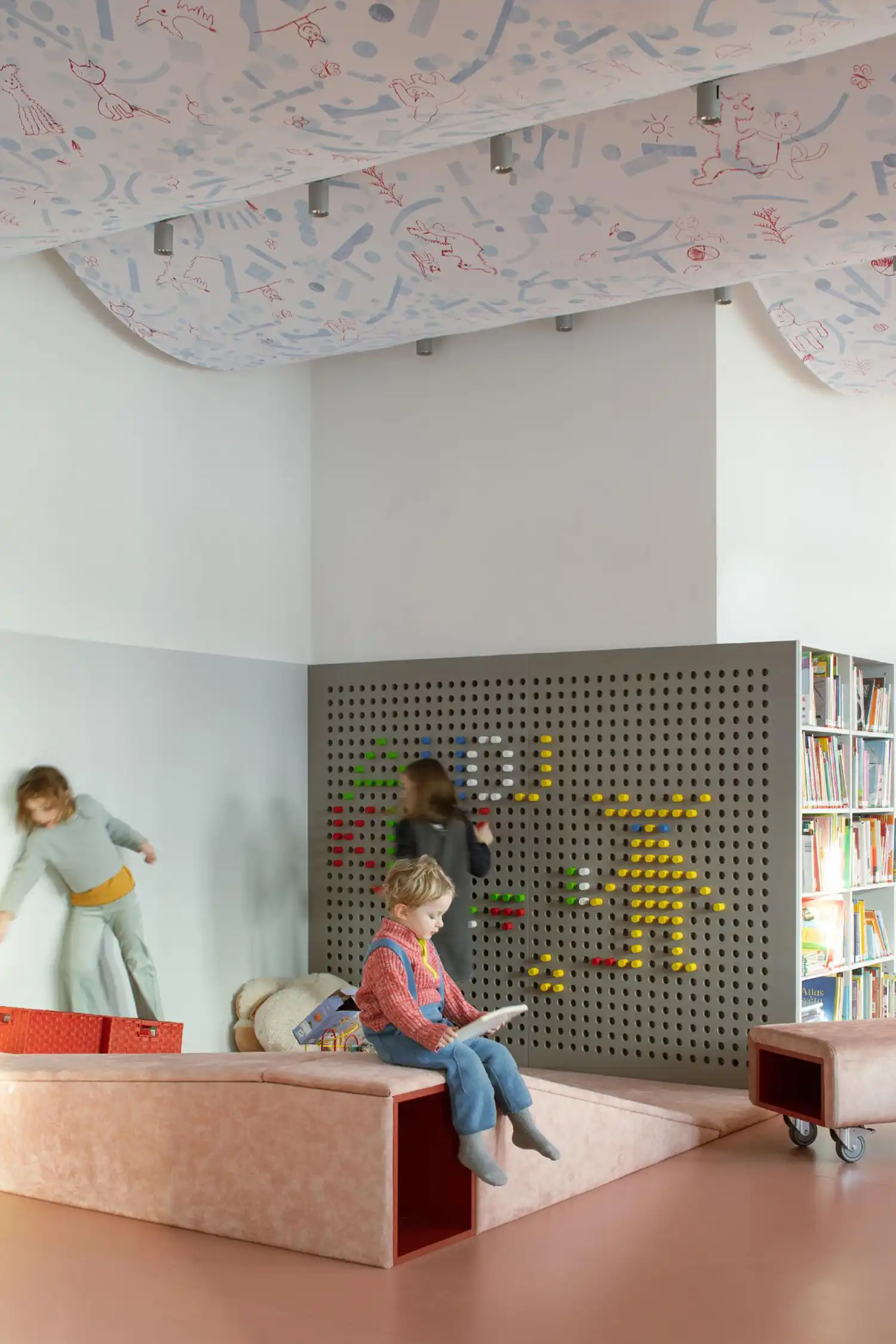
The chromatic identity of the project is perhaps its most evocative feature, drawing inspiration from the local landscape. Shades of pink and red dominate the palette, a direct reference to the name of Červený Kostelec (Red Church) and the town’s landmark ecclesiastical architecture. While the adult section on the ground floor maintains a disciplined, linear arrangement, the upper floor dedicated to children breaks into playful forms. Here, varied shelving heights and a bespoke textile canopy by artist Linda Retterová—created in collaboration with local children—soften the acoustics and diffuse the light, fostering a sense of wonder and ownership among the youngest patrons.
Urban integration and civic presence are at the heart of the library’s mission. Much like the iconic Far Rockaway Library in New York by Snøhetta, which stands as a beacon of transparency and social equity, the Břetislav Kafka Library uses its presence to reinforce the importance of the public realm. By clearing the old passageway and opening the building to its garden, Papundekl architekti have created a “third place” that bridges the gap between the private home and the public street. The inclusion of stainless steel details throughout the interior adds a layer of restrained elegance, signaling that while the space is playful, it remains a significant pillar of the town’s cultural infrastructure.
The success of the renovation lies in its refusal to overcomplicate the existing structure. Instead of fighting the spatial constraints of the old inn, the architects utilized a “room-within-a-room” strategy that respects the history of the Czech Republic’s vernacular architecture while injecting it with a fresh, rhythmic vitality. The result is a library that does not merely store books but actively generates community engagement. Through the clever use of mobility, color, and light, the Břetislav Kafka Library stands as a testament to how thoughtful intervention can breathe new life into forgotten corners of a city, ensuring that the act of reading remains a shared and deeply human experience.