




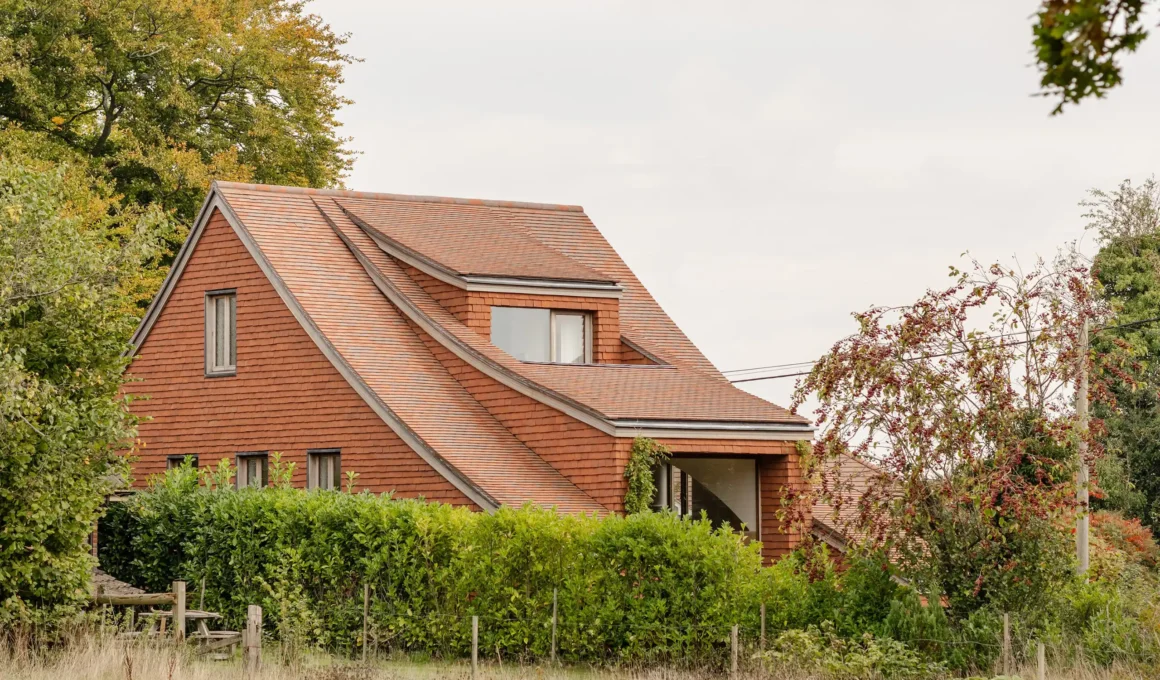
In the rolling terrain of West Hoathly, West Sussex, architecture often feels like a direct dialogue with the earth. Clay Rise, the debut residential project by Templeton Ford, serves as a sophisticated opening statement for the newly formed practice. Designed by architect Andre Templeton Ford and stylist Jessica Templeton Ford, the three-bedroom home is a deeply personal endeavor, situated on a plot neighboring Andre’s childhood home. It is a structure that does not merely sit upon the land but emerges from it, synthesizing the rich, tactile traditions of Sussex craftsmanship with a contemporary formal language that earned it a shortlist spot for the 2025 Manser Medal.
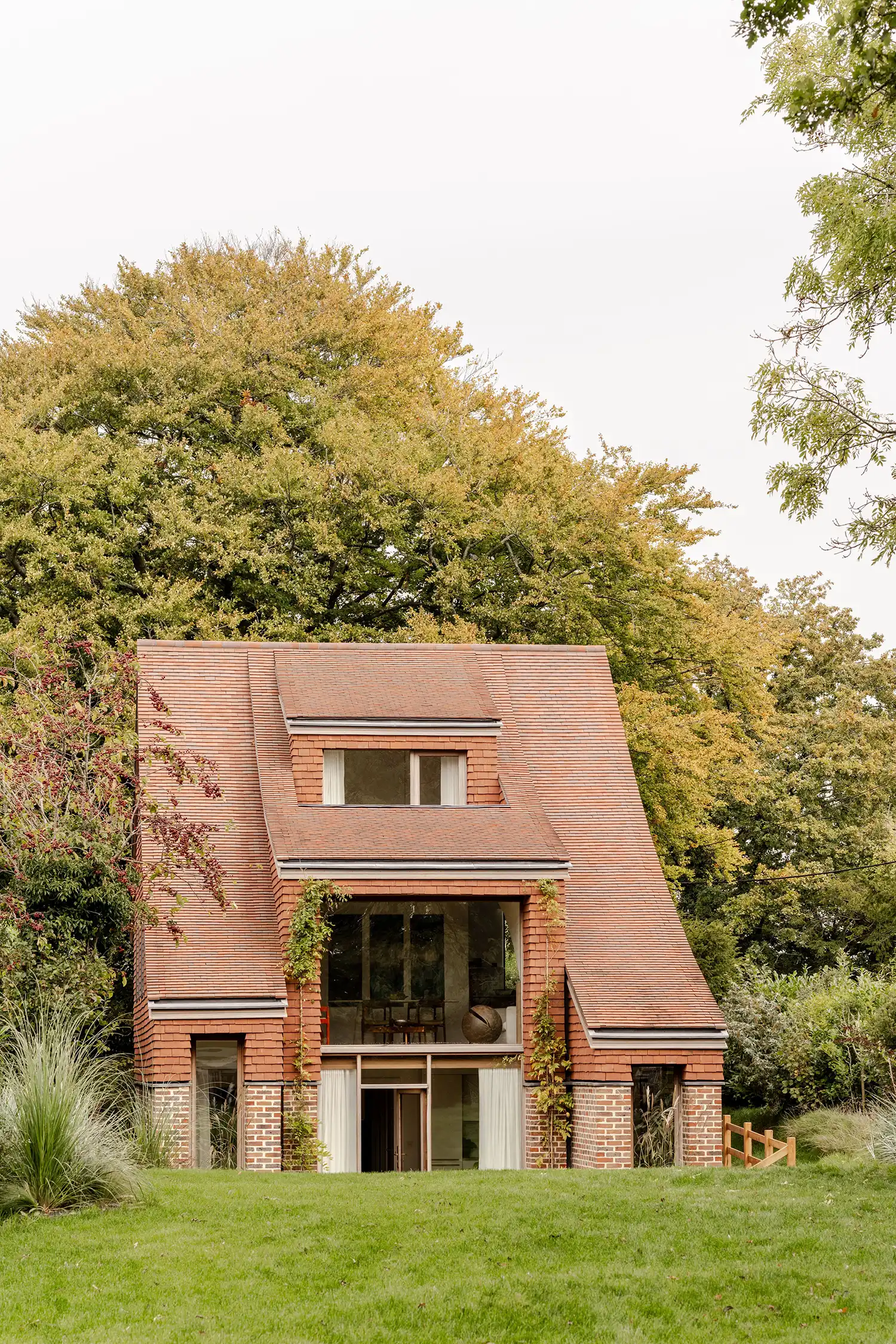
A poetic interpretation of the local vernacular drives the home’s striking silhouette. While the surrounding village is defined by traditional clay-tiled cottages and handmade brickwork, Clay Rise translates these elements into a fluid, tiered roofline. The layered sweeping curves roll from the pitch’s peak to frame generous windows across three storeys, creating a visual rhythm that echoes the undulating topography of the nearby South Downs. This delicate balance of solid mass and graceful curvature mirrors the sensitive approach seen in other British residential projects, such as the red clay design of Hackney Mews, where material heritage is reimagined through a modern lens.

The material language of the building is a direct reflection of the soil beneath it. The external skin is composed of local bricks made from the very same clay found on-site, establishing an unbreakable link between the architecture and the West Sussex terrain. A crisp datum line wraps around the facade, marking the transition where brick meets warm red clay tiles. By embedding the house 1.5 meters into the hillside, the architects created a split-level arrangement that allows the rear garden to flow into a natural grassy slope. This groundedness is reminiscent of how the Runda House in Londonutilizes brick to create a sense of permanence and enclosure within a contemporary urban context.
Technical precision meets environmental consciousness in the home’s construction. Despite its heavy, artisanal appearance, the core of Clay Rise is a prefabricated panelized timber frame system, which allowed the primary structure to be erected in just two weeks. This high-performance envelope is paired with passive environmental strategies; the house is oriented to maximize solar gain during the UK winter while deep window reveals in sapele timber provide essential shading during the summer months. Much like the ash brick extension at Denmark Hill, the project demonstrates how modern technical requirements can be seamlessly integrated into a design that prioritizes craft and longevity.

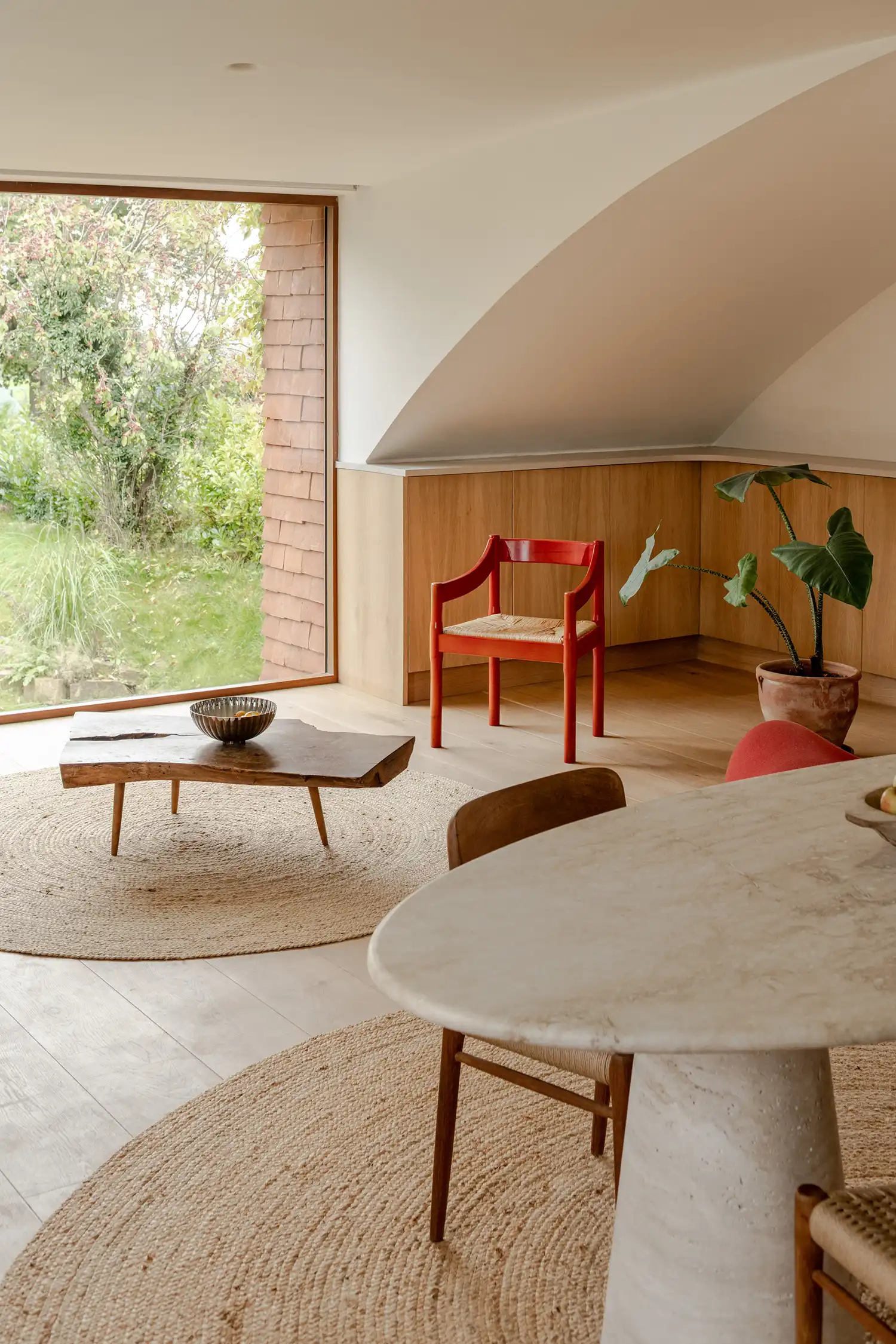
Inside, the sensory experience is one of softness and light. The rigorous geometry of the exterior gives way to an interior palette defined by lime-plastered walls, exposed timber, and stone floors. A central, CNC-cut staircase—finished in tactile lime plaster—acts as a thermal chimney, drawing air upward to maintain a comfortable climate year-round. The interiors feel curated rather than “designed,” thanks to Jessica Templeton Ford’s expertise in antiques. Bespoke joinery and found furniture pieces create a lived-in richness that avoids the sterile tropes of new builds, sharing an aesthetic DNA with the light-filled Scandi extension in Harpenden, where flow and tactility take center stage.
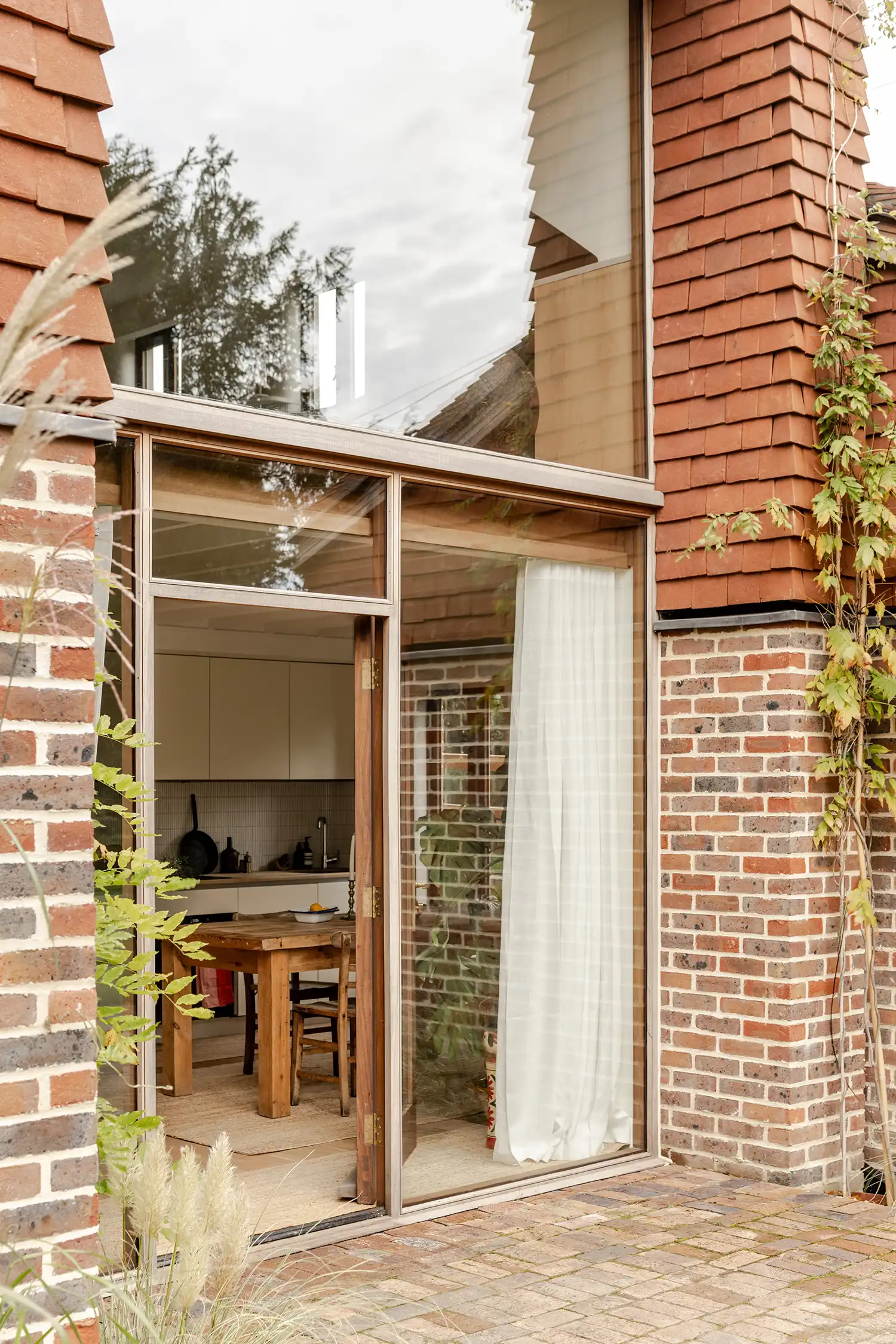
Future-proofing and multigenerational living are embedded into the home’s very DNA. Originally conceived as a flexible dwelling, the split-level floor plan allows Clay Rise to function as two independent units: a self-contained ground-floor apartment and a generous main residence above. Services like underfloor heating and lighting circuits were pre-engineered to accommodate future partitions, ensuring the house can evolve alongside its inhabitants. By marrying this utilitarian foresight with a high-fidelity dedication to local materials, Templeton Ford has delivered a project that feels both inevitable and transformative—a quiet landmark in the West Sussex countryside that honors its past while leaning gracefully into the future.