


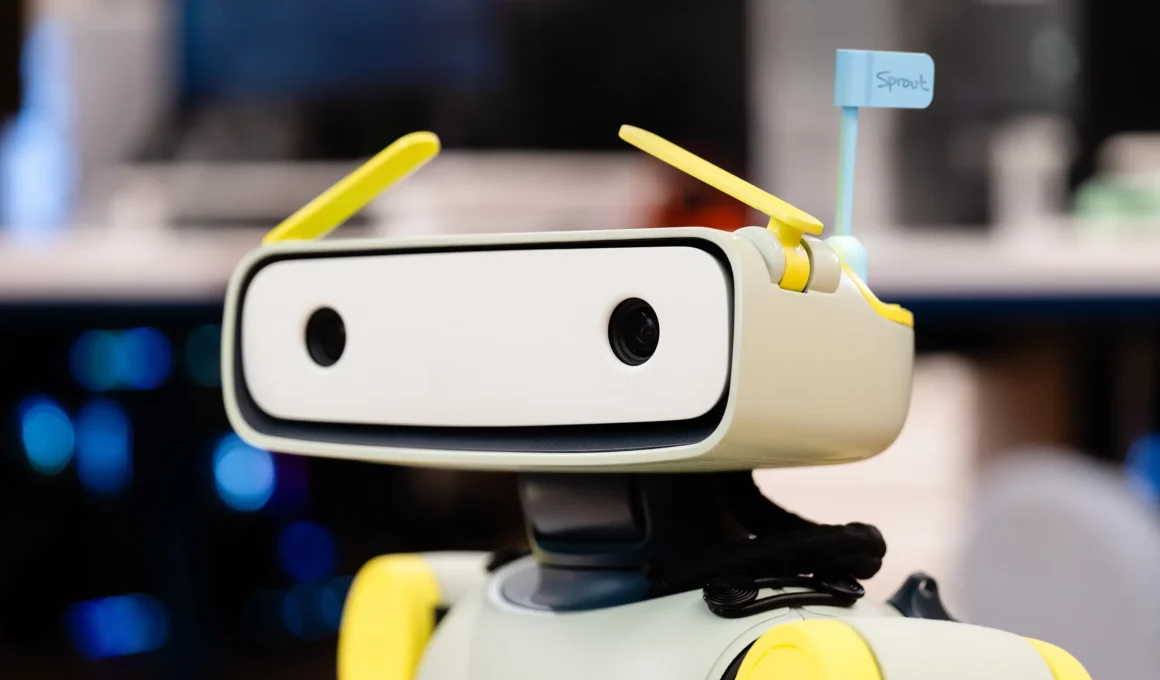
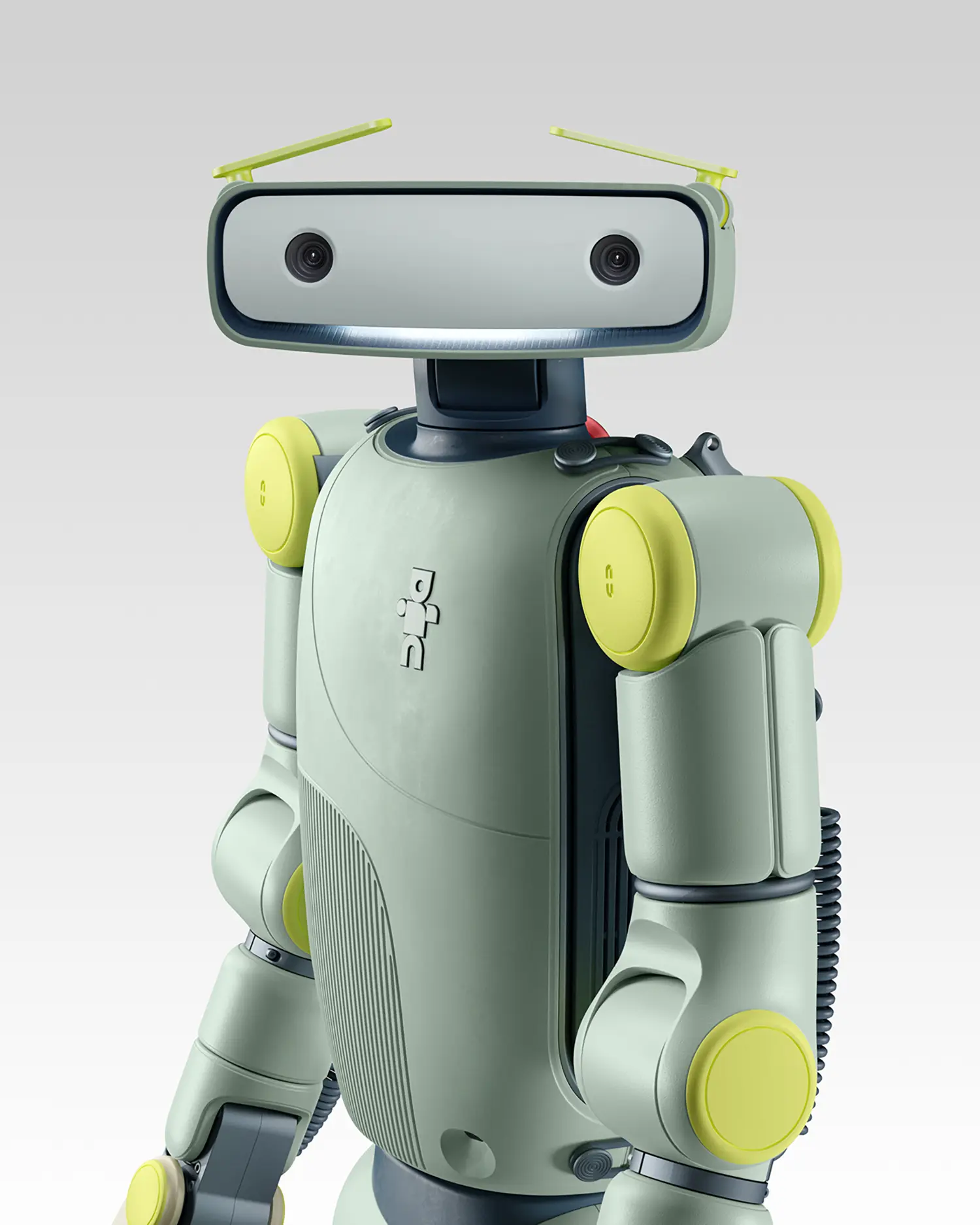
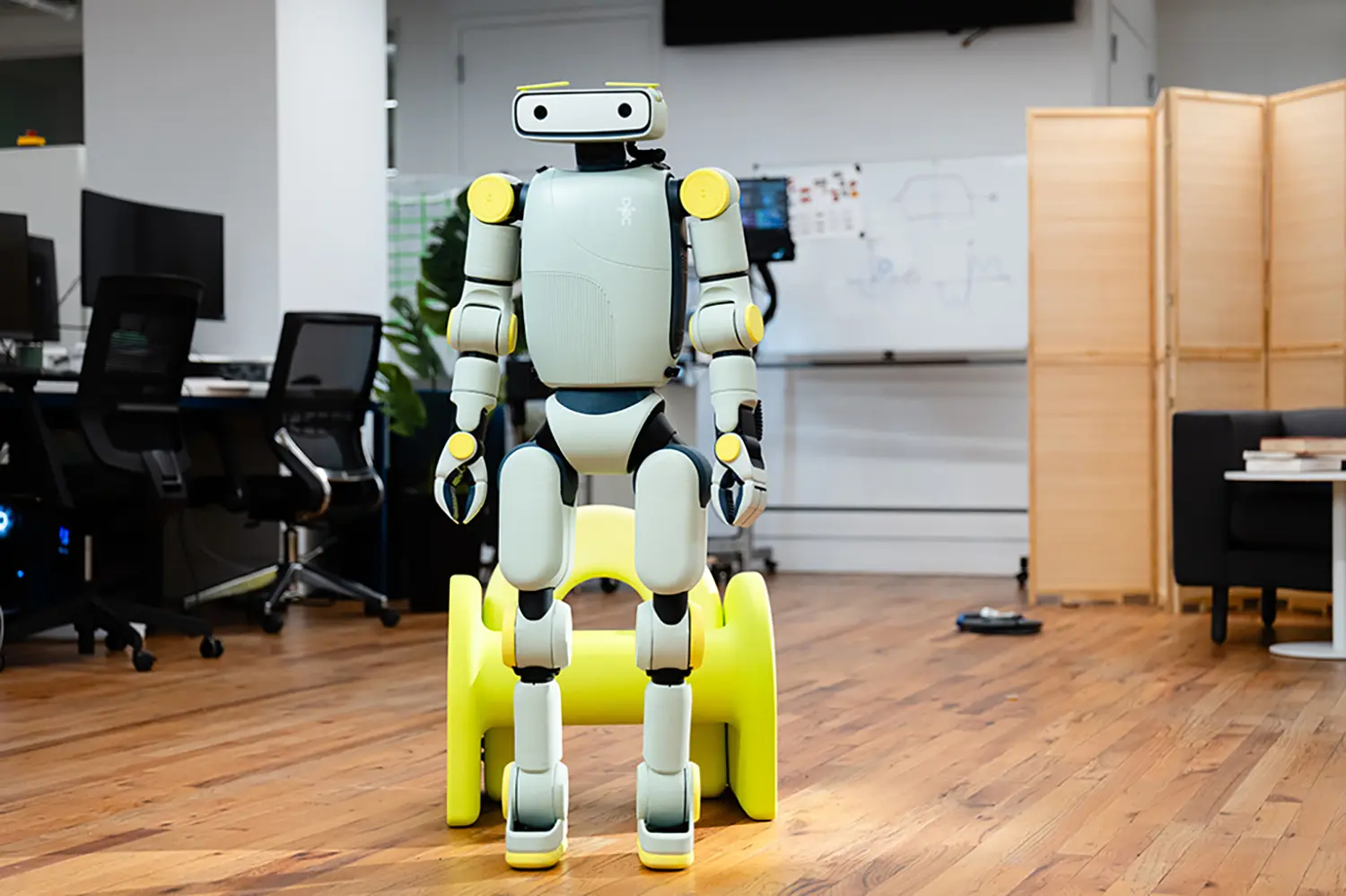
Sprout is not the most capable humanoid robot built in 2026 — and Fauna Robotics designed it that way on purpose. Where every other player in the humanoid robotics space has been racing toward greater strength, taller frames, and more aggressive industrial performance, this New York startup asked a different question: what does a robot look like when the primary design constraint is that it must not frighten the person standing next to it. The answer is 107 centimeters tall, 22.7 kilograms, soft to the touch, and equipped with two motorized antenna-eyebrows that move independently to signal emotional states. Sprout is the first humanoid robot that reads, before anything else, as a designed object.
The eyebrows are the thesis. They are also the most technically deliberate feature on the platform — two of Sprout’s 29 degrees of freedom are allocated entirely to those antenna-like appendages perched on a wide rectangular head. They tilt, raise, and drop with enough range to communicate surprise, attention, curiosity, and calm without a single spoken word. This is not aesthetic decoration. It is a direct response to one of the most documented problems in robotics and human perception: the uncanny valley, the zone of discomfort that activates when a robot approximates human appearance closely enough to trigger recognition but not closely enough to pass. As we explored in our analysis of the uncanny valley in humanoid robotics design, the closer a robot gets to human likeness without achieving it, the stronger the unease it produces. Fauna’s solution was not to push further toward realism but to step deliberately sideways — into something legible, expressive, and unambiguously non-human.
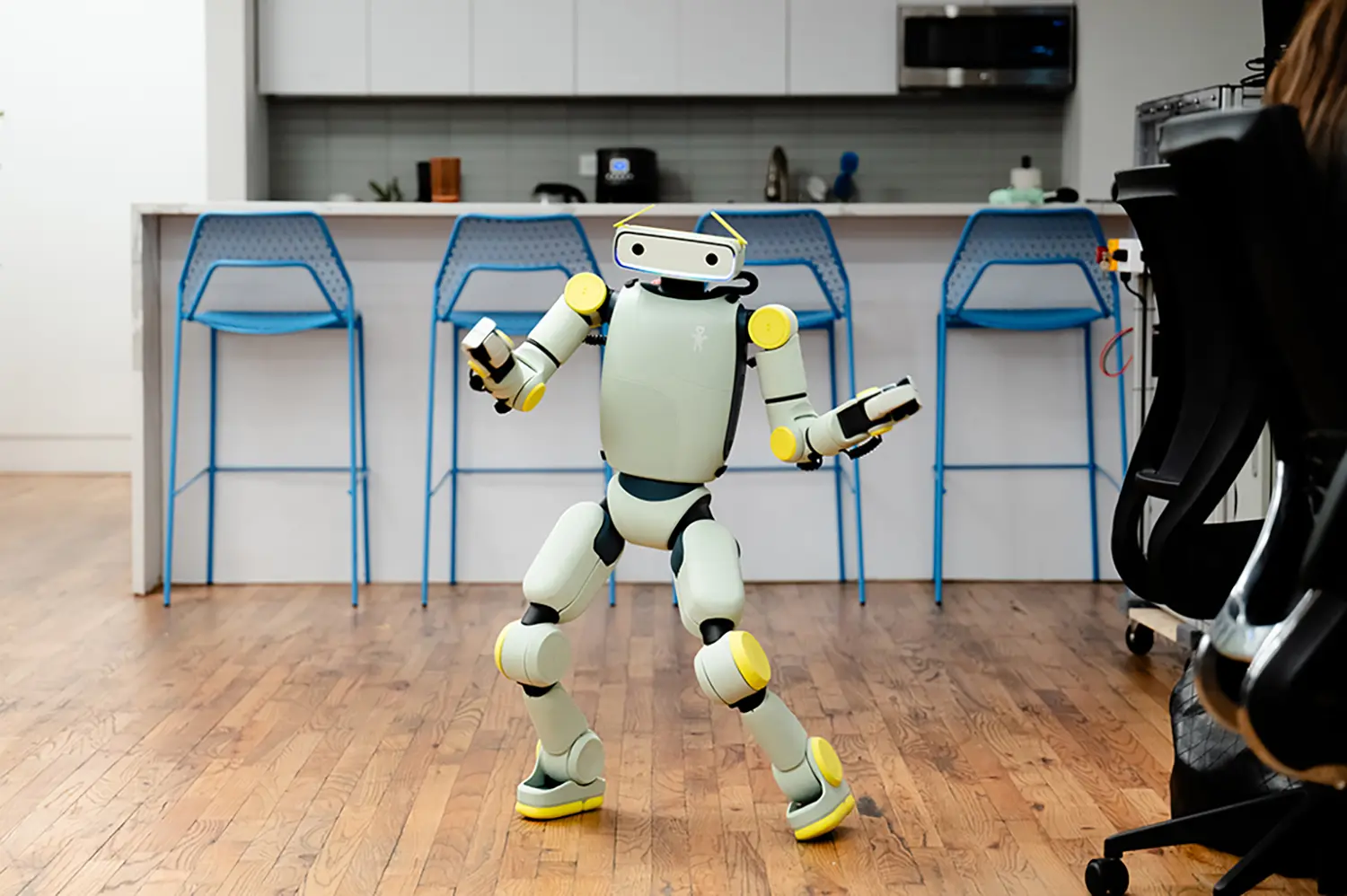
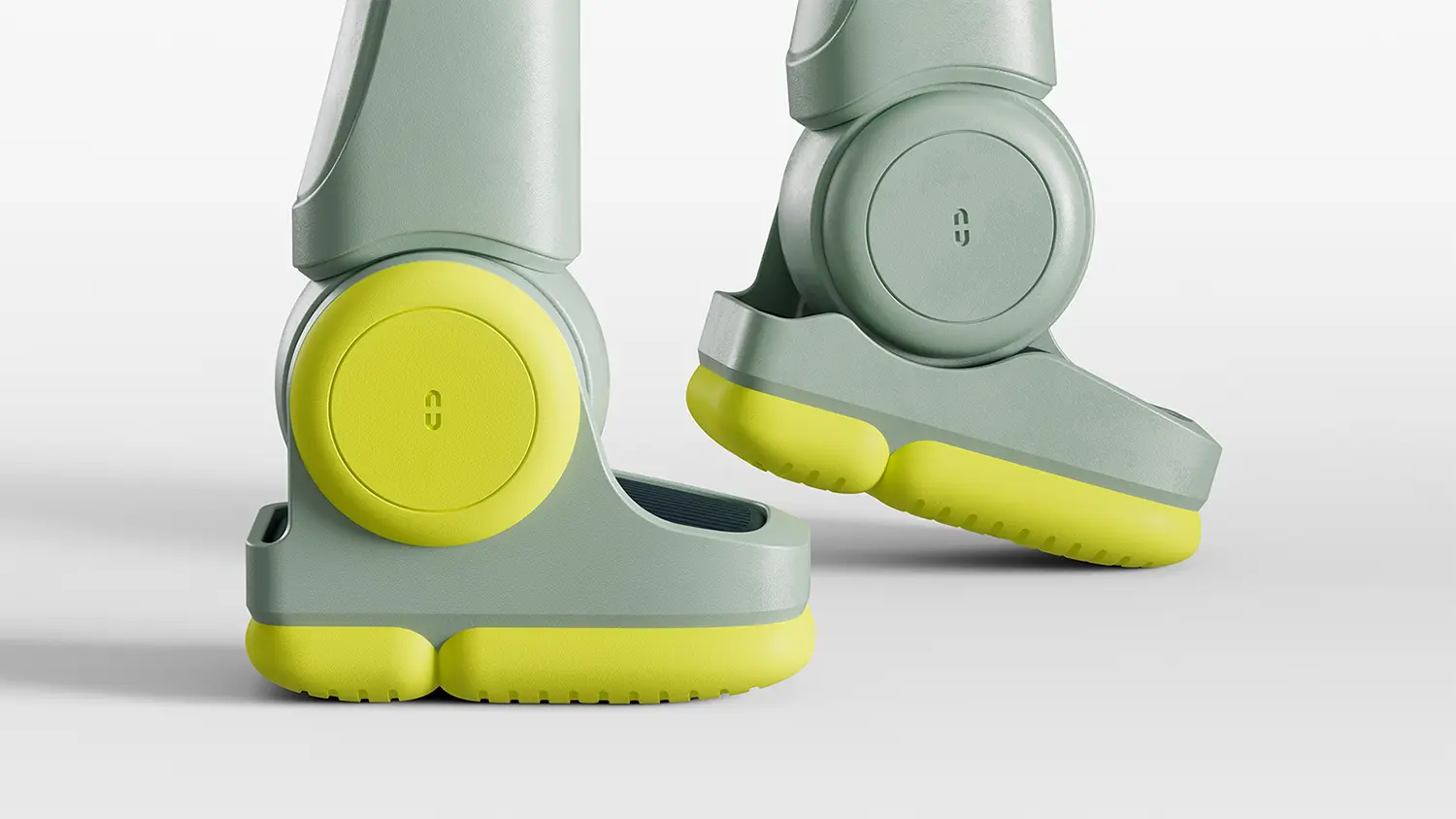
The body follows the same logic. Sprout’s exterior is padded and soft — the kind of surface that absorbs contact rather than meeting it with hard polymer or machined aluminum. The frame underneath is aluminum and composite, but what a person actually touches, or bumps into, or reaches toward, gives way slightly. This is a human-centered robot designdecision with measurable consequences: it changes how people move around the robot, how close they’re willing to stand, how quickly they relax in its presence. The scale reinforces it — at just over a meter tall, Sprout sits below adult eye level, a proportional choice that removes the psychological dominance cues that full-height humanoids inevitably trigger. Compare this to the design register of Boston Dynamics’ Atlas or Figure 03 — platforms built to maximize physical capability in industrial and warehouse environments, where approachability is irrelevant and performance is everything. Sprout occupies a different category entirely: the indoor social humanoid robot, designed for the same spaces people actually live and work in.
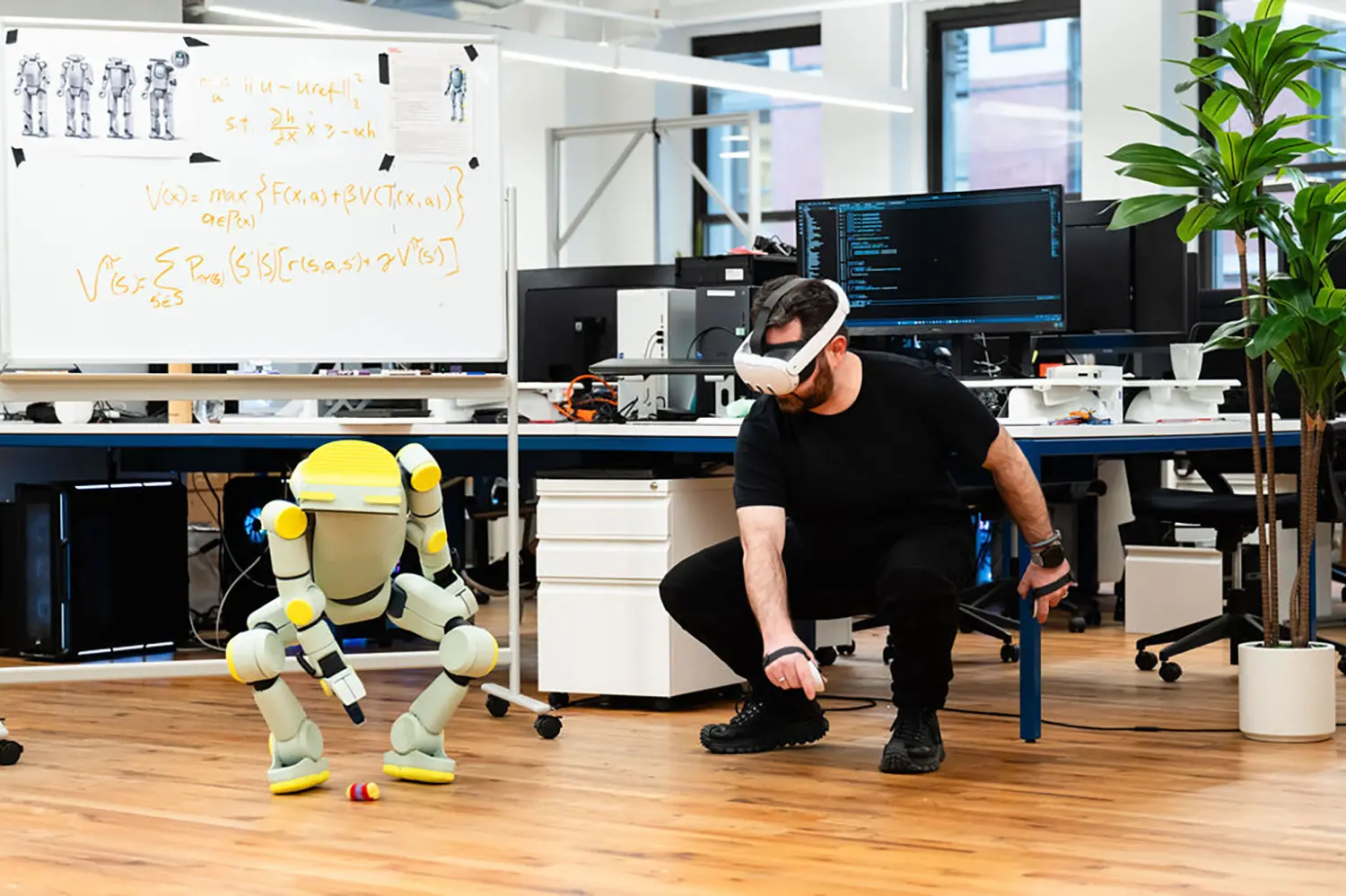
Inside the soft exterior, the hardware is serious. An NVIDIA Jetson AGX Orin 64GB drives onboard compute; a ZED2i RGB-D stereo camera handles depth perception and navigation; a four-microphone array with dedicated DSP supports voice activation, speaker localization, and echo cancellation precise enough for natural conversation in noisy environments. The 29-DoF articulated platform runs on a 46.8V system with a battery life of 3 to 3.5 hours. Full-body VR teleoperation via Meta Quest 3 lets operators inhabit the robot directly — not to show off a demo, but to collect human demonstration data for imitation learning and run human-in-the-loop training sessions that would otherwise require purpose-built laboratory infrastructure. The SDK exposes Python and C++ APIs alongside simulation compatibility with NVIDIA Isaac Sim, Gazebo, and MuJoCo. The $50,000 Creator Edition price point is not aimed at consumers — it is aimed at the researchers, developers, and institutions that build what consumers eventually use.
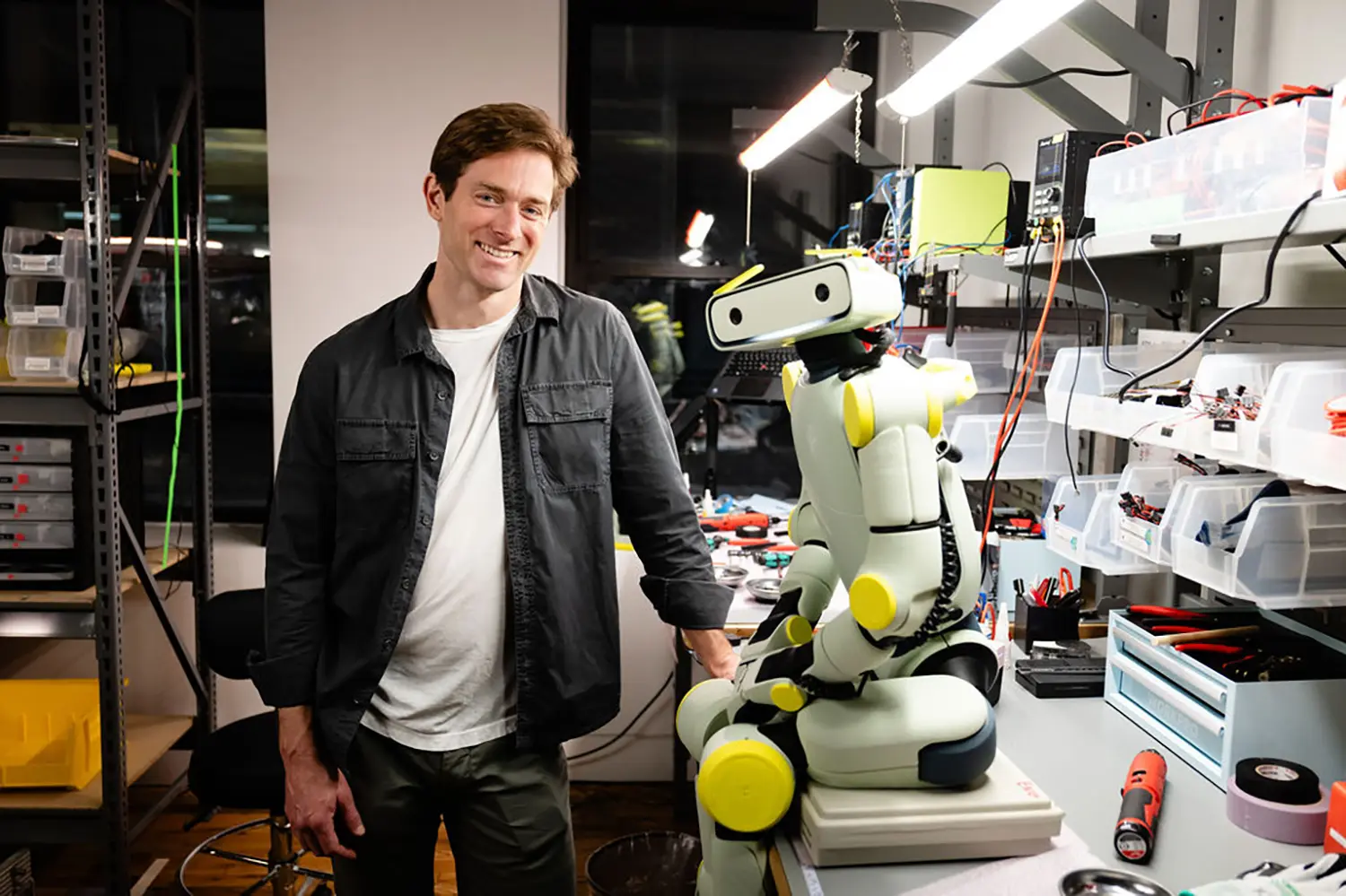
The brief Fauna wrote for itself was character. Co-founder and CTO Josh Merel, a former DeepMind research scientist, framed it plainly at launch: the goal was to make embodied AI development accessible to people with machine learning backgrounds who have never touched a hardware platform. Not roboticists. Not mechanical engineers. People who think in models and want to test them in physical space without spending a year learning actuator dynamics. Sprout’s design — approachable, readable, emotionally legible — is inseparable from that brief. A robot that telegraphs its intentions through body language and expressive hardware is also a robot that a non-specialist can deploy in a retail space, a university corridor, or an entertainment environment without requiring a risk assessment team. Early customers included Disney, UC San Diego, and NYU — organizations that span entertainment, research, and education, united by the need for a safe indoor humanoid platform that people can be around without training.
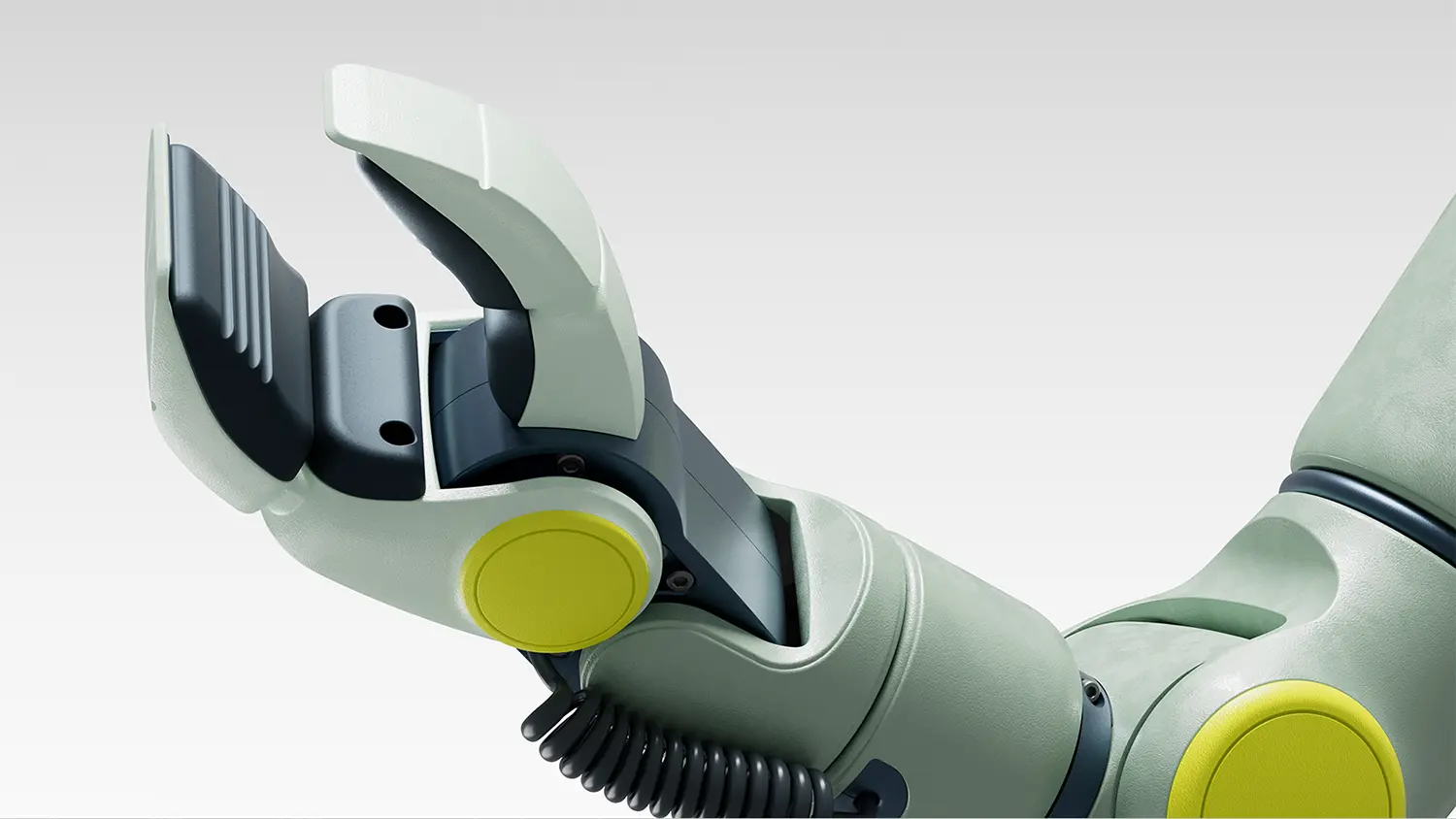
The material palette is as considered as the form. Silver-grey tones across the body, yellow-green accent joints at the shoulders and hips, a rectangular head that reads more product than android. There is something of the Pixar character about Sprout’s proportions and color language — deliberately cartoon-adjacent in the way that only deliberate design decisions can be. The palette sits closer to a well-designed piece of consumer electronics than to the matte-black utility aesthetic that dominates industrial humanoid robots. This is not coincidence. It is the visual grammar of a machine that wants to be welcomed rather than tolerated.
The field Sprout enters is crowded but oddly uniform. Every major humanoid robot platform launched in the last three years — from Figure 03 to Apollo to the latest iterations of Atlas — shares the same design DNA: tall, powerful, built for industrial throughput, and aesthetically indifferent to the person standing nearby. They are machines optimized for capability metrics, where approachability never appears on the specification sheet. Sprout is the first platform in this generation to treat the emotional response of a bystander as an engineering constraint equal in weight to payload capacity or locomotion speed. That reordering of priorities — human comfort before performance — is not a compromise. It is a different product category, and one that the rest of the industry has not yet followed Fauna into. Whether that changes now that Amazon holds the platform is the most interesting open question in social humanoid robot design heading into the second half of the decade.
Fauna Robotics was acquired by Amazon in March 2026, less than two months after Sprout shipped. The acquisition confirmed what the design had been arguing from the start: the most strategically valuable robot in 2026 is not the one that lifts the most weight, but the one that people are willing to let into the room. Amazon — already operating more than one million robots in its fulfillment centers, and carrying the failed iRobot acquisition as a cautionary note on consumer robotics — saw in Sprout a platform that had already solved the hardest problem: human acceptance. Fauna continues to operate under its own name as “Fauna, an Amazon company,” still selling and supporting the Creator Edition.
What Sprout argues — and what the acquisition confirms — is that the most important design decision in the next generation of consumer humanoid robotics is not performance but legibility. A robot that people can read emotionally, that communicates intent through body language and expressive hardware, that does not require a robotics PhD to deploy, is more strategically valuable than a robot that can lift 50 kilograms. The eyebrows are not a gimmick. They are the thesis. And the rest of the industry will spend the next several years deciding whether to follow.