



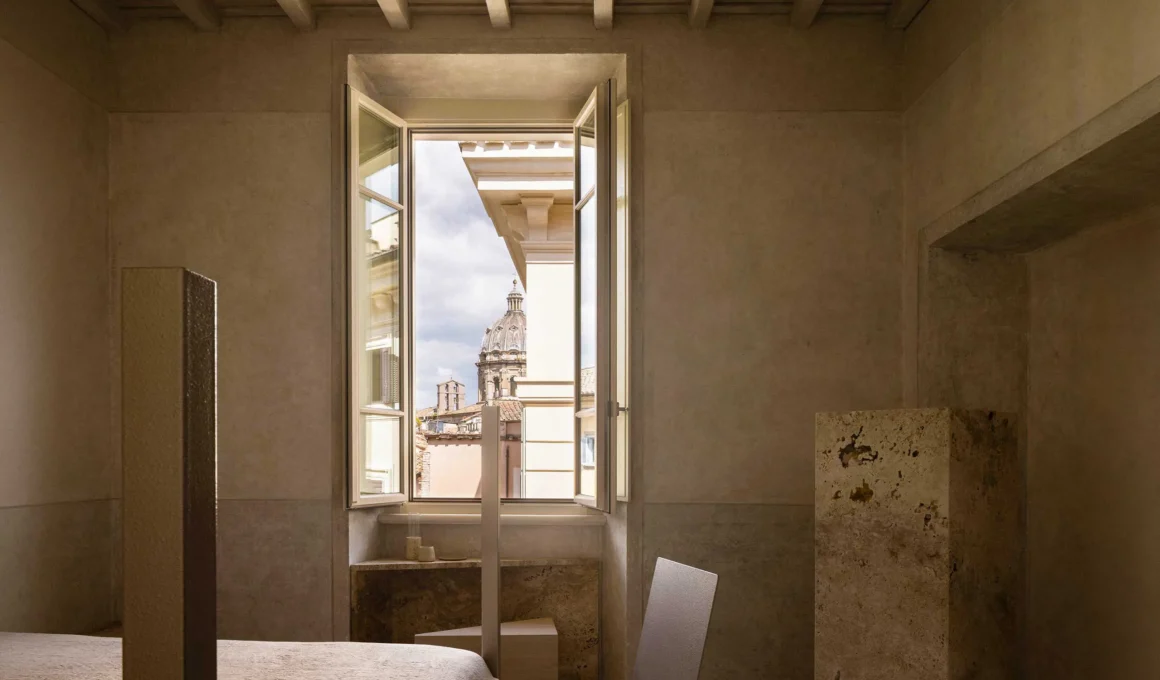
In the historic Regola district of Rome, Italian designer and artisan HENRYTIMI has transformed a former 17th-century Franciscan monastery into the Nomos Hotel, a quiet revolution in hospitality that rejects contemporary ostentation in favor of raw material honesty, spatial silence, and the profound historical resonance of the Eternal City.
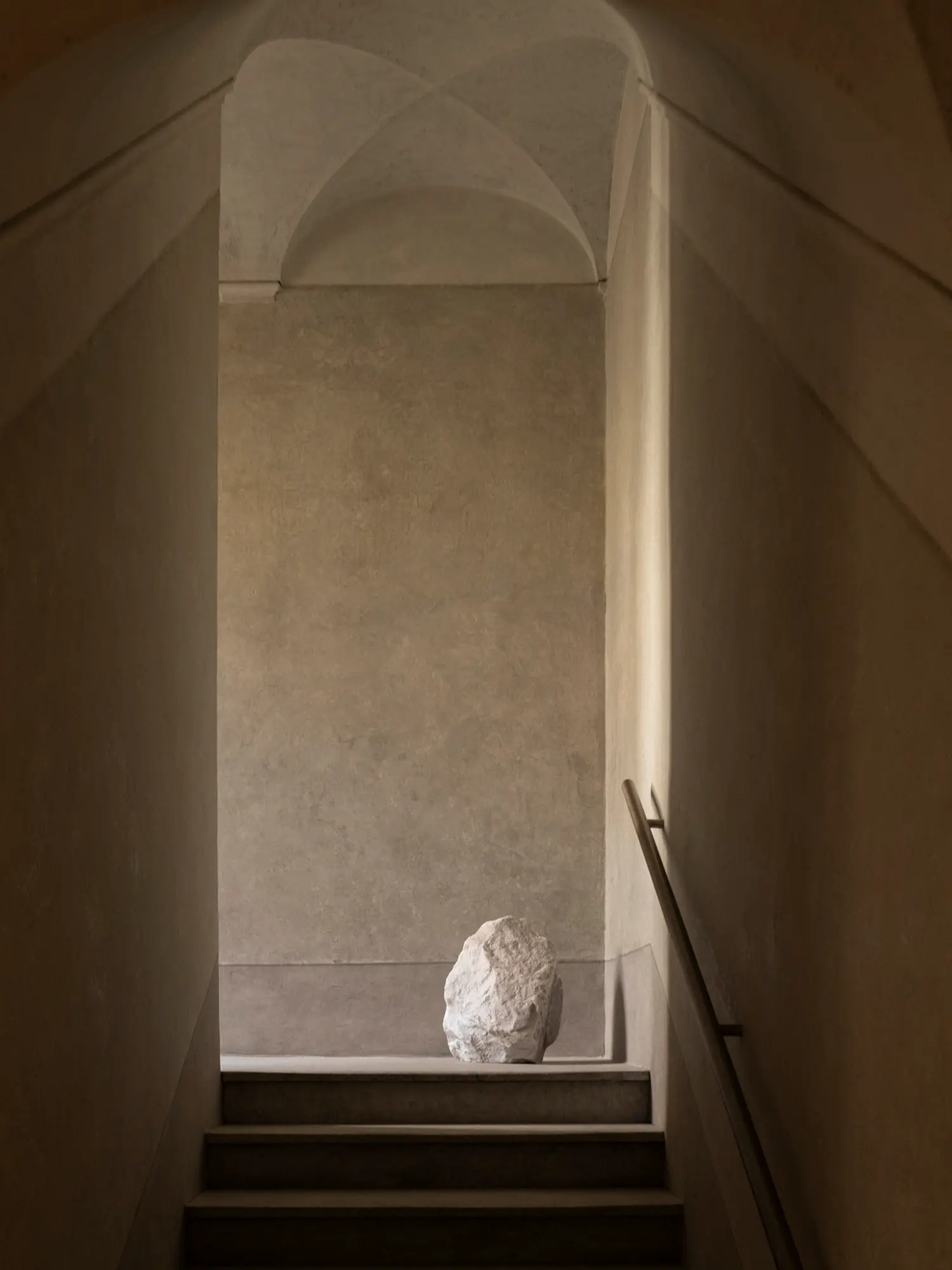
A Philosophy of Sacred Silence. The project moves far beyond typical restoration, establishing an intentional dialogue between ancient monastic life and modern physical presence. Nestled near San Paolo alla Regola, the building is treated by HENRYTIMI not as a canvas to overwrite, but as a living volume to be carefully heard. By stripping away centuries of superficial additions, the studio has unearthed the original, quiet spirit of the space, opting for a philosophy where luxury is defined by the absolute absence of formal and material arrogance, setting a new benchmark for minimalist hospitality.
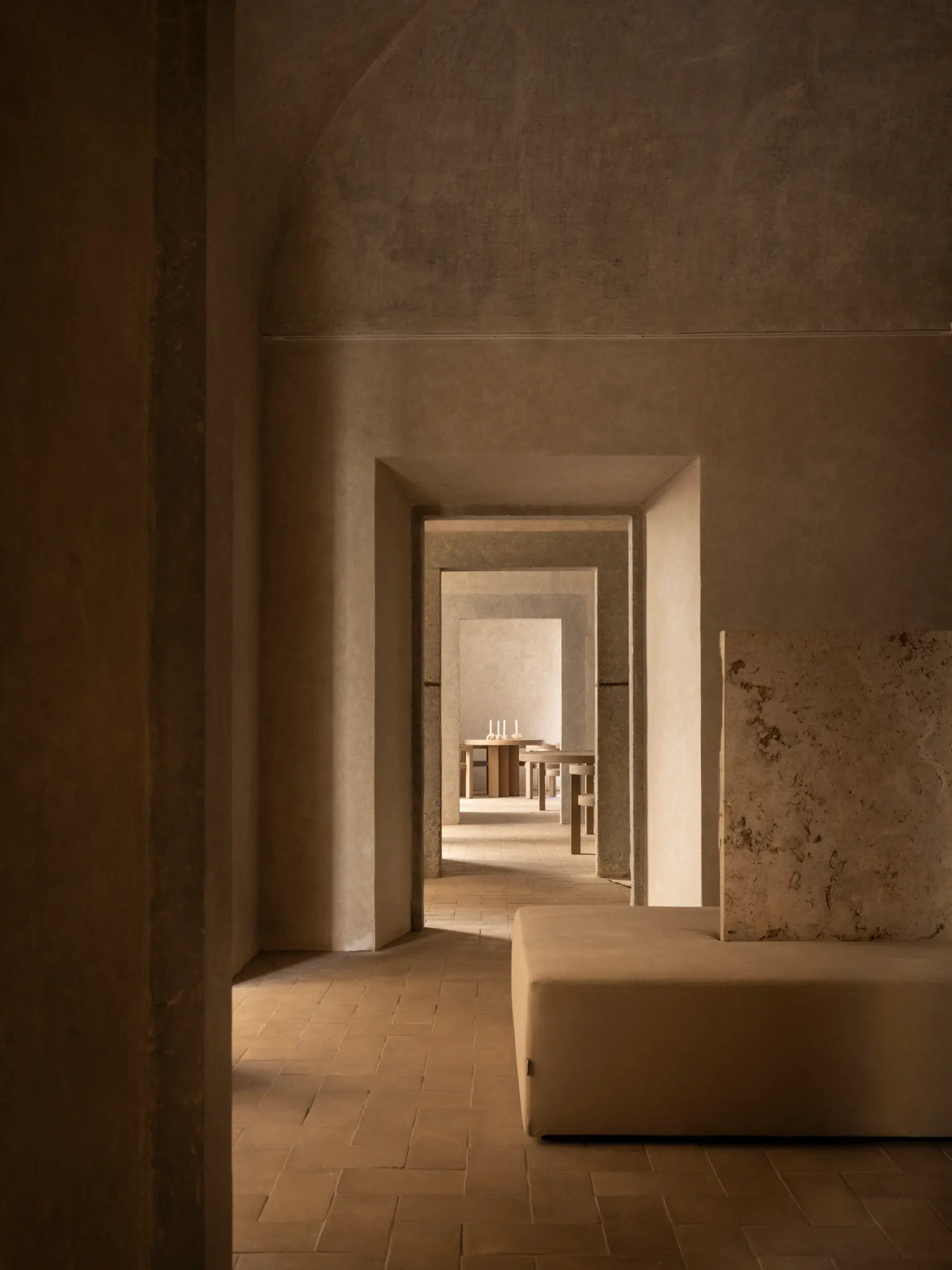
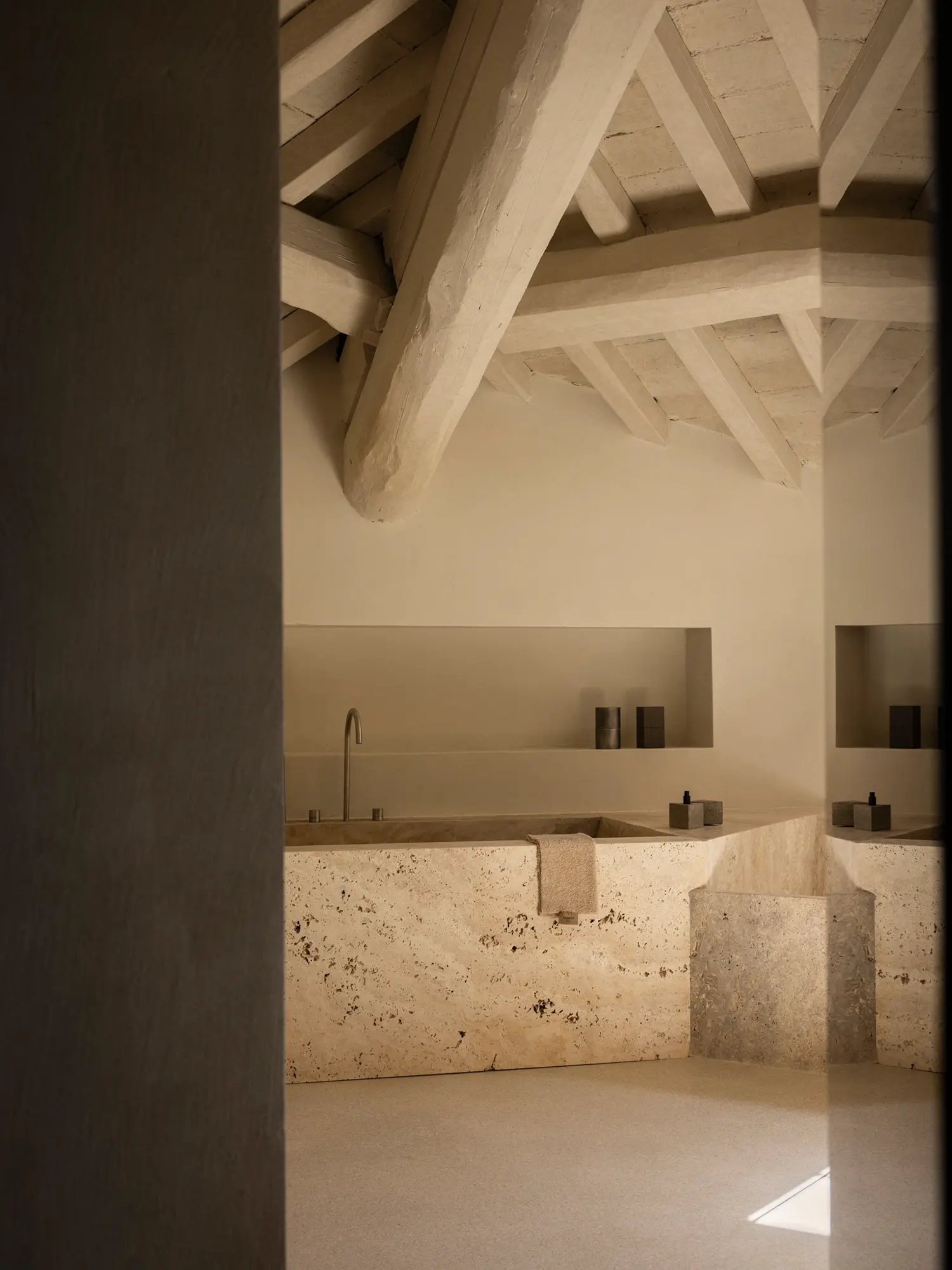
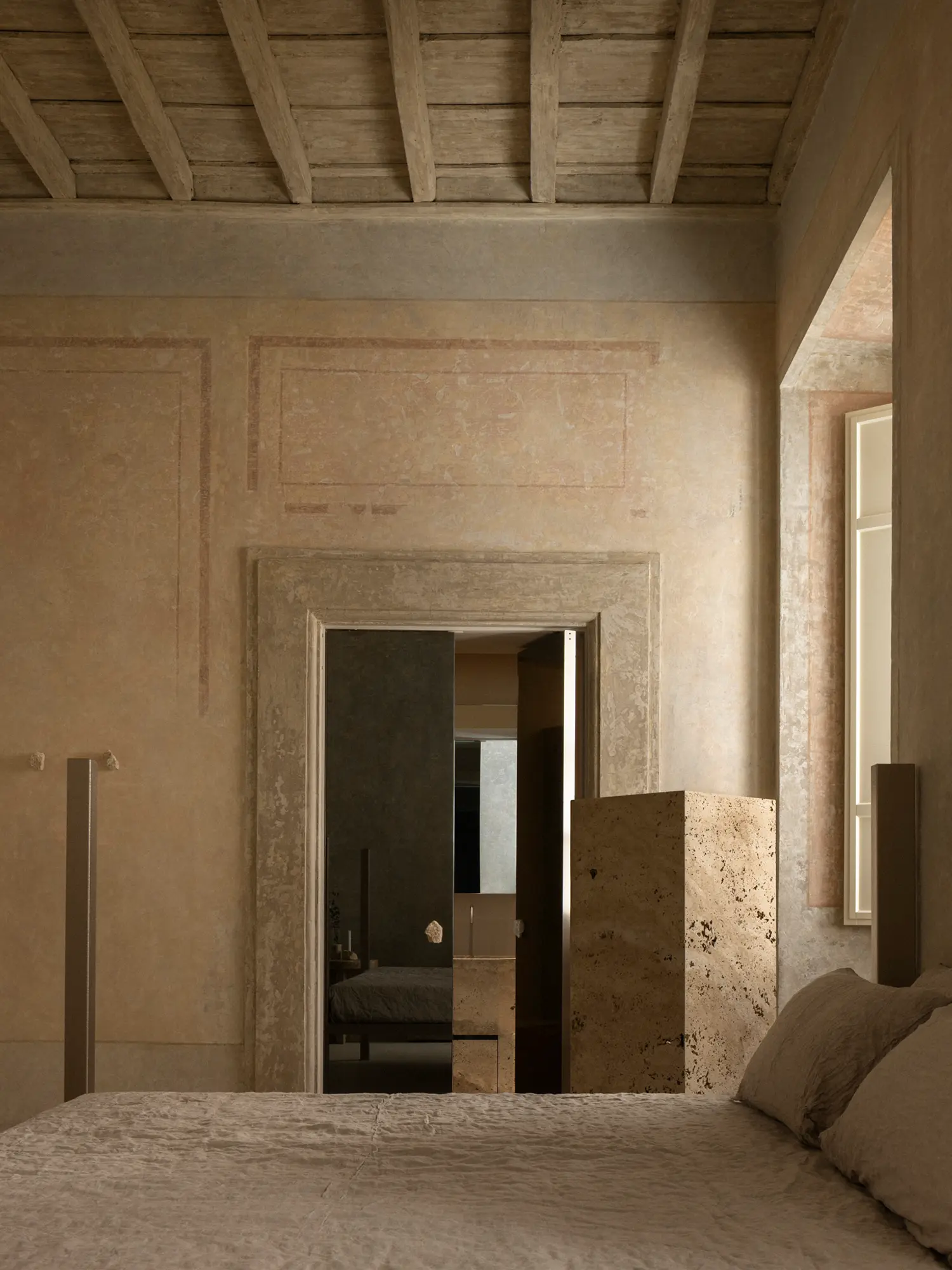
Sensory Subtraction and Material Honesty. Step inside and the sensory landscape shifts from Rome’s chaotic exterior to an almost monastic hush. The interior surfaces are finished with hand-applied clay plaster, raw travertine, and custom-poured terrazzo, reflecting natural light with a soft, chalky diffusion. By prioritising tactile depth over visual decoration, the surfaces function as quiet devices of observation, where the natural imperfections of stone and earth carry the physical memory of the site, creating a deeply engaging sensory experience.
Sculptural Living in the Raw Rooms. The 31 guest rooms and suites, referred to as “Raw Rooms,” are conceived as inhabitable sculptures where every piece of furniture has been custom-crafted by HENRYTIMI’s atelier. Rather than standard hotel furnishings, these creative spaces feature monolithic travertine totems that function as washbasins, desk alcoves carved directly into the walls, and low-slung, geometric bed frames wrapped in organic linen. Octagonal geometries and strategically positioned mirrors manipulate perspective, capturing the slow transit of Roman light across the muted beige and greige palette.

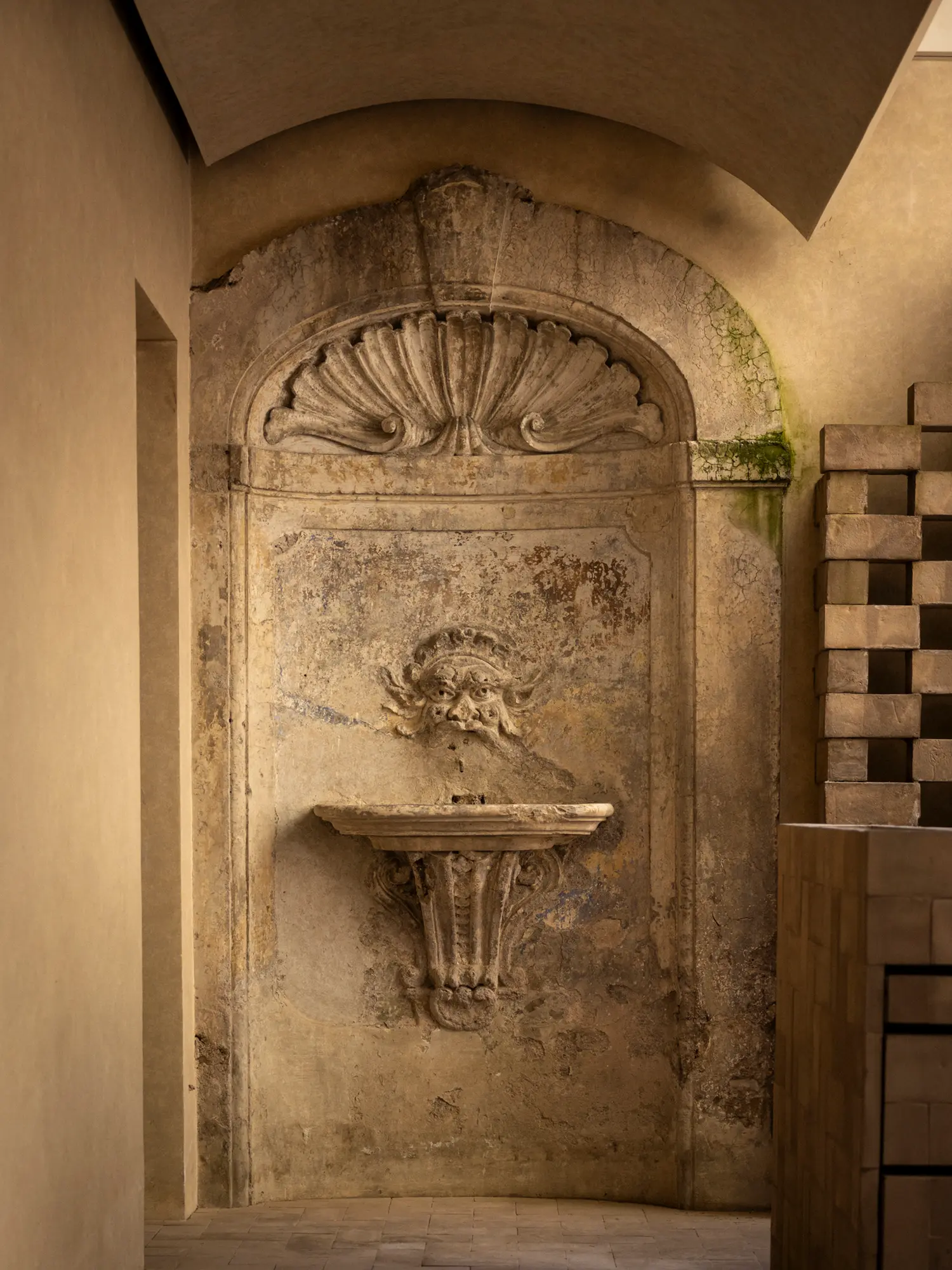
A Monumental Courtyard and Living Gallery. The ground floor unfolds around a secluded inner courtyard, where the transition between the interior and exterior is intentionally blurred. Here, towering stone totems reminiscent of ancient Roman columns frame a minimalist restaurant and bar, anchoring the communal space in historic weight. It is an environment designed as an art-interior—a continuous narrative where furniture, structural elements, and history merge into a cohesive, physical exhibition that guests are invited to inhabit rather than merely observe.
The Rise of the Micro-Boutique Masterpiece. The debut of the Nomos Hotel highlights a broader, significant shift within the global hospitality industry. As mainstream luxury properties increasingly fall victim to aesthetic homogenisation—driven by globalised trends and repetitive, “instagrammable” interiors—the pursuit of genuine character has migrated almost exclusively to highly curated boutique hotels. These rare projects resist commercial conformity by behaving as uncompromising artistic statements, prioritizing cultural storytelling and spatial poetry over universal appeal.
The Artistic Counter-Movement. This trajectory towards highly individualised, slow-living spaces is gaining momentum in the world’s creative capitals. A prime example is the stunning Celadon Suite by Uchronia for the Mandarin Oriental in London, where the Parisian studio utilized a singular, striking color palette to craft an immersive, sensory universe within an otherwise traditional grand hotel. Whether through the vibrant, wave-like textures of Uchronia’s Parisian fantasy or the radical, silent stone-carving of HENRYTIMI in Rome, these exceptional hospitality projects are redefining travel.
A New Blueprint for the Design Traveler. For the modern traveler who curates their journeys around spatial and tactile discovery, these destinations offer a profound shift from predictable luxury. They prove that the most memorable travel experiences do not rely on standard amenities, but on the emotional resonance of the space itself. By transforming a historic Roman monastery into a silent, living gallery, Nomos Hotel establishes itself not just as a place to stay, but as an essential pilgrimage site on the global design travel map, where the journey is as much about inner stillness as it is about exploring the city outside.