



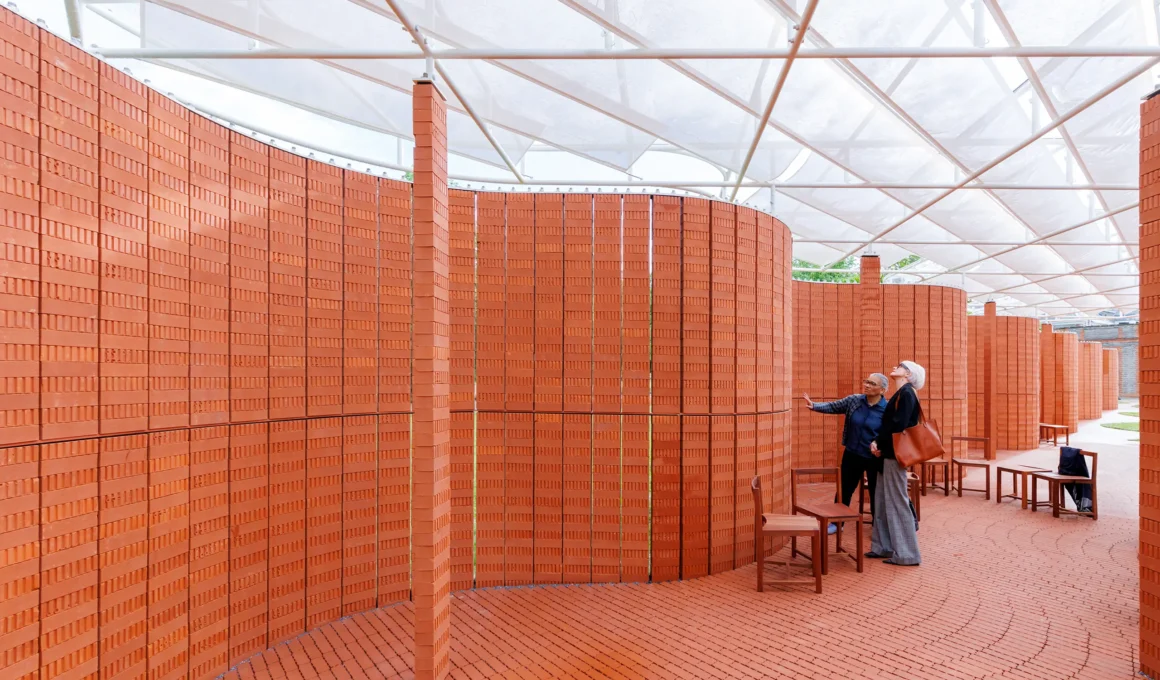
The 25th Serpentine Pavilion opens to the public on 6 June in London’s Kensington Gardens, designed by Isabel Abascal and Alessandro Arienzo of LANZA atelier — a Mexico City-based studio that turned a centuries-old structural trick into the central idea of a building that refuses to divide space, only shape it.
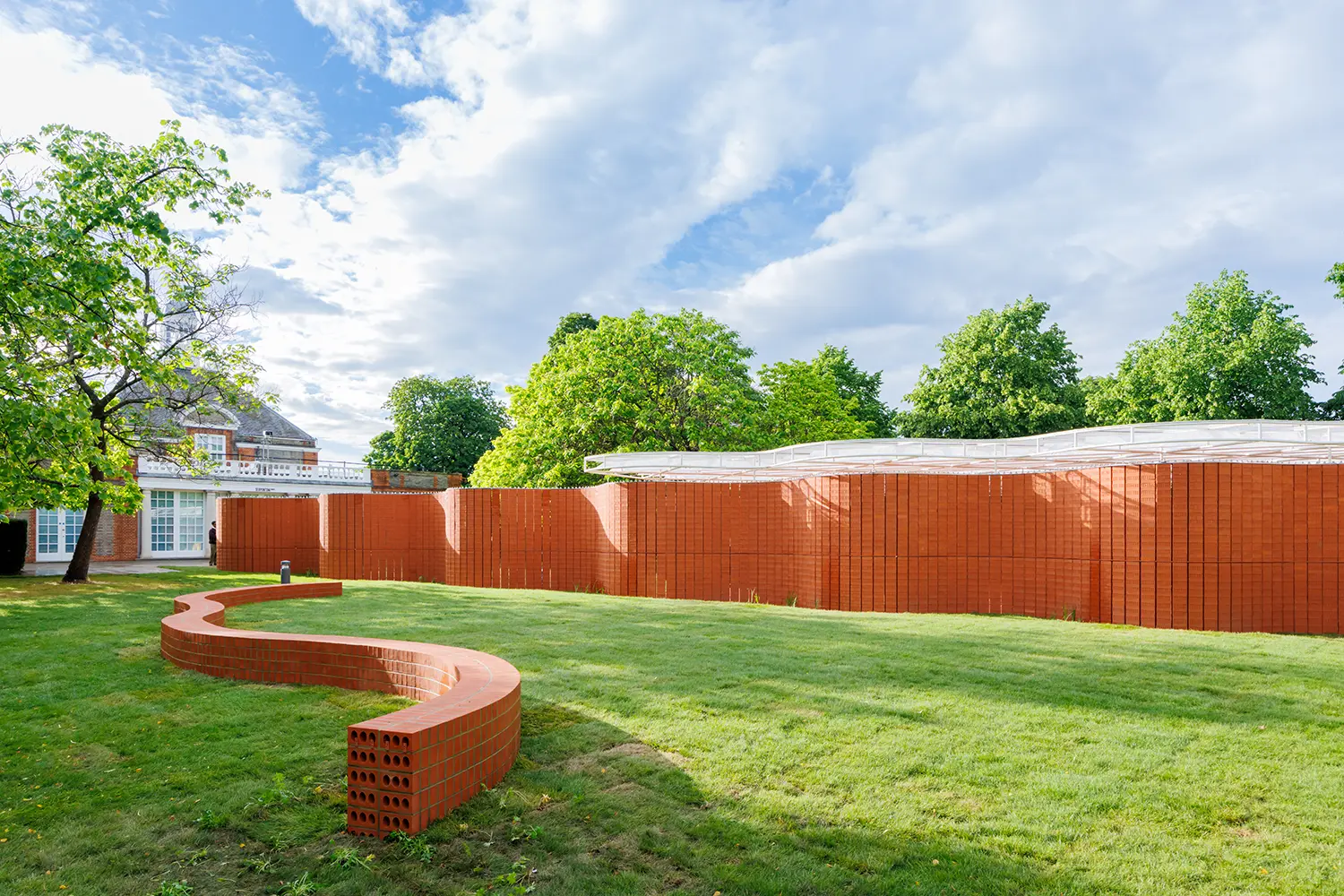
The most significant milestone in the Pavilion series since Zaha Hadid inaugurated it in 2000, a serpentine — the official title — draws its name and its logic from the crinkle-crankle wall, a serpentine brick wall composed of alternating curves whose sinuous geometry provides lateral stability with just a single brick’s width. Originating in ancient Egypt and introduced to East Anglia by Dutch engineers, the form requires roughly half the bricks of a straight wall, a fact that made it popular in Suffolk during the era of Britain’s Brick Tax. LANZA atelier found in it something more than structural economy: a device that both reveals and withholds, that shapes movement while refusing to block it.
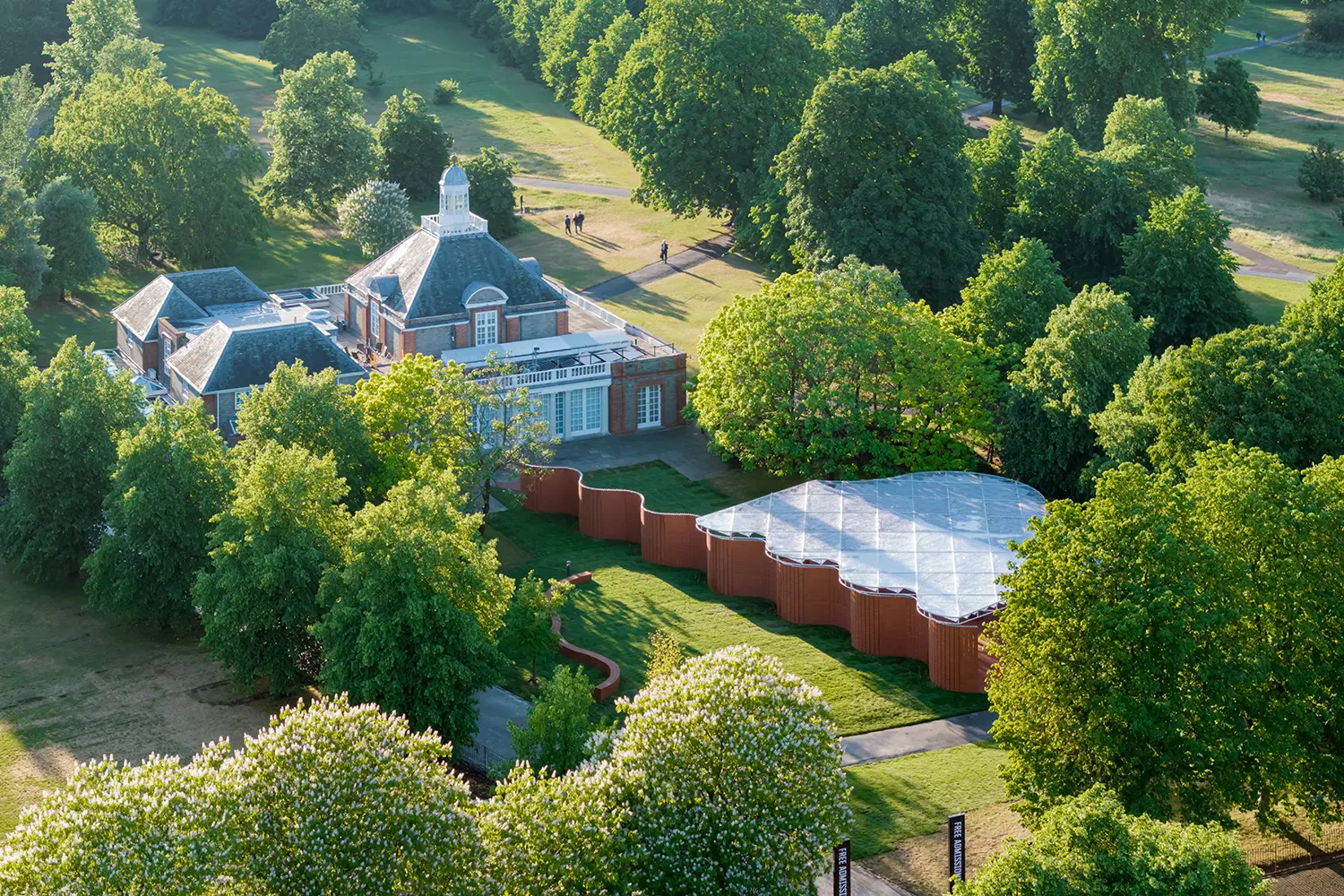
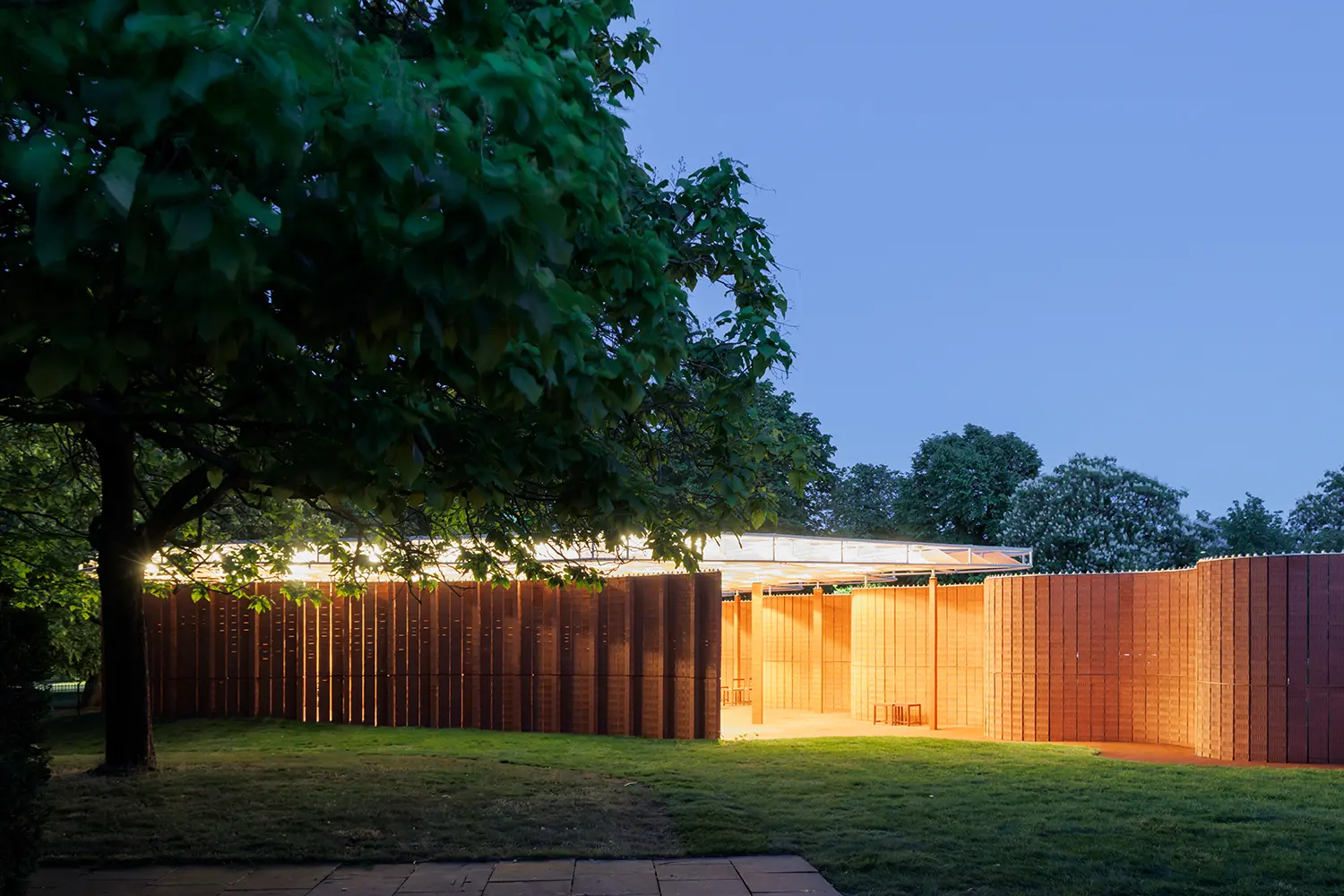
LANZA atelier’s crinkle-crankle wall design is not archaeological. The studio reactivated the type through its own spatial logic — a serpentine wall cuts diagonally through the site’s centre, transferring energy and rhythm to its surroundings, while a second, lower wall runs in dialogue with the tree canopy without disturbing it. The main structure is anchored to the northern edge of the site. Above everything, a translucent pavilion roof rests on brick columns that read like a grove of trees — letting light and air permeate continuously, collapsing the line between interior and exterior.

Brick as the primary structural material was a deliberate choice, not a default. Specifically, the project uses Sienna bricks — among the most common bricks in British construction — chosen to reinforce the connection with local building tradition while the structural system completely reinvents how they are laid. The fired clay units establish a conversation with the existing façade of Serpentine South Gallery, once a tea pavilion itself, and anchor the structure within the English garden tradition. But the brick here is never opaque in the conventional sense: the rhythmic repetition of columns transforms the wall from solid plane to permeable screen, so that visitors see through the Pavilion at every angle. The fully demountable masonry structure engineered by AECOM is technically ambitious — using a slender internal steel subframe and prestressed masonry units, eliminating traditional mortar beds in favor of soft joints, wedges, and shims. The entire structure can be disassembled and rebuilt elsewhere, extending its life well beyond October.
Founded in Mexico City in 2015, LANZA atelier is the work of Isabel Abascal and Alessandro Arienzo, whose practice moves fluidly between scales — from public infrastructure to furniture, from exhibition design to urban space. Their selection marks only the second Mexican architecture studio commissioned for the Serpentine Pavilion, following Frida Escobedo in 2018 — a commission we covered when the studio was first announced earlier this year. The studio’s work has been exhibited at SFMOMA, the São Paulo Architecture Biennale, and the Lisbon Triennale; in 2023 they received the Emerging Voices Award from the Architectural League of New York. In 2026, alongside the Serpentine commission, LANZA is simultaneously designing the Kosovo Pavilion at the 61st Venice Art Biennale.
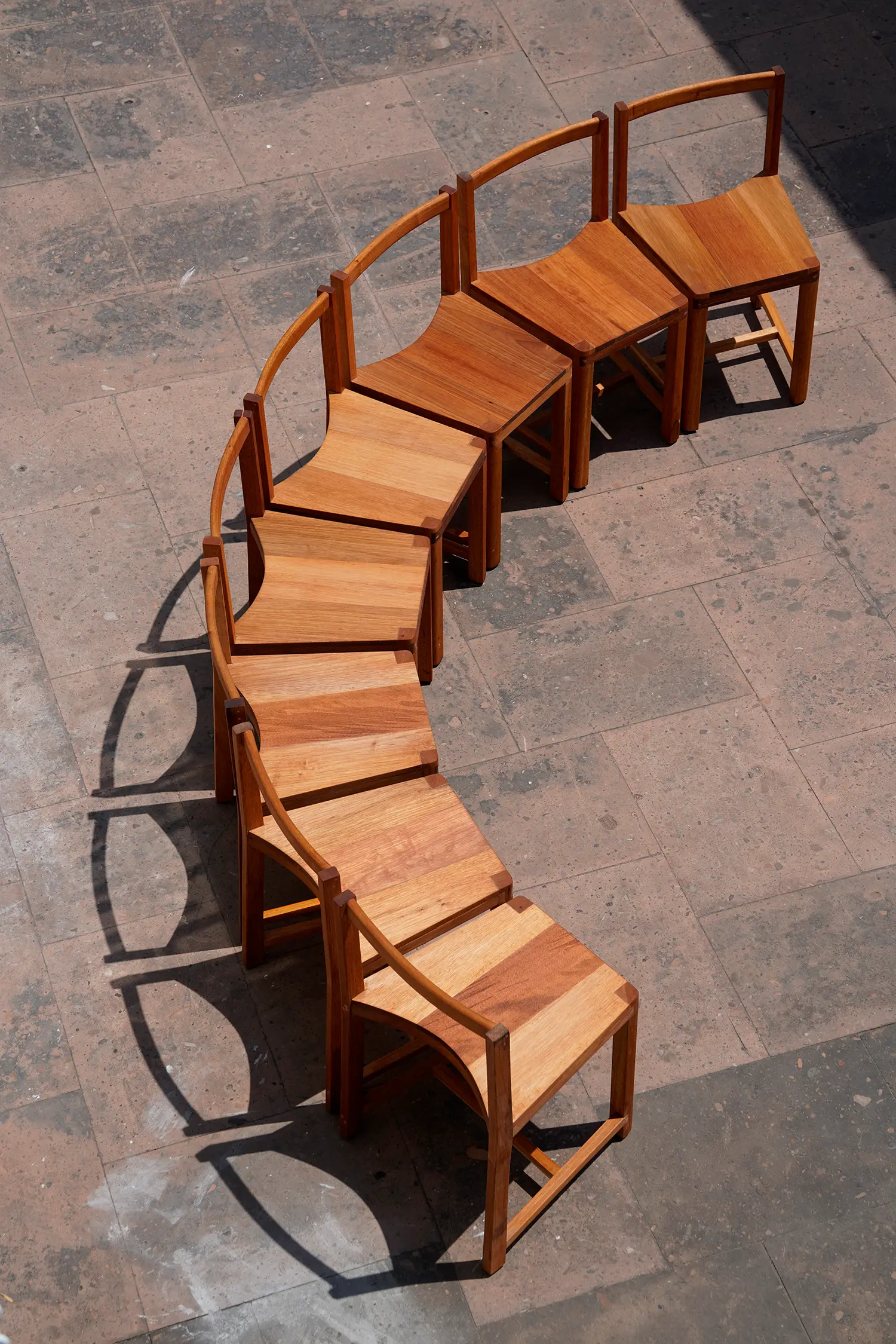
The conceptual framework behind a serpentine reaches further than the English countryside. Abascal’s accompanying text — titled A Serpent’s Tale — traces the serpent figure across Mesoamerican mythology, Greek origin stories, the linguistics of Mayan construction, and the etymology of the word “paradise” itself, which derives from the Avestan pairidaeza: a walled garden in architectural history. The essay reframes the Pavilion not as an enclosure but as a place around a wall — a contemporary pairidaeza where the bricks are inanimate, as the architects write, yet not entirely without a soul. That poetic register is not decorative. It reflects a studio that treats drawing, model-making, and material research as forms of thinking rather than production tools.
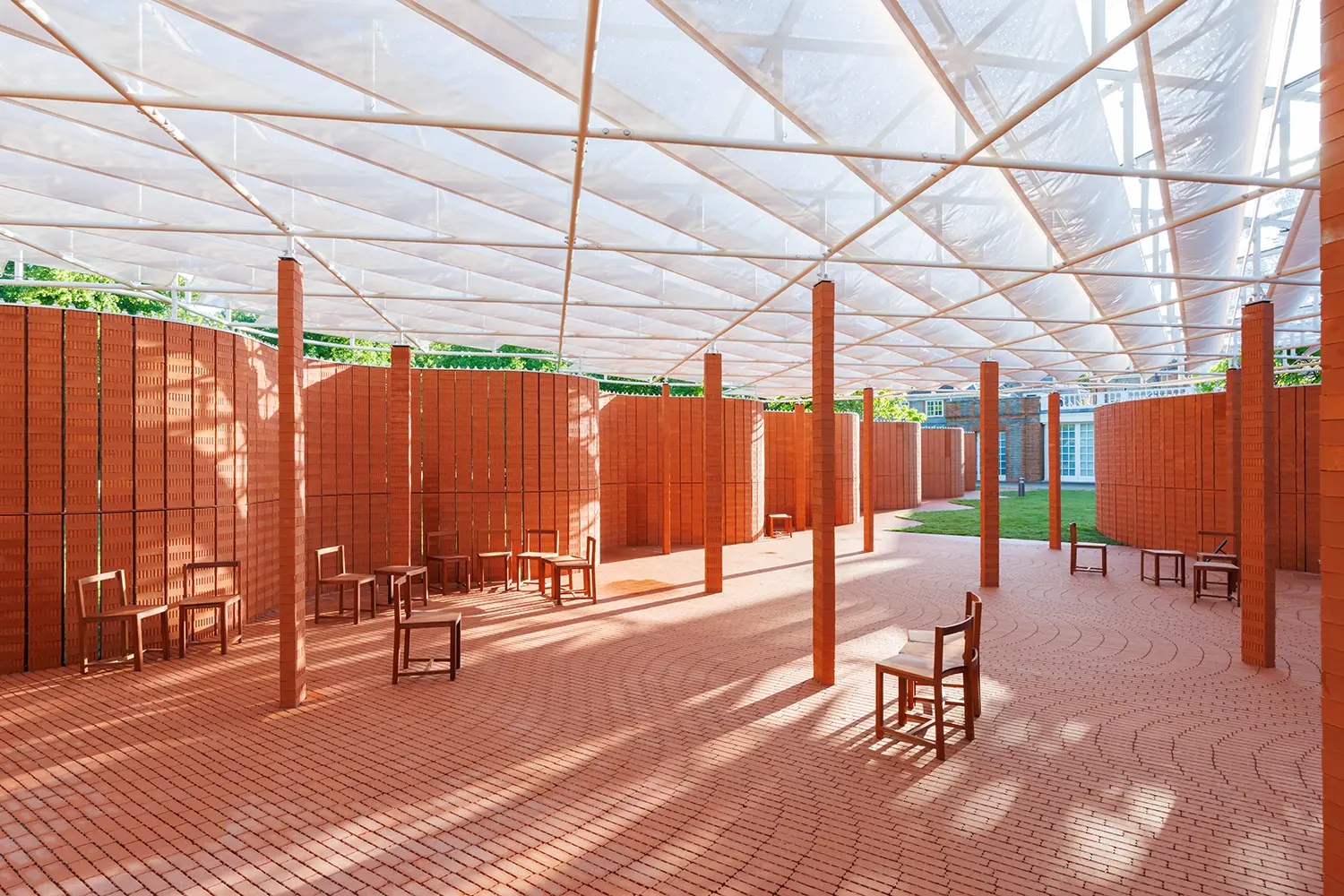
Sustainable pavilion construction is central to the engineering approach. Foundations have been reclaimed from previous structures on the site, significantly reducing embodied carbon. The modular build was prefabricated at Stage One’s facility in York and assembled on site in forty days. The lighting scheme illuminates the roof’s structural fins at night with rhythmic lines echoing filtered sunlight, turning the translucent canopy into a glowing field after dark. This is the 17th Pavilion constructed by Stage One Creative Services and the 13th consecutive year AECOM has served as technical advisor.
The Serpentine public programme 2026 running through October marks the 25th anniversary of the series with unusual depth. On 5 June, Abascal and Arienzo are in conversation with Artistic Director Hans Ulrich Obrist. Free family days take place on 7 June, 19 July, and 23 August. Curator Tamsin Hong leads free afternoon tours on 20 June, 25 July, 29 August, and 10 October. From July, the Pavilion hosts Serpentine’s Park Nights programme of live, site-specific performances. A two-day symposium with the Zaha Hadid Foundation and the Architectural Association — held in the Zaha Hadid-designed Magazine at Serpentine North — commemorates both Hadid’s legacy and 25 years of the commission. Coinciding with the opening, Serpentine and Verlag der Buchhandlung Walther und Franz König publish a serpentine, LANZA atelier’s first monograph, with contributions by Pulitzer Prize-winning author Cristina Rivera Garza, curator José Esparza Chong Cuy, and a poem by Ocean Vuong.
The Serpentine Pavilion 2026 is sponsored by Goldman Sachs — for the twelfth consecutive year — with Rolex joining for the first time as Official Timepiece, and major support from Qatar Museums.
Serpentine Pavilion 2026 by LANZA atelier | Where: Serpentine South, Kensington Gardens, London W2 3XA — When: 6 June – 25 October 2026