



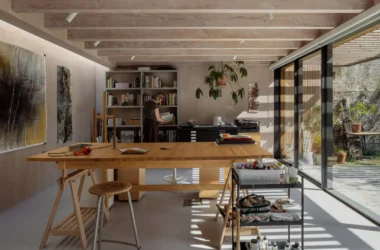
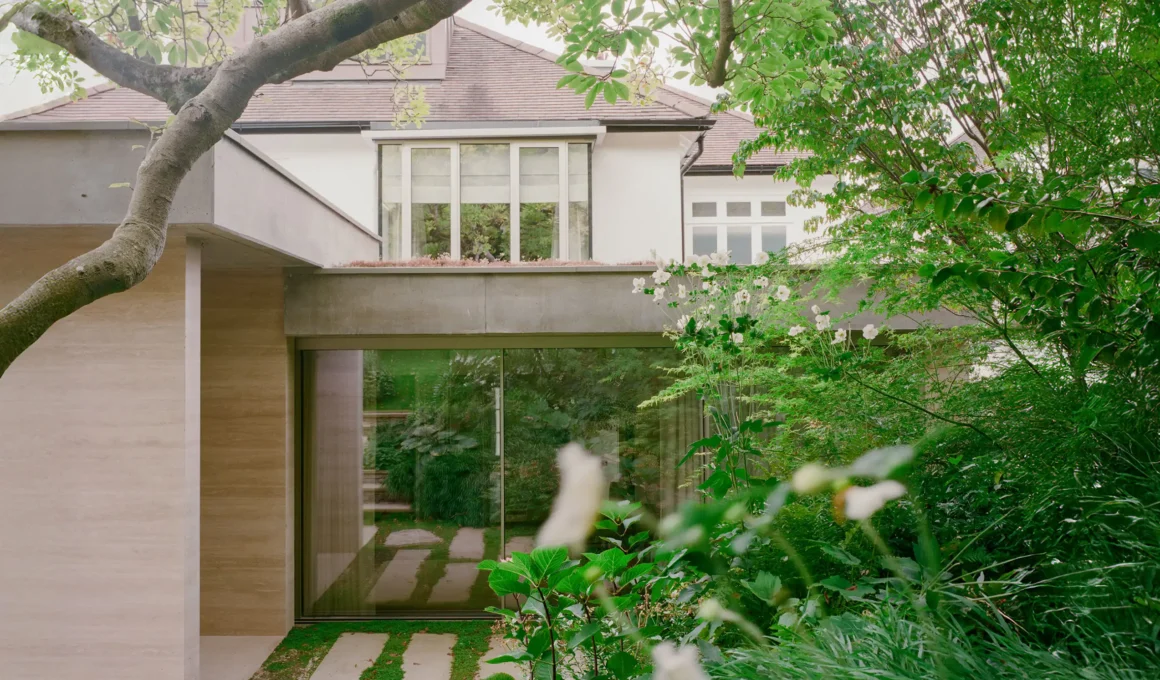
In the verdant, sloping terrain of Highgate, London, the dialogue between a home and its hillside is often defined by resistance, yet Matthew Giles Architects has opted for a far more harmonious approach. Known as “The Space Between,” this project is less a renovation and more a radical reimagining of how a family home can breathe within the UK’s complex urban landscapes. By navigating a dramatic seven-metre fall from the driveway to the garden’s peak, the architects have replaced a fragmented layout with a series of interlocking volumes that feel as though they have been unearthed from the site itself rather than merely placed upon it.
A rhythmic ascent through the landscape defines the primary living experience. Rather than fighting the natural gradient, the kitchen, dining, and sitting rooms are choreographed as a sequence of half-metre steps that mirror the hillside’s rise. This tiered arrangement creates a sophisticated “rhythm of intimacy and release”—a sensory journey where the compression of a modest, cozy corner gives way to the airy expansion of a garden-facing lounge. It is a spatial strategy that echoes the textural sensitivity found in other recent London brick extensions, such as the Threshold Houseby Studio MCW, where the threshold between interior and exterior is intentionally blurred to enhance the domestic experience.
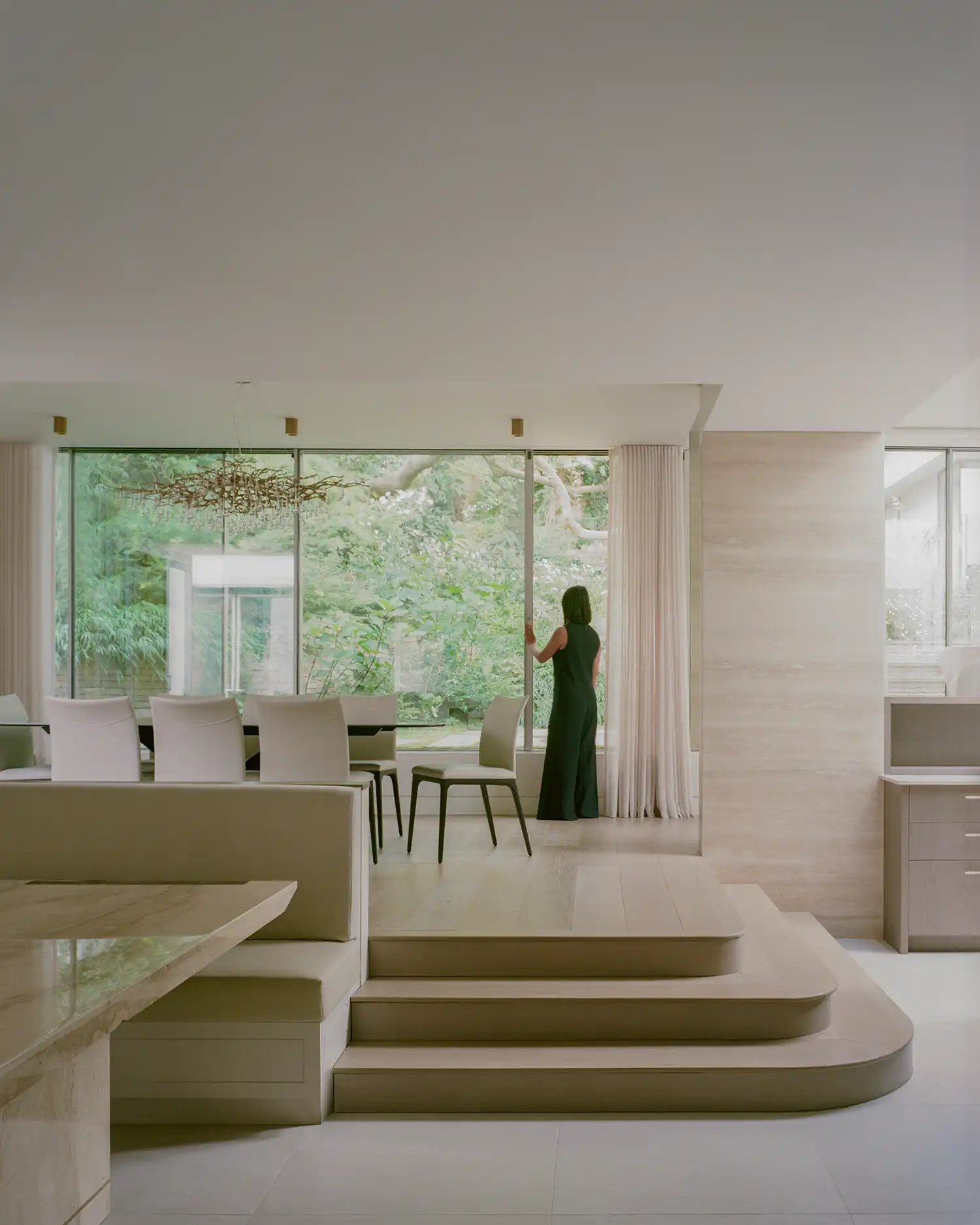
The material palette serves as a tectonic anchor, grounding the home’s ethereal light with a rigorous structural honesty. Throughout the extension, the interplay of travertine—alternating between rough-hewn and polished finishes—and raw concrete provides a sculptural depth. These robust elements are softened by the strategic use of timber, which introduces a tactile, human scale to the kitchen and communal areas. This balance of the “raw and the refined” ensures that while the architecture remains unapologetically modern, it retains a warmth essential for family life, much like the Victorian renovation seen in the Sobremesa House, which prioritized entertaining and heritage within a contemporary frame.
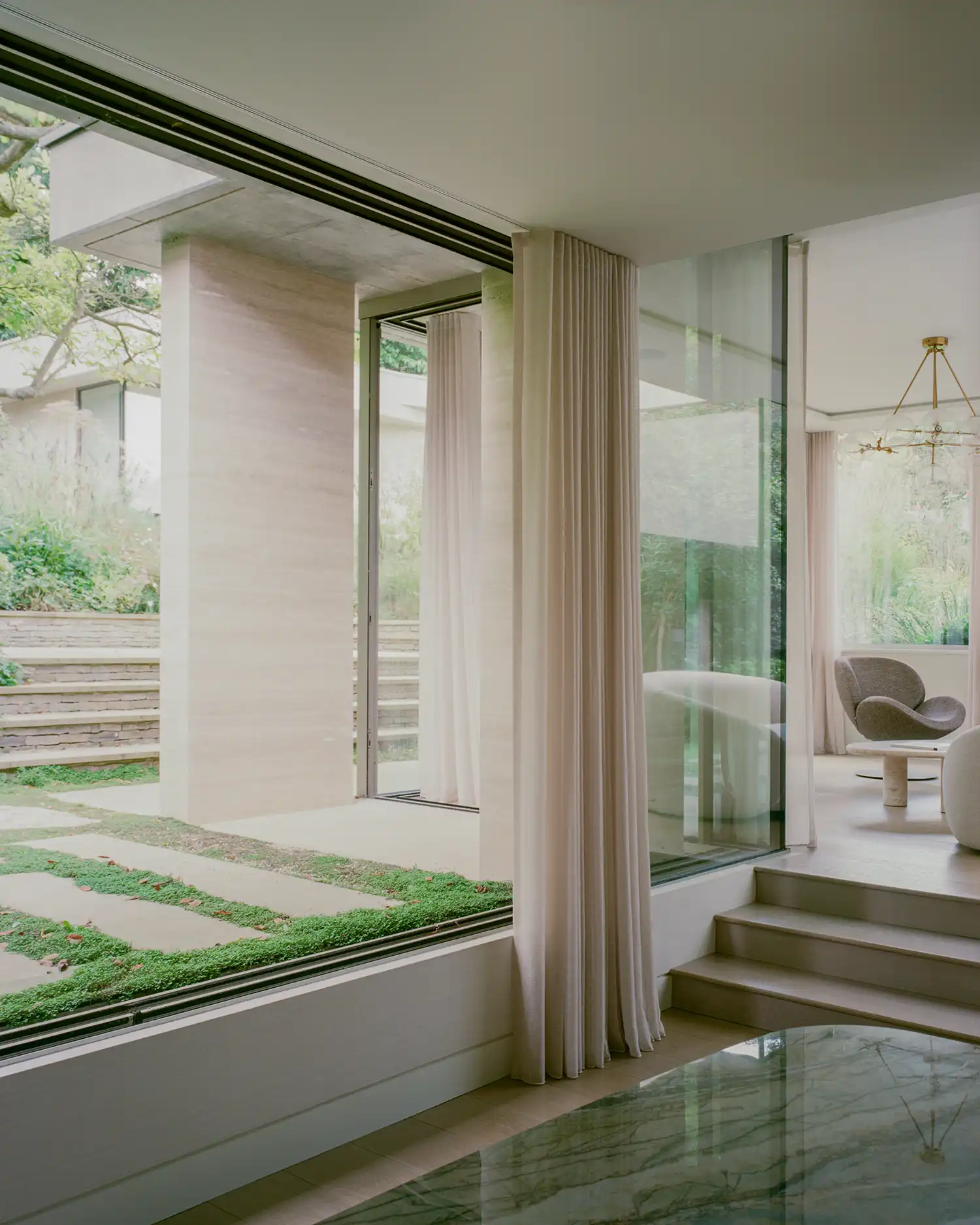
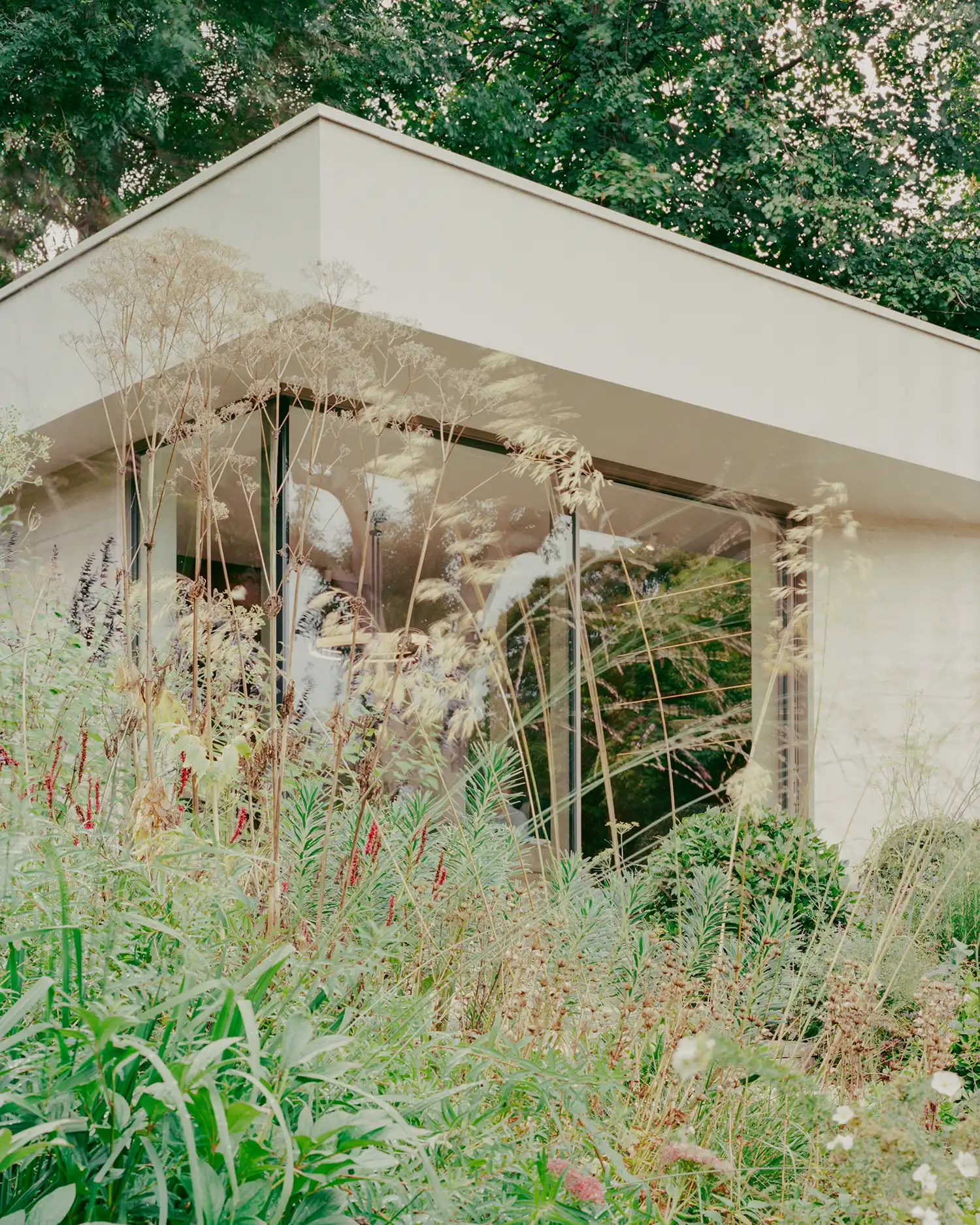
Seamless integration between architecture and nature is achieved through a “living” roof that acts as a visual bridge. When viewed from the top of the garden, the green roof makes the extension appear as if the lawn has been lifted and draped over the structure, masking the building’s footprint. At the far end of the site, a new garden annex mirrors the main house’s architectural language, creating a silent dialogue across the newly landscaped “external rooms.” This holistic approach ensures that the garden is not merely a backdrop but an active participant in the home’s daily life, filtered through high-performance glazing that frames the Highgate greenery like living art.
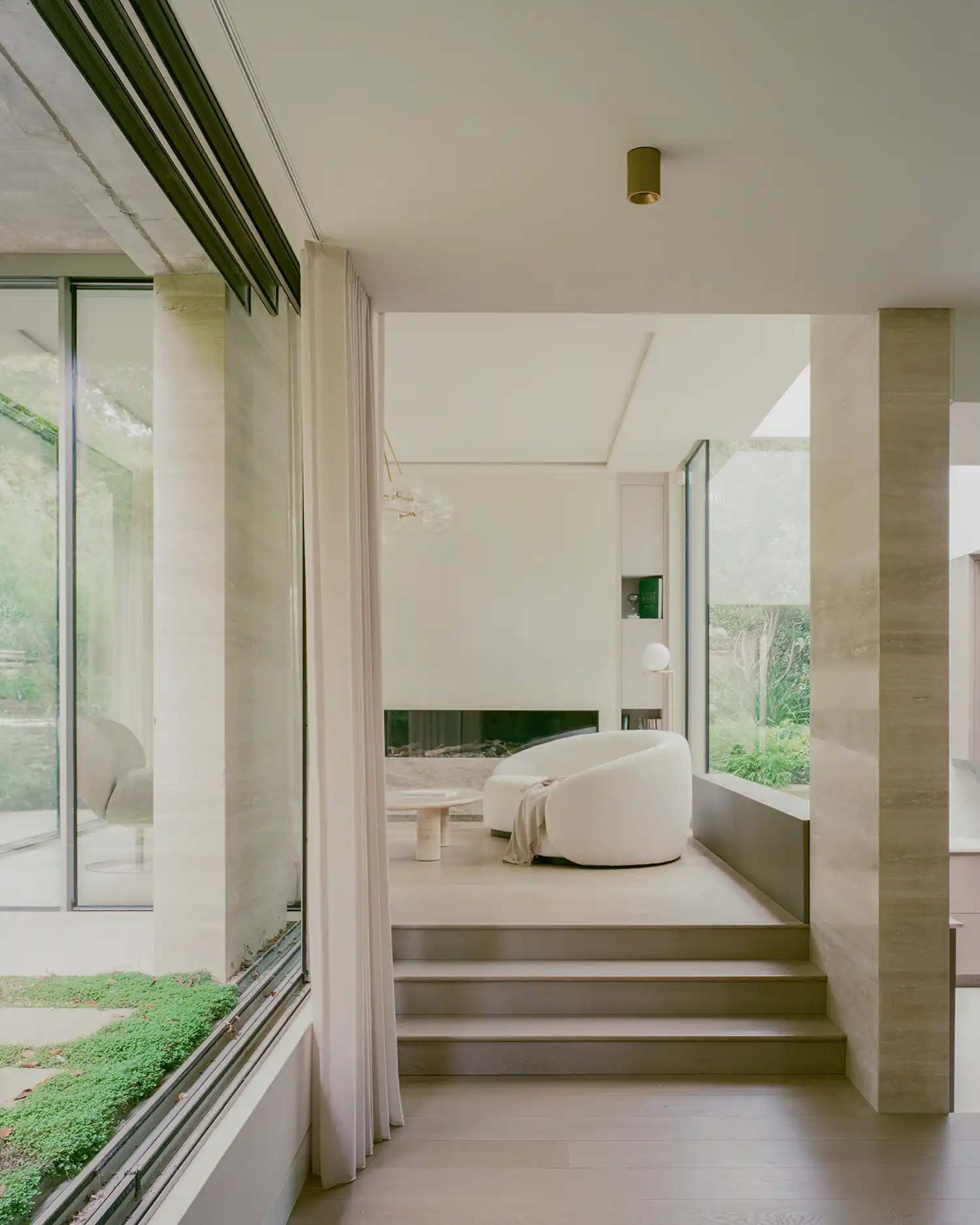
Sustainability is woven into the home’s DNA rather than applied as an afterthought. The exposed concrete frame is not just an aesthetic choice; it serves as essential thermal mass, regulating the internal climate by absorbing and releasing heat. By retaining the original timber structure and preserving period features like cornicing and flooring, Matthew Giles Architects significantly reduced the project’s embodied carbon. This commitment to the circular economy is bolstered by a high-performance envelope and passive solar design, ensuring the home remains energy-efficient throughout the erratic British seasons while supporting local biodiversity via its sprawling green roof.
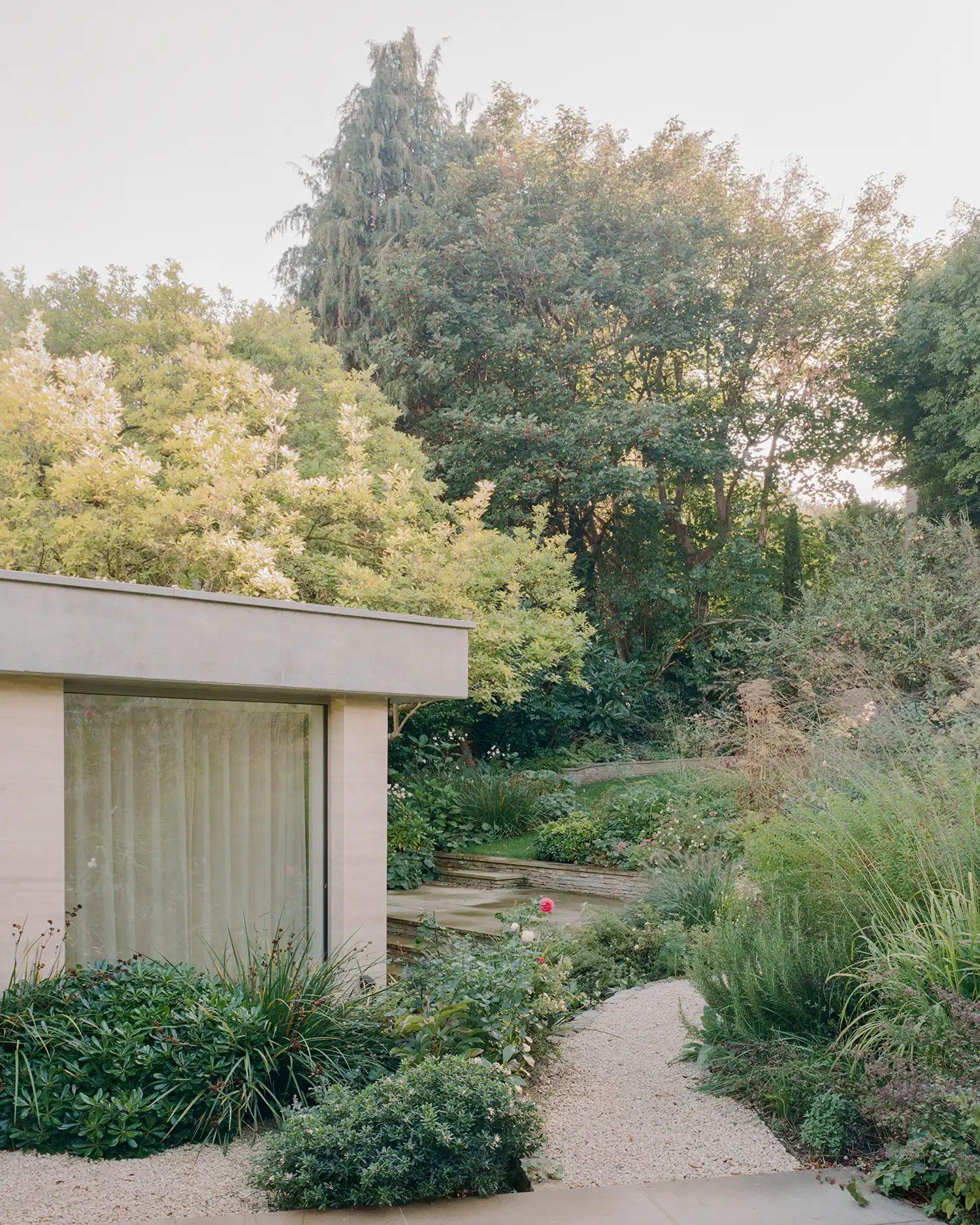
The final composition is a study in quiet confidence, proving that high-density urban living can still offer a profound connection to the earth. Through the careful reorganisation of space and a commitment to material clarity, “The Space Between” emerges as a sanctuary that respects its heritage while embracing a forward-thinking environmental strategy. It is a home that does not shout for attention but instead invites its inhabitants to slow down, stepping lightly through a site that finally feels complete.