




The intersection of automotive engineering and bespoke craftsmanship has long been the playground of Mulliner, Bentley’s oldest coachbuilder. With the unveiling of the Batur Convertible #4, we are witnessing more than just a seasonal update to a flagship series; it is a profound exploration of personal identity through the lens of high-performance design. This particular commission, destined for the private collection of enthusiast Sonia Breslow, serves as a masterclass in how a vehicle can transcend its mechanical origins to become a “forever car”—a permanent artifact of a collector’s aesthetic journey.
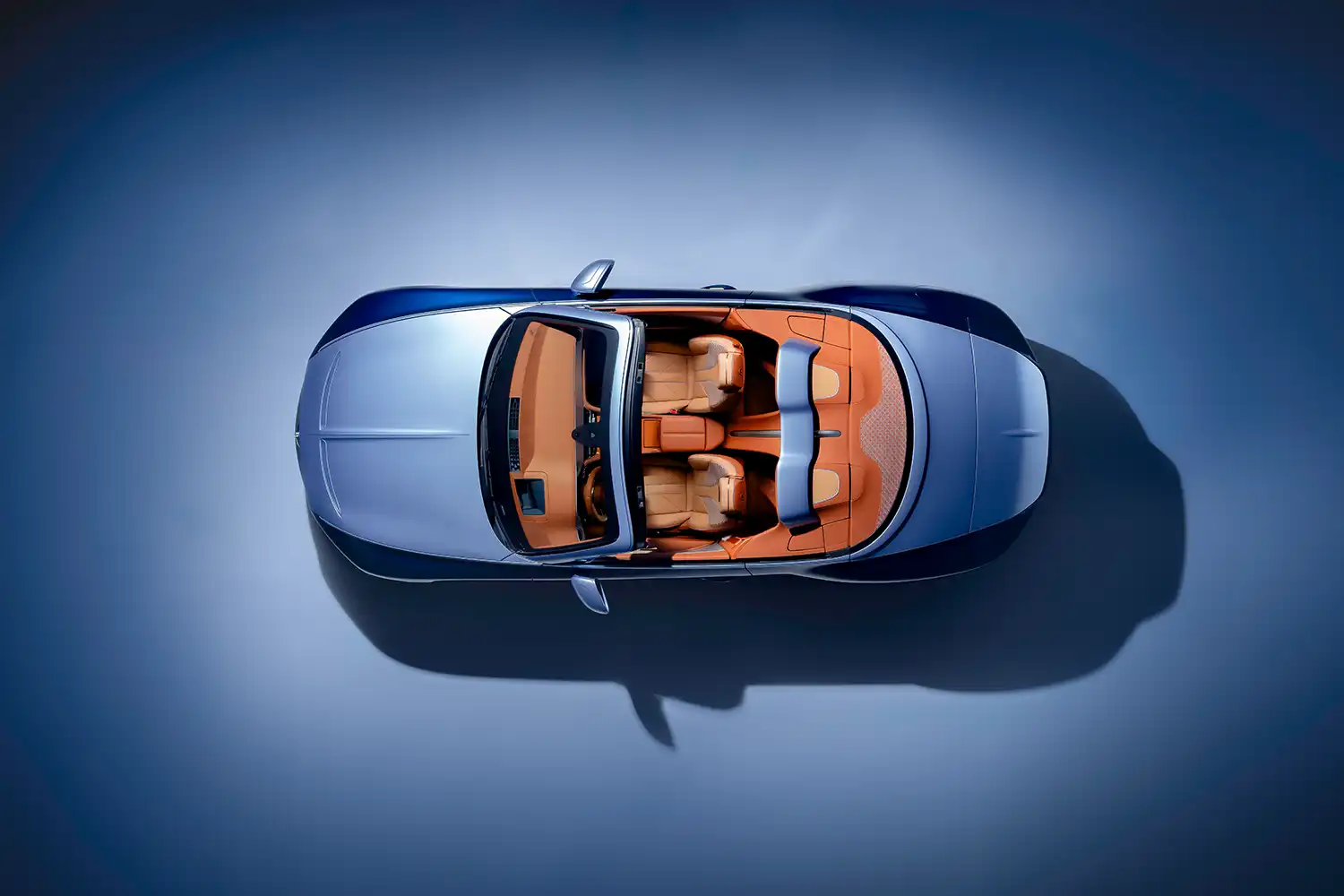
A conceptual vision of “endless” fluidity defines the exterior silhouette of this unique drophead. The car’s aesthetic language is dictated by a curated tri-tone palette, specifically “Breslow Blue,” a hue commissioned to harmonize with the luxury automotive landscapes of the world. A striking 6 mm gloss-silver pinstripe bisects the “endless bonnet,” a design gesture that elongates the vehicle’s proportions and directs the eye toward the horizon. This level of granular customization follows the trail blazed by previous iterations, such as the one-plus-one bespoke Batur, yet it pushes the boundary further by introducing the first-ever bespoke-colored roof canvas, ensuring a seamless visual transition whether the top is up or stowed.
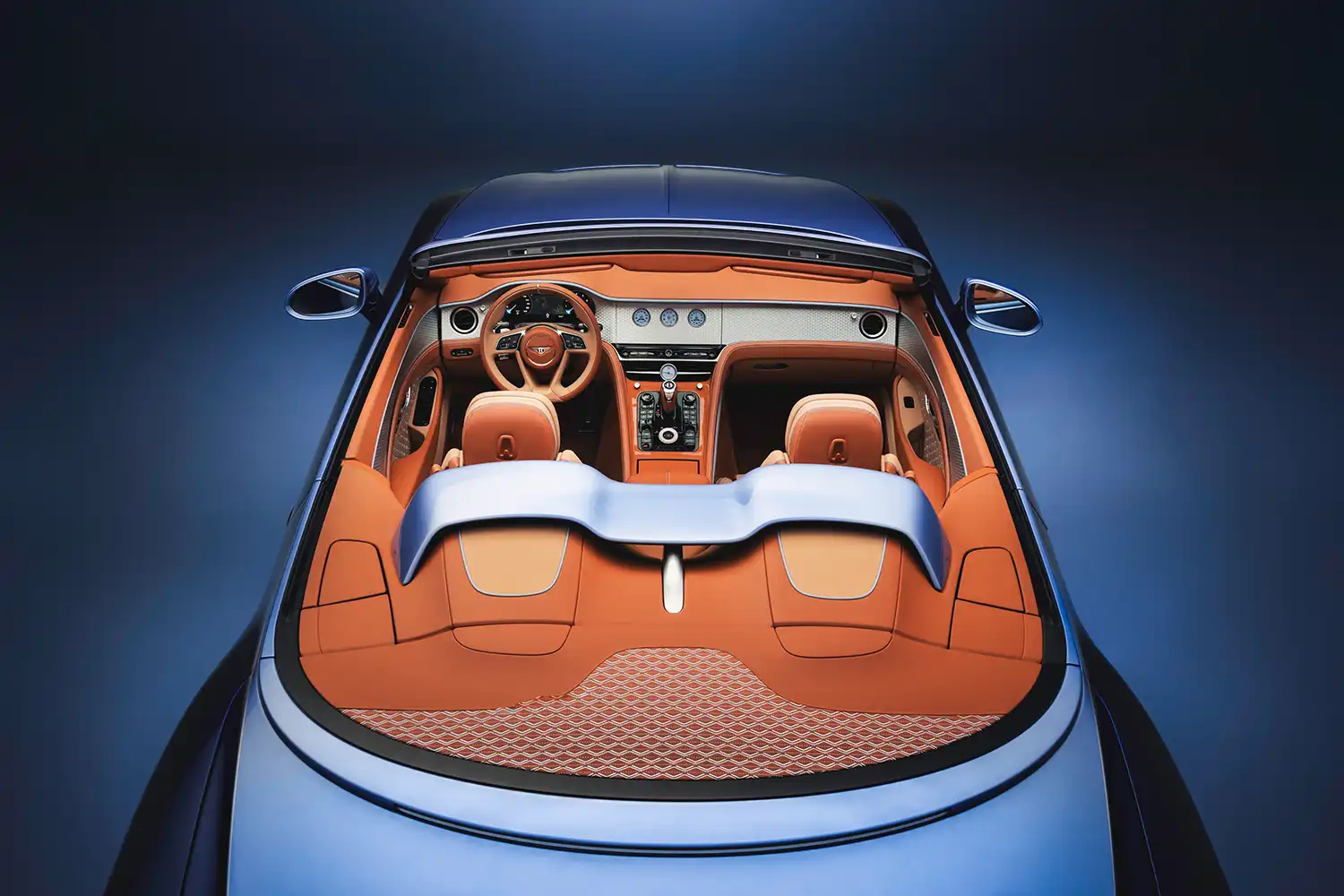
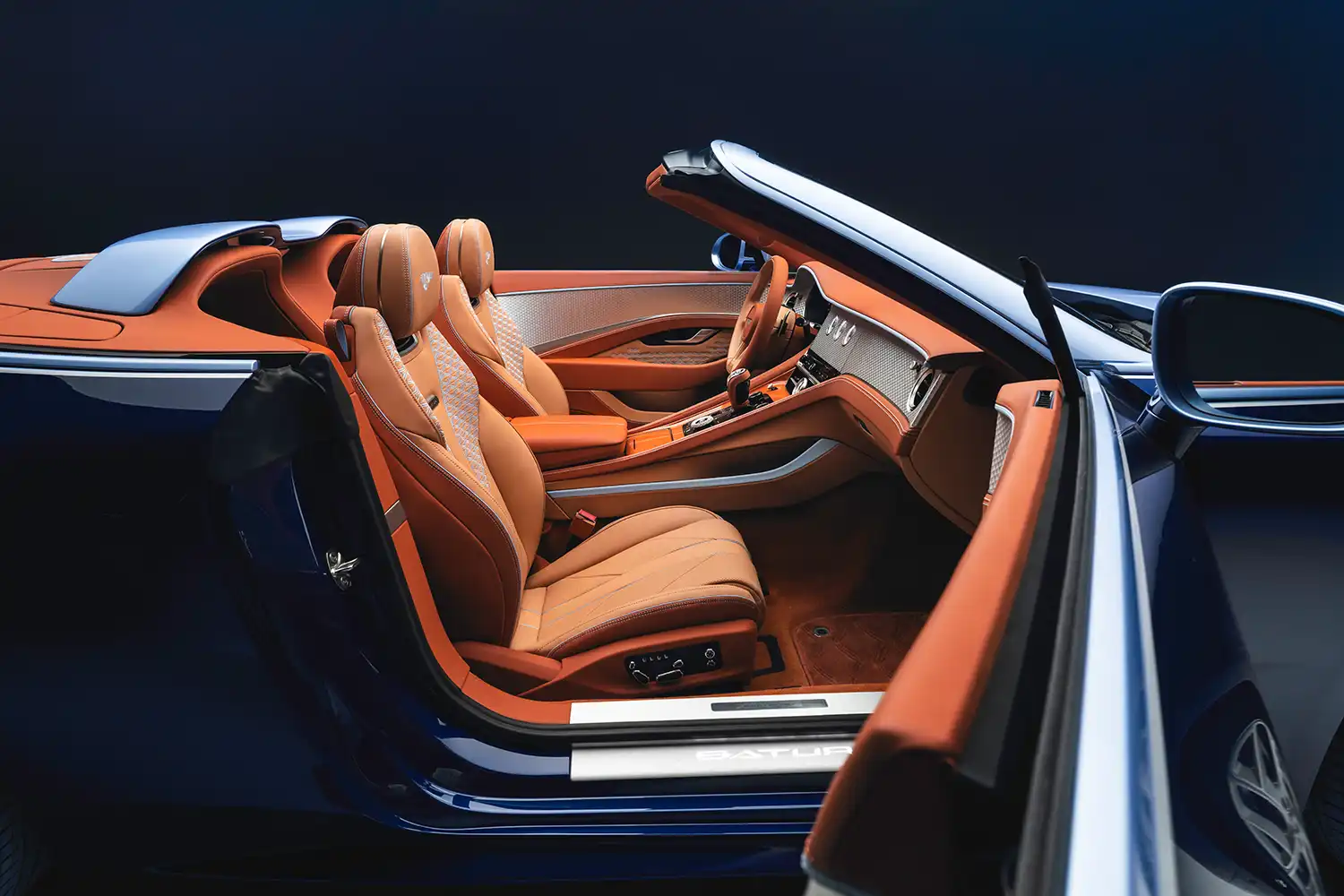
The technical innovation within the cabin introduces a sensory experience that bridges the gap between traditional jewelry and modern manufacturing. In a significant debut for the marque, Batur Convertible #4 features three-dimensional printed platinum. This precious metal is utilized for the “organ stop” vent controls and the steering wheel’s top-center marker, adding a tactile weight and an iridescent shimmer that CNC-machined aluminum simply cannot replicate. This embrace of additive manufacturing for luxury finishes recalls the forward-thinking philosophy seen in the Bentley EXP 100 GT concept, where heritage materials were reimagined through the lens of future-proof technology.
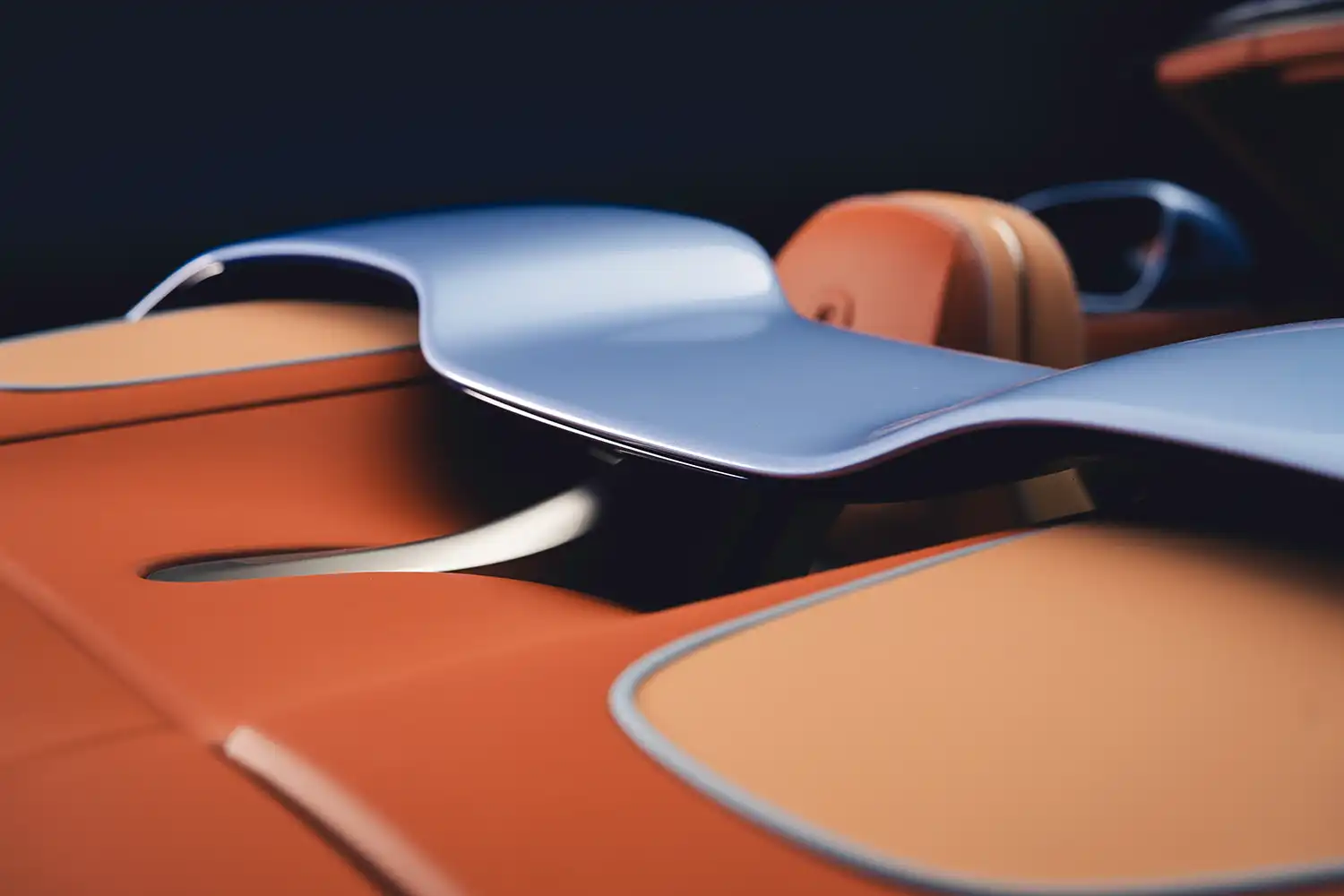
A dialogue of light and shadow greets the driver upon entry, where an animated welcome lamp projects a handwritten script of the owner’s name onto the ground. This is achieved via a sophisticated array of 415,800 microscopic mirrors, sculpting light into a digital signature. Inside, the atmosphere shifts to a warm, autumnal embrace. Tans and caramel hues provide a grounding contrast to the cool “Breslow Blue” of the Airbridge, while deep-pile floor mats are subtly etched with the contours of the Batur volcano in Crewe, United Kingdom. Even the dashboard fascia pays homage to the early 20th century with an “engine spin” aluminum finish, a nostalgic nod to the Bentley Boys and the brand’s racing pedigree.
The contextual impact of this commission lies in its role as a swan song for the iconic W12 engine. While the automotive industry pivots toward electrification, the Batur Convertible #4 retains the most powerful iteration of the 6.0-liter twin-turbocharged powertrain, delivering a staggering 740 bhp. It is a deliberate choice for a “forever car”—a mechanical heartbeat that represents the zenith of internal combustion. This power is not merely for speed but for the effortless “grand touring” capability that has defined the brand’s presence in continental Europe and beyond for over a century.
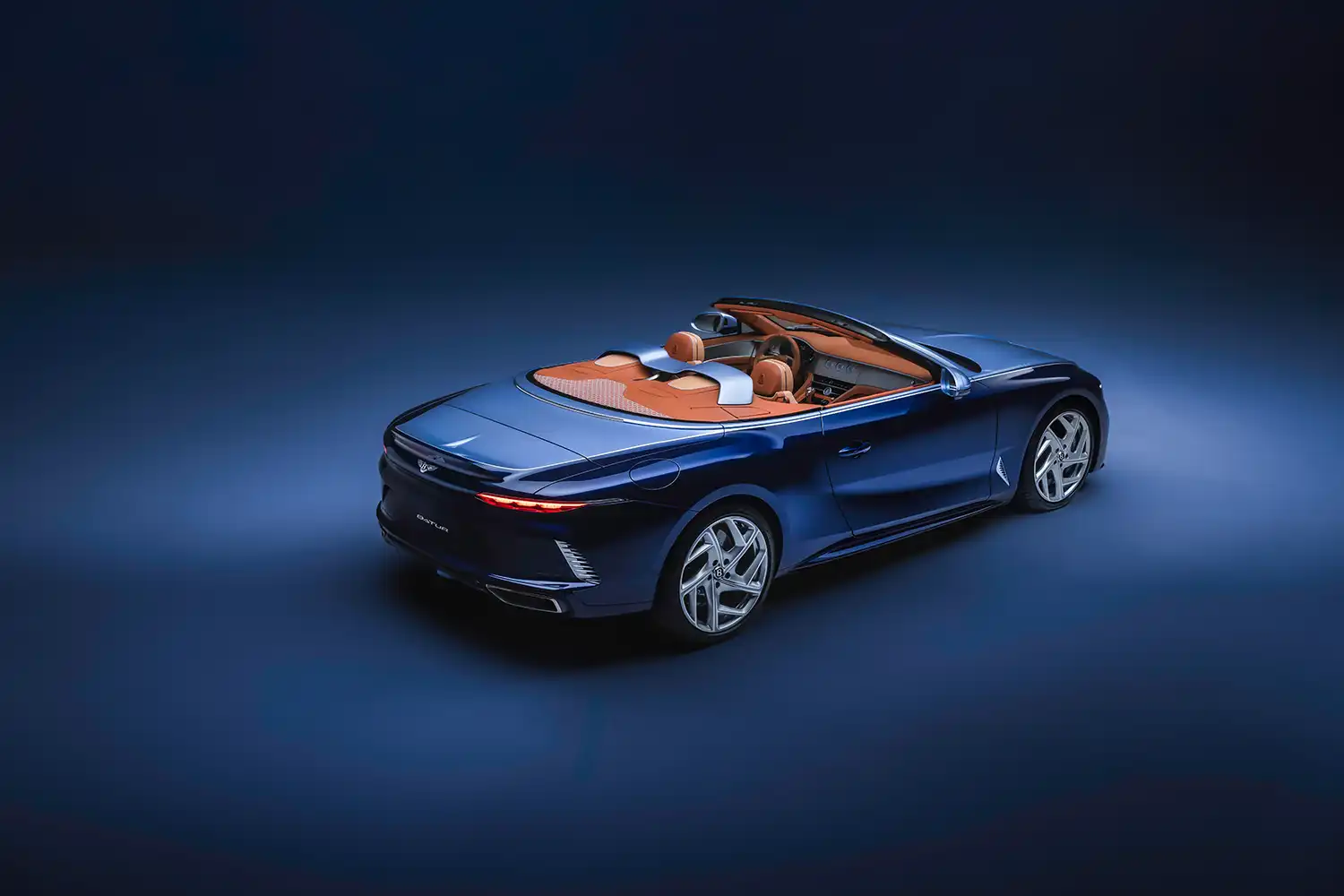
The arrival of the Batur Convertible #4 solidifies a new paradigm in the relationship between patron and maker, where the automobile ceases to be a product of assembly and becomes a tangible legacy. By joining a stable that already houses the Blower Continuation Series and the Bacalar, this vehicle defines the essence of “contemporary coachbuilding”—a sculptural entity that balances the raw, muscularity of British engineering with the delicate precision of a bespoke atelier. For a collector who views design as a lifelong commitment, this Mulliner commission is no longer merely a vehicle; it is a sophisticated synthesis of color, material, and memory, engineered to endure as long as the landscape it traverses.