




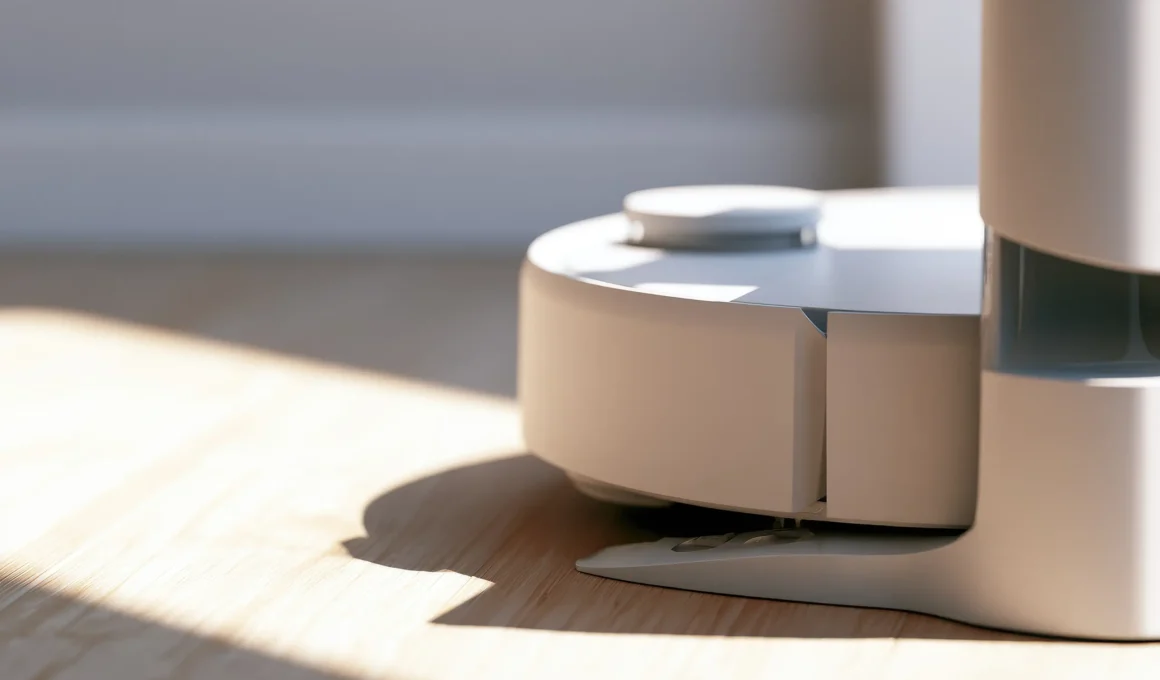
Floor-care technology was designed for the cupboard, and the cupboard is disappearing. Open-plan kitchens run into living rooms, new apartments are planned without utility rooms, and the appliances used every day now stay within reach instead of behind a door. That shift turns the cordless vacuum cleaner from a tool people hide into an object they have to live with, and it changes what good design means for it.
Why Vacuum Cleaners Can No Longer Be Hidden
For decades, the vacuum cleaner belonged to a specific category of domestic object: useful, necessary and ideally invisible. It lived in a closet or a utility room and came out only when the floor needed attention. Contemporary interiors have removed most of those hiding places. In an open-plan apartment, a device parked after use may sit a few steps from the dining table, the entry or the sofa, and every object left out becomes part of the room. The question is no longer only how well a vacuum cleans, but whether it can coexist with the architecture around it.
Other categories of domestic technology went through this change first. Routers, speakers, televisions and climate systems are increasingly designed as objects that take part in the interior rather than technical boxes to conceal. Floor care now belongs to the same conversation, from robotic floor cleaners to handheld wet-dry systems with their own charging bases.
The Docking Station Has Become Part of the Product
A cordless appliance needs a place to return to. For a cordless wet dry vacuum, that base often does far more than charge the battery: depending on the system, it can also handle self-cleaning, drying, water management and storage. Once the dock takes on those tasks, it earns a permanent footprint in the home, and anything with a permanent footprint starts to matter architecturally.
Station-based vacuum systems make this especially clear. The Tineco FLOOR ONE STATION S9 Scientist Pro, for example, pairs the handheld unit with a Smart Refresh Station that stores 5 liters (1.3 gallons) of water and refills with hot water automatically, and the brand presents the station as an active part of the cleaning routine rather than a charging stand. The handheld device cleans the floor; the station manages much of what happens before and after. Together they behave less like a standalone vacuum and more like built-in kitchen equipment or modular furniture, a small piece of domestic infrastructure with its own space requirements.
Where to Put a Wet-Dry Vacuum Station
Deciding where to put a vacuum docking station has become an interior planning question. A laundry room, mudroom or pantry zone are the obvious candidates, but in many homes the realistic options are a kitchen corner or a hallway niche. Each location raises points that older cleaning tools never did: access to a power outlet, enough clearance to lift the appliance off its base comfortably, space for accessories nearby and a position that doesn’t interrupt circulation.
In small apartments, where rooms are increasingly divided without walls, the station may end up in full view whatever the plan. That makes the choice of spot as much about sightlines as about convenience. A station facing the front door is seen every time someone comes home, while one placed beside tall cabinetry reads as part of the furniture line.
Visual Footprint Matters as Much as Physical Footprint
An appliance can be physically compact and still feel intrusive, while a taller system can sit calmly in a room if its proportions, colors and surfaces are restrained. This is where vacuum cleaner design overlaps with industrial design: the relevant measure is not only how much floor area the object occupies, but how much attention it demands.
Older vacuums made their mechanics obvious, with exposed hoses, large bins, visible joints, bright plastics and highly segmented forms. Contemporary appliances tend to move the other way, toward smoother surfaces, integrated controls and quieter color palettes. The aim is not to disguise a vacuum as furniture, which rarely convinces anyone, but to make it look intentional: an object that communicates what it can do without overwhelming the space.
Why Lay-Flat Vacuums Suit Low Furniture
Furniture proportions have shifted as much as floor plans. Low sofas, platform beds, floating cabinetry and long horizontal storage units are common features of contemporary residential design, and the lower the furniture sits, the harder it is for a traditional upright device to reach the floor beneath it.
That turns geometry into performance. Suction figures and sensors are of little use if the cleaner physically cannot enter the space that needs cleaning. The Tineco S7 Stretch Steam Wet dry Vacuum responds with a lay-flat vacuum design built to operate beneath lower furniture while keeping its wet-floor cleaning function. When comparing models, the height of the cleaner lying flat, the position of the tanks, the articulation of the handle and the profile of the cleaning head deserve the same attention as the headline specifications.
Choosing a Wet-Dry Vacuum Starts with the Floor
The flooring material should lead the decision, not the appliance. Wood, engineered timber, stone, tile, laminate and vinyl each have different maintenance requirements, and the functions of a machine should be chosen to suit the surface, never the other way around.
Steam cleaning on hard floors is the clearest example. The Tineco FLOOR ONE S9 Artist Steam Wet Dry Vacuum Cleaner adds steam-assisted cleaning for compatible hard surfaces, which can help with certain stubborn residues. That capability is not permission to use steam on every premium floor: wood, laminate and specialty finishes may restrict heat or moisture, and the flooring manufacturer’s care instructions remain the reference point.
Good product design also means making it clear when not to use a feature. Steam, high water flow, intensive modes and automatic settings each need an obvious purpose. When users can’t tell which setting suits which surface, complexity starts to work against the product.
How Dyson and Dreame Approach the Same Problem
Other manufacturers are working on the same problem from different directions. Dyson’s WashG1 uses a restrained, roller-based architecture built specifically around hard-floor cleaning, while Dreame’s recent wet-dry products combine lay-flat structures, thermal cleaning and increasingly elaborate docking systems.
Comparing them on whether one looks more premium or more technical says little. A more useful wet-dry vacuum comparison asks how much space each dock requires, how visible the tanks and mechanical parts are, how easily the device can be parked, how low it operates beneath furniture and how much maintenance happens at the station. Those questions treat the appliance as a designed object rather than a styling exercise.
From Freestanding Appliance to Built-In Storage
Kitchens have already been through this transformation. Refrigerators, ovens and dishwashers were once freestanding machines and are now routinely incorporated into architectural cabinetry. Cleaning systems could follow the same path, with built-in vacuum storage planned from the start: dedicated floor-care niches, ventilated utility cabinets, concealed charging zones, water-access points and modular storage around the station.
There is a quieter benefit too. A multifunctional floor cleaner that combines dry debris pickup with wet cleaning on compatible hard floors can reduce the need for a separate broom, mop, bucket and floor washer. It doesn’t replace every household cleaning tool, but fewer tools for a repeated task mean fewer storage problems, which in a compact home is a design gain in itself.
An Appliance That Moves Through the Architecture
A floor cleaner is one of the few domestic objects that travels through the entire plan. It turns around chair legs, slides alongside cabinetry, reaches beneath the sofa and then returns to the same few square feet by the wall. That short trip back to the station, repeated every day, is the part of its design the room sees most often.
FAQ: Vacuum Cleaners and Interior Design
Where is the best place to keep a wet-dry vacuum station?
A utility room, mudroom or pantry zone works best when one is available. In open-plan homes, a kitchen corner or hallway niche with nearby power, enough clearance to remove the appliance and some storage for accessories is the practical alternative.
Should a vacuum docking station be planned into an interior design project?
For larger or permanently visible stations, yes. Considering power access, clearance, storage and circulation during planning makes the system easier to integrate, especially when built-in cabinetry is involved.
Can you hide a vacuum cleaner in an open-plan apartment?
Partly. A ventilated cabinet or a dedicated niche can conceal a station, as long as power access and clearance are planned. Where concealment isn’t possible, a model with restrained proportions and quiet finishes keeps its visual impact low.
Why does a lay-flat vacuum matter with low furniture?
Low sofas, platform beds and floating cabinetry leave little clearance. A cleaner that operates at a low profile can reach beneath them, where an upright device cannot.
Can a wet-dry vacuum replace a regular vacuum cleaner?
Not entirely. Rugs, carpets, stairs and upholstery often still require dry-vacuum equipment. A wet-dry system works best on compatible hard flooring.
Is steam cleaning safe for hardwood and laminate floors?
It depends on the floor. Flooring specifications take priority, and wood, laminate and specialty finishes may restrict heat or moisture regardless of what the appliance can technically produce. Check the flooring manufacturer’s care instructions first.
Are large vacuum stations suitable for small apartments?
They can be, but they need more deliberate planning. A larger station may provide more automation while demanding a clearer, permanent location.