


In the rugged landscape of Syracuse, located on the southeastern coast of the Italian island of Sicily, history is often measured in millennia. Here, architecture frequently takes the form of absence—voids carved into limestone cliffs or shadows cast by ancient ruins. Leopold Banchini Architects challenges this narrative with Asympta, a site-specific installation that debuted in the historic island district of Ortigia and is set to journey toward the Pantalica UNESCO World Heritage Site in 2026. Rather than obsessing over the celebrated necropolis of the Anapo river valley, the project turns its gaze toward the ghosts of the living, creating a speculative micro-architecture that imagines how prehistoric commoners might have inhabited this volcanic terrain.
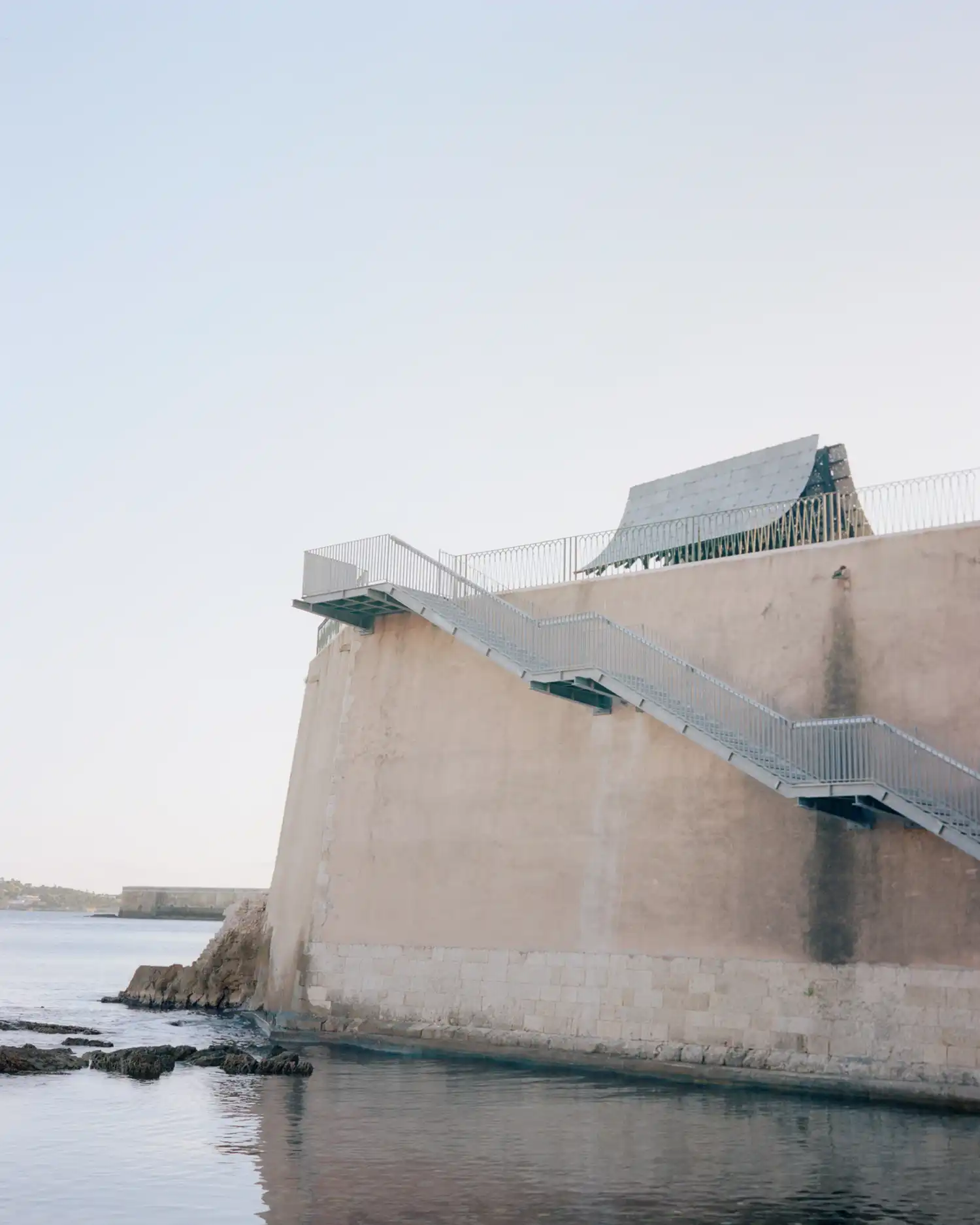
A departure from archaeological rigor allows the structure to breathe as a contemporary meditation rather than a historical reconstruction. While the 4,000 rock-cut tombs of Pantalica offer a permanent record of death, the domestic lives of those who built them remain largely invisible. Asympta fills this void by echoing the provisional, light construction techniques likely used by early Mediterranean civilizations. It is an exploration of how a cosmology can emerge directly from the soil, attuned to the specific topography of the region. This approach reminds us of how ecological design includes the studio’s ability to bridge the gap between raw landscape and human intervention.
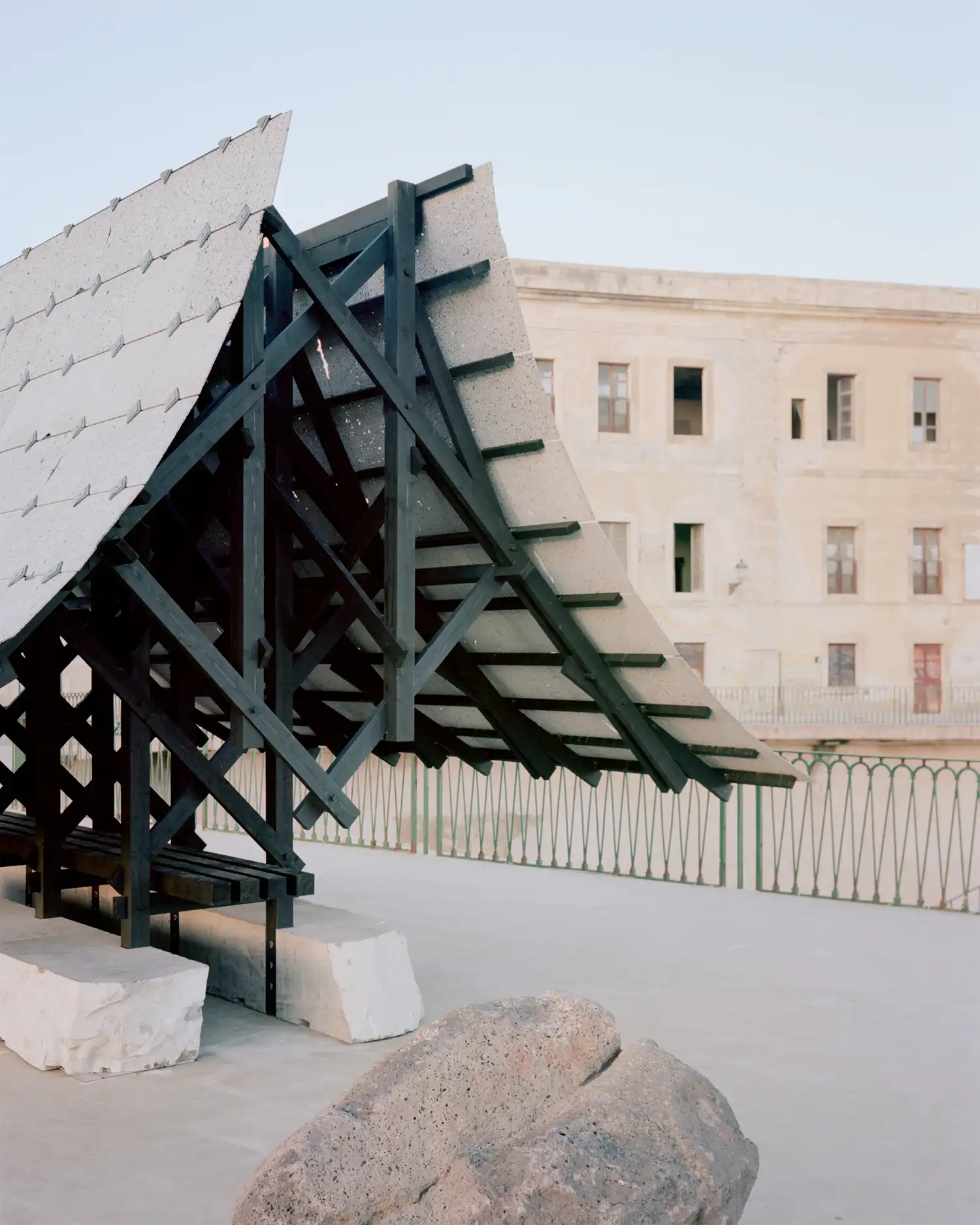
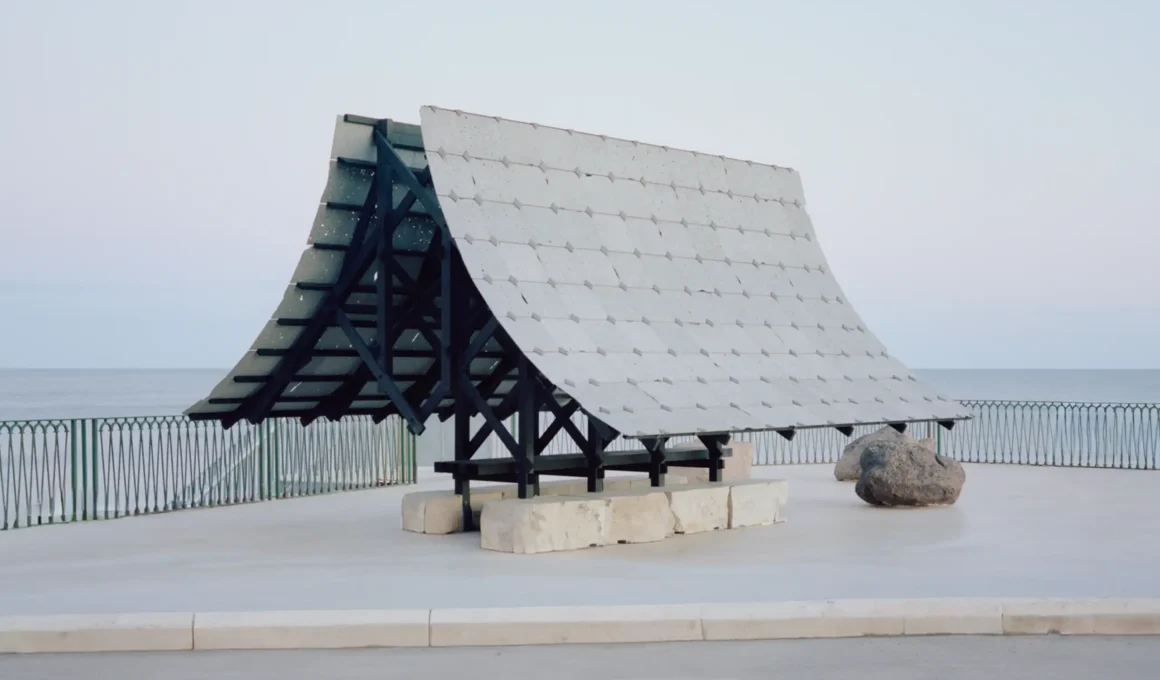
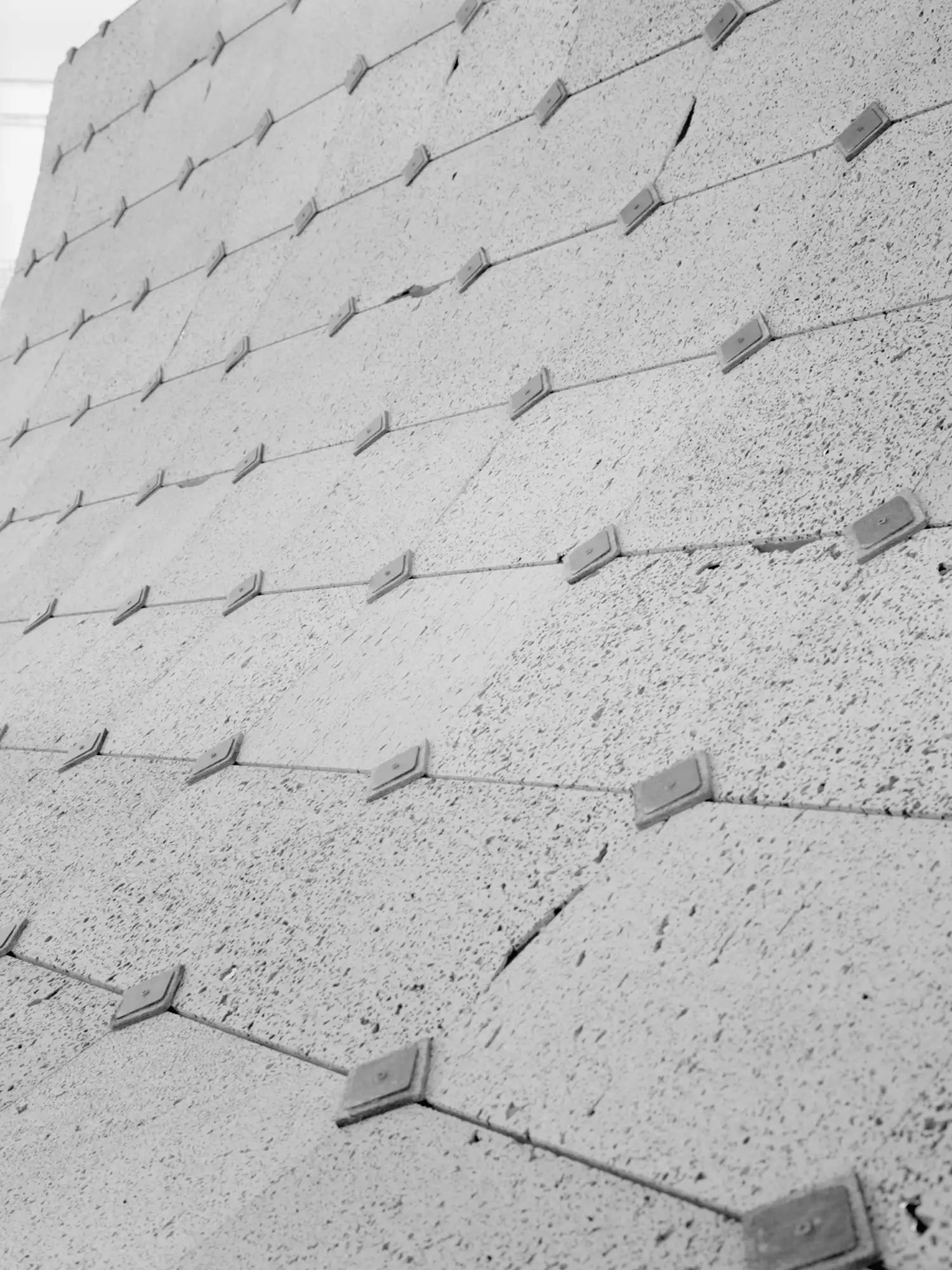
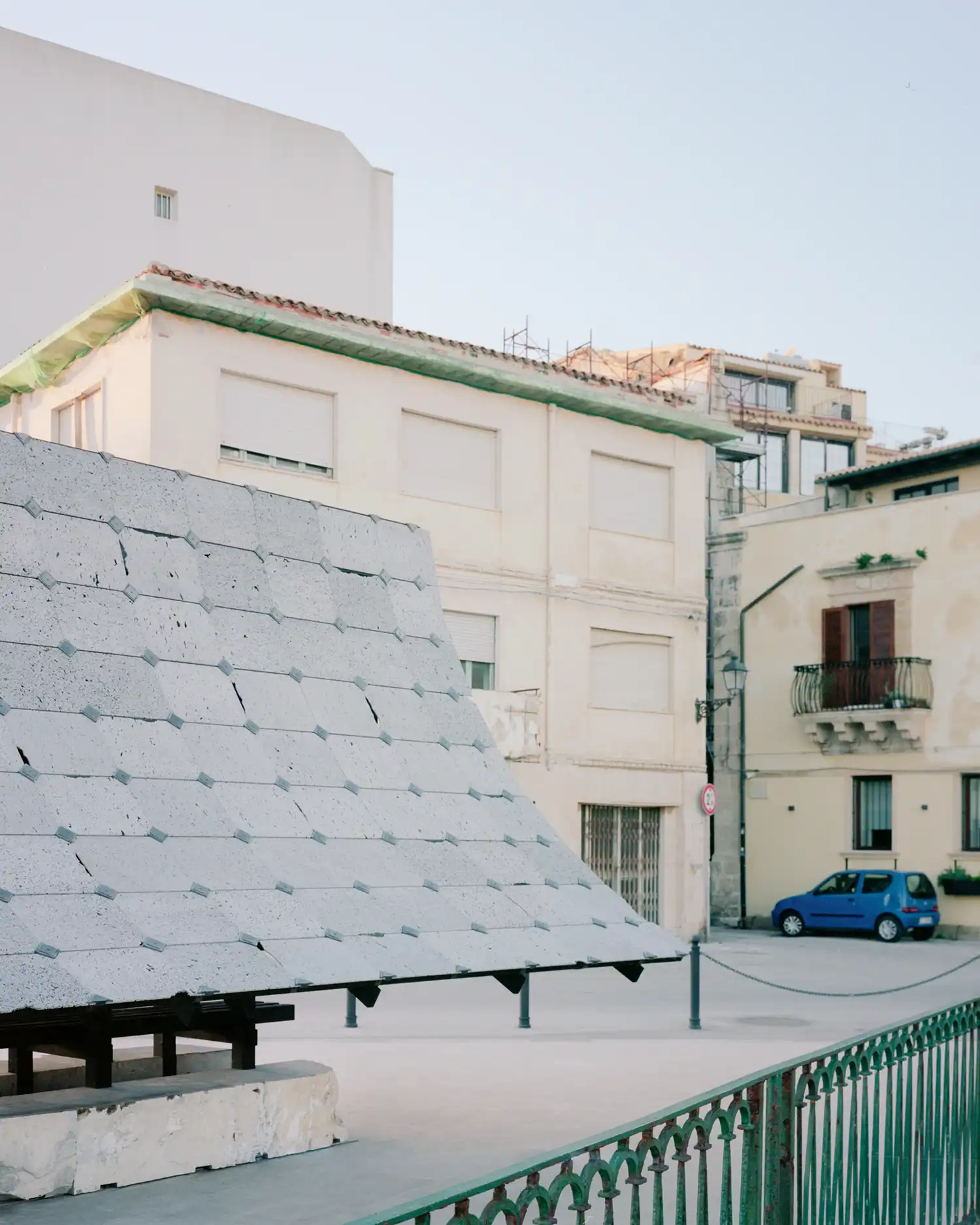
The materiality of the installation is a tactile dialogue with the region’s geological heritage. Banchini has curated a palette of Mount Etna lava stone, Pietra Pece limestone, and local wood sealed by fire—an ancient technique that grants the timber a dark, protective skin. These heavy, earthen elements are softened by the inclusion of bronze accents and sheep wool felt, creating a sensory experience that is simultaneously primal and refined. This sophisticated use of organic textures to define a space for reflection draws a parallel to recent sustainable architecture projects that prioritize local fibers and vernacular wisdom over industrial standardization.
The dual asymptotic form of the structure serves as a visual bridge between the celestial and the subterranean. One curve references the iconic cone of the volcano dominating the Sicilian horizon, while the other mimics the hollowed-out geometry of the latomie—the ancient stone quarries where the very bones of the region were extracted. By adopting this mathematical curve, the installation avoids the rigidity of traditional shelters. Instead, it offers a shaded space for gathering, intentionally distancing itself from the “Primitive Hut” myth to favor a more complex reciprocity with the environment. It functions much like a stone sphere in a landscape, acting as a focal point that reorients the viewer’s perception of their surroundings.
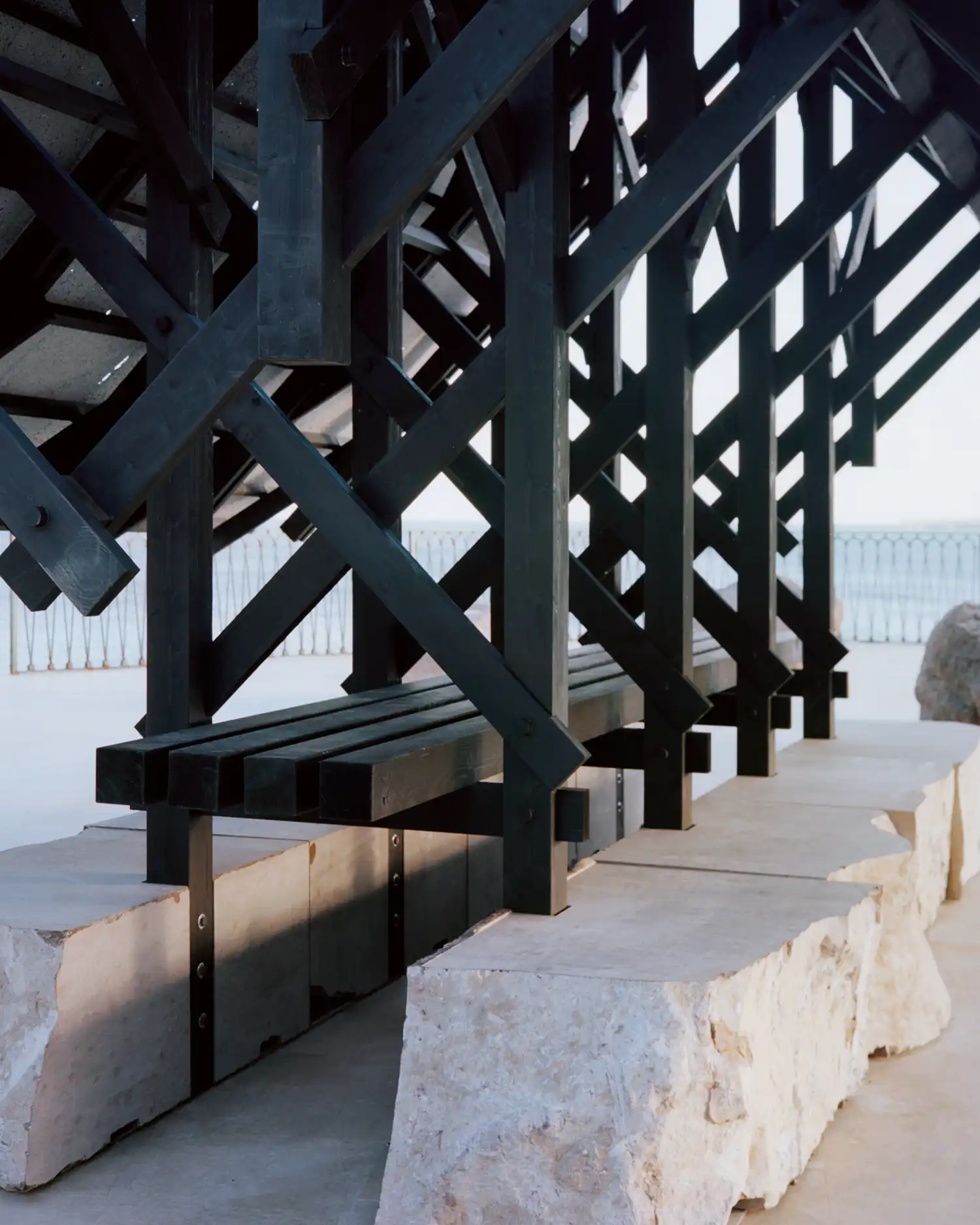
As part of the COSMO Festival, the project functions as an ephemeral landmark that questions the permanence of our built environment. The choice of materials—some meant to endure and others to weather—reflects the fleeting nature of domestic life along the Anapo river. There is a deliberate vulnerability in the open structure; it does not seek to wall off the world but to frame it. In doing so, it emphasizes adaptability and proximity, suggesting that the most profound architectures are those that acknowledge their own eventual disappearance into the landscape.
Looking forward to the 2026 reinstallation in the heart of Pantalica, the project will likely take on new layers of meaning as it moves closer to the prehistoric site that inspired it. In its current and future iterations, Asympta remains a compelling argument for a narrative-driven approach to the built form—one that values fiction and intuition as much as scientific research. It is a quiet, powerful reminder that even in a landscape defined by the dead, there is still room to imagine the vibrant, transient spaces of the living.