


Nestled within the rolling 3.1-acre landscape of Portola Valley, Moksha emerges as a sophisticated residential complex by SAW//Spiegel Aihara Workshop that explores the interplay between material permanence and the cyclical nature of renewal.
The project represents a profound response to both the physical topography of California and a deeply personal narrative of memory. Conceived for close friends of the studio, the home was envisioned as a space for contemplation, its very name reflecting a transition beyond the immediate. The resulting structure avoids the singular, static nature of a traditional villa, opting instead for a series of interconnected volumes that cascade down the hillside, creating a rhythmic dialogue with the surrounding oak woodland.
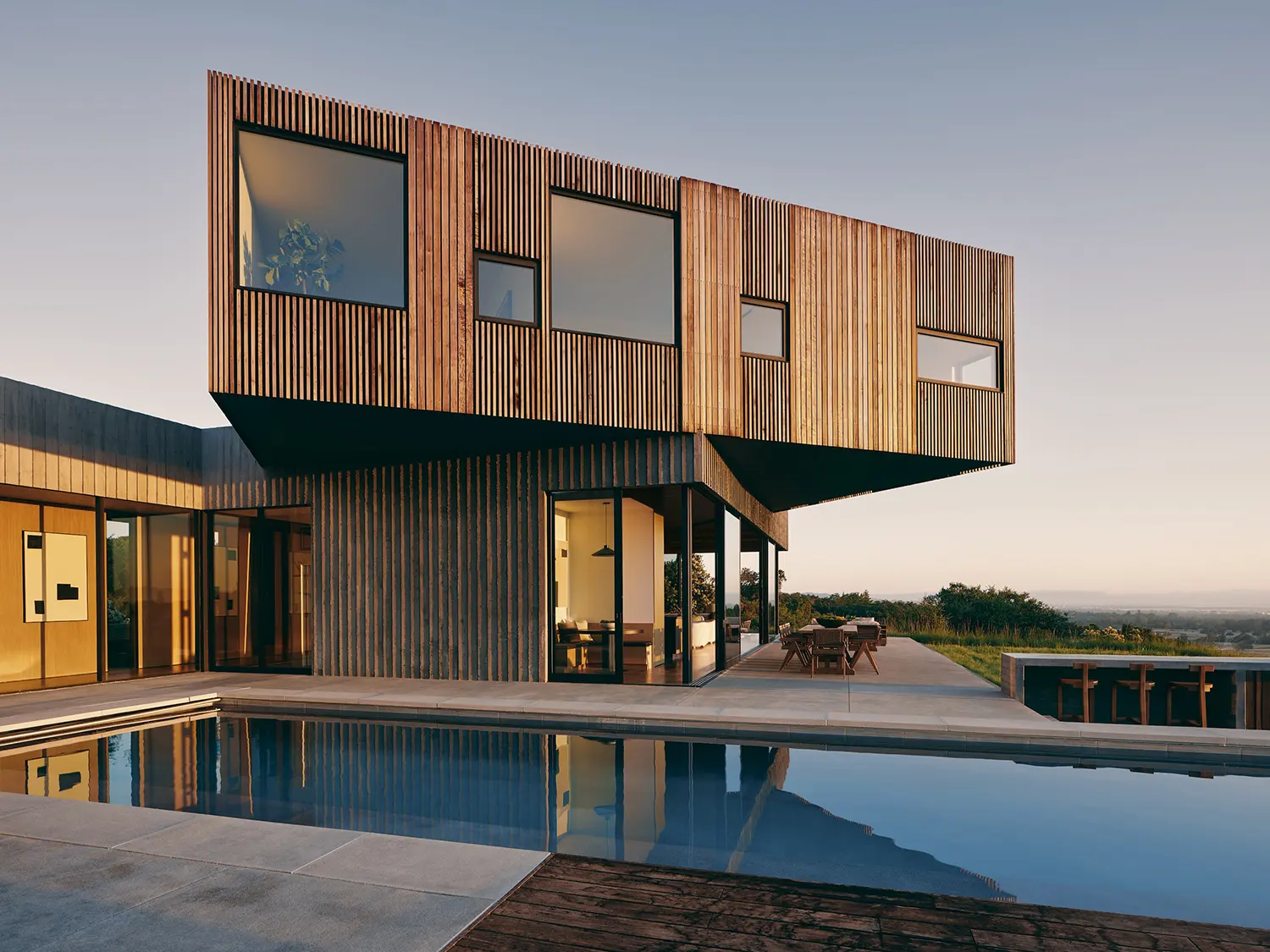
A choreography of shifted geometries. The site strategy involves a 7,797-square-foot main residence and a detached guest house, both oriented to maximize a sense of discovery. By rotating the floor plates along the slope, the architects have framed specific, intentional vistas that range from the immediate textures of the chaparral to the distant expanse of the San Francisco Bay. This arrangement ensures that the experience of the home is never static, as the shifting light of the valley continuously redefines the interior boundaries and the depth of the exterior courtyards.
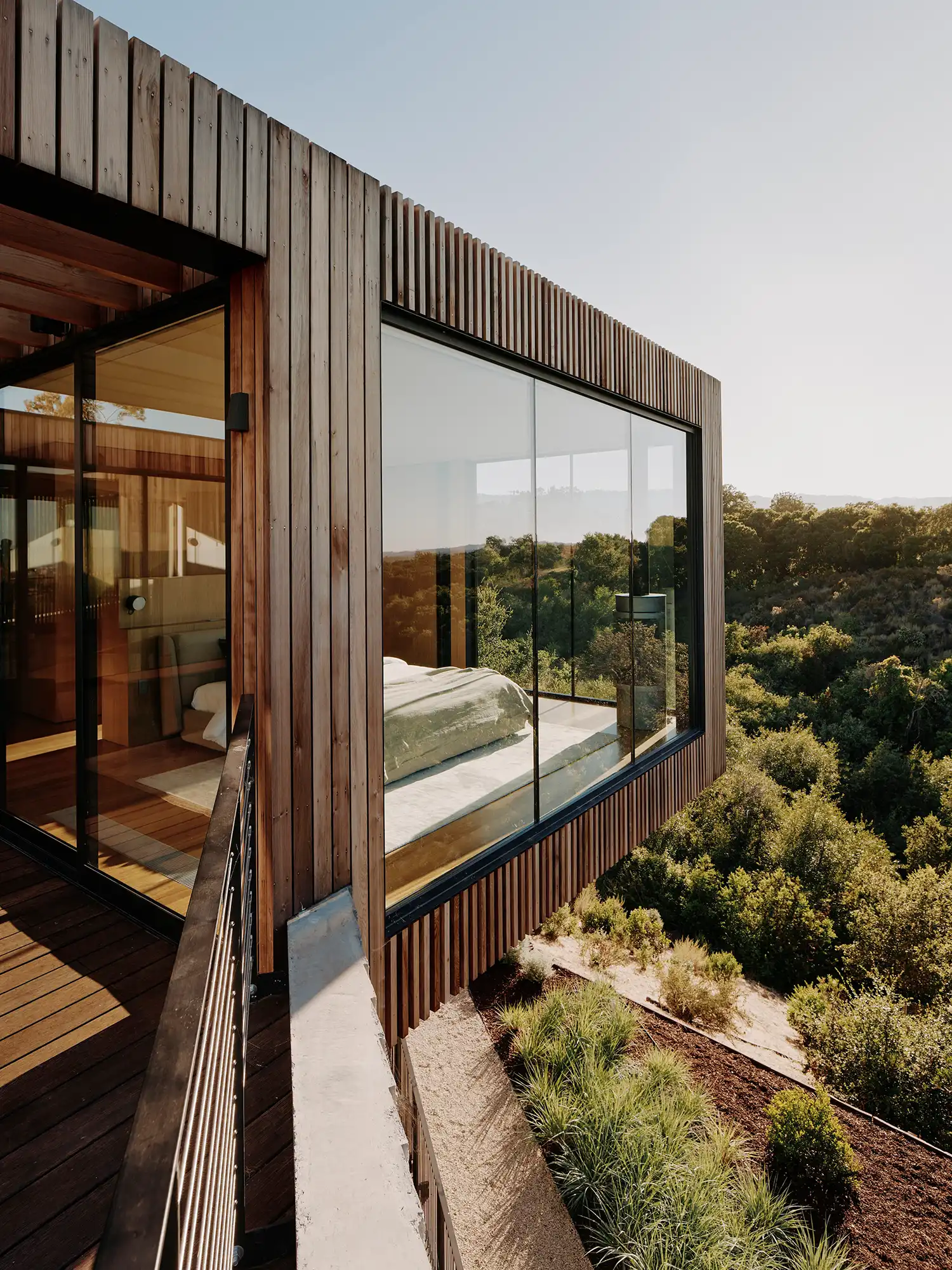
Structural weight and wildfire resilience. Given the environmental challenges of the region, the lower levels are anchored by a robust base of board-formed concrete. The custom sawtooth texture of the walls creates a high-contrast surface that evolves under the raking afternoon sun, grounding the home with a sense of geologic stability. This emphasis on a protective, mineral core evokes the material honesty seen in projects like the Creston House in Berkeley, where the building acts as a resilient sanctuary against the elements without sacrificing its connection to the site.
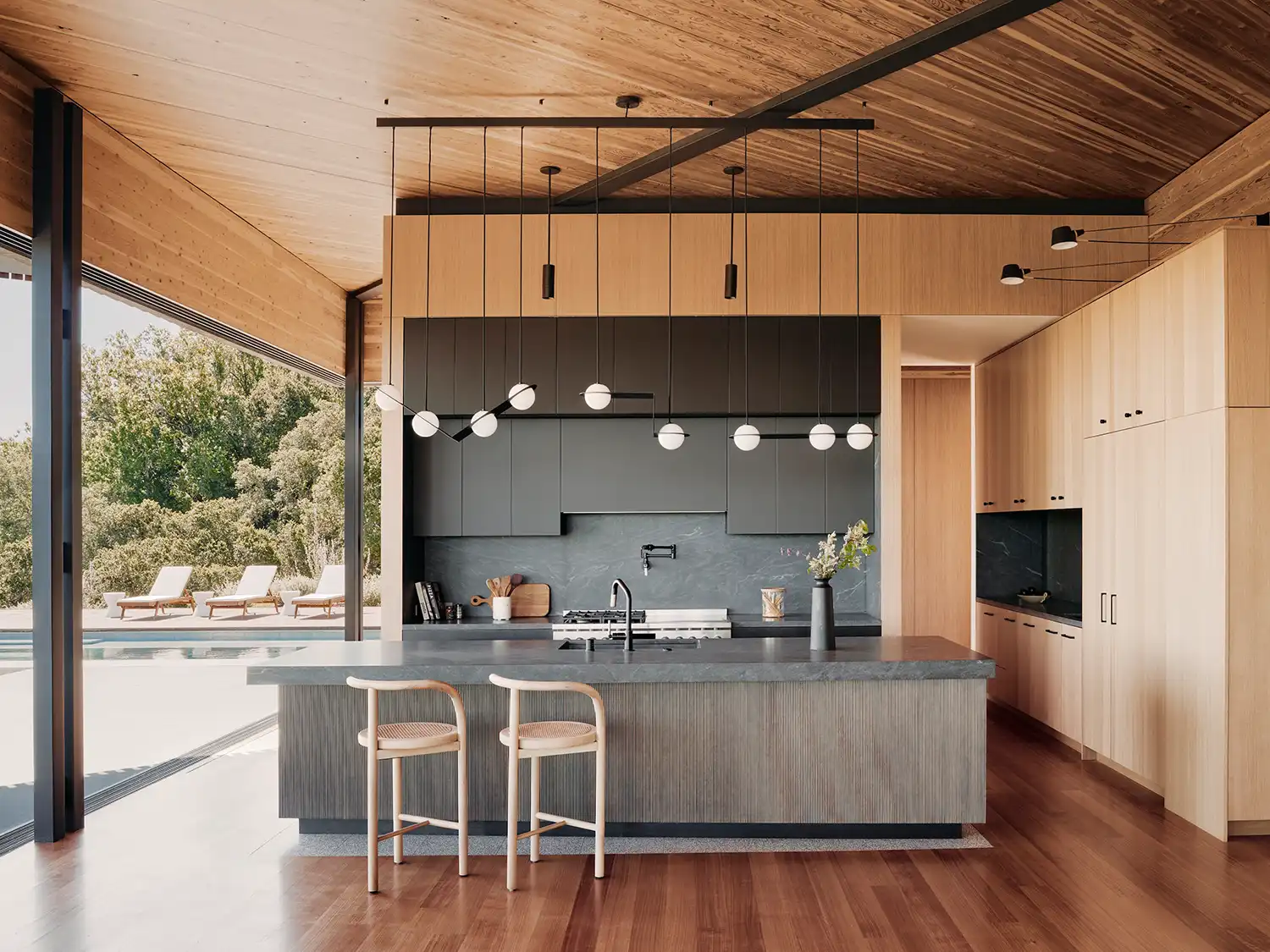
The narrative of salvaged materials. Floating above the concrete base, the upper stories are clad in a rainscreen of reclaimed old-growth redwood. Sourced from trees that fell during regional fires and landslides, the timber introduces a layer of environmental history to the facade. Over time, this wood will silver and weather, mirroring the natural lifecycle of the forest. This focus on a textured, evolving skin recalls the formal clarity of the House of Horns in Los Altos Hills, where the exterior envelope is utilized to curate a specific, internal sensory atmosphere.
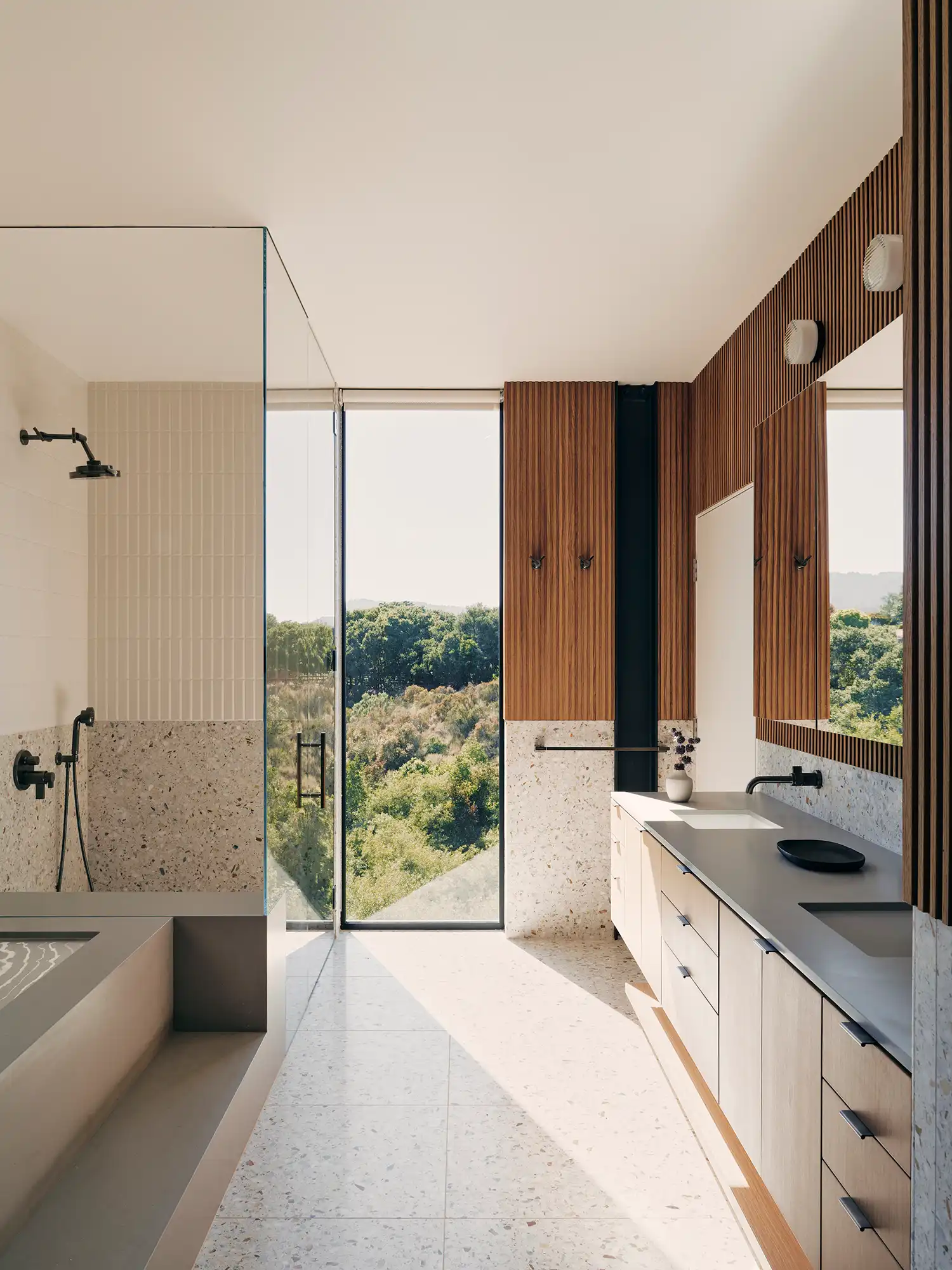
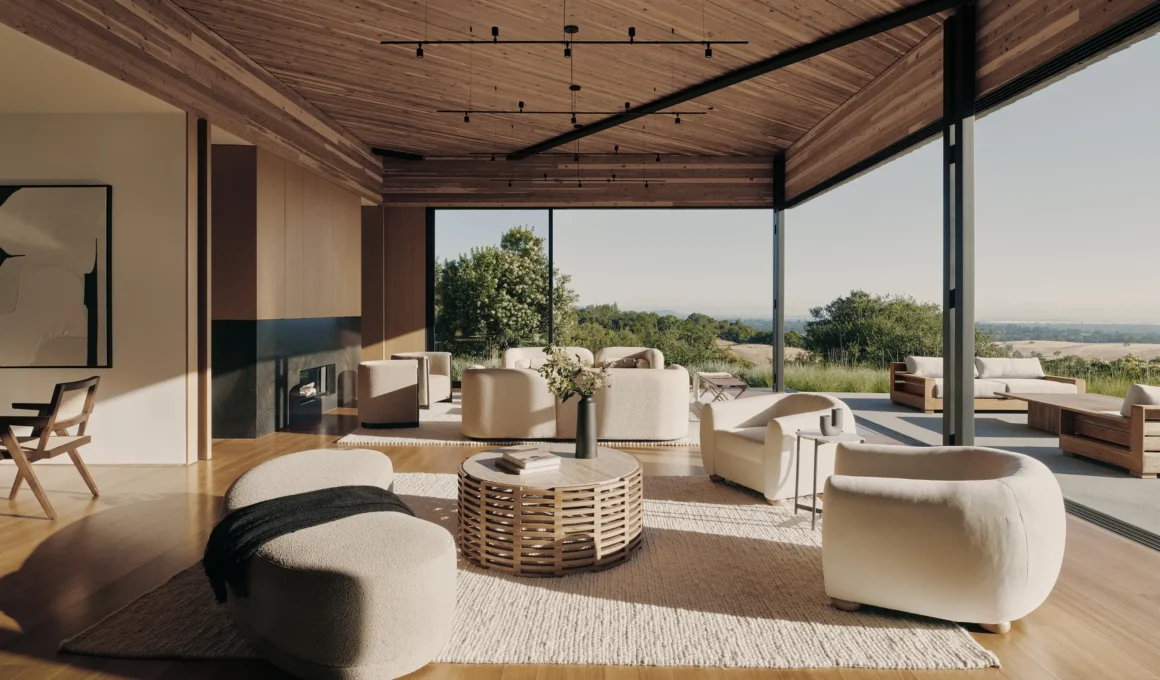
Luminosity and interior warmth. The interior experience is defined by a curated play of light that traverses the entire width of the home. Custom-milled blue-gum eucalyptus flooring provides a luminous foundation, its subtle sheen reflecting the sun as it enters through expansive glass apertures. The layout balances social connectivity with moments of profound quiet; while the great room opens entirely to the landscape via sliding glass systems, the private suites cantilever over the terrain, providing an elevated perspective that feels detached from the domestic bustle.
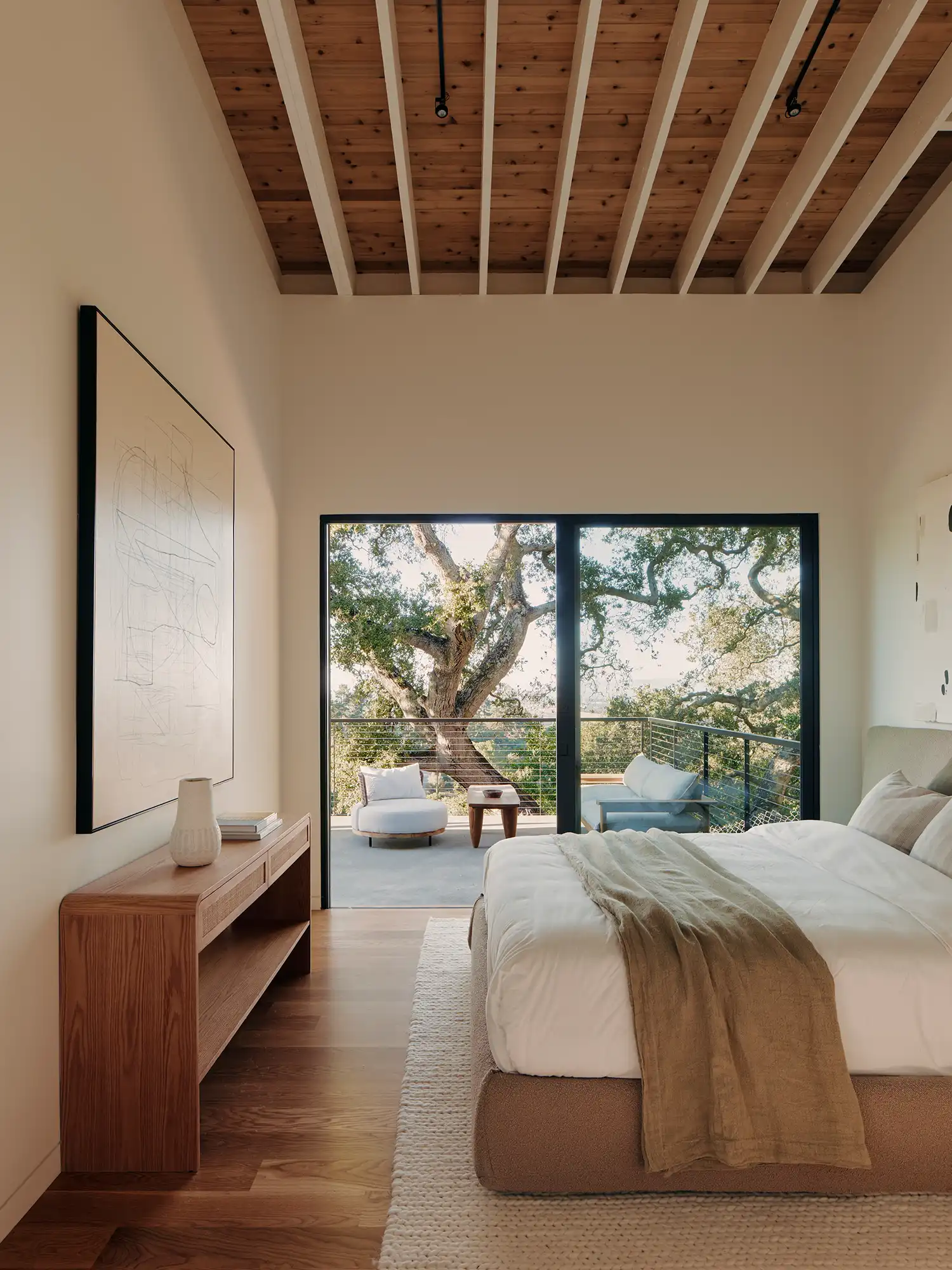
Engineering for ecological longevity. The technical resolution of the house supports its ambitious formal language through the use of mass timber glulam (GLT) and steel Vierendeel trusses. These systems allow for the dramatic spans and cantilevers that define the home’s silhouette while minimizing the need for internal supports. Integrated sustainability features, including high-performance heat pumps and a strategic array of photovoltaic panels, ensure that the home functions as a high-performance machine, harmonizing modern comfort with a commitment to long-term site stewardship.
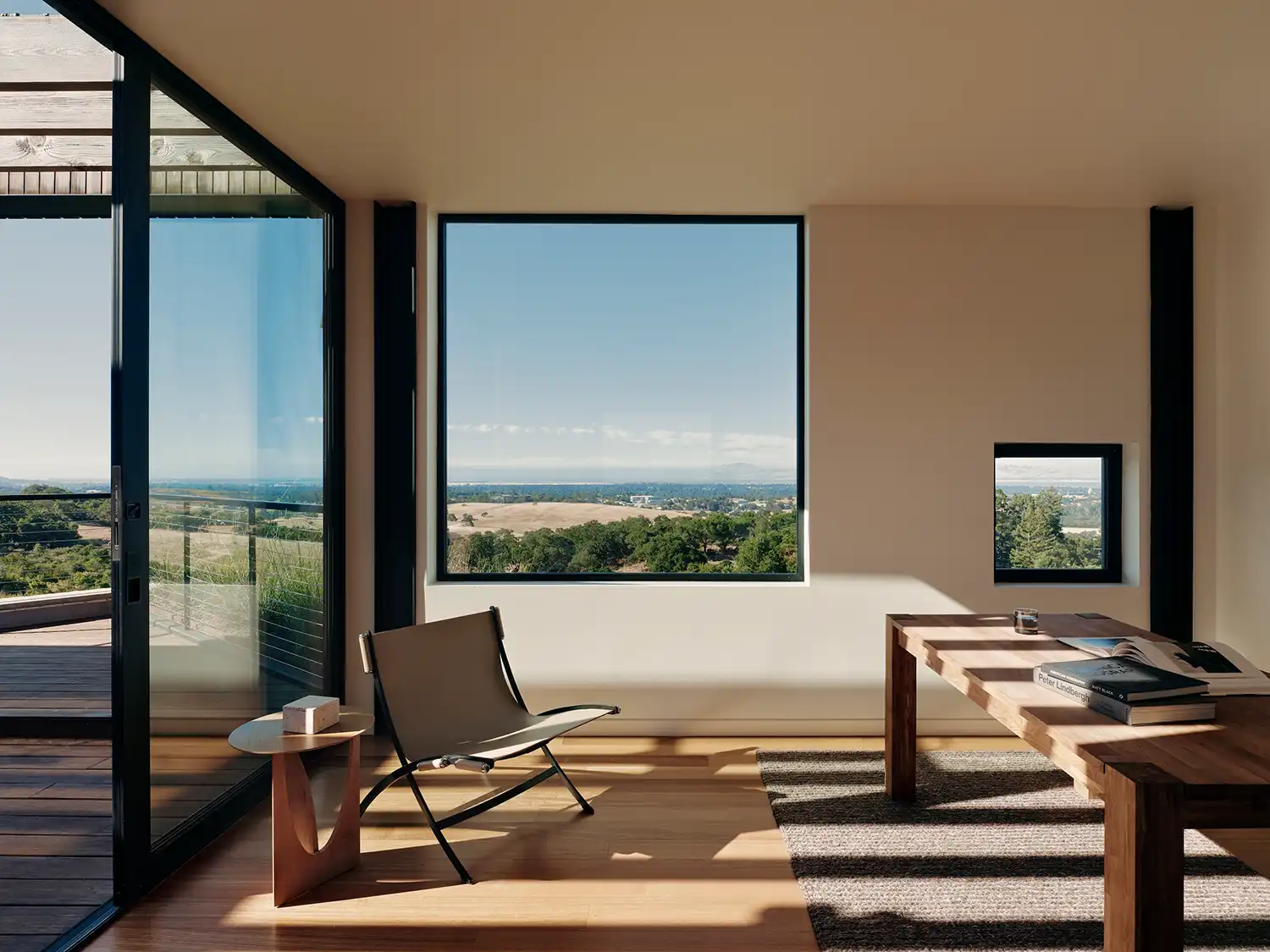
An architecture of transition. Ultimately, Moksha is designed to be a participant in the landscape rather than a finished monument. Every material choice—from the darkening concrete to the silvering redwood—is an acknowledgment of the passage of time. By weaving together panoramic outward views with intimate, sheltered spaces, the house honors its original vision through a design that is at once resilient and delicate, providing a lasting framework for life, memory, and the quiet observation of the natural world.