



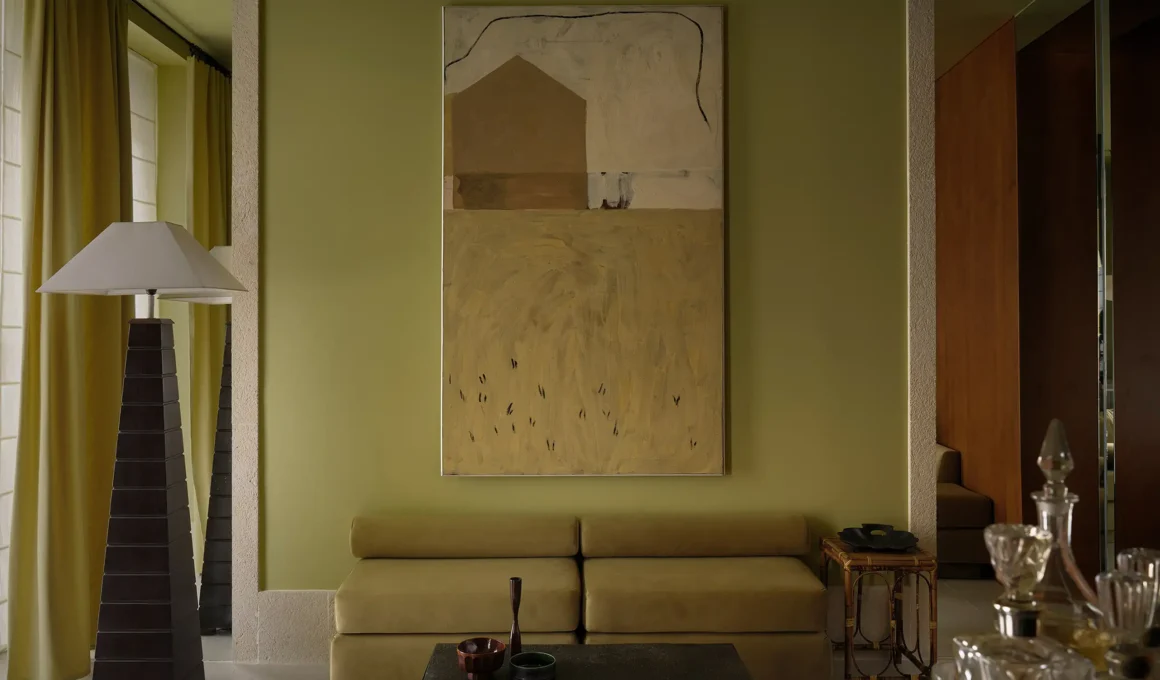
Madrid-based practice Teleno Studio has completed the renovation of a compact 56 m² apartment in a 19th-century residential building in the center of Madrid, producing a home where darkness is not an absence of light but its most deliberate instrument. Named House in Penumbra, the project reframes what a small urban dwelling can feel like — not by maximizing brightness or openness in the conventional sense, but by choreographing shadow, material depth, and a quiet sensory density that makes 56 square meters feel richly inhabited.
A city within a room. The apartment arrived in poor condition: a fragmented layout, a deteriorated timber structure, and the kind of spatial confusion that accumulates over decades of piecemeal interventions. Teleno Studio responded with a comprehensive structural overhaul — partially reconstructing the floor and load-bearing walls — before addressing the more poetic question of what the apartment should feel like. The answer, as the name suggests, was somewhere between light and dark. Not gloomy, not stark. Penumbra.
The oak volume as organizing principle. The entire spatial logic of the apartment pivots around a single built element: a compact oak volume that houses the bedroom and en-suite bathroom. Rather than partitioning the floor plan with conventional walls, this freestanding mass allows the remaining program — kitchen, dining, living, storage — to flow continuously around it as a single, uninterrupted social space. It is the kind of move that looks inevitable in retrospect, the sort of clarity that only emerges after everything extraneous has been stripped away. The three-meter-high ceilings, exploited to their full potential, reinforce the proportional generosity of this open field.
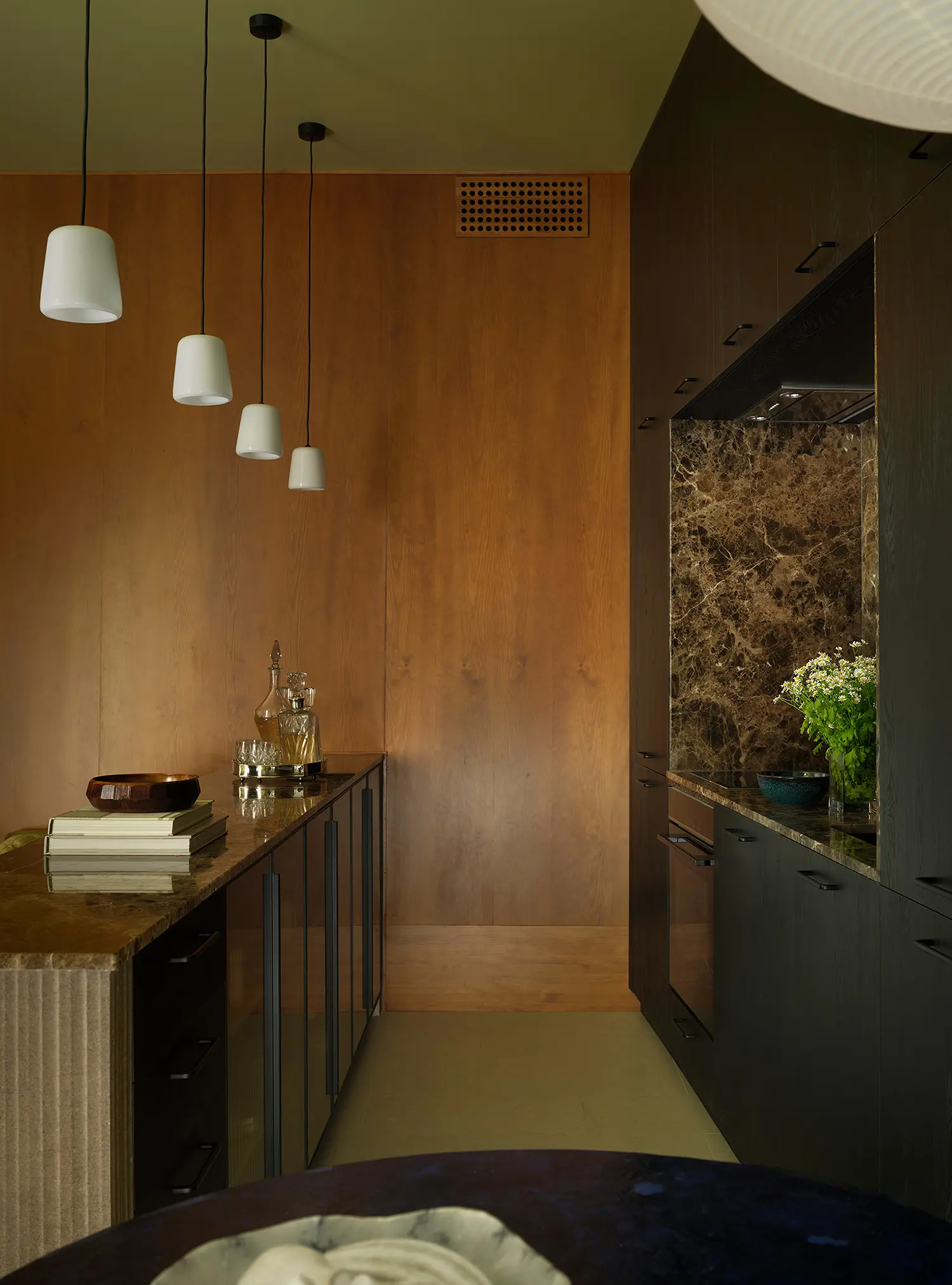
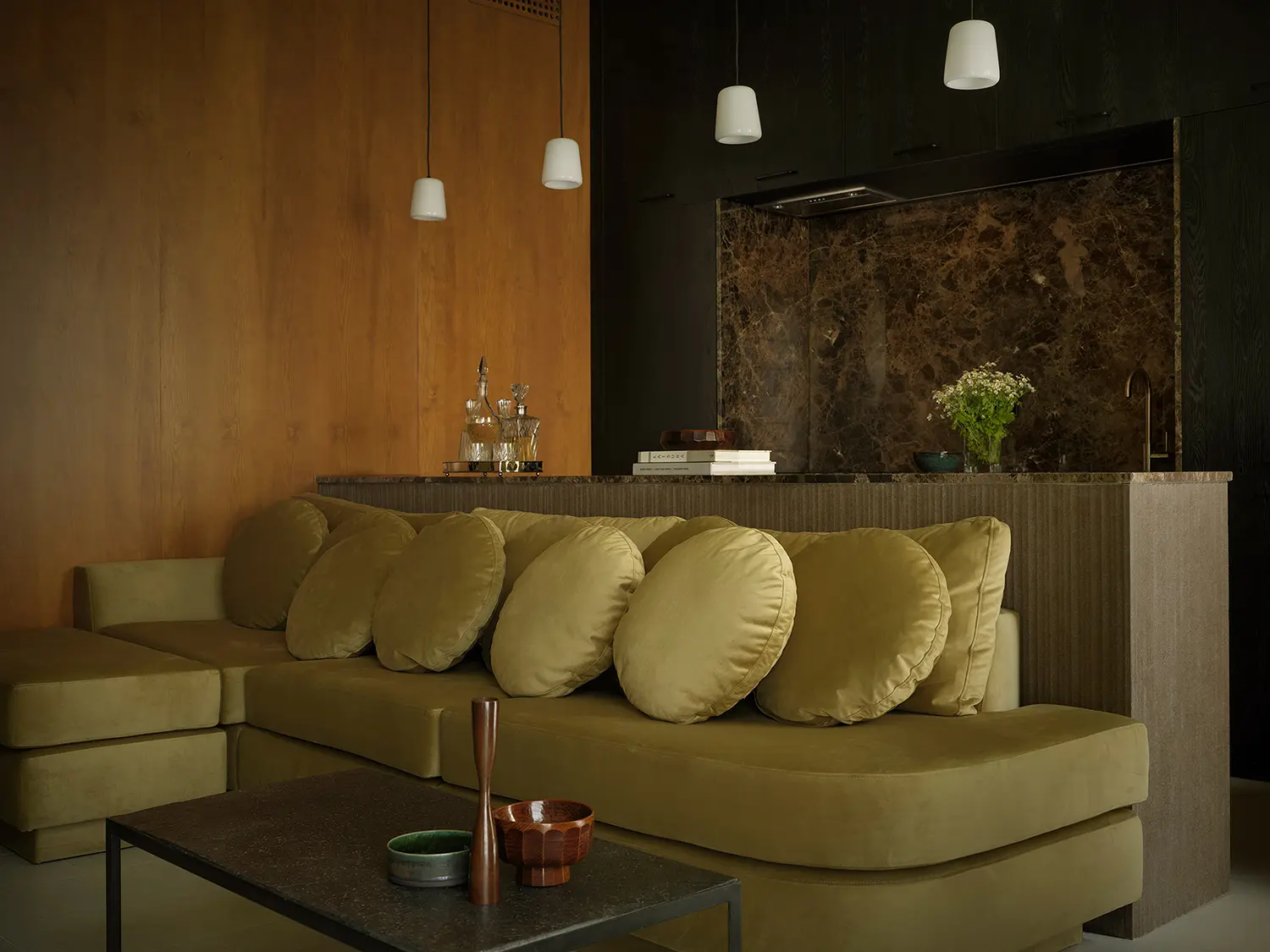
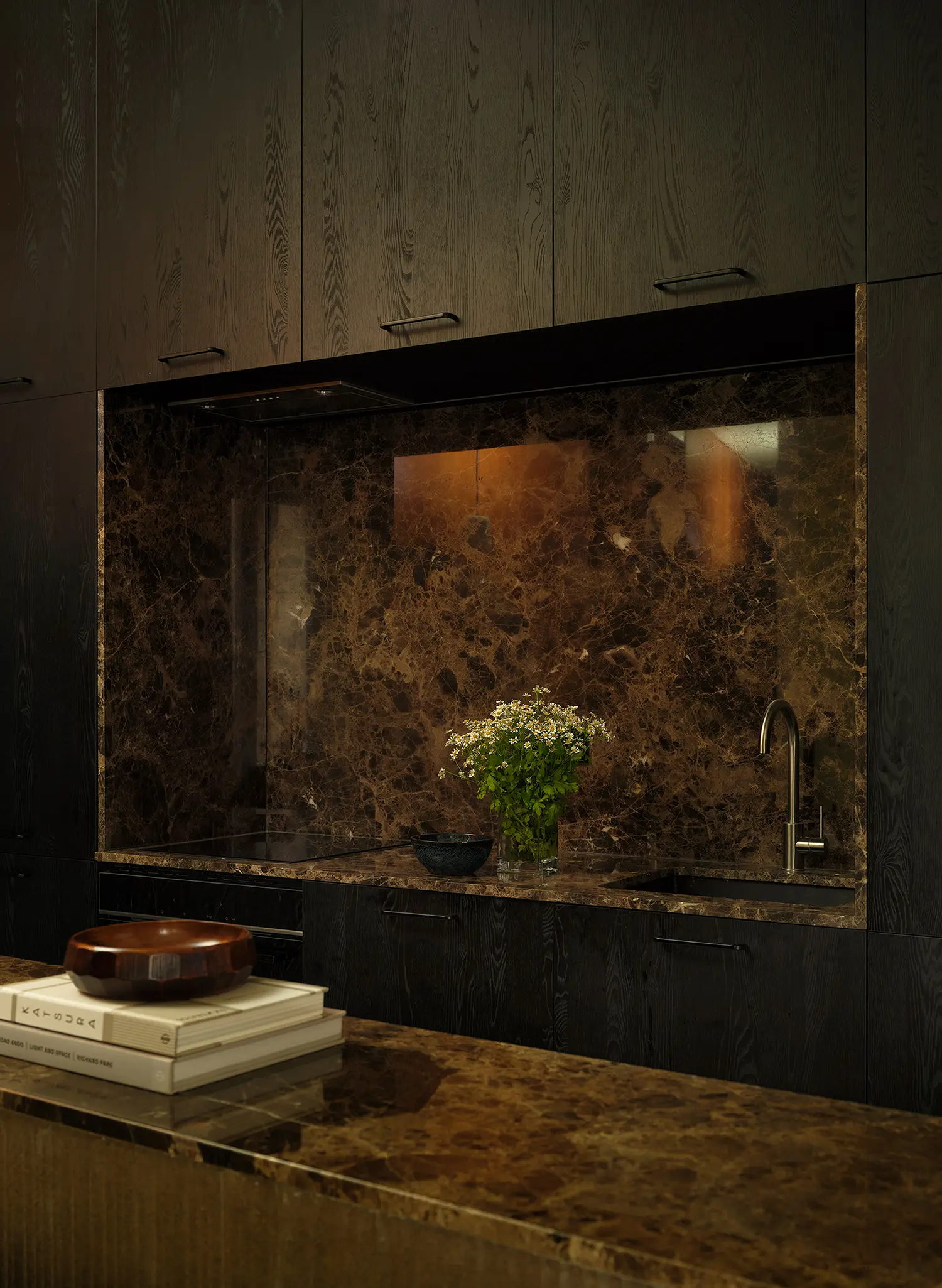
Cooking as ritual, kitchen as stage. The kitchen deserves particular attention. Designed as a floor-to-ceiling dark wood volume bisected by a central Emperador marble opening, it refuses to be concealed or domesticated into the background. It faces the living area head-on, positioning the act of cooking as a social performance rather than a private chore. A stone element behind the sofa doubles as informal bar, blurring the line between storage and hospitality. These choices accumulate into a domestic atmosphere that is genuinely relaxed and convivial — a home built around shared rituals rather than the isolated compartments of traditional apartment living.
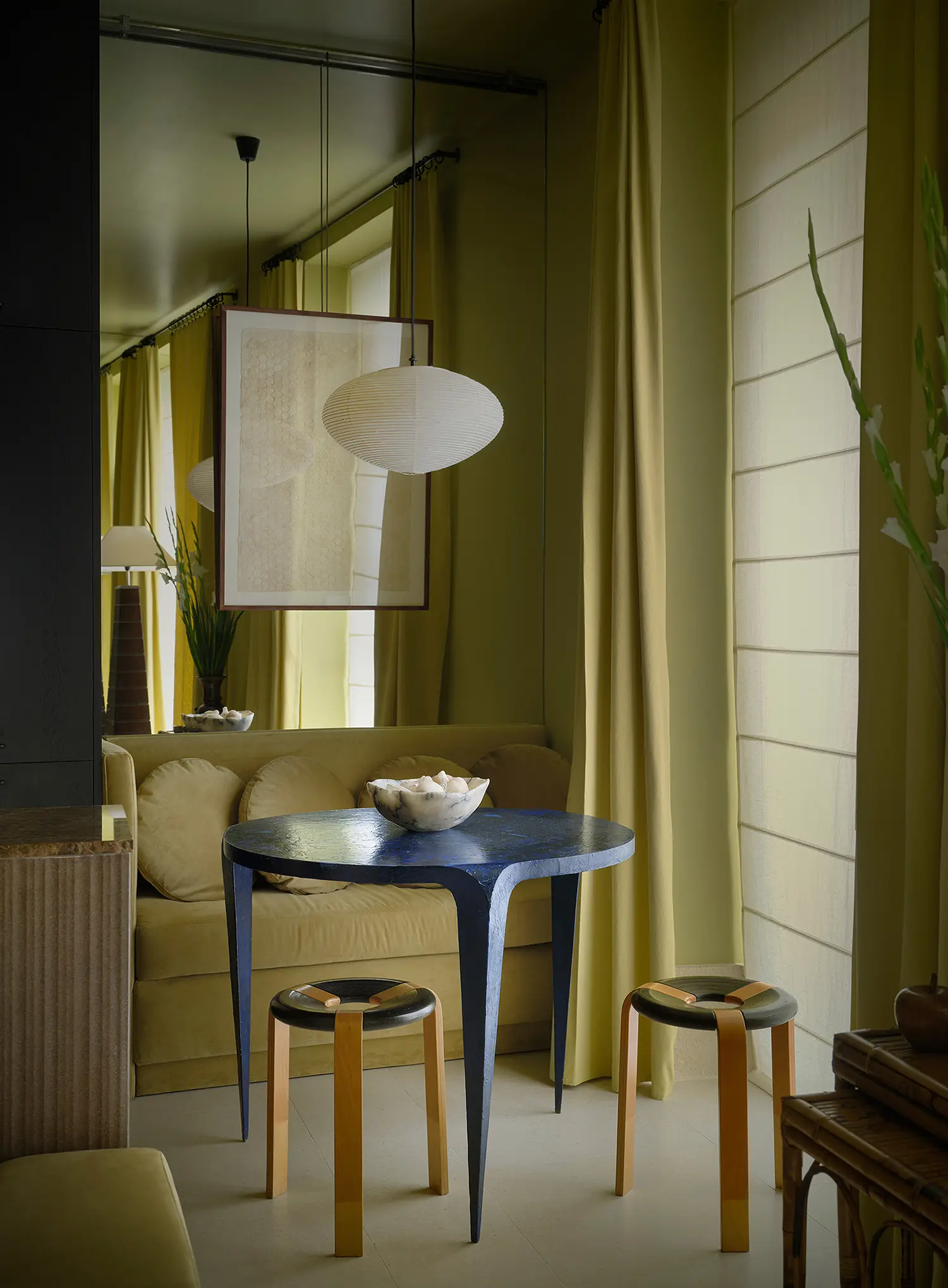
Light arrives like a rumour. Natural light enters through two street-facing balconies and a small courtyard window, but it never quite arrives unfiltered. Linen curtains intercept Madrid’s intense southern brightness, softening it into something diffused and ambient. Layers of olive-toned textiles deepen this effect further, building an interior climate that feels removed from the city’s glare without being sealed from it. It is a specific atmospheric achievement — the sensation of being sheltered inside a warm dusk at any hour of the day.
Mirrors that multiply shadow, not light. The material strategy is equally considered. Floor-to-ceiling mirrors placed perpendicular to the incoming light do not simply enlarge the space in the familiar decorator’s trick — they capture and amplify the subtle gradients of shadow that drift across surfaces throughout the day. Within this environment, lacquered surfaces, glazed ceramics, and dark furnishings acquire a presence and depth they would never achieve against white walls. Satin finishes catch the light obliquely; the room seems to glow from within rather than reflect from without. Objects sourced from Kyoto and Osaka — lacquered wooden pieces and ceramics — introduce a quiet cultural undertone that rhymes naturally with the material palette without announcing itself.
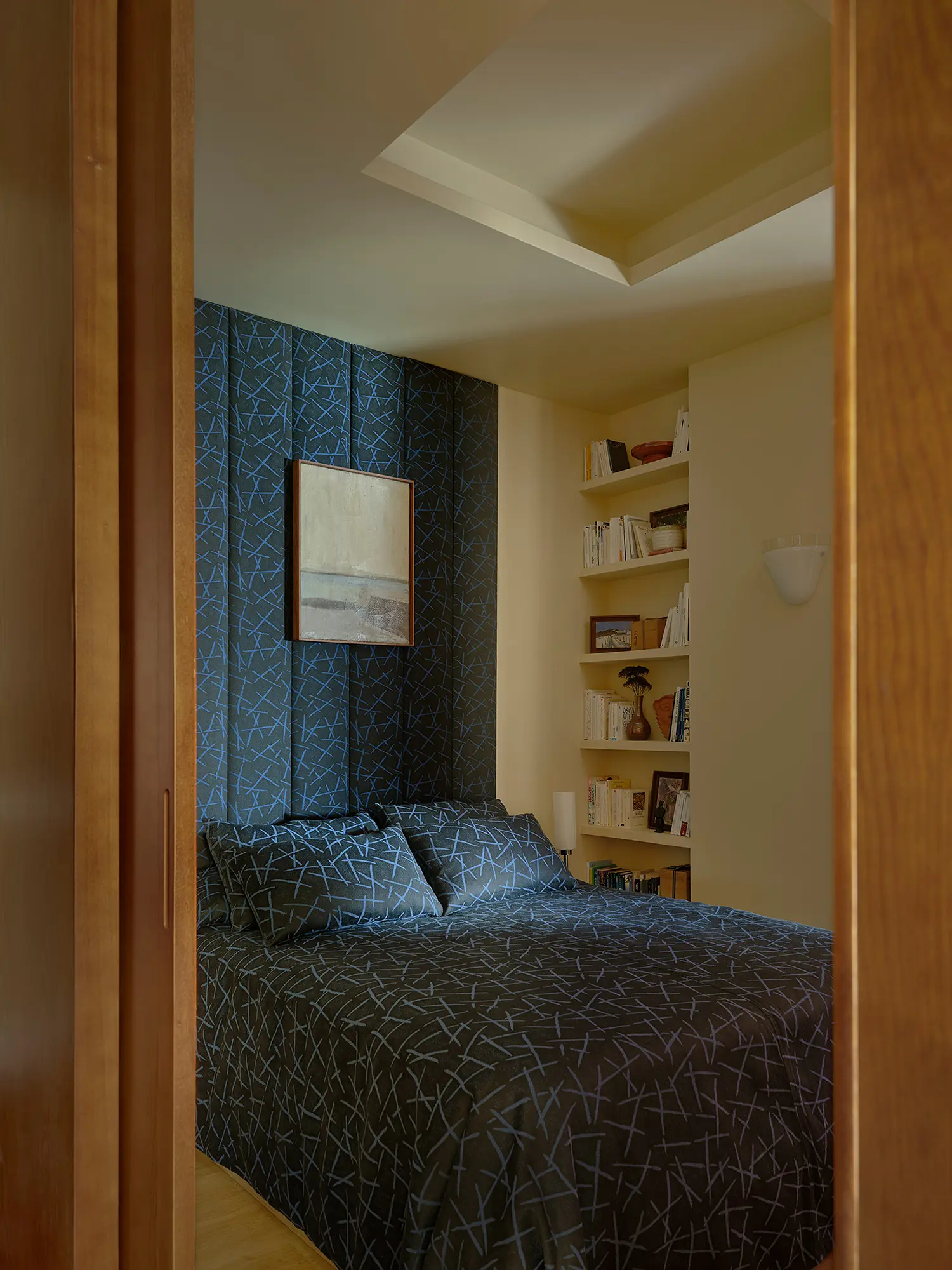
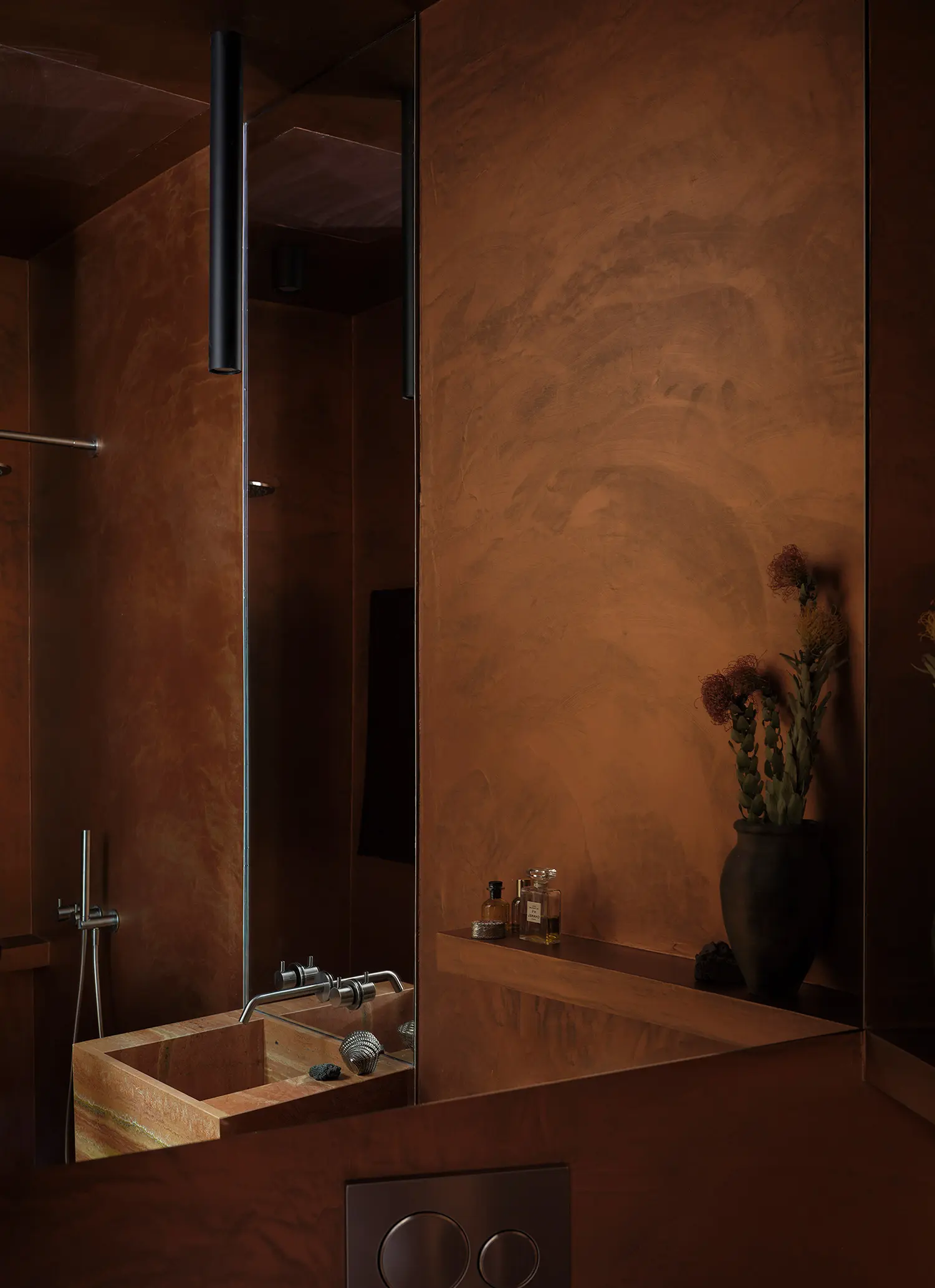
Crossing the threshold. Inside the oak volume, the shift in atmosphere is immediate and deliberate. A large sliding door separates the bedroom from the bathroom, and the act of crossing either threshold intensifies the sense of retreat. Light here is indirect, introspective. The bathroom — the most private room in the apartment — is conceived around a red travertine marble sink embedded within a mirrored surface, where reflections dissolve into depth rather than clarity. Metallic microcement and polished steel elements interact with steam and shifting light in a way that feels closer to the sensory logic of a Japanese sento than a European bathroom. It is small, but it is complete.
Shadow as an active element. What Teleno Studio has achieved in House in Penumbra is not simply a well-resolved small apartment — it is a meditation on atmosphere as a design material in itself. The project joins a growing conversation in Madrid about what renovation means in a dense, historically rich urban fabric, where the constraints of existing structures become creative catalysts rather than limitations. For readers interested in following this thread, two recently published projects offer compelling points of comparison: the Plutarco PDL70 House, a modernist villa renovation that navigates heritage with equal precision, and Casa Charca Verde by Aceboxalonso, which brings kinetic invention to the Madrid renovation scene. Together, these projects suggest that the Spanish capital is quietly producing some of the most thoughtful residential work in Europe right now — one recovered apartment at a time.